“Colombia’s Multinational Orion Strategy: Inception, Evolution, and Future Prospects” –USNI

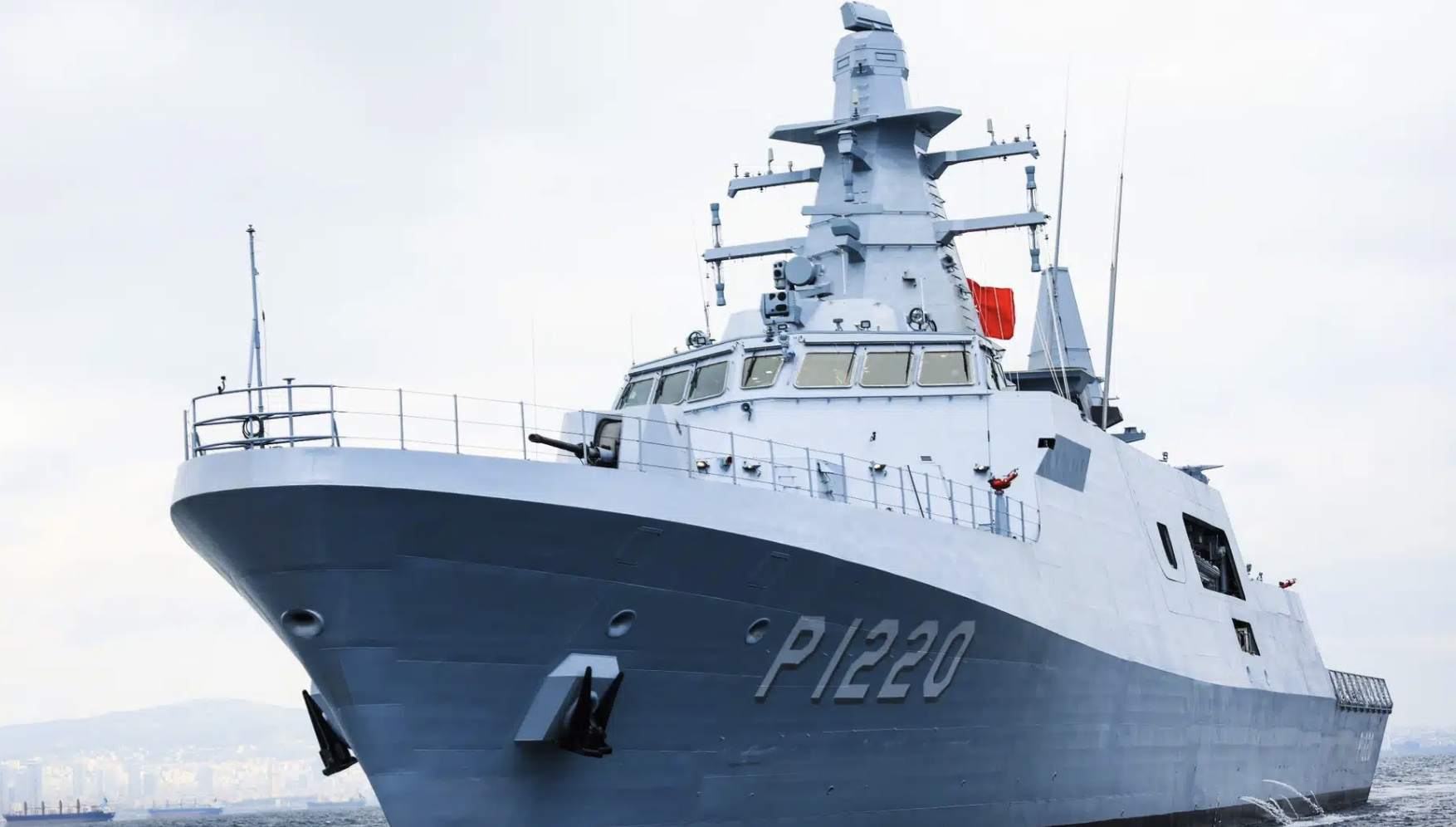
Colombian Navy patrol vessel ARC 20 de Julio carries out an ocean patrol.
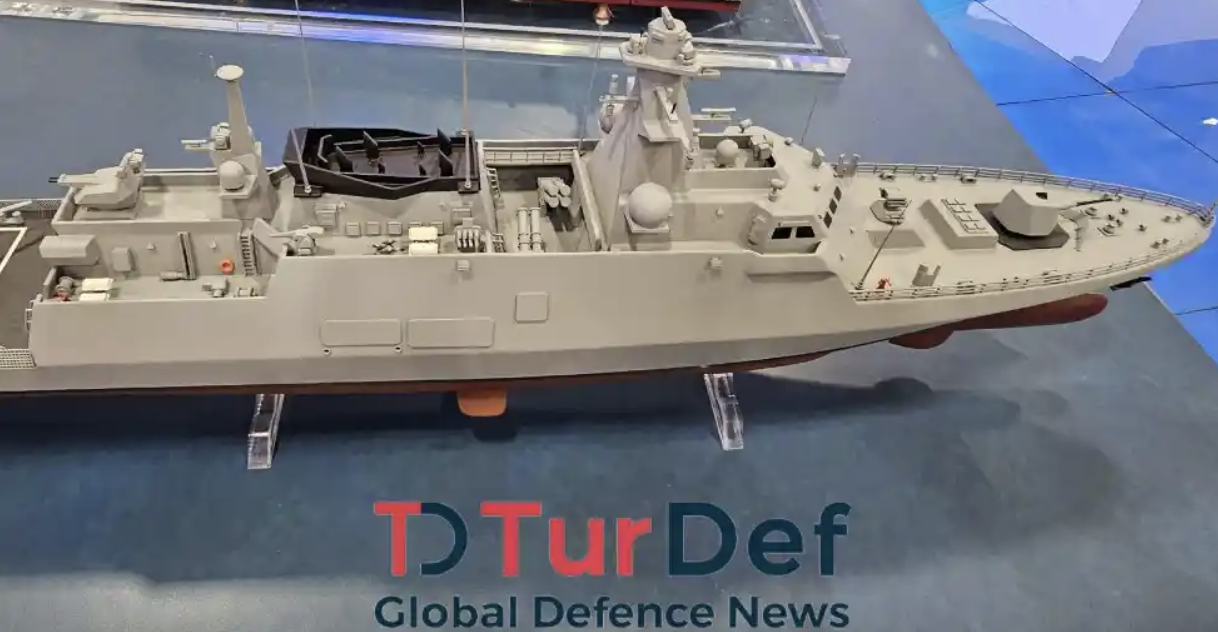
(PHOTO COURTESY OF COLOMBIAN NAVY). A post on this class now used by Chile and Colombia and slightly larger class used by Germany and soon Singapore.  

The November 2025 issue of US Naval Institute Proceedings includes an article by the head of the Colombian Navy, Admiral Juan Ricardo Rozo Obregón, that talks about their drug interdiction efforts and the international alliance they have formed to combat international drug smuggling, “which is now a year-round operation that integrates the efforts of 130 institutions from 64 countries and 10 multilateral organizations.”

“The Colombian Navy has achieved significant successes in facing down these threats. For instance, in 2024, the Navy seized 572 metric tons of cocaine—65 percent of the total amount confiscated by Colombian authorities.

“Through efforts aligned by the MOS (Multinational Orion Strategy-Chuck), partner nations have seized 3,830 metric tons of illicit drugs—including cocaine, marijuana, coca base, hashish, and methamphetamines—along with 1,130 vessels, including 81 self-propelled semisubmersibles. These joint efforts have led to 7,456  arrests. To date, these results have cost criminal networks more than $105 billion, prevented 21,966 overdose deaths, and saved $1.427 billion in healthcare costs.”

“Coast Guard to offload more than $362 million in cocaine” –District Southeast

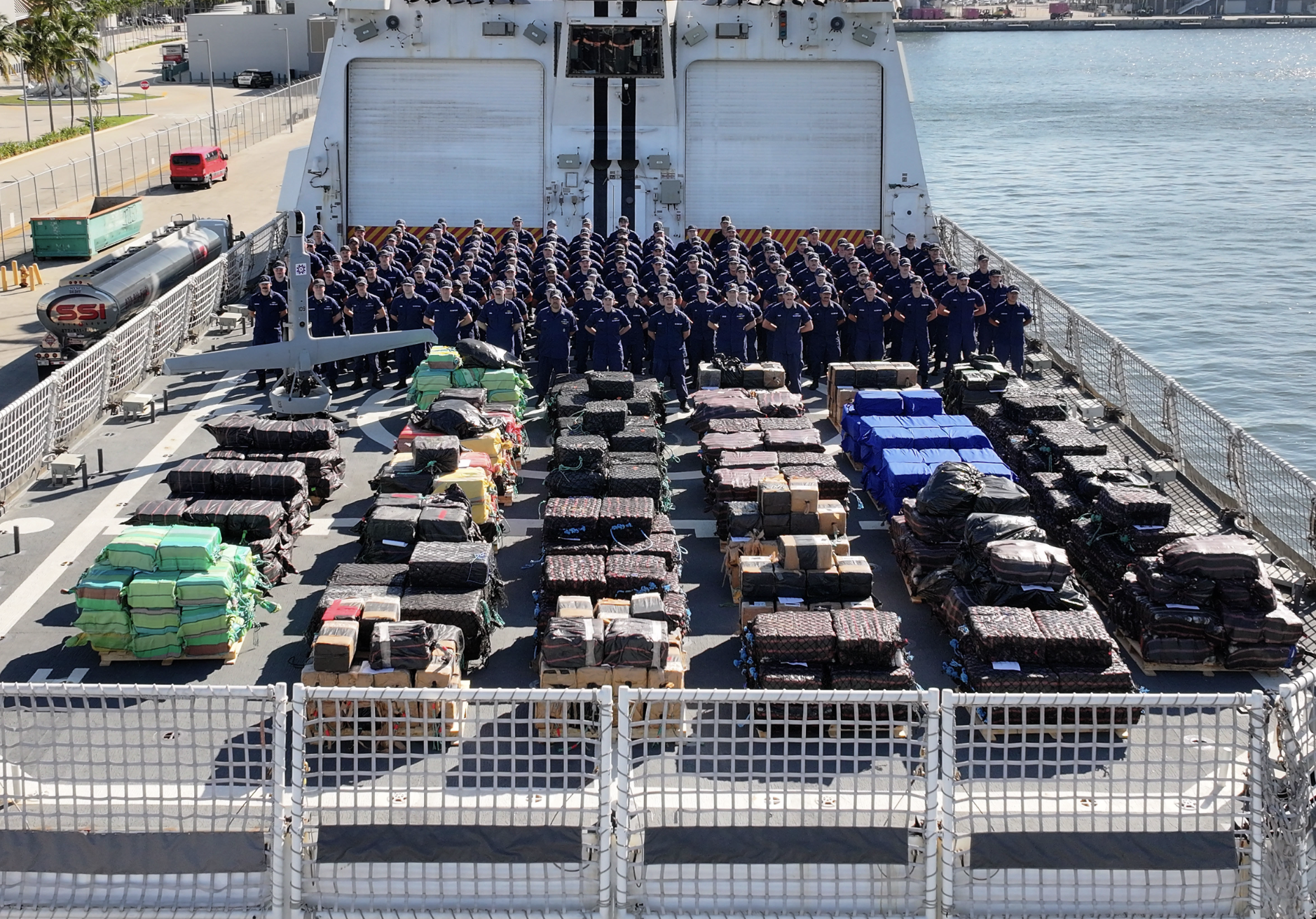
Offload photo from USCGC Stone’s previous patrol in which she made 12 interdictions. Coast Guard offloads over $517.5 million in illicit drugs interdicted in Eastern Pacific Ocean
Crew members from USCGC Stone (WMSL-758) stand at parade rest in front of interdicted narcotics at Port Everglades, Florida, Mar. 20, 2025. The Stone’s crew secured the illegal drugs from 14 interdictions (two by USCGC Mohawk) in the international waters of the Eastern Pacific. (U.S. Coast Guard photo by Petty Officer 2nd Class James Hague)

Below is a news release from Southeast District. USCGC Stone has been doing well. (See the link above.)
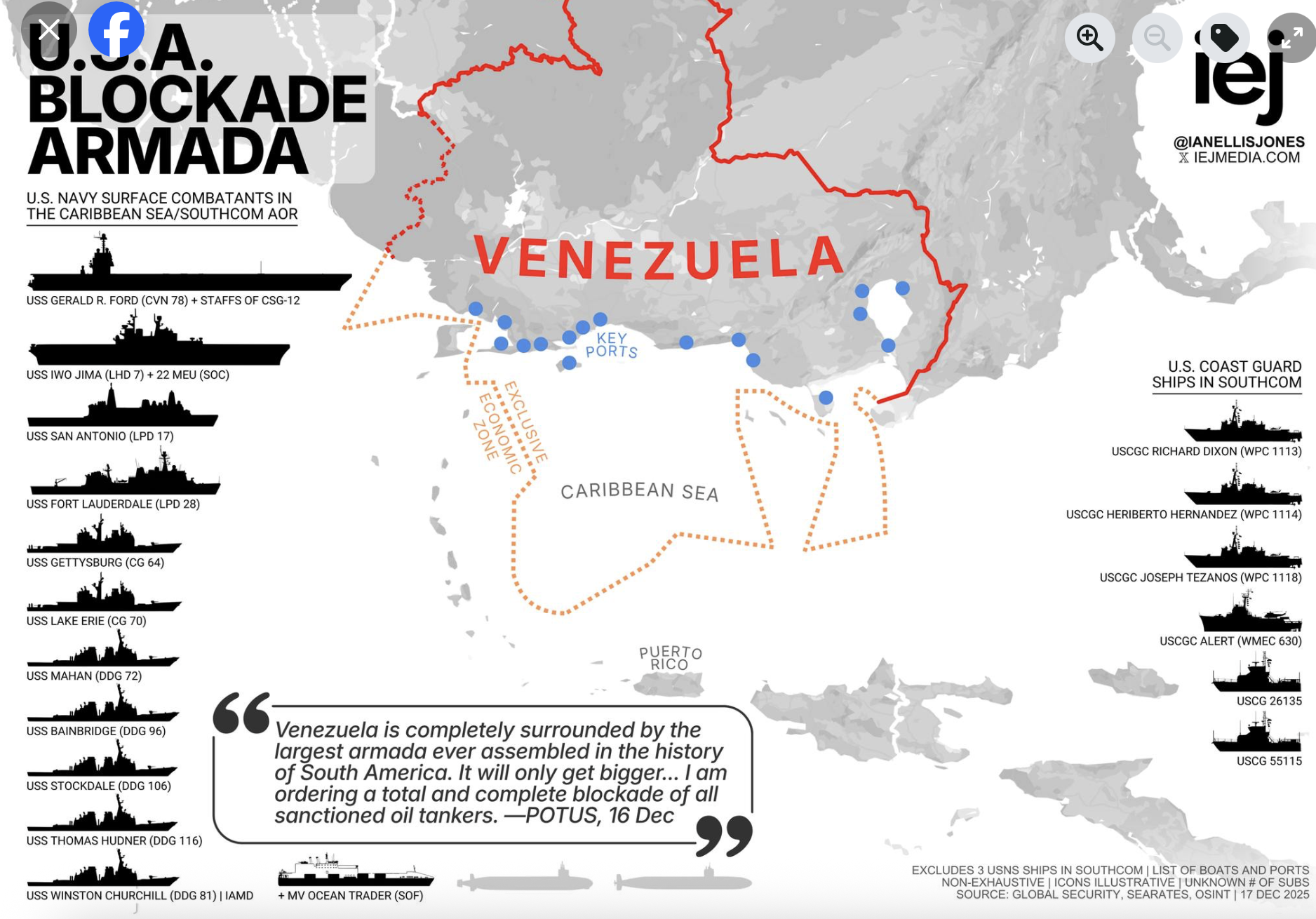
In her last patrol, Stone made 15 interceptions. By contrast the Navy with about 12,000 people in the Caribbean, a 13 Billion dollar aircraft carrier, two cruisers, three large amphibious warfare ships, three destroyers, and a submarine and probably more than a hundred aircraft have made 21 interdictions. Stone may have been at it longer. She also had the support of Joint Interagency Task Force South.

Nov. 18, 2025

Media Advisory: Coast Guard to offload more than $362 million in cocaine

Editor’s Note: Media are asked to RSVP by no later than 7 a.m., Wednesday, with the Coast Guard Southeast District Public Affairs Office at 305-202-3735 or by emailing Southeastpublicaffairs@gmail.com in order to be authorized access to the Port Everglades facility. Interested media are requested to arrive by 8 a.m., Wednesday, with media credentials, a valid driver’s license and proof of insurance to be processed through port security.

MIAMI — The U.S. Coast Guard is scheduled to hold a press briefing, Wednesday, highlighting the offload of over 49,000 pounds of illicit cocaine worth more than $362 million at Port Everglades.

The offload is the result of 15 separate interdictions by the crews of U.S. Coast Guard Cutter Stone, with an embarked Helicopter Interdiction Tactical Squadron aircrews and Tactical Law Enforcement Team-Pacific law enforcement detachment, and with the assistance of partner agencies during operations in the Eastern Pacific Ocean.

WHO:  

WHAT: Participating members will comment on and provide context for the Coast Guard’s maritime security and joint drug interdiction mission efforts to keep $362 million worth of illicit narcotics from reaching the United States.

WHERE: Berth 22, Port Everglades – 1800 SE 20th St, Fort Lauderdale, FL 33316. The seaport can be accessed by:

Main entrance. Take I-595 East straight into the port (I-595 become Eller Drive once inside the Port). I-595 runs east/west with connections to the Fort Lauderdale/Hollywood International Airport, U.S.1, I-95, State Road 7 (441), Florida’s Turnpike, Sawgrass Expressway and I-75.

Note:  Due to anticipated traffic associated with the Fort Lauderdale International Boat Show, media are encouraged to use the entrances at U.S. 1/State Road 84 and I-595 Eller Drive, to avoid the SE 17th Street Causeway entrance.

North entrance. Take U.S.1 or A1A to 17th Street Causeway in Fort Lauderdale and turn south at the streetlight onto Eisenhower Blvd. US1/Federal Highway entrance. At the intersection of State Road 84 East and U.S.1 (Federal Hwy.), turn east into the seaport.

WHEN: Wednesday, 9 a.m., Nov. 19.

Coast Guard imagery and b-roll of the drug offload will be published in a multimedia release after the press briefing.

USCGC Stone is a 418-foot national security cutter homeported in Charleston, South Carolina.

“Latest Coast Guard surge begins on Rio Grande River” –The Watch

Cameron County is East of Hidalgo County

The NORTHCOM on-line Magazine, The Watch, reports,

“The United States Coast Guard is conducting an unprecedented surge of force along 418 kilometers of the Rio Grande River to complement the activities of federal agencies to secure the Mexico-U.S. border. Operation River Wall, which includes quick response boats and tactical teams, began in October 2025 to further suppress illegal activity along the frontier. The exact number of vehicles and personnel has not been released, according to Stars and Stripes, a military affairs newspaper.

“The Coast Guard patrols the river as it winds through Cameron and Hidalgo counties in southeast Texas, eventually entering the Gulf of America. In the first 10 days of deployment, Guardsmen assisted in detaining 20 illegal migrants, according to Stars and Stripes.”

Much of the area of operation, Cameron and Hidalgo counties, is actually a metropolitan area including McAllen and Brownsville.

Kinetic Attack on Drug Trade

Kinetic attack target #20. Pentagon image.

The US Naval Institute reports,

U.S. forces struck a suspected narco boat in the Caribbean Sea earlier this week, killing four people, USNI News has learned.

The strike, which occurred Monday, killed all four people on board, leaving no survivors, a U.S. defense official confirmed Friday to USNI News. Unlike previous instances, Monday’s fatal strike was not announced by Defense Secretary Pete Hegseth or other members of the Trump administration on social media platform X.

These kinetic attacks have now become somewhat routine, but since this is a continuing topic of interest for my readers, I will report future attacks in the comments section of this post.

“Eastern Shipbuilding Suspends Work on Offshore Patrol Cutter Program” –Maritime Executive

Eastern Shipbuilding, Argus and Chase building. 2021

Maritime Executive reports,

“Florida-based Eastern Shipbuilding Group (ESG) has finally made the tough decision of suspending work on the troubled Offshore Patrol Cutters (OPCs) program, a development that comes six months after the Trump administration announced partial termination of the contract owing to delays and cost overruns.

“ESG CEO Joey D’Isernia announced that owing to the significant financial strains caused by the program’s structure and conditions, the company has opted to suspend work on its in-construction Heritage-class OPCs, resulting in layoffs.”

Can’t say this is a surprise. May 28, 2025 the Department issued a Request for Information for towing and a technical assessment for what could only have been an Offshore Patrol Cutter. OPCs #3 and #4 were cancelled in July.

Now, what will happen to OPC#1, Argus, and is there anything we can salvage from OPC #2, Chase?

This does leave the Coast Guard short of large patrol cutters, particularly in the Pacific. By now, there were supposed to be two OPCs home-ported in San Pedro and two home-ported in Kodiak. This is another reason LANT AREA’s should assume full responsibility for policing the Eastern Pacific drug transit zone. 

There really should be an investigation of how this happened.

Thanks to Pat for bringing this to my attention.

Keel Laying for OPC#3 hull number 917. Presumably future 915 is to the right and future 916 to the left. July 2022.


“Op-Ed: Is it time to replace pyrotechnic flares with eFlares?” –Marine Log

Credit: ACR Electronics

A Marine Log op-ed asks, “Is it not time for regulators to embrace the alternatives and make electronic flares permissible?”

Marine Inspection is definitely not in my wheel house, but if there are safer alternatives to pyrotechnical flares, it does seem they should be acceptable alternatives.

If we don’t have them on our own units already, maybe we should.

“Colombia to suspend intelligence sharing with US over boat strikes” –Defense News

U.S. Coast Guard Cutters Naushon (WPB 1311), Mustang (WPB 1310), Liberty (WPB 1334) transit through Seymour Narrows in British Columbia, Canada, May 2025. Through the Excess Defense Articles program, these boats will find a second life with the Colombian navy. (U.S. Coast Guard photo courtesy of USCGC Mustang)

Defense News reports,

“Colombian President Gustavo Petro ordered his nation’s security forces Tuesday to stop sharing intelligence with the United States, until the Trump administration stops its strikes on suspected drug traffickers in the Caribbean, as relations deteriorate between the nations that were once close partners in the fight against drug trafficking.”

“Coast Guard solicits potential locations for additional training center ” –News Release

USCGC BERTHOLF (WMSL-750) at Base Alameda

Below is a news release. It announces a Request for Information (RFI).

Seems to have a very short fuse. They are accepting responses to this RFI only until Dec. 8, 2025.

Occurs to me, Base Alameda was once used to be a Boot Camp. It might not be too difficult to make it one again and I believe it has some of the facilities referred to already. There is space for construction and it might be possible to get additional land if required from Oakland.

Nov. 10, 2025

Coast Guard solicits potential locations for additional training center

WASHINGTON — The United States Coast Guard, in coordination with the Department of Homeland Security, announced a Request for Information (RFI) and market research to identify prospective locations for an additional training center Monday.

The Coast Guard is conducting market research to identify facilities across the country that can be used to support projected service growth of up to 15,000 personnel. To address existing training space deficits and secure infrastructure to support increased throughput for recruit training, minimum requirements for a potential training center are defined as follows:

  • Lodging for 1,200 recruits
  • A dining facility capable of seating 400 personnel
  • A medical facility to support 1,000 personnel (minimum 200 medical encounters and 200 dental encounters per day)
  • 14 classrooms sized to accommodate 30-60 students
  • An auditorium with a capacity of 500+ students
  • A pool with 6 lanes, 25 yards in length, and a minimum depth of 4 feet
  • A multipurpose gymnasium/athletic/sports facility suitable for sitting 1,200 personnel
  • Office space for 400 staff members
  • A land area of 150-250 acres
  • Proximity to a small commercial service or larger airport within 30 miles

Through the RFI, the Coast Guard released screening and evaluation criteria to evaluate those locations eligible for consideration. The Coast Guard is providing communities meeting the screening criteria an opportunity to submit potential candidate locations by responding to the RFI at SAM.gov. The Coast Guard is accepting responses to this RFI until Dec. 8, 2025. Additional information regarding the RFI and market research, including location criteria, is available at the Coast Guard’s Force Design 2028 website. Potential candidates will receive additional information from the Coast Guard as part of the assessment process, based on the approved requirements and evaluation criteria.

Earlier this year, Secretary of Homeland Security, Kristi Noem, announced Force Design 2028 the Coast Guard’s bold blueprint for change to ensure the service is ready for the challenges of the future. By focusing on four campaigns – people, organization, contracting and acquisition, and technology – Force Design 2028 is transforming how the Coast Guard operates and shaping a more agile, capable and responsive fighting force. Growing Coast Guard end strength by up to 15,000 is a cornerstone of this transformation.

For media inquiries, contact mediarelations@uscg.mil.

About the U.S. Coast Guard
With more than 95,000 miles of shoreline, 25,000 miles of navigable rivers and 4.5 million square miles of U.S. exclusive economic zone, the U.S. Coast Guard defends the Nation, protects the marine transportation system, regulates and safeguards ports and waterways, leads the Nation in maritime drug interdiction and secures the maritime border. As a member of the joint force, a law enforcement organization, a regulatory agency and a member of the U.S. intelligence community, the Coast Guard employs a unique mix of authorities to ensure the safety and integrity of the maritime domain to protect the economic and national security of the nation. The more than 76,000 members of the Coast Guard operate a multi-mission, interoperable fleet of more than 220 cutters, 185 fixed and rotary-wing aircraft, 1,300 boats and its own dedicated cyber command to protect critical maritime infrastructure.

More information about the U.S. Coast Guard can be found at www.uscg.mil Follow @USCG on X and Instagram, like us on Facebook, subscribe on YouTube and follow LinkedIn – connect with us.

Make a difference on land, at sea or in the air with the Coast Guard. Visit GoCoastGuard.com to find out how to be part of our team.


Photos from Coast Guard Yard

Just wanted to pass along some photos from Coast Guard Yard to illustrate the work they are doing in preserving, renovating, and passing along retired Coast Guard Cutters.

Consider this and addendum to my earlier post in which I talked about the work being done at the Yard to prepare retired cutters for transfer to friendly nations.

Inactive WMECs at the Coast Guard Yard

Inactive WPBs and WMECs at Coast Guard Yard

WPB87s in Storage

“Coast Guard exceeds fiscal year 2025 recruiting goals, achieves highest numbers since 1991” –CG News Release

Below is a news release. Good news. I would really like to know more about the plan to grow the Coast Guard’s “military force by 15,000 members by FY28 to support fleet expansion and meet emerging mission demands.” 
It is not clear if this is 15,000 more than the current personnel allowance or 15,000 more than number of personnel actively in service. The GAO says the Coast Guard is short about 2,600 active-duty staff.
That would make the force a third larger. Force Design 2028 does not provide much detail about where those additional bodies will be working. If more detail is out there, I think we  would love to see it.
Also It seems our recruiting goals should be much higher than 4,300 per year if we are going to grow the service by 15000 in the next three years. That suggests there will be some novel personnel acquisition strategies. (The press release seems to have left out reference to any path to a commission other than the Academy.)

Nov. 7, 2025

Coast Guard exceeds fiscal year 2025 recruiting goals, achieves highest numbers since 1991

WASHINGTON – The Coast Guard announced Friday it exceeded its fiscal year 2025 (FY25) recruiting goals, achieving the highest accession numbers since 1991.

The Coast Guard accessed 5,204 active-duty enlisted service members in FY25, which was 121% of its FY25 target of 4,300. This success was the second year in a row that the Coast Guard met its active-duty enlisted recruiting goals after the Service brought in 4,422 new service members last year.

In addition to the success of the active-duty enlisted recruiting efforts, the Service commissioned 371 new officers, to achieve 101% of the overall goal. This represents the largest officer target achieved in recorded history.

In the reserve component, the Coast Guard accessed 777 reservists, which was 104% of the official target of 750. This was the third year in a row that the Coast Guard met its recruiting goals for the Coast Guard reserve.

To support these recruiting efforts, the Coast Guard opened 7 new recruiting offices in FY25. These offices are located in:

  • Miami, Florida
  • Los Angeles, California
  • Long Island, New York
  • Austin, Texas
  • Grand Rapids, Michigan
  • Cincinnati, Ohio
  • Davenport, Iowa

All enlisted members begin their Coast Guard careers at Training Center Cape May in Cape May, New Jersey, where they complete basic training to prepare for service. Officer accessions occur on board the Coast Guard Academy in New London, Connecticut, where candidates are trained and commissioned for service as Coast Guard officers.

“The Coast Guard far exceeded our recruiting goals in Fiscal Year 2025, showing that more Americans want to serve in the Coast Guard than ever before,” said Adm. Kevin Lunday, acting commandant of the Coast Guard. “Thanks to our recruiters for their great success. We aren’t just growing – we are bringing in the best talent from across the United States and building the workforce of the future.”

These results align with the goals of Force Design 2028, a strategic initiative to modernize the Coast Guard’s workforce, enhance readiness and grow its military force by 15,000 members by FY28 to support fleet expansion and meet emerging mission demands.

For media inquiries contact mediarelations@uscg.mil.

About the U.S. Coast Guard

With more than 95,000 miles of shoreline, 25,000 miles of navigable rivers and 4.5 million square miles of U.S. exclusive economic zone, the U.S. Coast Guard defends the Nation, protects the marine transportation system, regulates and safeguards ports and waterways, leads the Nation in drug interdiction and secures the maritime border. As a member of the joint force, a law enforcement organization, a regulatory agency and a member of the U.S. intelligence community, the Coast Guard employs a unique mix of authorities to ensure the safety and integrity of the maritime domain to protect the economic and national security of the nation. The more than 76,000 members of the Coast Guard operate a multi-mission, interoperable fleet of more than 220 cutters, 185 fixed and rotary-wing aircraft, 1,300 boats and its own dedicated cyber command to protect critical maritime infrastructure.

More information about the U.S. Coast Guard can be found at www.uscg.mil Follow @USCG on X and Instagram, like us on Facebook, subscribe on YouTube and follow LinkedIn – connect with us.

Make a difference on land, at sea or in the air with the Coast Guard. Visit GoCoastGuard.com to find out how to be part of our team.