U.S. Marines Add Bullfrog M240 Weapon Station to L-MADIS Vehicle for Low Cost Drone Kills/We Could Use This

Army Recognition’s Navy News reports,

The U.S. Marine Corps is introducing an automated weapon station into its Light Marine Air Defense Integrated System (L-MADIS) to expand its ability to defeat hostile drones in expeditionary operations. The upgrade strengthens the Corps’ layered air defense network by adding a low-cost kinetic option alongside electronic warfare systems.

The new capability is designed to complement L-MADIS’ existing electronic attack tools, providing Marines with an additional means of engaging unmanned aerial systems when jamming alone is ineffective or unsuitable. The integration supports the Corps’ broader Ground-Based Air Defense modernization strategy, improving force protection while preserving more expensive missile interceptors for higher priority aerial threats.

This is the junior (light) version of MADIS. There is also a more capable version.

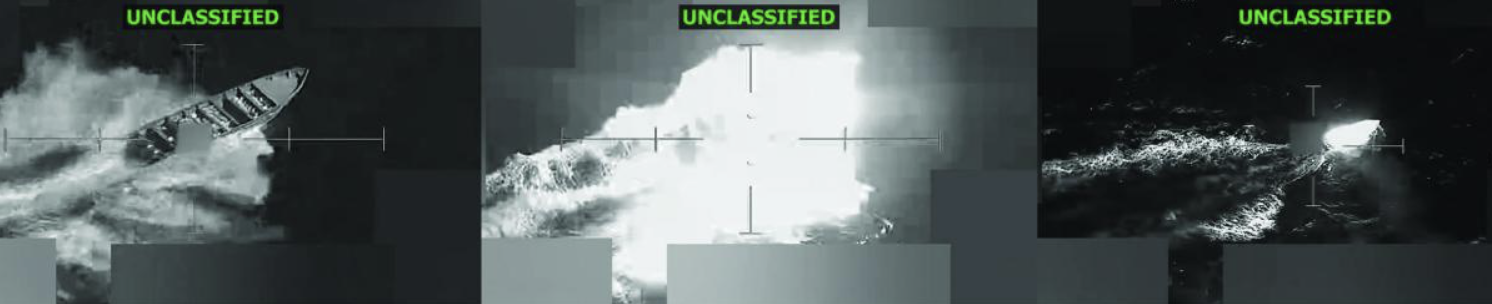
Since kamikaze drones are a threat that can emerge virtually anywhere, anytime, the Coast Guard needs to be prepared to counter them, both for self defense and for the protection of other assets.

U.S. Marines are adding an automated weapon station to LMADIS, expanding expeditionary counter-drone defenses with a new kinetic capability (Picture source: US DoD/ACS)

Certainly there are other alternatives, but since the Navy is buying this remote weapon station (RWS), it might be a good choice, in conjunction with the other elements of the Marine Air Defense Integrated System (MADIS). They could replace most of the crew-served .50 caliber mounts.

Frankly, I would think the 30mm M230 gun, which can use an air burst round would be better than a 7.62mm. Apparently this remote weapon station can also use the M230 or the .50 caliber. The 30mm has a longer range and higher first round kill probability. It is also more effective against other types of threats.

An air-burst round also means that misses to not continue on to who-knows-where and cause collateral damage. Since we might be using these inside a harbor that is an important consideration.

Mast on PATFORSWA WPC

We already have what looks like the same type radars on the six Webber class WPBs that were assigned to PATFORSWA.

I would think every cutter WPC and larger should have the MADIS radars, EW, and two remote weapon stations. Every cutter should have at least one remote weapon station. The electro-optic that are included in the RWS provide other advantages as well including for man-over-board, navigation, and SAR.


First Person Video Drones vs Helicopters

helicopter attacked by FPV drone

Recently saw some video of a first person video drone, you know the cheap hobby drones, being used to attack a helicopter, a Russian Mi-28 attack helicopter, in Ukraine and realized this might be something we may need to be ready for.

Logically drug runners should not try this because it could encourage the Coast Guard to shoot first. Still, you can’t always expect rational behavior.

It should be obvious if someone on the smuggler’s boat is operating a transmitter. The drone itself might be easier to miss. At least maybe something to look out for.

Reorganization of Navy Oversight of Polar Security Cutter Program

US Naval Institute reports, “New Navy PAE Maritime Shipbuilding Office Reaches IOC.”

“The new organization that will oversee surface shipbuilding for the U.S. Navy and one Coast Guard program has reached its initial operational capability overseeing major surface ship and aircraft carrier construction, according to a July 16 memo obtained by USNI News.”

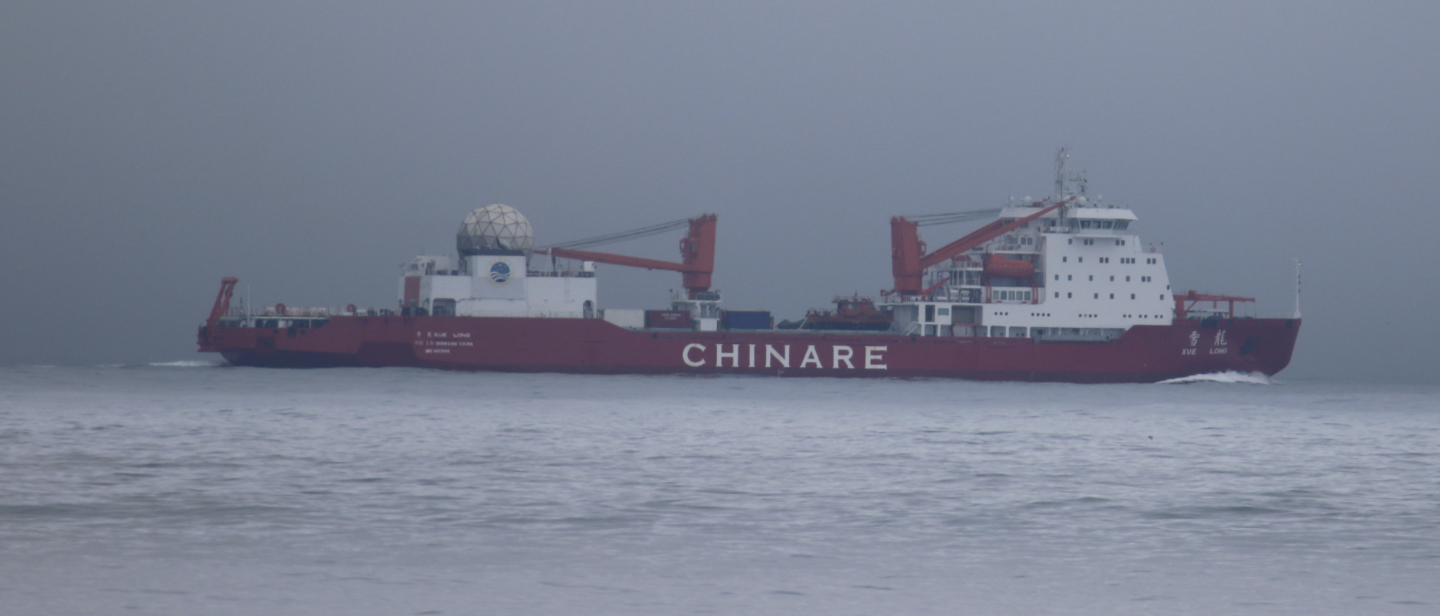
There are five Deputy Portfolio Acquisition Executives, one of which, Auxiliaries, “Led in an acting capacity by Capt. Cedric McNeal covers oilers, dry cargo ships, special mission ships and the U.S. Coast Guard Polar Security Cutter program.”

As you may know, both the Coast Guard and the Navy have had problems with ship building lately, frequently the blame has been placed on NAVSEA. This is an attempt to fix the problems by placing decision makers closer to the program managers.

Buoy Tender Homeports

The crew of the Coast Guard Cutter Juniper (WLB 201) return to Honolulu after completing a 45-day patrol in Oceania in support of Operation ‘Aiga, Oct. 1, 2021. The Juniper is a 225-foot Juniper-Class seagoing buoy tender home-ported in Honolulu, the crew is responsible for maintaining aids to navigation, performing maritime law enforcement, port, and coastal security, search and rescue and environmental protection. (U.S. Coast Guard photo courtesy of Coast Guard Cutter Juniper)

Today I realized there was not a convenient listing of buoy tenders including their geographic distribution. Buoy Tenders, particularly the 2000 ton 225 foot WLBs, really are major units. They frequently do more than tend buoys. WLBs break ice in the NE, Great Lake, and Arctic districts. They have escorted WPCs on long voyages in PACAREA. WLMs can do just about anything WLBs can do and may stand in for WLBs when they are doing other types of work.

A major maintenance availability (MMA) program for the WLBs was completed 29 July, 2025. An MMA for the WLMs began a year ago when USCGC Ida Lewis, WLM-551, arrived at the Coast Guard Yard, 15 July, 2025. That probably means we can expect about one WLM homeport change per year.

I used the Navy League’s 2026 Almanac to prepare this list.

NE District

  • Rockland, ME: WLM-553 Abbie Burgess
  • Portland, ME: WLM-554 Marcus Hanna
  • Newport, RI: WLB-209 Sycamore / WLB-211 Oak / WLM-551 Ida Lewis
  • Bayonne, NJ: WLM-552 Catherine Walker

East District

  • Philadelphia: WLM-560 William Tate
  • Baltimore: WLM-555 James Rankin
  • Portsmouth, VA: WLM-557 Frank Drew
  • Atlantic Beach, NC: WLB-207 Maple

SE District

  • Charleston, SC: WLB-202 Willow
  • Atlantic Beach, FL: WLM-562 Maria Bray
  • St Petersburg, FL: WLM-556 Joshua Appleby

Heartland District

  • Pensacola, FL: WLB-205 Walnut
  • Mobile, AL: WLM-559 Barbara Mabrity
  • Galveston, TX: WLM-561 Harry Claiborne

Great Lakes District

  • Duluth, Minn: WLB-206 Spar
  • Port Huron, Michigan: WLB-215 Sequoia

SW District

  • San Pedro, CA: WLM-564 George Cobb
  • San Francisco: WLB-216 Alder

NW District

  • Astoria, Ore: WLB-204 Elm
  • Everett, WA: WLM-563 Henry Blake

Arctic District

  • Ketchikan, AK: WLM-558 Anthony Petit
  • Sika, AK: WLB-203 Kukui
  • Cordova, AK: WLB-213 Fir
  • Homer, AK: WLB-208 Aspen
  • Kodiak, AK: WLB-210 Cypress

Oceania District

  • Honolulu: WLB-201 Juniper / WLB-214 Hollyhock
  • Apra Harbor, Guam: WLB-212 Hickory

Coast Guard’s Reimagined “Expeditionary Cutter Squadron”

WarshipCam -Official, March 29 at 4:49 PM
·
All six Bahrain-based USCG Sentinel-class cutters eastbound in the Singapore Straits – USCGC Charles Moulthrope (WPC-1141),USCGC Robert Goldman (WPC-1142), USCGC Glen Harris (WPC-1144), USCGC Emlen Tunnell (WPC-1145), USCGC John Scheuerman (WPC-1146) & USCGC Clarence Sutphin Jr. (WPC-1147) – March 2026 SRC: X-@StraitsSights

The Wall Street Journal Reports,

“U.S. Coast Guard ships previously deployed in the Middle East are now operating out of Singapore and the Philippines to help challenge China’s assertion of power in the Pacific.

“The six 154-foot fast-response cutters are part of the Coast Guard’s reimagined ‘expeditionary cutter squadron,’ which can be sent anywhere in the world.”

I did not read the rest of the article which is behind the pay wall, but this tells us a lot. Apparently the squadron is now operating out of Singapore and has been rebranded as the “expeditionary cutter squadron.”

We had previously seen reports that they were conducting exercises with the Thai Navy and with the Philippine Navy and Coast Guard, this is the first indication they are now operating out of Singapore and that they are no longer PATFORSWA if that is actually the case.

Still a lot of questions. Will they go back to Bahrain? PATFORSWA was an Atlantic Area asset. Will that change? What has happened to their dependents, I think some lived in Bahrain?

Really I thought the WPCs might have been useful close escorts to protect tankers from attacks by unmanned surface and aircraft, particularly if their armament had been  augmented with Hellfire or APKWS. There is really no end in sight for this conflict, at least not today, maybe we can rethink this.

Force Laydown

Click on the map for full size. “The Coast Guard has an international presence, including three permanent international units. Patrol Forces Southwest Asia (PATFORSWA) is the Coast Guard’s largest unit outside of the United States. PATFORSWA is currently supporting the U.S. Navy’s Fifth Fleet in Operation Freedom’s Sentinel. The Coast Guard has two commands (Activities Europe and Activities Far East) that support the Coast Guard’s Maritime Safety and Security mission, conducting marine inspection, marine investigation, and international port security operations to ensure the integrity of the Marine Transportation System. The Coast Guard also has personnel assigned to nine DoD Combatant Commands and often has a presence on all seven continents and all of the world’s oceans, projecting national sovereignty with our icebreakers, National Security Cutters, aviation assets, and deployable specialized forces.” -original caption recovered July 15, 2026

Thought some might find this interesting. I have to caution, this may be out of date and incomplete. The caption quoted above includes the statement, “PATFORSWA is currently supporting the U.S. Navy’s Fifth Fleet in Operation Freedom’s Sentinel.” Operation Freedom’s Sentinel which began in 2015, ended in August 2021. Since they do not use the name USINDOPACOM for the Pacific Command and that name change happened in 2018, it probably has not been changed for at least eight years. Even so, it may be surprising how many international positions the Coast Guard occupies.

There is also a Domestic Force Laydown on the same web page, but it does not look very useful. It does not include all air stations or WLB and WPC homeports and what is at each geographic location is not labeled. It also does not use the current district names.

Two PATFORSWA WPCs Participate in Cooperation Afloat Readiness and Training (CARAT) Thailand 2026

Heads of delegation representing the United States, Thailand and Canada pose for a photo during the opening ceremony of exercise Cooperation Afloat Readiness and Training (CARAT) Thailand 2026, July 6, 2026, at Laem Tian Pier. US Navy photo

The US Naval Institute news service reports,

The U.S Navy and Royal Thai Navy launched Cooperation Afloat Readiness and Training (CARAT) Thailand 2026 on Monday (July 6–Chuck) in Sattahip, Thailand, with Canada also joining the exercise. The U.S is deploying Coast Guard cutters USCGC Emlen Tunnell (WPC-1145) and USCGC Charles Moulthrope(WPC-1141), a U.S. Navy P-8A Poseidon maritime patrol and reconnaissance aircraft from Commander, Task Force (CTF) 72 and U.S. Marines from the Fleet Anti-Terrorism Security Team Pacific (FASTPAC).

Among the Royal Thai Navy ships deployed for CARAT Thailand 2026 are frigates HTMS Taksin (FFG-422) and HTMS Saiburi (FFG-458).

The same two cutters conducted a Maritime Cooperative Activity (MCA) with the Philippine Navy and Coast Guard, June 27-28, 2026. Have seen nothing to indicate what the remaining four PATFORSWA cutters are doing now.

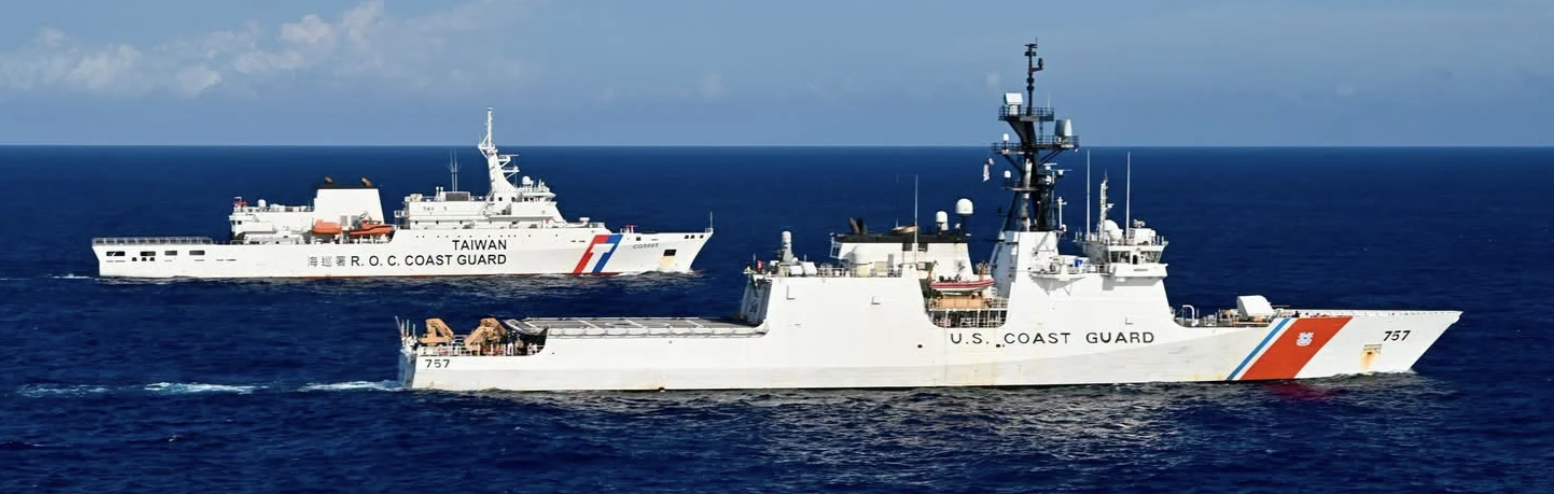
The post also indicated USCGC Kimball is participating in RIMPAC 2026 and USCGC Midgett (WMSL-757) is currently docked in Yokosuka.

“Coast Guard Cutter Venturous To Arrive At New Homeport In Portsmouth” / Resolute is Moving Too

ATLANTIC OCEAN (Feb. 23, 2021) — USCGC Charles Moulthrope (WPC 1141) conducted Astern Refueling at Sea training with the USCGC Venturous (WMEC 625). This evolution provides vital fuel to extend the endurance and range of FRC and provided an excellent training opportunity for both crews. (U.S. Coast Guard photo by Petty Officer 1st Class Sydney Niemi/Released)

The Navy League’s on line magazine “Seapower” reports,

PORTSMOUTH, Va. — The Coast Guard is scheduled to welcome the Reliance-class medium endurance cutter USCGC Venturous (WMEC 625) to its new homeport at Base Portsmouth, July 10, 2026.

The arrival of Venturous marks the first of two medium endurance cutters transitioning to Virginia this month, with the Reliance-class medium endurance cutter USCGC Resolute (WMEC 620) also scheduled to rehome to Base Portsmouth next week.

Both cutters have been based in Saint Petersburg, Florida. This is a move from the SE District to the East District.