The New Pick for SOUTHCOM

Lt. Gen. Laura J. Richardson, 20 June 2019, US Army photo

Defense News reports that President has nominated three officers to assume the duties of Commander Combatant Command at TRANSCOM, PACOM, and SOUTHCOM.

The SOUTHCOM Commander is particularly important to the Coast Guard because  the Coast Guard’s drug interdiction efforts in the Caribbean and Eastern Pacific fall under SOUTHCOM’s jurisdiction. Frequently SOUTHCOM has been a vocal advocate for the Coast Guard.

The SOUTHCOM nominee is Lt General Laura J. Richardson, currently the head of U.S. Army North. She is an aviator and has an interesting bio. More photos here.


State of the Coast Guard Address, Thursday, March 11, 13:00 Eastern, 10:00 Pacific

Below is a D11 news release. Includes how to watch.

MEDIA ADVISORY: Top Coast Guard officer to outline state of the Coast Guard during San Diego address

Media Advisory

U.S. Coast Guard 11th District PA Detachment San Diego
Contact: Coast Guard PA Detachment San Diego
Office: (619) 278-7025
After Hours: (619) 252-1304
PA Detachment San Diego online newsroom

Top Coast Guard officer to outline state of the Coast Guard during San Diego address

WHO: Adm. Karl Schultz, commandant of the United States Coast Guard

WHAT: The service chief is scheduled to give his third annual State of the Coast Guard Address

WHEN: Thursday at 10:00 a.m. PST

WHERE: Virtual via live stream and video Q&A afterward

Editor’s Note: Media may RSVP at (619) 252-1304 no later than Wednesday at 5:00 p.m. Due to COVID-19 restrictions, in-person attendance will be extremely limited. However, this event will be live-streamed at https://www.uscg.mil/alwaysready/ and on Facebook at @USCoastGuard. Immediately following the event, Admiral Schultz will be available for Q&A via video conference call. Media who RSVP will be given media call details.

SAN DIEGO — The commandant of the United States Coast Guard is scheduled to deliver his third State of the Coast Guard Address Thursday at Coast Guard Sector San Diego.

Adm. Karl Schultz will outline his vision for the service to protect the homeland, enhance economic prosperity and advance America’s national security interests. Adm. Schultz will accentuate the dedication and sacrifice of Coast Guard members stationed across the country and deployed around the world during this past year of unprecedented challenges.

The address will cover topics such as investments in shore infrastructure, vital cutter and aircraft acquisition programs, continued focus on revolutionizing the service’s use of technology and talent management initiatives.

Adm. Schultz will further highlight Coast Guard operations in our nation’s system of ports and waterways, better known as the Marine Transportation System (MTS). The MTS is a key economic engine for the nation, fueling 26% of America’s gross domestic product (GDP) which equates to $5.4 trillion of annual economic activity and 31 million jobs.

Additionally, Adm. Schultz is expected to feature stories of Coast Guard women and men who excelled in crisis, rescued mariners in distress, interdicted illicit narcotics and responded to a record-setting Atlantic basin hurricane season, all complicated by the challenges presented by the COVID-19 global pandemic. Finally, Adm. Schultz will discuss how the global Coast Guard is a unique instrument of national security.

Detailed Schedule of Events:

  • 10:00 a.m. – 11:00 a.m. PST: State of the Coast Guard Address
  • 11:30 a.m. – noon PST: Adm. Schultz will be available for media inquiries via video conference call.

“U.S., Canadian, Coast Guards, Royal Canadian Air Force, rescue 31 fishermen from sinking vessel off Nova Scotia” –D1 News Release

Just passing along this news release. Well done. You make us proud.

*VIDEO AVAILABLE* U.S., Canadian, Coast Guards, Royal Canadian Air Force, rescue 31 fishermen from sinking vessel off Nova Scotia

News Release

U.S. Coast Guard 1st District Northeast
Contact: 1st District Public Affairs
Office: (617) 223-8515
After Hours: (617) 717-9609
1st District online newsroom

U.S., Canadian, Coast Guards, Royal Canadian Air Force, rescue 31 fishermen from sinking vessel off Nova Scotia

Editors’ Note: Click on images to download high resolution version.

BOSTON— The U.S., and Canadian Coast Guards, and the Royal Canadian Air Force, rescued 31 fishermen from a disabled, Canadian fishing vessel over 130 miles south of Halifax, Nova Scotia, Tuesday night.

 At 7:05 p.m., Tuesday, the Joint Rescue Coordination Center in Halifax notified watchstanders at the Coast Guard First District Command Center that the 143-foot vessel, Atlantic Destiny, was disabled with a fire on board, and was taking on water. 

 A U.S. Coast Guard Air Station Cape Cod HC-144 Ocean Sentry fixed-wing crew, and two MH-60 Jayhawk helicopter crews launched and arrived on scene.

A Royal Canadian Air Force CH-149 Cormorant helicopter crew from 14 Wing Greenwood, in Nova Scotia, Canada, hoisted six crewmembers from the vessel, and dropped off two search and rescue technicians to assist in dewatering the vessel. A Canadian CC-130 Hercules, also from 14 Wing Greenwood, provided top cover for the operation.

The U.S. Coast Guard Jayhawk crews hoisted another 21 fishermen between the two helicopters. All hoisted crewmembers were taken to Yarmouth, Nova Scotia, where they were transferred for medial assessment.

The remaining four crewmembers, and the two SAR technicians, ceased dewatering efforts and were transferred to the Canadian Coast Guard Ship Cape Roger shortly after 7 a.m. Wednesday morning. The Atlantic Destiny sank to the bottom at 9:36 a.m.

“We have a strong connection with our Canadian partners,” said Capt. Wes Hester, the 1st Coast Guard District chief of response. “We conduct joint training every year with our partners in Greenwood, and our crew’s consistent training, coordinated responses, and international partnership saved 31 lives yesterday. That monumental effort is a testament to the hard work and sacrifice of everyone involved.”

“We were very fortunate to have had the support of the U.S. Coast Guard during this rescue. Their ability to provide such valuable support in the saving of the lives of these fishermen is very much appreciated and demonstrates how important our relationship is in providing search and rescue services to both Canada and the United States.” Maj. Kristin MacDonald, Officer in Charge, Joint Rescue Coordination Centre Halifax.

The weather on scene was 35 mph winds and 26-foot seas.

“COVID-19: MAJOR CUTTER RESILIENCY ABSENCE” –ALCOAST

An interesting and humane response to the difficulties of operating in the world of COVID-19.

united states coast guard

R 041700Z MAR 21
FM COMDT COGARD WASHINGTON DC
TO ALCOAST COMDT NOTICE

UNCLAS
ACN 025/21
SSIC 1000
SUBJ:  COVID-19: MAJOR CUTTER RESILIENCY ABSENCE
A. Coast Guard Pay Manual, COMDTINST M7220.29 (series)
B. Military Assignments and Authorized Absences, COMDTINST M1000.8
(series)
1. Due to the unique and arduous challenges the cutter community
has faced through the ongoing COVID-19 pandemic, this ACN authorizes
the use of administrative absence for members currently assigned
to major cutters to promote wellness and rejuvenation of the
physical, mental, and spiritual health of members of those who
faced significant restrictions on inport movement and impacts
to their cutter port calls. Commanding Officers of major cutters
(level 4 and 5), as defined in REF (A), are authorized to approve
resiliency absence of up to 15 days for permanently assigned
members. COs are encouraged to evaluate individual circumstances
when assessing how many days to authorize for individual members.
Considerations should include, but are not limited to, time
onboard, restriction of movement periods, missed leave, port
call availability and operational tempo.
2. Resiliency absence may be used consecutively or non-consecutively
and may be extended by combining with weekends, holidays, leave,
liberty, or TDY. Similar to other types of administrative absence,
defined in REF (B), resiliency absence will need to be locally
managed by the command of the cutter and it will not be entered
into Direct Access. Any unused days will expire one year after
the release of this message or upon permanent transfer from the
cutter, whichever occurs first. Resiliency absence is not authorized
for use in conjunction with a PCS transfer; it may not be used
as travel or proceed time. Commanding Officers should not withhold
normally authorized administrative absence in lieu of approving
resiliency absence. For example, it should not be used to conduct
house hunting and area familiarization for next assignment.
3. This message will be cancelled 03 MAR 2022.
4. You can find more information and resources related to
resilience at: https://www.uscg.mil/Coronavirus/Resilience/.
Questions regarding resiliency absence or other human resource
management matters may be directed to Office of Military Personnel
Policy (CG-133) at: HQSPolicyandStandards@uscg.mil.
5. Released by RADM J. M. Nunan, Assistant Commandant for Human
Resources (CG-1).
6. Internet release is authorized.

“Coast Guard Ship Modernization Under Full Steam” –National Defense

National Defense has a good post on the status and future of the Coast Guard’s vessel recapitalization programs, reporting remarks by the Commandant and the Assistant Commandant for Acquisitions at the Surface Navy Association. Status of the NSC and FRC programs were as might be expected, but there was some news on the Offshore Patrol Cutter (OPC), Polar Security Cutter (PSC), Arctic Security Cutter (ASC), and Waterways Commerce Cutter (WCC) programs.

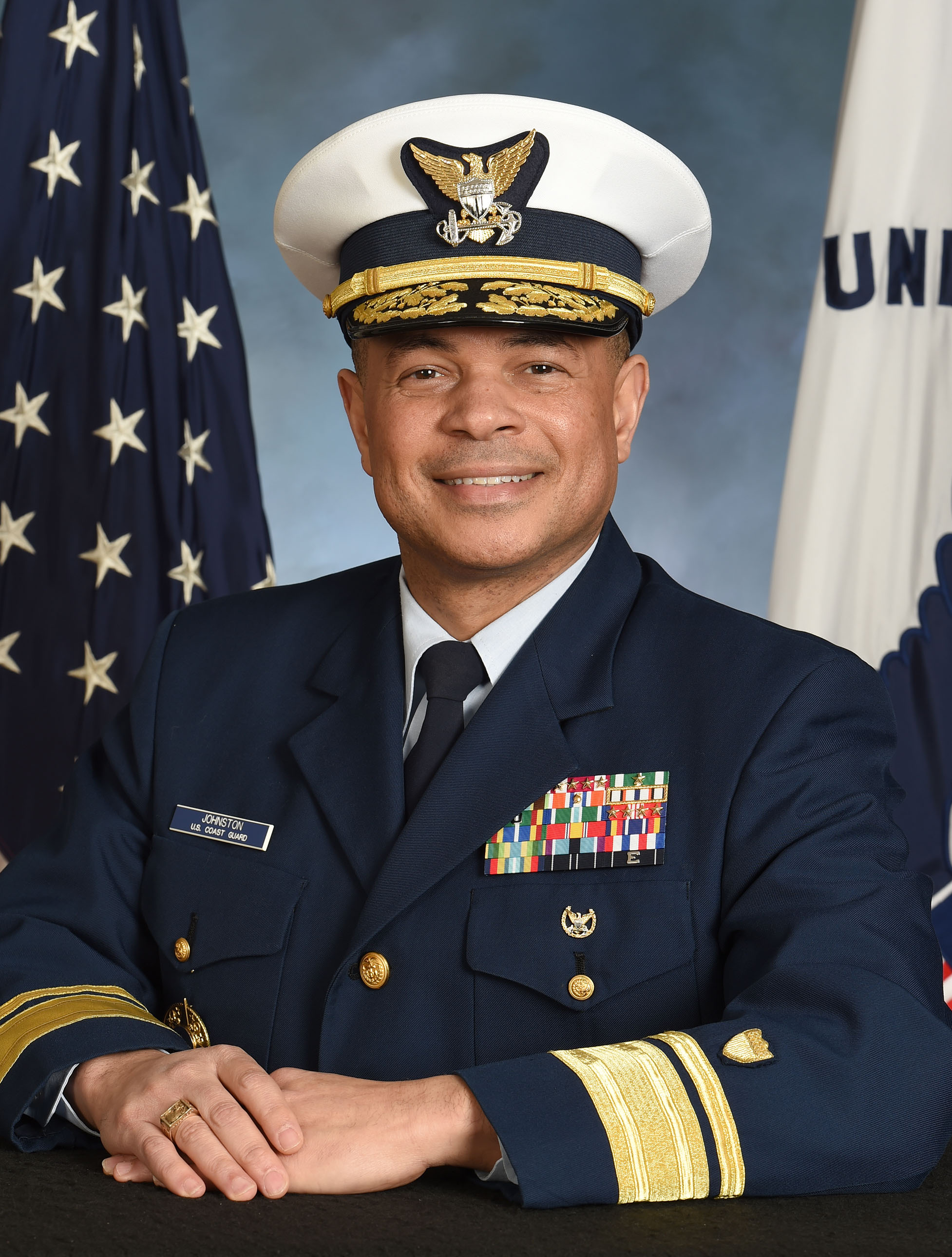
Rear Adm. Mike J. Johnston, Assistant Commandant for Acquisition

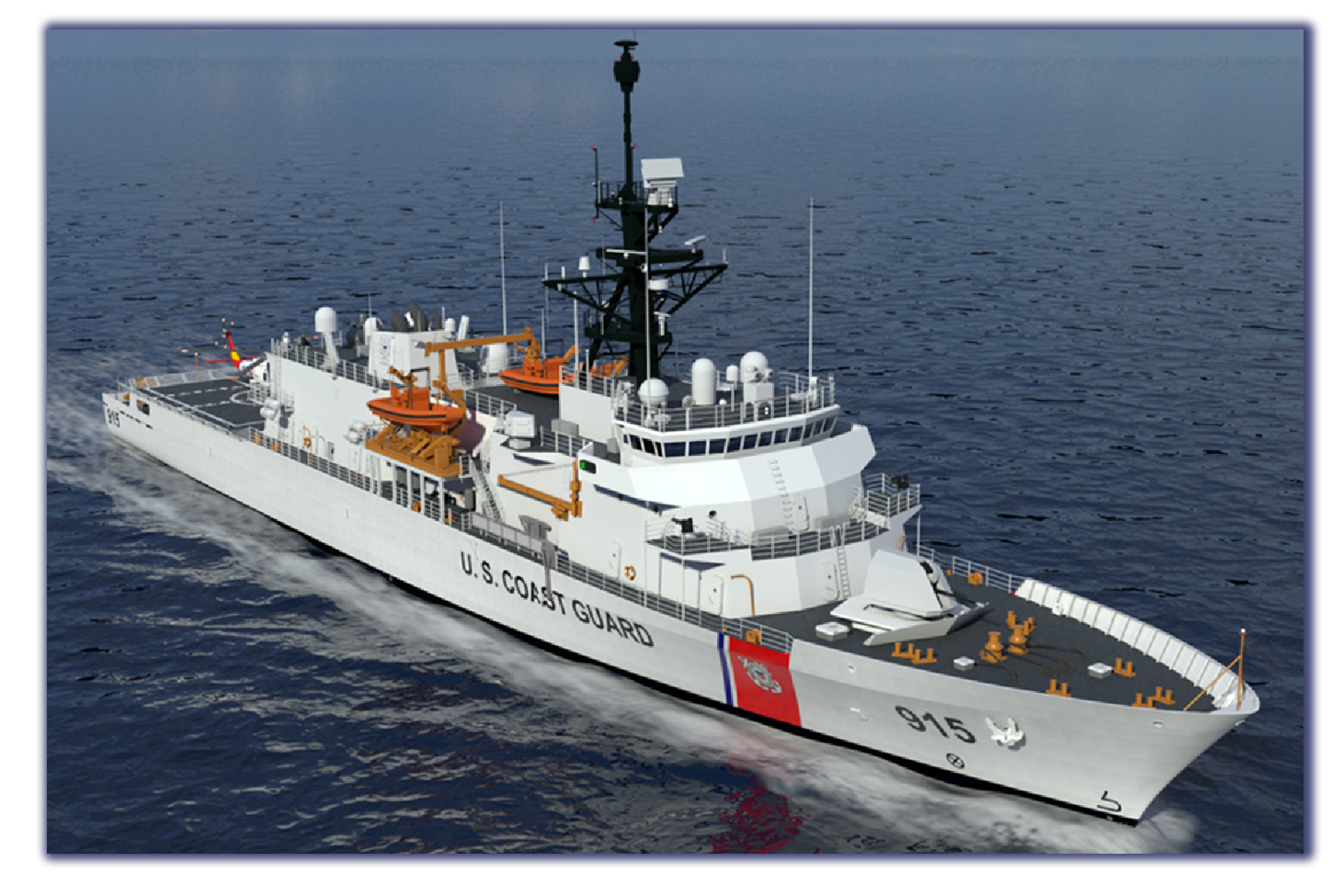
Offshore Patrol Cutter:

Rear Adm. Johnston noted that the Eastern built OPCs are back on schedule.

“Hull No. 1 of the planned 25-ship fleet is under construction and on track to be delivered to the Coast Guard in 2022. It will take about 20 years to build out the fleet.”

That 20 year figure is just way to long. The program was about 20 years late getting started, and now the rate of construction has been further reduced by the need to recompete the contract.

From the Congressional Research Service:

“Responses to the RFP are due by May 28, 2021. The Coast Guard plans to award the Stage 2 contract in the second quarter of FY2022….

“Notional Construction Schedule and Resulting Ages of Ships Being Replaced
“The posting for the RFP for the Stage 2 industry studies included an attached notional timeline for building the 25 OPCs. Under the timeline, OPCs 1 through 7 (i.e., OPCs 1-4, to be built by ESG, plus OPCs 5-7, which are the first three OPCs to be built by the winner of the Stage 2 competition) are to be built at a rate of one per year, with OPC-1 completing construction in FY2022 and OPC-7 completing construction in FY2028. The remaining 18 OPCs (i.e., OPCs 8 through 25) are to be built at a rate of two per year, with OPC-8 completing construction in FY2029 and OPC-25 completing construction in FY2038.

“Using these dates—which are generally 10 months to about two years later than they would have been under the Coast Guard’s previous (i.e., pre-October 11, 2019) timeline for the OPC program34—the Coast Guard’s 14 Reliance-class 210-foot medium-endurance cutters would be replaced when they would be (if still in service) about 54 to 67 years old, and the  Coast Guard’s 13 Famous-class 270-foot medium-endurance cutters would be replaced when they would be (if
still in service) about 42 to 52 years old.”

We should be replacing 270s now and the 210s should have been passed to other coast guards or navies through the Foreign Military Sales Program beginning a couple of decades ago. Once the design is proven, we need to increase the production rate to more than the planned maximum of two ships a year. That might mean awarding contracts to two yards rather than just one.

Icebreakers: 

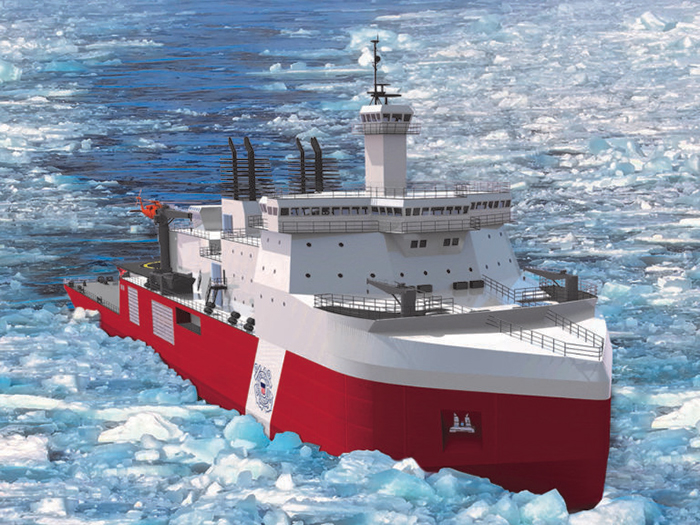
USCG Polar Security Cutter [Image: Halter Marine / Technology Associates, Inc.]

The Commandant put a floor on the requirement.

“Coast Guard Commandant Adm. Karl Schultz said at the same conference that the service needs “a minimum” of six.”

There was also discussion of the future Arctic Security Cutter.

“Meanwhile, the Coast Guard is in the pre-acquisition stage of developing a new ship it is calling the Arctic Security Cutter, which will also be designed to operate in cold climates and serve as a medium-sized icebreaker, Johnston said.

Previously the target had been three heavy icebreakers and three medium icebreakers, but that view seems to be changing.

“Schultz said he would like to have six icebreakers and three of the smaller Arctic Security Cutters for a total of nine ships.”

Note the Commandant called the Polar Security Cutters icebreakers, but not the Arctic Security Cutters. Seems what they will be is still being formulated, and they will not be simply medium icebreakers. I expect what we will see, is something conceptually akin to the Canadian Arctic Offshore Patrol Ship (AOPS), with space for containerized mission modules, vehicles (including unmanned surface and sub-surface), and extra accommodations, but more powerful, better armed (more like and OPC), and hopefully faster than 17 knots.

Waterways Commerce Cutters: 

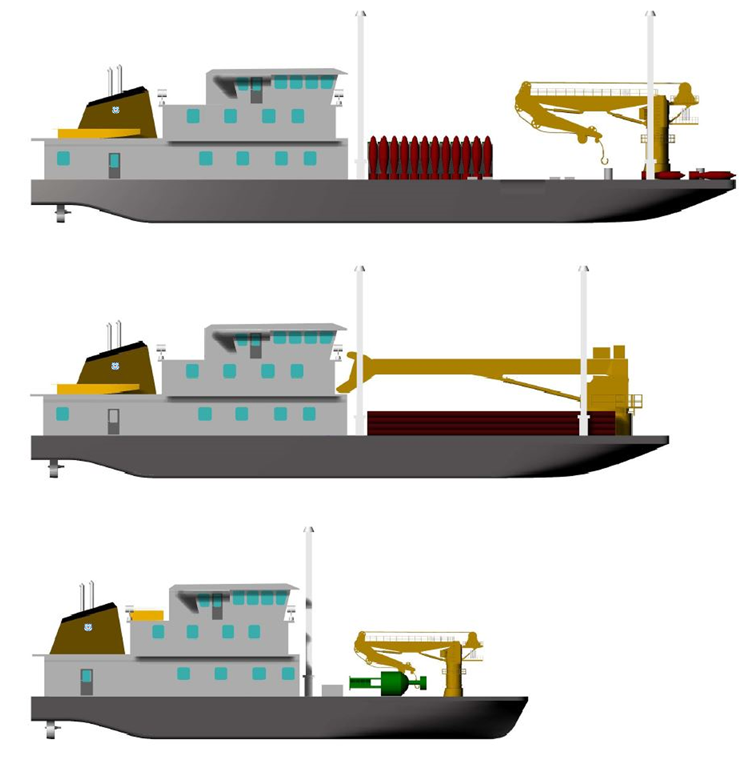
Shown above are Coast Guard indicative designs of a river buoy tender, inland construction tender and inland buoy tender.

It looks like the final number of WCCs is firming up. There are currently 35 such tenders, 18 River {Tenders (WLR), 13 Construction Tenders (WLIC), and 4 Inland Buoy Tenders (WLI) in nine classes with an average age of 56 years.

“A request for proposals to replace the 35 legacy tenders should be out in March, Johnston said. The service is looking at three monohull variants.

“The Coast Guard plans to acquire 16 river buoy tenders, 11 inland construction tenders and three inland buoy tenders.”

Changing Manpower: 

Masked members of the cutter James crew and Commandant Adm. Karl L. Schultz (front, center), along with interagency partners, stand among interdicted narcotics at Port Everglades, Florida, on June 9. U.S. COAST GUARD / Petty Officer 3rd Class Brandon Murray

The most numerous classes, OPCs and particularly the FRCs, will require more crewmen than the WMECs and WPBs they replace and the total number of cutters will be up.

The multi-mission Fast Response Cutters are just “one tool,” Schultz said. “They complement our 11 National Security Cutters as well as our forthcoming 25 Offshore Patrol Cutters. Add to that [up to] three new Polar Security Cutters, and you have a fleet of 103 highly capable U.S. Coast Guard cutters,” he said.

That will add 2,000 more sea-going billets for the service’s personnel needs, he noted.

Plus perhaps three more PSCs and three ASCs, this should increase the percentage of cuttermen in the service.


Update, “Coast Guard Waterways Commerce Cutter (WCC) Program: Background and Issues for Congress” –CRS

Shown above are Coast Guard indicative designs of a river buoy tender WLR), inland construction tender (WLIC), and inland buoy tender (WLI).

The Congressional Research Service has updated their two page explanation of the Waterways Commerce Cutter (WCC) program on Feb. 11, 2021.

Some highlights:

  • Three classes, WLR, WLIC, and WLI, will replace 18 WLRs, 13 WLICs, and 4 WLIs in nine classes with an average age of 56 years.
  • Single construction contract for WLRs and WLICs expected to be funded in FY2022. Separate contract later for WLIs. Final numbers not yet decided.
  • First to enter service 2025
  • All WCC vessels to be delivered by 2030.

“GA-ASI Plans to Demonstrate Maritime Capability in the United Kingdom” —

MQ-9B Seaguardian during the maritime capabilities demonstration flight over Southern California waters in September 2020. GA-ASI picture.

The Navy League’s on line magazine, Seapower reports that,

“General Atomics Aeronautical Systems Inc. (GA‑ASI) plans to take a company-owned SkyGuardian remotely piloted aircraft to the United Kingdom later this year to undertake a series of operational capability demonstrations for NATO allies, including The Netherlands, the company said in a Feb. 3 release. The U.K.’s Protector program is a derivative of SkyGuardian with a range of U.K. modifications and the Royal Air Force (RAF) is supporting this visit.”

This system is quickly becoming the go-to solution for Maritime Domain Awareness. It is an obvious solution for the Coast Guard’s MDA requirement. The requirement for land based long endurance UAS goes back at least to the Deepwater Program begun in the 1990s. It looks like a Coast Guard version of the Global Hawk may have been identified as a likely solution as early as 2002. Congress has been pushing the Coast Guard to start using land based UAVs.

There might be a question if this would duplicate the Navy’s Broad Area Maritime Surveillance (BAMS) program and its MQ-4C, but it is almost certain the Navy system will never provide all the information the Coast Guard needs. Their priorities are different, for instance, there are no plans for the Navy to base MQ-4Cs in Alaska.

In 2018 the CG-9 reported  “The Coast Guard on March 26 released a draft solicitation for long range/ultra-long endurance (LR/U-LE) unmanned aircraft system (UAS) technology demonstration and flight services requirements. Industry is invited to submit questions, comments and feedback on draft items including the statement of work, proposal requirements and evaluation methodology.” I don’t know what came of that, but there have been several demonstrations since.

CG-9 currently says,

“The Coast Guard has validated a mission need for land-based UAS to significantly enhance ocean surveillance in support of the service’s operations. Coast Guard land-based UAS flight crews are jointly operating maritime-variant Predator UAS (Guardian) on maritime missions with Customs and Border Protection to enhance the Coast Guard’s understanding of potential land-based UAS solutions and support the development of a land-based UAS requirements package.”

It is time to include land based UAS in the Coast Guard budget request. We can start small and grow the capability, but it is time to start. The answer might not be the MQ-9B, but answers are out there.

Somehow I managed to publish this prematurely so this is an updated version. 

“Commandant and Master Chief Petty Officer of the Coast Guard Statement on Extremism” –MyCG

The following from the MyCG web site.
As members of the Coast Guard, we have all voluntarily sworn an oath to support and defend the Constitution, and we share a commitment to our Core Values of Honor, Respect, and Devotion to Duty. We protect the homeland, we advance economic prosperity and other national interests, and when mariners in distress call for help, we proudly and professionally respond without hesitation. We answer the call because it is our duty. It is also our duty to respect those we serve with and we betray this duty if we allow bigotry, racism, or hate to infect our culture and service to America. In a Coast Guard anchored to dignity and respect, there is no place for extremism. Extremism goes against the fundamental principles of the Constitutional oath we share and our Core Values, tears away at unit cohesion, and degrades readiness and mission success.

The rights of freedom of speech and assembly are vitally important but are not unlimited. The Coast Guard will not tolerate extremism of any type. Speech or conduct that advances, encourages or advocates criminal activity, violence, illegal use of force, and efforts to deprive individuals of their civil rights, or any form of harassment or unlawful discrimination based on race, creed, color, sex, including gender identity and sexual orientation, religion, ethnicity, or national origin, among other personal characteristics, will not be tolerated. This applies equally to on-line speech. None of us can be indifferent to extremism.

Military members are subject to discipline and punishment under the Uniform Code of Military Justice if they actively support extremist causes by raising funds, recruiting or training others, taking a visible leadership role, or distributing literature or materials which undermine loyalty to the Constitution, interfere with the performance of duties, threaten discipline, or bring discredit upon the Service. Military members cannot participate in demonstrations or rallies in many circumstances, particularly when the event is a breach of law and order or is likely to result in violence. COMDTINST M1600.2, Discipline and Conduct, provides additional information and guidance. Civilian employees are subject to discipline for conduct that impairs the efficiency of the Federal Service. This may include criminal conduct in or away from the workplace, and other inappropriate conduct in the workplace.

Aligned with recent guidance issued by the Secretary of Defense, we are directing that a service-wide stand-down to confront extremism in the military occur at each unit before 31 March 2021. I expect commanders and supervisors to talk with their crews about this destructive cancer, to lead intrusively, and act when they encounter any indicators of extremism in our ranks. More specific guidance and expectations regarding this stand-down is forthcoming.

As your Commandant and Master Chief Petty Officer of the Coast Guard, we are dedicated to ensuring our Service supports and defends the ideals and institutions created and guaranteed by the Constitution, and that we foster a Service free from hatred, intolerance and extremism. Beyond being an Armed Force, as members of a federal Law Enforcement Agency, we have a special obligation to each other and the citizens whom we serve.

Jason M. Vanderhaden
Master Chief Petty Officer of the Coast Guard

Karl L. Schultz
Admiral, U.S. Coast Guard Commandant

“A homage to sea duty in the Coast Guard – Successes, challenges, and being underway” –MyCG

This from the MyCG website. (Perhaps noteworthy, maybe because the interviewer was a woman, but most of the interviewees were women.)


A homage to sea duty in the Coast Guard – Successes, challenges, and being underway

By Shana Brouder, MyCG Writer

As a sea service, we celebrate the perseverance of our shipmates who serve in the cutter community. While many industries went dark or slowed in response to COVID-19, the missions of the afloat community have continued to protect our Nation’s interests, deterring threats around the globe and in an especially complex maritime environment.

This growing demand has continued amid the COVID-19 global pandemic, where cutter crews are experiencing pre-deployment restrictions of movement, a reduction in liberty port calls, and extended time underway, away from loved ones.

The Coast Guard has increased compensation as they address urgent challenges for the sea-going workforce, while also looking for new ways to thank our members for continuing the traditions of the service. This past year, the Coast Guard increased internet connectivity speeds underway and arranged for wifi internet connectivity inport for deployed cutters, which enable reliable communication with friends and families.

Despite the challenges the pandemic presented, Coast Guard ships interdicted either a go-fast boat or a semi-submersible boat on a near daily basis, sending boarding teams to confiscate contraband and apprehend suspected smugglers. Cutter crews across the enterprise have seen some of the greatest successes in 2020. Crews surged to support an enhanced counter-narcotics operation resulting in a 37% increase in cocaine and other drugs interdicted between April and September of last year.

What is it that keeps our members returning to sea? After interviewing several junior officers, and one commanding officer, three central tenants of sea duty were named: the adventurous nature of the mission, the simple beauty of the sea, and—most importantly—the people.

“Every day on the water presents a new challenge that I’m excited to overcome,” said Lt. j.g. Ryan Brumm, supply officer aboard Coast Guard Cutter Alert, a Medium Endurance Cutter.

Lt. j.g. Matthew Nagle aboard Coast Guard Cutter Munro, a National Security Cutter, discussed excitedly watching aerial footage of the small boats underway from a small unmanned aircraft with his shipmates. “Seeing the live-action video after six months of hard work preparing and testing the hardware was incredible.”

Brumm’s shipmate aboard the Alert, Ensign Erin Mullen, also loves the missions underway. A self-proclaimed ocean nerd, Mullen also discussed her love of nature as a reason she plans to keep returning to sea. “Being on the bridge, seeing thousands of stars reflecting off that calm ocean,” said Mullen. “It really takes your breath away.”

The number one reason given, however, for enjoying sea duty was the friendships formed, “It seems cliché to say,” said Lt. j.g. Brooke Harkrader, assistant navigator aboard the Coast Guard Cutter Munro, “but the reason I love sea duty is because of the people.”

Cuttermen discussed the atmosphere aboard cutters—the comradery found afloat—as a reason they keep returning. As Lt. Cmdr. Laura Foster, commanding officer of the Coast Guard Cutter William Hart, a Fast Response Cutter, puts it: “The reason I’ve gone back to sea so many times is because of the family atmosphere aboard. The comradery among shipmates is unbelievable. I’ve never found it anywhere else.”

Ensign Kimberly Bryon, aboard the Coast Guard Cutter Munro, described her favorite memory underway during an otherwise difficult year, “We were at a port call in Alaska, and because of COVID we decided to stop at these uninhabited islands,” said Bryon. “I and three others spent the day shuttling people to and from the islands. While we didn’t get to go hiking ourselves, I had the absolute best time with the small crew I was working with. The comradery I felt with them was something I really can’t describe.”

While members speak openly of their love of sea duty, there is no doubt life afloat is challenging. “Being underway is the hardest thing you’ll ever do, but it is hands down the most rewarding work,” said Harkrader who, despite struggling with occasional seasickness, plans to stay afloat as long as possible.

Sea duty inconveniences are not insignificant. Like many in the Coast Guard, Foster has to spend prolonged periods of time away from her family. In her most recent trip, she was underway for 144 days. While it can be difficult, Foster doesn’t shy away from the challenge. “I feel honored to be able to take this job, and show other females that it is possible to rise to the position you want, and have a family,” she said.

Pandemic operating conditions have presented challenges to our members afloat, further complicated by social distancing measures advised by the Center for Disease Control (CDC) are not always possible. Those aboard the Munro, for example, faced extra hardships when 19 members from their crew tested positive for COVID-19 prior to going underway. “Everyone’s morale suffers when the workload increases so much,” said Hakrader.

Harkrader, Nagle, and Bryon both applauded the efforts commanding officers took aboard the Munro to keep things underway. The cutter was able to keep operating in a COVID-safe and smart environment, working to push through modified conditions, completing a mission through the waters of Alaska not usually completed by the crew.

Taking into account the challenges posed by the pandemic compounded already demanding life afloat make the successes these crews saw this year nothing short of extraordinary. A short sample of successes cutter forces saw this year, as detailed in Sea Duty Readiness ALCOAST 016/21.

While going to sea may not always be the easiest choice, being underway is a rewarding experience with benefits not found with other duties. “The goodbyes never get easier,” said Foster. “But the hugs you get when you return home never get old.” The Coast Guard is thankful to have members with a passion for sea duty, who see their work as so much more than just a job.

Coast Guard Cutter Successes in 2020:

  • Coast Guard Cutter Tahoma, a Medium Endurance Cutter, participated in Operation Nanook with Canadian, Danish, and U.S. Navy Forces.
  • Coast Guard Cutter Campbell, a Medium Endurance Cutter, participated in the high-latitude Search-and-Rescue Exercise Argus off Greenland, operating alongside Canadian, Danish, and French Naval Forces.
  • Coast Guard Cutter Cheyenne, a river buoy tender, responded to record high flooding on the Mississippi River.
  • Coast Guard Cutter Axe, a construction tender, responded to multiple Gulf Coast hurricanes, that, alongside other black hull cutters, surveyed, serviced, and corrected thousands of aids to navigation, restoring the smooth flow of efficient maritime commerce.
  • Coast Guard Cutter Kimball, a National Security Cutter, recently supported Pacific Island nations in building organic capability and law enforcement expertise to combat illegal, unreported, and unregulated (IUU) fishing.
  • Coast Guard Cutter Oliver Berry, a Fast Response Cutter, just returned to its homeport in Hawaii supporting the Pacific Island Forum Fisheries Agency, a collaborative international organization to promote sustainable fisheries. The cutter traveled nearly 10,000 miles round-trip to strengthen maritime domain awareness within the exclusive economic zone of both the Republic of the Marshall Islands and Federated States of Micronesia.
  • Coast Guard Cutter Bertholf, a National Security Cutter, used its ScanEagle unmanned-aerial system to surveil a group of 350 Chinese fishing vessels and make right-of-approach inquiries near the Galapagos Islands, at the request of Ecuador. They identified 15 potential IUU indicators of that particular fleet.
  • Coast Guard Cutter Bear, a Medium Endurance Cutter, deployed to Cabo Verde and increased partnerships with a key U.S. ally at the request of our National Security Council, on extremely short notice.
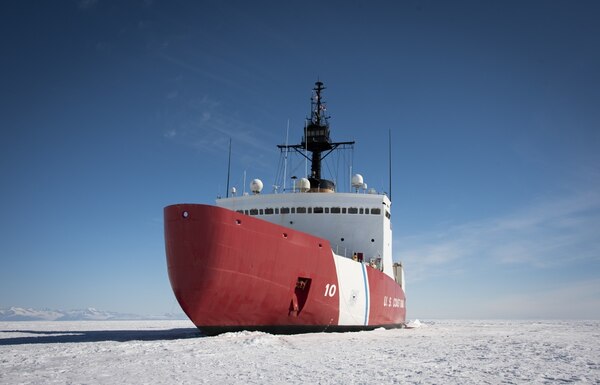
  • Coast Guard Cutter Polar Star, a Polar-class icebreaker, sailed for the first time in several years to the U.S. Arctic to project U.S. sovereignty.