“Ukraine’s New Maritime Drone Is A Jet Ski” –Covert Shores

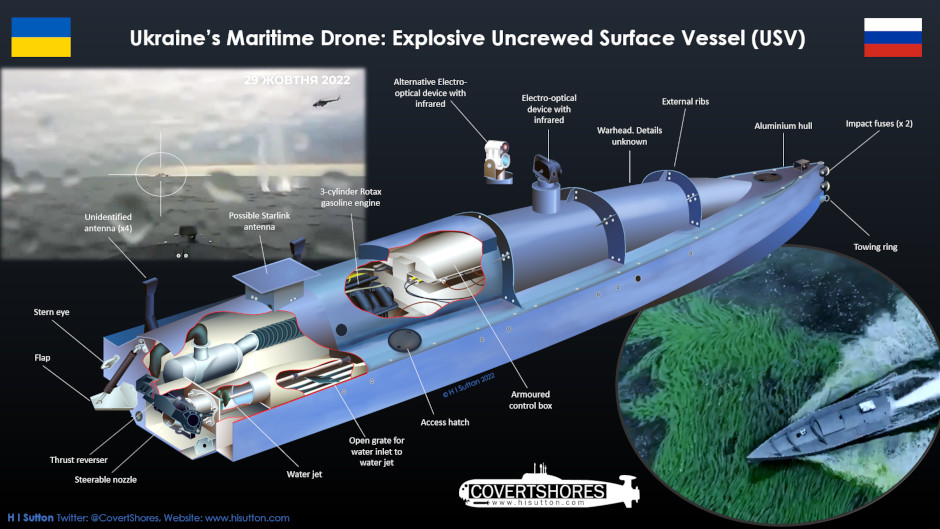
Click to enlarge. Photo credit: hisutton.com

Covert Shores reports,

Both Ukraine and Russia have developed ‘maritime drones’ (USVs – uncrewed surface vessels) with explosive charges. These one-way attack USVs, aka ‘kamikaze’ drones, have been used to attack ships and bridges. The initial design, first seen in September 2022, already employed jet ski parts. However the hull was bespoke. This latest USV is a minimally modified commercial jet ski.

Based on the blurred imagery, the jet ski used appears to be a Kawasaki STX type. The seats, handlebars and some unnecessary casings have been stripped off. Then some communication and control devices have been added.

This seems to show how easy it would be for terrorists to field an offensive unmanned surface kamikaze drone.

UNITAS 2023

I had expected that at least some Coast Guard units would participate in UNITAS 2023, July 11-21, given the Coast Guard’s prominent role in 4th Fleet, but I find no mention of CG participation.

Also bit disappointed we don’t have a listing of non-US units participating too.

Below is SOUTHCOM’s summary of the event. The incorporation of unmanned systems should have been very interesting.


Overview

UNITAS is an annual exercise conducted in Atlantic and Pacific waters around Central and South America. UNITAS LXIV included maritime and amphibious phases and, for the first time ever, included integrated operations of unmanned systems in the exercise. The exercise was held July 11-21, 2023, in Colombia.

The exercise develops and sustains relationships that increase the capacity of our emerging and enduring partners’ maritime forces to achieve common desired effects.

Training Scenarios

UNITAS’ challenging training addresses key aspects of multinational and combined operations such as technology standardization and common operating procedures. Training included scenarios addressing electronic warfare, anti-air warfare and air defense, anti-surface warfare, live fire, maritime interdiction, littoral operations, and amphibious operations.

UNITAS LXIV consisted of two concurrent phases: at sea and amphibious. The maritime domain included the littorals which incorporates not only the ocean, but also the area inland from the shore that can be supported and defended directly from the sea. The majority of the amphibious training took place along the coast where marines and naval infantry trained in support of greater naval operations. The amphibious phase consisted of riverine operations and culminated in a landing from naval vessels.

Unmanned Systems training: In April the Secretary of the Navy and the Chief of Naval Operations announced that the Navy will scale unmanned systems to the fleet level by operationalizing unmanned systems in the U.S. 4th Fleet area of operations. Specific to UNITAS LXIV, the Navy deployed and exercised several unmanned systems to enhance maritime domain awareness, conduct battle damage assessment in support of the UNITAS LXIV live-fire sink exercise, or SINKEX, and integrate unmanned system operations with partner nation navies. The deployment of multiple unmanned systems is new to UNITAS but will become the standard as NAVSOUTH/4th Fleet takes lessons learned to inform the Navy’s hybrid fleet coming in the next decade. Additionally, the U.S. Marine Corps employed unmanned systems in support of its Force Design 2030 concept and will refine tactics, techniques, and procedures (TTPs) to inform the service on operational employment.

Women, Peace and Security Symposium: UNITAS LXIV featured a forum on the topic of women, peace and security. The forum is part of a global effort to support the contributions of women in the defense and security sectors around the world. The program is a cornerstone to SOUTHCOM’s mission of promoting security partnerships across the Western Hemisphere.

Participating Countries

UNITAS LXIV featured 20 participating countries: Belize, Brazil, Canada, Chile, Colombia, Dominican Republic, Ecuador, France, Germany, Honduras, Jamaica, Mexico, Panama, Paraguay, Peru, Spain, South Korea, United Kingdom, Uruguay, and the United States.

Participating U.S. Forces

  • USS New York (LPD 21)
  • USS Cole (DDG 67)
  • USS Little Rock (LCS 9)
  • USS Pasadena (SSN 752)
  • USNS Burlington (T-EPF 10)
  • Patrol Squadron Five (VP 5)
  • Mobile Diving and Salvage Unit (MDSU) 2
  • Explosive Ordnance Disposal Mobile Unit (EOD) 612
  • Mine Countermeasures Group 3 (MCMGRU 3)
  • Expeditionary Mine Countermeasures EOD Company 61 (EODMU 61)
  • Helicopter Sea Combat Squadron 22 (HSC 22)
  • Helicopter Maritime Strike Squadron 70 Detachment 2 (HSM 70 Det 2)
  • Joint Communications Support Element (JCSE)
  • Fleet Surgical Team (FST) Eight
  • Meteorological Environmental Team (MET)
  • 3rd Battalion, 23rd Marine Regiment (3/23)
  • 4th Amphibious Assault Battalion (4th AABn)
  • 8th Combat Logistic Battalion (CLB 8)
  • 4th Combat Engineer Battalion (4th CEB)
  • Marine Medium Tiltrotor Squadron 774 (VMM 774)
  • Marine Light Helicopter Attack Squadron 775 (HMLA 775)
  • Marine Aerial Refueler Transport Squadron 234 (VMGR-234)
  • Marine Aircraft Control Group – 48 (MACG-48)
  • Marine Fighter Attack Squadron 112 (VMFA-112)
  • Commander, Destroyer Squadron 40 (COMDESRON 40)
  • Commander, Amphibious Squadron Four (COMPHIBRON FOUR)
  • U.S Marine Corps Forces South (MARFORSOUTH)
  • Special Operations Command South (SOCSOUTH)
  • U.S. Naval Forces Southern Command/U.S. 4th Fleet
  • U.S. Southern Command (USSOUTHCOM)

Background

UNITAS I took place in 1960 with forces from Argentina, Brazil, Chile, Colombia, Ecuador, Peru, Uruguay, the United States, and Venezuela. This year marks the 64th iteration of the world’s longest-running annual multinational maritime exercise. Additionally, this year Colombia celebrated the bicentennial of its navy, a historical milestone commemorating 200 years of the country’s maritime forces.

“US Navy ‘operationalizes’ drones in 4th Fleet’s UNITAS event” –Defense News

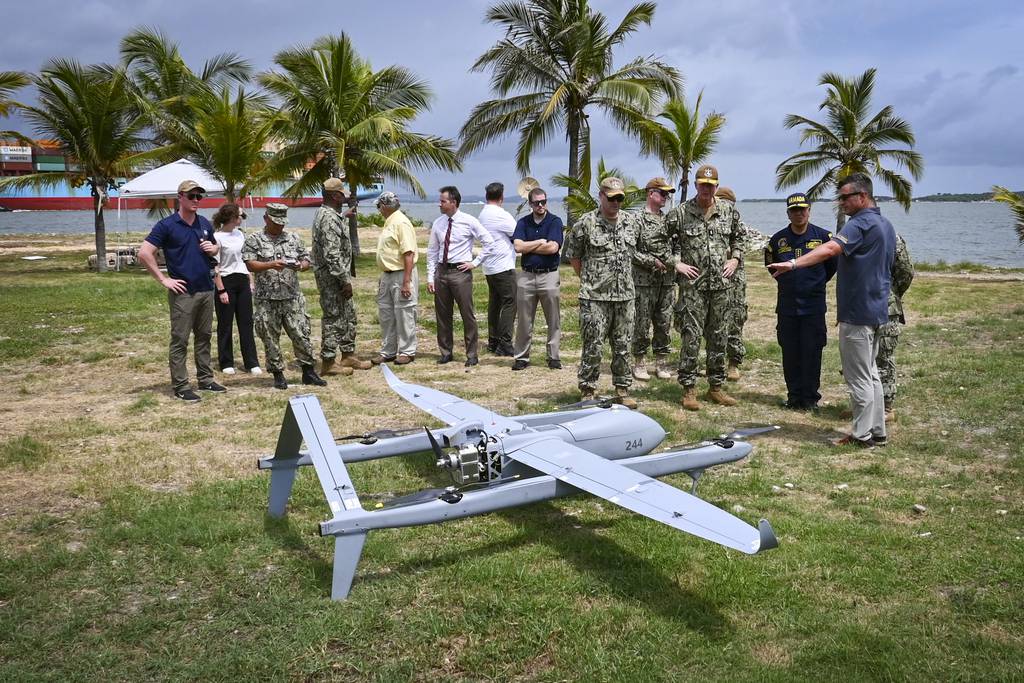
Personnel from the U.S. and Colombian navies attend a demonstration of Aerosonde MK4.7 Hybrid Quad drone during UNITAS on July 16, 2023. (MC1 Hunter Harwell/U.S. Navy)

Defense News reports,

“The U.S. Navy leveraged air and surface drones throughout its two-week UNITAS 2023 naval exercise near Latin America, the first major event since service leadership announced the region would host the sea service’s second unmanned operations hub.”

The Coast Guard certainly has an interest in 4th Fleet’s use of unmanned systems since their area of responsibility (AOR) includes the Eastern Pacific drug transit zones and the Caribbean.

Apparently, not all the systems are in place yet.

“Some of the same systems will return this fall for operations and exercises in the Caribbean and Eastern Pacific Ocean, he added.”

Importantly 4 Fleet is developing a “mesh network that compiles a detailed common operating picture of the region — then AI tools could help flag areas where potentially problematic activities are happening.”

Hopefully we will see video of the SINKEX as recorded by the UAS.

“UNITAS LXIV to begin in Colombia” –USNAVSOUTH/4TH FLEET PUBLIC AFFAIRS

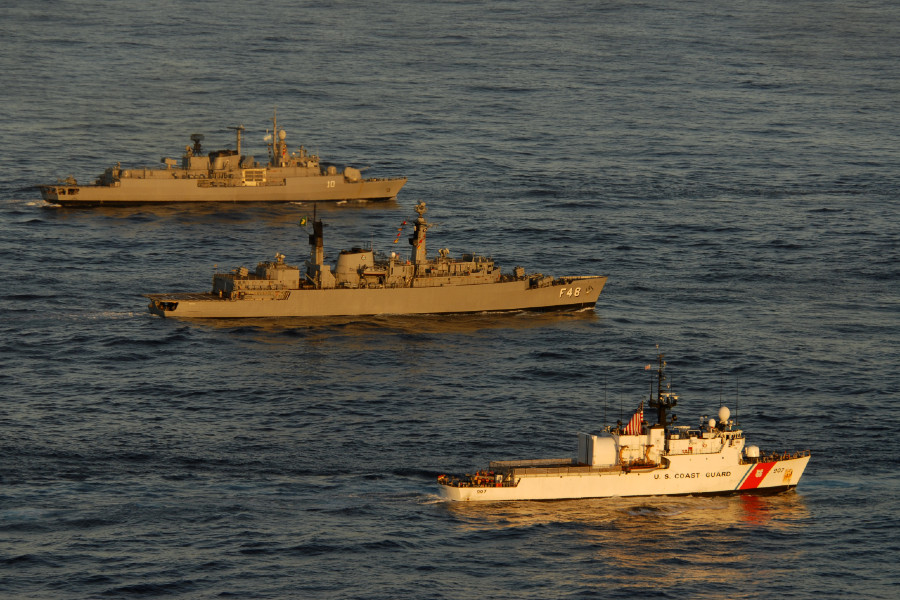
The US Coast Guard cutter USCGC Escanaba (WMEC 907), Brazlian Navy ship BNS Bosisio (F 48) and Argentinian navy ship ARA Almirante Brown (D-10) move into formation for a photo exercise during the Atlantic phase of UNITAS 52 on May 4, 2011. The formation included a total of ten ships from the US, Brazil, Mexico and Argentina. (Photo: US Navy/Mass Communication Specialist 1st Class Steve Smith)

Below is a news release announcing the start of exercise UNITAS LXIV (64 if you are not up on your Roman numerals). There is no mention of Coast Guard participation, but maybe they “simply forgot us.” Think we can bet there are some Coasties involved.

Britain’s Royal Navy also sent one of their highly regarded destroyers, HMS Dauntless.

With 26 surface vessels and three submarines participating, I think this is larger than most of the recent UNITAS exercises. In 2022 it was 19 ships, one submarine, 21 aircraft, accounting for approximately 5,500 total military personnel.

This year will see an attempt at large scale integration of unmanned systems into the exercise by 4th Fleet.


July 11, 2023

UNITAS LXIV to begin in Colombia

By USNAVSOUTH/4TH FLEET PUBLIC AFFAIRS

– U.S. Navy and Marine forces are set to arrive in Cartagena in support of UNITAS LXIV, the world’s longest-running multinational maritime exercise in the world, scheduled to start July 11, 2023.

The Colombian navy will host this year’s UNITAS, which will feature 26 warships/vessels, three submarines, 25 aircraft (fixed wing/helicopter), and approximately 7,000 people from 20 partner nations. Forces will conduct training operations off the coast of Cartagena, Colombia, and ashore in Covenas and Barranquilla, Colombia, through July 21. This year marks the 64th iteration of the exercise. Additionally, this year Colombia will celebrate the bicentennial of its navy, a historical milestone commemorating 200 years of the country’s maritime forces.

“UNITAS is so much more than a two week exercise. All participating nations have given much time, energy and effort into the months of planning leading up to what will be one of the most complex UNITAS to date,” said Rear Admiral Jim Aiken, commander U.S. Naval Forces Southern Command/U.S. 4th Fleet. “Utilizing air, surface, sub-surface, and unmanned assets, and land units, UNITAS will provide the multinational force a challenging environment in which to conduct training across the full spectrum of maritime operations. UNITAS strengthens maritime partnerships, enhances proficiency and improves interoperability of the participating forces, which is why so many partner nations are taking part this year.”

As part of the U.S. Navy’s future hybrid fleet, the Chief of Naval Operations has tasked U.S. 4th Fleet to scale unmanned platforms to the fleet level. An addition to this year’s UNITAS will include the integrated operations of unmanned air, surface, and subsurface systems into the exercise. UNITAS’ challenging training address key aspects of multinational and combined operations such as technology standardization and common operating procedures.

“This is our first opportunity to integrate unmanned systems into our operations at sea,” said Rear Adm. Aiken. “UNITAS has often served as a test bed for technology, so it is appropriate that we begin our unmanned integration campaign to operationalize the hybrid fleet here in UNITAS.”

In addition to the United States, UNITAS LXIV will bring together 19 nations from all over the world to train forces in joint maritime operations that enhance tactical proficiency and increase interoperability. Participating nations include Belize, Brazil, Canada, Chile, Colombia, Dominican Republic, Ecuador, France, Germany, Honduras, Jamaica, Mexico, Panama, Peru, Paraguay, Spain, South Korea, United Kingdom, United States, and Uruguay.

Following the UNITAS LXIV Opening Ceremony on July 12, the in port phase of the exercise will feature subject matter expert exchanges, professional symposia, ship rider exchanges, and operations meetings. During this time, Marines and Sailors will conduct expeditionary training events in Covenas to include riverine operations and diving and salvage operations.

During the UNITAS LXIV Underway Phase, forces will participate in events testing all warfare operations, to include live-fire exercises such as a SINKEX and an amphibious ship-to-shore landing and force retraction.

“Marines and Sailors from across the United States will travel to Colombia to not only train alongside our partner nations’ militaries, but to hone the skills required to operate as part of a larger maritime force focused on sea control and sea denial,” said Lt. Gen. David G. Bellon, commander, U.S. Marine Corps Forces, South, and U.S. Marine Corps Forces, Reserve. “We will be exercising command and control from a forward position as Marines set up and employ Expeditionary Advanced Base Operations to enhance naval capabilities as part of UNITAS.”

U.S. forces participating in UNITAS LXIV include USS New York (LPD 21), USS Cole (DDG 67), USS Little Rock (LCS 9), USS Pasadena (SSN 752), and USNS Burlington (T-EPF 10). Other U.S. participants include Patrol Squadron Five (VP 5), Mobile Diving and Salvage Unit (MDSU) 2, Explosive Ordnance Disposal Mobile Unit (EOD) 612, Mine Countermeasures Group 3, (MCMGRU 3), Expeditionary Mine Countermeasures EOD Company 61 (EODMU 61), East-coast based Naval Special Warfare units, Helicopter Sea Combat Squadron 22 (HSC 22), Helicopter Maritime Strike Squadron 70 Detachment 2 (HSM 70 Det 2), Joint Communications Support Element (JCSE), Fleet Surgical Team (FST) Eight, and the Meteorological Environmental Team (MET). U.S. Marine forces include 3rd Battalion, 23rd Marine Regiment (3/23), 4th Amphibious Assault Battalion (4th AABn), 8th Combat Logistic Battalion (CLB 8), 4th Combat Engineer Battalion (4th CEB), Marine Medium Tiltrotor Squadron 774 (VMM 774), Marine Light Helicopter Attack Squadron 775 (HMLA 775), Marine Aerial Refueler Transport Squadron 234 (VMGR-234), Marine Aircraft Control Group – 48 (MACG-48), and Marine Fighter Attack Squadron 112 (VMFA-112). Finally, Commander, Destroyer Squadron 40, (COMDESRON 40), Commander, Amphibious Squadron Four (COMPHIBRON FOUR), U.S Marine Corps Forces South (MARFORSOUTH), Special Operations Command South (SOCSOUTH), USNAVSOUTH/FOURTHFLT, and U.S. Southern Command (USSOUTHCOM) are participating in UNITAS LXIV.

UNITAS, which is Latin for unity, united, or oneness, was conceived in 1959 during a previous era of strategic competition when representatives at the first Inter-American Naval Conference in Panama agreed to conduct an annual maritime exercise with one another. Prior to UNITAS I in 1960, U.S. Chief of Naval Operations Adm. Arleigh Burke reviewed preparations for the multinational exercise. He commended planners for their progress, especially in building compatible communication systems among navies, and predicted that UNITAS would build strong relationships among Sailors of the Western Hemisphere.

U.S. Naval Forces Southern Command/U.S. 4th Fleet supports U.S. Southern Command’s joint and combined military operations by employing maritime forces in cooperative maritime security operations to maintain access, enhance interoperability, and build enduring partnerships in order to enhance regional security and promote peace, stability and prosperity in the Caribbean, Central and South American region.

U.S. Marine Corps Forces, South is the Marine Corps component to U.S. Southern Command, is responsible for planning exercises, operations, and overall Marine Corps support for the SOUTHCOM assigned area of responsibility.

“Our Best Look Yet at the Marines’ New Loitering Munition Toting Drone Boat” –MSN

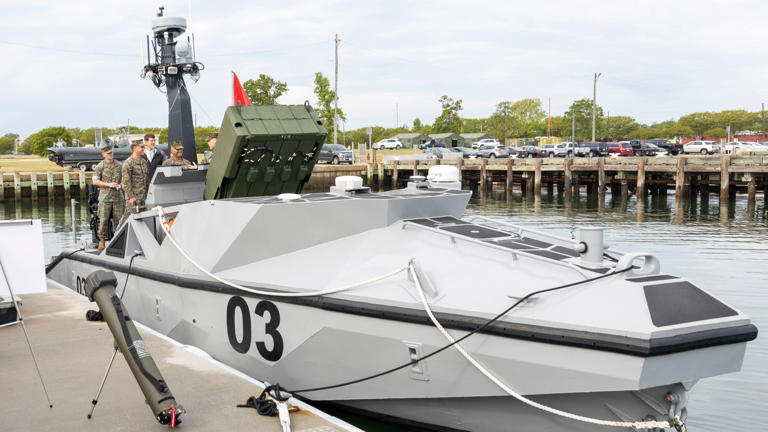
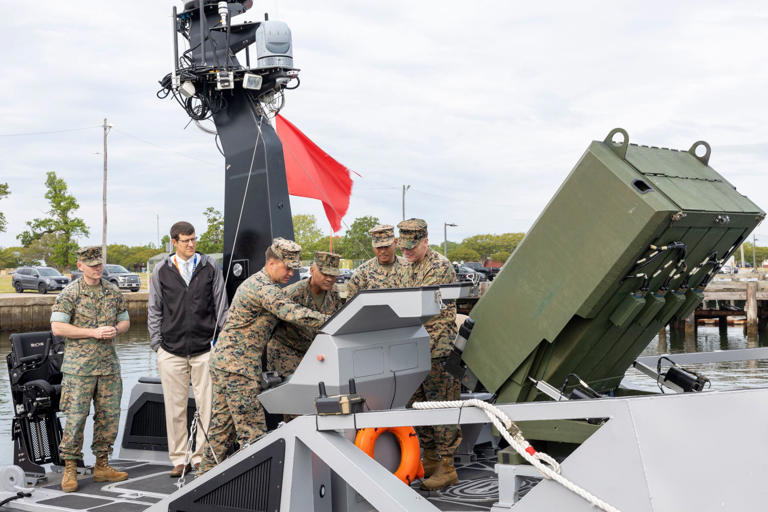
HERO 120 launcher on Long Range Unmanned Surface Vessel (LRUSV)

We talked about the HERO 120 loitering munition before. I noted it might be just what the Coast Guard needs to deal with the potential threat of small, fast, highly maneuverable craft.

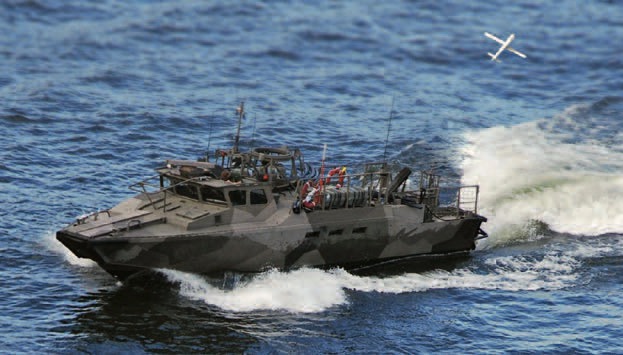
While man portable single round launchers are probably all Coast Guard units might need (other than perhaps Bahrain based PATFORSWA Webber class cutters), we now have photos of an eight-cell launcher mounted on a Metal Shark optionally manned 40-foot, Long Range Unmanned Surface Vessel (LRUSV).

The Hero 120 is the largest offering in UVision’s “tactical” line of loitering munitions, weighing around 27 and a half pounds, including a 10-pound warhead. It uses an electric motor to drive a propeller at the rear and has a maximum endurance of around 60 minutes.

U.S. Marine Corps Lt. Gen. Brian W. Cavanaugh, the commanding general of Fleet Marine Force, Atlantic, Marine Forces Command, Marine Forces Northern Command, and Marines with 3d Marine Littoral Regiment, 3rd Marine Division, examine the manual controls to the Long Range Unmanned Surface Vessel, Joint Expeditionary Base Little Creek-Fort Story, Virginia, April 27, 2023. A LRUSV is an optionally manned vessel capable of extended travel and transporting loitering munitions that accurately track and destroy targets on sea or land. Metal Shark is designing, building, testing and implementing the LRUSV system under another transaction authority agreement with Marine Corps Systems Command to primarily serve as an intelligence, surveillance, and reconnaissance platform.
© Provided by The Drive

While it looks increasingly likely this system will become common in the Navy/Marine Corps inventory, it is perhaps important to remember that this eight-round launcher is not necessary to launch these. Loaded single round launchers are small enough to be man portable and would impose no heavy loads on the platform at launch. Certainly, some training would be required, but they could be stored in a group, station, or ship’s armory and be issued when needed.

“Videos of Ukrainian drone boats swarming a Russian target end in explosion, mystery” –Task and Purpose

Task and Purpose brings us a report on an apparent drone attack on a Russian Electronic Intelligence ship, “Ivan Khurs,” including two videos, the second of which is reproduced above.

“Though there is no way to confirm the outcome of the attack — or even the legitimacy of either video — if the second boat triggered an explosion similar to the one seen in the first video, the Russian ship likely suffered serious damage.”

“Turkish “MIR” USV Test-Fires Torpedo For The First Time” –Naval News

MIR USV firing torpedo (Screenshot from SSB video)

Naval News reports,

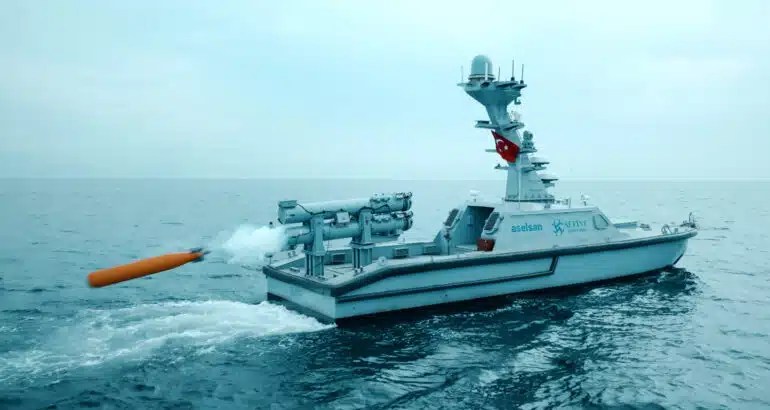
On April 18, 2023, the Turkish armed unmanned surface vessel (USV) “MIR” fired a light torpedo from a double torpedo tube at the stern of the ship. The test firing was the first torpedo launch from a Turkish USV.

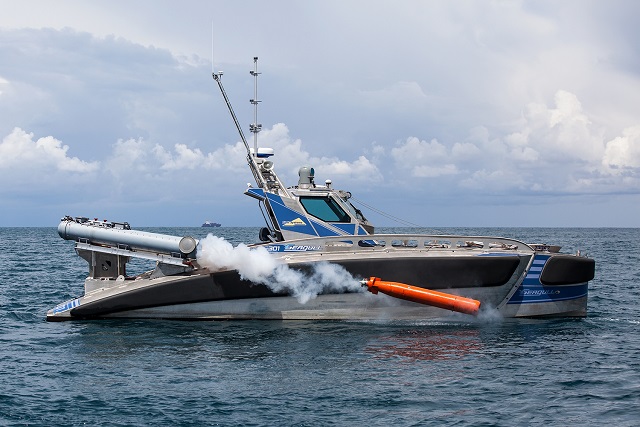
This is offered as an ASW system, but if you are a regular reader here, you know I had to show the photo to illustrate how even a very small vessel can launch light weight torpedoes. (Of course, we have had previous examples, see photos at the end of the post.)

This is important because the Coast Guard has an unaddressed Required Operational Capability implicit in its Ports, Waterways, and Coastal Security Mission, that the Coast Guard needs to be able to forcibly stop any vessel regardless of size. A lightweight torpedo that targets a ship’s propeller(s) seems to be the best solution for stopping larger vessels (hopefully without sinking it and causing a major pollution incident).

Existing lightweight ASW torpedoes, like those launched from the USV illustrated above, might do the job if they also have an anti-surface capability. Distribution to Coast Guard units might be thought of as a storage option for a war reserve, in that, while the Coast Guard would need to have them widely distributed, even in the worst case the Coast Guard would actually use very few.

The author notes,

“…submarines are unlikely to engage these small units because of the limited minimum depth of some torpedoes or the limited amount of torpedoes the submarines have loaded.”

But if USVs become a threat to submarines, it will not be long before there is a counter. In fact, the already existing 6.75″ diameter (171.45mm), 220 pound (100 kilos), Very Light Weight Torpedo that would not displace any existing submarine weapons might anticipate this need. This weapon system might meet the Coast Guard’s needs.

A Navy briefing slide showing the internal components and describing the various features of the PSU_ARL Common Very Light Weight Torpedo (CVLWT) design

Camera drone’s-eye view of IRGC boats on display, March 2023. A) The air defense boat. B) Light missile boat with Bladerunner hull. C) light missile boats on Interceptor hull. D) light missile boats on Interceptor hull (alternative design). E) Missile boat, with type of missile unclear. F) RIB, possibly explosive boat or uncrewed. G) RIB with lightweight anti-ship torpedoes, can be carried aboard a Shahid Soleimani-class missile corvette. H) Interceptor boat. I) Interceptor boat with new type of missile.

Elbit Systems’ Seagull unmanned surface vessel launching a lightweight torpedo. 

“Coast Guard signs strategic plan for unmanned systems” –MyCG

MyCG reports the completion of a Coast Guard UxS Strategic Plan,

“,,,the Coast Guard will find ways to use unmanned systems to improve our mission execution. Second, the Coast Guard will prepare to defend against threats from unlawful use of unmanned systems. Finally, the Coast Guard must establish and enforce a regulatory framework for the safe and lawful use of unmanned systems and automation in the Marine Transportation System.”

Using Unmanned air systems (UAS) and surface systems (USV) for increased Maritime Domain awareness is a no brainer.

Unmanned systems will certainly impact crewing requirements for the marine transportation system, with things like remote watch standers, market forces will make that happen.

The most challenging part of this will be “to defend against threats from unlawful use of unmanned systems.” This should include criminals, terrorists, and malevolent state actors.

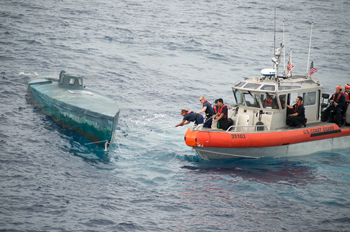
A team aboard Coast Guard Cutter Stratton’s long range interceptor-II cutter boat participates in the interdiction of a self-propelled semi-submersible vessel in the Eastern Pacific Ocean July 18, 2015. U.S. Coast Guard photo by Petty Officer 2nd Class LaNola Stone.

For criminals, shipping drugs without using crewmembers that might provide intelligence on their operations if captured, has to seem like a good idea.

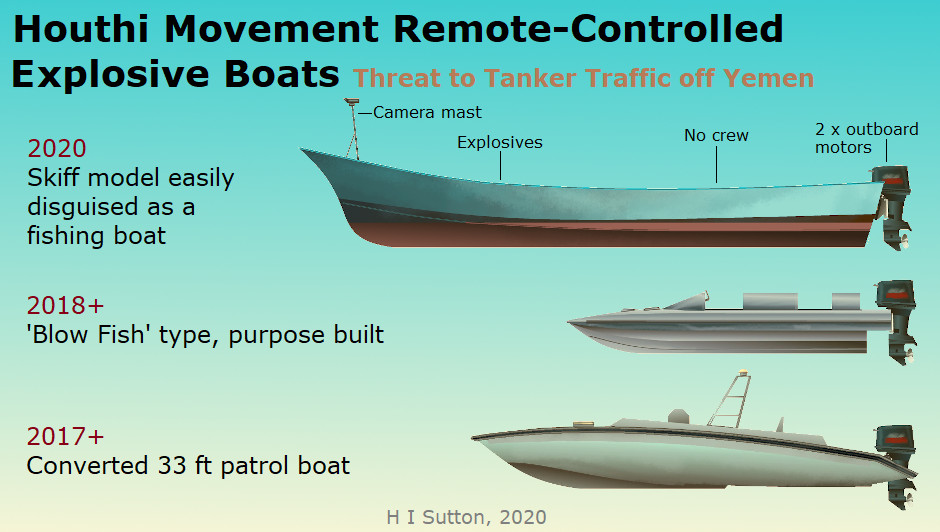
The wars in Yemen and Ukraine have already shown us what terrorists or a nation state might do with unmanned surface vessels.

The US Navy and many others are working on unmanned undersea vehicles (UUVs) as weapons platforms.

Snakehead Large Displacement Unmanned Undersea Vehicle (LDUUV)

Will the Coast Guard include countering UUVs as part of its mission?

Will this prompt a return of the Coast Guard’s ASW mission?

It’s likely unmanned surface vessels will be required to counter unmanned undersea vessels.

“Unmanned Surface Vessel Transits Strait of Hormuz with U.S. Coast Guard” –NAVCENT

A U.S. Navy L3 Harris Arabian Fox MAST-13 drone boat and the U.S. Coast Guard cutters USCGC John Scheuerman and USCGC Charles Moulthrope transit the Strait of Hormuz on Wednesday, April 19, 2023. (Information Systems Technician 1st Class Vincent Aguirre/U.S. Coast Guard)

Below is a NAVCENT news release. It is quite apparent that the PATFORSWA Webber class WPCs have become the go-to resource for operation with the US Navy’s Task Force 59 unmanned surface vessels. Will we see something similar emerge when UAS start operating under 4th Fleet in the near future?

Unmanned Surface Vessel Transits Strait of Hormuz with U.S. Coast Guard

19 April 2023

From U.S. Naval Forces Central Command Public Affairs

MANAMA, Bahrain – An unmanned surface vessel from U.S. 5th Fleet transited the Strait of Hormuz with two U.S. Coast Guard cutters, April 19, demonstrating the continued operational integration of unmanned and artificial intelligence systems by U.S. maritime forces in the Middle East.

A U.S. Navy L3 Harris Arabian Fox MAST-13 drone boat and the U.S. Coast Guard cutter USCGC John Scheuerman transit the Strait of Hormuz on April 19, 2023. (Information Systems Technician 1st Class Vincent Aguirre/U.S. Coast Guard)

USCGC Charles Moulthrope (WPC 1141) and USCGC John Scheuerman (WPC 1146) transited one of the world’s most strategically important straits with an L3 Harris Arabian Fox MAST-13 unmanned surface vessel. The three vessels sailed south from the Arabian Gulf and through the narrow Strait of Hormuz before entering the Gulf of Oman.

“I am proud to be a part of this great partnership between the U.S. Coast Guard and Navy in the Middle East. We often work side-by-side as one team with a common mission to provide security and safeguard the seas,” said Lt. Trent Moon, John Scheuerman’s commanding officer.

U.S. 5th Fleet established a unit called Task Force 59 in September 2021 to integrate unmanned systems and artificial intelligence into regional maritime operations. Since its launch, the task force has deployed a suite of new unmanned systems from operational hubs in Jordan and Bahrain.

In December, Task Force 59 launched an Aerovel Flexrotor unmanned aerial vehicle from USCGC Emlen Tunnell (WPC 1145) while operating in the Arabian Gulf. The launch marked Task Force 59’s first from a U.S. Coast Guard vessel at the time.

“We are on the cutting-edge of integrating advanced unmanned technology into our maritime patrols. Our crews are excited to help lead these efforts with our Navy counterparts,” said Lt. Stephen Hills, Charles Moulthrope’s commanding officer.

U.S. 5th Fleet is leading regional efforts to increase vigilance in surrounding waters that include more than 5,000 miles of coastline from the Suez Canal, around the Arabian Peninsula, through the Strait of Hormuz and into the Arabian Gulf. The integration of unmanned platforms and sensors alongside crewed ships from the United States and regional partners enhances this capability.

The two Coast Guard cutters and Arabian Fox transited the Strait of Hormuz while operating in support of the International Maritime Security Construct, an 11-nation coalition led by the United States that focuses on maritime operations near key waterways in the Middle East.

“Navy Expands Unmanned Operations to 4th Fleet” –Defense One

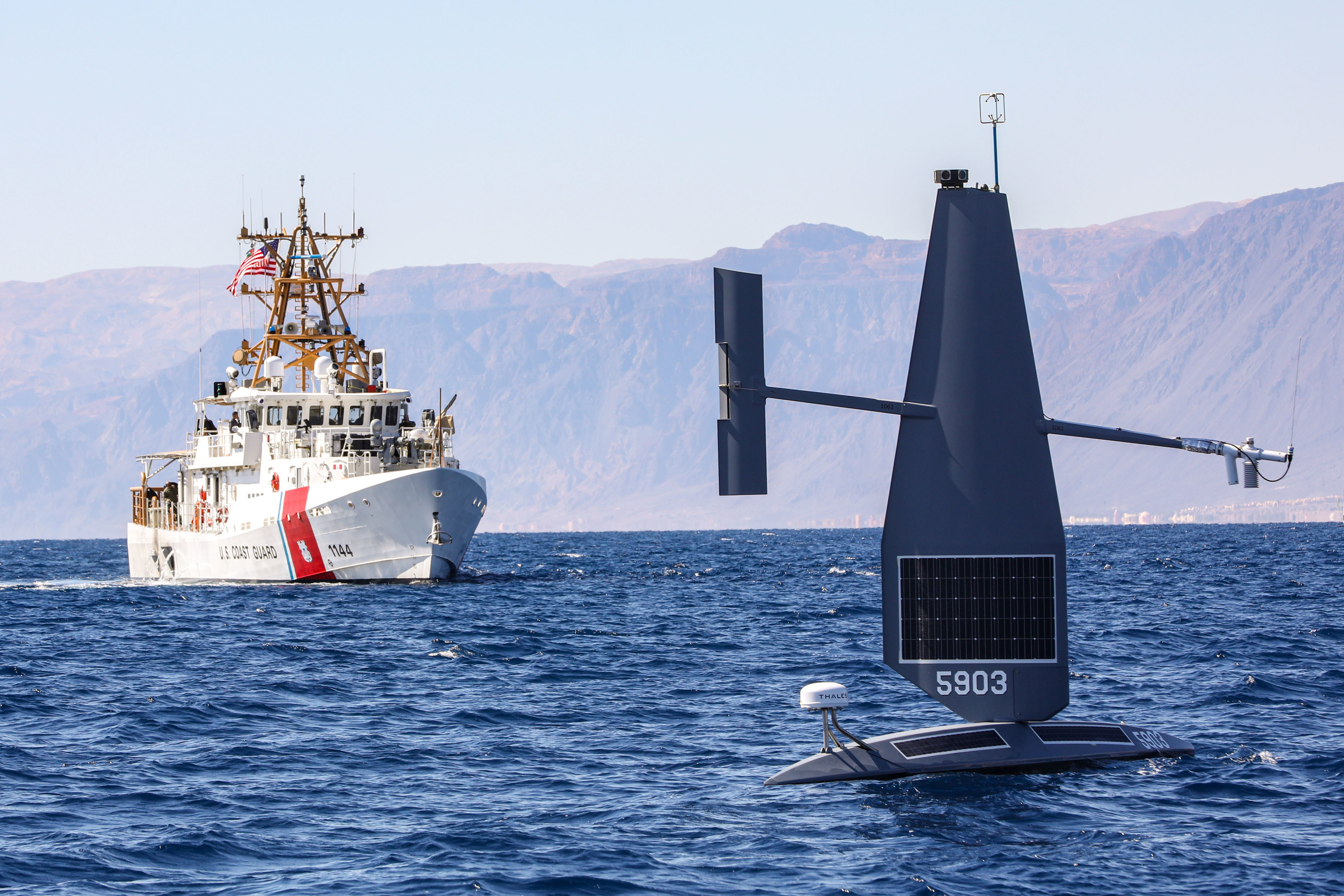
GULF OF AQABA (Feb. 13, 2022) The U.S. Coast Guard Sentinel-class cutter USCGC Glen Harris (WPC 1144) sails near a U.S sail drone explorer during the International Maritime Exercise/Cutlass Express (IMX) 2022, Feb. 13, 2022. IMX/CE 2022 is the largest multinational training event in the Middle East, involving more than 60 nations and international organizations committed to enhancing partnerships and interoperability to strengthen maritime security and stability. (U.S. Army photo by Cpl. DeAndre Dawkins)

Defense One reports,

“Drones are heading to the southern waters of 4th Fleet, which will follow 5th Fleet’s pioneering experiments with unmanned craft in the Middle East, Navy Secretary Carlos Del Toro announced Tuesday at the Navy League’s 2023 Sea-Air-Space Conference.”

This is great, and not unexpected, but I noted two things that concern me. First there was not mention of making this an international effort, as has been the case in 5th Fleet, and second, that they want to start in the Caribbean where we already have excellent maritime domain awareness, instead of the eastern Pacific drug transit zone where these are really needed.

Del Toro added, “it’s fair to say however, you want to start small and build upon it, obviously. And so you know, focus perhaps on the Caribbean Basin first, and then expand beyond that in the future.”

I can see that they would be more comfortable operating UxVs in the Caribbean, because it is closer to home, but in the Eastern Pacific we could look at Uncrewed Surface Vessels (USV) using acoustic sensors to help detect semisubmersibles. This is something that is not being done in 5th Fleet so it would provide a different sensor and target set and perhaps an opportunity to cross over some of the learning to ASW.

Of course, most of the 4th Fleet’s surface ships are Coast Guard Cutters.