Weapon Upgrade: APKWS and the Vampire C-UAS System

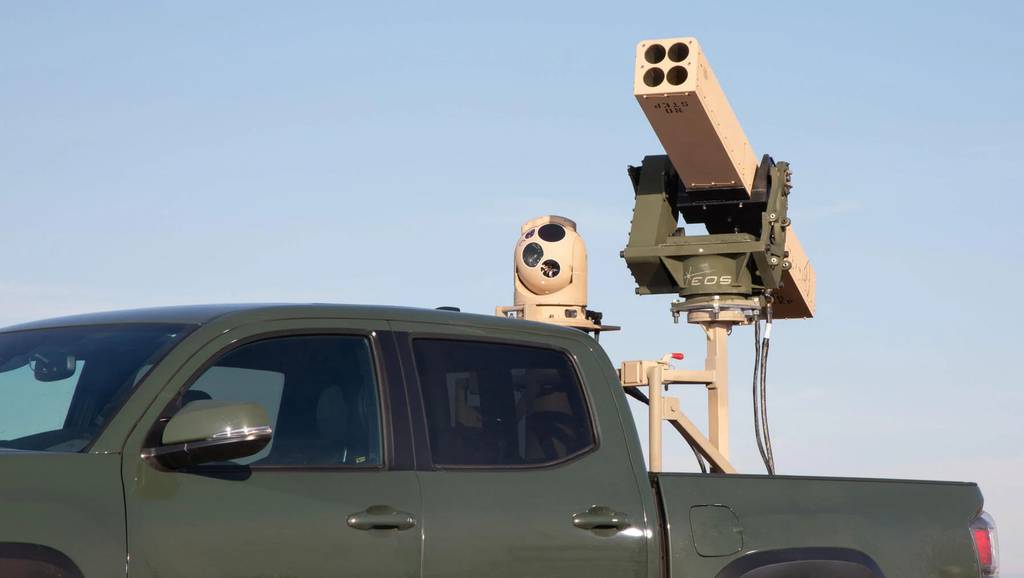
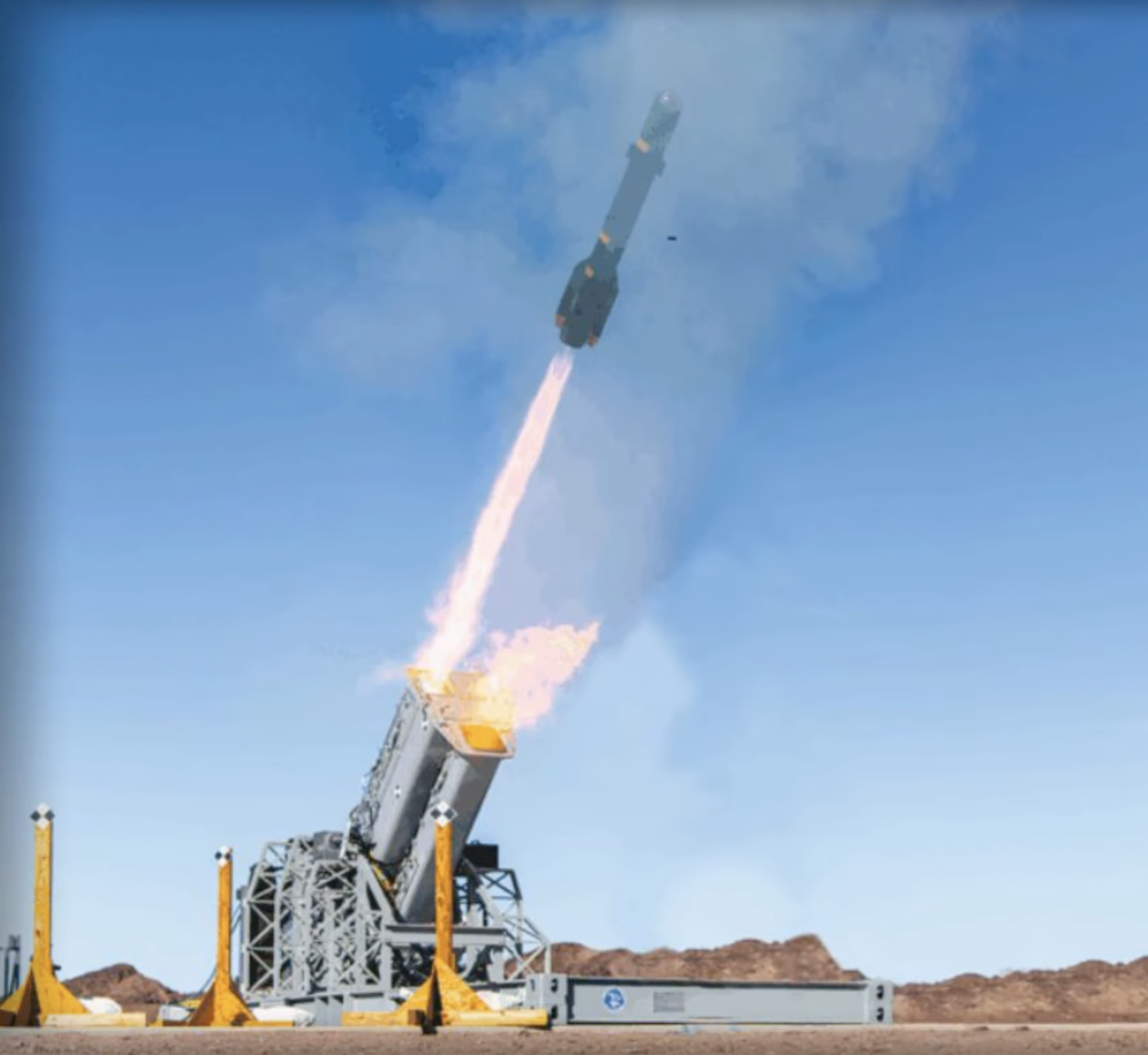
The VAMPIRE system can fit in almost any pickup or vehicle with a cargo bed. (Courtesy of L3Harris)

Earlier I said I would talk about some of the weapons I thought would be most appropriate for cutters, particularly the Webber class WPCs, that would allow them to respond to range of threats including:

  • Unmanned aircraft, from the smallest to converted light planes
  • Small, fast, highly maneuverable surface craft including personal watercraft
  • Merchant ships of any size

The APKWS is the first and it has proven particularly useful against drones and should be similarly effective against small watercraft and small ships. Its ability to forcibly stop or sink medium or large ships is limited, but I would say the same about the 57mm. Reportedly systems hurriedly shipped to Ukraine have shot down hundreds of drones and now APKWS are being made in very large numbers. For a guided munition, costs are very low, $15K to 20K for the guidance section and a few thousand for the very old tech 70mm Hydra rockets.

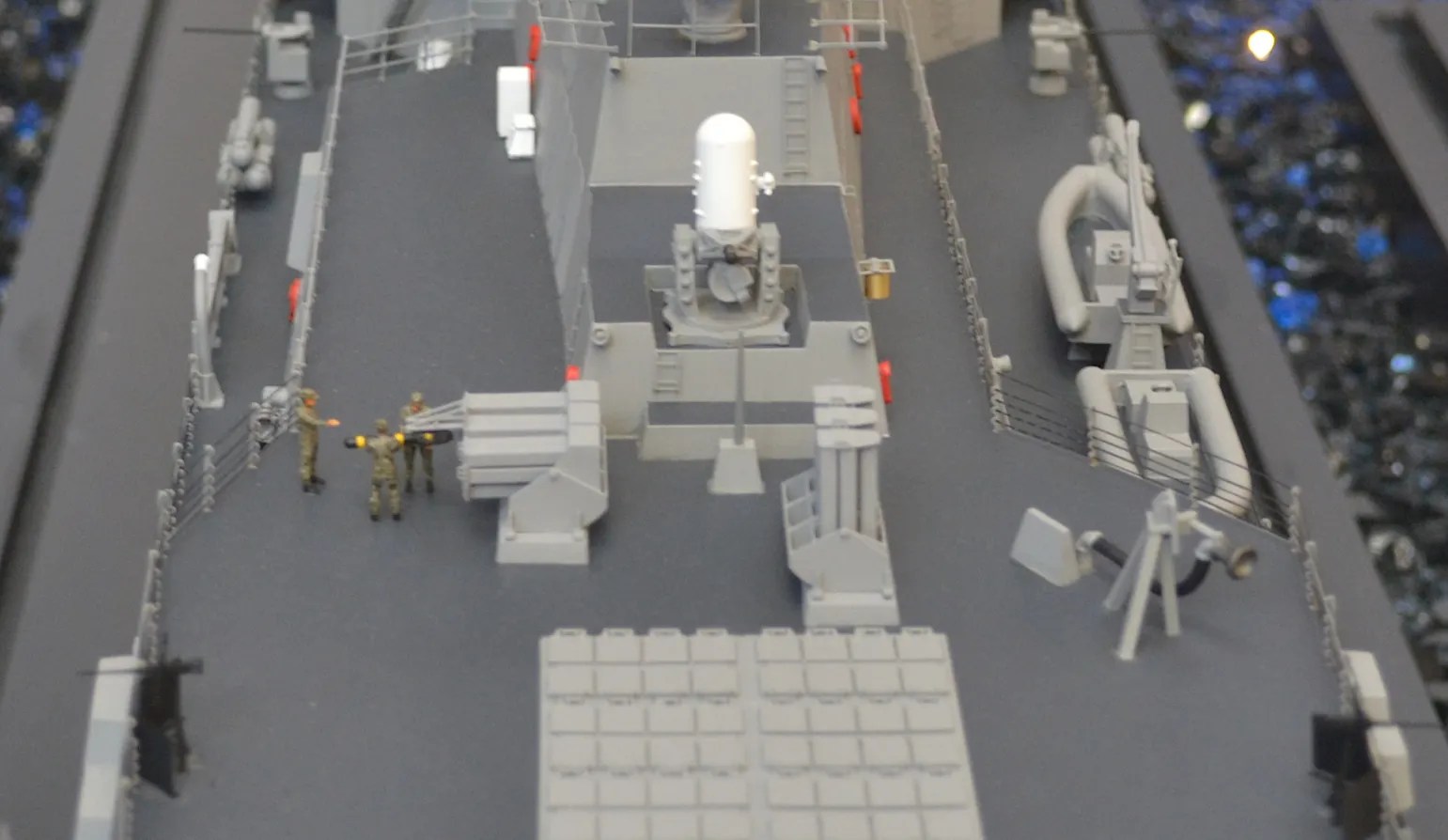
I could see the four round launchers mounted where the .50 calibers are mounted forward of the bridge on the O-1 deck, on the Webber class WPCs.

The basic APKWS requires full time laser designation from launch to impact. The system is evolving. An infrared seeker has been developed. This would allow the user to more rapidly shift from one target to the next.

The Launcher and fire control system commonly associated with surface launched APKWS is the L3Harris VAMPIRE. The US Naval Institute assures us that a naval variant is being developed and The War Zone shows us how ubiquitous this system is becoming and how it might develop.


“Germany to buy anti-torpedo torpedo in 2026, leaked document shows” –Defense News

Defense News reports,

“The German military intends to start the procurement process for a novel “Anti Torpedo Torpedo” in 2026, according to a budget planning document published by Politico Europe on Tuesday.”

I first reported on this system in September 2024. French and Turkish companies are also apparently attempting to develop an anti-torpedo torpedo. Russia has long claimed that their light weight torpedo had hard-kill anti-torpedo capability. In April 2025 we had a report that the Netherlands had decided to purchase anti-torpedo torpedoes. In May 2025 we got an indication that the system the Netherlands was intending to use was the German SeaSpider.

The US counterpart anti-torpedo-torpedo is the Mk58 Very Light Weight Torpedo, also known as the Compact Rapid Attack Weapon or CRAW. In July, Naval News reports its status here. 168 US ships equipped with Nixie are expected to get this system which I believe would include some Coast Guard cutters.

I also hope to see the M58 equip large numbers of cutters as an anti surface weapon that would give cutters to ability to forcibly stop even large ships.

The Mk58, like the SeaSpider might also be usable against Unmanned Undersea Vessels.

“Russia Deploys Icebreaker With Kalibr Cruise Missile Capability, Blurring Civilian-Military Lines” –United 24 Media

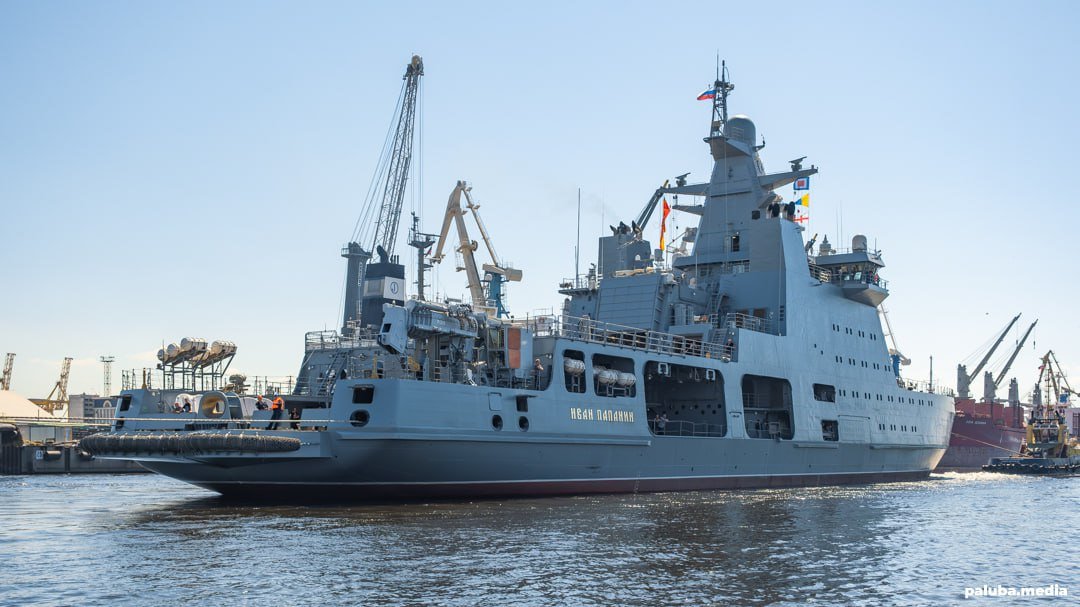
“The Project 23550 Ice-class patrol ship “Ivan Papanin”, built for the Russian Navy at “Admiralty Shipyards”, went to sea for factory sea trials. https://tass.ru/armiya-i-opk/21229221

United 24 Media reports that,

The Russian Navy formally commissioned the Ivan Papanin, a Project 23550 patrol icebreaker…Armament includes a 76.2 mm AK-176MA automatic naval gun, but the most notable feature is its ability to carry containerized missile systems.

There have been several references to these as if they made a significant difference, but actually, so far we have not seen containerized missiles actually mounted. The Russian Navy has many missile launchers in the Arctic and the US Navy (and US Army) has also demonstrated the ability to deploy containerized missile launchers, using one or more Mk70 launchers. Most Russian icebreakers are civilian ships but the Russian Navy has maintained their own icebreakers since at least World War II. This is not a big change. We are just seeing weapons packaged a different way, a way that allows the armament to change rapidly.

“HMS Coventry (D118) Sea of Fire” –Video

Above is a video that I saw on Cdr Salamander’s “Full Bore Friday.” This happened about 43 years ago so there is a good chance you may not know about it. The British lost several ships but still won the war. Ironically if Argentina had waited for a few months some of the critical ships would have been decommissioned, most importantly the two HMS Fearless Landing Platform Docks. Instead they remained in commission until 1999 and 2002.

The HMS Coventry was slightly smaller than a Nation Security Cutter or an Offshore Patrol Cutter. During the fighting the Type 42 had no close in weapon system but they were added shortly after the fighting ended.

It was a failure to add what was needed.

Liberator, Containerized Launcher for Torpedoes and Maybe More

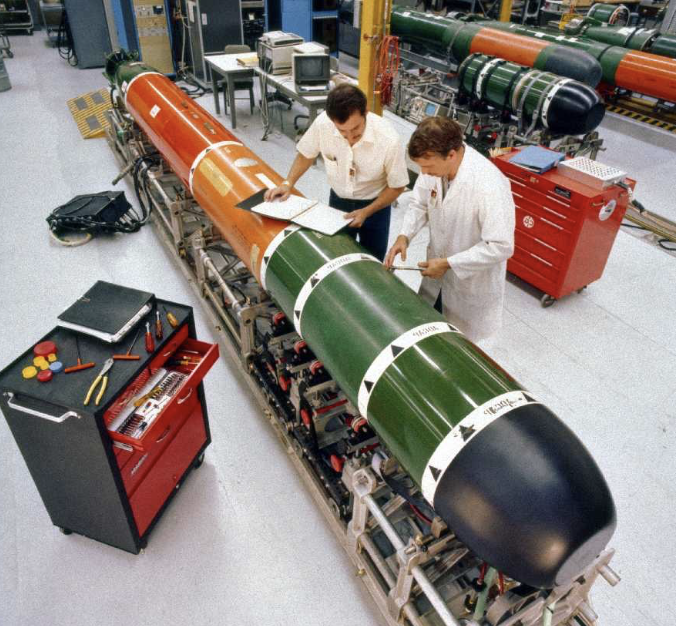
Keyport Technicians working on a Mark 48 in early 1982. U.S. Navy Photograph No. DN-SC-86-00553.

Naval News reports,

A new line item in the U.S. Navy Fiscal Year 2026 budget is supporting a containerized Mark 48 Advanced Capability (ADCAP) torpedo launcher for use on unmanned surface vessels (USV) and small combatants.

But looks like there may be more to it than the very expensive Mk48 torpedo.

“Program Executive Office, Unmanned and Small Combatants (PEO USC) is leading the effort and will deliver a 3.5 hour presentation about Liberator and a related unmanned undersea vehicle (UUV) payload…The Liberator provides for the development of alternative methods for launching torpedoes or similar devices…”

The Mk48 is intended to be used against the most demanding (nuclear submarines) in the most hostile environment. They have to be fast and they need to be capable of surviving great pressure. For this reason they are extremely expensive. The basic design goes back to 1972 but there have been many improvements.

Torpedo tubes are already being used to launch and recover Uncrewed Underwater Vehicles (UUVs). Plus we have begun seeing new cheaper torpedoes.

I find this exciting because it looks like we might have a relative inexpensive anti-surface torpedo. It would allow a Patrol Boat to stop even a large ship.

“U.S. Navy Sets Sights on Fleet-Wide Anti-Torpedo Weapon Rollout in Coming Years” –Naval News

A Navy briefing slide showing the internal components and describing the various features of the PSU_ARL Common Very Light Weight Torpedo (CVLWT) design

Naval News reports a FY2026 budget document states,

“The FY 2026 increase includes support SLQ-25E countermeasures capability improvements, and support for development of an anti-torpedo torpedo defense hard kill capability… …integration and testing the Hard Kill Program will be developed through FY 2030. The US Navy plans to install this torpedo hard-kill countermeasure on over 165 different surface ships.”

“Development will also include improvements to the NIXIE winch to enable the integration of the TWS system, the design and development of a launching system that will launch the Compact Rapid Attack Weapon (CRAW) variant designed for torpedo defense. The launcher will be designed to have the capability to launch ADC-MK2 Acoustic countermeasure devices along with the CRAW countermeasure.”

Sounds like they are going to put it on every ship that has a NIXIE, which would include the National Security Cutters and perhaps the Offshore Patrol Cutters as well.

We have seen this weapon before:

Jan. 13, 2023 Seapower magazine reported that Raytheon was building 18 CRAW prototypes.

These cannot enter the fleet too soon.

What isn’t clear is if the multi-mission nature of the weapon was retained. Apparently the Mk58 torpedo can also be used against submarines as well as inbound torpedoes. Can it be used against surface ships? If so, can it target the stern/propellers/rudder? If so, it could give small cutters an effective way to forcibly stop even large ships, a capability they need for the Ports, Waterways, and Coastal Security mission.

German Navy Adopting 30x173mm Air Burst Weapons / So Should the Coast Guard

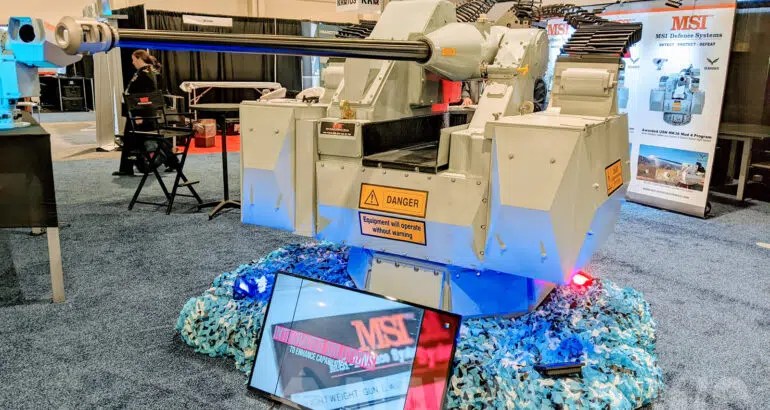
The new Mark 38 Mod 4 30mm naval gun system on display on MSI Defence stand at Sea Air Space 2022. Photo: Naval News

Army Recognition’s Navy News reports,

“…on 11 June 2025 … a public tender released via the official German e-procurement platform marks the beginning of a strategic modernization effort in the German Navy’s close-range defense capabilities. In a context where drones and asymmetric threats are playing an increasingly prominent role in contemporary conflicts, the Bundeswehr is initiating a structural transformation of its naval weapons systems.

“At the core of this reform is the introduction of a new 30×173 mm caliber, intended to progressively replace the currently deployed 27 mm light naval guns. This development aims to improve effectiveness against light aerial targets, especially drones, but also surface and land-based threats, by using programmable airburst munitions. The doctrinal shift reflects operational requirements and signals a lasting change in the defensive posture of German naval vessels.”

The gun that is being replaced is in some respects a better weapon than the 25mm the Coast Guard currently uses. It fires a heavier projectile, over a greater distance and has a much higher rate of fire, but apparently they have decided that an airburst projectile is necessary to deal with the drone threat.

The Coast Guard should probably come to the same conclusion. It now appears that an attack by unmanned air or surface craft is the most likely form of terrorist attack. Air burst projectiles are the best available, reasonably priced, hard kill systems for both self-defense and close in force protection.

Unlike the German Navy, the 30x173mm round is already in service with the US Navy and is expected to arm the Polar Security Cutter.

The new large cutters are getting 57mm guns which should be effective, but the FRCs are the units most likely to encounter this threat. The 30 mm would also be more effective against larger threats. We have been told that it is possible to replace a few parts and upgrade existing 25mm mounts to 30mm mounts. If so, we should be doing this.

26 foot UAS Shoots Down Supersonic Fighter, Can Air Defense for Even Small Cutters Be So Hard?

Click to enlarge. Magura V7 surface drone (USV) armed with two Sidewinder missiles. Note that the missiles have yellow protective covers over their seekers, indicating that it is on a test run.

Naval news has a couple of reports about the recent shoot downs here and here. We also have a report from The War Zone.

You have to hand it to the Ukrainians–they think outside the box.

This is another example of what the Coast Guard might face from an unconventional attack using USVs, but it also suggests that it should not be too hard to give even small cutters an effective short range AAW weapon.

The Russian aircraft were SU-30s, relatively high tech, high performance aircraft. It appears they were being used in a low tech way, attacking from relatively low altitude.

Attacks on cutters by aircraft are likely to be from at least medium altitudes with missiles or  glide bombs. Short range surface to air weapons are not likely to take down an aircraft at altitude, but they might be effective against stand-off weapons and would at least make strafing dangerous.

Spike NLOS Missile System Photos and Video

A FaceBook friend alerted me to photos and the video above of an exercise launch of Spike NLOS missiles from a Philippine Acero class Fast Attack Craft (FAC), a version of the Israeli Shaldag V.

I see a need for something similar in the Coast Guard.

There was a discussion of Spike NLOS in earlier post. That post showed two smaller four round launchers fitted to an 11.9 meter craft.

The missile never leaves its shipping container until it is launched.

“Spike NLOS is delivered as a ‘wooden roound’ enabling long shelf life, low maintenance, and low life-cycle cost.”

TYPHOON MLS NLOS has an eight cell Spike NLOS missile launcher and integrated Toplite stabilized observation and target acquisition system (same as on the Mk38 mod2 and mod3). Photo: RAFAEL via defense-update.com

Below is one of the Philippine Acero class launching a Spike NLOS. In the US, Spike NLOS is currently used by the US Army and it is marketed through Lockheed Martin.

Philippine Navy Acero class patrol boat launches Rafael Spike NLOS. The vessel features a Rafael Typhoon MLS-NLOS missile launcher capable of carrying 8 Spike-NLOS surface-to-surface missiles (limited to 4 ships only). Additionally, it is armed with one Mk.44 Bushmaster II autocannon mounted on a Rafael Typhoon Mk 30-C remote-controlled weapon station, two M2HB Browning 12.7 mm/50-cal. heavy machine guns mounted on Rafael Mini Typhoon remote-controlled weapon stations, and two M60 7.62 mm/30-cal. GP machine guns.