German Navy Adopting 30x173mm Air Burst Weapons / So Should the Coast Guard

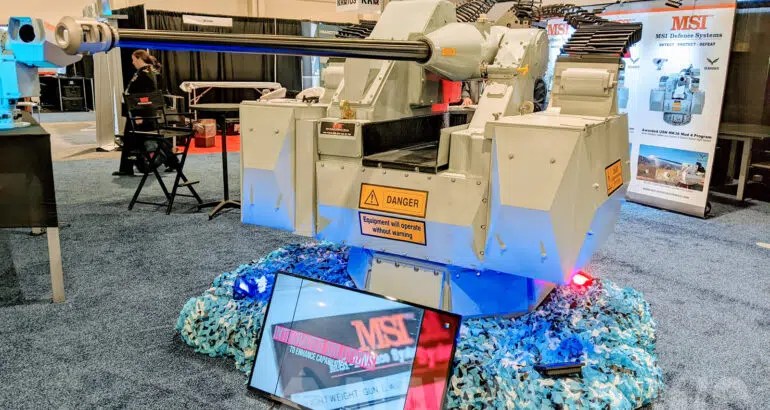
The new Mark 38 Mod 4 30mm naval gun system on display on MSI Defence stand at Sea Air Space 2022. Photo: Naval News

Army Recognition’s Navy News reports,

“…on 11 June 2025 … a public tender released via the official German e-procurement platform marks the beginning of a strategic modernization effort in the German Navy’s close-range defense capabilities. In a context where drones and asymmetric threats are playing an increasingly prominent role in contemporary conflicts, the Bundeswehr is initiating a structural transformation of its naval weapons systems.

“At the core of this reform is the introduction of a new 30×173 mm caliber, intended to progressively replace the currently deployed 27 mm light naval guns. This development aims to improve effectiveness against light aerial targets, especially drones, but also surface and land-based threats, by using programmable airburst munitions. The doctrinal shift reflects operational requirements and signals a lasting change in the defensive posture of German naval vessels.”

The gun that is being replaced is in some respects a better weapon than the 25mm the Coast Guard currently uses. It fires a heavier projectile, over a greater distance and has a much higher rate of fire, but apparently they have decided that an airburst projectile is necessary to deal with the drone threat.

The Coast Guard should probably come to the same conclusion. It now appears that an attack by unmanned air or surface craft is the most likely form of terrorist attack. Air burst projectiles are the best available, reasonably priced, hard kill systems for both self-defense and close in force protection.

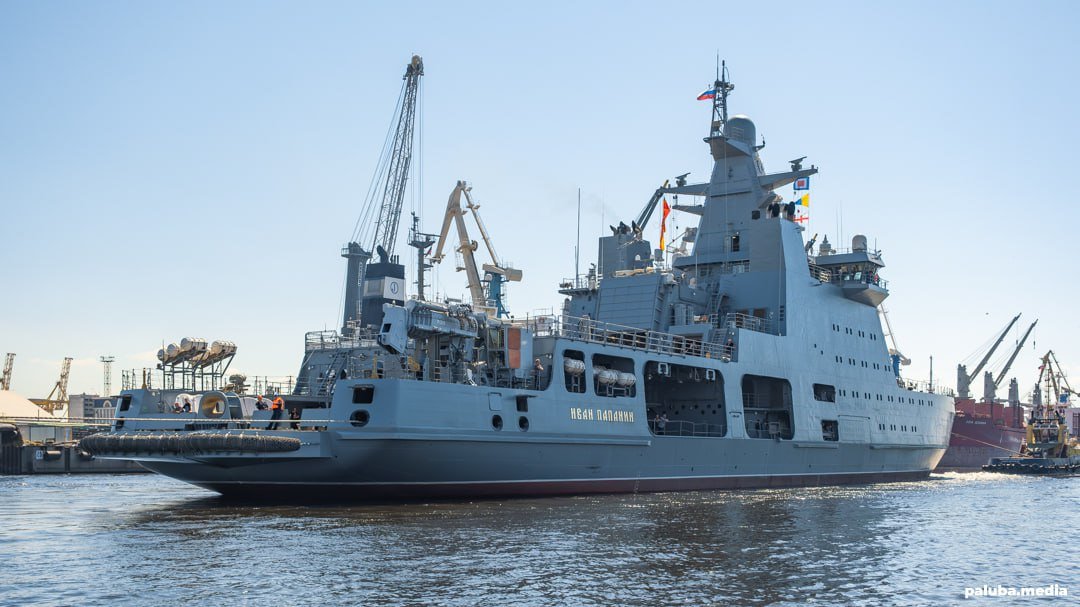
Unlike the German Navy, the 30x173mm round is already in service with the US Navy and is expected to arm the Polar Security Cutter.

The new large cutters are getting 57mm guns which should be effective, but the FRCs are the units most likely to encounter this threat. The 30 mm would also be more effective against larger threats. We have been told that it is possible to replace a few parts and upgrade existing 25mm mounts to 30mm mounts. If so, we should be doing this.

26 foot UAS Shoots Down Supersonic Fighter, Can Air Defense for Even Small Cutters Be So Hard?

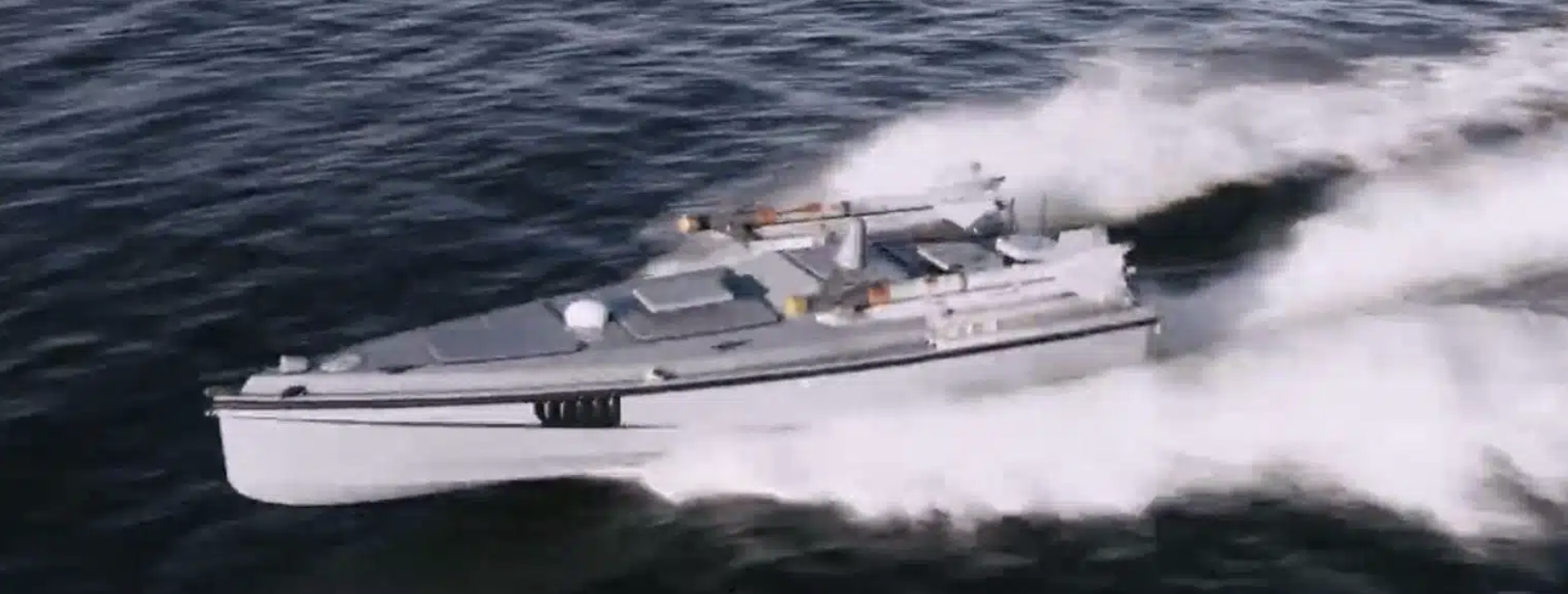
Click to enlarge. Magura V7 surface drone (USV) armed with two Sidewinder missiles. Note that the missiles have yellow protective covers over their seekers, indicating that it is on a test run.

Naval news has a couple of reports about the recent shoot downs here and here. We also have a report from The War Zone.

You have to hand it to the Ukrainians–they think outside the box.

This is another example of what the Coast Guard might face from an unconventional attack using USVs, but it also suggests that it should not be too hard to give even small cutters an effective short range AAW weapon.

The Russian aircraft were SU-30s, relatively high tech, high performance aircraft. It appears they were being used in a low tech way, attacking from relatively low altitude.

Attacks on cutters by aircraft are likely to be from at least medium altitudes with missiles or  glide bombs. Short range surface to air weapons are not likely to take down an aircraft at altitude, but they might be effective against stand-off weapons and would at least make strafing dangerous.

Spike NLOS Missile System Photos and Video

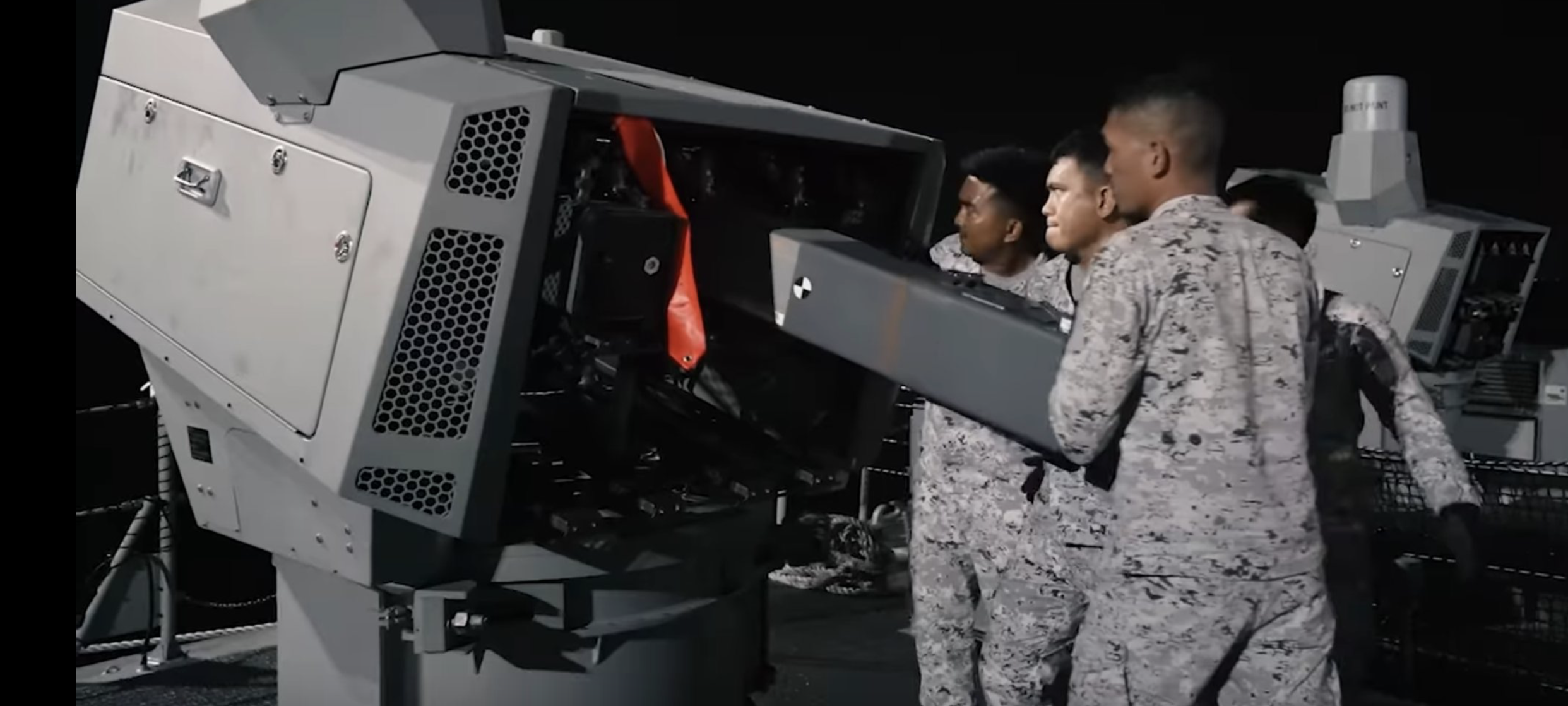
A FaceBook friend alerted me to photos and the video above of an exercise launch of Spike NLOS missiles from a Philippine Acero class Fast Attack Craft (FAC), a version of the Israeli Shaldag V.

I see a need for something similar in the Coast Guard.

There was a discussion of Spike NLOS in earlier post. That post showed two smaller four round launchers fitted to an 11.9 meter craft.

The missile never leaves its shipping container until it is launched.

“Spike NLOS is delivered as a ‘wooden roound’ enabling long shelf life, low maintenance, and low life-cycle cost.”

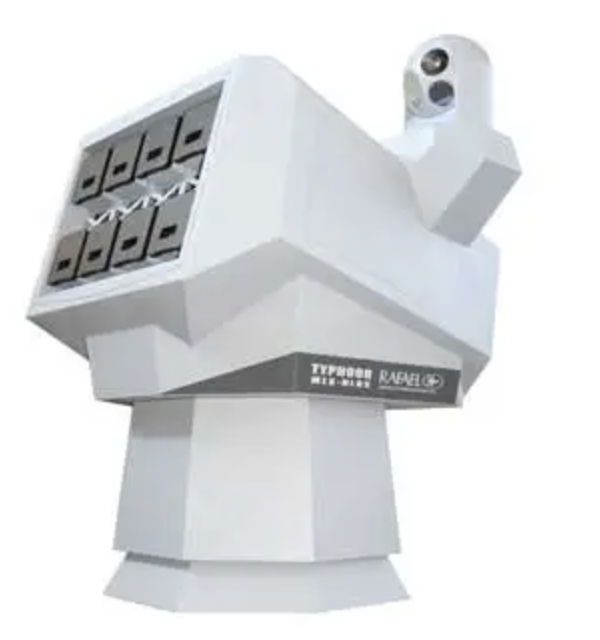
TYPHOON MLS NLOS has an eight cell Spike NLOS missile launcher and integrated Toplite stabilized observation and target acquisition system (same as on the Mk38 mod2 and mod3). Photo: RAFAEL via defense-update.com

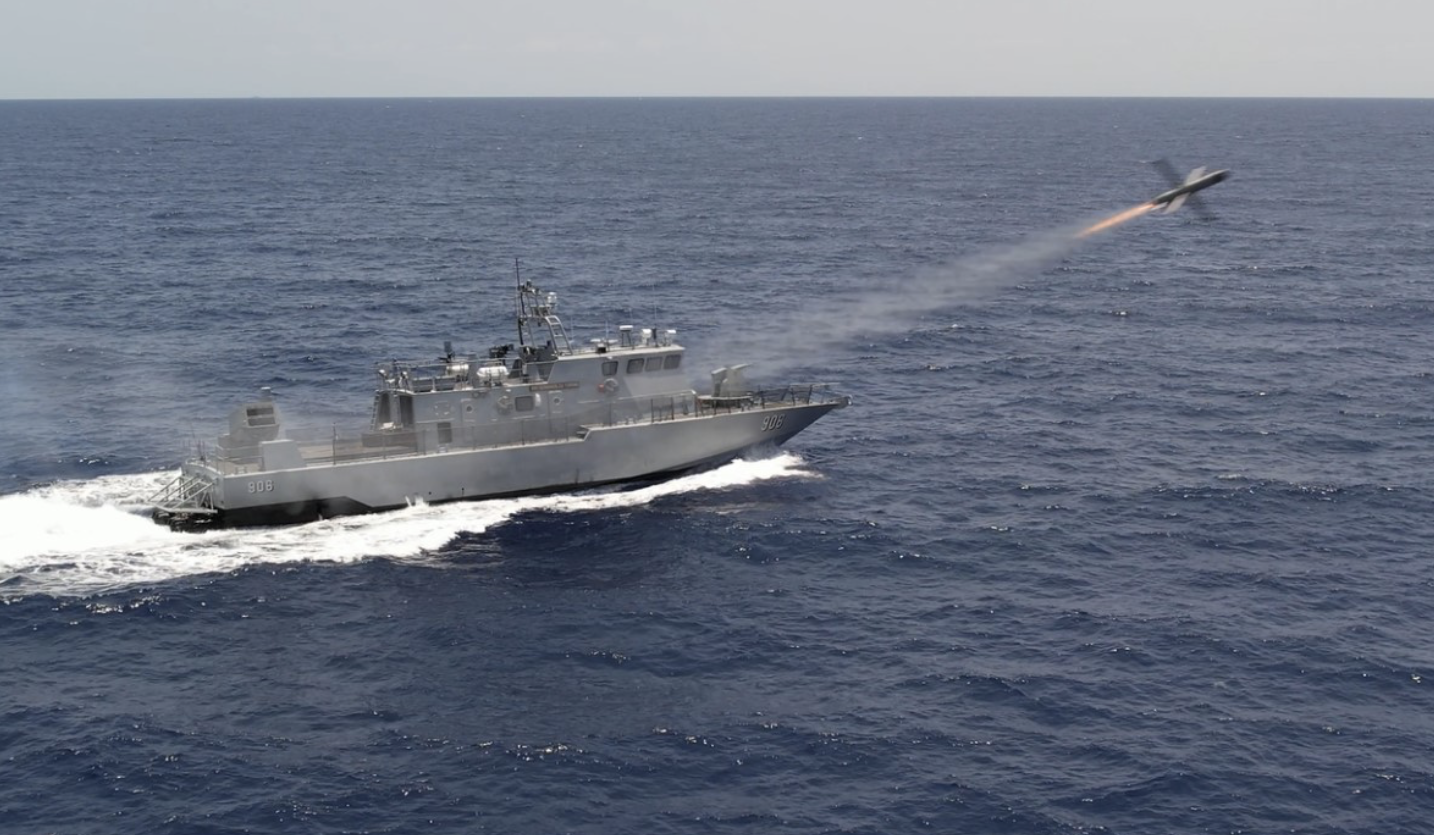
Below is one of the Philippine Acero class launching a Spike NLOS. In the US, Spike NLOS is currently used by the US Army and it is marketed through Lockheed Martin.

Philippine Navy Acero class patrol boat launches Rafael Spike NLOS. The vessel features a Rafael Typhoon MLS-NLOS missile launcher capable of carrying 8 Spike-NLOS surface-to-surface missiles (limited to 4 ships only). Additionally, it is armed with one Mk.44 Bushmaster II autocannon mounted on a Rafael Typhoon Mk 30-C remote-controlled weapon station, two M2HB Browning 12.7 mm/50-cal. heavy machine guns mounted on Rafael Mini Typhoon remote-controlled weapon stations, and two M60 7.62 mm/30-cal. GP machine guns.

Heavy Weight Torpedoes on Surface Ships

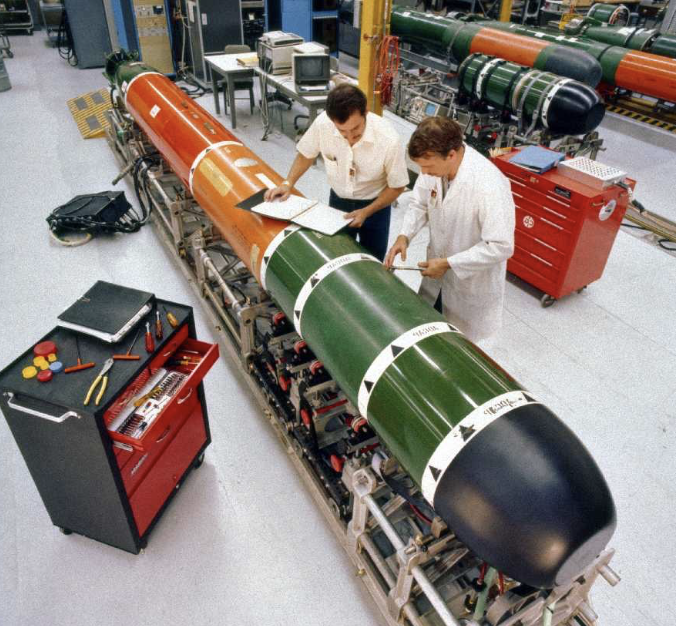
The Mk 48 torpedo was intended for use in both submarines and surface ships, in the latter for the ASW role. Twin Mk 25 tubes for Mk 48 torpedoes were fitted in guided missile frigates (DLG/DLGN) in their after deckhouse and in escort ships (DE/DEG) in their stern counters. This photo shows a Mk 48 being launched from the USS Talbot (DEG-4). Lockheed Shipbuilding; US Navy

Looking back a couple of years, The War Zone had a post that argued that Heavy Weight Torpedoes (HWT) should be installed as anti-submarine weapons on surface ships.

Cold War U.S. Navy Nearly Armed Its Frigates With Mk 48 Heavyweight Torpedoes

The argument is based on misgivings about the effectiveness of the Mk54 light weight torpedo (LWT)) and about reliance on only one weapon in general.

He specifically talks about problems with the Mk54 and the possibility of mounting at least one torpedo tube with reloads on the Constellation class guided missile frigates.
He also advocates adding a bow mounted active sonar to provide targeting for the HWT. From what I hear, the CAPTAS 4 sonar really does make the bow mounted sonar unnecessary.
His argument seems sound, but there are perhaps additional reasons for putting one or two heavy weight torpedo tubes on large Cutters, even if they don’t come with the very expensive Mk48 torpedoes.
There are indications the Navy may be producing an alternative heavy weight torpedo tentatively named the RAPTOR (Rapid Acquisition Procurable Torpedo) and we have Anduril offering an unmanned underwater vehicle that serve as a heavy weight torpedo.
Given the implicit requirement in the Coast Guard mission set that cutters should be able to forcibly stop any vessel regardless of size, a heavy weight torpedo could be a very effective ship stopper with relatively long range.
For Mobilization:
In case of a major conflict I would anticipate large cutters would be used to enforce blockades and/or escort logistics support ships.
The new generation of large cutters are armed adequately to enforce a blockade against clandestine shipments in small vessels for operations like Market Time, but to forcibly stop larger vessels we need something more than the 57mm. Since in most cases the desire would be to stop rather than to sink vessels like large tankers, we need something that can reliably disable propulsion, most probably a smart torpedo.
To escort logistics ships against either China or Russia, the minimum requirement would be a towed array like CAPTAS 4 (selected to equip FFG-62 class) or one of that family, an ASW helicopter, space for torpedoes and sonobuoys, and additional personnel (probably Navy Reserves) to operate and maintain them.
It would not be too difficult to add light weight torpedoes to large cutters, but unless there is major surgery, cutters will not have the vertical launch systems that allow Navy escort vessels to also have an organic longer ranged ASW weapon in the form of vertical launched ASROC for times when an ASW helicopter is not available. A heavy weight ASW torpedo could provide such a long range capability.

“Copperhead Torpedo-Like Underwater Kamikaze Drones Rolled Out By Anduril” –TWZ

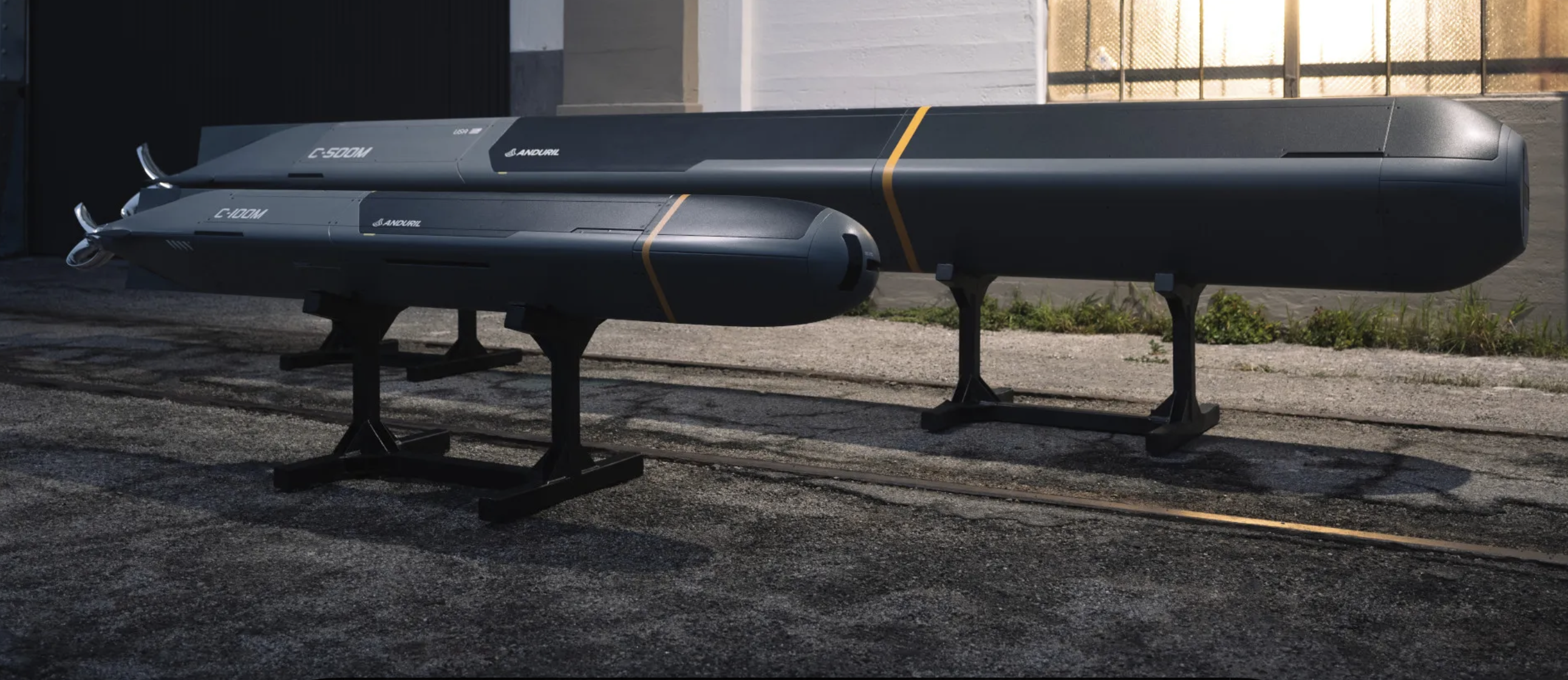
Copperhead torpedo like UUV

If you are a regular reader, you know, the Coast Guard has a requirement implicit in its missions to be able to forcibly stop any vessel, regardless of size, particularly in response to unconventional maritime attacks. This ability needs to be widely and readily available. The Coast Guard does not have that ability with regard to larger ships. Torpedoes can fill this requirement reliably and economically. The Coast Guard might logically also be called upon to enforce blockades in wartime and would require a similar capability.

Unfortunately, the only torpedoes in the US inventory are designed for much more demanding missions than the Coast Guard requires for its peacetime missions–attacking high speed submarines that move in three dimensions at great depths. This has made them much more expensive than they need to be for the Coast Guard missions.

It now appears, we may have a low cost alternative.

The War Zone reports,

Anduril has rolled out a new family of modular torpedo-like uncrewed underwater vehicles (UUV) called Copperhead. This includes kamikaze types…The Copperhead family of UUVs, which Anduril also refers to as autonomous undersea vehicles (AUV), currently consists of the 100 and 500-pound-class types, as well as “M” munition subvariants of each. The Copperhead-100 has an overall length of just under nine feet (approximately 2.7 meters) and is 12.75 inches in diameter, while the Copperhead-500 is just over 13 and a half feet (just over four meters) long and 21 inches wide…. the company says they can both reach top speeds in excess of 30 knots.

While there are probably other ways to launch, these systems are clearly designed to fit in existing torpedo tubes. Existing torpedoes have been autonomous Unmanned Underwater Vehicles (UUV) all along. Anduril is taking the basic torpedo form and broadening its application, while retaining the option of employing the UUV as a weapon.

The 500 and 100 designations refer to the approximate payload weight, not the weight of the device.

Copperhead 100 is 12.75″ “in diameter” and 106″ in length. These outer dimensions are essentially identical to that of the Mk54 but the diamond (square cross section) shape and the need to maintain near neutral buoyancy suggests it will be lighter, probably about 450 pounds.

Copperhead 500 with a 21-inch diameter and 163-inch length is short for a heavy weight torpedo. It probably weighs about 1700 pounds, a bit less than the USN air launched Mk13 Mod 0 (1,949 lbs. or 884 kg) and about half that of the 288 inch long surface launched Mk15 Mod3 (3,841 lbs. or 1,742 kg) torpedoes of WWII.

The speed for both systems is reported as greater than 30 knots. That is slow for a modern torpedo, but faster than nearly all commercial ships, military auxiliaries, and offshore patrol vessels.

As reusable systems, I would assume these are powered by rechargeable batteries like the SAAB Torped 47. Torped 47 is larger than Copperhead 100 but substantially smaller than Copperhead 500. Torped 47 as a reported range of at least 20 km so I would expect the 100 to have a bit shorter range and the 500 to have a longer range.

Among other things, Copperhead 500 UUVs could be used as a mobile mine. At slow speed it could go at least ten miles on its own, based on the old tech Mk37 based Mk67 mobile mine, so probably substantially further.

They might also be able to do Q-route surveys, checking port approach and departure routes for mines.

The Coast Guard might want to employ these systems as scientific or surveillance assets as well as weapons.

Coast Guard manned Destroyer Escort USS Menges, victim of a German Acoustic Homing Torpedo, May, 1944

Copperhead 100M would probably be adequate to immobilize most ships if the warhead exploded below the propeller(s) and rudder(s), but if the target managed to limp along after the first hit, a second might be necessary. If it is necessary to sink a target of over 1000 tons, then you would probably need the larger warhead of the 500M and/or multiple hits. 

Equipping FRCs and larger cutters to support two Copperhead 100s and one Copperhead 500 might both answer the need for an effective ship stopper and also provide options for otherwise employing UUVs.

USNS Kilauea breaks in half after being hit by the torpedo.

“Wash the Sky Clean of Drones” –USNI

Powerful shipboard firefighting monitors can operate with flow rates in the vicinity of 16,000 gallons per minute, generating nozzle pressures and forces capable of knocking down or destroying drones with seawater. SHUTTERSTOCK

Captain Karl Flynn, U.S. Marine Corps, offers a novel counter to small drones,

It is well established that unmanned aerial systems (UASs) and vehicles (UAVs) are cheap, ubiquitous, and deadly against ground forces. While U.S. Navy ships and aircraft have proven themselves effective at shooting them down in the Red Sea, unmanned aircraft could soon become more dangerous in multiple environments: busy ports, canals, straits, the littorals, and other choke points. The Navy should explore using high-powered water cannons—also known as firefighting monitors—as ship-based counter-UAS (cUAS) weapons.

Now, I don’t think this would work against anything, but the small First Person Video drones that are now extremely common, but that is what the Coast Guard is most likely to encounter. At close range, water under high pressure can be damaging, but it’s not likely to cause collateral damage, like firearms could.

There are, of course, other reasons we might want to have powerful fire monitors.

SAN DIEGO (July 12, 2020) The U.S. Navy amphibious assault ship USS Bonhomme Richard (LHD-6) on fire at Naval Base San Diego, California (USA), on 12 July 2020. On the morning of 12 July, a fire was called away aboard the ship while it was moored pier side at Naval Base San Diego. Base and shipboard firefighters responded to the fire. Bonhomme Richard was going through a maintenance availability, which began in 2018. The fire was extinguished on 16 July.

They can also be used in less than lethal confrontations.

Screengrab from Philippine Coast Guard shows a Philippine vessel being water cannoned by the China Coast Guard on April 30, 2024.

They have become a regular feature of Gray Zone activities in the Western Pacific.

A water cannon battle between Taiwanese and Japanese Coast Guard vessels.

Frankly, what we have now looks kind of wimpy by comparison.

U.S. Coast Guard Cutter Waesche and Japan Coast Guard vessel JCGC Wakasa (PL-93) test their water cannons during a trilateral search and rescue exercise in the East Sea, June 6, 2024. Coast Guardsmen from Japan, Republic of Korea and the United States used the trilateral training as an opportunity to rehearse cohesion between the nations when operating together. The U.S. Coast Guard has operated in the Indo-Pacific for more than 150 years, and the service is increasing efforts through targeted patrols with our National Security Cutters, Fast Response Cutters and other activities in support of Coast Guard missions to enhance our partnership. (U.S. Marine Corps photo by Cpl. Elijah Murphy)

Is the Coast Guard Going to Bring a Knife to a Gun Fight? A Gun to a Missile Fight?

The first three fast response cutters—the USCGC Richard Etheridge (WPC-1102), Bernard C. Webber (WPC-1101), and William Flores (WPC-1103). Credit U.S. COAST GUARD. In case of a maritime terrorist attack, Webber class Fast Response Cutters are likely to be the most potent response the Coast Guard would be able field. 

Why is it that the Coast Guard has not mounted missiles or torpedoes on their ships since about 1991?

Currently the US Coast Guard’s most powerful weapons are the 57mm Mk110 and the 76mm Mk75. Do they assure that the Coast Guard will be able to take actions inherent in Coast Guard missions, including the ability to forcibly stop any vessel–any vessel— regardless of size? Will the larger cutters mounting these weapons even be in the vicinity when needed? When called upon, will the units on scene have any effective weapons?

I don’t think so.  In fact, we are less capable of doing so than we were in the 1930s.

When asked about this in 2020, then Commandant, Admiral Fagan, is reported to have said essentially, “For the present time, the U.S. Coast Guard is satisfied with keeping the current ‘gun and no missiles’ weapons fit the same and exercising the White-Hull Humanitarian symbol of Search and Rescue and Maritime Law Enforcement wherever and whenever the large Coast Guard Cutters sail into far off seas.”

My response at the time was here. I recognize some advantage in being seen as non-threatening, but few people would mistake even a missile armed Cutter for an invading force, and torpedoes are useless against targets on land. Coast Guard cutters overseas missions are primarily law enforcement. In the future, cutters may be in gray zone conflicts with the aggressive China Coast Guard–the largest coast guard fleet in the world, which usually operates cutters in groups. We don’t want USCG cutters to look like they can be pushed around.

Looking helpless may not inspire confidence in our allies.

This Chinese coast guard ships armed with 76mm and 30mm guns© Kyodo

Wartime:

It seems likely that, if the US has a conflict with China, one of the first things the Coast Guard will have to do is seize all Chinese owned/flagged/manned vessels in US waters. Naturally some will resist. The Coast Guard will need to be able to overcome any resistance without asking for help from other armed services because they will be busy elsewhere.

As the conflict develops, it it likely the Coast Guard will be involved in blockade operations and otherwise tasked with hunting down Chinese controlled shipping that might be carrying agents, special forces, mines, or even containerized missile launchers.

We are not just talking about small vessels here. Some are over a thousand feet long and there are hundreds of them.

Law Enforcement/Counter-Terrorism:

Coast Guard vessels patrol boat size and larger are not just SAR assets. They are law enforcement units and in wartime combatants. Included in their peacetime law enforcement role is counter terrorism.

Wise men learn from the mistakes of others. Consider the lessons to be learned from the response to attacks on 9/11 and the North Hollywood shootout.

9/11: We knew about kamikazes. We knew airplanes loaded with fuel could be used as weapons. We knew that big planes were more destructive than small ones.

Domain awareness failed when the aircraft turned off or changed their transponder codes. Communications between FAA and NORAD were poor. Interceptors were too few and too far between. Interceptors once launched were sent in the wrong directions. Managers focused on the first attack, which was then already over, refused to receive a report of the second attack in progress.

Too many layers of decision making between detection and action. For timely action, best if the unit that detects an attack can respond immediately, and Coast Guard units are likely to be the first to recognize a maritime terrorist attack.

North Hollywood Shootout:

“The North Hollywood shootout, also known as the Battle of North Hollywood, was a confrontation between two heavily armed and armored bank robbers, Larry Phillips Jr. and Emil Mătăsăreanu, and police officers in the North Hollywood neighborhood of Los Angeles on February 28, 1997.

In this case the response to the crime was prompt but inadequate. At the time, the police on patrol were generally armed with only the classic 38 Special revolver, 9mm handguns, and a few shotguns. The bank robbers armor was impervious to these weapons. The robbers carried automatic rifles with high capacity magazines with up to 100 rounds. The two robbers fired approximately 1100 rounds. Some police officers even reequipped themselves with weapons from a local firearms dealer.

An inventory of the weapons used by the two bank robbers:

  • A Bushmaster XM-15 converted illegally to fire full auto with two 100-round Beta Magazines and fitted with a M16A1-style handguard
  • A Heckler & Koch HK-91 semi automatic rifle with several 30-round magazines
  • A Beretta 92FS with several magazines
  • Three different civilian-model Norinco Kalashnikov-style rifles converted illegally to fire full auto with several 75- to 100-round drum magazines and 30-round box magazines

The police were ultimately successful because of the overwhelming response. Over 300 law enforcement officers from various forces had responded to the citywide tactical alert, but they were really not prepared to confront just two men who were armed or protected in ways they did not expect. The perpetrators, Phillips was shot 11 times, including his self-inflicted gunshot wound to the chin, while Mătăsăreanu was shot 29 times. Twelve police officers and eight civilians were injured.

If terrorist sage a maritime attack, it is unlikely to be what the Coast Guard has trained for. Coast Guard capabilities are public knowledge. Ballistic protection to protect terrorist operators or shooters against common Coast Guard weapons is relatively easy.

Terrorist can easily put protected firing positions and strong points on a ship, even if the Coast Guard has not done it.

Tests have shown that 25mm Mk38 rounds may not even penetrate a quarter inch of aluminum.

Even relatively small terrorist controlled vessels could be armed with a variety of weapons more destructive than the .50 caliber machine gun or the 25mm gun. RPGs (rocket propelled grenades) are common, but there are recoilless rifles, heavy machine guns, anti-tank and anti-aircraft guns up to 152mm, and anti-tank guided missiles that would also work well against a cutter, that are widely distributed.

Here are two examples. Both are widely available, compact, and hard hitting. The options are almost endless.

122mm howitzer D-30 (2A-18) Chief Designer F. F. Petrov (1960) Maximum range: 15300 meters Rate of fire: 6 – 8 rounds per minute Mass: 3200 kg Shell mass: 22 kg. Photo credit George Shuklin

The 122-mm howitzer D-30

 … is a Soviet howitzer that first entered service in 1960. It is a robust piece that focuses on the essential features of a towed field gun suitable for all conditions. The D-30 has a maximum range of 15.4 km (9.6 mi) or 21.9 km (13.6 mi) using rocket-assisted projectile ammunition.

With its three-leg mounting, the D-30 can be rapidly traversed through 360 degrees. Although no longer manufactured in the countries of the former Soviet Union, the D-30 is still manufactured internationally and is in service in more than 60 countries’ armed forces.

Finnish D-30 in direct fire during a training exercise. Photo credit: Jaakko Pulkkinen

Map of D-30 operators in blue with former operators in red. From Wikipedia. Credit: Jurying

9M133 Kornet:

9M133 Kornet. Control check of cadets of the Training Center for Combat Use of Missile Troops and Artillery of the Ground Forces of the Western Military District (Moscow Region).

The 9M133 Kornet (Russian: Корнет; “Cornet”, NATO reporting name AT-14 Spriggan, export designation Kornet-E) is a Russian man-portable anti-tank guided missile (ATGM) intended for use against main battle tanks. It was first introduced into service with the Russian army in 1998.

The Kornet is among the most capable Russian ATGMs. It was further developed into the 9M133 Kornet-EM, which has increased range, an improved warhead, and equipped with an automatic target tracker (fire-and-forget capability).

The Kornet has been widely exported and is produced under license in several countries. It was first used in combat in 2003 and has since been used in many conflicts.

Kornet-EM missiles truck mounted Kornet-D launcher. Credit: Mike1979 Russia. Looks like this could be easily mounted in a container.

Map with 9M133 operators in blue. Author: Jurryaany

NON-STATE USERS:

Precision Guided 70mm Rockets–APKWS and LOGIR, Poniard Low-Cost Guided Imaging Rocket

Couach 2200FPB Fast Patrol Boat. 12 being built for Royal Saudi Navy, armed with multiple rocket launchers by LIG Nex1 fitted at the stern.

Lately I have been seeing a lot of news about various developments related to guided 70mm (2.75 inch) rockets, particularly since an APKWS took down a cruise missile less than two weeks ago.

I probably don’t need to say this again, but I think these are extremely appropriate weapons for the Coast Guard because of their light weight, minimum training and maintenance requirements, low cost, and their range, accuracy, and effectiveness against the range of threats the Coast Guard is most likely to encounter from small drones to merchant ships.

The CUSV seen in the video and below is only 12 meters, 39′ in length.

Textron USV fitted with LIG Next1’s Poniard guided rocket. Textron photo.

South Korean Guided Rocket Test-Fired from USV at RIMPAC 2024

LIG Nex1’s K-LOGIR / Poniard guided rocket successfully finished a Foreign Comparative Testing (FCT) during RIMPAC 2024.

“A launch system for the 2.75-inch guided rocket was developed to be mounted on ships. Currently, it is installed on the Royal Saudi Navy’s 2200 Fast Patrol Boat (FPB) and HSI-32 interceptors, The UAE Navy new Gowind corvettes and is planned to be installed on the UAE Navy’s Falaj 3-class OPV.

Installing LIG Nex1’s Poniard launcher on Textron’s CUSV for the live fire test during RIMPAC. (ROK Navy Photo)

Infrared Seeker For APKWS Guided Rockets Is In The Works

“Advanced Precision Kill Weapon System II, better known simply as APKWS, is slated to be demonstrated with a passive infrared seeker. The news came in the 2025 Marine Aviation Plan, which states that “Additional demonstrations are also in [the] work[s] with the Army and Air Force to determine [the] feasibility of adding additional guidance methods to the APKWS family, including passive infrared seekers.”

“While little is known about this initiative, such a capability could potentially offer a far cheaper solution with independent targeting capabilities compared to existing missiles, while also increasing magazine depth on certain platforms dramatically.”

OKSI Awarded USSOCOM and AFRL Contracts for Precision Guidance Seeker for Munitions

“July 23, 2024 /PRNewswire/ — OKSI has been awarded multiple contracts totaling nearly $6 million from USSOCOM and the Air Force Research Laboratory (AFRL) for their ARMGDN seeker. ARMGDN is a capability enhancement to BAE Systems’ APKWS® laser-guidance kit, providing passive target acquisition and tracking for precision engagements. APKWS is a guidance kit for the 2.75 inch Hydra-70 rocket. Together, the APKWS with OKSI’s ARMDGN seeker will facilitate rapid engagements of multiple air or ground targets via ripple fire of multiple precision- guided rockets in rapid succession.”

U.S. F-16 Fighters Shot Down Drones with Laser-Guided Rockets in Combat

“The U.S. Navy also announced in late 2023 that it was about to deliver a new proximity-fused warhead for APKWS II rockets, optimized for use against drones, albeit developed ostensibly for the surface-to-air role. However, further developing an air-to-air capability out of these older rockets is another impressive feat for the U.S. Air Force, that has now the possibility to engage targets at a very small fraction of the cost of other existing missiles.”

Marines to give air-to-ground missile new counter-drone capabilities

“APKWS II continues to provide a reliable, high-capacity precision guided munition for both the rotary wing and fixed wing communities. The program has now completely transitioned to the Single Variant Block Upgrade (SVBU) that will enable the same guidance unit to be used for any platform, as well as increasing the overall employment envelope. To improve performance against UAS, certification of a suitable proximity fuse is in work for fielding to the fleet with current guidance and warhead combinations. Additional demonstrations are also in work with the Army and Air Force to determine feasibility of adding additional guidance methods to the APKWS family, including passive infrared seekers,” officials wrote.

Case for the Five Inch Gun–Revisited

In 2012, in one of my first posts, I explained a “Case for the Five Inch Gun.” All the reasons I outlined at that time have only become more salient over the last twelve years, but if the Hypervelocity Projectile (HVP–video above) becomes a real option, we will have even more reason to choose the 5″.

We could get many of the same benefits, and perhaps even more capability, by adding missiles to the USCG’s vessels and in some cases, we could put the capability on much smaller platforms, but the Coast Guard seems to be allergic to the idea of adding missiles, however small and innocuous, to their ships. The rationale seems to be we don’t want to appear threatening. I would argue that sometimes you just want to look capable.

If the Coast Guard is going to persist down this single gun/no missiles path, then the gun should be the best available in the US Navy inventory, the 5″/62 Mk45 Mod4 HVP or no HVP, assuming it would not look out of place, and it would not. Originally the 5″ Mk45 was designed as a direct drop in replacement for the 5″/38 single mount.

A modern 5″ gun would not be a radical change from the way Coast Guard Cutters have been armed in the past. The first Coast Guard cutters armed with 5″ guns goes back to at least USCGC Haida commissioned in 1921, which was armed with not one but two five inch guns.

Five inch guns remained a standard fit on large cutters until completion of the WHEC378 FRAM program in 1992. Over the intervening 71 years, at least 64 US Coast Guard cutters have been armed with 5″ guns.

Several classes had multiple three and five inch guns.

An aerial port view of the U.S. Coast Guard high endurance cutter RUSH (WHEC-723) underway during Exercise Brim Frost ’85.

A modern 5″/62 MK45 Mod4 on an OPC would not much look different from the 5″/38 on a 378, but it would provide much greater capability than the 57mm Mk110 which alone is not enough to meet the needs of an increasingly hostile geopolitical environment.

70mm Guided Rockets–Big Stick for Small Ships

70

Lets face it, the US Coast Guard is not always ready–not Semper Paratus.

The Coast Guard is not ready to reliably counter a terrorist attack on US ports using Kamikaze air and surface craft (manned or unmanned) or using a medium to large ship. The Coast Guard simply does not have the weapons.

The 57mm Mk110 might be useful against kamikaze drones, but the vessels they are mounted on are either not likely to be in the vicinity of the threat or they will not be capable of getting underway and on scene fast enough to deal with the threat.

Even the 57mm probably isn’t going to stop a medium to large ship under the direction of dedicated terrorists before it completes its mission and again there is doubt large cutters will be in the right place at the right time.

We need weapons that can deal with these threats on widely distributed craft at least as small as the Webber class WPCs. The WPCs do have a 25mm gun but unfortunately that gun does not support an air-burst round that would be needed to deal with Unmanned Air Systems, and it is far too small to expect success against medium to large ships.

APKWS is a proven system against UAS and while it is probably not going to succeed against a medium to large ship, at least has a limited capability. Their warhead is up to three times the size of that of a 57mm projectile.

There are alternatives that could also deal with UAS and that might do better against surface threats:

  • The 25mm could be replaced with a more capable gun. Some would fit in the existing mount.
  • Hellfire and its replacement the AGM-179 JAGM would offer greater range and a larger warhead but, while still relatively small, are heavier and much more expensive. They are still my favored solution.
  • Adaptations Army or Marine Short Range Air Defense system that use a remote weapon station combining missiles with a 30mm gun capable of firing air-burst ammunition (either the high velocity 30mmx173 Mk44  Bushmaster II or the lighter but lower velocity 30mmx113 M230).

APKWS is in the US Navy inventory, but there it is used primarily as an air to ground weapon. It is a semi-active Iaser homing weapon so requires use of a laser designator. It can be as simple as the L3 Harris VAMPIRE system which provides a complete system–weapons, launcher, designator, and detection–that fits on a pickup truck.

APKWS is not the only guided 70mm rocket system. South Korea has developed the “Poniard” Korean-Low cOst Guided Imaging Rocket (K-LOGIR).

This is a fire-and-forget system allowing multiple simultaneous engagements. It is also claimed to have advantages in periods of restricted visibility.

The Weapon has already been exported. Here is a report on an earlier test was done by 4th Fleet.