70mm Guided Rockets–Big Stick for Small Ships

70

Lets face it, the US Coast Guard is not always ready–not Semper Paratus.

The Coast Guard is not ready to reliably counter a terrorist attack on US ports using Kamikaze air and surface craft (manned or unmanned) or using a medium to large ship. The Coast Guard simply does not have the weapons.

The 57mm Mk110 might be useful against kamikaze drones, but the vessels they are mounted on are either not likely to be in the vicinity of the threat or they will not be capable of getting underway and on scene fast enough to deal with the threat.

Even the 57mm probably isn’t going to stop a medium to large ship under the direction of dedicated terrorists before it completes its mission and again there is doubt large cutters will be in the right place at the right time.

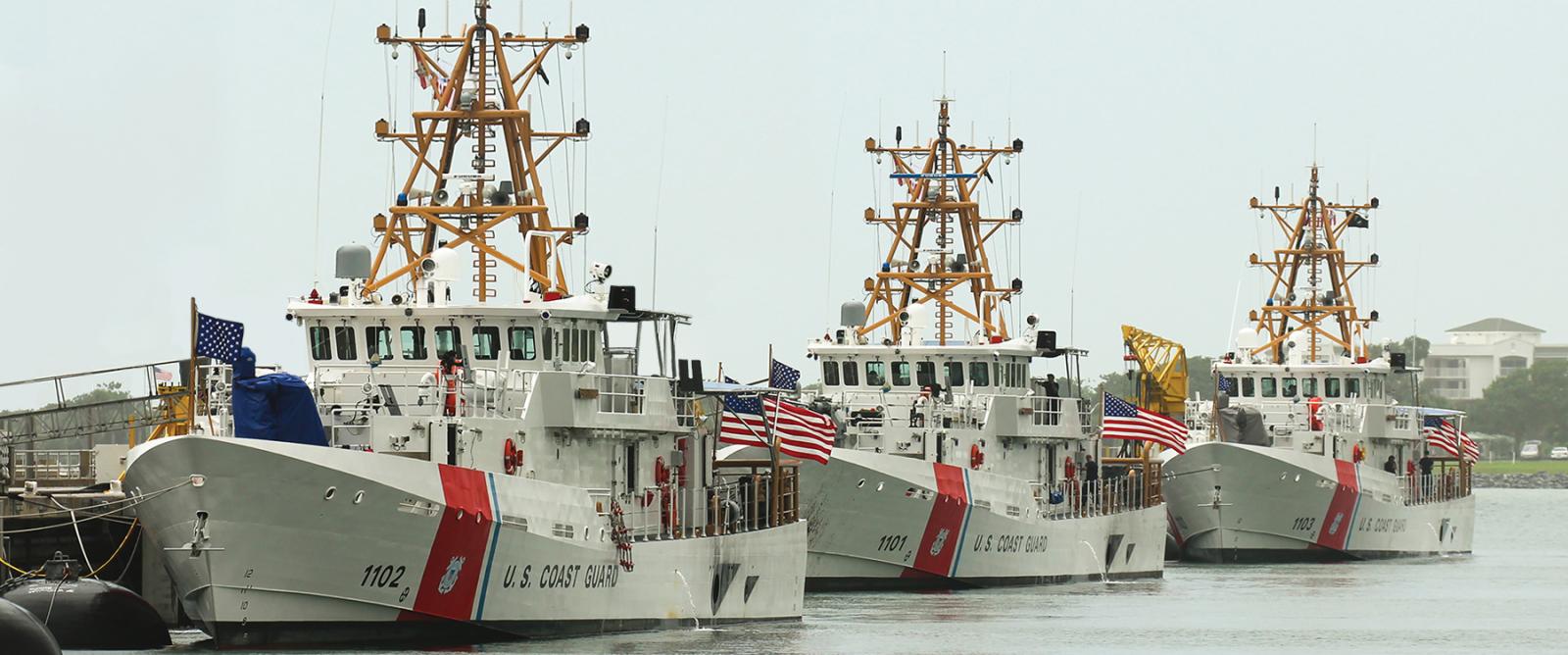
We need weapons that can deal with these threats on widely distributed craft at least as small as the Webber class WPCs. The WPCs do have a 25mm gun but unfortunately that gun does not support an air-burst round that would be needed to deal with Unmanned Air Systems, and it is far too small to expect success against medium to large ships.

APKWS is a proven system against UAS and while it is probably not going to succeed against a medium to large ship, at least has a limited capability. Their warhead is up to three times the size of that of a 57mm projectile.

There are alternatives that could also deal with UAS and that might do better against surface threats:

  • The 25mm could be replaced with a more capable gun. Some would fit in the existing mount.
  • Hellfire and its replacement the AGM-179 JAGM would offer greater range and a larger warhead but, while still relatively small, are heavier and much more expensive. They are still my favored solution.
  • Adaptations Army or Marine Short Range Air Defense system that use a remote weapon station combining missiles with a 30mm gun capable of firing air-burst ammunition (either the high velocity 30mmx173 Mk44  Bushmaster II or the lighter but lower velocity 30mmx113 M230).

APKWS is in the US Navy inventory, but there it is used primarily as an air to ground weapon. It is a semi-active Iaser homing weapon so requires use of a laser designator. It can be as simple as the L3 Harris VAMPIRE system which provides a complete system–weapons, launcher, designator, and detection–that fits on a pickup truck.

APKWS is not the only guided 70mm rocket system. South Korea has developed the “Poniard” Korean-Low cOst Guided Imaging Rocket (K-LOGIR).

This is a fire-and-forget system allowing multiple simultaneous engagements. It is also claimed to have advantages in periods of restricted visibility.

The Weapon has already been exported. Here is a report on an earlier test was done by 4th Fleet.

China CG, Japan CG, Philippine CG, Different Answers to Choice of Weapons

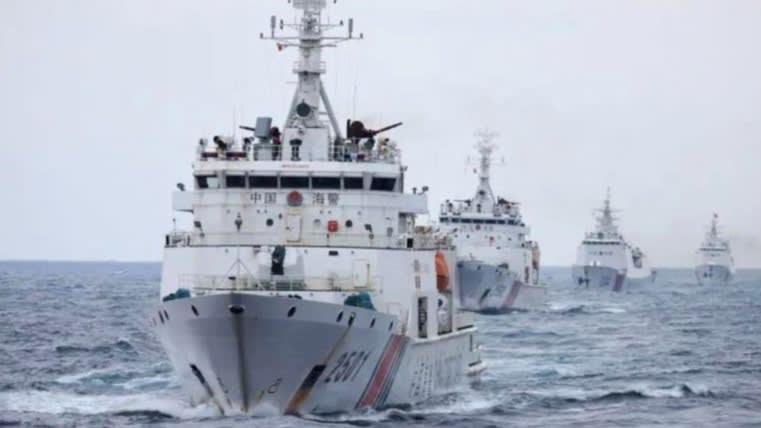
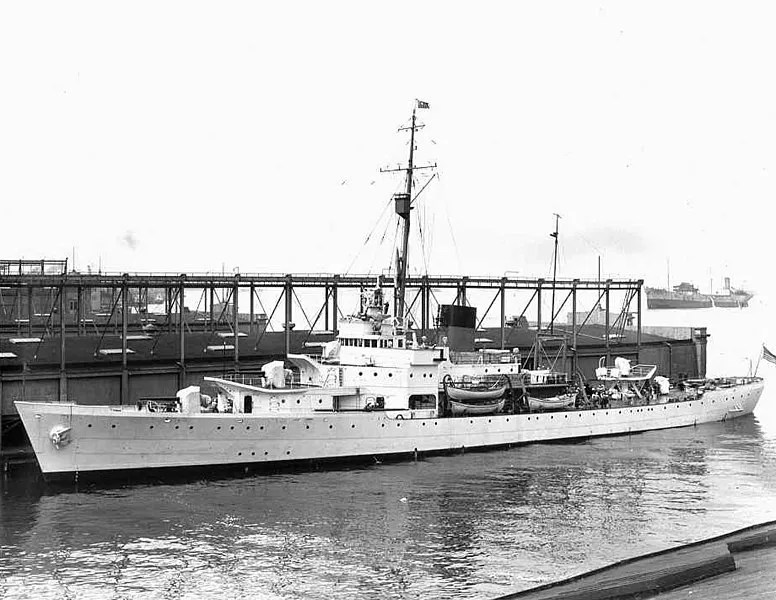
This Chinese coast guard ship 2501 is equipped with weapons believed to be 76-millimeter guns. © Kyodo

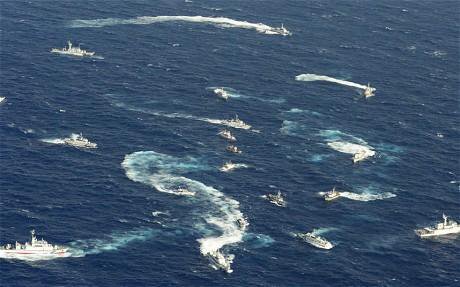
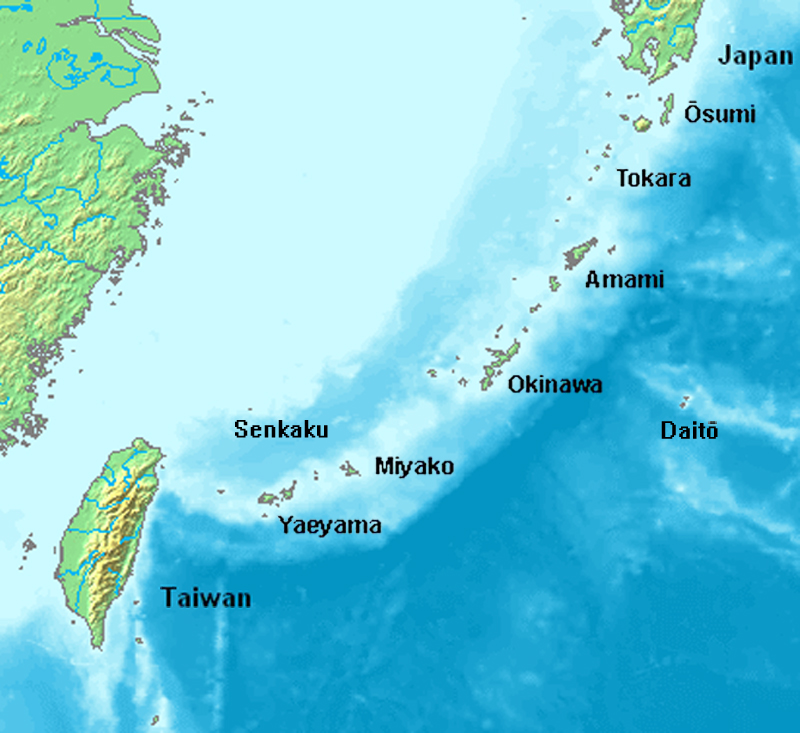
A recent large-scale transit of the Miyako Strait by three PLAN frigates and three China Coast Guard frigates has caused some alarm in Japan and raised questions about the armament on Japan Coast Guard cutters. (“China tests maritime blockade strategy in Miyako Strait“}

Ryukyu Islands. The Miyako Strait is located between Miyako and Okinawa

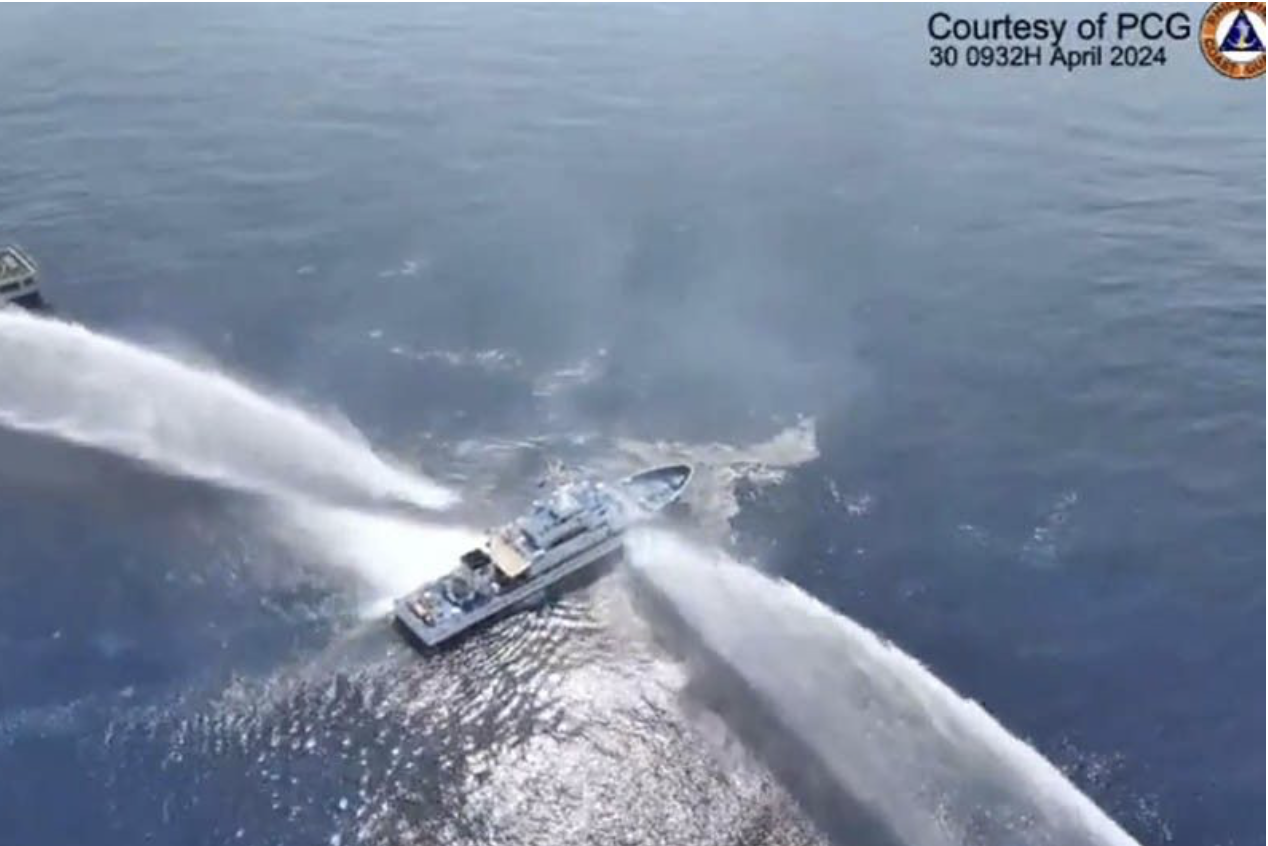
Meanwhile we see increasingly aggressive deployment of heavily armed China Coast Guard vessels in the Philippine EEZ. (“Chinese Warships, Aircraft Deploy in Strength to Scarborough Shoal“)

The Chinese, Japanese, and Philippine Coast Guard have each taken different paths in their choice of how to arm their large coast guard vessels.

Changing with the Geopolitical Situation:

China: China Coast Guard (CCG) was formed in 2013 by the consolidation of four existing agencies. At that time none of their vessels were armed with anything larger than crew served machineguns 14.5mm or smaller. July 1, 2018, the China Coast Guard was transferred from the civilian control to the People’s Armed Police. The Coast Guard Law of 1 February 2021 allows CCG ships to use lethal force on foreign ships that do not obey orders to leave Chinese waters. In parallel with this increased militarization, the China Coast Guard expanded dramatically growing into the largest fleet of cutters in the world, with several times more ships than the US Coast Guard. Four frigates or 22 corvettes that have been transferred from the PLA Navy to the CCG have retained much of their gun armament. Their newer cutters are relatively well armed. Typical armament for cutters now includes a 76mm and two 30mm guns. While this armament is typical of many Offshore Patrol Vessels world-wide, it offers significantly greater range and lethality that that of the Japan CG and particularly the Philippine Coast Guard.

Chinese H/PJ-17 30mm

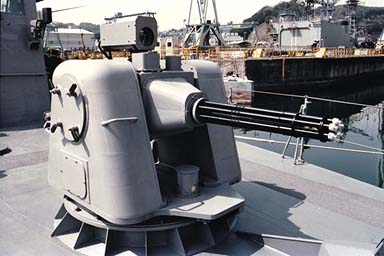
Japan: Prior to the December 2001 “Battle of Amami-Ōshima” in which the Japan CG engaged and ultimately sank a North Korean spy ship disguised as a fishing vessel, most Japanese CG cutters were typically armed with 20mm Gatling guns, the same gun used in the Phalanx Close In Weapon System (CIWS), but with a much simpler fire control system. Though they significantly outnumbered the N. Korea vessel they had considerable trouble dealing with the improvised armaments on the N. Korean Vessel that included at least one recoilless rifle and heavy machine guns. This led Japan to recognize a need for more powerful, longer ranged weapons. Even so, even the largest Japanese Coast Guard cutters, and some are very large, carry no weapons larger than 40mm. The 20mm Gatling guns still seem to be the base armament for their smaller cutters and is the secondary armament for large cutters.

Japanese 20 mm/76 Gatling Gun. Note the camera for remote targeting. JMSDF Photograph.

Philippines: The Philippine Coast Guard is in the unique position of being, in terms of personnel, larger than the Philippine Navy even including Philippine Marine Corps, and in terms of personnel, larger than the China CG. The Philippine Coast Guard was born out of the Philippine Navy in 1967 and it was completely separated in 1998. Despite this military background the Philippine CG is a police and public service organization rather than a military service. Like the Philippine military, much of its history involved suppression of internal unrest. Until 2020 their largest ships were two buoy tenders and still none of their vessels carry weapons larger than .50 caliber machine guns. More large cutters are building, but currently they have only three. The Philippines seems to be determined to show that they are the innocent party being bullied.

Why Arm Cutters?:

No existing cutters were built with the threat of Unmanned Air Systems in mind. This is likely to have an effect on future cutters.

Weapon choices are determined on the basis of expectations of who or what the cutters will have to deal with:

  • fishermen, smugglers–small arms will serve
  • domestic terrorists that might employ small vessels–something a bit heavier, with a premium on accuracy and limited danger of collateral damage, putting guns in remote weapon stations helps, but something that has a very high probability of hit on the first round like APKWS would be better.
  • state sponsored terrorists, revolutionary groups, hostile maritime militia that can employ even large ships–how they will be armed is unpredictable, but opposing cutters need to be at least equal to the most dangerous widely available weapons that are easily tacked on.
  • coast guard of other states in disputed waters–the cutters need to be armed with weapons of equal effective range so that they cannot be intimidated.
  • armed aggression by the military of another state–cutters needed to be armed or at least rapidly upgradeable for the missions they are expected to perform.

For some states the coast guard is the only navy they have, and the coast guard needs to be prepared to assume that role. In other countries, notably the UK and France, their navy also does coast guard type missions that require larger vessels. For other states, like the US, the coast guard is a significant naval auxiliary.

Why Not to Arm Cutters?:

First of course, weapons may incur costs to various degrees–procurement, maintenance, man-days of training, ship-days of training, increased cost to build a ship that can support armaments.

Weapons change how the organization views itself. Is it a military service or a law enforcement agency or exclusively a service provider like Canada’s Coast Guard?

Weapons change how others, including other nations, see the service. International law enforcement cooperation is much easier to achieve than military cooperation. It is easier for a country to trust a Coast Guard cutter in their waters than a haze gray “battleship.” I do think this presumption of trust worthiness has more to do with reputation than the actual armament and that some types of weapons look aggressive while others do not.

Is there an optimum level of weapons for Japan and Philippine Coast Guard cutters?:

The concern in Japan seems to be that with weapons that have greater range, the China Coast Guard can strike with impunity. That seems unlikely to happen as a result of a decision by higher-ups unless they want to provoke a major conflict. That is not an advantageous way to willfully initiate a war, but wars frequently result because one side underestimates the resolve of their counterparts on the other side. An overzealous midgrade CCG officer might see an opportunity to strike a blow that his Japanese or Philippine counterpart could not answer, or China’s national command authority might see using the possibility of just a few shots to inflict some damage on a Japanese or Philippine cutter as just a small step up from ramming.

In any case, leaving the impression that the opposition can inflict significant and lethal damage on your ship, with impunity, does not seem like a good idea.

The one thing guns can do that missiles cannot, is fire warning shots. Larger guns can fire more impressive warning shots at greater ranges than smaller guns. That is a consideration, but once weapons are fired it becomes a smaller step to fire for effect. Even so, a weapon that can fire an impressive warning shot at a range outside the effective range of most improvised armament seems essential. That seems to point to at least a 40mm gun.

The most obvious answer is that Japan and the Philippines should arm their cutters the way most similar vessels are armed, with one 57 or 76mm caliber gun and one or two 20 to 40mm autocannon. This has become almost a worldwide standard for Offshore Patrol Vessels.

There is another alternative that might serve them better, that is to create ambiguity or doubt in the mind of the opposition by installing VLS that could support different types of munitions or have none at all. Are they armed with loitering munitions, Hellfire, Spike ER, Spike NLOS, Sidewinders, short range anti-drone (UAS) weapons, or anti-ship cruise missiles or is a bluff? What is their range? How lethal are their weapons? No way of knowing. 


“Ukraine Claims Its Drone Boat Shot Down A Russian Mi-8 Helicopter With A Surface-To-Air Missile” –The War Zone

In May we had a report that the Ukrainians had equipped at least one USV with R-73 IR homing Air to Air missile.

Now The War Zone reports that Ukraine has claimed one of their Unmanned Surface Vessels (USV) had shot down a Russian Mi-8 Helicopter and damaged a second using this missile.

This is reportedly the first time in history a USV has destroyed an aircraft.

Helicopters have been one of the Russia’s most effective weapons against USVs. Ukraine seems to have found a counter.

This is a cautionary tale for anyone who expects to use helicopters against USVs.

Perhaps more importantly, it is also a demonstration that even the smallest marine platforms can have an AAW missile system. (The MAGURA V5 USV is only 5.5 meter (18 feet)-long.) The US developed AIM-9 Sidewinder is the Counterpart of the R-73 (NATO designation AA-11 Archer) and could be used in the same way. The AIM-9 also has a proven anti-surface capability making these weapons doubly useful.

Mini-Cruise Missile

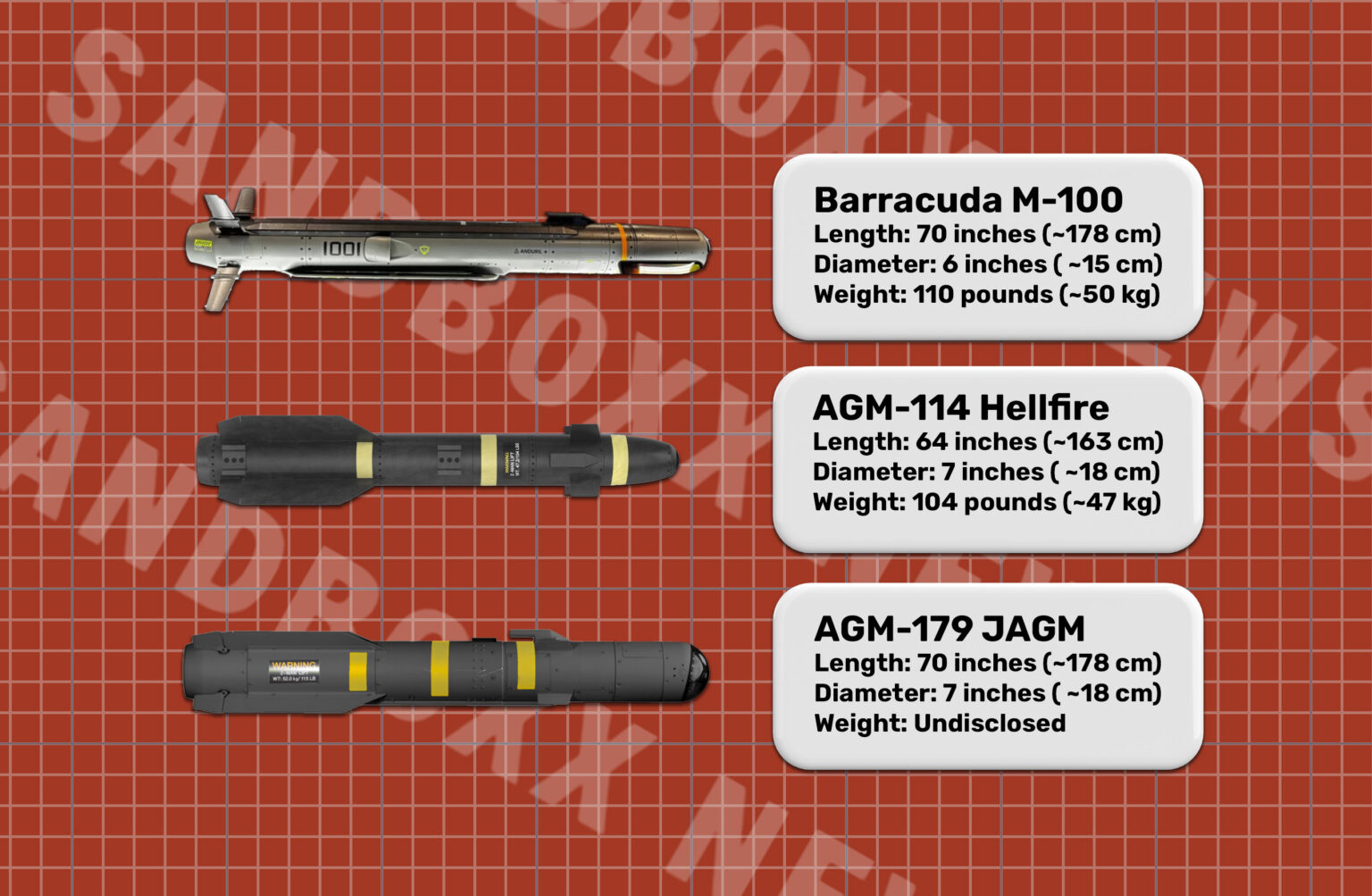
(Graphic by Alex Hollings)

SANDBOXX has a report on a new weapon, “Anduril’s mini-cruise missile is like a Hellfire on steroids.”

I have been advocating for Hellfire, or something similar, for some time as an answer to the possibility of an attack using small, fast, highly maneuverable surface craft (manned or unmanned). It could also work against some aircraft and have at least a minimal capability against an attack using a medium to large vessel. This new weapon seems to be a significant improvement and reportedly at a lower cost. Even if the Coast Guard does not get it, but DOD does, it might free up stocks of Hellfire for Coast Guard use. If the Coast Guard does get the system, it would mean that a single launch platform could cover a very large area, if they could get targeting from units on scene.

Apparently, this is not yet a program of record, but it certainly looks promising and Anduril has a good record of producing affordable innovative weapons.

Differences in capabilities between Barracuda M-100 and the Legacy Hellfire and JAGM are a larger warhead (40 pounds vs 20) and much longer range (138 miles vs at most 21). A disadvantage is lower maximum speed (roughly 500 knots vs 860 knots). The speed difference may not actually be significant over the entire range since Hellfire and JAGM are rocket powered so they don’t necessarily fly under power the entire range, rather they accelerate to a maximum speed, sustain for a period, and then coast to their maximum range. The Barracuda M-100 would be fully powered, accelerating to its maximum speed, over any range Hellfire or JAGM could reach and well beyond that.

The M-100 is the smallest of the Anduril line of Barracuda cruise missiles.

Barracuda line of AAVs and Weapons (graphic created by Alex Hollings using Anduril images)

In the video below, there is more information on the company, the defense industry and what is wrong with it, and even a “Lord of the Rings” connection. It’s almost an hour, but it is very interesting.

“Navy To Explore Arming Other Ships With Missiles Amid Constellation Frigate Woes” –Coast Guard, Raise Your Hand

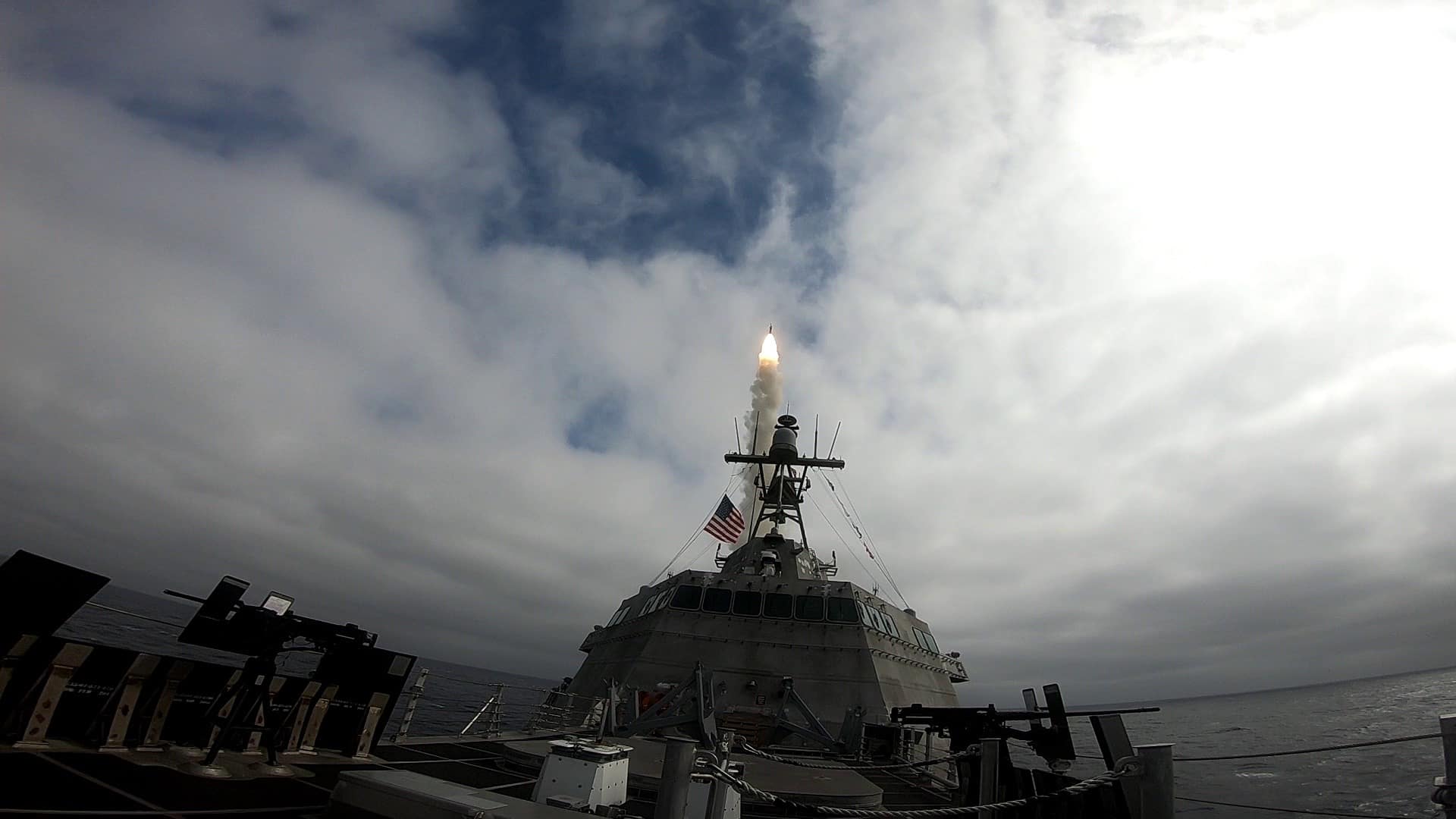
USS Savannah (LCS 28) conducts a live-fire demonstration in the Eastern Pacific Ocean utilizing a containerized launching system that fired an SM-6 missile from the ship at a designated target. 

The War Zone reports,

“Congress has demanded the U.S. Navy look into buying a new class of small warships loaded with missiles or adding bolt-on launchers to existing vessels…to help increase its combat capacity. Lawmakers ordered the study in response to major delays in work on the Navy’s future Constellation class frigates…”

The problem is simple. The Navy has been shrinking. Without a replacement in sight, they are rapidly decommissioning cruisers, each of which has 122 Vertical Launch Missile (VLS) tubes and eight Harpoon missile launch tubes. New DDGs, equipped with 96 VLS cells are coming online slowly and the new class of frigates, each of which has 32 VLS and 16 launchers for Naval Strike Missiles are long delayed and will also come out slowly.

Put simply, too few ships, with too few launch tubes.

It has been frequently proposed that missiles be mounted on Navy auxiliary ships. This is not likely to happen. These ships are not even armed for self-defense, beyond occasional crew served machinegun mounts. Most are limited to 20 knots, and they are busy scuttling supplies.

Few of the Navy’s MSC civilian manned auxiliary ships, are as well equipped for fitting into a Surface Action Group as the ten (soon to be eleven) National Security Cutters, with their higher speed, secure communication systems, data links, and Sensitive Compartmented Information Facility (SCIF). The Offshore Patrol Cutters will be only slightly less appropriate for the role.

The Coast Guard alone can’t fix this problem, but the Coast Guard can certainly help. It may not be necessary to mount missile launchers all the time. The Navy could build kits that could be quickly mounted on cutters. There are at least two options already available:

The Navy has already demonstrated use of the Mk70 containerized missile launcher on the flight deck of a Littoral Combat Ship.

The cutters would probably need a cooperative engagement capability (CEC), but that is probably also true of other platforms that might be used.

Each cutter could carry three or four containerized systems providing 12 or 16 launch tubes. Mk41 VLS mounted forward of the bridge, either conventionally or as Adaptable Deck Launchers could add eight more. Upon mobilization, there is potential for Navy or Marine Reservist to augment the cutter crews and operate the missile systems.

USS Savannah (LCS 28) Independence-variant littoral combat ship leaving San Diego with a U.S. Army MK 70 missile launcher on its deck – September 18, 2023. Photo Credit: WarshipCam.

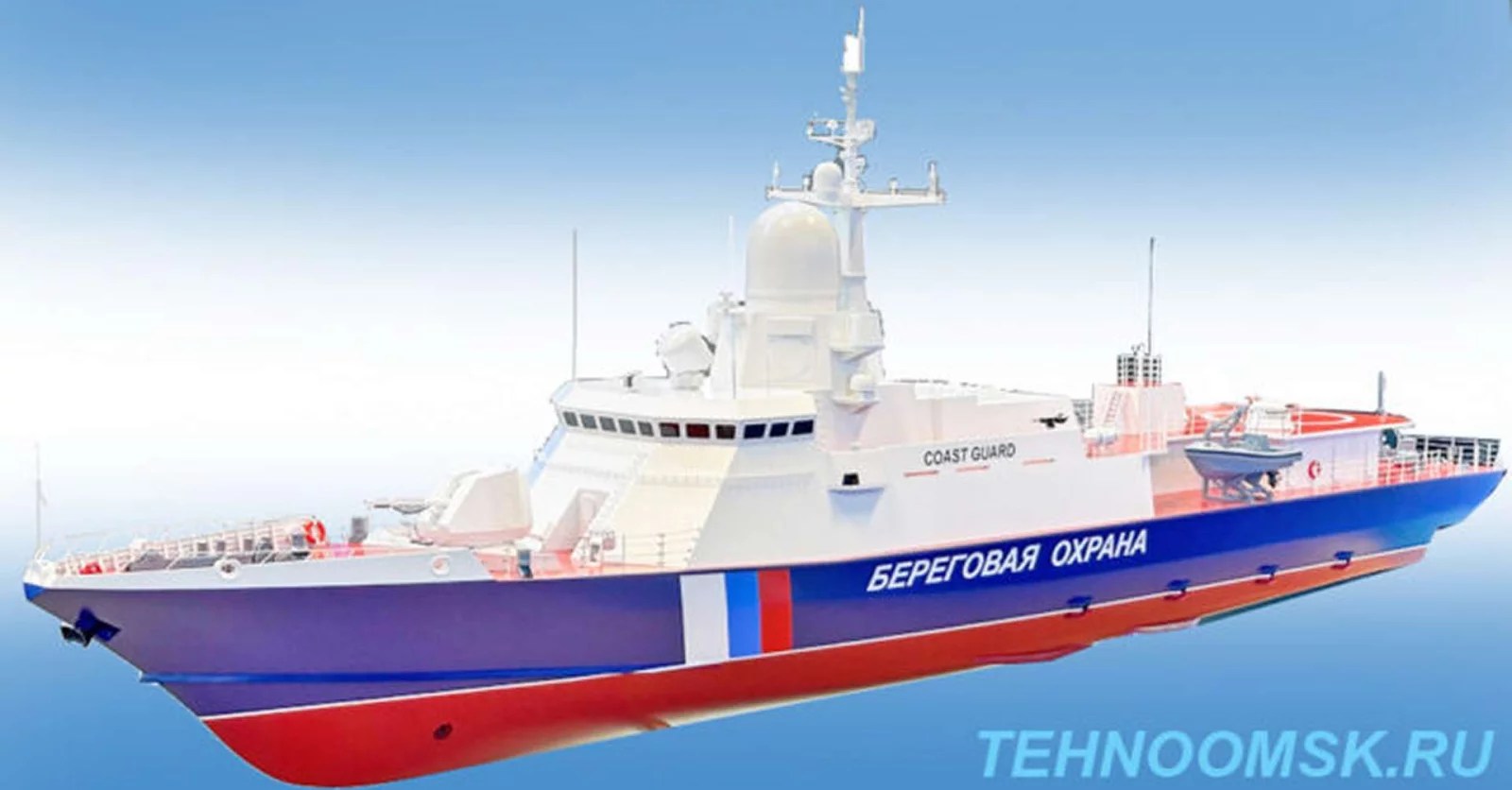
Vertical Launch AAW Missiles on a New Russian Coast Guard Cutter?

The Army Recognition Group’s Global Defense News organization reports,

According to Tehnoomsk on June 28, 2024, Russia is currently developing a new patrol ship using the Karakurt class as a platform. Shipbuilders from the Leningrad shipyard “Pella” and engineers from the Central Marine Design Bureau “Almaz” are working on this project for the Coast Guard of the Border Service of the FSB of Russia. This project leverages the established design of the Project 22800 Karakurt class missile corvette. The new vessel will be equipped with the Resurs 3K96-3E multi-channel anti-aircraft missile system and various other weapon systems.

We should note that this does not report there has been a contract awarded for construction, but if these are built and armed as described, it would mark a return to Cold War practice we have not seen for more than three decades and despite their small size, these cutters could be the most powerfully armed coast guard vessels in the world.

Russian Rubin class (Project 22460) patrol vessel Rasul Gamzatov, typical of recent Russian Coast Guard construction of a similar size ship.  It is armed with a single 30mm six-barrel Gatling gun. (Picture source: Военный Осведомитель)

During the Cold War the Soviet coast guard counterpart frequently operated variants of Soviet Navy vessel classes. The Russian Coast Guard still has a pair of Krivak III frigates and a Pauk class corvette that came out of this era, but since that time Russian Coast Guard patrol cutters have had no Navy counterpart. Their armament has not been much different from that of typical Offshore Patrol Vessels. I have seen no indication of either Anti-Ship missiles or Anti-Aircraft missiles (other than man portable air defense missiles) on Russian Coast Guard vessels.

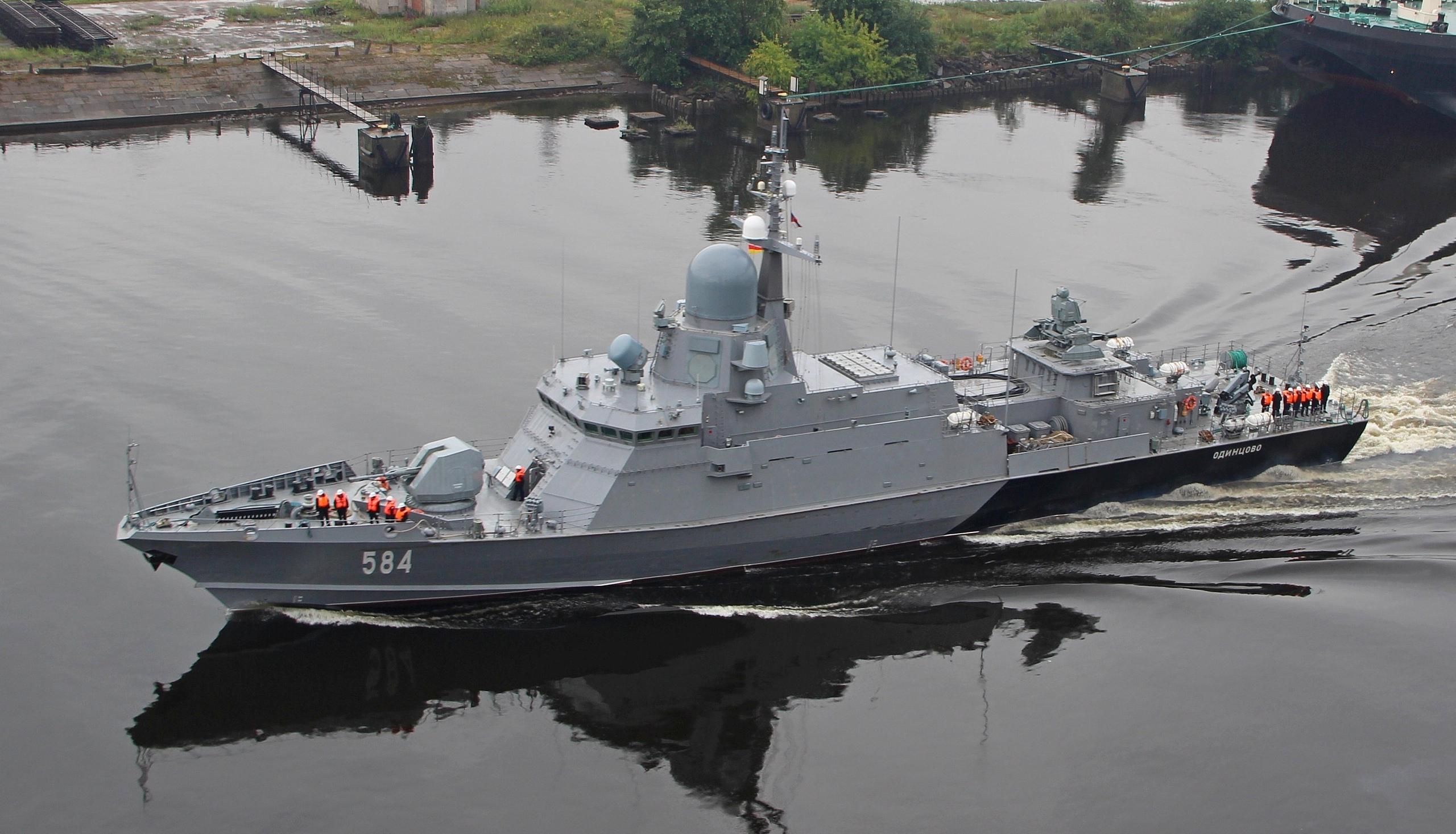
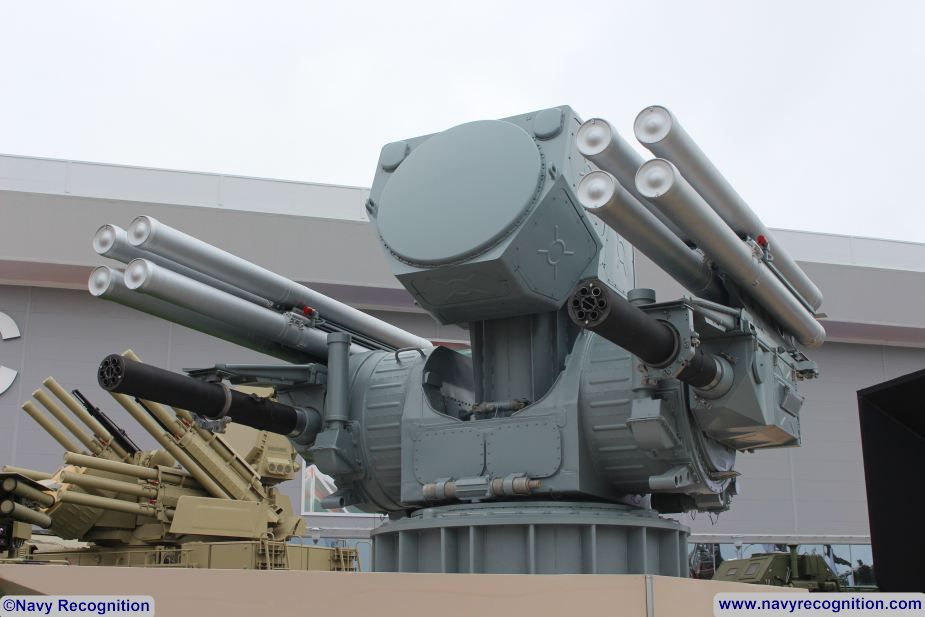
Russian Project 22800 Karakurt class corvette with 76.2 mm 59-caliber AK-176MA gun and Pantsir-M gun and missile CIWS. Vertical launch system for surface to surface missiles visible amidships. Photo Source: Reddit (Warship Porn)

The ships that this proposal is based on are the Project 22800 Karakurt class missile corvette, two of which appear to have been lost in the ongoing war between Russia and Ukraine. Members of the class have been able to reinforce the Russian Black Sea Fleet even after Turkey closed the Dardanelles by using the Russian river and canal system.

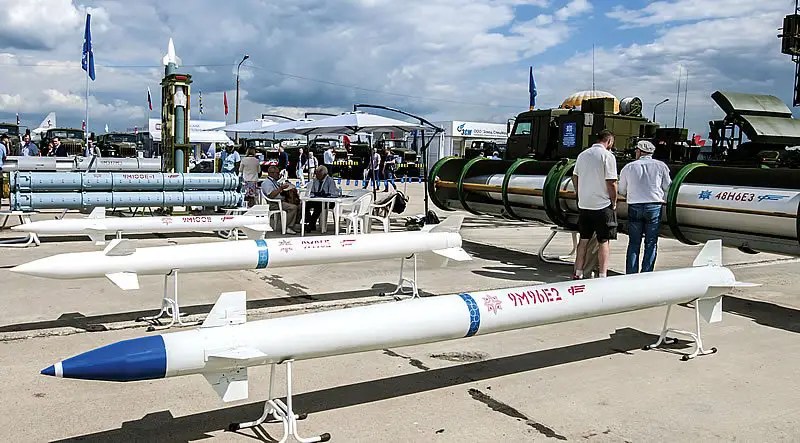
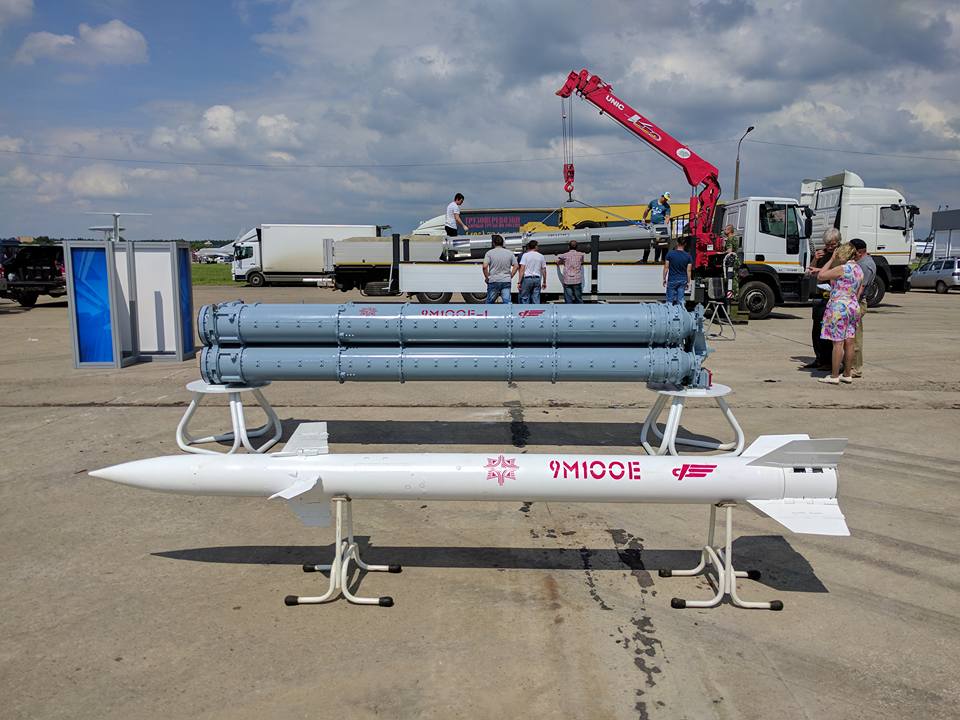
The Reported Coast Guard version of the Project 22800 class would apparently replace the cruise missile vertical launch system with vertical launch systems for the 9M96E and 9M100 AAW missile systems.

The 9M96E missile is smaller than any of the Standard Missiles. In sizes it is closer to the ESSM, longer but with a smaller diameter.

The smaller IR homing 9M100 missile, which can be quad-packed into the launcher, replacing the larger missile on a 4 to 1 basis, is about the size of an AIM-9 Sidewinder, another IR homing missile, in length and diameter, but reportedly considerably heavier.

Why the Change?

Why would the Russian Coast Guard be suddenly adding AAW missiles to their cutters? It probably has something to do with the emergence of unmanned systems as a threat. If the intent was simply self-defense, I would think they would use the Pantsir-M gun and missile CIWS as mounted on all but the first two Navy Karakurt class. Instead, they will have two 30mm gatling guns. The AAW system they are getting is the same one used on the currently in production Project 20381/20385 subclasses of Steregushchiy-class corvettes where it replaced the Kashtan CIWS. 

I am guessing these cutters might be used for force protection or as mobile AAW missile batteries. There is no indication of an ASW capability on either Navy or Coast Guard versions of the Project 22800.

The Pantsir-M was presented at Army 2017

“Iran’s ‘Zulfikar’ Submersible Torpedo Boat” –Covert Shore

Covert Shores reports on Iran’s version of an unusual asymmetric threat that originated in North Korea. Used by the Islamic Revolutionary Guard Corps, PATFORSWA may encounter these.

“I originally interpreted these to be Special Operations assets intended as a form of swimmer delivery vehicle. This would be consistent with related types in North Korean and Vietnamese service. In that role the torpedoes would be for self-defense. However, I now view them more as submersible torpedo boats intended to sink ships with torpedoes.”

The torpedoes are 12.75 inch (324mm) light weight anti-surface homing torpedoes. (243mm noted in the diagram above is apparently a typo.) We can’t take too much comfort in the fact that these are not heavy weight torpedoes. Heavy weight torpedoes frequently break ships in half, but because water is not compressible, the 100 pound warhead of a typical light weight torpedo still has about one half the impact of the 600 pound warhead of a typical heavy weight torpedo. These smaller torpedoes can seriously hurt even a large ship, possibly including immobilizing it, and making it an easier target for follow on attacks. Used against a vessel the size of PATFORSWA’s Fast Response Cutters, they would be fatal. Assuming these are wake homers, it might be wise to learn the maneuvers used to defeat wake homing torpedoes.

It is unlikely these little submersibles can go very deep or that they have much mobility while submerged. Even so, much of the Persian Gulf is shallow, so there are certainly places where they could rest on the bottom, lying in wait.

Turkish Twin 35mm CIWS on South Korean Built Philippine Corvette (corrected text)

Gökdeniz twin 35mm CIWS (Aselsan image)

Naval News reports,

“On June 25, 2024, Türkiye’s leading defense company Aselsan announced that the Philippine Navy’s newly launched corvette, BRP Miguel Malvar, is equipped with the Gökdeniz close-in weapon system (CIWS).”

This is the first of a class of two 3,200 ton light frigates or corvettes. It is notably larger than the two previous 2,600 ton Jose Rizal class frigates also built by Hyundai Heavy Industries in S. Korea for the Philippine Navy which have yet to receive a CIWS they are expected to mount. I presume they will receive this system as well. Hyundai has also been contracted to build six 94.4 meter Offshore Patrol Vessels. They are well armed for OPVs including a 76mm gun, short range AAW missiles, and two 30mm guns presumably in this mount.


USCG perspective: All three ship classes are considerably smaller than either the NSCs or the OPCs. The 94.4 meter OPV is about a third larger than the Bear Class 270s.

This will be the first CIWS in the Philippine Navy, but it also notable because of its potential effectiveness in other roles. It should be more effective than Phalanx against threats other than cruise missiles, it might even be better against them. This CIWS is equipped with the same 35mm guns that equip the German made Gepard Flakpanzer that has proven so effective against kamikaze drones in Ukraine. An air burst round is available for the gun as well as Armor Piercing/High Explosive/Incendiary and High Explosive Incendiary rounds. 

At effective ranges, 4000 yards or less, these would also be devastating against above water systems on any surface vessel.

At some point, I believe the Philippine Coast Guard will choose to arm their cutters. The largest of these could easily accommodate a 76mm but this twin 35mm might be a good alternative. It or smaller mounts using single 35mms would probably fit on many of their smaller cutters, simplifying ammunition logistics. The Bushmaster III chain gun can use the same ammunition.

“Chinese Submarine’s Torpedo Destroys Amphibious Landing Ship During Exercise” –The War Zone / More on Why the CG Needs Torpedoes

The War Zone has an article including the video above that appears to be a wake homing torpedo exploding under the stern of a small (800 tons, 191′) LST (Landing Ship Tank).

It also includes a discussion of wake homing torpedoes and their capabilities. This is assumed to be a typical heavy weight (21″/533mm) torpedo. Russia and China also have much larger 25.6″/650mm torpedoes. Of course, they have or have had smaller (450, 400, 355, and 330mm) torpedoes too.

Wake homing torpedoes are problematic for the defense because decoys and acoustic countermeasures like Nixie don’t work against wake homing torpedoes. The Navy has been working on developing a hard kill countermeasure.

How is this related to the Coast Guard?

As I have contended the Coast Guard’s missions, particularly counter terrorism, require the ability to forcibly stop any ship regardless of size. For medium to large ships, getting a “mobility kill” with a gun is very difficult since most of the propulsion machinery is below the waterline and large marine diesels are extremely tough.

A torpedo that destroys the propellers and/or rudder may be the answer. It could be either wake or acoustic homing, as long as it blows up under the stern, like the one in the video above.

It is not like the Coast Guard is going to use a lot of torpedoes. A marine terrorist attack is an unlikely event, but the consequences of a successful attack could be catastrophic, perhaps leading to a war as happened after 9/11.

By my calculations, we have 31 individual ports or port complexes that might be targeted. The Webber class WPCs appear the most appropriate asset to arm for the purpose of protecting those ports, since they, are most likely to be underway or at least ready to move, and near the ports that might be threatened. We expect to build a total of at least 67. Assuming two torpedoes per WPC, that would be 134 torpedoes and probably less, since some cutters will not be in a position to use them, and some will be in maintenance status.

This is important.

The Navy does not have to buy torpedoes for the Coast Guard, they just need to loan the Coast Guard torpedoes from war reserve stock, and if a war starts the Navy can have their torpedoes back.

We don’t need the most expensive torpedoes. 

The standard US Navy heavy weight torpedo, the Mk 48, is very large, heavy, and extremely expensive, and the Navy can’t make enough of them, but we don’t necessarily need a large warhead or great range, nor do we need a torpedo that can operate at great depth against submarines.

There are three possibilities for torpedoes that the Coast Guard might use, existing light weight torpedoes, new very light weight torpedoes, or new heavy weight torpedoes.

New Heavy Weight Torpedo: Reportedly the Navy is fast tracking a new heavy weight torpedo with a target price of $500,000, much less than the cost of the Mk48 ($4.2M) and even less than the cost of the Mk54 light weight torpedo ($839,320 in 2014). They don’t say so, but this may be explicitly a wake homing anti-surface vessel torpedo. It might also be smaller than the Mk48. If the torpedo is made significantly shorter than the Mk 48, it might permit Submarines to carry more torpedoes. More war shots would be an advantage.

Mk 46 Light Weight Torpedo

Light Weight Torpedo: For at least three decades as many as 36 US Coast Guard WHECs (aka WPGs) were equipped with light weight torpedoes. Throughout their lives, the 378s had two sets of triple light weight torpedo tubes and a torpedo magazine in the superstructure for additional torpedoes, so the Coast Guard has had these in the past.  At least some Light Weight ASW torpedoes, beginning with the Mk46 Mod5 (1984), still a NATO standard, are reported to have an anti-surface capability. Reportedly 26,000 Mk46 torpedoes, including more than 6000 Mod 5s have been produced. The Navy has also produced more capable Mk50 and Mk54 light weight torpedoes, but for the counter terrorism mission the Coast Guard does not need their additional ASW capabilities.

Very Light Weight Torpedo

Very Light Weight Torpedo: 

The Navy has contracted Raytheon for a new class of torpedo, 6.75″ in diameter (171.45mm), about 85″ in length, and weighing about 220 pounds (100 kilos). More here.

While this Common Very Light Weight Torpedo (CVLWT), also known as Compact Rapid Attack Weapon (CRAW), is reportedly effective in both defense (as an anti-torpedo torpedo) and offense against both surface and subsurface targets, by submarines, surface vessels, and aircraft, the initial purchase is only for US submarines.

We may see additional applications for this weapon. There may be good arguments for increasing the production to include defense for surface vessels and offensive use by ASW helicopters and Unmanned surface and subsurface systems.

While the warhead is only half the size of that for the Mk46 and about one twelfth that of the Mk48, it is probably enough to disable even large ships and its small size means more can be carried in the same space.

A Navy briefing slide showing the internal components and describing the various features of the Penn State University’s Applied Research Lab (PSU/ARL) Common Very Light Weight Torpedo (CVLWT) design

It seems the Navy, after a long period of apparently coasting, is showing renewed interest in developing torpedoes and torpedo countermeasures. In addition to the Common Very Light Weight Torpedo, and the new Heavy Weight Torpedo, the Navy is also developing an improved Light Weight ASW torpedo, the Mk54 Mod2.

New weapons may provide an opportunity to repurpose older weapons.

Sweden Selecting New Family of Weapons for Small Craft

Swedish Combat Boat 90 (CB 90) in the port of Gothenburg. Photo by Arco Ardon

Naval News reports,

The Swedish modernization of their coastal troops is continuing, with the formal call for tenders for a new surface-to-surface anti-ship missile. The new weapon will receive the formal designation RBS 18, and unlike the current man-portable Hellfire-missile system used in the short-range anti-ship role by the Swedish marines will be mounted aboard the CB 90 combat boat.

Defense News reports,

“Sweden plans to acquire anti-aircraft guns for its fast-assault boats to counter drones and helicopters…”

Defense Industry Europe reports,

“FMV (Försvarets materielverk), the Swedish Defence Materiel Administration, announced the signing of a contract for the delivery of mortar-armed boats as part of the Amfbat 2030 programme.”

The Mortar equipped assault craft appears to be a resurrection of the previously cancelled Combat Boat 2010 program. The associated Patria 120mmAdvanced Mortar System could also be used in a direct fire mode.

The Amphibious Battalion operates between sea and land with the overall task of preventing enemy amphibious assaults. With the new maritime artillery, the fire controller on, for example, a Combat Boat 90 HSM can provide target data to the firing platform, enabling the firing of grenades at a high rate of fire while advancing, for indirect engagement of various types of ground targets. Image: FMV.

What we are seeing is a comprehensive overhaul of Sweden’s approach to littoral combat for their Amphibious Battalions (Amfibiebataljonen) of the Swedish Armed Forces from Stockholm and Gothenburg, assigned with defending the coastline, including numerous islands, against potential amphibious assaults.

While the mortars will be mounted on new construction boats, the new air defense and anti-ship missile systems will be mounted on existing CB90 (combat boat) assault craft.

The CB90 is a very popular product, used by at least nine different nations including the US, UK, and Ukraine. The Russian Navy even has what appears to be unlicensed copies of the craft. Mexico’s eight ship Oaxaca class Offshore Patrol Vessels carry a CB-90 HMN Patrol Interceptor in their well deck.

The CB90 displaces 23 tons and is 52 feet long with a 12.5 foot beam. 

If a weapon system fits on a CB90 it will certainly fit on any of the US Coast Guard’s patrol boats and larger cutters. 

In all probability the AAW weapon system will include a 30mm chain gun. Short range AAW missiles are possible. Perhaps the APKWS.

The anti-ship missile may be something entirely new. The closest to the description I know of, other than the MARTE MK2/N mentioned in the article, is the Spike NLOS.