“SH Defence to deliver Cube Mission Modules to U.S. Coast Guard”–Naval News

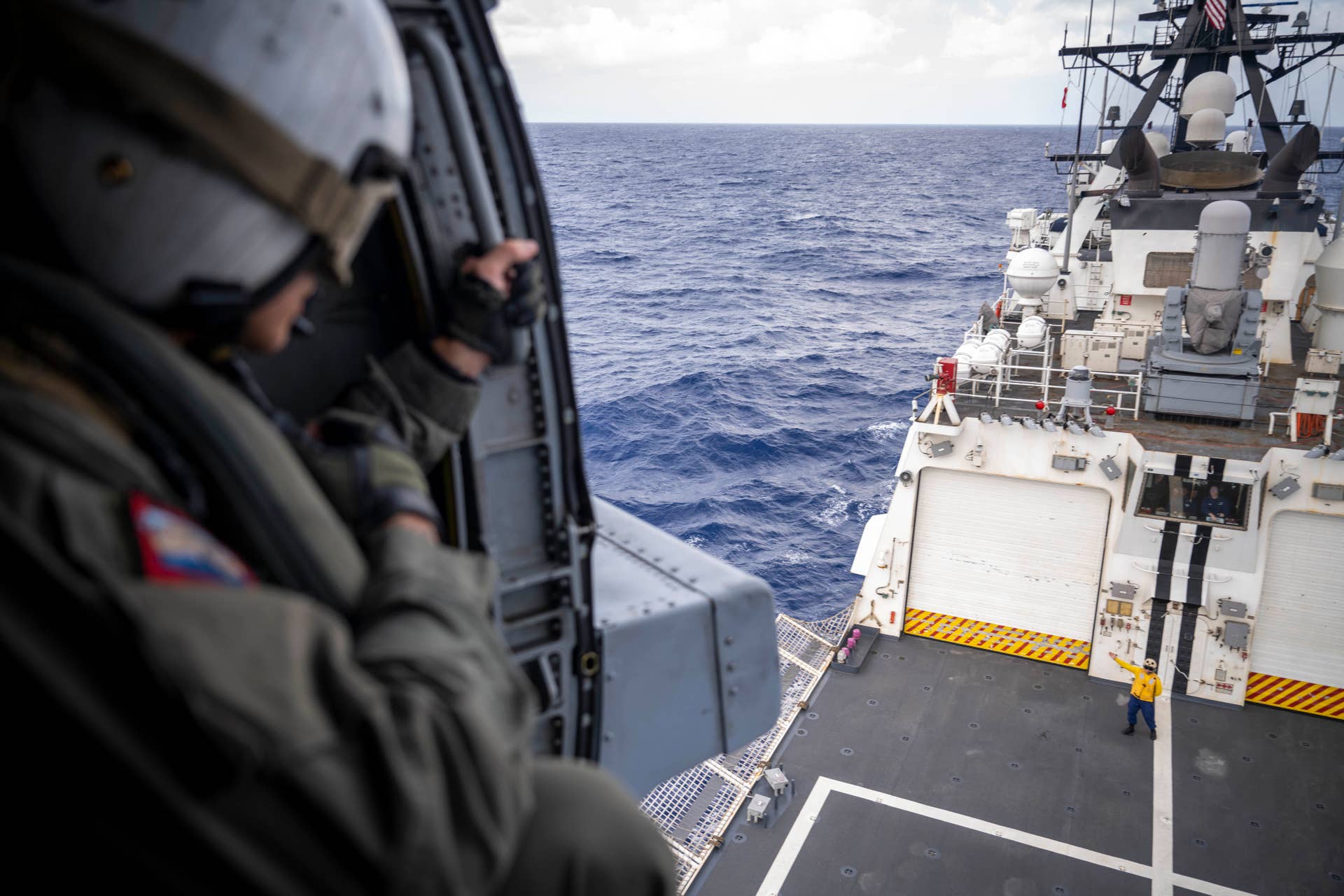
U.S. Coast Guard Cutter Storis (WAGB 21) Is underway in Mobile, Alabama, May 23, 2025. Storis conducted sea trials 20 miles off Petit Bois in the Gulf of America. (U.S. Coast Guard photo by Petty Officer 3rd Class Grace McBryde)

Naval News reports,

SH Defence a Danish Defence Company with an office in the USA has signed an agreement with the US Coast Guard through Foreign Comparative Testing, to deliver CubeTM Mission Modules and CubeTM System RemoteOperated Twistlocks for integration into US Coast Guard Cutter Storis.

A brief overview of “The Cube” here: 12:52

“Russia Deploys Icebreaker With Kalibr Cruise Missile Capability, Blurring Civilian-Military Lines” –United 24 Media

“The Project 23550 Ice-class patrol ship “Ivan Papanin”, built for the Russian Navy at “Admiralty Shipyards”, went to sea for factory sea trials. https://tass.ru/armiya-i-opk/21229221

United 24 Media reports that,

The Russian Navy formally commissioned the Ivan Papanin, a Project 23550 patrol icebreaker…Armament includes a 76.2 mm AK-176MA automatic naval gun, but the most notable feature is its ability to carry containerized missile systems.

There have been several references to these as if they made a significant difference, but actually, so far we have not seen containerized missiles actually mounted. The Russian Navy has many missile launchers in the Arctic and the US Navy (and US Army) has also demonstrated the ability to deploy containerized missile launchers, using one or more Mk70 launchers. Most Russian icebreakers are civilian ships but the Russian Navy has maintained their own icebreakers since at least World War II. This is not a big change. We are just seeing weapons packaged a different way, a way that allows the armament to change rapidly.

“National Defence Welcomes the Canadian Coast Guard to the Defence Team” –Canadian Government

Canadian CG MPV. Credit Aker Arctic. I expect vessels like these are seen as essential to protect national sovereignty.

The Canadian Government has announced that,

“The Department of National Defence (DND) today announced the integration of the Canadian Coast Guard (CCG) into the Defence Team, marking an important step forward in strengthening Canada’s maritime security…This transition also includes key personnel from Fisheries and Oceans Canada, bringing greater collaboration across departments in support of Canada’s maritime priorities…The CCG will remain a civilian Special Operating Agency, with no change to its status…the Government of Canada has also proposed expanding the CCG’s services to include maritime security activities under Bill C-2, which is currently before Parliament.

It appears this is aimed at facilitating law enforcement in the Arctic, making the Canadian Coast Guard more of a law enforcement agency, and enhancing their ability to deal with human trafficking and fentanyl precursors.

It may be surprising that the Canadian vessels that cooperate with the US Coast Guard in conducting drug enforcement are Canadian Navy rather than Coast Guard. The Canadian Coast Guard vessels, unlike USCG vessels are not armed.

“HMS Coventry (D118) Sea of Fire” –Video

Above is a video that I saw on Cdr Salamander’s “Full Bore Friday.” This happened about 43 years ago so there is a good chance you may not know about it. The British lost several ships but still won the war. Ironically if Argentina had waited for a few months some of the critical ships would have been decommissioned, most importantly the two HMS Fearless Landing Platform Docks. Instead they remained in commission until 1999 and 2002.

The HMS Coventry was slightly smaller than a Nation Security Cutter or an Offshore Patrol Cutter. During the fighting the Type 42 had no close in weapon system but they were added shortly after the fighting ended.

It was a failure to add what was needed.

“COAST GUARD EXERCISES OPTIONS ON $3 BILLION OFFSHORE PATROL CUTTER CONTRACT” –Austal News Release

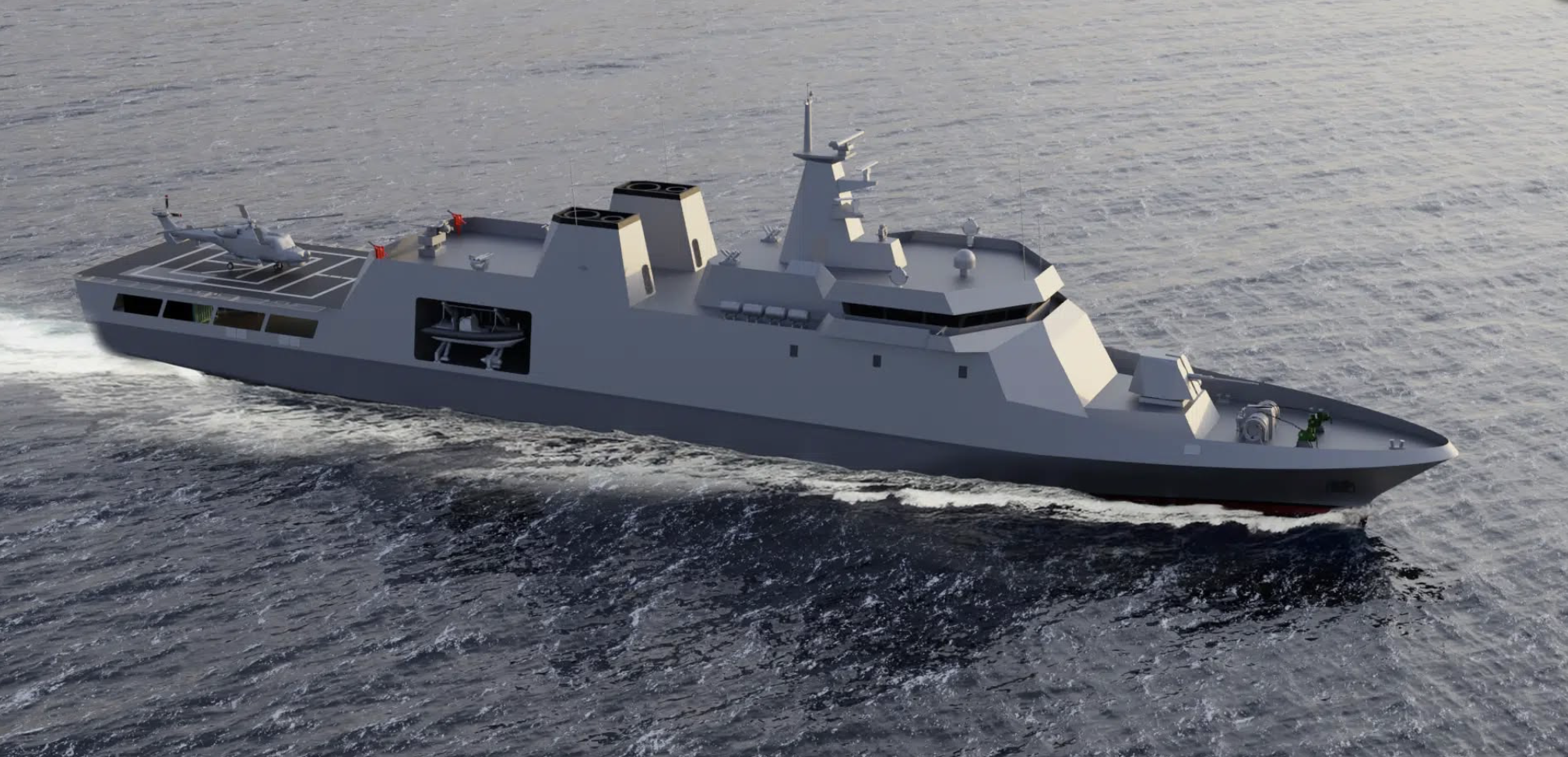
USCGC Pickering Artist rendering starboard quarter. Credit: Austal

Below is a news release from Austal Shipbuilding.


SEPTEMBER 4, 2025

Mobile, Ala. – The U.S. Coast Guard exercised options worth $314 million to Austal USA for the Offshore Patrol Cutter (OPC) program.  The contract options provide Austal USA approval to order long lead time materials (LLTM) for another 3 OPCs, Austal USA’s 4th, 5th, and 6th cutters.  Funds have also been provided for logistic supply items for two OPCs.  The original contract was awarded to Austal USA in June 2022 included detail design and construction for up to 11 OPCs with a potential value of $3.3 billion. To date, 2 of 11 OPCs in the contract have been awarded to Austal USA.

“We are pleased to receive these contract options for long lead-time materials in support of the U.S. Coast Guard’s OPC program,” commented Austal USA President Michelle Kruger. “These early awards speak to the strong partnership that has developed between the Coast Guard and Austal USA teams.  We look forward to continuing to strengthen our partnership and deliver these much-needed cutters.”

Work on Austal USA’s first OPC, Pickering (WMSMS 919), is well underway with the keel laying planned for December.  Construction began on Icarus (WMSMS 920) in early August.

The 360-foot OPC will support the national security strategy for maintaining the nation’s economic, social, environmental and military security mission areas. The OPC will typically conduct its primary missions beyond 12 nautical miles from shore and will be employed anywhere the national interests require the Coast Guard’s unique blend of authorities and capabilities. OPC will provide the majority of the Coast Guard’s offshore presence conducting a variety of missions including law enforcement, drug and migrant interdiction, and search and rescue.

With a range of 10,200 nautical miles at 14 knots and a 60-day endurance period, each OPC will be capable of deploying independently or as part of task groups, serving as a mobile command and control platform for surge operations such as hurricane response, mass migration incidents and other events. The cutters will also support Arctic objectives by helping regulate and protect emerging commerce and energy exploration in Alaska.

“Coast Guard to get first MQ-9 drones” –Military Times

General Atomics Aeronautical Systems’ MQ-9A “Big Wing” UAS flew in the hostile climate of the Canadian Arctic. GA-ASI

Military Times reports reports,

About $266 million of the nearly $25 billion that the Coast Guard received in the “One Big Beautiful Bill Act” signed into law in July will be used to procure the service’s own MQ-9 Alpha long-range unmanned aerial systems, Lieutenant Commander Steve Roth said.

I am glad to see the Coast Guard buying its own airframes but I don’t understand why they are not buying the MQ-9B SeaGuardian that is optimized for over ocean search and includes Minotaur like all Coast Guard fixed wing aircraft along with link 16. From. Wikipedia:

The MQ-9Bs performance changes include a 79 ft (24 m) wingspan that has winglets and enough fuel for a 40-hour endurance at 50,000 ft (15,000 m). Features include High Definition EO/IR Full Motion Video sensor, De/Anti-Icing System, TCAS, and Automatic Take-Off & Land. The system also includes a completely redesigned & modernized integrated ground control station with 4 crew stations.

Thanks to David for bring this to my attention.

“ASW Should Be a Coast Guard Mission­–Again” –USNI

USCGC Duane on North Atlantic Convoy Duty. AS seen from USCGC Spencer.

The US Naval Institute September Proceedings includes an argument that major cutters need to be prepared to take on anti-submarine equipment. In an long war the author envisions the Coast Guard will ultimately have their own ASW equipment but recognizes that initially the helicopters, towed array sonar, and crews could be Navy..

The author, a submariner, also believes the equipment could help with peace time missions.

Important, ASW investment would offer immediate peacetime benefits. Enhancing the Coast Guard’s underwater surveillance capabilities would directly strengthen its border security and counternarcotics missions, improve boarding team safety, and extend interdiction range in the maritime domain. Many of the technologies necessary for submarine detection would be valuable in locating low-profile drug smuggling vessels, including go-fast boats and semisubmersibles. (See “Interdicting Narcotics at Sea,” pp. 10–11, August 2025.) These crafts’ minimal radar and visual signatures pose detection challenges similar to those of modern diesel-electric submarines.

There were good reasons ASW equipment was removed from the 378s in 1991 as the Soviet Union fell apart, but things have changed. I would expect the Chinese to use their conventional submarines to lie in wait for US submarines and aircraft carriers in the Western Pacific. They are unlikely to engage American subs with their own SSNs. I think they are more likely to engage US logistics with their SSNs. The US Navy does not want to divert highly capable AAW assets to convoy escort but currently those are the only type of escorts the Navy has.

Modernizing Base Charleston and Base Seattle

240825-G-SG988-1089. U.S. Coast Guard Cutter Polar Star (WAGB 10) (left) sits moored next to U.S. Coast Guard Cutter Healy (WAGB 20) at Coast Guard Base Seattle, Aug. 25, 2024. The Polar Star and Healy are routinely deployed to Arctic and Antarctic locations to support science research or help resupply remote stations. (U.S. Coast Guard photo by Lt. Chris Butters)

Coast Guard News announces two new contracts to modernized Base Seattle and Base Charleston:

Reconstruction of Pier November (second from the bottom) continues July 23, 2025, at Base Charleston in North Charleston, South Carolina. The Coast Guard used funding made available under the One Big Beautiful Bill Act to modify an existing contract to remove submerged pilings in the vicinity of the piers to facilitate construction of new and modernized facilities to support Coast Guard major cutter operations. U.S. Coast Guard photo.

Liberator, Containerized Launcher for Torpedoes and Maybe More

Keyport Technicians working on a Mark 48 in early 1982. U.S. Navy Photograph No. DN-SC-86-00553.

Naval News reports,

A new line item in the U.S. Navy Fiscal Year 2026 budget is supporting a containerized Mark 48 Advanced Capability (ADCAP) torpedo launcher for use on unmanned surface vessels (USV) and small combatants.

But looks like there may be more to it than the very expensive Mk48 torpedo.

“Program Executive Office, Unmanned and Small Combatants (PEO USC) is leading the effort and will deliver a 3.5 hour presentation about Liberator and a related unmanned undersea vehicle (UUV) payload…The Liberator provides for the development of alternative methods for launching torpedoes or similar devices…”

The Mk48 is intended to be used against the most demanding (nuclear submarines) in the most hostile environment. They have to be fast and they need to be capable of surviving great pressure. For this reason they are extremely expensive. The basic design goes back to 1972 but there have been many improvements.

Torpedo tubes are already being used to launch and recover Uncrewed Underwater Vehicles (UUVs). Plus we have begun seeing new cheaper torpedoes.

I find this exciting because it looks like we might have a relative inexpensive anti-surface torpedo. It would allow a Patrol Boat to stop even a large ship.