Thanks for a Great 2019

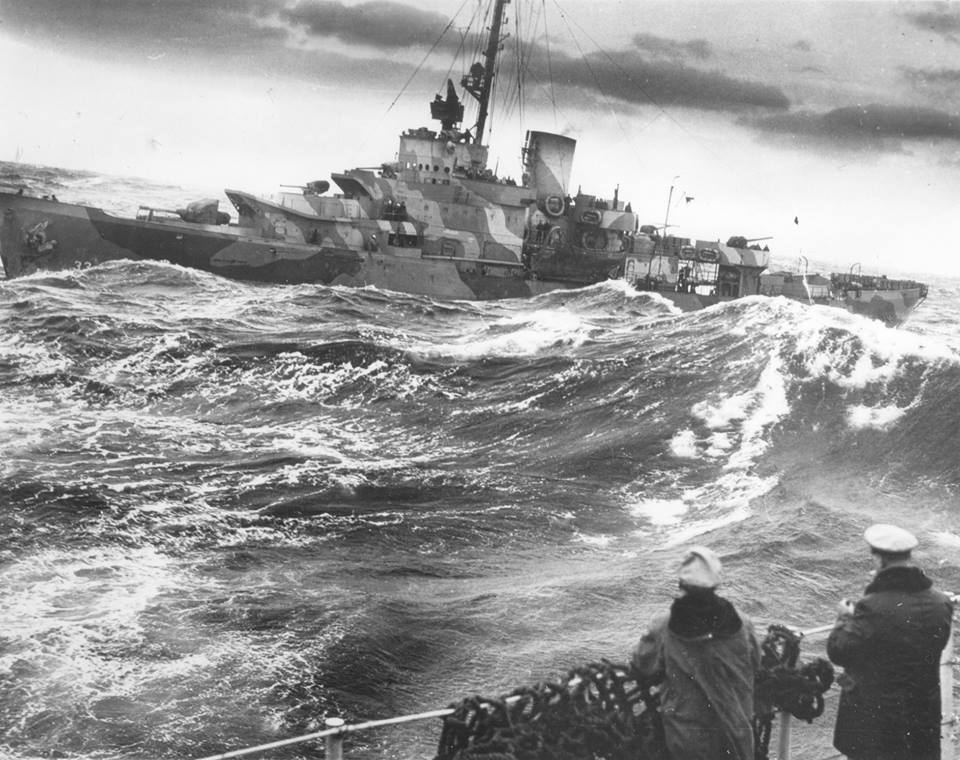
USCGC Duane on North Atlantic Convoy Duty

Thanks to the those who have come by to see what we have been discussing and especially to those who put in their two cents, your interest has made the effort more than worthwhile. This has been a remarkably civil and knowledgeable group. Nice to see that all experience and knowledge levels are respected.

It has been a very successful year for this blog. Readership was up 18.7% over the previous best year, 2017, to 255,331 views. This is the first time there have been more than a quarter million views in a year. Individual visits to the blog were up 49% over the previous best year, 2018, to 86,140, due in large part to one post, “Navy this is Coast Guard, we need to talk” that was viewed 18,245 times.

Readership for eight of the twelve months was higher than any previous corresponding month. Until this year, the blog had never had more than three month with more than 19,000 views, and never more than two months with more than 20,000, nor more than 20,881 in a single month. For 2019, ten months had more than 19,000 views, eight had more than 20,000, and one 31,500.

I would also like to thank other bloggers who have seen fit to reference our little corner of the internet, including:  Center for International Maritime Security (CIMSEC) “Next War Blog”, Eaglespeak, and Cdr Salamander.

We had 1,733 comments. This kind of feedback is most welcome. The post with the most comments was Navy Awards FFG Conceptual Design Contracts for FFG(X)–Speculation on a NSC Derivative (Feb. 2018), with 123.

Would particularly like to thanks Tups for bringing his special Icebreaker knowledge to the blog.

Just over 25% of the readers were from outside the US. Visitors from 19 different nations came by for more than 1000 views. In order, they were the Philippines (8,509), the UK (8,327), Canada (5,051), Australia (4,199), Germany (2,344), the Netherlands (2,323), Finland (2,316), Japan (2,097), Greece (1,958), Chile (1,801), New Zealand (1,399), India (1,352), Russia (1,192), Spain (1,187), Malaysia (1,151), Ireland (1,146), China (1,107), Argentina (1,092), and Norway (1,087).

There were 311 new posts in 2019, pushing the total to 2,562 posts.

The top ten post for 2019 were

  1. Navy this is Coast Guard, we need to talk (2019)
  2. An Offshore Patrol Vessel With Teeth (2019)
  3. The Sharrow Propeller (2018)
  4. “The Coast Guard Does Not Exist Solely for Preparing for War” –USNI (2019)
  5. “Coast Guard Cutter Procurement: Background and Issues for Congress Updated November 27, 2019” –CRS
  6. What Does It Take to Sink a Ship? (2011)
  7. The 87 Foot WPB Replacement –Response Boat, Large –Interceptor (2019)
  8. New 40mm Gun (2016)
  9. 50mm Chain Gun, More Detail (2019)
  10. Navy Awards Conceptual Design for FFG(X)–Speculation on an NSC Derivative (2019)

I have updated the “Top Ten Posts” page to reflect both top ten for 2019 and the top ten over the history of the blog.

If anyone has any suggestions, or would like to write a post for publication here, you can contact me at chuckhhill@aol.com.

Looking at the year ahead, the OPC debacle has damaged the Coast Guard’s procurement planning reputation, which had been on the rise, because of the suspicion that Eastern was never really qualified to build the OPC. It will take some time to rebuild confidence. Unfortunately this is likely to make Coast Guard acquisitions even more cautious, leading to further delays. We really need to see both the OPC and Polar Security Cutter programs proceed smoothly for here on out.

As noted, long term planning has not met the demands of the Congress, and more importantly seems to lead to long delays in funding Procurement, Construction, and Improvement projects. Hopefully we will see improvement in this area.

The Geopolitical situation seems to be deteriorating at an alarming rate. I don’t expect we will have a new war in South West Asia. I do expect to see incidents. Trouble with Russia, North Korea, and in Afghanistan, Iraq, Yemen, and the Persian Gulf will continue to distract us and sap our strength, while China is the real threat. They play the long game and push outward where ever they find weakness. They are on the move in Oceania, Africa, Latin America, the Arctic, and the Antarctic. The US and China are in a naval arms race, but only China seems to recognize that fact. The Coast Guard has a significant part to play. It is time to recall the wisdom and foresight of Admiral Waesche in preparation for WWII.

“Coast Guard vessel capsizes near 36th Street pier in Astoria, Ore.” –D13

Below you will find a D13 press release. While it may be embarrassing to have your boat capsize, there is an element in this story that I find very heartening.

At 11:39 a.m., watchstanders at the 13th Coast Guard District command center in Seattle received four Personal Locator Beacon alerts registered to Coast Guard Aids to Navigation Team Astoria.

That each man was provided with a personal locator beacon shows genuine concern for those working on the water.

united states coast guard

News Release

U.S. Coast Guard 13th District PA Detachment Astoria
Contact: Coast Guard PA Detachment Astoria
Office: (503) 861-6380
After Hours: (206) 220-7237
PA Detachment Astoria online newsroom

Coast Guard vessel capsizes near 36th Street pier in Astoria, Ore.

Coast Guard services Columbia River Aides to Navigation

Editors’ Note: Click on images to download high resolution version.

ASTORIA, Ore. — A 26-foot Coast Guard Trailerable Aids to Navigation Boat capsized Saturday with four crew members aboard near Pier 39 in Astoria.

Four Coast Guardsmen were aboard the vessel conducting routine operations when the capsizing occurred. The vessel reportedly encountered a series of heavy wakes that came over the bow, which resulted in an unrecoverable starboard list that capsized the vessel.

At 11:39 a.m., watchstanders at the 13th Coast Guard District command center in Seattle received four Personal Locator Beacon alerts registered to Coast Guard Aids to Navigation Team Astoria.

The beacons’ positions correlated with multiple good Samaritans’ reports of visual distress signals in the vicinity of Pier 39 in Astoria, Oregon. Correlating reports were also received by Astoria 911 dispatch.

At approximately 11:50 a.m., watchstanders at Coast Guard Sector Columbia River issued an urgent marine information broadcast (UMIB) and directed a Coast Guard Air Station Astoria MH-60 Jayhawk crew and a Coast Guard Station Cape Disappointment 47-foot Motor Lifeboat crew to respond.

At 12:09 p.m., crew members aboard the Columbia Bar Pilot vessel Connor Foss contacted the Coast Guard reporting they had recovered the four Coast Guardsmen from the water after responding to the UMIB and were en route to awaiting medical personnel at the 17th Street pier.

Clatsop County Sheriff Marine Unit assisted in the recovery by towing the capsized vessel to the 17th Street pier.

All persons involved are reported to be in healthy condition after being evaluated at Columbia Memorial Hospital. 

The Coast Guard is overseeing salvage operations and has initiated the mishap board review process.

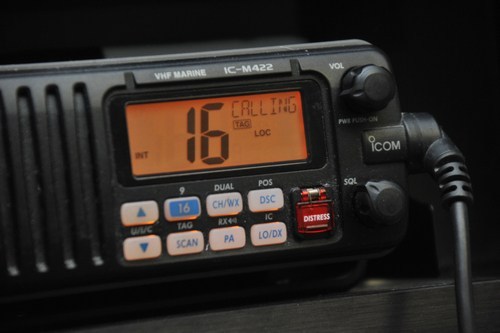
“34 VHF towers are down in AK; CH 16 not being picked up by USCG” –Alaska Fish Radio

BALTIMORE Ð A digital selective calling VHF-FM marine-band radio, set to channel 16, is shown energized for operations at Coast Guard Station Curtis Bay, Md., Dec. 9, 2010. DSC radios allow for a digital transfer between radios versus voice transmission which allows mariners to instantly send an automatically formatted distress alert to the Coast Guard, provided the radio is registered with a Maritime Mobile Service Identity number and connected to a compatible GPS unit. U.S. Coast Guard photo by Petty Officer 2nd Class Brandyn Hill.

A disturbing report from Alaska Fish Radio that a third of the VHF towers in Alaska are down and in many cases the Coast Guard is not monitoring channel 16 where it would be expected that we would.

Curious how we got in this situation?

Thanks to Eric for bringing this to my attention. 

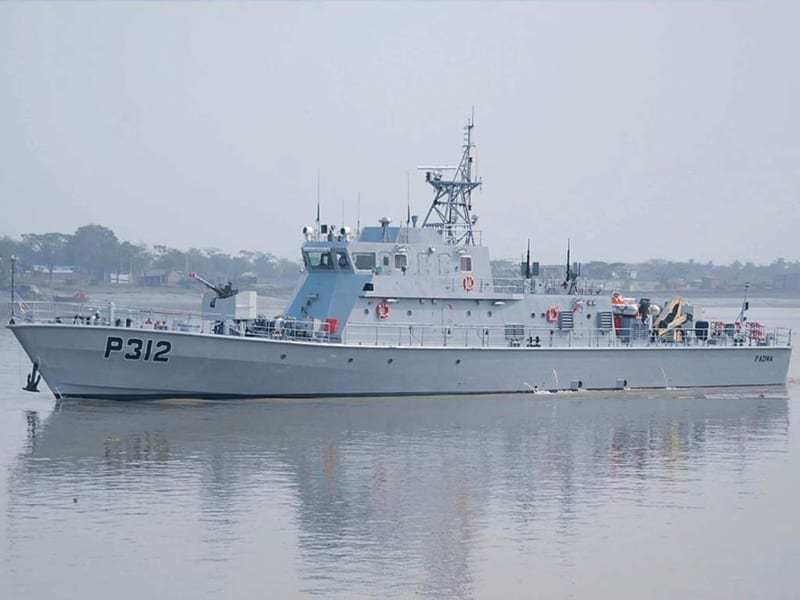
“Khulna Shipyard lays keel for five more Padma-class patrol vessels for Bangladeshi Navy” –Navy Recognition

NavyRecognition reports.

“Bangladesh’s Khulna Shipyard Ltd has begun construction of the second batch of five Padma-class patrol vessels on order for the Bangladeshi Navy (BN).

“… first batch was built in Bangladesh by BN-owned Khulna Shipyard in collaboration with mainland China’s Hudong-Zhonghua Shipbuilding through the China Shipbuilding & Offshore International Corporation (CSOC).”

The Padma class is used by both the Bangladesh Navy and Coast Guard. According to Wikipedia, eight have been completed, five for the Navy and three for their Coast Guard, with a total of 23 planned. It is similar in size to the Webber class. They are a bit slower at 23 knots but have a considerably larger crew, 45.

The Bangladesh Navy and Coast Guard have vessels from a number of sources including the US, UK, Italy and South Korea, including two former USCG 378s, but most of their vessel of late seem to be coming from China or like these are Chinese designs built in Bangladesh.


“Griffin Missile Exercise” –Demitry Shulgin

ARABIAN GULF (Sept. 16, 2018) A MK-60 Griffin surface-to-surface missile is launched from coastal patrol ship USS Thunderbolt (PC 12). Ships attached to U.S. 5th Fleet’s Task Force 55 are conducting missile and naval gun exercises against high speed maneuvering targets to advance their ability to defend minesweepers and other coastal patrol ships. U.S. 5th Fleet and coalition assets are participating in numerous exercises as part of the greater Theater Counter Mine and Maritime Security Exercise to ensure maritime stability and security in the U.S. Central Command area of responsibility, connecting the Mediterranean and the Pacific through the western Indian Ocean and three strategic choke points. (Photo by MC2 Kevin Steinberg)

Dmitry Shulgin reports on a live fire exercise involving half the Cyclone class PCs and half the PATFORSWA 110 foot Island class cutters operating out of Bahrain.

“Exercise participates included Forward Deployed Naval Forces (FDNF) patrol coastal ships USS Sirocco (PC-6), USS Tempest (PC-2), USS Squall (PC-7), USS Hurricane (PC-3), USS Whirlwind (PC-11) and island class patrol boats USCGC Adak (WPB-1333), USCGC Aquidneck (WPB-1309), and USCGC Baranof (WPB-1318).

“The ships also conducted live fire exercises with their Mark-38 25-mm machine guns and other crew served weapons to maintain operator proficiency and test new equipment upgrades for future missions.”

There is one bit of information here I had not seen before, an effective range for the Griffin small, short range surface to surface missile, given as 3 nautical miles, 6000 yards or 5.56 km. Since these missiles have found no other user after the installation on the ten Cyclone class homeported in SW Asia, I think the program was probably a dead end. It is bracketed by two very successful system being produced in huge numbers,  the smaller Advance Precision Kill Weapon System (APKWS) and the larger Longbow Hellfire.

I am hoping, when the Webber class cutters replace the Island class in Bahrain, that the Coast Guard and Navy will have taken some steps to better equip them for this potentially hostile area, including possibly Hellfire and/or APKWS..

Crewmembers aboard the U.S. Coast Guard cutter USCGC Adak (WPB-1333) raise the American flag. Adak is assigned to CTF 55, supporting maritime security operations and theater security cooperation in the U.S. 5th Fleet area of responsibility. U.S. Coast Guard photo by Seaman Frank Iannazzo-Simmons

China’s Warship Construction. More Surface Warships Launched in 2019 than the USN has Commissioned in Five Years

Chinese warships launched in 2019.

Earlier I noted that the Chinese seemed to be building an incredible number of warships. Found this chart of surface warships launched in 2019. I have been unable to find the original source, the style appears to be from http://www.military-today.com/, but in any case, it appears to be correct.

16 Type 056 corvettes, 8 Type 052D destroyers, two type 055 destroyer/cruisers, a Type 071 LPD, and a Type 075 LHD. 28 surface warships total. It is possible some of the Type 056s are intended for export or for the China Coast Guard.

By way of comparison, over the last five years, 2015 through 2019, as nearly as I can tell, the US Navy commissioned 15 Littoral Combat Ships, five Burke class destroyers, two Zumwalt class destroyers, two LPDs, no big deck amphibs (LHD or LHA),  and one aircraft carrier. That is 25 surface warships total. The conclusion is a bit startling.

The Chinese launched more surface warships in 2019, than the US Navy commissioned in the last five years. 

The 19th and 20th Type 052D destroyers are launched in Dalian on May 10 (Image: 香港 文匯 網)

The LCS program is coming to an end, but there are still 16 to be commissioned. Generally the program has funded four per year, The FFG(X) program is expected to replace the LCS program in the Navy budget with one FFG funded in the first year followed by two frigates in each year to a total of 20. Combined with the LCS this should give the Navy 55 “small surface combatants.” The Chinese have about 50 frigates but this number is likely to decline as older ships are decommissioned, as their current frigate program, the Type 054A, is nearing completion.

The USN’s Zumwalt class destroyer program will end with three ships when the Lyndon B. Johnson is commissioned in the near future.

The Burke class DDG program was expected to continue building twelve ships over the next five years, but there has been a recent report that DOD would like to cut five ships to make room in the budget for development of more unmanned systems. Also suggested is that Ticonderoga class cruisers be retired early and that the first four LCS be decommissioned.

It is comforting to assume that Chinese systems and their training are inferior. We had similar assumptions about the Japanese before WWII. It is extremely dangerous to assume your own superiority. Plus while the US Forces spread all over the world, the Chinese are concentrated in their own theater of interest.

What Has Happened to Coast Guard Online History?

USCGC Spencer (WPG-36) in 1942 or 1943. Spencer sank U-175 with assistance of USCGC Duane, on April 17, 1943.

Several months ago the Coast Guard moved their on line presence to new servers. When they did this, a great deal of the Coast Guard history that had been available on line disappeared. Apparently there was no plan to migrate the once extensive files to the new system.

I had planned to talk about this when it happened, but other priorities kept pushing it into the future until it seemed to late, but recently I reopened a post I had included in the heritage page, “The Battle for Convoy 166, 25 February 1943” and I was struck by how much had been lost.

“For more information on the Coast Guard’s battles against the U-boats, there are a series of extensively captioned photos of 327s here, an accounting of “U.S. Coast Guard Combat Victories of World War II” which also lists significant losses is here, and a twenty page pdf on the Battle of the North Atlantic is here.”

None of the referenced resources appear to be available on line anymore. It is just one example. Go to the Coast Historian’s page and try to look something up.

If you go to the Coast Guard Historian’s link for cutters, their are four pages of listings. The first page is a listing of ten: Aaron V. Brown, 1861, AB Class, 1913-1938, Absecon, 1949 (WHEC-374), Acacia, 1927 (WAGL-200), Active, 1816, Massachusetts, 1791, Point Class Cutter (82′), USCGC 95003 (ex-Aberdeen), USCGC Bayberry (WLI-65400), USCGC Point Harris (WPB-82376). The remaining three pages are devoted to LCIs of WWII. That is it. Why only these particular ships and not some of the more famous cutters? It has been this way for months.

It should be an embarrassment that the Navy’s Naval History and Heritage web site has more Coast Guard history than the Coast Guard Historians web page.

I have not purged my Heritage page of links that have been broken because, presumably these documents still exist somewhere in the Coast Guards files. Hopefully some day they will reemerge.

HMS Clyde, a Short but Remarkable Career

HMS Clyde (P257) has been decommissioned and is expected to be sold to the Brazilian Navy. By Coast Guard standards, she is almost new, not yet 13 years old. She is being replaced by a new ship of the more capable River Batch II class that evolved from HMS Clyde and three earlier River class Offshore Patrol Vessel.

As an OPV, Clyde’s design is largely unremarkable (specifications below), but her twelve year deployment on distant station, with reportedly only a single yard period, in spite of having a crew of only 40 on a ship slightly larger than a 270 foot WMEC, is quite unusual.

HMS Clyde was commissioned in 30 Jan. 2007 and decommissioned 20 Dec. 2019. In Brazil where she will join three newer, but similar type ships, also built in Britain.

Specifications:

  • Displacement: 2000 tons
  • Length: 81.5 m (267 ft 5 in)
  • Beam: 13.5 m (44 ft 3 in)
  • Propulsion: twin diesel, 11,280 HP total
  • Speed: 21 knots
  • Endurance: 21 days
  • Range: 5,500 nmi (10,200 km)
  • Flight Deck for helicopters up to and including Merlin
  • Armament: 30mm auto cannon, 2 miniguns