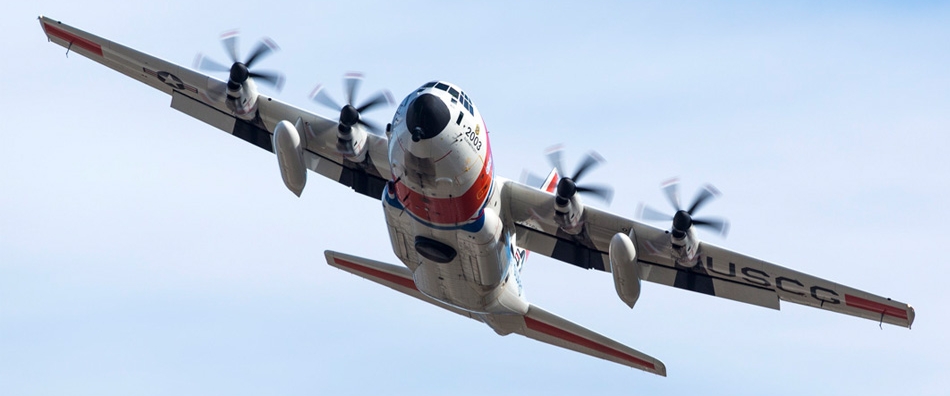
An email discussion with a reader got me to thinking about how our cutters might be homeported in the future. It started with a simple question, where would NSC #11 be homeported? Turns out it is not a simple question because first we do not yet know where nine and ten will go, but it also kicked off a lot of thought about how changes of fleet capabilities, mission, and maintenance philosophy will effect the future lay down of assets.
–
This is not going to be a definitive document, but rather an exploration of considerations and possibilities.
–
Why 2035? If the shipbuilding plans proceed as expected, we will not see the last Offshore Patrol Cutter (OPC) delivered until 2034.
–
Fleet Capabilities:
–
To provide I baseline, I will look back on the fleet of WHECs, WMECs and Island class WPBs as it existed before the new generation started arriving and before we lost eight Island class to the 123 foot conversion disaster and six more to a continuing commitment to South West Asia. My reference is a 2000-2001 issue of “Combat Fleets of the World” which includes a notation of cutter homeports.
–
In 2035 we can expect to have 35 large patrol cutters, 36 if we get NSC#11. The fleet in 2000 had 44. The new ships are certainly far more capable, but quantity has a quality all its own. Fortunately we have another way to make up for numbers.
–
The FRCs are much more capable than the 110s and approach the capabilities of the 210 foot WMECs. Additionally they will be more numerous than the 110s they are replacing. Only 49 Island class 110 foot WPBs were built, but the program of record includes 58 Webber class WPCs. The Webber class should be able to do many of the fisheries enforcement missions currently done by 210s. They have the same ship’s boat as the larger cutters and they are as seaworthy as most of the fishing vessels. The Webber class are expected to be underway for 2500 hours per year compared to 1500 hours for the Island class. The Webber class are not just “fast response cutter,” which was what the Island class were, they are at least part time, patrol assets.
–
If we compare what we had in 2000, 49 Island class available 1500 hours/year for 73,500 hours, with what we are projected to have, 58 Webber class available 2500 hours/year for 145,000 hours, that is an increase of 71,500 hours. If we assume optimistically that a dedicated patrol ship is available 24 hours a day for 185 days/year, that is 4,440 hours/day so the additional 71,500 hours is the equivalent of 16.1 patrol cutters. If we give due consideration to when and where they can be used and provide land based air support, this more than makes up for the lower number of larger cutters.
–
The Offshore Patrol Cutters will be far more seaworthy than the WMECs. In fact they will be at least equal to, and probably superior to the 378 foot WHECs, in terms of seakeeping. Their cruising speeds will higher than that of the 378s and their effective range of operations will be similar. Unlike the 270 and 210 foot WMECs they will be usable for Alaska Patrol.
–
Mission Changes:
–
I don’t expect any of our current missions to go away, but there will inevitably be a change of emphasis.
–
The Eastern Pacific drug interdiction effort will likely continue, but the drug of choice may be changing from cocaine to synthetic opioids which enter the US by other routes. The Navy will also likely join the Coast Guard in Eastern Pacific drug interdiction, which may reduce the need for cutters.
–
The island nations of
Melanesia,
Micronesia, and
Polynesia will be under stress as a result of sea level rise and the effects of illegal, unregulated, and unreported fishing. The Coast Guard is likely to be called upon to assist them.
–
There will be a need to assist other coast guards and coast guard like organizations, particularly in Africa and South East Asia where they have problems with piracy, drug and human trafficking and illegal, unreported, and unregulated (IUU) fishing, and the Coast Guard will be increasingly asked to provide capacity building assistance.
–
Maintenance Philosophy:
–
The Coast Guard seems to have embraced the idea that there are benefits to basing ships in clusters. Clusters of at least three almost guarantees that there will be at least one vessel in port to benefit from the support facilities there. I think we may see many of those ports that are currently expected to host two Webber class get a third when more become available. I don’t think we will see many, or perhaps any ports, with only one Bertholf, OPC, or Webber class homeported there.
–
In the Past:
–
In 2000 ships were split between the Atlantic and Pacific in ways that reflected fundamental differences in the two theaters. Looking at the WHECs, WMECs, and 110 foot WPBs as surrogates for the NSCs, OPCs’ and FRCs; LANTAREA had 63 vessels (two WHECs, 26 WMECs, and 35 WPB110s), PACAREA had 30 vessels (ten WHECs, six WMECs, and 14 WPB110s). Those 93 vessels were distributed among 38 ports, 15 in PACAREA and 23 in LANTAREA.
–
The Ports:
–
In an earlier post,
“Ruminating on Homeports While Playing the Red Cell,” I identified 30 critical ports or port complexes that are likely targets for those hostile to the US (23 in LANTAREA and seven in PACAREA), including 23 military outload ports (17 in
LANTAREA and six in PACAREA). Only five of these ports have a significant Navy surface ship presence. It makes sense for us to homeport vessels, particularly the Webber class, in, near, or on the approaches to those ports where there is no Navy surface ship presence. Fortunately some of these ports are in close proximity to each other. This list of ports is repeated below. I have indicated
where current planning indicates NSCs and FRCs are or will be homported in bold.
This accounts for eight NSCs and 43 FRCs. LANTAREA
CCGD1:
- Bath, Me–Major Naval shipbuilder
- Groton, CT–Submarine base
- Hudson River complex, New York, NY/Elizabeth and Bayonne, NJ–a major cultural target, #3 US Port by tonnage, #2 Container port, #4 Cruise ship port (NYC) and #13 cruise ship port (Cape Liberty, NJ), Strategic Seaport (Elizabeth)
CCGD5–four FRCs
- Delaware Bay–Strategic Seaport (Philadelphia) –two FRCs at Cape May
- Chesapeake Bay Complex, VA–Base for aircraft carriers and submarines, Major naval shipbuilder, #14 port by tonnage, #7 container port; plus water route to Washington, DC (major cultural target) and Baltimore, MD–#9 port by tonnage, #10 container port, #12 cruise ship port, Strategic Seaport (Norfolk and Newport News)
- Morehead City, NC–Strategic Seaport –two FRCs at near by Atlantic Beach
- Cape Fear River–Strategic Seaport (Sunny Point and Wilmington, NC)
CCGD7–Two NSCs, 18 FRCs (six in Key West in addition to those indicated below)
- Charleston, SC–#9 container port, #15 cruise ship port, Strategic Seaport –two NSCs
- Savannah, GA–#4 container port Strategic Seaport
- Jacksonville complex, FL (including Kings Bay, GA)–SSBNs, Navy Base Mayport, #14 cruise ship port, Strategic Seaport
- Port Canaveral, FL–#3 Cruise Ship port
- Port Everglades/Fort Lauderdale, FL–#13 container port, #2 Cruise Ship port
- Miami, FL–#11 container port, #1 Cruise Ship port–six FRCs
- San Juan, PR–#5 Cruise Ship port, #15 container port–six FRCs
- Tampa, FL–#7 Cruise Ship port
CCGD8–Five FRC
- Mobile, AL–major naval shipbuilder, #12 port by tonnage
- Pascagoula, MS–major naval shipbuilder –two FRCs replacing Decisive.
- Gulfport, MS–Strategic Seaport
- Mississippi River Complex, LA–#14 container port,#10 Cruise Ship port (NOLA), #1 port by tonnage (South Louisiana), #6 port by tonnage (NOLA), #8 port by tonnage (Baton Rouge), #10 port by tonnage (Port of Plaquemines)
- Lake Charles, LA–#11 port by tonnage
- Sabine Pass complex (Beaumont/Port Author/Orange, TX)–#4 port by tonnage (Beaumont), Strategic Seaport (both Beaumont and Port Author)
- Houston/Galveston/Texas City, TX–#2 port by tonnage (Houston), #13 port by –tonnage (Texas City), #5 container port (Houston), #6 Cruise ship port (Galveston)–Three FRC going to Galveston when Dauntless departs.
- Corpus Christi, TX–#7 port by tonnage, Strategic Seaport
PACAREA
CCGD11–Four NSCs, two (assumption) FRCs
- San Diego–Base for aircraft carriers and submarines, major naval shipbuilder (NASSCO), Strategic Seaport
- Los Angeles/Long Beach/Port Hueneme, CA–A major cultural target, #5 port by tonnage (Long Beach), #9 port by tonnage (Los Angeles), #1 container port (Los Angeles), #3 container port (Long Beach), #9 cruise Ship port (Long Beach), #11 cruise ship port (Los Angeles), Strategic Seaport (Long Beach and Port Hueneme) –FRC(s)at San Pedro
- San Francisco Bay complex–A major cultural target, #6 container port (Oakland), Strategic Seaport (Oakland and Concord) –Four NSCs
CCGD13–Two FRCs planned for Astoria, OR
- Puget Sound Complex, Seattle/Tacoma, WA–Base for aircraft carriers (Bremerton), SSBNs (Bangor), and submarines, major naval bases, #8 container port (Seattle), #10 container port (Tacoma), #8 Cruise ship port (Seattle), Strategic Seaport (Indian Island and Tacoma, WA)
CCGD14–Two NSCs, Six FRCs, Two in Honolulu, + Four planned
- Honolulu/Pearl Harbor–Major Naval base, including submarines–Two NSC, Two there now, Two FRCs + a third planned
- Apra, Guam–Submarine Base, Strategic Seaport–Three FRCs planned
CCGD17–Six FRCs, Two in Ketchikan, + Four more planned
- Anchorage, AK–Strategic Seaport
Next we will talk about where the remaining NSCs and FRCs, and where all the OPCs might be going.
Bertholf Class National Security Cutters:
In 2000 the twel
ve 378s were distributed ten to the Pacific and two to the Atlantic. Homeports in 2000 were Charleston (2), Seattle (2), Alameda (4), and Honolulu (2). The program of record was for eight National Security Cutters, but ten have been funded and it appears there may be an eleventh. Homeports for the first eight include four in Alameda, CA, two in Charleston, SC, and two in Honolulu, HI. I don’t expect that there will be any other homeports assigned. It is likely that numbers nine and ten will go to Honolulu and Charleston, bringing them to three each. This will give LANTAREA more very long range assets both to support drug interdiction and capacity building in West Africa.
Number eleven will probably go to the Pacific. Alameda could probably accept it, but I suspect a growing recognition of responsibilities in the Western Pacific will mean, if procured, it will go to Honolulu, if not initially, at least by 2035. .
Offshore Patrol Cutters:
I don’t think OPCs will go to the same ports as the NSCs. Based on where other WHECs or multiple WMECs were based (and an unused naval base at Corpus Christi), likely homeports for OPCs include:
- Boston, MA
- Portsmouth, VA
- Key West, FL
- St. Petersburg, FL
- Corpus Christi (Naval Station Ingelside), TX
- San Diego, CA
- Kodiak, AK
If we assume at least three ships in each, that accounts for 21. What of the remaining four? They could be added to the ports above or perhaps added to other ports.
I think a case can be made for putting a higher percentage of the large cutters in PACAREA. After all, less than 16.2% of the US Exclusive Economic Zone is in LANTAREA’s area of operation.
Currently there are only four medium endurance cutters in the Pacific and 24 in the Atlantic. There are only 25 OPCs in the program of record. Obviously this will not be a one for one replacement
In the year 2000 PACAREA had 16 large patrol cutters (10 WHECs and six WMECs), currently they have 13 (five NSCs, four WHECs, and four WMECs). Considering the apparent growing responsibilities of PACAREA, the projected maximum of no more eight NSCs, and the ability of the Webber class to assume some of the fisheries protection duties of the WMECs in the Atlantic, it is likely PACAREA WMECs will be replaced with OPCs on a better than one to one basis that would have left PACAREA with only 12 large patrol ships. I suspect PACAREA will be assigned at least six OPCs, and that it should have at least nine (17 of the total of 36 large ships (8 NSCs and 9 OPCs), if we get 11 NSCs homeported as above).
It is extremely likely at least two OPC will go to Kodiak to replace 378 foot WHEC Douglas Munro and 283 foot WMEC Alex Haley. It seems likely that this could ultimately grow to three OPCs. Locating them close to ALPAT areas.
San Diego was homeport to two 378s. It is closer to the Eastern Pacific drug transit zones than other Pacific ports, and it has both excellent training facilities and shipyards.
Seattle seemed a likely location for OPCs but since it is the likely homeport for three new Heavy Polar Icebreakers as well as USCGC Healy (and/or other medium icebreakers) it appears they may not have the room.
Assuming three OPCs in Kodiak and three in San Diego, if additional OPCs go to the Pacific where would they go? Additional ships in San Diego or nearby Terminal Island in San Pedro (Long Beach) appear likely.
This leaves 16 to 19 OPCs to be assigned to LANTAREA. Three each in Boston, MA, Portsmouth, VA, Key West, FL, St. Petersburg, FL, Corpus Christi (Naval Station Ingelside), TX would account for 15, leaving only one to four to find a home. One more port, perhaps Miami, or just add ships to the ports above. Certainly there is space in Portsmouth and Little Creek, VA.
I will assume six in San Diego and/or San Pedro (Long Beach), four in Portsmouth, VA and three each in Boston, Key West, FL, St. Petersburg, FL, Corpus Christi, TX, and Kodiak, AK.
Webber class WPCs:
–
The program of record includes 58 Webber class. As noted above homeports for 39 have been identified, of the remaining 19 four will go to Alaska. Lets look at each in turn.
–
CGD1
–
In 2000 there were seven Island class in the First district, two in Portand, ME, two in Woods Hole, MA, one at Glouchester, MA, and two in Sandy Hook, NJ. I would presume there will be Six Webber class in the First District.
–
In order to cover all the Critical port in the First District, we will probably put two in Sandy Hook, NJ to protect the Hudson River port complex, two in S. Portland, ME that would cover Bath ME and two at the East end of Long Island Sound that would protect the Sub base at Groton. Woods Hole might work, but I would hope they would be based closer either at Newport, RI or in New London.
–
CGD5
–
In 2000 there were only thee Island class in the Fifth district, one in Portsmouth, VA and two in Atlantic Beach, NC. We already have four Webber class going to the District, two in Cape May, NJ, and two in Atlantic Beach, NC.
–
CCGD7
–
In 2000 there were 23 Island class based in the Seventh district, six in Miami, seven in Key West, six in San Juan, one in Port Canaveral, and three in St. Petersburg. We already have 18 Webber class assigned to the Seventh District, six in Miami, six in Key West, and six in San Juan. Notably there are no Webber class on the Seventh District’s Gulf coast, so I would anticipate we will see three more homeported in St. Petersburg.
–
CGD8
–
In 2000 there were only two Island class WPBs homeported in the Eighth district, one in Mobile, AL and one in Corpus Christi, TX. We already know two will go to Pascagoula, MS, and three will go to Galveston, TX. We probably want at least two more in Corpus Christi, TX to cover that Strategic Port and the Western Gulf of Mexico.
–
CGD11
–
In 2000 there were three Island class in the Eleventh District. All three were homeported in San Diego. We already know one or more Webber class will go to San Pedro. I anticipate there will ultimately be two in San Pedro, CA. It seems likely there will also be two based in the San Francisco Bay complex to cover this strategic port and the Northern California coast.
–
CGD13
–
In 2000 there were two Island class in the Thirteenth district, one in Port Angeles, WA and one in Coos Bay, OR. We already know two will go to Astoria, OR. I think we also need two in Port Angeles, WA to cover the Puget Sound port complex and the Washington coast.
–
CGD14
–
IN 2000 there were four Island class WPBs in the Fourteenth district, two in Honolulu, HI, one in Hilo, HI, and one in Guam. We already know there will be three Webber class in Honolulu and three in Guam. I don’t anticipate any more.
–
CGD17
–
In 2000 there were five Island class WPBs in the Seventeenth district, one each in Seward, Ketchikan, Auke Bay, Petersburg, and Homer. We already have two Webber class in Ketchikan, and we know the district will get four more. I anticipate we will see at least two somewhere in Cook Inlet to cover the strategic port of Anchorage, either in Homer or in Anchorage itself. The last two will probably go to Auke Bay, Juneau or add one more to Ketchikan and Cook Inlet.
–
The Overview:
–
I think this is fairly close to the way we will end up in 2035.
–
CGD1…three OPCs…six Webber class
- S. Portland, ME: …two Webber class
- Boston, MA: …Three OPCs
- East end of Long Island Sound (Woods Hole, MA, Newport, RI , or New London)…two Webber class
- Sandy Hook, NJ:…two Webber class
CGD5…four OPCs…four Webber class
- Cape May, NJ…two Webber class
- Portsmouth, VA…Four OPCs
- Atlantic Beach, NC…two Webber class
CGD7…three NSCs…three OPCs…21 Webber class
- Charleston, SC…three NSCs
- Miami, FL…six Webber class
- Key West, FL…Three OPCs…six Webber class
- San Juan, PR…six Webber class
- St. Petersburg, FL…Three OPCs…three Webber class
CGD8
- Pascagoula, MS…two Webber class
- Galveston, TX…three Webber class
- Corpus Christi (Naval Station Ingelside), TX…Three OPCs…two Webber class
CGD11
- San Diego and/or San Pedro (Long Beach),… six OPCs…two Webber class
- San Francisco Bay/Alameda Complex…four NSCs…two Webber class
CGD13
- Astoria, OR…two Webber class
- Port Angeles, WA…two Webber class
CGD14
- Honolulu…four NSCs…three Webber class
- Apra, Guam…three Webber class
CGD17
- Ketchikan…two Webber class
- Auke Bay (Juneau)…two Webber class
- Kodiak, AK…Three OPCs
- Cook Inlet (Homer or Juneau)…two Webber class
How does this square with the list of critical ports? It is a good start, but there are too many ports between Pascagoula and Galveston. and between Charleston and Miami. Either we need more Webber class or we need the smaller WPBs that will replace the 87 foot Marine Protector class WPBs to also be able to also protect these ports.
Having ships in the right place is not enough. As I’ve noted several times, I don’t think any of our ships are adequately armed to perform the Maritime Security role, meaning they need to be able to counter both small, fast, highly maneuverable craft and larger vessels. I don’t really think the guns we have now are capable of reliably doing either. Hopefully sometime before 2035 our vessels will be properly equipped for the Homeland Security mission.