This Day in Coast Guard History, April 7

Based on the Coast Guard Historian’s timeline, https://www.history.uscg.mil/research/chronology/
With inspiration from Mike Kelso

April 7

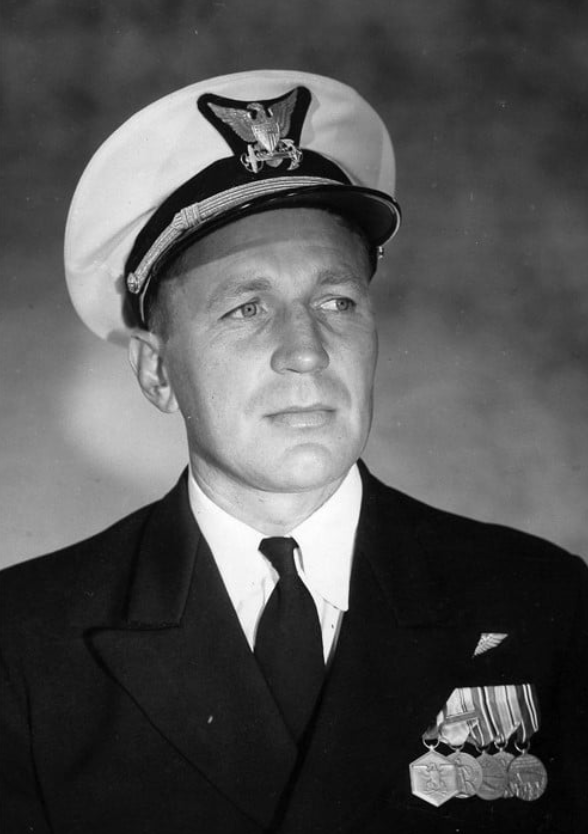
Photograph of Ellsworth P. Bertholf, Commandant of the U.S. Revenue Cutter Service from 1911 to 1915 and Commandant of the U.S. Coast Guard from 1915 to 1919. Coast Guard photo.

1866  The first Commandant of the U.S. Coast Guard, Ellsworth P. Bertholf, was born in New York City.  He entered the Revenue Cutter Service as a cadet on September 14, 1885 and graduated from the Revenue Cutter School of Instruction with the Class of 1887.

1938  Congress passed HR 8982, an amendment to the Alien Fishing Act (50 Stat. 639).  The amendment clarified the earlier laws on salmon fishing in Alaskan waters by limiting commercial salmon fishing in the vicinity of Bristol Bay, Alaska, to U.S. citizens only.  The act was enforced by the Coast Guard.

HMT Bedfordshire one of over 20 Royal Navy trawlers dispatched to the US to escort coastal convoys, sunk by the German submarine U-558 on 11 May 1942 off the coast of Ocracoke Island in the Outer Banks of North Carolina, with the loss of all hands.

1942  A Coast Guard aircraft directed a Royal Navy trawler to a life boat with 24 survivors off the coast of North Carolina.

1952  The breakup of ice in the Missouri River and its tributaries at Bismarck, North Dakota, and above, and on the Big Sioux, created the worst flooding conditions in that area in thirty years.  U.S. Coast Guard personnel rendered assistance, utilizing small boats, mobile radio stations, automotive equipment, helicopters, and fixed wing aircraft.  The Coast Guard evacuated stranded persons, transported critical relief supplies, evacuated livestock from low ground, transported personnel engaged in levee construction, and generally assisted the Red Cross, local, state, civil, and military authorities.

“Taking Stock of China’s Polar Fleet” –The Diplomat

Aerial view of China’s icebreaker Xue Long 2 berthing at the pier of Qingdao Olympic Sailing Center on July 3 in Qingdao, Shandong Province of China.
This icebreaker, delivered in 2019 and with a displacement of about 14,000 tons, is said to be the first icebreaking vessel capable of breaking polar ice with both its bow and stern in the world.

The Diplomat provides an unusually balanced assessment of China’s current icebreaker competence. It also projects their growing technical development.

It looks at the relationship between China and Russia in the Arctic, opportunism but with some degree of distrust.

Xue Long 2. Snow Dragon 2 China icebreaker

China’s largest and most capable icebreaking research vessel, Xue Long 2. Snow Dragon 2, sails in Antarctica’s Prydz Bay in this aerial photo taken on Nov. 19, 2019

It talks about the Chinese military’s interest in polar regions, not just the Arctic, they see the Antarctic as an area of possible future conflict.

Aerial view of China’s icebreaker Ji Di berthing at the pier of Qingdao Olympic Sailing Center on July 3 in Qingdao, Shandong Province of China.
© Sun Qimeng/VCG via AP

Also of interest is the growing number of ships of various types that are not icebreakers, in the usual sense of a ship that breaks ice to allow other ships to pass, but are ships of various types that are simply designed to operate independently in ice covered waters.

China’s first icebreaker, Ukrainian built, Xue Long 1. Snow Dragon 1

This Day in Coast Guard History, April 6

Based on the Coast Guard Historian’s timeline, https://www.history.uscg.mil/research/chronology/
With inspiration from Mike Kelso

April 6

Men killing fur seals on St Paul Island, Alaska, 1890s.

1894  The President authorized the Revenue Cutter Service to enforce the Paris Award, which was concerned with the preservation of fur seals in Alaska.

Miami-class cutter USCGC Tampa photographed in harbour, prior to the First World War. Completed in 1912 as the U.S. Revenue Cutter Miami, this ship was renamed Tampa in February 1916. On 26 September 1918, while operating in the English Channel, she was torpedoed and sunk by the German Submarine UB-91. All 131 persons on board Tampa were lost with her, the largest loss of life on any U.S. combat vessel during the First World War. Official U.S. Navy photo NH 1226 from the U.S. Navy Naval History and Heritage Command

1917  The United States declared war on Germany and joined the Allied Powers in World War I.  The Coast Guard, which at that time consisted of 15 cruising cutters, 200 commissioned officers, and 5,000 warrant officers and enlisted men, became part of the U. S. Navy by Executive Order.  The cutters immediately reported to their assigned naval districts for duty.  Cutters provided armed parties to seize German ships that had been interned in U.S. ports.  Coast Guard aviators were assigned to naval air stations in this country and abroad.  One Coast Guardsman, First Lieutenant (Eng.) Charles E. Sugden, USCG, commanded the Naval Air Station at Ile Tudy, France, and was later awarded the French Chevalier of the Legion of Honor.  Another officer, Second Lieutenant (Eng.) Philip B. Eaton, USCG, commanded Chatham Naval Air Station and he piloted one of two HS-1 seaplanes that attempted to bomb and machine gun a surfaced U-boat off the coast of New England after the U-boat had shelled a tug and barges four miles off Cape Cod.  Eaton’s bombs failed to explode, however, and the U-boat escaped.  One cutter, CGC Tampa, was lost in action with all hands while on convoy duty in British waters.

“HOIST PICK-UP DEMONSTRATION: A Coast Guard HO3S helicopter from the Coast Guard Air Station Elizabeth City, N.C., demonstrates the use of hydraulic hoist to pick up a man from the ground during the American Helicopter Society Show at Anacostia Naval Air Station, Washington, D.C., April 28-29, 1951. The helicopter equipment has proved invaluable in effecting rescues in areas inaccessible by any other means.”; no photo number; April 1951; photographer unknown.
Note the rescue litter basket slung beneath the HO3S’s fuselage.

1949  A U.S. Coast Guard H03S-1 helicopter completed the longest unescorted helicopter ferry flight on record.  The trip from Elizabeth City, North Carolina to Port Angeles, Washington via San Diego, a distance of 3,750 miles, took 10-1/2 days to complete and involved a total flight time of 57.6 hours.

“Sen. Rick Scott Announces Bill to Establish a Secretary for the U.S. Coast Guard”

The U.S. Coast Guard’s headquarters campus in Washington, D.C.

Senator Rick Scott (R-FL) has announced introduction of a bill to establish a Secretary of the Coast Guard, who would in turn report to the Secretary of Homeland Security. This would parallel the Secretary of the Navy’s relationship with the Secretary of Defense, but then the DOD budget is five times that of DHS, and, in fact, the Navy Department budget is 50% larger than the entire DHS  budget.

The Maritime-Executive has a report on this, written by K. Denise Rucker Krepp that attributes this move to the Fouled Anchor controversy which investigated alledged coverup of mishandling of allegations of racism, hazing, discrimination, sexual harassment, sexual assault, and rape.

My own feeling has always been that when within a local jurisdictions, violations of local laws, particularly sexual assault and rape, should be handled by local law enforcement.

The caption on the photo above, as it appears in the Maritime-Executive report states, “Unlike the other armed forces, the service has no civilian leader.” This is not really true. The Coast Guard is under the Secretary of Homeland Security. Similarly there is no “Secretary of the Marine Corps,” a much larger military service than the Coast Guard, with a budget almost four times as large, but they do fall under the Secretary of the Navy and do in fact have civilian leadership.

Creating a Secretary of the Coast Guard would not just add one civilian political appointee, he would need a civilian staff. This would be a whole new level of bureaucracy between DHS and the Coast Guard, and we know how well “Gossip Games” go. Meanwhile there is nothing that stops the Secretary DHS from having part of his staff specialize in oversight of the Coast Guard. 

I will take this opportunity to state, I think the Coast Guard should be an independent agency, like NASA or the EPA. The Federal Government has lots of them. The Coast Guard has no shortage of oversight from Congress and the Coast Guard’s eleven missions don’t really fit neatly in any existing department. It would cut out an entire level of bureaucracy.

It might be assumed that a Secretary of the Coast Guard would support the service, but could they really do a better job of representing the service or perhaps they would have a different agenda. This might even lead to civilianizing or politicizing the service.

This Day in Coast Guard History, April 5

Based on the Coast Guard Historian’s timeline, https://www.history.uscg.mil/research/chronology/
With inspiration from Mike Kelso

April 5

USCGC Itasca as HMS Gorlsston

1941  President Franklin Roosevelt signed the official order to transfer all 10 Coast Guard Lake-Class cutters of the Coast Guard to the Royal Navy under Lend-Lease.

HMS WALNEY, formerly USS SEBAGO, after refit. Underway in coastal waters. Tomlin, H W (Lt), Royal Navy official photographer – This photograph A 5322 comes from the collections of the Imperial War Museums (collection no. 4700-01)

1950  The Coast Guard announced that former enlisted women of the Coast Guard Reserve could apply for enlistment in the “Women’s Volunteer Reserve.”  Enlistments were to be for a three-year period with written agreement to serve on active duty in time of war or national emergency.

1967  The commander of all Soviet fishing vessels in the Far East, Evgeniy Gromov, invited representatives from the Coast Guard and the Bureau of Commercial Fisheries to meet aboard the Soviet vessel Olivtorka off Kodiak, Alaska.  The purpose of the meeting was to improve understanding in the implementation of the recent U.S.-Soviet 12-mile fisheries agreement that went into effect on March 15, 1967.


Torped 47 Video Includes Launch from Outboard Motorboat.

I did did a post about the testing of SAAB’s torped 47 from their small high speed Combat Boat 90 less than a week ago, but the video above from Naval News, includes some additional information about the testing and shows the torpedo launched from the smallest and simplest surface craft I have ever seen launch a torpedo, an unmanned outboard motorboat.

I am interested in this type of weapon because I believe it is the cheapest and easiest way for a patrol craft to forcibly stop a medium to large vessel regardless of size. It would probably sink any vessel under 1,000 tons and seriously damage any vessel up to about 10,000 tons.

Given that this system is wire guided and provides sensor information back to the operator, it might be better, if it were thought of as one way suicide unmanned underwater vehicle. In a pinch, I wonder if it might be used to clear mines.

Reportedly the Ukrainians have this weapon along with the CB90. With a max speed of 40 knots and a range of 12 miles, I’m sure they will find a use for it.

This Day in Coast Guard History, April 4

Based on the Coast Guard Historian’s timeline, https://www.history.uscg.mil/research/chronology/
With inspiration from Mike Kelso

April 4

1912  President William Howard Taft recommended abolishing the Revenue Cutter Service.  Instead of elimination though, his actions led to the creation of the Coast Guard by consolidating the Revenue Cutter Service and the Life-Saving Service on January 28, 1915.

A Curtiss F9C-2 Sparrowhawk inside USS Akron (ZRS-4) hangar.

1933  The Navy airship USS Akron crashed near the Barnegat Lightship. The ensuing search and rescue efforts employed over 20 Coast Guard vessels and aircraft.

BMCM Thomas McAdams

1972  BMC (later BMCM) Thomas D. McAdams became the first Coast Guardsmen to receive the new Coxswain insignia.  Then-Commandant ADM Chester Bender presented the insignia to Chief McAdams at a ceremony at the Coast Guard’s Small Boat School in Ilwaco, Washington, where McAdams was the OIC.

1975  Four Coast Guard helicopters saved 36 crewmen from the 557-foot tanker Spartan Lady after the oil-laden vessel broke up in heavy seas 165 miles south-east of New York.  Two of the helicopters were from AIRSTA Brooklyn and two were from AIRSTA Cape Cod.

Janna Lambine, Cdr. USCG

1977  The Coast Guard designated its first female Coast Guard aviator, Janna Lambine.  She was Coast Guard Aviator #1812.

“US Coast Guard on Guam shifts focus to border security, expects new cutters” – Stars and Stripes

U.S. Coast Guard Forces Micronesia Sector Guam Commander Capt. Nicholas R. Simmons and the Honorable Joses R. Gallen, Secretary of Justice, Federated States of Micronesia, signed an expanded shiprider agreement allowing remote coordination of authorities, the first of its kind aboard the USCGC Myrtle Hazard (WPC 1139) in Guam, on Oct. 13, 2022. The agreement will enable to U.S to act on behalf of the FSM to combat illicit maritime activity and to strengthen international security operations. (U.S. Coast Guard photo by Chief Warrant Officer Sara Muir)

Stars and Stripes reports,

Senior Coast Guard leadership in Washington D.C., ordered the shift, Muir added. The Coast Guard is part of the Department of Homeland Security, now under Secretary Kristi Noem. To achieve that goal, Sector Guam is deploying its cutters closer to islands like Guam and Saipan, rather than farther out to sea, Crose said. However, new cutters would allow more flexibility on deployments.

Thanks to Paul for bringing this to my attention. 

“Coast Guard’s heavy icebreaker returns to the U.S. after 128-day deployment in support of Operation Deep Freeze” –D11

The U.S. Coast Guard Cutter Polar Star (WAGB 10) and crew sail under San Francisco’s Golden Gate Bridge upon returning to the United States following their 128-day deployment to Antarctica to support Operation Deep Freeze 2025, March 30, 2025. Polar Star’s crew completed their 28th voyage to Antarctica in support of the joint military service mission to resupply and maintain the United States Antarctic Stations. U.S. Coast Guard photo by Auxiliarist Pablo Fernicola.

Below is a news release.

A couple of noteworthy items, first, why is Polar Star, based in Seattle, going into San Francisco?

For the fifth year in a row, Polar Star is going into an extended maintenance and dry-docking period in Vallejo, this time for the final phase of a five year rolling service life extension program. Apparently the plan is to do the same thing with USCGC Healy.

Second, a unique ship, the Japanese built HMNZS Aotearoa,had an at sea crew exchange with Polar Star and used the channel broken by Polar Star to get to McMurdo. HMNZS Aotearoa, is, I believe, the world’s only ice strengthened underway replenishment ship, perhaps something the US Navy or Coast Guard might want to consider, given the increased interest in the Arctic.

HMNZS Aotearoa (A11) participating in the International Fleet Review 2022. Japanese Government photo

April 2, 2025

Coast Guard’s heavy icebreaker returns to the U.S. after 128-day deployment in support of Operation Deep Freeze

SAN FRANCISCO – The U.S. Coast Guard Cutter Polar Star (WAGB 10) and crew returned to the United States, arriving in San Francisco Sunday, following a 128-day deployment to Antarctica in support of Operation Deep Freeze (ODF) 2025.

Polar Star completed its 28th voyage to Antarctica in support of the joint military service mission to resupply and maintain the United States Antarctic Stations. Every year, a joint total force team works together to complete a successful Operation Deep Freeze in support of the U.S. National Science Foundation (NSF) – the agency that manages the United States Antarctic Program (USAP).

Polar Star departed Seattle bound for Antarctica on Nov. 22, 2024, traveling over 25,000 miles through the North Pacific, South Pacific, and Southern Oceans.

Polar Star made two logistical stops in Pearl Harbor, Hawaii, and Sydney en route to Antarctica. In Sydney, the cutter and crew hosted the U.S. Consul General Christine Elder and other members of the U.S. Embassy.

In Antarctica, the cutter encountered 14 miles of fast ice up to six feet thick. Polar Star created a navigable route and cleared Winter Quarters Bay for two cargo vessels and HMNZS Aotearoa to reach NSF McMurdo Station. While operating in McMurdo Sound, Polar Star, and Aotearoa conducted an at-sea crew exchange to build camaraderie and a shared understanding of each vessel’s unique capabilities in the polar regions. At the conclusion of vessel operations at McMurdo Station, the cutter departed the Antarctic region on March 3 after 60 days of support to ODF 2025.

Polar Star provides heavy icebreaking capabilities to facilitate sealift, seaport access, bulk fuel supply, and cargo handling for two of three permanent U.S. research stations in Antarctica, with NSF McMurdo Station being the largest. The cutter’s icebreaking capabilities enable the safe delivery of critical supplies to sustain USAP’s year-round operations and support international partnerships in the harsh Antarctic environment. It is vitally important that the U.S. maintains a maritime domain presence in Antarctica to protect international access to the region, in line with the Antarctic Treaty System.

Polar Star also worked with the Commission for the Conservation of Antarctic Marine Living Resources (CCAMLR) to support a secure and sustainable Southern Ocean. Polar Star was the first United States surface asset to support CCAMLR. The crew’s efforts to observe and monitor fishing and other activity on the high seas safeguarded resources and U.S. national interests in the Antarctic region.

“This crew continues to amaze me by how well they work together through every challenge,” said Capt. Jeff Rasnake, Polar Star’s commanding officer. “And I am so very proud of how each person brought their best energy every day to keep the ship running, to endure the strain of this long deployment, to take care of each other, and to truly thrive as a team.”

On their journey back to the United States, Polar Star’s crew moored in French Polynesia. Polar Star’s stop in French Polynesia included visits with the Commander of the Armed Forces in French Polynesia, Naval Base Papeete Commandant, and the Secretary to the High Commissioner of French Polynesia. These engagements underscored the United States’ continued commitment to a secure and prosperous Indo-Pacific region.

“But our work isn’t done,” said Rasnake. “As we wrap up ODF 25, we must quickly transition to the first phase of ODF 26 – heavy depot maintenance. There’s no time to waste as we work to ensure Polar Star is ready to roll into her 50th year of service.”

Polar Star will enter the final phase of its five-year Service Life Extension Project (SLEP). SLEP was awarded to Mare Island Dry Dock, LLC, in Vallejo, to recapitalize targeted systems, including the cutter’s propulsion, communication, machinery control, and auxiliary systems, and to conduct significant maintenance extending the cutter’s service life. Completing SLEP will significantly mitigate the risk of lost operational days due to unplanned maintenance or system failures by replacing obsolete, unsupportable, or maintenance-intensive equipment. Each phase is coordinated so that operational commitments, like Operation Deep Freeze missions in Antarctica, will still be met.

The Seattle-based Polar Star is the only United States asset capable of providing assured access to both polar regions. The cutter is a 399-foot heavy polar icebreaker commissioned in 1976. It weighs 13,500 tons, is 84 feet wide, and has a 34-foot draft. The six diesel and three gas turbine engines produce up to 75,000 horsepower.

Next year’s Operation Deep Freeze will be Polar Star’s 29th and will coincide with Polar Star’s 50th commissioning date anniversary.

“Coast Guard repatriates 99 aliens to Haiti” –D7

Mar. 27, 2025, a law enforcement boat crew from Coast Guard Cutter Seneca (WMEC 906) intercepts an overloaded vessel with Haitian aliens approximately 35 miles north of Cap-Haitien, Haiti, about 500 kM from the nearest US territory. The aliens were repatriated back to Cap-Haitien, Haiti, April 1, 2025 following the interdiction. (U.S. Coast Guard photo)

Below is a District 7 news release. This looks like a routine report of a routine interdiction, but I found this statement interesting.

Since the beginning of fiscal year Oct. 1, 2025, Coast Guard crews have repatriated a total of 412 aliens to Haiti, compared to 857 aliens repatriated to Haiti in FY24.

412 repatriated over six months vs 857 over twelve month, it appears that intercepts are being made at about the same rate, or perhaps a bit lower rate, than in FY24. The Coast Guard was on the job then, as it is now,


April 1, 2025

A law enforcement boat crew from Coast Guard Cutter Seneca (WMEC 906) intercepts an overloaded vessel with Haitian aliens approximately 35 miles north of Cap-Haitien, Haiti, Mar. 27, 2025. The aliens were repatriated back to Cap-Haitien, Haiti, April 1, 2025 following the interdiction. (U.S. Coast Guard photo)

MIAMI – Coast Guard Cutter Seneca’s crew repatriated 99 aliens to Haiti, Tuesday, following a maritime interdiction approximately 35 miles north of Cap-Haitien, Haiti.

A Customs and Border Protection Air and Marine Operations aircrew notified Coast Guard District Seven watchstanders, Thursday, of an approximate 35-foot overloaded vessel transiting north toward the Turks and Caicos Islands.

“The Coast Guard remains steadfast in our defense of the U.S. maritime borders and approaches with patrols in the Florida Straits, Windward and Mona Passages to interdict unlawful maritime migration attempts before they reach our shores,” said Lt. Cmdr. Brent Pearson, Coast Guard liaison officer to U.S. Embassy Port-au-Prince. “Attempting illegal migration in overloaded, unsafe vessels with no safety equipment is extremely dangerous and puts you and your loved one’s lives at risk. Don’t take to the sea just to be sent back.”

Once aboard a Coast Guard cutter, aliens are processed to determine their identity and are provided food, water, shelter, and basic medical attention before repatriation to their country of origin or return to the country of their departure.

The Coast Guard, along with its Homeland Security Task Force – Southeast partners, maintains a continual presence with air, land, and sea assets in the Florida Straits, the Windward Passage, the Mona Passage, and the Caribbean Sea in support of Operation Vigilant Sentry. The HSTF-SE combined, multi-layered approach is designed to protect the safety of life at sea while preventing unlawful maritime entry to the United States and its territories.

Anyone attempting to enter the United States illegally by sea will be interdicted and repatriated, consistent with U.S. law and policy.

Since the beginning of fiscal year Oct. 1, 2025, Coast Guard crews have repatriated a total of 412 aliens to Haiti, compared to 857 aliens repatriated to Haiti in FY24.

To learn more about the Coast Guard’s border security and territorial integrity mission in the Seventh Coast Guard District, watch the videos linked below:

For breaking news, follow us on X (formerly Twitter). For additional information, find us on Facebook and follow us on Instagram.