This Day in Coast Guard History, December 20

Based on the Coast Guard Historian’s timeline, https://www.history.uscg.mil/research/chronology/
With inspiration from Mike Kelso

December 20

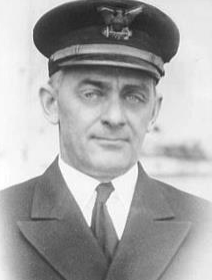
Elmer Stone, Coast Guard Aviator #1

1934  Coast Guard pilot CDR Elmer F. Stone set the world record for amphibian airplane speed.  Over a measured three-kilometer course at Langley Field CDR Stone attained a maximum speed of 196.89 miles an hour and an average speed of 191.17 while flying a Grumman JF-2 “Duck” amphibian, besting the previous record set by Alexander P. De Severesky the previous year.

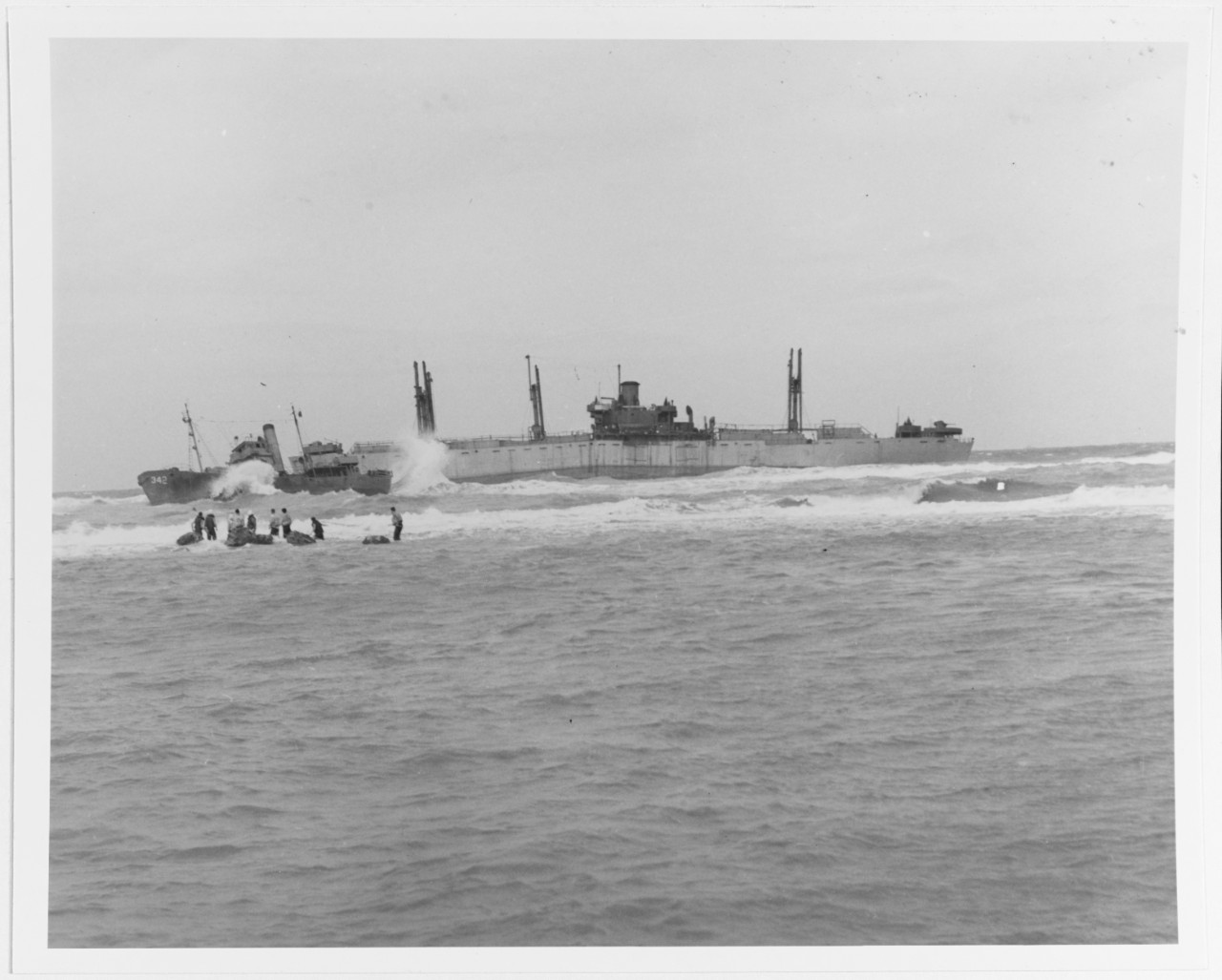
USCGC BODEGA (WYP-342) Aground off Fort Randolph, Canal Zone, on 21 December 1943, with her survivors coming ashore at right. The SS JAMES WITHY COMBE, which she was attempting to assist, is aground in the background.

1943  CGC Bodega grounded off the Canal Zone. No lives were lost.

The crew of the USCGC Alex Haley (WMEC 39) transfers custody of the detained fishing vessel Run Da to a People’s Republic of China Coast Guard patrol vessel in the Sea of Japan, June 21, 2018. The Alex Haley and PRC Coast Guard crews detained the Run Da suspected of illegal high seas drift net fishing. U.S. Coast Guard photo. Petty Officer 1st Class William Colclough

1991  The United Nations adopted General Assembly Resolutions (UNGAs) 44-225, 45-197, and 46-215, thereby establishing a worldwide moratorium on all high seas drift net fishing that was to be in effect by December 31, 1992.

USCGC ALERT departing Astoria for the last time, currently homeported in Cape Canaveral.

2013  CGC Alert returned to its homeport of Astoria, Oregon, following an 81-day deployment.  While away Alert covered more than 12,000 miles, conducting a counter-drug enforcement patrol in the Eastern Pacific and a rigorous training assessment by the Afloat Training Group in Everett, Washington.  Alert’s crew conducted law enforcement operations off the coast of Central America in early October 2013.  An MH-65 Dolphin helicopter crew and a fast response boat crew conducted multiple at sea boardings from Alert, disrupting more than 4,000 pounds of illegal drug shipments.  Additionally, Alert’s crew rescued six Ecuadorian fishermen who had spent a week stranded adrift on the open ocean.  The crew participated in several community relations events, while taking time to resupply the cutter and provide crew rest.  While on a port call in Golfito, Costa Rica, Alert’s crew competed against Costa Rican Coast Guard crewmembers in a soccer tournament.  In Puerto Vallarta, Mexico, Alert’s crew helped complete a restoration and painting project for a local park.  After two months of conducting maritime law enforcement and search and rescue operations, Alert traveled to Everett to complete three weeks of required training.  Every 18 months, Coast Guard cutters undergo Tailored Ships Training Availability to ensure crew proficiency and readiness.  Experienced Coast Guard and Navy inspectors evaluated Alert’s ability to respond to situations involving weapons proficiency, seamanship, navigation, damage control, emergency medical treatment, and engineering casualty response.  Alert successfully completed 118 drills and exercises with an impressive overall score of 96-percent, earning the coveted “Battle E” award for operational excellence in all mission areas.  As per tradition, Alert flew a broom from its port yardarm, signifying a “clean sweep” of certification in all mission areas.


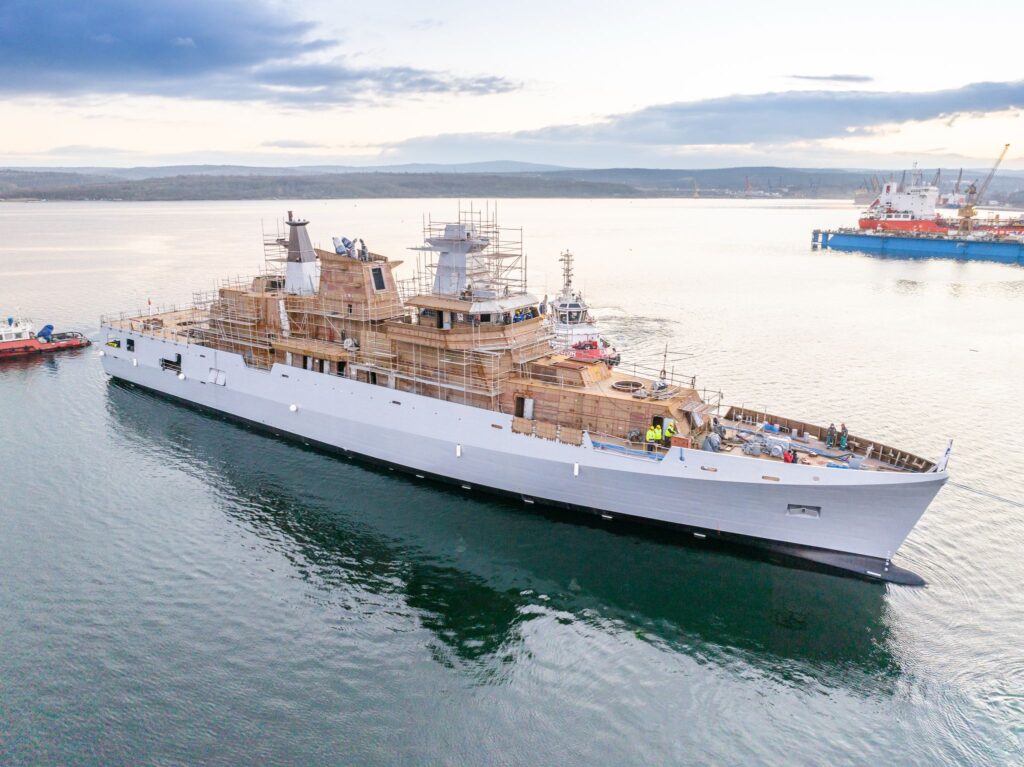
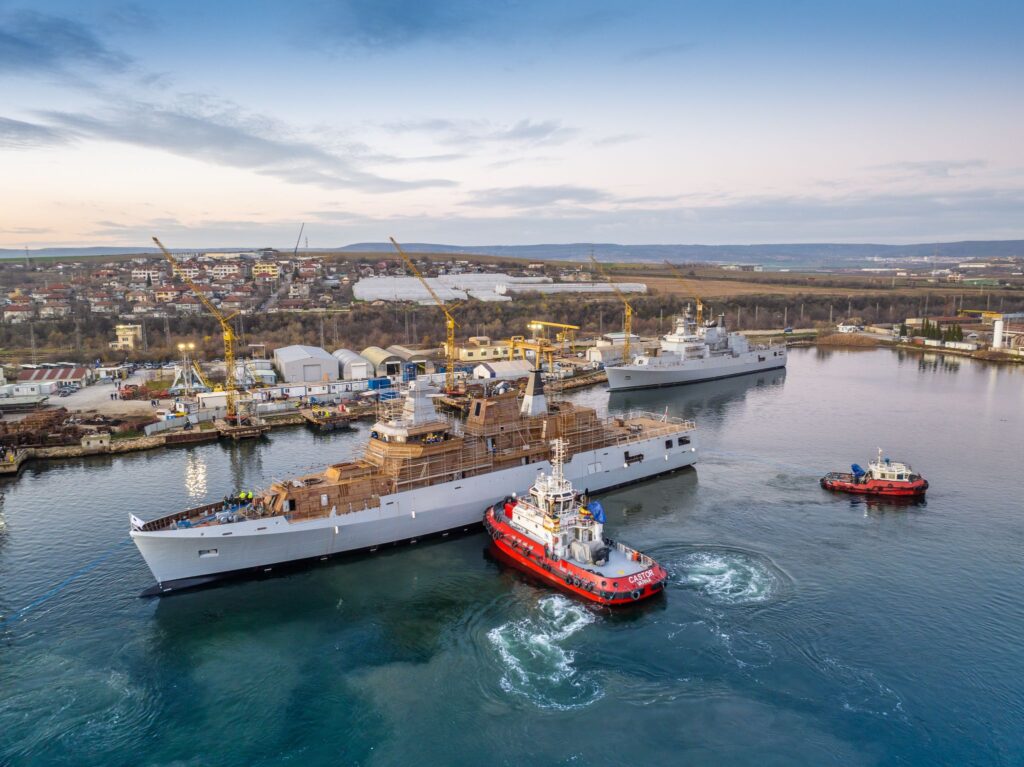
“Bulgaria’s Second MMPV Launched by Local Shipyard” –Naval News

Naval News reports,

The second of two MMPVs (Multipurpose Modular Patrol Vessels–Chuck) was launched ahead of schedule. According to the contract, it was supposed to take place in April 2025. The two MMPVs are being built under a contract signed November 12, 2020 between the Bulgarian Ministry of Defence and the German shipbuilding group Fr. Lürssen Werft (now NVL – Naval Vessels Lürssen). The vessels will cost about BGN 984 million gross (about EUR 503 million).

These are a significant step up from the earlier Lürssen designed 80-meter Darussalam class built in Germany for the Royal Brunei Navy and the Arafura class building in Australia.

They are to be equipped with two twin launchers for RBS15 Mk3 anti-ship missiles, 8 cells for MBDA VL MICA surface to air missiles, Leonardo OTO Super Rapid 76mm gun, Rheinmetall Millennium 35mm CIWS, and 324mm light weight ASW torpedoes. They will have a SAAB combat management system and a hangar for a Eurocopter AS565MB Panther helicopter, an aircraft that is an evolution of the H-65 design.

Specifications indicate:

  • Displacement: 2,300 tons
  • Length: 90 meters (295′)
  • Beam: 13.5 meters (44.3′)
  • Max Speed: variously reported as 20 to 24 knots
  • Range: 3000 nautical miles at 14 knots.
  • Crew: 70

These ships remind me very much of the new Damen designed Pakistani 2,600 ton, 98 meter OPVs. The layout is much the same:

  • Gun and VLS AAW system forward of the bridge elevated above the main deck
  • Anti-ship cruise missiles behind the bridge
  • Uptakes
  • Hangar with a 35mm CIWS mounted on the roof
  • Flight deck that extends all the way to the stern
  • Reconfigurable space below the flight deck.

Reconfigurable space is becoming common but what really sets these two classes apart from other OPVs is the VLS launchers for small surface to air missiles. On the slightly larger Pakistani ships, which appear more capable, the missile is a bit larger and the gun smaller. The Pakistani ship also has a pair of 30mm guns similar to the Mk38 Mod4.

I think we are going to start seeing this general layout on more OPVs in the future.

Given the need for more than the currently planned 36 large cutters, and the increasingly hostile geopolitical environment, building something like these smaller, cheaper, but more combat capable ships, in greater numbers, rather than the last ten planned OPCs might be worth considering.

I would suggest we could build a cutter with configurable space sufficient to support a towed array, a flight deck, hangar, and magazines sufficient to support an MH-60R, eight Mk41 VLS (sufficient for16 ESSMs and four vertical launch ASROCs) forward of the bridge. Launchers for up to eight Naval Strike Missiles (we don’t need to carry the missiles themselves all the time), SeaRAM, and one or two 30mm Mk38 Mod4s. This should all be possible on a 25 knot ship of less than 3000 tons.

DOD on the China Coast Guard

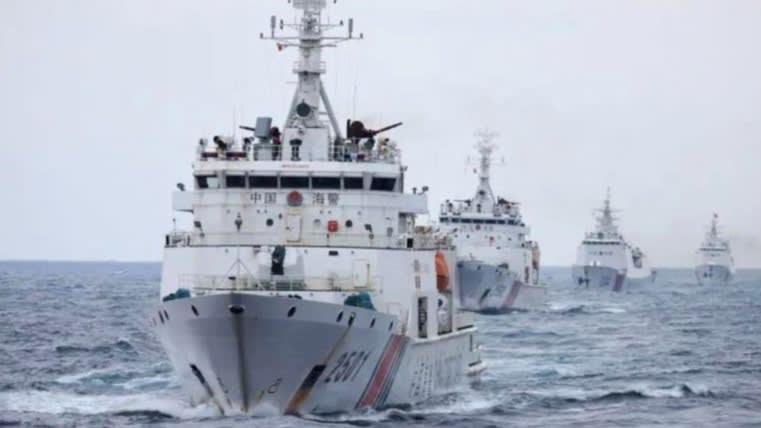
This Chinese coast guard ship 2501 and other are equipped with 76-millimeter guns. © Kyodo

The Department of Defense has issued its annual “Military and Security Developments Involving the People’s Republic of China, 2024.” The degree of annual expansion is extremely troubling. There is a brief look at the Naval aspects from Commander Salamander here. I think it is fair to say that the US Navy is rapidly losing its edge.

We should expect to see rising expectations for the US Coast Guard to be prepared to participate in a war with China.

I have reproduced the brief section devoted to the China Coast Guard (CCG) below. This is from the pages numbered 76 and 77. They are the 90th and 91st pages of the 182 page document.

For Perspective:

China’s undisputed EEZ, including territorial sea, is less than 8.5% that of the US and even their expansive claimed EEZ and territorial sea is less than 20% of that of the US.

The China Coast Guard has far more large patrol vessels (over 1,000 tons) than the US Coast Guard (about 150 vs 33), which they tend to operate in groups. Still the CCG probably has fewer personnel (no recent figures seem to be available) and far fewer aircraft. The CCG does not do aids to navigation or marine inspection, and it is not the country’s primary coastal search and rescue agency. In short it is much more focused, primarily on bullying China’s neighbors.


China Coast Guard

CCG Service Roles and Missions. The CCG is subordinate to the PAP (People’s Armed Police–Chuck) and responsible for a wide range of maritime security missions, including defending the PRC’s sovereignty claims; combating smuggling, terrorism, and environmental crimes; and supporting international cooperation in accordance with relevant international treaties. The Standing Committee of the PRC’s NPC (National People’s Congress, China’s Legislature–Chuck) passed the Coast Guard Law, which took effect on February 1, 2021. The legislation regulates the duties of the CCG, including the use of force, and applies those duties to seas under the jurisdiction of the PRC. The law was met with concern by other regional countries that perceive
the law as an implicit threat to use force, especially as territorial disputes in the region continue. The CCG is the PRC’s front-line force for carrying out “rights protection” (weiquan) operations in disputed areas of the PRC’s maritime periphery. The PLAN overwatches CCG operations to deter other claimants and provide the PRC an option to rapidly respond with force, if necessary.

CCG Capabilities and Modernization. The CCG’s continued expansion and modernization makes it the largest maritime law enforcement fleet in the world. Newer CCG vessels are larger and more capable, enabling them to operate farther off shore and remain on station longer. The CCG has over 150 regional and oceangoing patrol vessels (more than 1,000 tons). These larger vessels include over 20 corvettes transferred from the PLAN, which were modified for CCG operations. The newer, larger CCG vessels are equipped with helicopter facilities, high-capacity water cannons, multiple interceptor boats and guns ranging from 30 mm to 76 mm. Revised estimates indicate the CCG operates more than 50 regional patrol combatants (more than 500 tons), which can be used for limited offshore operations, and an additional 300 coastal patrol craft (100 tons to 499 tons). In 2023 and early 2024, the CCG launched seven offshore patrol ships as well as two additional patrol ships based on a large salvage ship design. Several more offshore patrol ships are likely under construction.

CCG Readiness. The CCG continues to operate in alignment with the Coast Guard Law, asserting the PRC’s claims in the East and South China Seas and Taiwan Strait, in what the law considers the “waters under the jurisdiction of China.” In these regions, the CCG uses aggressive tactics against foreign vessels, such as ramming, firing water cannons, and performing dangerous maneuvers, frequently working alongside the PLAN and CMM. The CCG annually sends two vessels on a month-long fisheries law enforcement patrol in the North Pacific. These patrols support the PRC’s membership in the Convention on the Conservation and Management of High Seas Fisheries Resources in the North Pacific Ocean.

“Task Force 51/5-Led Operation Leads to Seizure of Narcotics At Sea” –5th Fleet / and a Close Look at a PATFORSWA FRC

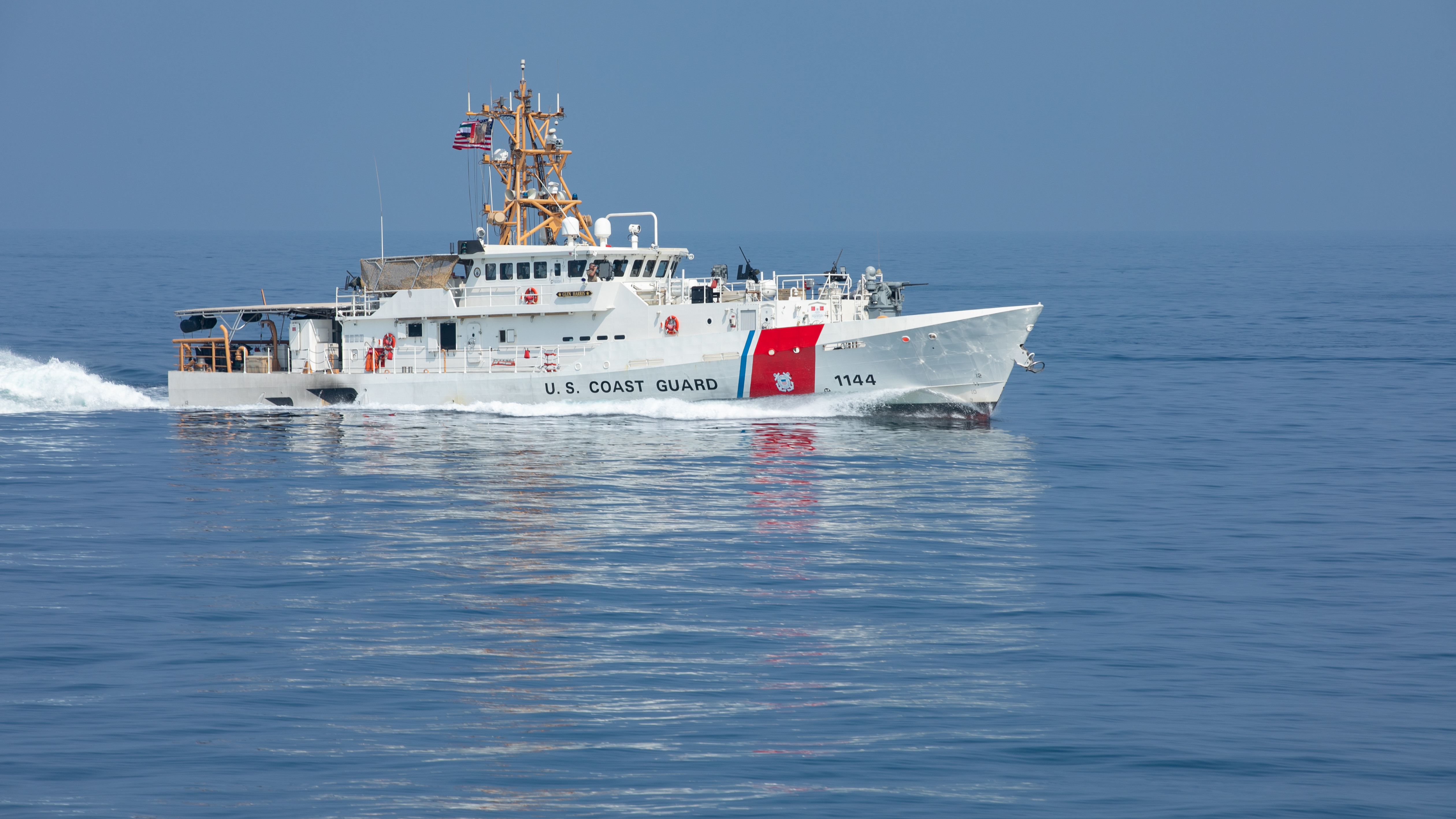
231024-A-LS473-1027 ARABIAN GULF (Oct. 24, 2023) U.S. Coast Guard Sentinel-class fast response cutter USCGC Glen Harris (WPC 1144) sails in the Arabian Gulf, Oct. 24. Glen Harris operates in the U.S. 5th Fleet area of operations to help ensure maritime security and stability in the Middle East region. (U.S. Army photo by Spc. William Hunter)

Below is a NAVCENT/5th Fleet News release.

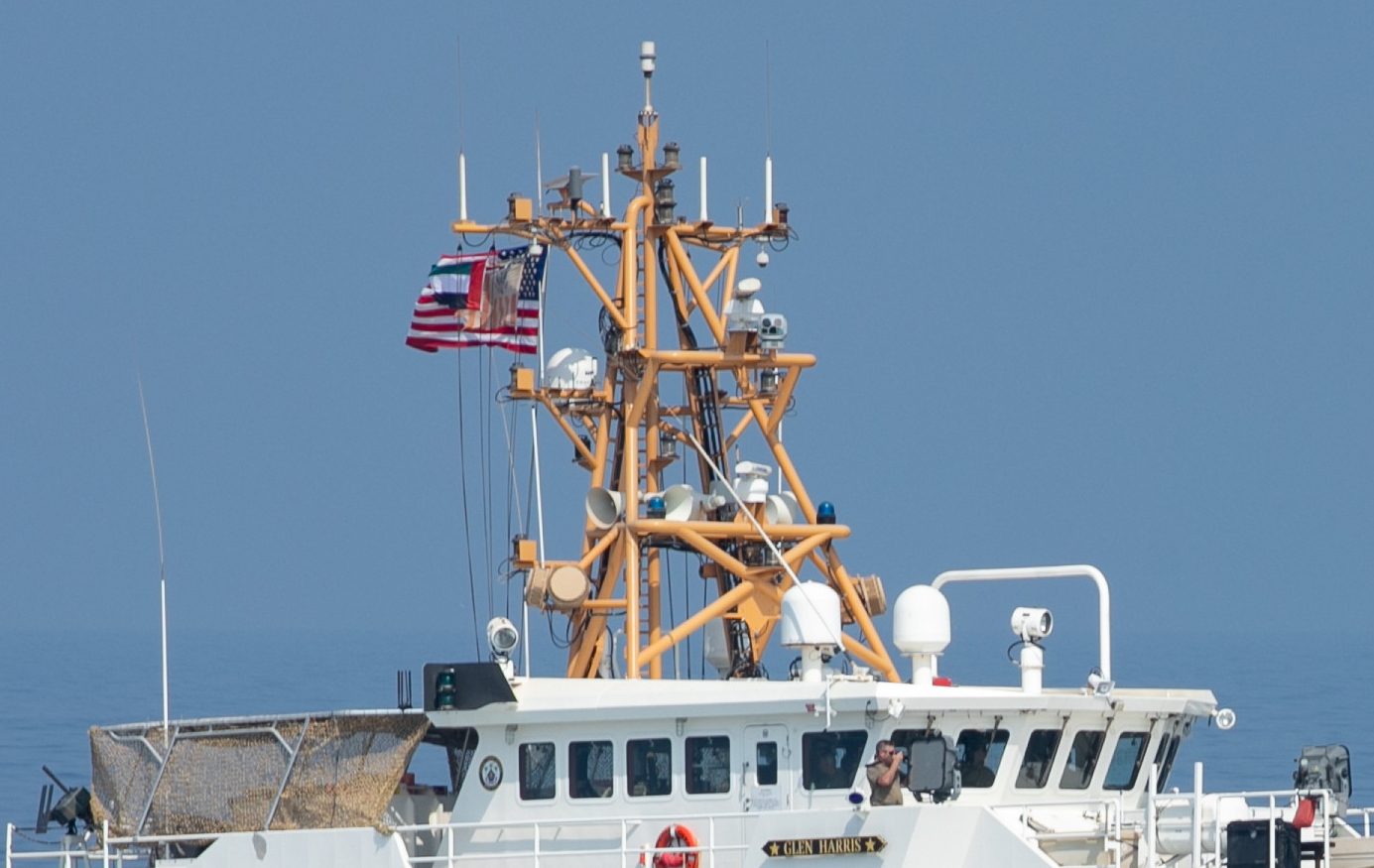
The accompanying photo of USCGC Glen Harris is particularly good. The additional equipment mounted only on PATFORSWA FRCs is clearly visible on the mast, as are the Long-Range Audio Devices. On the aft starboard corner of the O-1 (bridge) deck, a Mk19 Mod3 grenade launcher Machine Gun is visible. The Mk19 Mod3 has an airburst round so may be effective against UAS (drones) at short range. I have heard that the 25×137mm M242 gun in their Mk38 Mod2 or 3 mounts has been replaced by a 30×173mm Mk44 which also has an air burst round, but I have seen no additional evidence this is the case.

231024-A-LS473-1027 (cropped) ARABIAN GULF (Oct. 24, 2023) USCGC Glen Harris (WPC 1144) sails in the Arabian Gulf. (U.S. Army photo by Spc. William Hunter)


U.S. 5TH FLEET AREA OF OPERATIONS —

The boarding team discovered and seized 5,316.1 kilograms of hashish, 181.4 kilograms of heroin and 1.3 kilograms of methamphetamine and, after documenting and weighing the illicit haul, properly disposed of it. Total estimated market value of the narcotics is $4.6 million.

Glen Harris was supporting a Task Force (TF) 51/5 mission at the time of the seizure.

U.S. Marine Corps Brig. Gen. Stephen J. Lightfoot, commanding general of TF 51/5, said operations such as these help maintain freedom of the seas and is part of a larger effort with partner nations in the region.

“The collaboration between our Coast Guardsmen, Marines and Sailors is outstanding,” Lightfoot said. “I’m proud of our interoperability. We are disrupting criminal acts at sea and keeping over five tons of narcotics from hurting more people.”

“Glen Harris is one of six U.S. Coast Guard Fast Response Cutters performing maritime security operations throughout the region,” said U.S. Navy Capt. Patrick Murphy, commodore of TF 55, also known as Destroyer Squadron (DESRON) 50, which has tactical control of Glen Harris. “The U.S. Coast Guard brings expertise and flexibility to the wide range of missions we execute.”

Glen Harris is forward deployed to Bahrain as part of a Patrol Forces Southwest Asia under tactical control of TF 55, consisting of surface forces, including U.S. Coast Guard patrol boats and independently deployed ships in the U.S. 5th Fleet area of operations.

Task Force 51/5 executes operations, responds to contingencies and crises, and conducts theater security cooperation at sea, from the sea and ashore in support of U.S. Central Command, 5th Fleet and Marine Forces, Central Command theater objectives.

This Day in Coast Guard History, December 18/19

Based on the Coast Guard Historian’s timeline, https://www.history.uscg.mil/research/chronology/
With inspiration from Mike Kelso

December 18

USLHT Amaranth, by Jerry McElroy

1912  The Lighthouse Service suffered its first gas-powered buoy accident when one exploded during maintenance.  The explosion killed a machinist, John A. Dunbar, who was a member of the crew of the Lighthouse Tender Amaranth.

2014  The Coast Guard issued the following statement regarding “The Coast Guard on Cuba Policy Changes” announced by President Barack Obama on December 17, 2014: “Coast Guard missions and operations in the Southeast remain unchanged. The Coast Guard strongly discourages attempts to illegally enter the country by taking to the sea. These trips are extremely dangerous.  Individuals located at sea may be returned to Cuba.”

December 19

Gurnet Pt Lifesaving Station, Plymouth, MA

1881  While the head keeper and six men of his crew were conducting drills away from their Gurnet Point, Massachusetts, Life-Saving Station, the surfman who remained in charge at the station saw a schooner standing inside of Brown’s Island Shoals.  He realized that unless the vessel was warned she would go aground.  So he rowed out to the schooner in a small boat and piloted her clear.  She proved to be the schooner Milton and had mistaken the channel entrance to Plymouth Harbor.

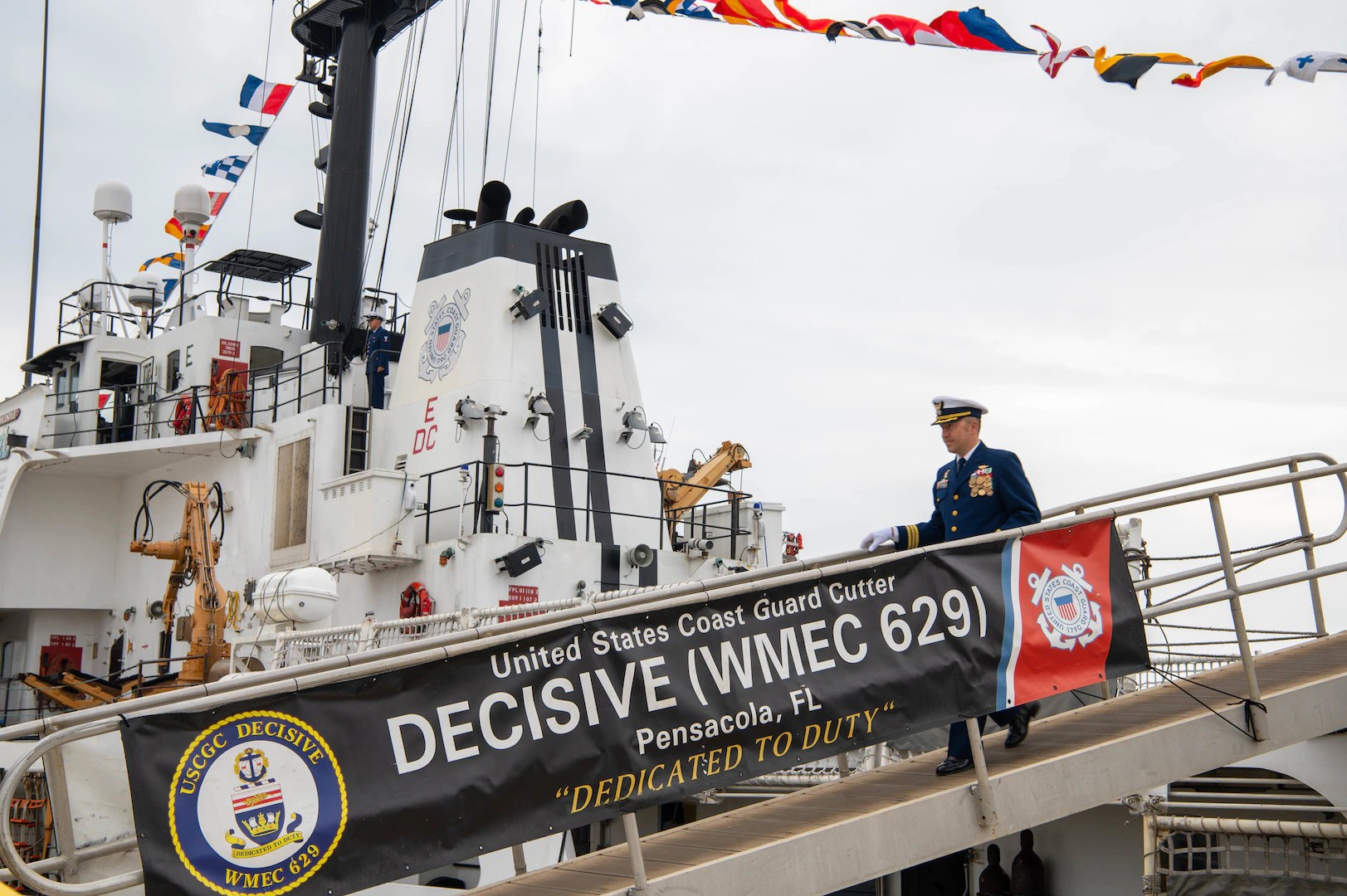
USCGC Decisive on the day of her decommissioning, March 2, 2023

2014  CGC Decisive returned to its homeport in Pascagoula, Mississippi, following a six-week patrol in the Caribbean Sea supporting the Joint Interagency Task Force-South.  During the deployment, the 70-member crew of Decisive was primarily responsible for conducting counter drug operations in support of U.S. and international laws.  Decisive worked directly with federal and international partners at JIATF-S and the 7th Coast Guard District to combat transnational organized crime networks operating in the Caribbean Basin.  Decisive’s efforts directly contributed to the prevention of more than 4,100 pounds of contraband from reaching American shores.  During Decisive’s 39-day deployment, the cutter’s crew also conducted a professional exchange with members of the Honduran Navy.  These interdictions were part of Operation Martillo, an international operation focused on sharing information and bringing together air, land, and maritime assets from the U.S. Department of Defense and the Department of Homeland Security, as well as Western Hemisphere and European partner nation agencies, to counter illicit trafficking.

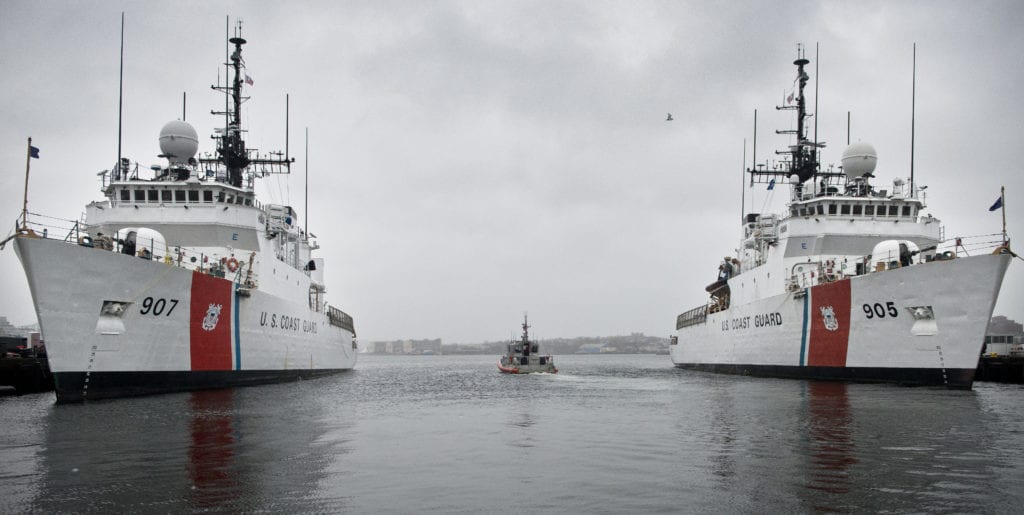
A Coast Guard Station Boston crew transits between Coast Guard Cutter Escanaba and Coast Guard Cutter Spencer in Boston on Nov. 24, 2014. The Escanaba and Spencer are 270-foot Famous-class medium endurance cutters. U.S. Coast Guard / Petty Officer 3rd Class MyeongHi Clegg

2015  CGC Escanaba returned to its homeport in Boston following a successful 52-day deployment in the Eastern Pacific Ocean.  During the patrol, Escanaba steamed more than 11,200 miles, successfully transited the Panama Canal for the first time in more than 10 years, and interdicted 1,009 kilograms of cocaine, two vessels, and five narcotic smuggling suspects.  Escanaba’s crew worked in partnership with an MH-65 Dolphin helicopter crew from the Coast Guard’s Helicopter Interdiction Tactical Squadron, based out of Jacksonville, Florida, to pursue and conduct boardings of eight vessels in five cases.

This Day in Coast Guard History, December 17

Based on the Coast Guard Historian’s timeline, https://www.history.uscg.mil/research/chronology/
With inspiration from Mike Kelso

December 17

Members of the Overland Relief Expedition

1897  The Overland Expedition, consisting of three officers from the Revenue Cutter Service, departed from the cutter Bear off Nunivak Island to rescue 300 whalers trapped in the ice at Point Barrow, Alaska.  The rescuers were First Lieutenant D. H. Jarvis, Second Lieutenant E. P. Bertholf (later commandant), and Surgeon S. J. Call.  The rescuers had to travel over 1,000 miles overland to reach the whalers.

1903  Life-Saving Service personnel from Kill Devil Hills Life-Saving Station helped carry materials to the launch site for the first successful heavier-than-air aircraft flight by the Wright Brothers at Kitty Hawk, North Carolina and then assisted the brothers in their flights that day.  The life-savers were John T. Daniels, W.S. Dough, and A.D. Etheridge.

The wooden fishing trawler Belmont was acquired for service for a fee of $2,122 to serve under charter by the Navy “for Coast Guard use as a vessel of the Greenland Patrol.” After conversion, including the addition of two small depth charge tracks and minimal anti-aircraft armament, she was commissioned as a vessel of the Coast Guard on 19 June 1942 and renamed Natsek.

1942  USCGC Natsek, part of the Greenland Patrol, disappeared in Belle Isle Strait while on patrol.  There were no survivors among her 24-man crew.  It was thought that she capsized due to severe icing.

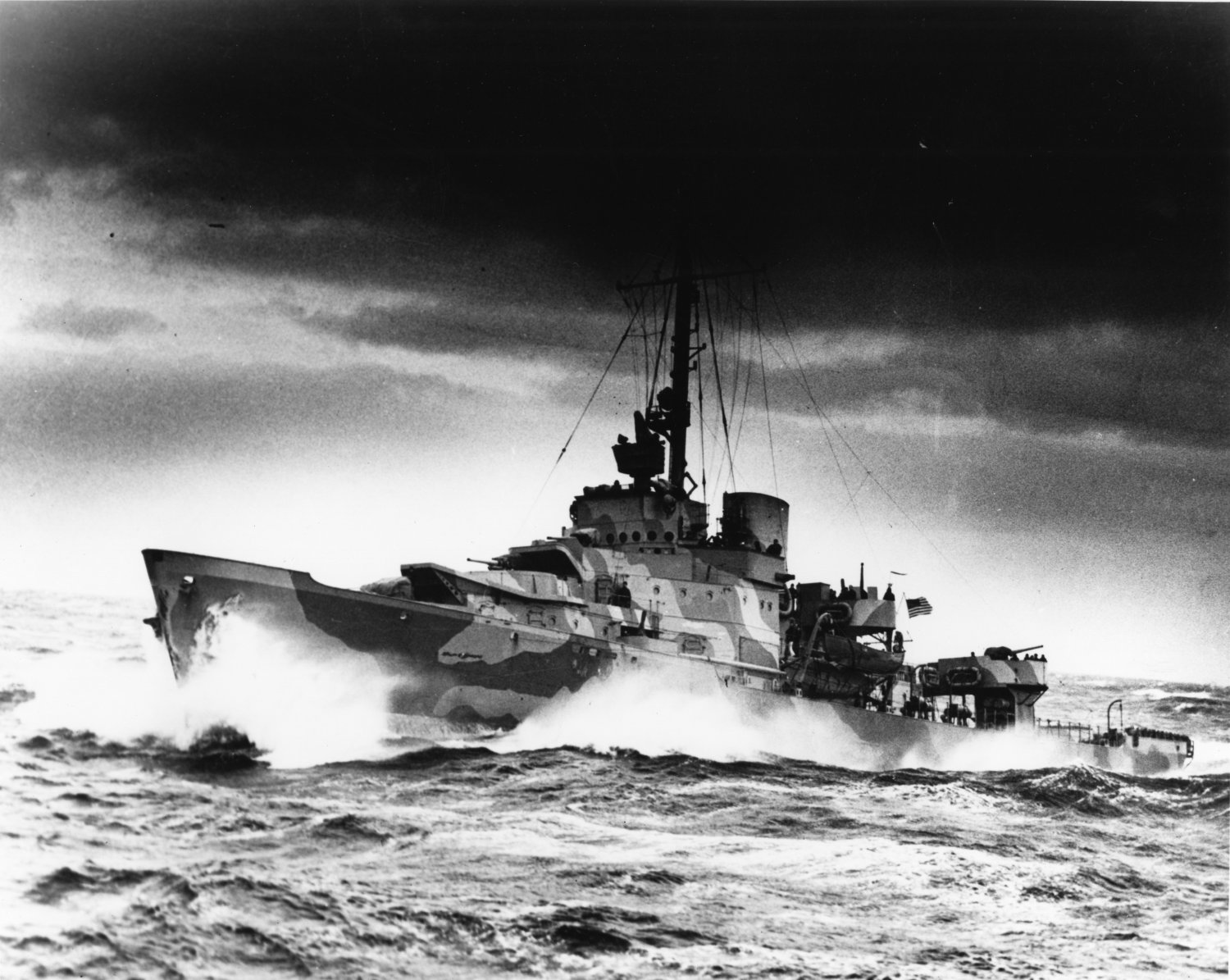
USCGC Ingham (WPG-35) underway in heavy seas, circa 1941-1944, location unknown.
US Coast Guard photo # 2000225945

1942  The Navy credited CGC Ingham with attacking and sinking the submerged U-626 south of Greenland.

U-626 was previously thought to have been sunk in the North Atlantic on 15 December 1942 by depth charges from US Coast Guard cutter USCGC Ingham. This attack was actually 200 nmi from U-626′s position and there is no evidence that the target was a U-boat.

1951  President Harry Truman presented the Collier Trophy to the Coast Guard, the Department of Defense and the “helicopter industry” in a joint award, citing “outstanding development and use of rotary-winged aircraft for air rescue operations.”  Coast Guard Commandant VADM Merlin O’Neill accepted the trophy for the Coast Guard.

2000  An HH-60 from AIRSTA Elizabeth City hoisted 26 survivors from the sinking cruise ship Sea Breeze I and flew them to safety, a record for a single helicopter rescue. Another HH-60 rescued the remaining eight survivors from the cruise ship while an HC-130 also participated in this historic rescue.

She (Sea Breeze 1–Chuck) was part of Dolphin when the line merged with Premier in the late ’90s. (Interesting, as SeaBreeze was Premier’s first ship when the line was founded in the ’80s.) Anyway, when Premier went out of business in September 2000, SeaBreeze was seized in Halifax, and remained there through December. Later that month, she ran into a storm off the coast of Virginia and sank. She was carrying about 40 crew members, all of whom were rescued via helicopter in a heroic feat by the US Coast Guard. There were no passengers aboard.

2014  President Barack Obama and Cuban President Raúl Castro announced the beginning of a process of normalizing relations between the two countries.  The Coast Guard announced its statement regarding the Cuba policy changes due to this change the following day, December 18, 2014.

“Ukraine’s Drone Boats Are Now Shooting Machine Guns At Russian Helicopters, Boats” –The War Zone

The War Zone reports that Ukraine has equipped some of their unmanned surface vessels (USV) with machineguns to allow them to respond to Russian countermeasures including helicopters and jet fighters. The video above is from the perspective of the USV.

It is interesting but what if the Coast Guard was in the position of the defenders? The attacker could be any type of small, fast, highly maneuverable, surface craft, manned or unmanned.

Take a look at the video linked here and included in the “War Zone” post. A Russian Border Security Force Kamov Ka-29 helicopter is attempting to stop a USV using both a door gunner and a forward firing gun. What I see:

  • It is daylight–advantage helo
  • The helicopter is at relatively close range–advantage helo
  • The USV is not shooting back–advantage helo
  • It appears the helicopter is getting at least a few hits

What I am not seeing:

  • Any effect on the surface craft’s speed or maneuverability
  • Use of guided weapons that would quickly disable the surface craft at longer range

In this case the helicopter, which is taking no return fire, might be able to stay on top of the surface craft and complete the destruction of the USV, but if that had been the case, you would have thought the video would have included it. For some reason the mission appears to have been unsuccessful. The helicopter may have run out of ammunition or been low on fuel.

If there had been more than one attacking USV and/or their objective was nearby, the time taken to achieve a kill might be critical. If the surface craft has been firing back, the helicopter might have been lost in the attempt.

“Guide To Iran’s Navy & IRGC’s Drone Carriers, Forward Base Ships, and Covert Intelligence Ships” –Covert Shores

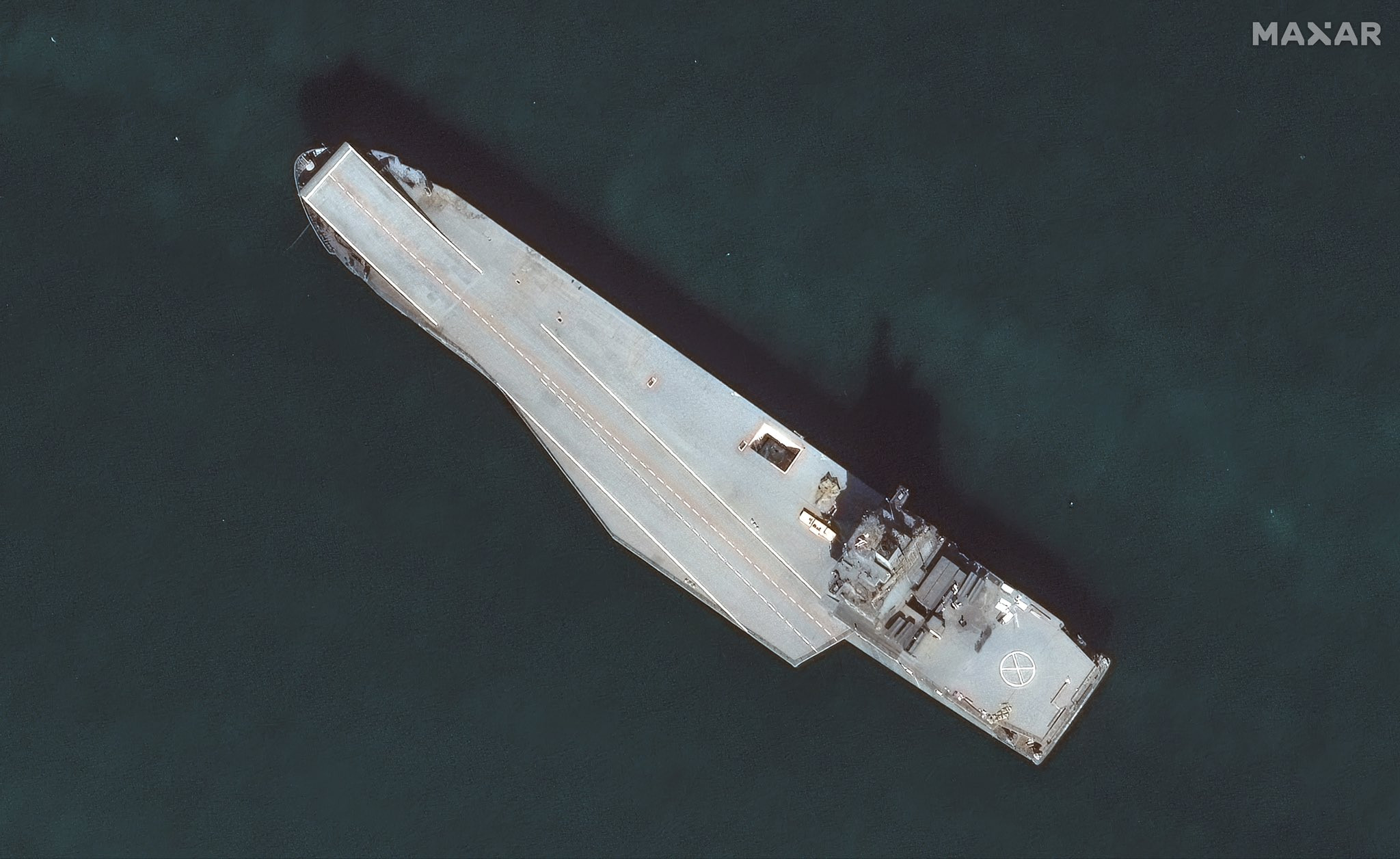
Satellite image of the drone carrier I.R.I.S. Shahid Bagheri (C-110-4) by Maxar Technologies. Note the open aircraft lift and boxed anti-ship missiles behind the superstructure. There appears to be a UAV under netting ahead of the superstructure. This may be a Gaza or similar type

Well, drones are in the news so why not. Drone carriers are becoming a type.

“Covert shores” has an excellent overview of how Iran is converting merchant ships to fulfill naval tasks.

Some are armed with ballistic or cruise missiles.

“U.S. Coast Guard Aviation, Facing Crisis, Rethinks Strategy” –Forbes

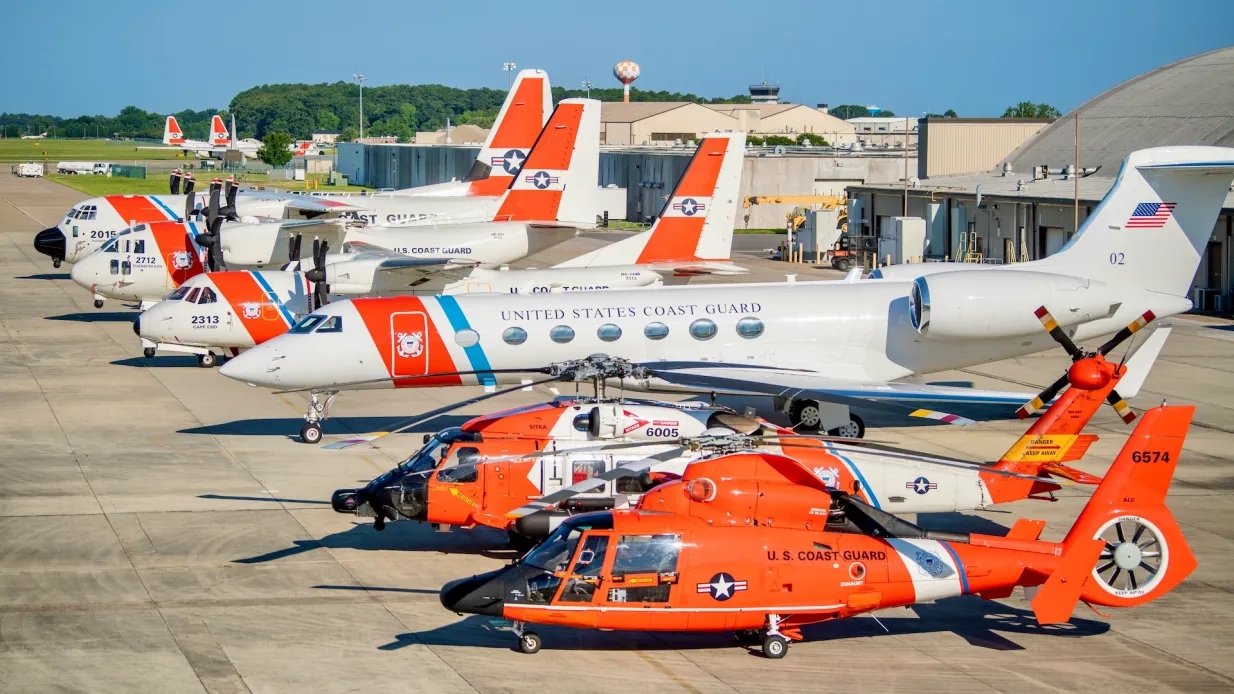
Every Coast Guard Aircraft Type Pictured Together In Rare ‘Family Photo’. Pictured: HC-130J, C-27J, HC-144, C-37B, MH-60T, MH-65E.

I have always been under the impression that the Coast Guard aviation fleet was better maintained than the cutter fleet. That, because of the more immediate and potentially fatal results of unreliability, the aviation part of the Coast Guard was immune from the insidious desire to “do more with less” that effects the cutter fleet. I may have been wrong.
The Coast Guard needs to move fast. The crisis in the Coast Guard’s rotary wing community not going away. As of early December, almost 18 percent of the Coast Guard’s 45-strong MH-60T “Jayhawk” medium range recovery fleet is out of service. Eight helicopters with over 19,000 flight hours are, as of now, permanently grounded….If the flight restrictions remain, the Coast Guard aviation—led by the hard-used Jayhawks—will run into serious peril. By late 2023, over 90 percent of the Coast Guard’s MH-60T helicopters were operating with more 16,000 flight hours, so, without a rollback to the Coast Guard’s original 20,000 flight hour target, several more Coast Guard Jayhawks are set to bump up against the new 19,000 flight hour limitation…Coast Guard leadership is finally showing signs of throwing in the towel and recognizing reality. A new aviation strategy is under development. In a December 10th email, a Coast Guard spokesperson wrote, “We are developing a comprehensive strategy for the future of Coast Guard Aviation,” that “will outline aircraft transitions across our rotary and fixed-wing fleets, as well as the potential development of an uncrewed fleet.”
Hopefully this is just the CG aviation community making a timely correction.
The current Coast Guard MH-60T program as outlined by the Acquisitions Directorate is here and I have reproduced the text below.
When I first heard about the grounding of H-60s due to the reduction in pre-SLEP operational life from 20,000 to 19,000 hours, it appeared to me that the Coast Guard should be able to continue to maintain at least the capabilities it had previously enjoyed as SLEPs had been completed on all MH-65s and newly SLEPed and additional remanufactured HMH-60Ts joined the fleet. In fact, a new H-60 air station has been opened, but perhaps the rebuilds are taking longer than expected, H-65s are proving difficult to maintain, and the effects of reduced operational life are cascading.
I have a lot of respect for the author, Craig Hooper. He has been very supportive of the Coast Guard.
Even if the existing strategy works as planned, as I noted here, “Coast Guard takes next steps toward all MH-60T helicopter fleet ” –CG-9, January 24, 2024,
… it is going to take a long time. H-65s will be with us until the early 2040s. The Coast Guard intends to increase its H-60 fleet to at least 127, up from 45. Currently the Coast Guard has 98 H-65s or a total 143 rotary wing aircraft. We may be looking at 16 fewer total aircraft, but that is in the distant future and not really a reason for concern. Somehow, I doubt the plan will remain unchanged for 20 years, nor should it.

Thanks to David V. for bringing this to my attention.


Medium Range Recovery Helicopter–CG-9

Consolidation of the Coast Guard’s rotary wing fleet to a single MH-60T airframe is necessary to mitigate sustainability challenges with the MH-65 short range recovery helicopter and maintain the service’s rotary wing capability until recapitalization in line with the Department of Defense’s Future Vertical Lift program.

How will the Coast Guard increase and sustain the fleet?

The Coast Guard established a service life extension program (SLEP) in 2017 to extend the service life of the 45 MH-60T aircraft currently in the fleet. These helicopters have been in service since 1990; without the SLEP, 90% of the MH-60T fleet would reach the end of its service life by 2028.

As part of the SLEP, the Coast Guard is replacing the hulls of the legacy airframes with hulls from two sources: retired U.S. Navy H-60 aircraft and newly manufactured hulls procured from the original equipment manufacturer, Lockheed Martin/Sikorsky.

The Navy hulls are being converted to the MH-60T configuration at the Coast Guard Aviation Logistics Center (ALC) in Elizabeth City, North Carolina.

The program awarded an indefinite-delivery, indefinite-quantity contact in January 2021 for the production of new hulls – consisting of three fuselage structure sections: the nose, mid (cabin) and transition – that will be engineered, manufactured and delivered in the MH-60T configuration. Use of new hulls provides an airframe service life of 20,000 flight hours, compared to an average service life of approximately 12,000 flight hours for the previously used Navy hulls.

The remaining production activities – including installation of new dynamic components such as rotors and electrical rewiring – for all hulls will also be completed at ALC.

In October 2023, the Coast Guard received approval from the DHS to proceed with acquisition program activities that expand on the original SLEP to include a component for fleet growth.

The MH-60T Acquisition/Sustainment Program is authorized to:

  • Move to full rate production of newly manufactured hulls as part of the SLEP for the existing MH-60T fleet.
  • Conduct Obtain Phase activities and execute low-rate initial production of 12 new aircraft that will transition three Coast Guard air stations currently operating with the MH-65 to the MH-60T.
  • Begin Obtain Phase activities for aircraft that will transition the remaining Coast Guard air stations to the MH-60T from the MH-65.

The SLEP is now known as Increment 1 of the program. To date, three aircraft have completed SLEP activities. Forty-five new hulls are currently under contract.

The first fleet growth phase, known as Increment 2 of the program, will organically produce 36 aircraft to convert eight air stations from MH-65 to MH-60T operations. The program has been authorized to produce the first 12 aircraft for this increment and will seek authorization from DHS to produce the remaining aircraft at a later date. Transition of the first air station under Increment 2 started in summer 2024.

The air stations not transitioned to MH-60Ts under Increment 2 will be converted as part of Increment 3 of the program. The final air station transition is anticipated to occur in the early 2040s.

The MH-60T Acquisition/Sustainment Program was initially chartered in 2017 to evaluate and implement technical and mechanical solutions for extending MH-60T use through the 2030s. On Oct. 31, 2023, the Department of Homeland Security gave approval to add acquisition program activities to the existing SLEP.

The sustainment effort is being implemented through form, fit and function replacements of the structural hull components, dynamic components such as the rotor, and electrical rewiring. Replacement of the structural hulls will be accomplished either through conversions of retired Navy SH-60F/HH-60H hulls into the MH-60T specification or through the procurement of newly manufactured hulls from the original equipment manufacturer that will be engineered, manufactured and delivered to the Coast Guard in the MH-60T specification.

The acquisition effort will start with the conversion of eight air stations from MH-65 to MH-60T operations through the organic production of 36 aircraft. The program has been authorized to produce the first 12 aircraft for this increment and will seek further authorization from DHS to produce the remaining aircraft.

The existing MH-60T avionics components and software will continue to be used and maintained on the replacement hulls through decommissioning and disposal.

Characteristics

  • Length: 64 feet 10 inches
  • Rotor Diameter: 53 feet 8 inches
  • Height: 17 feet
  • Maximum Weight: 21,884 pounds
  • Cruise Speed: 170 knots
  • Range: 700 nautical miles
  • Service Ceiling: 13,000 feet
  • Endurance: 6.5 hours
  • Crew: four

Features

  • Common avionics architecture system of digital glass cockpit instruments similar to those installed on the Coast Guard’s fixed-wing aircraft
  • Surface search radar and electro-optical/infrared sensors
  • Engines standard with the Department of Defense’s H-60 fleet
  • Five multifunction display screens
  • Sensor and hoist cameras
  • Integrated traffic collision avoidance system
  • 7.62 mm machine gun for firing warning shots and a 7.62 mm shoulder-fired weapon for precise targeting, such as disabling engines on noncompliant go-fast vessels, can be installed
  • Standardized mission system components complementing capabilities and equipment installed on the Coast Guard’s upgraded MH-65 short range recovery helicopter

This Day in Coast Guard History, December 15/16

Based on the Coast Guard Historian’s timeline, https://www.history.uscg.mil/research/chronology/
With inspiration from Mike Kelso

December 15

The Mobile Point Lighthouses prior to the American Civil War. They were destroyed during the Battle of Mobile Bay.

1835  The superintendent of the lighthouse system wrote to Winslow Lewis, “I perceive by a Mobile paper which I received this morning that the Mobile Point light has been fitted by you as a revolving light” similar to the nearby Pensacola lighthouse.  “I am very sorry that you have done so.” Lewis was a contractor who – almost by himself a virtually controlled the administration of the lighthouse system.  The incident helped cause a Congressional investigation that ultimately created a modern lighthouse system in this country.

1839  Near Gloucester, Massachusetts, a storm from the southeast caught and dragged ashore or drove to sea over fifty vessels.  An eyewitness wrote: “From one of the beach to the other, nothing could be seen but pieces of broken wrecks; planks and spars…ropes and sails…flour, fish, lumber…soaked and broken…”  The local fishermen manned two boats, the Custom House boat and the newly launched Revenue Cutter Van Buren (commissioned December 2, 1839) and “fearlessly risked their lives for the safety of their fellow creatures” and brought many safely to shore.

15 December 1943, New Britain. Landing craft approach the inhospitable shores near Arawe, where American troops forced a landing at dawn in one of the most daring amphibious assaults yet undertaken in this area. Completely overwhelming the Japanese defenders they seized the entire Arawe Peninsula within three hours. Note the number identifying the landing craft had been whited out by the censor. Photo credit: Harold George Dick

1943  Coast Guardsmen participated in the landings made on Arawe Peninsula, New Britain.

1944  Coast Guardsmen participated in the landings made on Mindoro, Philippine Islands.

Argo Merchant sinking

1976  The Liberian-flagged 644-foot tanker Argo Merchant, with 7.5 million gallons of oil on board, grounded on a shoal 28 miles southeast of Nantucket.  Coast Guard helicopters from AIRSTA Cape Cod rescued her 38-man crew.  CGCs Sherman and Vigilant responded, along with other vessels, but heavy weather prevented the containment of the spill.  The tanker broke in two on December 21.

December 16

USRC Gallatin; “U.S. Coast Guard survey schooner GALLATIN photographed in 1855
Gallatin was a 73-foot topsail schooner that displaced 112 tons. She was built by the New York Navy Yard and entered Revenue service in 1830. She was ordered to Charleston, SC, on 16 November 1832 to enforce federal tariff law and suppress the “nullification proceedings” adopted by the State of South Carolina. She was transferred to the Coast Survey in 1840 and returned to Revenue service between 1848 to 1849 and then returned to the Coast Survey. She was captured by Confederate forces early in the Civil War and served the South as a privateer. This is the earliest known photo of a Revenue cutter although by the time this photo was taken she had already transferred permanently to the Coast Survey.

1831  Secretary of the Treasury John McLane ordered Revenue cutters to conduct “winter cruises.”  The USRC Gallatin became the first cutter “directly authorized by the government to assist mariners in distress.”

The crash site of the United Airlines DC-8, United 826, in Park Slope, Brooklyn

1960  A United Airlines DC-8 with 84 passengers on board collided with a TWA Super Constellation carrying 44 in mid-air over the New York City area. There were 134 fatalities including all aboard the two aircraft and six on the ground. Coast Guard helicopters, working with the aircraft of the Army, Navy and New York Police Department, transported the injured to a nearby hospital.  Coast Guard vessels also searched the New York harbor area.  The debris they picked up was used by the Civil Aeronautics Board in its determination of the cause of the mishap.

The crash site of the TWA Super Constellation, TWA 266, in Miller Field, Staten Island.