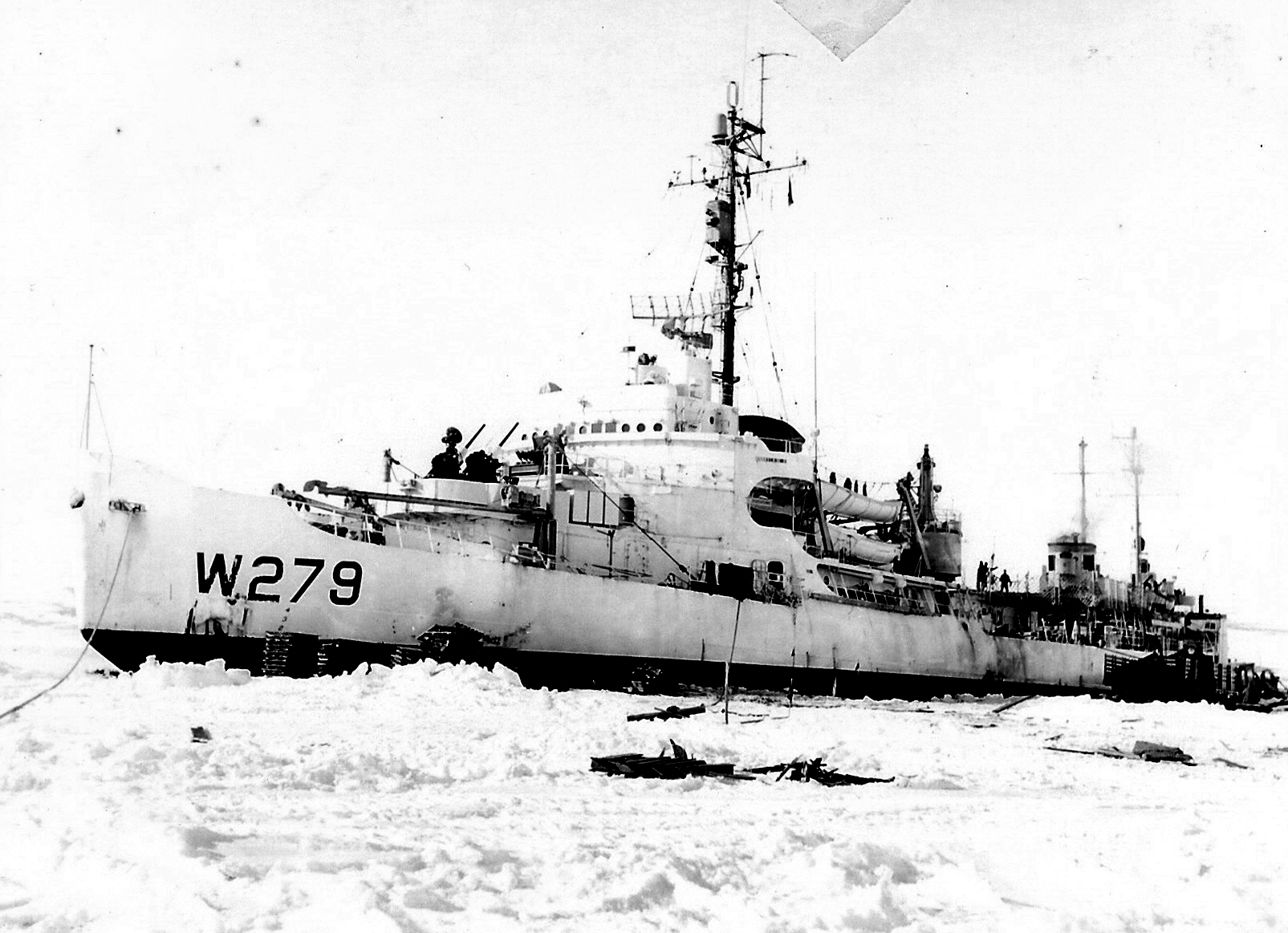
“Serious About Building Maritime Capacity in the High Latitudes? Look South” –CIMSEC

CIMSEC has a post by two active-duty Coast Guard Officers suggesting greater engagement between the US Coast Guard and Navy with their Latin American counter parts in regard to operations in Polar Regions.

They also mention a new Colombian Coast Guard Arctic Research Vessel, ARC ‘Simon Bolivar (PO-151). Thought you might be interested in some specifications. More details here.

  • Displacement of 3,250 tons
  • Length: 83 meters (272′)
  • Beam: 16 meters (52.5′)
  • Max Speed: 13 knots

(The designation, PO, indicates Patrol Offshore and is shared with the former USCG Reliance, a WMEC210, as well as at least four other ships, two as small as 131 tons. Colombian Navy OPVs are designated PZE. PZE or PZEE (Spanish: Patrullero de Zona Economica Exclusiva), Exclusive Economic Zone patrol boat) Amazingly logical.

None of the Latin American ships in the post mentioned are as capable as the Polar Star or the planned Polar Security Cutter. They probably will never go as far South as Polar Star will go as it makes its way to McMurdo, but this does clearly illustrate that smaller, cheaper, ships that are not as difficult to build, can do useful work in the Polar regions.

Ceremony as the first Colombian research vessel ‘ARC Simon Bolivar’ departs for Antarctica.Credit: Juan Cano/Presidency of Colombia

“Coast Guard adds first polar icebreaker to its fleet in 25 years” –MyCG

The future Coast Guard Cutter (CGC) Storis, the Service’s newest icebreaker, near Tampa, FL on December 10, 2024. The Coast Guard purchased the M/V Aiviq in November 2024 to bolster U.S. presence in the Arctic. The vessel will be renamed CGC Storis (WAGB 21) upon commissioning.

Passing along this report from MyCG.

There is still much work to be done before the ship is ready for its first patrol as a cutter. I expect the helo deck forward will be removed, and a deck and hangar will be installed aft. Hopefully they will also enclose some additional space to increase the freeboard aft, currently about three feet. The low freeboard caused problems in the past.

This seems to indicate that it will be some time before she is homeported in Juneau which suggests Seattle, or less likely Kodiak in the interim.

Interesting that they expect to man it with a crew smaller than that of a 210 (60 vs 75).


Dec. 23, 2024

Coast Guard adds first polar icebreaker to its fleet in 25 years

By Kathy Murray, Senior Writer, MyCG

The Coast Guard has officially welcomed its first polar icebreaker in more than 25 years – the recently acquired Aiviq, a commercial vessel that will be renamed CGC Storis.

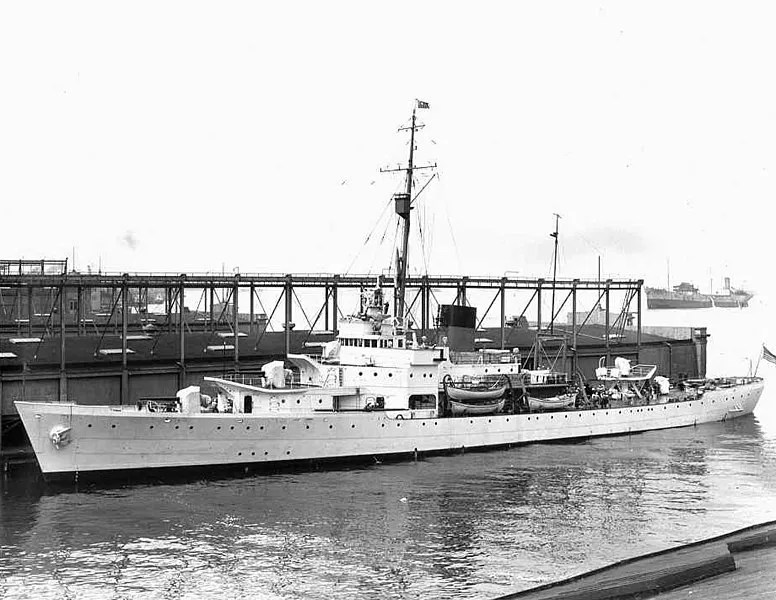
Storis means “great ice” in Scandinavian. The name is also a nod to the original CGC Storis, a legendary light icebreaker and medium endurance cutter commissioned in 1942 that patrolled for submarines and ran convoys during World War II and led the first American transit of the Northwest Passage. In 1948, Storis was moved to Alaska where it conducted law enforcement, search and rescue, and humanitarian relief for 59 years until its decommissioning in 2007.

The new CGC Storis has undergone limited changes since its acquisition last month. These included painting the hull red and labeling the ship as WAGB-21. The vessel will be permanently homeported in Juneau, Alaska once the shoreside infrastructure is ready. The design and construction work for the homeporting project will take several years.

“The Coast Guard is thrilled to acquire this icebreaker,” said Commandant Adm. Linda Fagan. “Like its namesake, this cutter highlights the Coast Guard’s long history of operating in the Arctic and demonstrates our commitment to assert and protect U.S. sovereignty in the region.”

How it came about 

The Coast Guard received appropriation for a commercially available polar icebreaker in 2024 to supplement mission readiness and capability in the polar regions while Polar Security Cutters (PSC) are built. At a time of heightened activity in the area – including the first joint Russian/Chinese patrol passing near Alaska this summer – the Service only has two operational polar icebreakers. Our medium polar icebreaker, CGC Healy, was temporarily sidelined after experiencing an electrical fire in July. Meanwhile, the CGC Polar Star, a heavy polar icebreaker, is nearly 50 years old.

On Nov. 20, the Coast Guard purchased the M/V Aiviq, a 360-foot U.S.-built polar class 3-equivalent icebreaker for $125 million in a deal with Offshore Surface Vessels LLC. The vessel, which was constructed in 2012, has supported oil exploration in the Chukchi Sea off the coast of Alaska in the Arctic Ocean, and has deployed twice to the Antarctic. As a polar class 3-equivalent icebreaker, the future CGC Storis is expected to be capable of operating in waters that are otherwise inaccessible to most Coast Guard cutters.

What this means for future icebreakers 

Buying the future CGC Storis won’t affect the acquisition of the PSCs. The Coast Guard still needs a mix of eight to nine polar icebreakers to meet its operational requirements. In a congressional hearing last month, Vice Adm. Peter Gautier, the Deputy Commandant for Operations, noted the challenges in the region were mounting. “I acknowledge we have a national security threat now from the increased threat of competitors who are working together in ways we have not seen,” he said, adding that the U.S. would be at risk without these new icebreakers.

The Coast Guard is authorizing the shipbuilder, Bollinger Mississippi Shipbuilding, to build the first 16 modules that will be incorporated in the first PSC, CGC Polar Sentinel, with estimated delivery in 2030.

In the interim, the future CGC Storis is expected to help bridge the gap and provide additional capability in support of national security in the region.

How was the new icebreaker named? 

Before the future CGC Storis was acquired, a working group generated a list five potential names that were submitted to an official naming committee composed of senior officers and enlisted personnel. This group ranked their top three choices.

“Storis” was an early favorite given the long history and accomplishments of its namesake. In addition to its previously mentioned activities, the original CGC Storis:

  • was first to arrive to the scene of the sinking CGC Escanaba in 1943, which was believed to have been torpedoed or hit a mine
  • became the first U.S. registered vessel to circumnavigate North America
  • was on scene for the largest U.S. earthquake (magnitude 9.2) in Alaska in 1964
  • was the oldest commissioned cutter in the Coast Guard during its tenure, earning the title “Queen of the Fleet”
  • participated in the 1990 rescue of the M/V Alaskan Monarch off of St. Paul Island, which was immortalized in the movie, “The Guardian”

How big will the crew be on this new icebreaker? 

The initial commissioning crew of the future CGC Storis will consist of approximately 60 officers and enlisted personnel. They will be assigned in the summer of 2025.

“Coast Guard building nation’s first Polar Security Cutter” –Coast Guard News

USCG Polar Security Cutter [Image courtesy Halter Marine / Technology Associates, Inc.]

Some good news. Below is a news release from Coast Guard News.

The design for the Polar Security Cutter (heavy icebreaker) is sufficiently mature to allow construction, and the shipyard has shown that it can do this type of construction.

Even so, delivery is not expected until 2030.


Dec. 23, 2024

Coast Guard building nation’s first Polar Security Cutter

The U.S. Coast Guard and U.S. Navy Integrated Program Office received approval Dec. 19 to begin building the first Polar Security Cutter (PSC).

The PSC marks the first heavy polar icebreaker to be built in the United States in more than five decades.

The work is being performed by Bollinger Mississippi Shipbuilding in Pascagoula, Mississippi, the prime contractor for design and construction of the future PSC fleet. This decision continues work that has been underway since the summer of 2023 as part of an innovative approach to shorten the delivery timeline of these critical national assets.

The approval incorporates eight prototype fabrication assessment units (PFAUs) currently being built or planned. The PFAU effort was structured as a progressive crawl-walk-run approach to help the shipbuilder strengthen skills across the workforce and refine construction methods before moving into a full-rate production. The PFA has prepared the government and the shipbuilder to begin construction of the PSC class, resulting in more precise, cost-effective and reliable construction processes.

The Coast Guard’s operational polar icebreaking fleet currently includes one heavy icebreaker, the 399-foot Coast Guard Cutter Polar Star, commissioned in 1976, and one medium icebreaker, the 420-foot Coast Guard Cutter Healy, commissioned in 1999.

The service recently acquired a commercially available polar icebreaker to provide additional presence and mission capability in the Arctic.

For more information on the PSC class visit the Polar Security Cutter website.

This Day in Coast Guard History, December 24/25

Based on the Coast Guard Historian’s timeline, https://www.history.uscg.mil/research/chronology/
With inspiration from Mike Kelso

December 24

It was just minutes past midnight of Christmas Eve 1955 when the Gum Tree Levee on the Feather River in Sutter County collapsed, sending a 21-foot wall of water into Yuba City. In the darkness of the night, the town would go into complete chaos, with families fleeing from their homes to escape the deadly flood.

1955  A Coast Guard helicopter was the first rescue unit to reach a flood disaster scene in Yuba, California.  Its crew hoisted 138 persons to safety within 12 hours.  The first 58 were made possible because of the light from a small handheld searchlight from positions of peril among chimneys, television antennas, and trees.  In all, the Coast Guard assisted Federal, state, and local agencies in saving over 500 persons by helicopters and boats.

December 25

1944  Allied forces liberated and occupied Palompon and Leyte in the Philippines.

1998  Coast Guard helicopters from Air Station Barbers Point rescued balloonists Richard Branson, a British billionaire, American millionaire Steve Fossett, and Per Lindstrand when bad weather forced them to ditch their balloon off Hawaii during their attempt to be the first balloonists to circle the globe.

This Day in Coast Guard History, December 22/23

Based on the Coast Guard Historian’s timeline, https://www.history.uscg.mil/research/chronology/
With inspiration from Mike Kelso

December 22

1819  The revenue cutter Dallas seized a vessel laden with lumber that had been unlawfully cut from public land in what was one of the first, if not the very first, recorded instances of a revenue cutter enforcing an environmental law.

1837  Congress authorized President “to cause any suitable number of public vessels, adapted to the purpose, to cruise upon the coast, in the severe portion of the season, and to afford aid to distressed navigators.”  This was the first statute authorizing activities in the field of maritime safety, thus interjecting the national government into the field of lifesaving for the first time.  Although revenue cutters were specifically mentioned, the performance of this duty was imposed primarily upon the Revenue Marine Service and quickly became one of its major activities.

December 23

1904  Near Oak Island and Fire Island, New York the American schooner Frank W. McCullough ran aground on Fire Island Bar, 2 miles from the former station and 4 from the latter, at about 9 am.  The Oak Island crew reached the vessel at 10:30 am and the Fire Island crew a half hour later.  They found her pounding heavily and leaking badly. They manned the pumps and assisted the crew in throwing overboard the cargo of lumber; but on the flood tide the sea began to break over the wreck and they were obliged to give up for fear of being washed overboard.  The Fire Island surfboat filled in the seaway and foundered.  At midnight the sea moderated and all hands, 14 surfmen and 5 of schooner crew, abandoned the wreck in the Oak Island surfboat and at 2 a.m. reached the shore.  The vessel was lost.

USCGC Lagare

2014  CGC Legare returned to its homeport of Portsmouth, Virginia following a 52-day patrol through the Caribbean and into the eastern Pacific Ocean.  During their patrol, Legare’s crew transited through the Panama Canal and coordinated with multiple countries in Central and South America, along with partner agencies to stem the flow of illegal drugs into the United States.  The unified effort resulted in the interdiction of multiple suspected drug smugglers and vessels transporting approximately 1200 kilograms, or approximately 2,645 pounds of cocaine, worth an estimated estimated street value of $40 million.

Coast Guard Preparations for WWII

327 foot Secretary class cutter USCGC Taney tied up at Pier 4 in Honolulu Harbor, Hawaii, circa 1940. VIRIN: 220509-G-G0000-002.JPG Photo credit: USCG Historian’s Office

I began this as a comment in answer to a comment by Bill Smith, to the effect that it is harder to prepare for war now than it was in preparation for WWII, but thought it might be of general interest. 

Admiral Waesche served in the Navy Department’s War Plans shop as an O-5 before assuming the role of Commandant in June 1936 at the age of 50 (after ten years as a Commander) skipping the rank of Captain altogether.

He had five years as commandant, to get the Coast Guard ready to fight WWII, but even then, we had serious problems. Many of the smaller cutters used as escort vessels had no sonar and/or no trained sonar operators. Even the 327s didn’t get  decent anti-air fire control systems until 1943. That the 327s had only a single engine and boiler room was a serious flaw as a warship and the while the 327s and 165 foot 165B class WPCs proved excellent ASW ships, the last 327s were commissioned in March 1937 and the last of the WPC165s in 1934. The Coast Guard laid down no credible surface combatants in preparation for the coming war from October 1933 until USCGC Storis was laid down in July 1941, almost eight years. The only large cutters constructed during the war were the 255s and they were assigned a low priority and only one was complete before the end of the conflict.

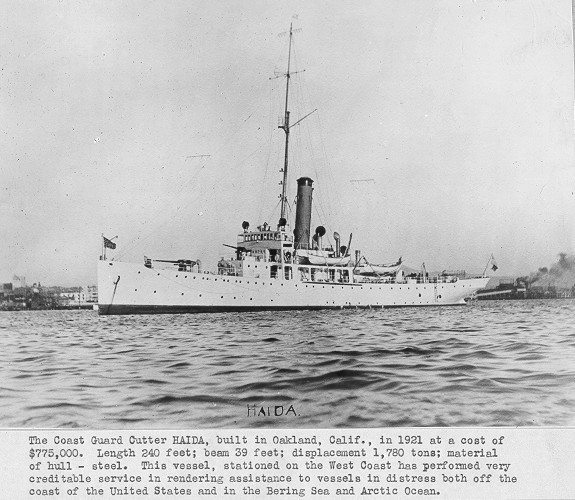
240 foot Tampa class cutter USCGC Haida in the Bering Sea sometime in 1945. Note her wartime appearance and armament. Photo credit: naval-history.net

The large cutter fleet in the immediate pre-war period consisted of 30 ships:

USCGC Unalga at San Juan, PR, circa 1943, with two 3″/50 guns fore and aft. In 1941 the two 3″/50s were mounted abreast on the forecastle. The decks could not support a centerline gun, so in 1944 the forecastle was strengthened
Photo “U.S. Coast Guard Cutters & Craft of World War II” by Robert L. Scheina

All ten of the 250s were transferred to Great Britain in April and May of 1941. These were to be replaced by what became the 255s, the first of which was not commissioned until May 1945.

250 foot Lake class cutter USCGC Itasca as HMS Gorlsston

No patrol boats over 40 feet were completed after 1937 until the 83 foot WPB program was initiated in 1941.

The US began pre-war naval expansion in 1934 with the relatively modest Vinson–Trammell Navy Act followed by additional expansion concluding with the Two Ocean Navy Act of 1940, but the Coast Guard was not a beneficiary of this increased spending.

Perhaps it was not surprising the money went to the Navy. When war did come, the Coast Guard expanded exponentially. Large numbers of vessels were taken up in an emergency expansion and ultimately the Coast Guard would man 351 Navy and 288 Army vessels.

While the concentration on Navy vessels was understandable, the total effort would have improved with only a small investment in equipment and training for the Coast Guard.

Ironically, after WWII, the Coast Guard was fleshed out with ships built for the US Navy.

Where Did Attacks Happen? Where the Ships Are–In Port

Credit: MSN.com

The graphic above was included in an MSN online article about Ukranian use of dazzle style camouflage on one of their gunboats but allow me to make an unrelated observation.

The graphic is incomplete in that it reports the position of attacks on 15 ships while noting that “In two years, Ukraine has destroyed or damaged a total of 27 ships or boats belonging to the Russian Black Sea Fleet.” Even so, it appears representative, in that the vast majority, 13 of the 15, attacks were on units either stationary (moored/in drydock/etc) or underway in close proximity to ports. In some cases, the Russian units were protecting the port.

Why?

Finding ships in port is much easier than finding ships at sea. That is where the ships are–concentrated.

Why should we care?

The Coast Guard is the default protector of ports from maritime threats.

You might assume it’s the Navy, but the Navy has ships in only six US ports or port complexes in North America and Hawaii, and one of those (Groton) has only submarines.

That leaves about 25 significant US ports with no organic USN presence. There are no Navy surface combatants or even patrol boats in Coast Guard Districts 1, 8, or 17, none on the East Coast North of Virginia, none on the West Coast between the Puget Sound area and San Diego, and none in the Gulf of Mexico.

The US Army is legally responsible for Coast Defense, but no such organization has existed since the end of WWII.

NORAD provides minimal air defense for the US, but they are not prepared to deal with surface threats.

If there is an attack on a port in the US “Who You Gonna Call?” or who you gonna blame. After all, we are the Coast Guard, people expect us to Guard the Coast.

This Day in Coast Guard History, December 21

Based on the Coast Guard Historian’s timeline, https://www.history.uscg.mil/research/chronology/
With inspiration from Mike Kelso

USRC Seminole, Amerioca’s Cup Races 1901, Library of Congress

1907  The Commandant, Captain Worth G. Ross, USRCS, by letter, advised the Chamber of Commerce of Baltimore, Boston and Philadelphia, the New York Maritime Exchange and the Navy’s Chief Bureau of Equipment that wireless telegraph sets had been installed on the following Revenue cutters operating on the Atlantic coast and would use the following call letters: USRC Algonquin: RCA; USRC Gresham: RCG; USRC Mohawk: RCM; USRC Onondaga: RCO; & USRC Seminole: RCS.

1936  Executive Order No. 7521 authorized ice breaking operations by the Coast Guard.

1960  The tanker Pine Ridge, with 37 crewmen on board, reported it was breaking in two about 120 miles off Cape Hatteras, North Carolina.  Immediately, the Coast Guard dispatched aircraft and vessels to the scene and alerted nearby US Navy and merchant vessels.  After the arrival of a Coast Guard UF-2G amphibian aircraft, the bow section of the Pine Ridge capsized, throwing some members of the crew overboard; the stern section, however, remained afloat and upright.  Mountainous seas rebuffed every attempt of the tanker Artemis to rescue the seamen in the water.  Life rafts and emergency equipment, meanwhile, were airdropped, and the helicopters from the aircraft carrier Valley Forge successfully removed the 28 survivors from the still floating stern section.  Of the bow section and the 9 missing crewmen, only debris and lifejackets were found, despite a widespread air and surface search.

RVNS Tran Binh Trong (HQ-5) es-USCGC Castle Rock moored outboard of ex-USCGC Cook Inlet (WHEC-384) in South Vietnamese naval service as RVNS Tran Quoc Toan (HQ-6) and ex-USCGC Bearing Strait (WHEC-383) in South Vietnamese naval service as RVNS Tran Quang Khia (HQ-2) at Saigon in May 1972.

1971  The last two cutters of Coast Guard Squadron Three (RONTHREE) in service in Vietnamese waters during the war, CGC Cook Inlet (WHEC 384) and CGC Castle Rock (WHEC 383) were decommissioned and transferred to the South Vietnamese Navy.

“U.S. Coast Guard Heavy Icebreaker Production Decision Expected This Week After Multi-Year Delay” –gCaptain

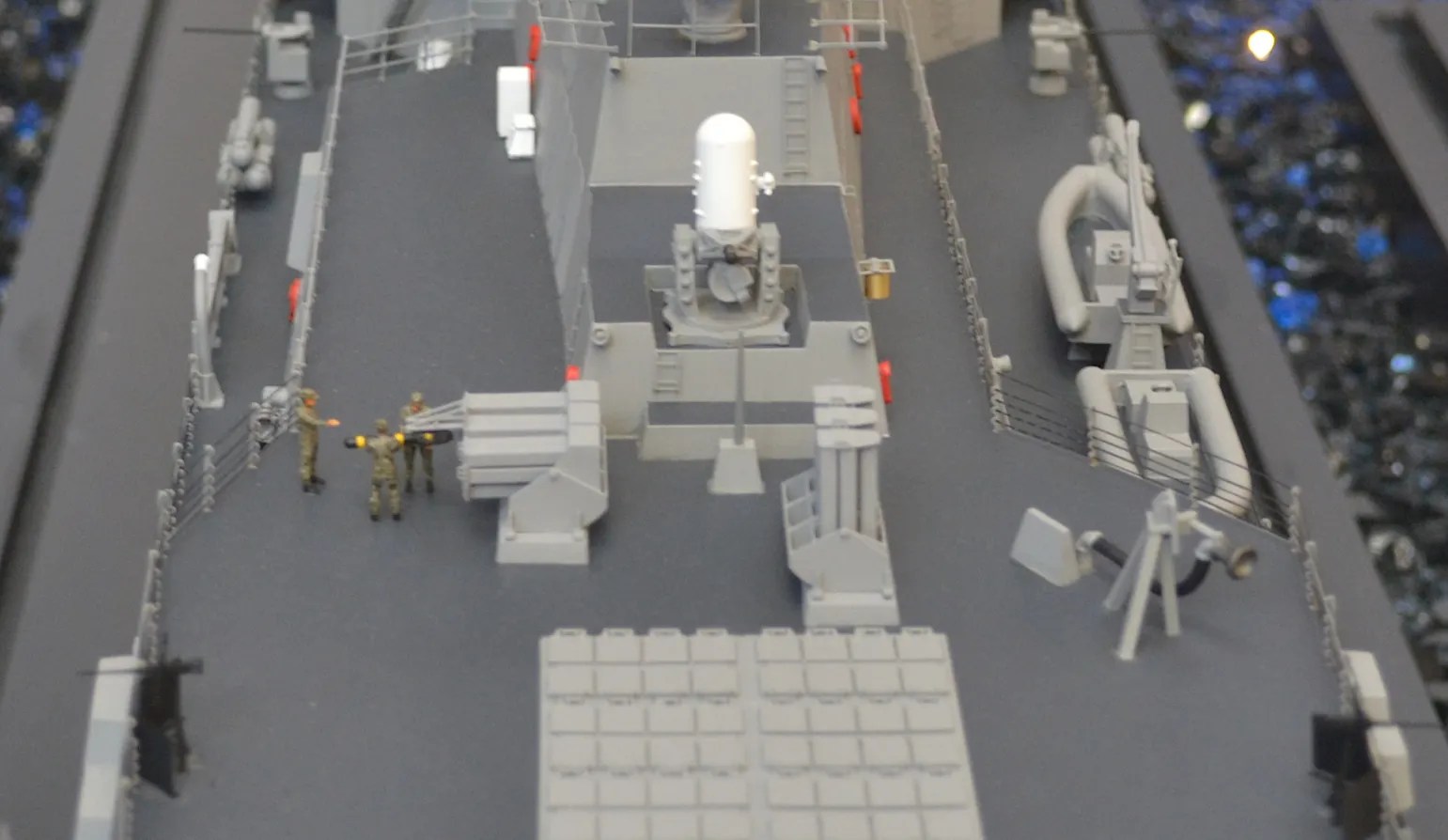
Photo of a model of Halter Marine’s Polar Security Cutter seen at Navy League’s Sea-Air-Space Exhibition have surfaced. Photo credit Chris Cavas.

gCaptain reports,

“The U.S. Coast Guard is looking to take the last remaining hurdle to begin construction of its first heavy icebreaker in 50 years. According to USCG leadership the production decision by the Department of Homeland Security is expected this week. This final step will allow work on the Polar Security Cutter to begin at Bollinger Shipyards in Mississippi.”

The post also passes along unfavorable comparisons between US and China icebreaker construction but does not note that the Chinese icebreaker construction has been far less ambitious in terms of capabilities than that of the US Coast Guard.

Hopefully construction will start in the near future. The six years delay in starting construction is less troubling to me than the fact we were about 20 years late in starting the project in the first place. Unfortunately, we saw the same thing in the start of the OPC project.

“Coast Guard celebrates 40 years of service with H-65 helicopter” –CG-9

Great article about the history of the H-65 in Coast Guard service by the Acquisitions Directorate, CG-9 reproduced below.

Don’t get the impression that the H-65 is going away anytime soon. Expect at least another decade of service. The last of the parent design AS365 Dauphin was manufactured in 2021. The closely related Eurocopter AS565 Panther is still being manufactured and has seen service in eleven countries.


Coast Guard celebrates 40 years of service with H-65 helicopter

Upgrades throughout the 40-year history of the H-65 were strategically completed to allow for expanding missions and operations in the most challenging maritime conditions, such as cliff rescues. Here an MH-65 crew conducts vertical surface training off the coast of Humboldt Bay, California, to hone critical skills to ensure precise and efficient hoisting techniques in this rugged, coastal environment. U.S. Coast Guard photo.


It’s 2007. Coast Guard Air Station Port Angeles, Washington, receives a call about an injured mountain climber at the summit of The Brothers, a pair of prominent mountain peaks in Olympic National Park near Seattle. The elevation: 6,866 feet. And it’s snowing.

A search and rescue mission was deployed using the HH-65C short range recovery helicopter. “We were right up against that line where it was clear. If we had gone much further toward the peak, we would have been in blizzard conditions. We had to dump fuel at altitude to get light enough,” recalled Cmdr. Christian Polyak, co-pilot on the rescue mission and now commanding officer of Coast Guard Air Station Detroit. “We were able to reach the summit, pluck the injured mountain climber off the peak and get back to the airport in about 15 minutes.”

Unknown to the mountain climber, the Coast Guard H-65 Conversion/Sustainment Program had been working for years – and would continue working in subsequent years – to update the H-65 fleet and support missions like the one that brought the mountain climber to safety. “The rescue couldn’t have been done without the HH-65 and the engine upgrade from Bravo to Charlie,” Polyak explained.

In November 2024, the Coast Guard marked the 40th anniversary of the initial H-65 operation, but the tenure of this critical asset in supporting Coast Guard missions is slowly coming to an end. The service has completed the transition from the MH-65D to the MH-65E, the final upgrade of this airframe. Obsolescence challenges with the MH-65 will lead to the sundowning of aircraft as they reach the end of their service lives.

HH-65A HH-65B HH-65C/MH-65C  MH-65D MH-65E
Began operations: 1984 Began operations: 2001 Began operations: 2004 Began operations: 2009 Began operations: 2015
Original Coast Guard version. Avionics upgrade undertaken on a portion of the fleet, including a night vision goggle compatible integrated flight management avionics suite. Engines replaced with Turbomeca Arriel 2C2-CG engines, adding 40% more power. Airborne use of force capability added, including 7.62 mm general-purpose machine gun and a .50-caliber precision rifle. Obsolete subsystems replaced, such as replacing navigation systems and gyros with digital GPS and inertial navigation systems. Remaining obsolete subsystems modernized, including replacing analog automatic flight control with digital systems, installing digital weather radar systems and installing digital glass cockpit instruments.
Other program milestones included purchase of seven new MH-65 aircraft to identify and intercept non-compliant light aircraft operating within the Washington, D.C., Air Defense Identification Zone and execution of a service life extension program to extend the service life of the helicopters by an additional 10,000 flight hours.

Since their introduction more than 40 years ago, Coast Guard H-65s have been credited with rescuing approximately 26,000 people. For nearly two decades, the Coast Guard has planned and executed targeted improvements to enhance reliability and performance of the operational fleet. Across each iteration, starting with the initial designation of the HH-65A (Alpha) to the current MH-65E (Echo), every upgrade enhanced the airframe’s capabilities, enabling crews to complete lifesaving, law enforcement and national security missions more efficiently and effectively.

Retired Capt. Keith Overstreet has flown every model of the H-65, starting with the Alpha in 1995 at Air Station Savannah, Georgia. “I started flying the 65 when it was relatively new … when we purchased the H-65 it was really an advanced aircraft with advanced avionics. It allowed us to fly coupled approaches down to the water with a fairly precise position. It could control not only the lateral, the guiding left to right, but vertically down to the water as well.”

As modern as it was for its time, regular upgrades kept it relevant.

“The Alpha had a small navigation screen where you could create a flight plan. It had a forward-looking radar that would map out vessels and terrain,” said retired Cmdr. Kevin Barres, who flew 65s throughout his entire 25 years in the Coast Guard. “Then Bravo came up and you had a color display that differentiated some terrain,” which helped in developing flight plans.

“Charlie meant changes to the engine, and the engine control. It went from mechanical control using air and linkages to digital control. Echo replaced analog avionics components with a digital cockpit that has significant commonality with the H-60 fleet. There were enhancements to the automatic flight control system and there was a complete rewire of the aircraft. Its modern glass cockpit is standard across the board,” Overstreet said.

LEFT: A glass or digital cockpit replaced analog instruments in the MH-65E. RIGHT: The updates for missions requiring airborne use of force capability got underway in August 2006. The Helicopter Interdiction Tactical Squadron specializes in those missions, often used for drug-interdiction, and moved to the MH-65 from the Agusta MH-68A Stingray in 2008. U.S. Coast Guard photos.


“Every upgrade was significant and addressed a specific problem or modernization to accommodate how the mission, aviation and airspace were changing,” Barres said.

Cumulatively, these three pilots have flown nearly 16,000 hours in the H-65 and remember missions completed with fondness and pride.

Barres remembers when a bear-watching float plane split in half in the water, stranding six tourists, the bear guide and the pilot in Haro Bay, Alaska. It was 2006, and he was on his first deployment in Kodiak.

“It was a very windy day. The seas in the bay had built a little bit. When the aircraft tried to take off, the tube that goes across the front that connects the two floats failed and split. The aircraft did a nosedive into the wave and was swamped. They were all able to get out and were standing on the wing while it floated for a little while.”

The Coast Guard responded with an HC-130, an MH-60 and an MH-65. Barres was in the office and volunteered to pilot the MH-65.

“The C-130 got on scene and dropped two survival rafts to them. The bear guide was able to climb up on the capsized life raft and hang on. All the other people were hanging on to the float plane. The plane sunk, and they all ended up in the water for about 10 to 20 minutes.”

They were able to float due to their safety devices, but they all were hypothermic. The two helicopters were able to retrieve everyone, and all survived.

Another “miraculous” search and rescue mission Barres recalls was when he was stationed in Barbers Point, Hawaii. He was involved in rescuing a family that was stranded on a very small skiff in ocean waters for just short of two weeks, surviving on sea water and flying fish, after their small outboard motor malfunctioned. When the family was taken back to their home in Kiribati aboard an H-65, they were met with ecstatic school children and an elected official showered them with gifts of bananas and coconuts.

H-65 does more than search and rescue

“The H-65 has been heavily relied upon for all our aviation special missions,” said Polyak, who currently ranks as the most senior active-duty H-65 aviator.

During a deployment to Japan from Kodiak on a mission to enforce an international fisheries treaty, Polyak was grateful for the enhancements of the satellite communications on the MH-65C.

“Without that upgrade, we wouldn’t have been able to maintain radio communications with the cutter at the distances we were operating the helicopter,” he said. “As a pilot I always want to be able to talk to the ship if I’m 100 miles away from it. When you’re thousands of miles away from land and there’s nowhere else to go, you need to be able to talk to the ship so you can find out where they are and get back to them.”

The stories of the missions are endless. But without the behind-the-scenes mechanics that keep the aircraft operational, none of this would be possible.

“It takes 21 maintenance labor hours for every flight hour,” said Polyak, who served as the branch chief for the H-65 Echo conversion at the Aviation Logistics Center (ALC) in Elizabeth City, North Carolina, leading a team of 36 to deliver MH-65 Echoes to the fleet from 2017 to 2020. “There’s a lot of work happening on the hangar deck. Our enlisted mechanics work very hard to allow this aircraft to continue to operate and do lifesaving missions. There’s an equally important component at the ALC where the overhaul for the aircraft occurs. And there are hundreds of active-duty members, civilians and contractors that only support the H-65 fleet. These quiet professionals are supporting frontline operations. Along that same vein, the Aviation Training Center in Mobile, Alabama, has continued to provide excellent standardization and training support so that pilots and air crews can work together and execute these challenging missions.”

Looking forward, pilots are grateful they had the opportunity to fly the H-65s.

“It’s amazing the way we in the Coast Guard were able to bring it online,” Barres said. “Basically, going from 1960s helicopters to the most modern helicopters in the world at that time and then over 40 years keeping the aircraft upgraded and relevant.”

“At one point we had nearly 100 airframes in the fleet,” he continued. “The 65 never let me down on a mission or my crew or the folks that we were out there trying to help, whether it was law enforcement, or a fisheries patrol or a search and rescue case.”

All three pilots find immense career fulfillment in completing search and rescue missions made possible by the capabilities of the H-65.

“That day when you look somebody in the eye,” Overstreet said. “And you know, and they know that they would not be on this earth alive if you hadn’t been there. That makes it easy to put your all into your work every day.”

An airman from Air Station New Orleans, who was on the first helicopter that returned following the Hurricane Katrina, recounted, “The second that everyone heard us on Channel 16, Channel 16 just blew up with mayday calls.” Flying on waivers, he did rescues for five days and nights straight. At the time, this was considered the biggest search and rescue event in U.S. history. U.S. Coast Guard photo.


Related:

40 years in service!

Genesis of the Coast Guard HH-65 Helicopter

For more information: MH-65 Short Range Recovery Helicopter Program page