This Day in Coast Guard History, December 31

Based on the Coast Guard Historian’s timeline, https://www.history.uscg.mil/research/chronology/
With inspiration from Mike Kelso

1881  At 4 a.m. the patrolman from Station No. 34, Fourth District, New Jersey, discovered a vessel ashore on the south bar at Townsend’s Inlet, NJ about three miles south of the station and a mile offshore.  He reported at the station at once and the vessel was boarded by the life-saving crew within an hour and a half.  She proved to be the schooner Joseph F. Baker with a crew of eight persons.  After endeavoring to work the vessel off with her sails, the keeper made preparations to run an anchor and heave her off.  By this time a wrecking vessel came alongside, and her captain arranged with the master of Baker to take his vessel off.  The life-saving crew, which had meantime been joined by the keepers of Station 33 and 35, finding they could be of no further service, left the vessel, taking ashore dispatches for the captain.  A steamer towed the vessel off the bar.

Sinbad

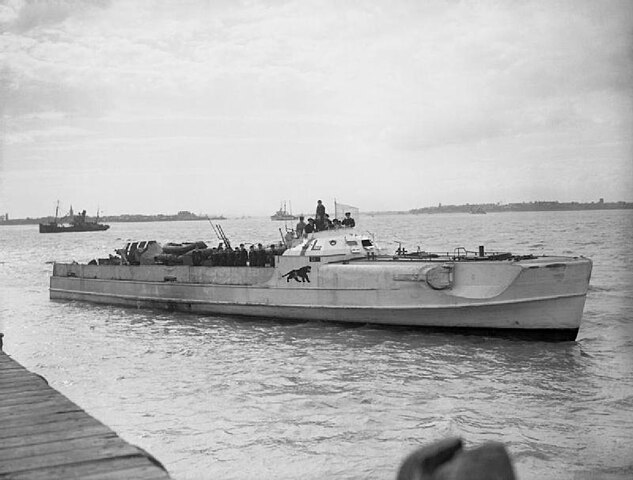
1952  Sinbad, the canine-mascot of the cutter Campbell during World War II, passed away at his last duty station, the Barnegat Lifeboat Station, at the ripe old age of 15.  He served on board the cutter throughout World War II and earned his way into Coast Guard legend with his shipboard and liberty antics.  To date, he is the most decorated mascot to have ever served in the Coast Guard.

Hyperbolic navigation example (Image: Wikipedia)

1980  The 14 remaining LORAN-A stations closed down at midnight, ending Loran-A coverage, which began during World War II.

The crew of USCGC Steadfast holds a decommissioning ceremony for the cutter in Astoria, Oregon, Feb. 1, 2024. Steadfast was commissioned in 1968 and spent nearly 30 years in Astoria.

1985  Vice President George Bush paid an official visit to the officers and crew of CGC Steadfast while the cutter was in Nassau, Bahamas.  Accompanied by RADM Richard P. Cueroni, commander, 7th District and various other U.S. and Bahamian officials, the vice president officiated at an awards and wreath-laying ceremony in honor of the National Narcotics Border Interdiction System and the joint U.S. Bahamian operations.

2014  Watchstanders at the Coast Guard Sector Honolulu command center received notification the morning of December 31, 2014 that the tour boat, Mahana Nai’a with 55 people on board was taking on water in the engine room near Kihei.  A Response Boat-Medium crew from Coast Guard Station Maui was diverted to the scene where once on scene, two crewmembers from the RBM went aboard the Mahana Nai’a with a P6 pump and a damage control kit and successfully dewatered the port engine room.  The RBM then safely towed the Mahana Nai’a to Pier 47 at Maalaea Bay.


Cutter Seneca, 1908 to 1936

USRC Seneca, 1908

Navsource.org is a great resource naval history, including Coast Guard history. I found information on about 80 cutters built before the 1915 formation of the Coast Guard. It appears all cutters that served in the US Coast Guard are also covered. This story about the Cutter Seneca, reproduced below, is particularly detailed and more eventful than most.

Her physical dimensions were not that much different from a WMEC210.

  • Displacement 1,259 t.1915 – 1,445 t.
  • Length 204′
  • Beam 34′
  • Draft 17′ 3″; 1915 – 25′ 9″
  • Speed 13.2 kts.
  • Complement 74; 1918 – 105
  • Armament: Four 6-pounders; 1915 – Four 3″/50 mounts; 1918 – Four 4’/50 mounts, two machine guns and one Y-gun depth charge projector
  • Propulsion: Two single ended boilers, one 1,600hp vertical triple expansion steam engine, one shaft.

Revenue Cutter History: Named for the Seneca Nation of Indians, one of the six tribes of the Iroquois Confederacy whose aboriginal lands were in New York State

The 28 years the cutter Seneca served the U.S. Coast Guard were filled with enough adventure and heroism for a book-length history. Fighting submarines in World War I, making the International Ice Patrol, capturing rum runners in the Prohibition era, saving lives from Greenland to Puerto Rico, from Gibraltar to the Gulf of Mexico, participating in colorful ceremonies and sporting events–these are all a part of the Seneca’s story.

She was launched 18 March 1908 and was christened by Miss Edith E. Hepburn. She was named for the Senecas, a Native-American tribe of Iroquoian Indians of western New York. The builders, Newport News Shipbuilding and Drydock Company of Newport News, Virginia, received a contract price of $244, 500. She was designed as a “derelict destroyer,” her principal mission being to locate and then destroy abandoned wrecks that were still afloat and were a menace to navigation. She was designed with excellent seakeeping qualities, a long cruising range, good towing capabilities, and by necessity the capacity to store a large amount of munitions.

Seneca was accepted by the Government on 26 June 1908 and was commissioned by the Revenue Cutter Service at Arundel Cove, Maryland, on 6 November of that year. On 8 November 1908 she proceeded to Tompkinsville, NY, to take station as a derelict destroyer for the Atlantic coast. Her cruising district included the Atlantic Ocean to the eastward of the United States bounded by a line from Portland, Maine, to Sable Island, Nova Scotia, thence to the Bermuda Islands, and then to Charleston, South Carolina.

On 29 November she destroyed her first derelict, a wreck off Hog Island, and then returned to Tompkinsville. In February of 1909 the cutter visited Washington, D.C. and in June visited Philadelphia. On 21 September she was in New York for the Fulton-Hudson celebration. On 17 May 1910 Seneca visited West Point, and on 28 June she patrolled the Harvard-Yale regatta at New London, Connecticut. In June 1911, she escorted the presidential yacht USS Mayflower, which had President William Taft and his party on board, from Manhattan Beach to Fall River.

ON 23 May 1912, she was at Philadelphia representing the Revenue Cutter Service at the Convention of Permanent International Association of Navigation Congresses. On 29 June she patrolled the course of the Intercollegiate Rowing Association at Poughkeepsie, New York. During 4-6 September Seneca was at New London for the Fifth Convention of Atlantic Deeper Waterways Association. From 12-15 October, she patrolled the Navy Mobilization at New York City. On 2 September she patrolled the British International Trophy races at Huntington, Long Island. During the winter of 1912-1913 she took the place of USRC Mohawk on winter cruising.

On 29 March 1913, Seneca was assigned to the International Ice Patrol. The Titanic disaster of 14 April 1912 had resulted in the loss of 1,517 lives and a universal demand for a patrol of the ice zone had arisen. Two Navy scout cruisers had performed this patrol for the remainder of the 1912 ice season, after which the duty was turned over to the Revenue Cutter Service. Seneca and Miami were the first two cutters to perform this duty in 1913. They made these patrols out of Halifax, Nova Scotia.

On 16 September 1913 she towed the Lottie Russell, a derelict, into Halifax. On 12 April 1914, while on ice patrol, Seneca rescued four survivors from a lifeboat which had been drifting in the North Atlantic for ten days. Originally 14 survivors of the British freighter Columbian had put to sea in this boat, but ten had died of hunger, thirst, and exposure. On 5 July 1914 she proceeded to Labrador to observe and investigate conditions governing the origins of the ice flows.

On 10 August 1914 she was ordered to cooperate with the USS Florida in the enforcement of the neutrality of the United States after the outbreak of war on the European continent. In the winter of 1914-1915 she was again on winter cruising from Gay Head to the Delaware breakwater. After winter cruising, she conducted another ice patrol only this time as a Coast Guard cutter as the Revenue Cutter Service had merged with the Life-Saving Service in January, 1915 to create the Coast Guard. She again conducted a winter cruise in the winter of 1915-1916 and then an ice patrol in the spring of 1916. On 13-14 September 1916 the crew participated in the Marine Parade at Philadelphia. The winter of 1916-1917 was her last winter cruise before the war.

The United States declared war on Germany on 6 April 1917 and Seneca and her crew, along with the rest of the Coast Guard, were transferred to the Navy Department. A battery of four 3-inch guns were installed at the Navy Yard in Brooklyn. The cutter was assigned to the Atlantic Patrol Fleet, Squadron Four, with headquarters at Key West, Florida. She arrived there on 22 May, and was assigned the duty to search the waters of Cuba and the Bahama Islands for enemy submarines.

She was then selected for duty overseas. Seneca was overhauled and refitted at the Morse Shipyard in New York. Captain J. H. Brown was detached and Captain William J. Wheeler assumed command before the ship left the United States in the latter part of August. She arrived at Gibraltar on 4 September 1917 and was assigned to Squadron Two of the patrol forces there. She began escorting convoys from Gibraltar to Tangiers and other nearby points. She escorted six of these convoys and sighted one enemy submarine on 2 October. On 19 October she got her first convoy to England, being the lone escort of eleven merchant ships to Pembroke, Wales, where she arrived on 29 October. During this convoy two of the merchant vessels collided, and one, Usher, was sunk. On 3 November she escorted 14 ships back to Gibraltar, arriving the 11th. On 26 November 26 a submarine was sighted in the moonlight about 2,000 yards distant. Seneca fired two shots, forcing the submarine to submerge.

On 17 February 1918, lookouts sighted another submarine at 500 yards astern. Seneca fired one shot, but owing to the darkness of the night, was unable to determine the results. On 4 March, one of the ships in Seneca’s convoy was torpedoed and sunk, but the submarine was not sighted. On the 22nd, new and improved depth charge releasing gear was installed on the cutter. Early in the morning of 25 March the men on Seneca heard a loud explosion within their convoy, and shortly afterwards saw distress rockets in the air. They found the British ship Cowslip had been torpedoed and was sinking. Immediately a boat was put over with Third Lieutenant F. W. Brown in charge. They soon returned with 15 of Cowslip’s men, along with one of Cowslip’s boats with 19 others. Boatswain P. W. Patterson and a fresh boat crew took Cowslip’s boat back, while Lieutenant Brown returned with Seneca’s boat. Patterson’s boat took 20 survivors on board and towed seven others in a small dinghy. Brown’s boat rescued the last 19 on board the sinking vessel. Only five officers and one enlisted man were lost, and they had been killed in the explosion.

This rescue was beyond the call of Seneca’s duty. The escort vessels were to attack enemy submarines, but it was understood that when a ship was torpedoed the escorts were not expected to expose themselves to a similar fate by stopping to rescue the survivors. However, Captain Wheeler was commended for taking what was considered a “justifiable risk.”

On 29 April 1918 Seneca chased a submarine away from her convoy, but in doing so had two torpedoes cross fifty feet ahead of her bow. On 19 May Seneca joined up with what would be her 20th convoy at Falmouth, England. On the 20th she dropped a depth charge over a suspicious oil spot, whereupon a very heavy oil slick came to the surface. On her next convoy Seneca sighted a submarine on 8 June. After firing a torpedo at the cutter that passed close the Seneca’s bow, the submarine submerged.

Seneca attacked with depth charges and may have sunk the submarine, but they could not remain in the area to investigate further.

Seneca’s 22nd convoy was very memorable. On 25 June, while escorting 29 merchant ships to Gibraltar, Seneca’s men heard a terrific explosion, and observing the steamer Queen sinking, they drove Seneca at full speed to the rescue. So badly was the Queen hit that within five minutes of the explosion she was completely out of sight under the water, taking 25 of her men with her, including the commodore of the convoy. Twenty-seven survivors were clinging to the small boats and pieces of floating wreckage. Seneca’s No. 1 lifeboat with Third Lieutenant F. W. Brown in charge, was lowered to pick them up. All 27 were safely on board Seneca within 40 minutes. For the remainder of the convoy’s run, Captain Wheeler assumed command.

On 10 July, while Seneca was at Gibraltar, a loud explosion was seen on board the Portuguese steamer Peniche. Seneca sent her whale boat and sailing launch with full crews to assist Coxswain J. A. Pedersen and Seaman M. Stellenwerf were overcome by gas fumes but later recovered. On her next convoy, the 23rd, she was escorting 25 ships to England when on 13 July one of the ships in the convoy sounded the submarine warning and hoisted a signal reading “submarine to starboard.”

Seneca immediately stood in that direction, dropping two depth charges on the flank of the convoy as a precautionary measure, and stood full speed in the direction of the submarine some 5,000 yards off. Seneca then began firing, and expended 28 rounds. Upon closer approach the submarine proved to be a dead whale, floating on its side and bearing a striking resemblance to the conning tower of a submarine. Four holes in the carcass testified to the accuracy of the Seneca’s guns.

The next convoy was escorted safely back to Gibraltar, arriving 15 August and the following one back to England arrived 2 September. Convoy OM-99 consisted of 21 ships bound for Gibraltar. This was the 26th convoy for the men of Seneca. For eleven of them it was the last. On 16 September at 1130 hours the steamship Wellington, a ship in convoy OM-99, was torpedoed. Seneca proceeded at full speed to her assistance. At 1131 hours a submarine was sighted a few hundred yards from Wellington. Seneca’s crew fired three shots at the submarine before it submerged. Depth charges were dropped and additional shots fired to keep it from resurfacing.

Wellington was in bad condition, having been torpedoed in the fore peak. Her master believed she would stay afloat, but all but eleven of his men refused to remain on board. First Lieutenant F. W. Brown at once volunteered to assist Wellington’s master, and almost the entire crew of Seneca wanted to go with him. Nineteen of these Seneca volunteers were selected to go with Lieutenant Brown to the Wellington, while 11 of the 42 men in Wellington’s crew also remained with the master. Lieutenant Brown was to be in charge of the ship, but the master was to navigate her into the nearest port which was Brest, France.

At 1235 Seneca left Wellington and rejoined the convoy. USS Warrington was on her way to assist Wellington, expecting to reach her by five p.m. Arriving on board Wellington, Lieutenant Brown posted lookouts, broke out ammunition and started drilling a gun crew, for they were still in sub-infested waters, and on a stricken ship carrying valuable cargo to the allies. Repairs were made below decks and by 1250 hours the ship began to move ahead. By 1410 the speed was increased until they were making 7 1/2 knots. The ship was making water in the number 2 hold, but by driving the pumps, the crew held it to a level of 3 1/2 feet. At 1846 the ship was down by the head, and although Lieutenant Brown was able to stop her and bring her head back up long enough to regain his course, her head went down again and her engines were helpless.

A storm had come up and the seas had grown very heavy, with waves crashing over the bow. There was only one lifeboat on Wellington and Lieutenant Brown mustered all the men abreast of this except for the radio operator and three men on the pumps. It was his intention to remain with these four until all hope of saving the ship was gone, the other men meanwhile standing by in the lifeboat. One Seneca man and seven Wellington men were lowered with the boat, the others to slide down the falls into the boat as soon as it reached the water. Fearful lest the boat be smashed against the ship by the heavy seas, one of Wellington’s men chopped the painter and the lifeboat with its eight men drifted away rapidly. They tried to row back, but inexperienced in a pulling boat, they were no match for the heavy seas and
strong current.

Lieutenant Brown was left stranded with 18 of his men and five of the Wellington men. He set the men to constructing life rafts. The bow continued settling. The radio operator was in contact with the Warrington and continued sending position reports. Rockets were fired from Wellington, and at 1430 of the 17th, answering rockets from the Warrington were seen off the port bow. The Wellington listed rapidly and Lieutenant Brown gave the order to leave the ship. He continued signaling with a hand flashlight to the Warrington about 1,200 yards away as the ship’s keel turned to a sixty degree angle. Then her boilers exploded and the vessel rose up for her final plunge. Lieutenant Brown jumped and swam clear, searching about for something to which he could cling.

Responding to cries for help he swam about, and finding men clinging to planks advised them to keep their mouths closed to keep out the sea water. Next he swam to some calcium lights and extinguished them so they would not lure his men away from their planks. After about three and a half hours in the water Brown was picked up in an unconscious state. From his long exposure he developed pneumonia. Eight others of Seneca’s crew were picked up from the water, but one died shortly afterwards. In all, 11 Seneca and five Wellington men perished. Among the eight other Seneca men picked up was a seaman, James C. Osborn, who, supporting a shipmate, Coxswain Jorge A. Pedersen, had swum to a small life-raft with the semiconscious man and held him between his feet. Several times in the hours that followed they were washed off, but each time Osborn recovered his shipmate and hoisted him back on the pitching raft. Finally sighting the Warrington, Osborn semaphored “I’m all right but he’s gone unless you come right away.” Both were recovered.

The following awards were made: To Acting Machinist William L. Boyce, posthumously: the Distinguished Service Medal and citation. To the following deceased members of the crew, posthumously, the Navy Cross and citation: Water Tender William H. Best; Cook Russell Elan; Gunner’s Mate Second Class P. L. Marvelle (USN); Boy First Class James J. Nevins; Coxswain Merton Stellenwarf; Water Tender R. H. Tingard, and Assistant Master at Arms Andrew Zuleger, Coxswain Carl S. Newbury; Water Tender M. M. Ovesen; and Seaman William H. Prime.

The remaining living members of the rescue party were awarded the Navy Cross and citation: First Lieutenant F. W. Brown; Oiler Second Class George W. Christy; Seaman Raymond J. Gorman; Assistant Master at Arms D. E. Grimshaw; Electrician Second Class M. C. Mason; Seaman Anthony Orhelein; Coxswain James C. Osborn; Coxswain Jorge A. Pedersen; and Machinist First Class M. J. Ryan.

Rear Admiral Grant, senior British naval officer at Gibraltar had this to say of the volunteers: “Lieutenant Brown and the gallant volunteers set an example worthy of the highest traditions of any Service or any Nation.”

After the Wellington episode the Seneca escorted four other convoys, several times encountering submarines. She was at Gibraltar on 11 November 1918 when the Armistice was signed, ending World War I. Seneca’s wartime service included escorting thirty convoys consisting of about 580 ships. Only four were lost, and from them 139 survivors were rescued. Twenty-one responses to submarines were made and only one of these proved to be false–the “dead whale” episode. The cutter had four close calls with torpedoes, and was believed to have sunk one submarine.

After the war Seneca remained at Gibraltar for several months, then returning to the United States via Algeria, France, and England. Several vessels in distress were assisted during this period. When Seneca was returned to the Treasury Department on 28 August 1919, she resumed her station at Tompkinsville. In the spring of 1920, she was back on ice patrol. On 14 July she patrolled the International Yacht Race at Sandy Hook, NJ. Again in 1921 and 1922 she was on ice patrol.

On 31 July 1922 she got a new set of guns at the Washington Navy Yard. On 5 August she ran aground in the Potomac River, off Mathias Point, but suffered no serious casualty. After her ice patrol in the spring of 1923, she patrolled the Harvard-Yale regatta at New London on 21 June. In July she was overhauled in Brooklyn and repainted at Annapolis. On 15 November 1923 the Commandant ordered the Coast Guard to seize the vessel Tamoka (ex-Areteusa) and arrest her crew. This vessel belonged to William F. McCoy, notorious rum-runner, and had been hovering along the coast between Nassau and Canadian ports, peddling liquor. On 22 August she had fired upon a boat from Manhattan, attempting to board her.

At 1030 hours on the morning of 24 November Seneca hailed Tomoka in latitude 40° 21.6′ North, longitude 73° 49.7′ West and ordered her to heave to and be prepared to be boarded and examined. A surfboat with an armed boarding party in charge of Lieutenant L. W. Perkins was sent to go on board and take charge of the vessel. At first Tomoka broke out the British flag and cruised about so that the boarding party would not overtake her. Seneca called her gun crews to quarters, cast loose the number one gun, and then ordered Tomoka to permit the boat to board. The master then complied. At 1200 the boarding officer reported that he was all right and requested the Seneca to go ahead and he would follow with Tomoka. Seneca shaped a course for the Ambrose Channel lightship, but by 1230 Tomoka had still not started to follow. Heading back for the rum-runner Seneca was met by her boarding party, which had been chased off Tomoka with a machine gun.

Seneca then instructed Tomoka that she would be sunk by gunfire unless she proceeded toward New York. The rum-runner started in that direction, but then suddenly started its engine, hoisted the fore staysail and stood rapidly to eastward. Seneca gave chase and opened fire. The first shot was fired across the bow of the fleeing schooner, then the range was gradually decreased. After three warning shots, a fourth shot was fired to hit. The shell landed alongside a few feet from Tomoka, and the schooner immediately stopped engines, hauled down the fore staysail and headed into the wind with her foresail idly flapping.

Seneca mustered a force armed with rifles, called away a boat, and ordered the master to haul down his foresail. The crew of the schooner, without waiting for instructions from the master, immediately jumped to the sail and hauled it down. Boatswain I. E. Johannessen took an armed boarding party on board Tomoka and ordered the “rummy” crew below decks. Meanwhile, Seneca was lying less than 100 feet off, with another armed party on the bow. No further difficulty was encountered. The vessels arrived off Staten Island at 2330 and turned Tomoka and her crew over to Lexington, including Bill McCoy himself.

After her 1924 ice patrol she was again overhauled, and again patrolled various regattas. On 26 July 1927 she was placed out of commission at Curtis Bay but on 20 April 1928 she was recommissioned and reported for duty with the New York Division. On 1 March 1929 she arrived in Washington, DC to take part in the inauguration of Herbert Hoover. On 23 September 1932 her permanent station was changed to San Juan, Puerto Rico, and she arrived there on 23 October. On 1 June 1934 her permanent station was changed once again when she moved to Mobile, Alabama, where she served until 28 January 1936, when she was selected to be decommissioned. Proceeding to the depot at Curtis Bay, Seneca had one last opportunity for service when a big freeze came over the Virginia and Maryland coasts. The Chesapeake Bay and the Potomac River froze over, stranding several vessels in the ice. Seneca was called to the rescue. From 21-27 February, she stayed busy breaking ice, freeing and rendering assistance to five ice-bound vessels.

On 21 March 1936 she was decommissioned at the Coast Guard Depot and on 3 September 1936, she was sold to the Boston Iron and Metal Company of Baltimore for $6,605.00. Seneca was then sold to the Texas Refrigeration Steamship Line and she sailed with them for only a few months before the company went bankrupt. Boston Iron and Metal Company then bought Seneca back at auction.

She returned to Coast Guard service in 1941 and was overhauled. In 1942 she was turned over to the state of Pennsylvania for use in training merchant and naval cadets from the maritime academies of the states of Pennsylvania, Massachusetts, and New York. Renamed Keystone State, she stayed in that service through 1948. She was then returned to the Maritime Commission and laid up until she was sold for scrap in Baltimore in 1950.

This Day in Coast Guard History, December 30

Based on the Coast Guard Historian’s timeline, https://www.history.uscg.mil/research/chronology/
With inspiration from Mike Kelso

December 30

The Steam Ship Circassian, 1856 by unknown artist (watercolour) (© National Maritime Museum, Greenwich).

1876  The British ship Circassian was destroyed off Bridgehampton, Long Island, following a successful rescue of 49 persons on December 11 by the Life-Saving Service.  During later salvage operations in a storm the ship broke up, resulting in the loss of 28 of its salvage crew including 12 Shinnecock Indians.

Army freighter similar to Coast Guard-manned USS FS-367

1944  Coast Guard-manned USS FS-367 rescued survivors from USS Maripopsa at San Jose, Mindoro, Philippine Islands.

Warriors, Lifesavers…
December 30, 1944 — The Coast Guard-manned Army freight and supply vessel USAT FS-367 rescued survivors from USS Maripopsa at San Jose, Mindoro, Philippine Islands.
FS-367 was commissioned April 29, 1944, with LTJG R.H. Greenless, USCGR, as commanding officer. She reached her final destination in the Philippines on 30 December 1944.
In Operation L-3, near San Jose, Mindoro Island, Philippines, she anchored 500 yards off Bulong Point midway between Blue and White beaches. The USS Maripopsa dropped anchor about 300 yards away and some 800 yards from shore.
At 1530 Japanese planes, in a sudden and devastating attack of shipping in the harbor sank or damaged 24 ships. One crashed into the USS Arturus, a PT-boat tender, which sank almost immediately. A second made a low level strafing and bombing attack on a group of LSTs unloading at White Beach blowing the stern off one of them and then turned on the Maripopsa, into which it crash dived. The tank ship immediately burst into flames and a number of the crew either were blown or jumped into the water. The FS- 367 immediately went to her assistance.
At the same time a third Japanese plane made a low-level attack on the destroyers outside the harbor, straddling two destroyers with bombs and finally crashing into the USS Ganesvoort (DD-608), which immediately began to burn and settle in the water, being assisted by two other destroyers, in a sinking condition.
Proceeding to assist the Maripopsa , the FS-367 took several men aboard with her boarding net and James D. Ellis sighting a man struggling in the water and calling for help, dove into the water and supported him until both were picked up by an LSM. The FS-367 stayed alongside the Maripopsa until all survivors had been taken off.
About 1900 the FS-367 withdrew out of the line of fire of guns that were to shell and sink the disabled Maripopsa . Later, this was cancelled and the Ganesvoort launched 2 torpedoes into her. Immediately thereafter a great amount of burning gasoline spread over the bay making the FS-367’s anchorage unsafe.
As she was preparing to move, the Ganesvoort requested she come alongside and take off her crew. By the time she had reached the destroyer, however, the gasoline had spread so widely that the Ganesvoort was in immediate danger of being engulfed. The FS-367, instead of stopping to take off personnel, warped alongside the destroyer and began towing her to a safe anchorage. While so occupied another alert sounded and a Japanese plane was shot down immediately overhead. The FS-367 finally got to safety several hundred yards off White Beach. The next day the Ganesvoort was abandoned by her crew in a sinking condition. No casualties were suffered by the FS-367.
Coast Guard crewed — Under a Joint Chiefs of Staff agreement signed 14 March 1944, the Coast Guard was designated to man certain small Army Transportation Corps vessels (with some already operating in the Southwest Pacific and manned at the time by civilians). The agreement reads: “The Coast Guard, due to decrease in category of defense in the United States, will have some personnel available to man ships and craft for which civilian personnel cannot be obtained.” Five categories of Army vessels were specified for Coast Guard crews: AMRS (Army Marine Repair Ship), TY (tankers), LT (large tugs), FS (freight and supply vessels), and F (Freight vessels). The Coast Guard manned a total of 288 of these Army craft.
(Information courtesy of the Coast Guard Historian’s Office,,,,)

The wreck of the SS African Queen, a Liberian oil tanker that ran aground on Denwick Island, Maryland on the 28th of December, 1958.

1958  The 590-foot tanker African Queen ran aground and split in two 10 miles off Ocean City, Maryland.  Within two hours 15 helicopters from the nearby Coast Guard, Navy and Marine Corps bases evacuated all 47 crewmen successfully.  The Coast Guard Rescue Coordination Center at New York coordinated the operations.

1997  The 493-foot freighter Merchant Patriot began taking on water in stormy seas.  Coast Guard air assets from AIRSTA Clearwater arrived on scene and, along with Air Force units, rescued the ship’s captain and her 27 crewmen.  The vessel, however, remained afloat and was later towed to Freeport, Bahamas.

This Day in Coast Guard History, December 29

Based on the Coast Guard Historian’s timeline, https://www.history.uscg.mil/research/chronology/
With inspiration from Mike Kelso

Men killing fur seals on St Paul Island, Alaska, 1890s.

1897  Congress prohibited the killing of fur seals in the waters of the North Pacific Ocean.  The Revenue Cutter Service was tasked with enforcing the law.

Circa 1940 photograph showing keepers quarters and “U.S. Coast Guard” painted on the side of the storage shed. (Photo courtesy of the Guantanamo Public Memory Project)

1903  An Executive Order extended the jurisdiction of the Lighthouse Service to Guantanamo, Cuba.

29 December 1998 — The 578-foot cargo vessel Violetta caught fire in the Houston ship channel. 
Coast Guard photo by Petty Officer 1st Class Patrick Montgomery

1998  The 578-foot cargo vessel Violetta caught fire in the Houston ship channel.  Twenty-three of her crew were rescued.  CGC Point Spencer spent several days fighting the fire on board the vessel.

Sudden waling of sirens on December 28 disturbed a peaceful morning in Galveston, Texas. The 578-foot cargo vessel, Violetta, caught fire and was burning in the Houston ship channel. As rescue units began to arrive, thick black smoke filled the air and hung over the bay like a black velvet veil.
VioIetta suffered an engine room fire that claimed the lives of two crewmembers. Days would pass before the last hot spot was finally extinguished.
Coast Guard Station Galveston, Texas., rescued 23 of 25 crewmembers of the Cypriot-flagged vessel in those early morning hours on December 28, 1998. Coast Guard Cutter Point Spencer, an 82-foot patrol boat from Galveston, Texas, one 55-foot aids to navigation boat and two 41-foot utility boats from Station Galveston quickly set up a safety zone of 500-yards.
The fire broke out at about 5 a.m. in the engine room of Violetta. The vessel was empty except for the 165,000 gallons of diesel and fuel oil onboard. The VIOLETTA was scheduled to take on corn and wheat as cargo in Galveston.
(Information courtesy of the Coast Guard Historian’s Office and DVIDS)
Coast Guard photo by Petty Officer 1st Class Patrick Montgomery

Fouled Anchor is Still With Us

Marine Link has an opinion piece talking about the Coast Guard’s new requirements being placed on the merchant marine community in hopes of preventing Sexual Assault Sexual Harassment (SASH). Perhaps inevitably, he asks how regulators who cannot get their own house in order, can establish rules for others.

I have avoided comment on the Fouled Anchor because I am not current on personnel policies and know I’m not really qualified to comment, but it is important to know what the public thinks of the service.

“North American Arctic defense could shape outcome of Indo-Pacific conflict” –Indo-Pacific Defense Forum

A U.S. Army Green Beret observes an incoming CH-47 Chinook helicopter during Operation Polar Dagger in Wales, Alaska, in August 2024. IMAGE CREDIT: SPC. BRYON DAVIDSON/U.S. ARMY

The Indo-Pacific Defense Forum reported on a Special Operations Command North (SOCNORTH) exercise,

“To address growing concerns in the Arctic, SOCNORTH recently executed two phases of Operation Polar Dagger, an operational series that demonstrates rapidly deployable, joint SOF capabilities throughout the North American Arctic. It forms the basis of options to deter, disrupt and deny adversary activity in support of U.S. Northern Command’s (USNORTHCOM) layered defense of the U.S. homeland…

“In 2023 and 2024, SOCNORTH and the U.S. Navy partnered to deploy the amphibious transport dock ship USS John P. Murtha and the USS John L. Canley, an expeditionary sea base vessel that supports SOF operations and other maritime missions, to the Bering Sea and the Arctic Circle to support Operation Polar Dagger. USSOF is enhancing its navigation expertise in Arctic terrain and has demonstrated the ability to thrive in the region by executing long-range movements, maritime interdiction operations, rapid infiltration/exfiltration, air-to-ground integration, critical infrastructure defense, domain awareness, and medical evacuation validation, among other engagements.”

(I suspect what this means is that USS John P. Murtha participated in 2023 and USS John L. Canley participated in 2024. Both could not have participated both years.)

A lot of the post is an attempt to explain to an Indo-Pacific audience why a NORTHCOM exercise should be important to them.

Observations: 

It appears that Polar Daggar is a part of the larger NORTHCOM NOBLE DEFENDER exercise. This is apparently a regular annual exercise. NORTHCOM’s on-line magazine reported on the 2023 exercise.

“U.S. Army and Navy assets conduct an interdiction operation in the Bering Sea in July 2024.” Note how flat the seas are. That’s not normal. They did do this in July. You can’t count on seas like this. IMAGE CREDIT: SENIOR AIRMAN JOHNNY DIAZ/U.S. AIR FORCE

There is a serious problem here because there was apparently no Coast Guard participation in these exercises. The Navy’s Pacific Fleet almost never has surface ships anywhere near the Arctic. If you have an urgent need for a ship to do something in the Bering Sea, the Coast Guard is really the only option most of the time. SOCNORTH should be learning how they can exploit Coast Guard resources including ships, boats and aircraft. If you want maritime interdiction in the Bering Sea, if you want maritime domain awareness, who should NORTHCOM call? –the Coast Guard.

Want to fly a “Night Stalker” helicopter off of a ship? Want to launch ATACMS from the Chukchi Sea or maybe Tomahawk or SM-6 from a Mk70 launcher? You could put it on the flight deck of a cutter. 

Need follow-up logistics for paratroopers dropped into an isolated coastal location? Coast Guard.

A satellite image of Shemya Island. What is now called Eareckson Air Station, with its lengthy runway, is seen along the southern edge. Google Earth

Not enough Air Force transports available when you need to move troops to reinforce Shemya? Kodiak C-130Js can help with that.

Cutter might even put a landing party ashore to provide quick protection for a critical facility and stand offshore to provide some AAW protection with its 57mm.

East-Coast-based U.S. Naval Special Warfare Operators (SEALs) conduct an over the beach infiltration on Shemya Island, Alaska, Sept. 6, 2023, as part of Operation Polar Dagger. During the operation, special operations forces projected the ability of U.S. forces to defend critical infrastructure, enhanced all-domain awareness, demonstrated operational reach, and strengthened our understanding of activity in the Arctic. (U.S. Navy photo by Mass Communication Specialist 2nd Class Matthew Dickinson)

In 2023, Special Forces operating from USS John P. Murtha (LPD-26) did an infiltration exercise. A cutter could have done the same thing, and it probably would have been more realistic since an LPD is unlikely to be available.

Any surface or land action at the start of a conventional conflict against Russian and/or China that involves the Arctic is likely to be a surprise involving small units, probably involving covert actions from unconventional platforms, paratroopers, and small unit insertions. At least initially, it will be a “run what you brung” war. We will have to fight with what we have and effectively the Coast Guard is the surface navy for Alaska.

The “Center of Gravity” for the theater is likely to be the Bering Strait. As long as the US controls the strait, the Northern Sea Route will be useless for traffic between the Russian North coast and China or the Russian Pacific Coast.

The photo that leads off this post was taken at Wales, Alaska, population 145, 111 miles (179 km) northwest of Nome. The location is significant in that it is on the Eastern edge of the Bering Strait. It appears someone has recognized the significance of the location.

This Day in Coast Guard History, December 28

Based on the Coast Guard Historian’s timeline, https://www.history.uscg.mil/research/chronology/
With inspiration from Mike Kelso

December 28

1835  The “Dade Battle” occurred when Seminole Indians ambushed and killed Major Francis Langhorne Dade and his Army command while they were on the march on Fort King Road from Fort Brooke to reinforce the troops at Fort King (Ocala).  This battle was the immediate cause of the Second Seminole War, a war in which the Revenue Cutter Service played an important role.

Cape Flarry Lighthouse

1857  The light was first illuminated in the Cape Flattery Lighthouse, located on Tatoosh Island at the entrance to the Straits of Juan de Fuca, Washington.  “Because of Indian trouble it was necessary to build a blockhouse on Tatoosh Island before even commencing the construction of the lighthouse. Twenty muskets were stored in the blockhouse, and then the lighthouse work began.”

Light House Service Seal

Barbers Point Light, Barbers Point, outside of Kalaeloa, Oahu, Hawaii

1903  An Executive Order extended the jurisdiction of the Lighthouse Service to the non-contiguous territory of the Hawaiian Islands.

USCGC Tahoma (WMEC-908)

2014  CGC Tahoma returned safely to its homeport of Kittery, Maine after a 55-day patrol conducting operations and training in the Gulf of Maine and Georges Bank.  Tahoma’s law enforcement teams conducted boardings of commercial fishing vessels to inspect safety gear and enforce marine resource management to ensure sustainable fisheries in the North Atlantic.  On December 1, 2014 Tahoma’s crew assisted the disabled F/V Madison Kate following an engine casualty.  Tahoma’s crew put the vessel in tow and safety and transferred it to a Coast Guard Station Brant Point motor life boat.

“Quentin Walsh — D-Day planner and Cherbourg liberator 80 years ago!” –MyCG

190606-N-DM308-001 A graphic illustration of the future Arleigh-Burke class guided-missile destroyer USS Quentin Walsh (DDG 132). (U.S. Navy photo illustration by Mass Communication Specialist 1st Class Paul L. Archer)

MyCG has a retelling of the life of my favorite Coast Guard Hero, Quentin Walsh. Read the whole thing, but I have quoted below the section on what he and his 53 man  SeaBee unit did in less than three weeks following the Normandy invasion.

German prisoners march out of surrendered Cherbourg under U.S. Army guard. U.S. Navy photo.

By Tuesday, June 27th, Walsh’s men had fought their way through to Cherbourg’s harbor. During this assault, Walsh moved his men quickly to occupy strategic parts of the port and take control the harbor. During the assault, the men in his unit experienced a twenty-five percent casualty rate. By the end of the day, Walsh’s unit had advanced to the city’s old naval arsenal, where he accepted the surrender of 400 German troops.

After capturing Cherbourg’s port facilities, Walsh learned that the Germans held American paratroopers in the city’s old citadel at Fort du Homet. In the highlight of the Cherbourg operation, and likely his career, Walsh and one of his officers put themselves in harm’s way to save the lives of the Americans. The two officers entered the fort under a flag of truce and met with the commanding officer of the German garrison. By greatly exaggerating the numeric strength of his small force of Sea Bees, Walsh convinced the commanding officer to surrender the stronghold. With the surrender of Fort du Homet, Walsh and his men disarmed another 350 German troops and liberated over fifty American prisoners.

I have added this story to my Heritage page. There is an earlier post here reporting that the Secretary of the Navy had announced the decision to name DDG-132 after Walsh while on the deck of USCGC Eagle, in Cherbourg, June 6, 2019.

USS Quentin Walsh (DDG-132), a Flight III Arleigh Burke class destroyer, is to be built by Bath Iron Works.

This Day in Coast Guard History, December 26/27

Based on the Coast Guard Historian’s timeline, https://www.history.uscg.mil/research/chronology/
With inspiration from Mike Kelso

December 26

Coast Guard manned LSTs 202 and 204, Landing at Cape Gloucester, 230 miles (370 km) west of Rabaul and 245 miles (394 km) northeast of Port Moresby.

1943  Landings at Cape Gloucester were conducted by Coast Guard-manned LSTs 1822666768168202204, and 206.  The LST-22 shot down a Japanese “Val” dive bomber while LST-66 was officially credited with downing three enemy aircraft.  Two of her crew were killed by near misses.  LST-67 brought down one Japanese dive bomber while LST-204 shot down two and the gunners aboard LST-68 claimed another.  The LST-202 claimed three enemy planes shot down.

050102-N-9593M-040 Indian Ocean (Jan. 2, 2005) A village near the coast of Sumatra lays in ruin after the Tsunami that struck South East Asia. U.S. Navy photo by Photographer’s Mate 2nd Class Philip A. McDaniel

2004  A 9.1-magnitude earthquake off the coast of the Indonesian island of Sumatra triggered a tsunami that killed around 230,000 people across a dozen countries, reaching as far as East Africa. CGC Munro, deployed as part of Expeditionary Strike Group 5 (ESG-5), along with the other units in the Group, responded.  The cutter shuttled more than 80 tons of humanitarian relief supplies from Singapore to USS Bonhomme Richard (LHD-6), also part of ESG-5, for distribution to the victims of the tsunami.

December 27

1968  The United States Air Force requested additional LORAN-C coverage in Southeast Asia and by December 27, 1968 the Coast Guard had received authorization to proceed with the project.  This led to the construction a LORAN station at Tan My, South Vietnam, that supplemented the other LORAN stations in Southeast Asia first established in 1966 under an operation code-named Tight Reign.

“Coast Guard Cutter Forward and Coast Guard Cutter Bear, homeported in Portsmouth, Virginia, finish an at-sea transfer while underway on a two-month patrol. Coast Guard Cutter Forward returned to homeport on April 10, 2021.” (U.S. Coast Guard photo)

1977  The Coast Guard awarded Tacoma Boat-building Company, Inc., of Tacoma, Washington, a $110,207,245 contract for the detail design and construction of four 270-foot Medium Endurance Cutters.

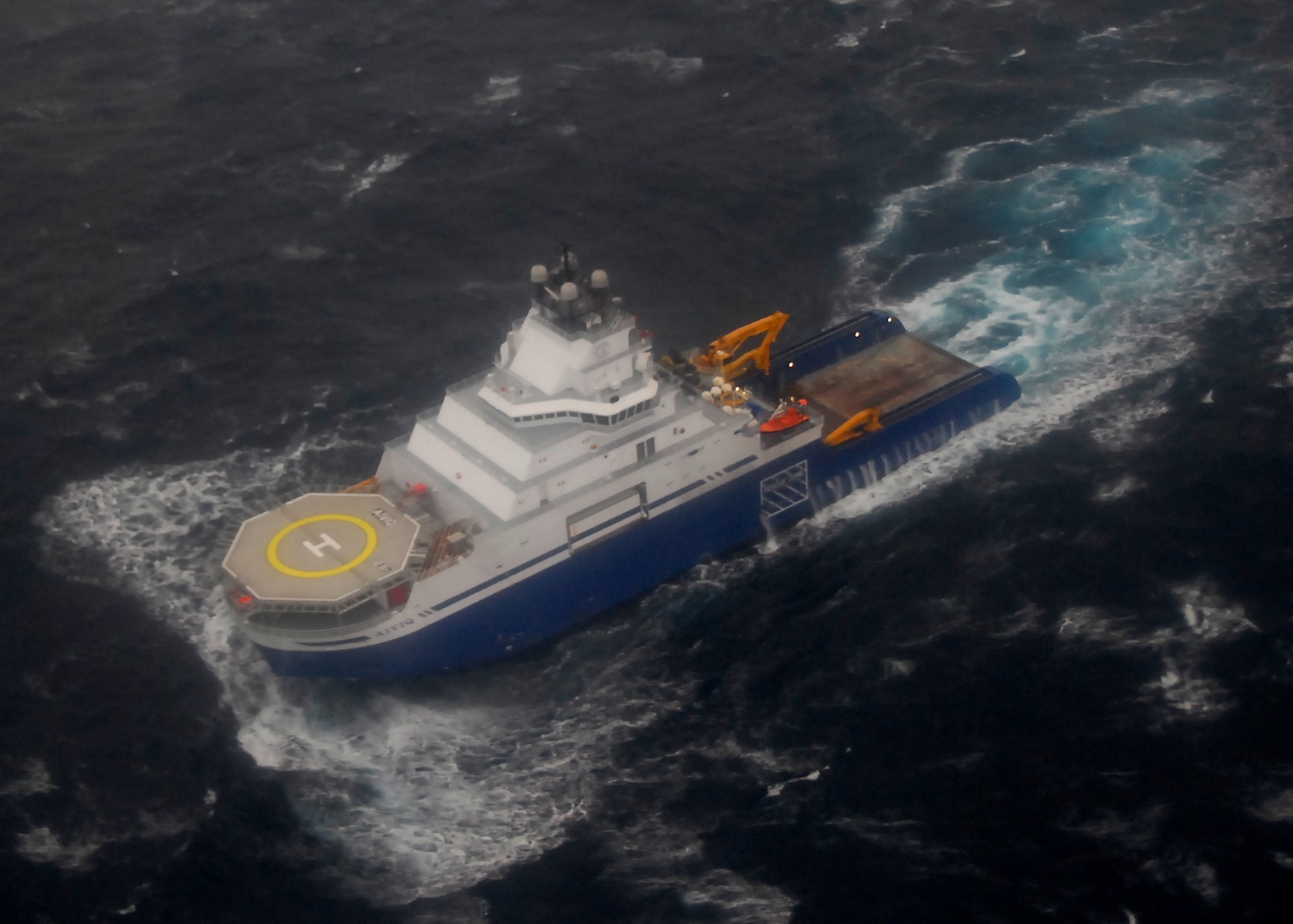
2012  Watchstanders at Coast Guard Sector Anchorage first received contact from the crew of the tug Aiviq, which was towing MODU Kulluk, a Royal Dutch Shell Company ice-strengthened oil drilling barge, back to its winter port of Seattle.  In extremely heavy seas, the tow line parted and Aiviq requested Coast Guard assistance.  CGC Alex Haley was diverted from its patrol and, after Aiviq experienced total engine failure, attempted to take both the rig and Aiviq under tow.  The line fouled Haley’s port propeller, forcing the cutter to return to Kodiak for repairs.  CGCs Hickory and SPAR were dispatched to provide further assistance while Royal Dutch Shell sent three additional tugs to the scene.  Coast Guard aircraft rescued the rig’s 18-man crew safely on December 29 and delivered spare engine parts to Aiviq. Despite these efforts Kulluk went aground at Oceans Bay, Alaska, on December 31, 2012.  The rig was later refloated and towed to Unalaska.  No injuries or pollution incidents were reported and ultimately Kulluk was scrapped.

The AIVIQ, the unfortunate main player in this accident, was selected to tow the KULLUK from Alaska to Seattle. Picture ECO Publicity.

“The Aleutian Low looms over the North Pacific as a climatic warning to mariners navigating the Alaskan waters. This semi-permanent feature is made up of the day-to-day storms that traverse these seas in a seemingly endless procession. With these storms come rain, sleet, snow, the howling winds and the mountainous seas that make the northern Gulf of Alaska and the southern Bering Sea among the most treacherous winter waters in the Northern Hemisphere.”

USINDOPACOM Exercises & Engagements

INDOPACOM Defense Forum Special Features has a post that includes the map above that shows where “Exercise, Joint Combined Exchange or Training Teams” are located.

On the linked post, you can hover over the dots, and it will list activities in that location. Coast Guard is associated with dots identified as Solomon Islands, Federated States of Micronesia (FSM), Guam, Palau, Papua New Guinea, and Australia. It should have included the Marshall Islands as well. All these are also associated with Operation Blue Pacific.

Federated States of Micronesia, the Marshall Islands, and Palau are Compact of Free Association states. Guam and the Northern Mariana Islands are US territory.

The same post also has a different map that shows the location of DOD units normally located in the AOR (area of operations) that may be of interest.