Ageism? “Coast Guard veterans wrongly forced into retirement by service now fighting in court for backpay” – Stars and Stripes

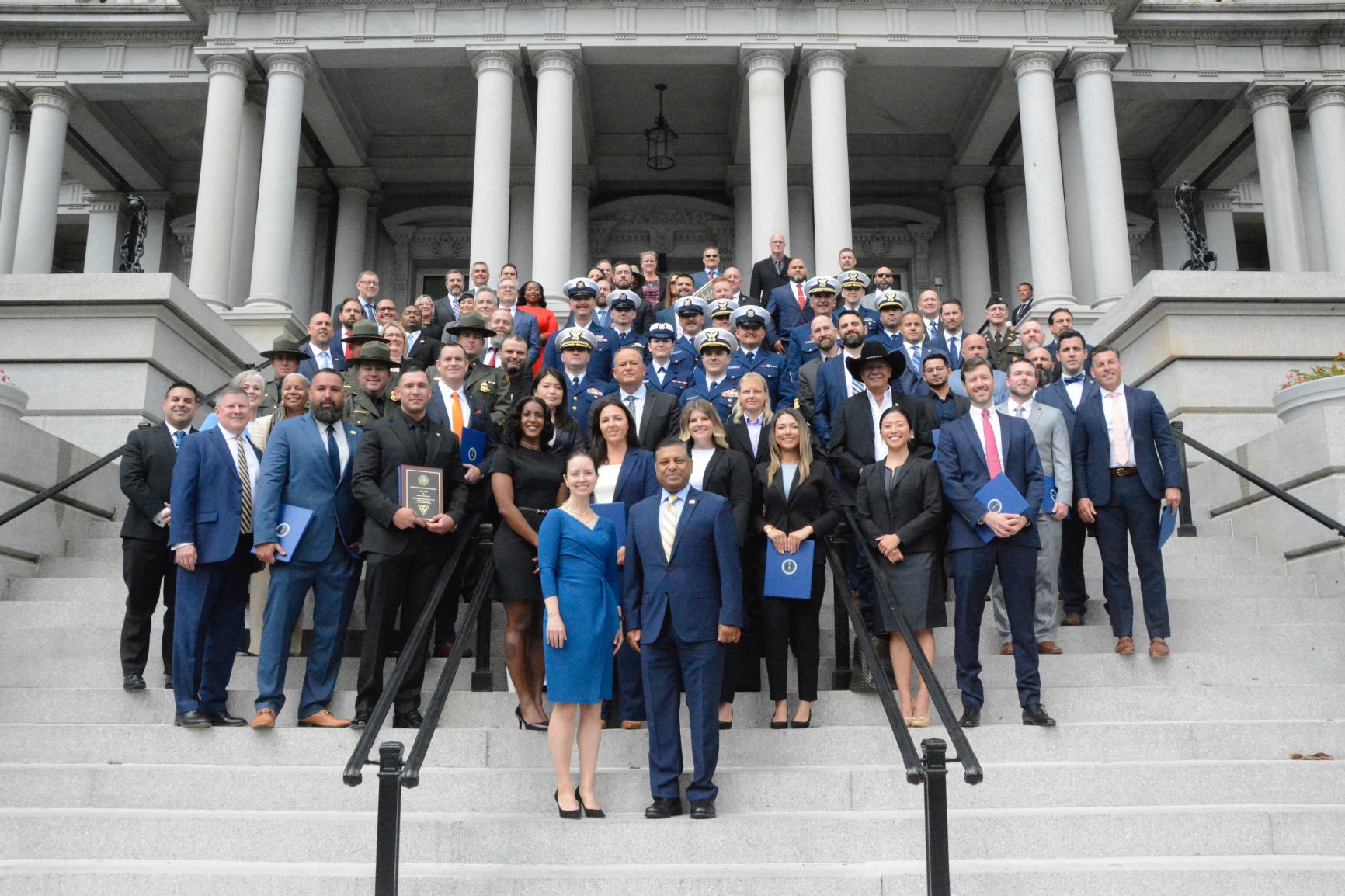
Coast Guard Cutter James (WMSL 754) personnel pose for a photo with other law enforcement agency officials, July 19, at the White House in Washington, D.C. for the annual United States Interdiction Coordinator Awards. James’ crew was recognized with the top maritime interdiction during the awards ceremony. (Photo courtesy of the White House)

I don’t normally comment on personnel questions, but I found this story somewhat ironic after all the stories about the Coast Guard failing to meet recruiting goals.

The Commandant has taken some steps to remove barriers to service associated with “ageism,” but it is systemic in the military. Of all the military services the Coast Guard may be the one that can benefit the most from continuity and long-term experience.

I particularly remember our Chief of the Boat on Duane, an engineer. He was old, he was experienced, he loved that old ship. He knew every detail of its strengthens and weaknesses and because of his expertise. that 47-year-old ship was always ready to answer all bells.

You can’t afford to throw that kind of experience away.

This Day in Coast Guard History, January 17

Based on the Coast Guard Historian’s timeline, https://www.history.uscg.mil/research/chronology/
With inspiration from Mike Kelso

1832  Treasury Secretary Louis McLane discontinued the practice of hiring unemployed Navy officers as senior Revenue Cutter Service officers.  All vacancies from that point forward were to be filled by promotions from within the service.  Secretary McLane’s actions brought a tremendous boost to morale among Revenue cuttermen as they had long complained about the slow line of promotion caused by unemployed Navy officers “grabbing up” senior positions.

USCGC STORIS moored alongside LAMUT.

1972  USCGC Storis seized two Soviet fishing vessels, the 362-foot factory vessel Lamut and the 278-foot stern trawler Kolyvan, for fishing inside the 12-mile U.S. contiguous zone.

In one of her more dramatic law enforcement missions, on January 17, 1972, STORIS found two Soviet fishing vessels within the territorial waters of the United States. Radar picked up the two vessels inside the protective zone and upon further investigation, STORIS found the 278-foot fishing vessel, KOLJVAN offloading its catch to the 362-foot fish processor LAMUT in violation of U.S. laws. STORIS sent armed boarding parties aboard each of the Soviet ships and ordered them to the naval base in Adak, Alaska.

While the ships were in route to Adak, LAMUT attempted to flee with the Coast Guard boarding party still on board. After an intense one-hour chase, STORIS’ CO, Commander William P. Allen, received permission from the commandant to fire a shot across the bow of LAMUT. STORIS sent a message to LAMUT that she was prepared to open fire and the Soviet vessel stopped. STORIS arrested both Russian masters and took them into custody aboard the cutter. All three ships arrived in Adak and charges were assessed against the two Russian ships.

1977  DOT Secretary William T. Coleman, Jr., issued licenses to LOOP, Inc., and Seadock, Inc., to own, construct, and operate deepwater ports in the Gulf of Mexico.  Both ports were designed to “handle” supertankers.

1994  Coast Guard units and family members assisted those in need after an earthquake hit Los Angeles, California.

Who You Gonna Call?

I just ran across this interesting bit from Wikipedia. Sounds like a good idea.

“In May 2000, the Japan Coast Guard introduced a nationwide emergency number, 118, for reporting accidents at sea, oil spills, suspicious vessels, smuggling, and illegal immigration. It can be dialed from mobile phones, landline phones, public phones, and marine radiotelephones in Japan.

“Alaska homeported cutter earns cutter of the year award” –News Release

Below is a Coast Guard news release.

Jan. 15, 2025

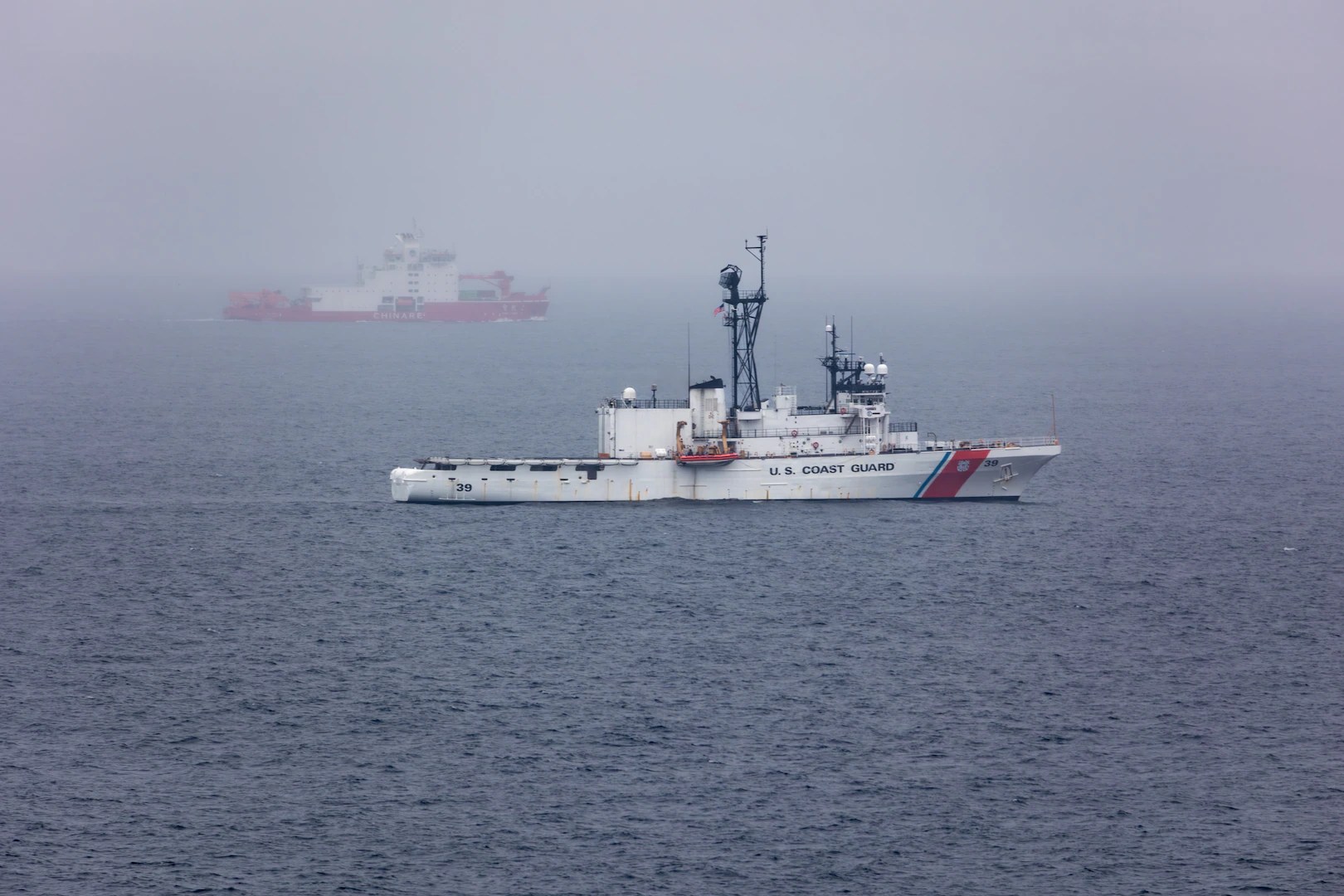
JUNEAU, Alaska – Coast Guard Cutter Alex Haley (WMEC 39) was selected as the recipient of the 2024 Hopley Yeaton Cutter Excellence Award. 

For the second year in a row, Alex Haley earned the medium cutter of year award across the entire Coast Guard fleet. The Hopley Yeaton Cutter Excellence Award recognizes the ship that demonstrated exceptional performance across operations and mission accomplishment, commitment to crew and families, training and readiness, and engineering.

Spending nearly 200 days deployed in support of Coast Guard Pacific Area and District 17, Alex Haley embodied the proud tradition of the Bering Sea cutter, sailing from the Arctic Ocean to the furthest reaches of the Bering Sea and Aleutian Islands. Leading all cutters in Bering Sea and Aleutian Island living marine resource law enforcement boardings to protect and help sustain Alaska fisheries, the ship also supported strategic United States Government priorities including intercepting and escorting a Russian warship across the Aleutian Islands. Most notably, the cutter and crew earned a Letter of Commendation from the International Maritime Organization for bravery saving eight mariners in distress while towing a fishing vessel 32 hours to safe harbor during a winter gale. 

Additionally, Alex Haley earned the 2024 Large Afloat Dining Facility of the Year award for best galley and was runner up for the 2024 Morale Program of the Year Award. The Alex Haley crew was awarded the Arctic Service Medal and the Operational Excellence “E” Award.   

“As the only major cutter homeported in Alaska, the ‘Bulldog of the Bering’ lives and operates in unforgiving conditions across a vast area of responsibility,” said Cmdr. Steven Baldovsky, Alex Haley ‘s commanding officer. “Our crew displayed exceptional mission execution and resilience against a challenging work-life balance – always answering the call and providing an incredible return on investment to the American people. I could not be any prouder of the crew and our amazing family support for the work Alex Haley did to earn the back-to-back Hopley Yeaton Cutter Excellence Awards.”

Alex Haley is a 282-foot Medium Endurance Cutter that performs search and rescue, fisheries law enforcement and maritime security across Alaska and has been homeported in Kodiak since 1999.   

This Day in Coast Guard History, January 16

Based on the Coast Guard Historian’s timeline, https://www.history.uscg.mil/research/chronology/
With inspiration from Mike Kelso

January 16

1920  Prohibition, later called the “noble experiment” by President Herbert Hoover, became the law of the land on January 16, 1920, one year after the 36th state ratified the 18th Amendment to the Constitution.  Enforcement of the law fell to the Department of the Treasury and the Coast Guard was charged with interdicting the flow of “Demon Rum” at sea before it reached American shores.

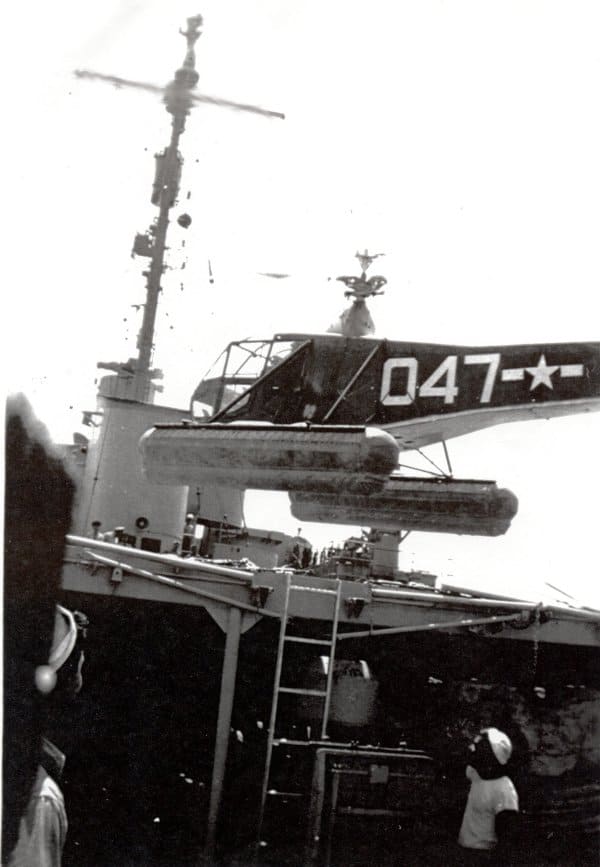
Sikorsky HNS-1 “Hoverfly”

1944  LT Stewart R. Graham became the first person to make a helicopter take-off and landing aboard a ship underway at sea when he piloted a Sikorsky HNS-1 off of and back on the SS Daghestan in the North Atlantic.

1948  The list of nominations for appointments and promotions of Coast Guard officers transmitted to Congress by the President on this date represented the first permanent advancements of Coast Guard regular officers since the summer of 1942.

Coast Guard Cutter Northland (WMEC 904), Aug. 13, 2024, while underway in the Atlantic Ocean. (U.S. Coast Guard photo by Petty Officer 3rd Class Anthony Randisi)

1988  Coast Guard units responded to a report of a murder on board the container vessel Boxer Captain Cook.  The ship’s first officer reportedly murdered the captain and threw his body overboard.  A boarding party from CGC Northland, offloaded onto CGC Cape York, boarded the vessel while it was underway on the high seas and captured the suspected murderer and collected evidence of the crime.

U.S. Coast Guard units responded to a report of a murder on board the container vessel Boxer Captain Cook.
Crew members aboard the British-registered Boxer Captain Cook said that the First Officer, Remigio Hernando, went berserk and attacked the ship’s Captain, Alistair McKinnon. The slaying occurred about a week after McKinnon dismissed Hernando because of a piloting error that caused the ship to briefly run aground off Cuba. The first officer reportedly murdered the captain and threw his body overboard.
After the slaying, some crew members locked themselves in their cabins while others sealed the bridge, kept the ship under control and radioed the Coast Guard.
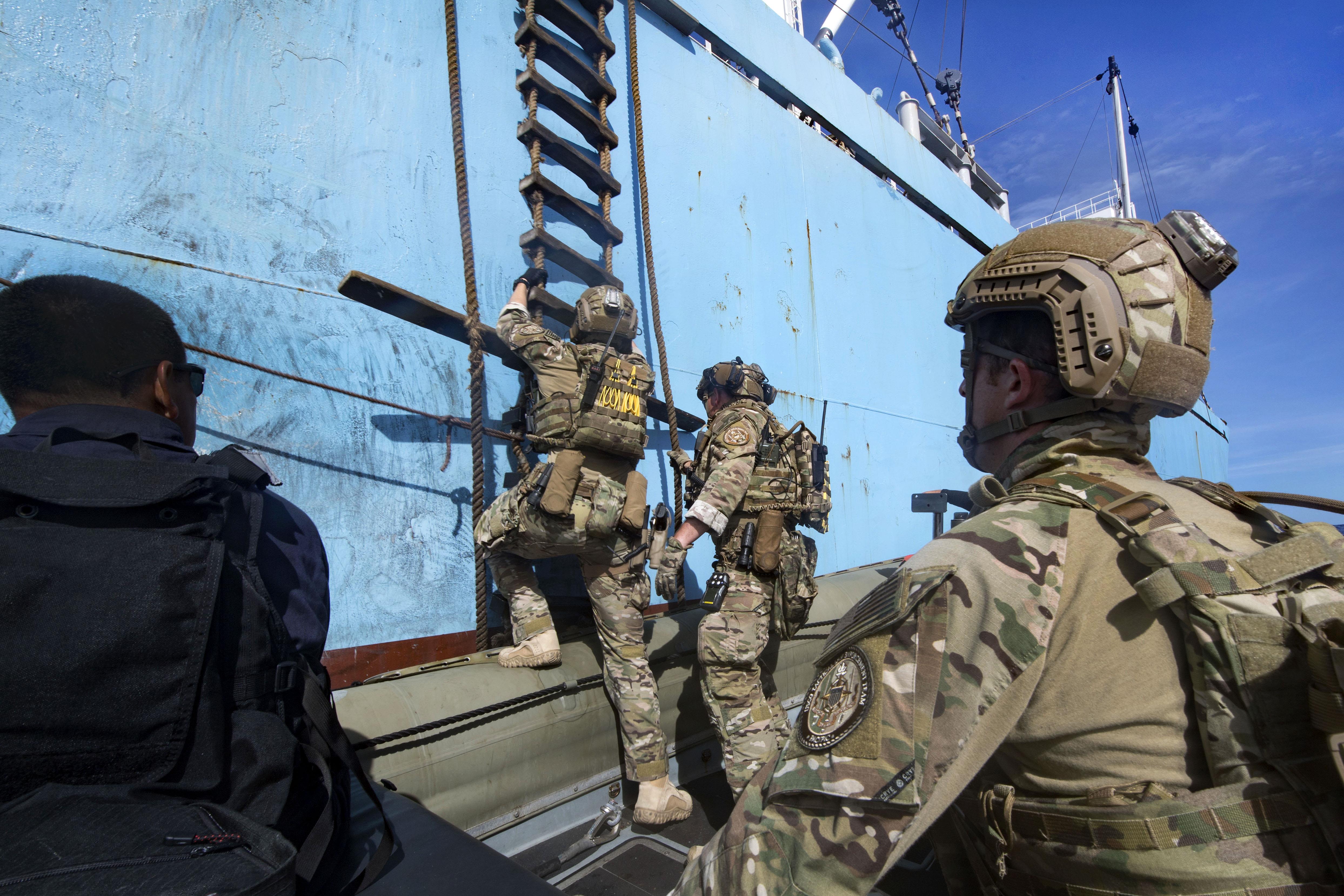
The U.S. Coast Guard Cutter Northland (WMEC-904), embarked a boarding party onto Cutter Cape York (WPB-95332), a 95-foot patrol boat, who came along side Boxer Captain Cook. The team boarded while the vessel was underway on the high seas. The boarding team captured the suspected murderer and collected evidence of the crime.
The Coast Guard searched unsuccessfully for Captain McKinnon’s body. The search was suspended on January 18th.
(Information courtesy of the Coast Guard Historian’s Office)–Foundation for Coast Guard History

Harpoon Missile Launch from USCGC Mellon

1990  CGC Mellon fired a Harpoon anti-ship missile in a live-fire test, becoming the first cutter to fire the missile.

This Day in Coast Guard History, January 15

Based on the Coast Guard Historian’s timeline, https://www.history.uscg.mil/research/chronology/
With inspiration from Mike Kelso

1836  A General Order from the Secretary of the Treasury prescribed that “Blue cloth be substituted for the uniform dress of the officers of the Revenue Cutter Service, instead of grey…” thereby ending a controversy that had brewed for years regarding the uniforms of the Service.

1947  The first helicopter flight to the base “Little America” in Antarctica took place.  The pilot was LT James A. Cornish, USCG and he carried Chief Photographer’s Mate Everett Mashburn as his observer.  They flew from CGC Northwind.

1966  When winds of 30 to 50 knots hit the southern California coast, surface craft off the 11th Coast Guard District rendered assistance to six grounded vessels, three disabled sailboats, and three capsized vessels. They also responded to seven other distress cases. A Coast Guard helicopter played a prominent role in one of the cases by evacuating the five-man crew of the vessel Trilogy that had gone aground and broken up on Santa Cruz Island.

1974  The first group of women ever enlisted as regulars in the Coast Guard began their 10-week basic training at the Coast Guard Training Center in Cape May.  Thirty-two women were in the initial group and formed Recruit Company Sierra-89.

USCGC Escape (WMEC 6) Operation Able Manner.

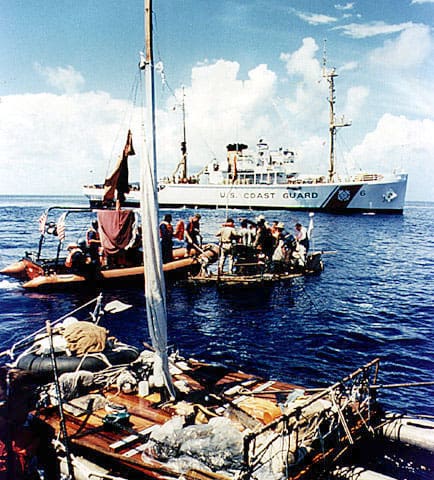
1993  In response to a massive increase in the number of Haitians fleeing their country by sea that began in October 1991, President-elect William Clinton ordered the commencement of Operation Able Manner on this date in 1993.  It was the largest SAR operation ever undertaken by the Coast Guard to that time.  Twenty-nine cutters were initially involved, as were aircraft from 10 air stations and five US Navy vessels.

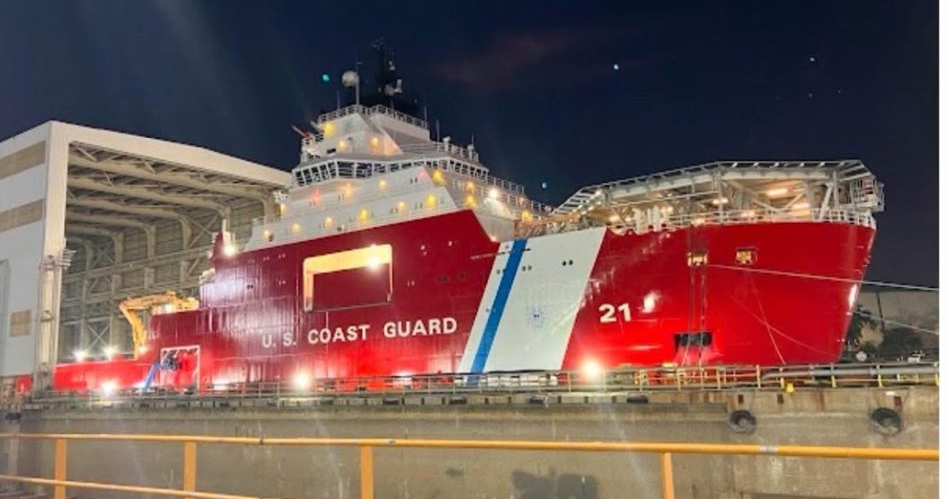
“The Icebreaker Numbers Game” / Where Are Our Medium Icebreakers Coming From?

National Defense reviews the current state of the US Coast Guard’s icebreaker fleet. There is probably nothing here we haven’t already heard, but it did include a question and answer with the Commandant that, as reported, might give the wrong impression,

“So, as a nation, we have one heavy icebreaker,” she said.

This led to the follow-up question of how many does Russia operate?

“Way more than one. It’s close to 40,” she said. Russia operates the world’s only fleet of nuclear-powered icebreakers.

I think the Commandant was saying the Russians have about 40 icebreakers, not 40 heavy icebreakers.

The Russians do have the largest fleet of heavy icebreakers. Table B-1, page 51, of the Congression Research Service’s “Coast Guard Polar Security Cutter (Polar Icebreaker) Program: Background and Issues for Congress” dated November 19, 2024, indicates that as of April 4, 2022, Russia had 51 icebreakers (36 Government owned or operated and 15 Privately owned or operated), but only six operational icebreakers were classed PC1, PC2 or equivalent. The only other operational icebreaker with these characteristics was USCGC Polar Star. The Russians were reported to have 31 medium icebreakers classed PC3 or PC4 and 14 light icebreakers classed PC5 or PC6.

Only Russia and the US operate what the US Coast Guard would call a heavy icebreaker. Of the 104 icebreakers listed, from 20 countries, only 7 would be considered heavy icebreakers by the USCG.

Healy and Storis (formerly Aiviq) are considered medium icebreakers and Nathanirl B. Palmer and Sikuliaq are considered light icebreakers.

Clearly medium and light icebreakers have a role. Not every mission requires over 45,000 HP. The highly successful Wind class would now be considered light icebreakers and USCGC Glacier would barely qualify as a medium icebreaker. Sometimes smaller size is actually an advantage. There are probably places where two medium icebreakers might be preferable to only one heavy icebreaker, if only to provide a degree of redundancy.

So why aren’t we building some medium icebreakers? We know there is a stated Coast Guard has a requirement for nine icebreakers and four or five are expected to be medium icebreakers. So why haven’t we at least started the procurement process for those medium icebreakers? So far not even a Request for Proposal.

If we use the current approach, we are probably not going to see the first new Arctic Security Cutter (medium icebreaker) until 2035 even if the process starts now.

The Icebreaker Collaboration Effort, or ICE Pact may provide another way. Hopefully the US and Canadian Coast Guards could get together to come up with a set of requirements and optional enhancements both could agree on and ask the Finnish partners to detailed design a medium icebreaker that would be welcomed by both services. It the final design is acceptable, have the Finnish yard build the prototype. It successful then determine where follow on ships should be built.

This isn’t a short process, but it does not get shorter if we wait to start. A prototype built quickly in Finland would allow the proof of concept testing the GAO keeps telling the Coast Guard that they should do before building the second and later ships of a class.

If the Congress and Administration actually feel any urgency for additional presence in the Arctic, the Coast Guard should try to offer them a shortcut.

This Day in Coast Guard History, January 14

Based on the Coast Guard Historian’s timeline, https://www.history.uscg.mil/research/chronology/
With inspiration from Mike Kelso

United States Revenue-Marine revenue cutter USRC Wolcott (1873) at her home port, Port Townsend, Washington.

1886 USRC Wolcott made the Revenue Marine’s first drug seizure when a landing party seized 3,011 1/2 pounds of opium hidden at the Kaasan Bay Salmon Fishery, in Alaska.  A detail of officers and crew from the Cutter had previously assisted Customs Inspectors with the seizure of 695 pounds of opium from vessel Idaho in Port Townsend.  When a disgruntled crewman later provided intelligence about the additional opium stored at Kaasan Bay, RC Wolcott’s crew ensued on a 695-mile race to beat Idaho to the concealed drugs, resulting in the RMS’s first and largest-ever opium seizure. Hot on the Opium Smugglers’ Trail | Naval History Magazine – October 2016 Volume 30, Number 5 (usni.org)

Coast Guard Hall PH-3 loading depth charges

1942  A Coast Guard aircraft, Hall PH-3 No. V-177, dropped food to a raft with six survivors of a torpedoed tanker in one of hundreds of such incidents carried out by Coast Guard aircraft during the war.  This tanker had been the victim of a German U-boat attack off the coast of the United States.

1985  Vice President George Bush made an official visit to Base Miami Beach to extend the thanks of the nation to those involved in Operation Hat Trick, an “all-out” effort to stop smugglers soon after they had left ports in Central and South America.  The vice president decorated 15 Coast Guardsmen.

U.S. Coast Guard Cutter THETIS (WMEC-910) , US Navy photo ID:J3103SPT95001725 / DNST9800595

2004  CGC Thetis rescued three shrimp fishermen from the fishing vessel Dona Nelly after they were in the water for 45 minutes after their vessel sank 15 miles off the coast of Brownsville, Texas.


This Day in Coast Guard History, January 13

Based on the Coast Guard Historian’s timeline, https://www.history.uscg.mil/research/chronology/
With inspiration from Mike Kelso

Joseph Francis Life-Car. Image credit: Smithsonian National Museum of American History.

1853  The ship Cornelius Grinnell grounded in a heavy surf off Squan Beach, New Jersey.  A surf car was used to rescue safely all 234 persons on board.

1925  Congress authorized the Coast Guard to assist in the enforcement of the Alaskan Game Law.

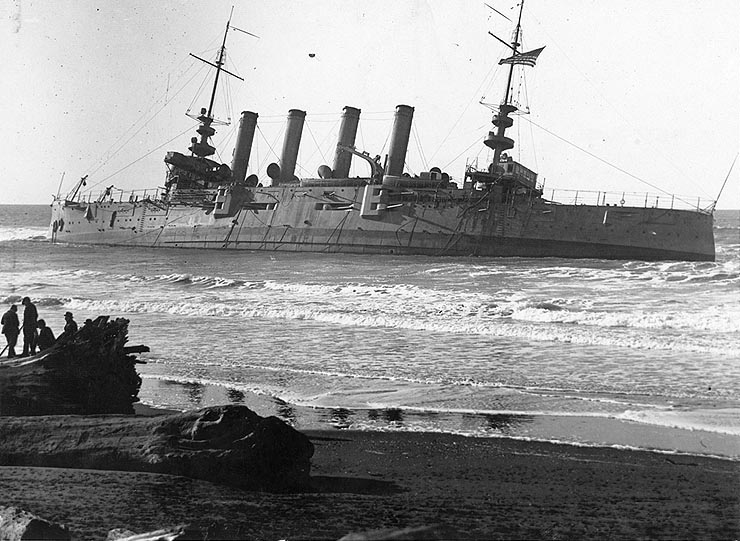
USS Milwaukee (Cruiser # 21) stranded at Samoa Beach, near Eureka, California. She had gone aground on 13 January 1917 while attempting to salvage the grounded submarine H-3.
This photograph was taken soon after her crew had been brought ashore. Note that her flag is still flying from her mainmast.

1918  Surfmen from the Humboldt Bay Lifesaving Station rescued the 430-man crew of the Navy cruiser USS Milwaukee safely after the cruiser ran aground.  Milwaukee had been attempting to pull a grounded submarine off of Samoa Beach, near Eureka, California, when she too ran aground and was a total loss.

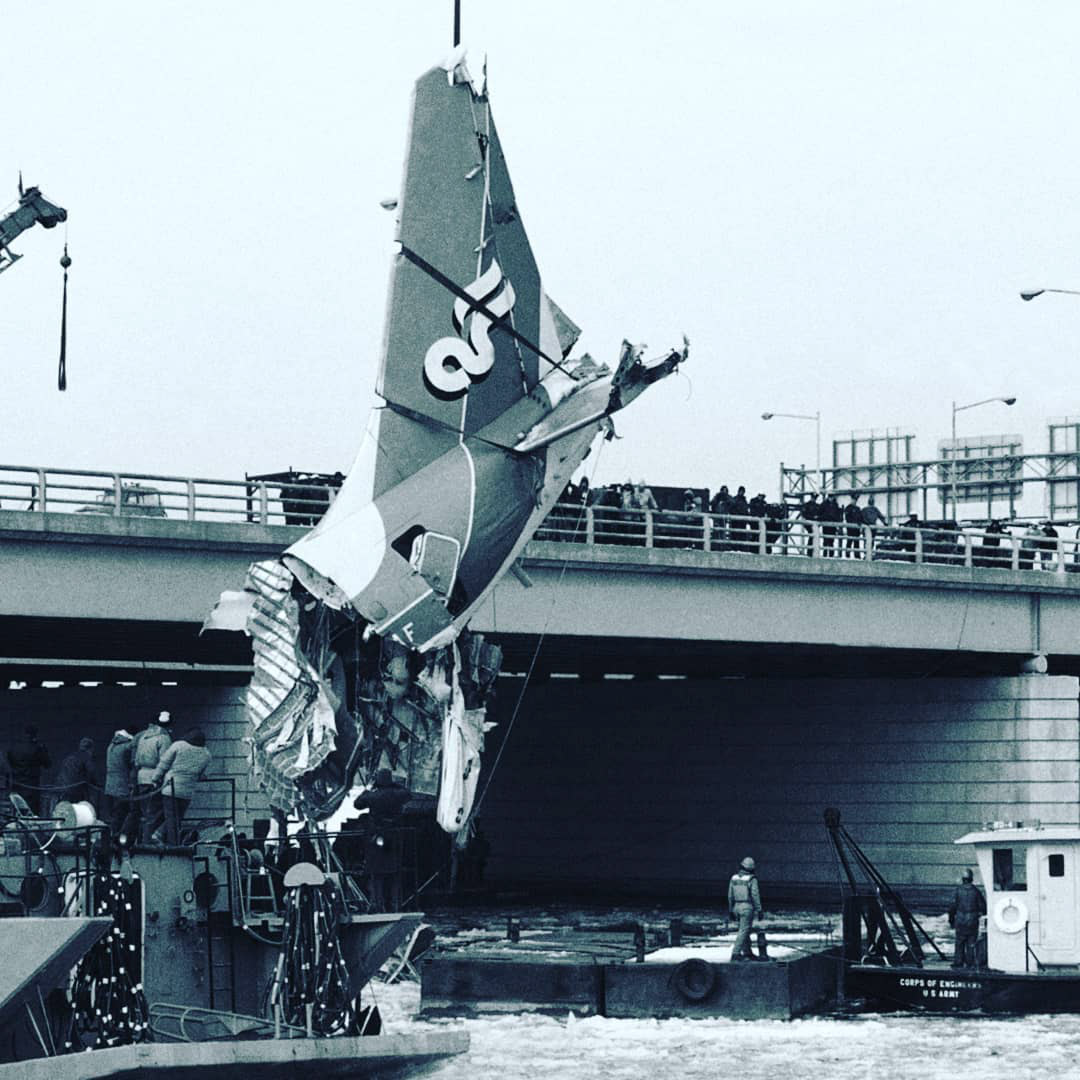
1982  Air Florida Flight 90 crashed onto the 14th Street Bridge and then into the Potomac River in Washington, D.C., during a heavy snow storm.  Coast Guard units, including cutters Capstan and Madrona, divers from the Atlantic Strike Team, a helicopter from AIRSTA Elizabeth City, personnel from Curtis Bay, and reservists from Station Washington assisted in the rescue of the five surviving passengers and the recovery of the aircraft’s wreckage.  The plane crushed several cars on the bridge.  All told seventy-four persons lost their lives.