“Indonesia’s New President Makes Three Stunning Concessions to China” –Real Clear Defense

Indonesian Maritime Security Agency vessel KN Tanjung Datu, left, sails alongside U.S. Coast Guard Cutter Stratton during joint exercises in the Singapore Strait in August 2019. IMAGE CREDIT: PO1 LEVI READ/USCG

Real Clear Defense reports,

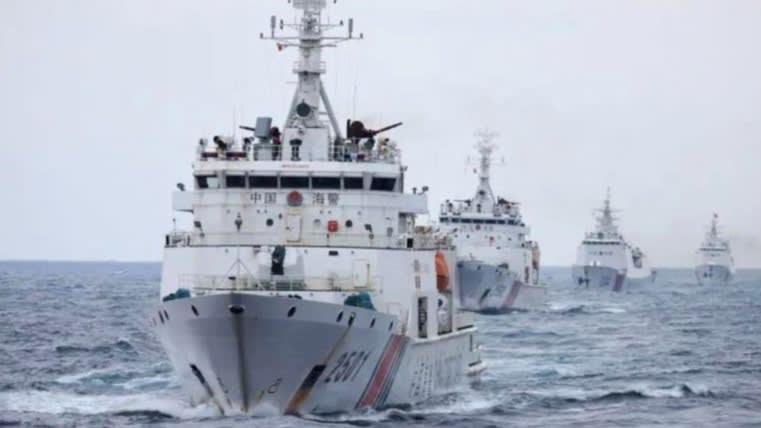
“Indonesia’s new president, Prabowo Subianto, needed only three weeks in office to make three big concessions to China.

In a joint statement with President Xi Jinping in Beijing on 9 November, Prabowo acknowledged Chinese maritime claims that Indonesia had long rejected. Despite leading the most populous Muslim-majority country, he affirmed China’s right to deal with Xinjiang as it pleased. He also endorsed China’s vague vision of the geopolitical order, something that Indonesia has long been wary of.”

This is a disappointing turnabout. Indonesia had appeared to be a leader in ASEAN in rejecting expansive Chinese maritime claims.

This Day in Coast Guard History, November 21

Based on the Coast Guard Historian’s timeline, https://www.history.uscg.mil/research/chronology/
With inspiration from Mike Kelso

November 21

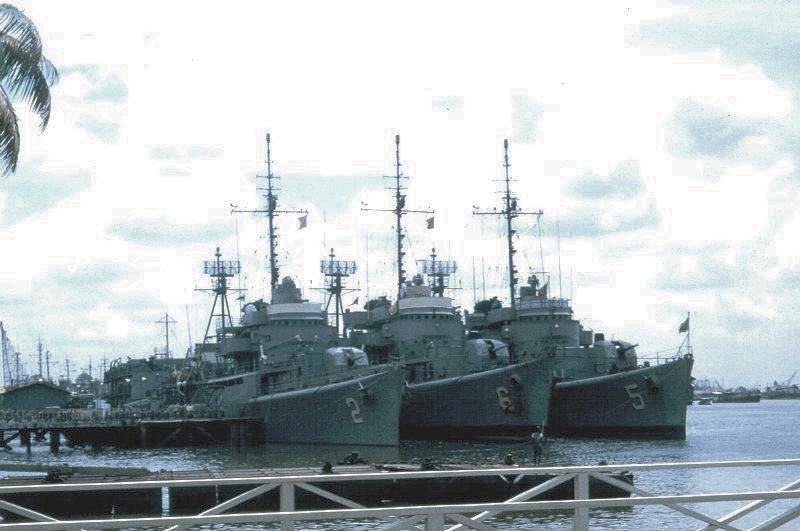
USS ENDURANCE (MSO-435) cruises into position alongside the oiler USS MISPILLION (AO-105) for underway refueling, 5 January 1971. Catalog #: USN 1147566

1970  Two 378-foot cutters, CGC Sherman and Rush, combined with USS Endurance to attack and sink a North Vietnamese trawler attempting to smuggle arms into South Vietnam.

The Reliance-class medium endurance cutter USCGC Decisive (WMEC 629) conduct at sea engagements with the navy of Guatemala in the territorial seas of Guatemala on Oct. 25 – 26, 2021. The U.S. Coast Guard conducts routine deployments in the Southern Command area of responsibility, works alongside partners, builds maritime domain awareness, and shares best practices with partner nation navies and coast guards. (U.S. Coast Guard photo)

1995  CGC Decisive located and began tracking a 75-foot freighter packed with Haitian migrants 30 miles off the northwest coast of Haiti on November 19.  The cutter followed the freighter for two days as it maneuvered in and out of Cuban territorial seas, refusing to allow a boarding party aboard.  Finally, at noon, November 21, with  USCGC Northland having joined the chase, the captain of the freighter allowed a boarding team to come aboard where they discovered 516 migrants.   Using small boats from both cutters, the migrants were brought aboard Northland and were repatriated.

Coastal freighter Calypso

2014  Watchstanders at the Coast Guard 7th District command center received a report from a tug stating they heard a distress call from a vessel claiming to be taking on water off the coast of Great Inagua, Bahamas.  A Coast Guard MH-60 crew deployed in support of Operations Bahamas, Turks and Caicos (OPBAT) launched and located the coastal freighter Calypso approximately 50 miles off the coast of Great Inagua.  The helicopter crew lowered a rescue swimmer down with a dewatering pump.  Calypso began to slowly transit to the coast of Haiti to investigate the source of the flooding.  At approximately 12:30 p.m., CGC Charles Sexton arrived on scene and Coast Guard crewmembers were transferred to the freighter and assisted with the dewatering of the vessel.  The freighter began to list on the right side due to the amount of water in the lower compartments.  To ensure the safety of everyone aboard, all seven crewmembers were removed and transferred to the cutter Sexton with no medical concerns.  CGC Thetis arrived on scene at approximately 7 p.m. and safely transferred the seven crewmembers from Sexton to Thetis.  At approximately 7:30 p.m., crewmembers from the cutter Thetis reported seeing the freighter Calypso continue to list on the right side before sinking approximately 45 miles north of Cap Haitien, Haiti.

This Day in Coast Guard History, November 20

Based on the Coast Guard Historian’s timeline, https://www.history.uscg.mil/research/chronology/
With inspiration from Mike Kelso

November 20

US Coast Guard manned Attack Transport USS Leonard Wood (APA-12) underway 28 April 1944. Source Robert Hurst

1943  Landings commenced at Makin and Tarawa in the Gilbert Islands.  The Coast Guard-manned assault transport USS Leonard Wood, veteran of the landings made in the Mediterranean, participated.  She landed 1,788 officers and men of the 165th Combat Team of the U.S. Army’s 27th Division, on Makin Island.  Coast Guard-manned LST-20LST-23LST-69, LST-169LST-205, and the USS Arthur Middleton, and the following Navy ships with partial Coast Guard crews: USSs HeywoodBellatrix, and William P. Biddle, participated in the bloody assault of Tarawa.

Coast Guard manned USS LST-69 beached while unloading equipment, date and location unknown.
US Coast Guard photo # 3237 from the collections of the US Coast Guard Historian’s Office. While moored in the West Loch at Pearl Harbor USS LST-69 was destroyed by an ordnance explosion, and sank, 21 May 1944.

This Day in Coast Guard History, November 19

Based on the Coast Guard Historian’s timeline, https://www.history.uscg.mil/research/chronology/
With inspiration from Mike Kelso

November 19

CDR Frank Erickson, USCG, the first US Naval Aviation helicopter pilot.

1943  CG Air Station at Floyd Bennett Field, Brooklyn, New York, was designated as a helicopter training base.  The Coast Guard ran the training program during the war.

US Coast Guard photo, by PAC Dana Warr

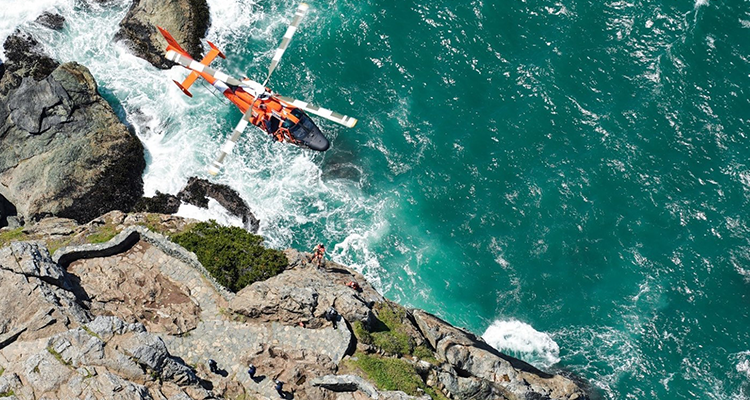
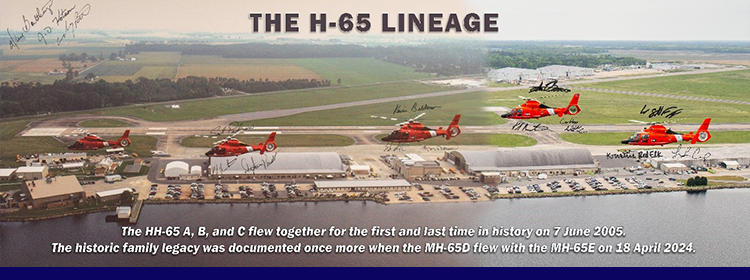
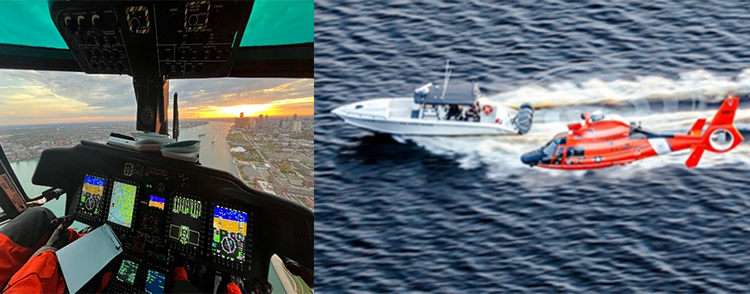
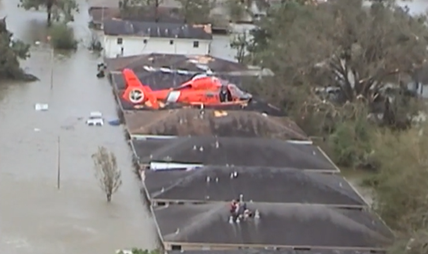
1984  The Coast Guard accepted the new HH-65A Dolphin helicopter for service.

2008  CGC Vigorous returned to its homeport of Cape May, New Jersey, after “a productive 56-day deployment in the Caribbean Sea. . .Patrol highlights include law enforcement boardings, search and rescue operations as well as successfully completing Tailored Ship’s Training Availability.”

Propulsion and Maneuvering System for Waterways Commerce Cutters

Two Waterways Commerce Cutter variants – an Inland Construction Tender (top) and River Buoy Tender (bottom) (Credit: Birdon America)

Below is a press release from SCHOTTEL Inc.

Two Schottel Rudder Propeller type SRP 210 with an input power of up to 597 kW (800 HP) will power the new Waterways Commerce Cutters. 


SCHOTTEL to supply components to 27 Waterways Commerce Cutters for U.S. Coast Guard

SCHOTTEL has been selected by Birdon America, Inc. to supply components to 27 vessels of the U.S. Coast Guard Waterways Commerce Cutter (WCC) Program with rudder propellers type SRP 210. For this program, U.S. Coast Guard prime contractor Birdon America, Inc. is designing the cutters and is expected to construct sixteen River Buoy Tenders (WLR) and eleven Inland Construction Tenders (WLIC). The cutters will be built at Birdon’s recently acquired Bayou La Batre shipyard in Alabama. Up to four cutters are expected to be delivered annually over the course of the next eight years, gradually replacing the aging vessels.

Up to 27 vessels to be equipped with SCHOTTEL
Each SRP features an input power of 597 kilowatts (800 horsepower) and a propeller diameter of 1.3 metres. The thrusters are fitted with SCHOTTEL’s highly efficient SDC40 nozzle, which combines compact design and high propulsion efficiency. Hydrodynamically optimized protective grids on the nozzles will increase the safety of the propellers in case of collisions with debris. SCHOTTEL DuroVario-S slipping clutches will allow for smooth startups and overall improved handling of the thrusters for precise maneuvering and will reduce the environmental impact during berthing operations. Enabling the WCCs to operate in both deep and shallow waters, the SRPs will allow the vessel to achieve a free-running speed of 11 knots or more.

Reliable protection against contamination of river and seawater
The propulsion system of the WCCs will be equipped with SCHOTTEL LeaCon. LeaCon is a sealing system certified by DNV, which offers safe and reliable protection against the contamination of river and seawater by operating materials and vice versa. LeaCon works with an intermediate chamber design and multiple seals on the propeller shaft and steering stem that separate lubricants from water. The system is equipped with a monitoring and alarm unit that continuously checks the condition of the seals. LeaCon is considered a non-oil to water interface thus the thrusters can be operated without EALs and fulfill the current VGP regulations. Further, the scope of supply is completed by SCHOTTEL’s condition monitoring system MariHub to enable condition-based maintenance via an onboard display.

First new WCC planned to be operational by 2027
WCCs are essential to maintain and protect the United States’ inland waterways transportation system. Approximately 630 million tons of cargo move through these waterways annually. The current inland tender fleet has an average age of more than 57 years and is approaching obsolescence. The new vessels will feature improved habitability and will accommodate mixed-gender crews. The first of the new WCCs is planned to be operational by 2027.

About SCHOTTEL Inc.
SCHOTTEL Inc. was founded in 1997, following more than six decades of sales and after-service market activity in the US, including the establishment of the first US subsidiary under a different name in 1961. Since October 2013, SCHOTTEL Inc. has been headquartered in Houma, Louisiana, where the 9,700-square-metre site provides ample space for offices, a spare parts warehouse, and a sales and training center to ensure customer proximity in sales and after-sales services.

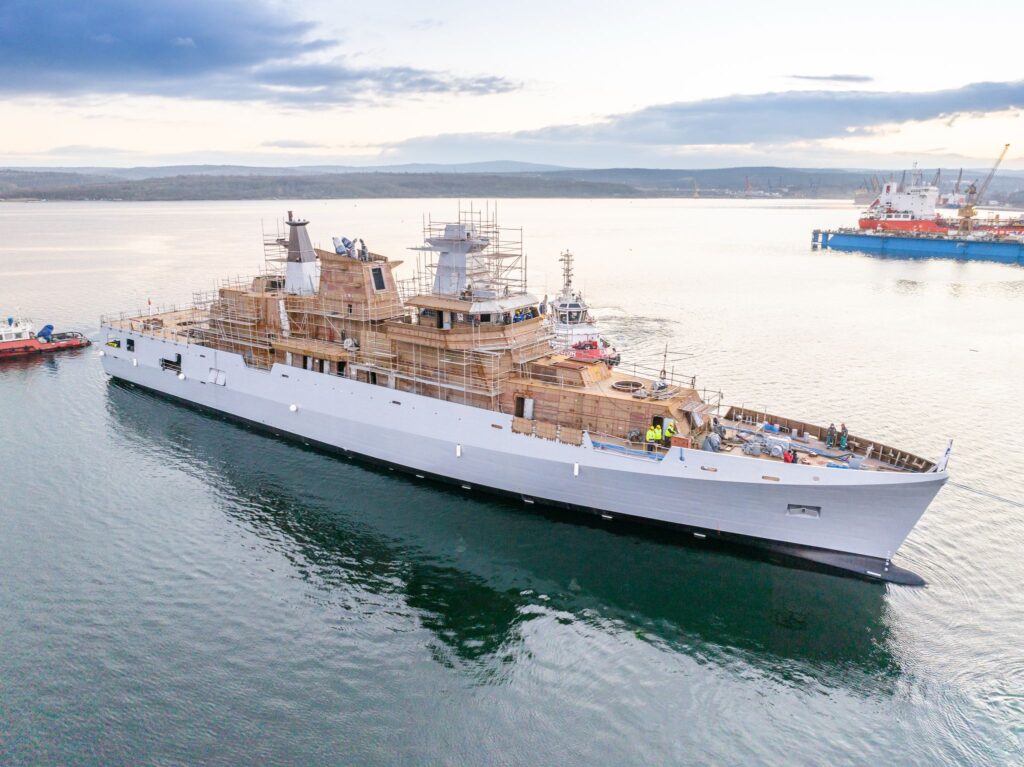
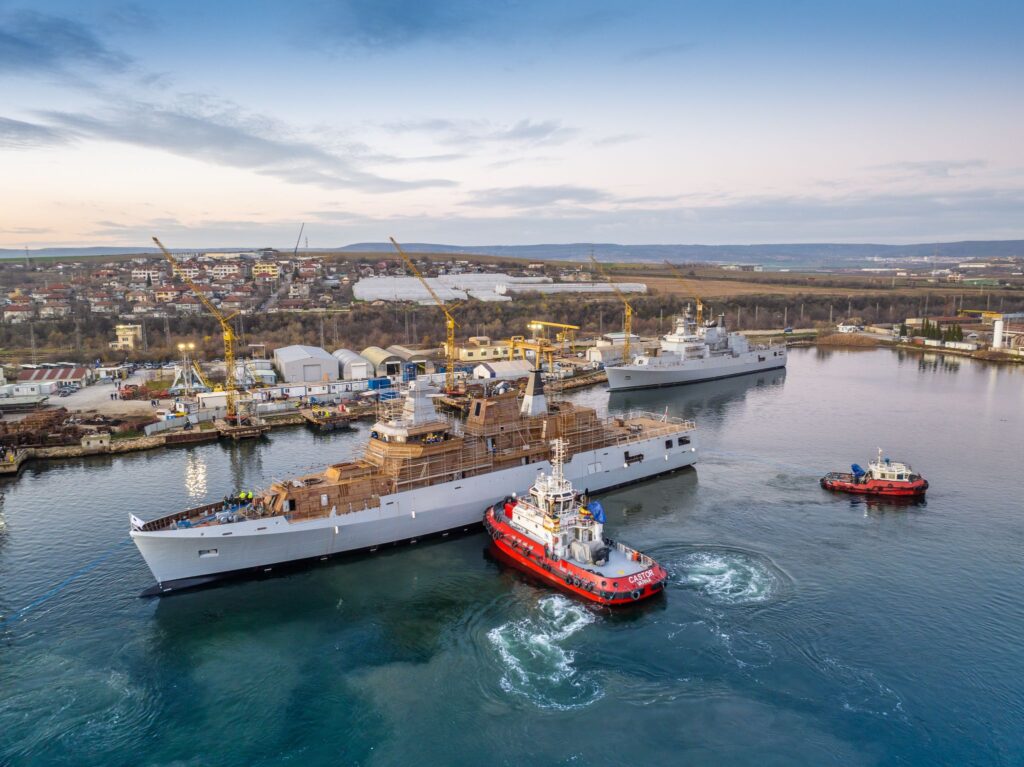
Korean Built Ships for the Philippine Navy and Coast Guard –Naval News

Naval News has a new post, “HD HHI Pitches Horizon 3 Frigates, Corvettes and White Hulls to Manila” that includes the video above.

HD HHI has delivered two “frigates” to the Philippine Navy and has contracts for six offshore patrol vessels (OPV) and two corvettes. Hyundai apparently hopes to continue this successful collaboration with proposals to meet Philippines requirements for larger and more capable “Horizon 3” frigates and for Philippine Coast Guard cutters.

200820-N-TT059-2393 PACIFIC OCEAN (Aug. 20, 2020) Republic of the Philippines Navy ship BRP Jose Rizal (FF 150) participates in a tactical maneuvering drill with U.S. Coast Guard ship USCGC Munro (WMSL 755) and U.S. Navy guided-missile cruiser USS Lake Erie (CG 70) during exercise Rim of the Pacific (RIMPAC) 2020. (U.S. Navy photo by Mass Communication Specialist Seaman Lily Gebauer)

The two Philippine 2,600 ton Jose Rizal class frigates (pictured above) are smaller than the former USCG Hamilton class cutters (3200 tons). The follow-on (3,200 ton) Miguel Malvar class corvettes (or light frigates) will be larger and more capable. The Horizon 3 Frigate will be larger still.

The six Philippine Navy Offshore Patrol Vessels (above) will be 2400 tons full load; 94.4 meters (310′) in length; 14.3 meter (47′) of beam; with a maximum speed of 22knots; and a maximum range of 5,500 nautical miles at 15 knots. It appears they will be armed with a 76mm gun, two 30mm guns, and two Simbad-RC twin-Mistral missile launchers. HHI is proposing cutters based on this design for the Philippine Coast Guard.

Will the Philippine Coast Guard arm its cutters? Currently no Philippine Coast Guard (PCG) vessels have any weapons larger than .50 caliber machine guns, but the models of possible future Philippine Coast Guard vessels all carried some type of installed weapons system, apparently 30mm, 40mm, or 76mm. Was this because the PCG intends to field larger weapons or just because that is the way South Korean CG cutters are armed? The twin 35mm Gökdeniz close-in weapon system (CIWS) mounted on the new corvettes and that appears on the model of the proposed Horizon 3 frigate would be very appropriate for the Philippine Coast Guard.

There is an interesting statement at the end of the post,

“HD HHI plans to realize its ‘Pacific-Rim Belt Vision’, establishing regional hubs in countries such as the Philippines, Peru, Australia, Saudi Arabia, and the United States (emphasis applied–Chuck) based on its advanced shipbuilding technologies.”

This Day in Coast Guard History, November 17/18

Based on the Coast Guard Historian’s timeline, https://www.history.uscg.mil/research/chronology/
With inspiration from Mike Kelso

November 17

Portrait of Hamilton authoring the first draft of the U.S. Constitution in 1787

1791  Secretary of Treasury Hamilton fixed the value of rations at a “generous” 12 cents per day for each man in Revenue Marine.

The Coast Guard Cutter Polar Star cuts through Antarctic ice in the Ross Sea near a large group of seals as the ship’s crew creates a navigation channel for supply ships, January 16, 2017. The resupply channel is an essential part of the yearly delivery of essential supplies to the National Science Foundation’s McMurdo Station.US Coast Guard photo by Chief Petty Officer David Mosley

1973  The “Largest Icebreaker in the Western World,” CGC Polar Star, was launched.

U.S. Coast Guard Cutter Dauntless (WMEC 624) and crew patrol, March 4, 2024, off the coast of Haiti. Dauntless deployed for two months to support Operation Vigilant Sentry while conducting maritime safety and security missions. (U.S. Coast Guard photo by Lt.j.g. Olivia Gonzalez) Note the shelter on the flight deck.

1982  President Ronald Reagan visited the CGC Dauntless and awarded the cutter and crew the Coast Guard Unit Commendation for their work during the period of July 1980 to July 1982.  President Reagan wrote in the Record of Inspections: “Aboard ‘Dauntless’ – a proud ship with an impressive crew.”  This was the first visit by a U.S. president aboard a cutter in 19 years.

Edith Munro, US Coast Guard, mother of Douglas Munro.


1983  LT Edith Munro, USCGR, a World War II SPAR veteran and the mother of Coast Guard hero Douglas Munro, passed away at the age of 88.

November 18

1953  Heavy rains in the Coquille, Coos, and Willamette River Valleys of western Oregon caused flooding of the lowland areas and isolation of some towns through the blocking of highways by slides and high water, necessitating the evacuation of families and livestock.   A Coast Guard relief detail of boats, men, and aircraft participated in relief assistance measures, cooperating with the Red Cross and civil authorities. (The river flooded again 1964 and 1996.)

1999  The 605-foot Russian freighter Sergo Zakariadze, loaded with a cargo of cement dust, ran aground at the entrance to San Juan harbor, Puerto Rico.  Coast Guard Strike Team, MSO San Juan, Greater Antilles Section, among others, responded to the accident.

“Coast Guard Cutter Stratton returns to California following 110-day Arctic deployment” –CG News

Harper and Henry Helsabeck hold up a sign to welcome home their dad, Lt. Cmdr. Jason Helsabeck, operations officer, Coast Guard Cutter Stratton (WMSL-752), home to Alameda, Calif., Nov. 4, 2024. The Stratton’s crew returned home from a months-long Bering Sea Patrol where the crew conducted fisheries law enforcement to protect living marine resources. (U.S. Coast Guard photo by Chief Petty Officer Levi Read/released)

Below is a Coast Guard news release.

I would note some differences between this patrol and my, 1974 to 1990, experience on Alaska Patrol.

  • They passed through the Bering Strait and patrolled in the Chukchi Sea whereas we seldom got as far North as the Bering Strait.
  • The patrols are longer than I remember, “This was Stratton’s second 110-day Alaska patrol in 2024.”
  • “Stratton conducted the first at-sea refueling evolutions for a national security cutter in the high latitudes.”
  • “…deck landings qualifications with Air Station Kodiak’s MH-60 helicopter (emphasis applied, not the smaller H-65s–Chuck) air crews operating near the Alaskan towns of Utqiagvik (formerly known as Barrow, population 4,927, the most northerly point in Alaska–Chuck) and Kotzebue (population 3,102) above the Arctic Circle.”
  • There were encounters with the Russian Navy.
  • There was more cooperation with Canada, “Stratton hosted three Royal Canadian Navy members during the patrol, enhancing U.S. and Canadian interoperability.”
  • There was engagement with the local communities, “…community relations engagements in the remote Alaskan communities of Savoonga (on St. Lawrence Island, population 835), Teller (population 249, near the Bering Strait and endangered by climate change), and Brevig Mission “(population 388 in 2010). This is something the Canadians have been doing for a long time with their first nation villages, but I think it is relatively recent for the USCG.

These cutters are pushing the envelope, going where US Navy surface combatants virtually never go.


Nov. 15, 2024

Coast Guard Cutter Stratton returns to California following 110-day Arctic deployment

ALAMEDA, Calif. — The crew of Coast Guard Cutter Stratton (WMSL 752) returned to its Alameda homeport on Nov. 4, after completing a 110-day patrol in the Arctic Ocean, Chukchi Sea and Bering Sea.

Stratton departed Alameda on July 18 and patrolled the Alaskan Inside Passage to Juneau, Alaska, throughout the Gulf of Alaska, the Bering Sea and into the Arctic Ocean. The crew supported U.S. strategic interests in the high latitudes and ensured the safety and compliance of domestic fishery operators. This was Stratton’s second 110-day Alaska patrol in 2024.

During the patrol, Stratton’s crew tracked and observed two Russian Federation Navy surface action groups transiting through U.S. waters above the Arctic Circle. Stratton patrolled under Operation Frontier Sentinel, an operation designed to meet presence with presence when strategic competitors operate in and around U.S. waters. The Coast Guard’s presence strengthens the international rules-based order and promotes the conduct of operations in a manner consistent with international law and norms.

While patrolling the Arctic, Stratton conducted the first at-sea refueling evolutions for a national security cutter in the high latitudes. The at-sea refueling extended patrol times in the Arctic and enabled persistent Coast Guard presence in the remote region.

Stratton conducted 20 boardings of commercial fishing vessels and foreign trans-shipment vessels enforcing safety and fishing regulations. Alaska’s fisheries are some of the nation’s largest providers of seafood and are a critical component of the U.S. economy. The Coast Guard’s efforts in ensuring safe fishing practices are essential to support this vital industry.

Stratton’s crew also conducted search and rescue (SAR) operations while deployed to the region. Stratton responded to the fishing vessel Galatea, which was adrift in a storm without propulsion due to a severed engine cooling line. Stratton crew deployed to the fishing vessel, repaired the casualty, and safely escorted Galatea to Dutch Harbor.

Stratton also responded to the 738-foot cargo tanker Pan Viva beset by a storm north of Dutch Harbor. After losing propulsion, the vessel was in danger of running aground in seas greater than 30’ and 90-mile-per-hour winds. Stratton provided operational oversight to Pan Viva as Coast Guard MH-60 helicopter air crews evacuated non-essential personnel and commercial tugs aided the vessel.

Throughout the patrol, Stratton conducted 334 deck landings qualifications with Air Station Kodiak’s MH-60 helicopter air crews operating near the Alaskan towns of Utqiagvik and Kotzebue above the Arctic Circle, to Cold Bay and Dutch Harbor in the Bering Sea. Stratton’s coordination of these flight operations provided training opportunities for the crews to enhance their SAR capabilities in the remote areas of Alaska, which tripled the number of shipboard-qualified pilots in the Alaska region.

“I am extremely proud of the resilience and professionalism of Stratton’s crew who’ve spent eight of the last ten months at sea in Alaska, conducting missions to safeguard our nation and people throughout two deployments to the region,” said Capt. Brian Krautler, Stratton’s commanding officer. “We met foreign presence in the Arctic, demonstrating our ability and resolve to protect our most challenging border and we found new ways to extend our presence, devising means to refuel at sea in the high latitudes. We boarded U.S. and foreign vessels to ensure compliance with legal and safety regulations, we enhanced SAR capabilities through rigorous flight training and conducted important search and rescue cases in our most demanding area of operations.”

Stratton also met with the Royal Canadian Navy leadership during a port call in Victoria, Canada, to discuss strategic interests and cooperative efforts in the region. Stratton hosted three Royal Canadian Navy members during the patrol, enhancing U.S. and Canadian interoperability.

Additionally, Stratton conducted community relations engagements in the remote Alaskan communities of Savoonga, Teller and Brevig Mission. During these engagements, crew members met with tribal and city council leadership, volunteered at elementary schools, provided training in water and boating safety, participated in community-wide events including a high-latitude half-marathon, and learned about Inupiat culture, aiding in the service’s understanding of the communities and how to optimize support for remote Alaskan villages.

Commissioned in 2012, Stratton is one of ten commissioned legend-class national security cutters and one of four homeported in Alameda. National security cutters are 418-feet long, 54-feet wide, and have a 4,600 long-ton displacement. They have a top speed of 28 knots, a range of 12,000 nautical miles, and can hold a crew of up to 170. Stratton routinely conducts operations throughout the Pacific, where the cutter’s combination of range, speed, and ability to operate in extreme weather provides the mission flexibility necessary to conduct vital strategic missions.

Stratton’s namesake is Capt. Dorothy Stratton, who led the service’s all-female reserve force during World War II. Dorothy Stratton was the first female commissioned officer in the Coast Guard and commanded more than 10,000 personnel. The ship’s motto is “we can’t afford not to.”

Late addition: This trackline was from a gCaptain report on the deployment. Note the ship did not spend any significant time out the Aleutians chain. 

This Day in Coast Guard History, November 16

Based on the Coast Guard Historian’s timeline, https://www.history.uscg.mil/research/chronology/
With inspiration from Mike Kelso

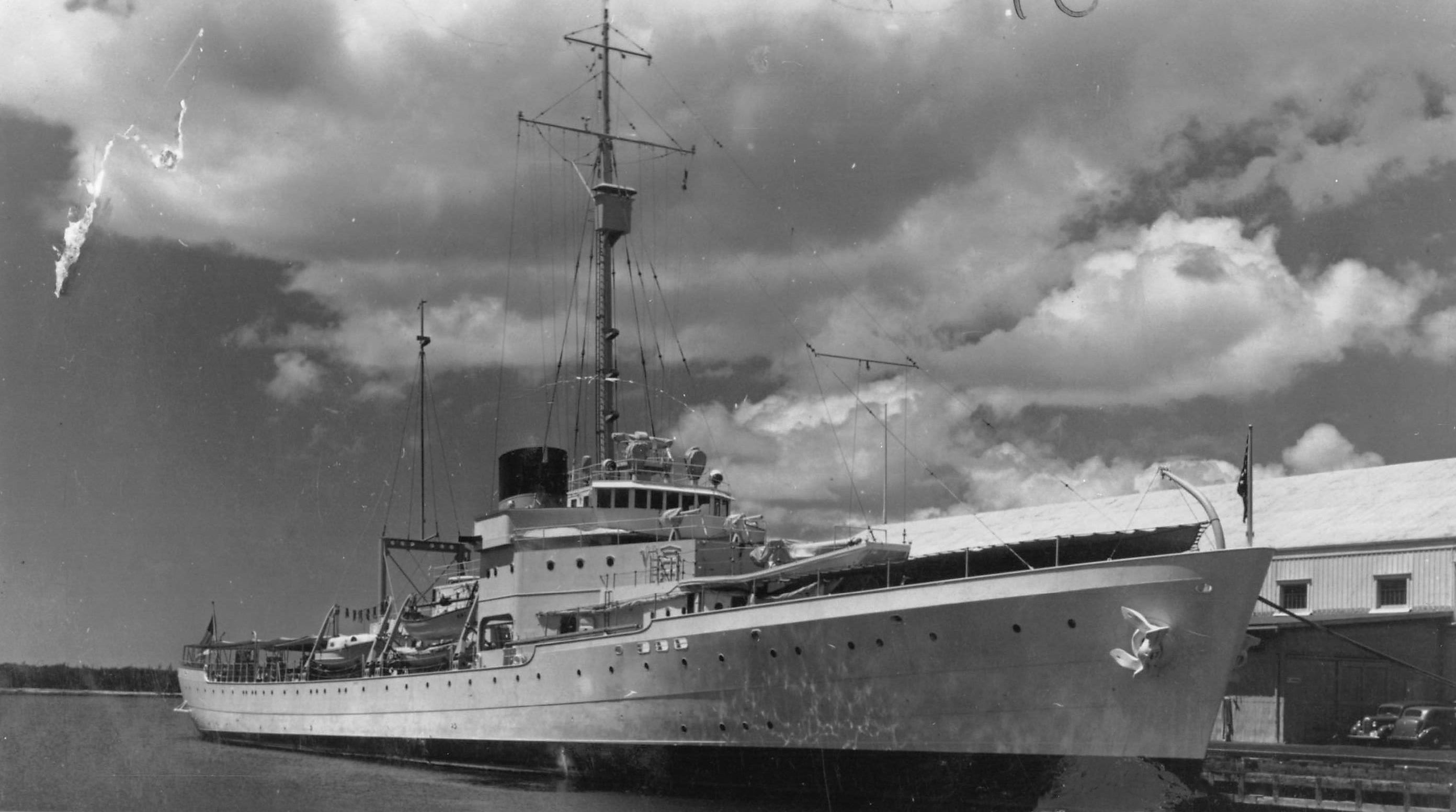
USCGC Itasca as HMS Gorlsston

1929  CGC Itasca slid down the ways of the General Engineering and Drydock Company in Oakland, California.  Ms. Jean Lyans christened the new 250-Lake Class cutter.  Ms. Lyans was nominated for the task by Representative Homer Hoch, of Kansas, a “great friend of the Coast Guard.”  The Lake-Class cutters, ten in all, were designed in-house by the Coast Guard and were propelled by a turbine-driven electric motor.  All ten were transferred to the Royal Navy under Lend Lease in the spring of 1941.

USS Serpens (AK-97)

The U.S.S. Serpens Monument at Arlington National Cemetery is dedicated to those who lost their lives when the U.S.S. Serpens was destroyed. The 14,250-ton ammunition ship exploded off Lunga Baech, Guadacanal, British Solomon Islands on the night of Jan. 29, 1945 and was the largest single disaster suffered by the U.S. Coast Guard in World War II. (U.S. Army photo by Rachel Larue/released)

1950  The Serpen’s monument in Arlington National Cemetery was dedicated on November 16, 1950.  The monument was placed on the gravesite of those who lost their lives on the night of January 29, 1945 when USS Serpens was destroyed off Lunga Beach, Guadalcanal. This was the largest single disaster suffered by the Coast Guard in World War II.

USCGC Storis

1992  CGC Storis became the cutter with the longest service in the Bering Sea, eclipsing the U.S. Revenue Cutter Bear which had held that distinction since 1929.  Bear was decommissioned in 1929 after serving in the Bering Sea for 44 years and two months.

This Day in Coast Guard History, November 15

Based on the Coast Guard Historian’s timeline, https://www.history.uscg.mil/research/chronology/
With inspiration from Mike Kelso

November 15

Minot’s Ledge ighthouse in a storm

1860  The light in the massive stone Minot’s Ledge Lighthouse, which was built on the original site of the one lost in 1851, was exhibited.  Work on the new lighthouse commenced in 1855 and finished in 1860.  “It ranks, by the engineering difficulties surrounding its erection and by the skill and science shown in the details of its construction, among the chief of the great sea-rock lighthouses of the world.”

1929  The SS Briton came ashore at Point Abino, Lake Erie, and was in danger of breaking up.  Coast Guard patrol boat CG-164, under the command of BMC Clarence C. Kimball, safely rescued all 27 persons on board the stricken vessel.

USCG 41-foot Utility boat

1977  Coast Guard UTB-41332 from Station Cape Disappointment capsized in the Columbia River during a night training exercise.  The UTB sank after the current swept it past the Columbia River Lightship.  Three Coast Guardsmen were killed in the accident: BM3 Greg Morris, BM3 Ray Erb, and SN Albin Erickson.

 “Twenty minutes into a night navigation exercise at Cape Disappointment, Washington, Coast Guard utility boat 41332 tracked off course, strayed into breaking surf, and capsized, trapping eight of its 10-person crew inside a dark, slowly flooding cabin. Over the next hour, the survivors fought their way underwater to the outside. Three students lost their lives.”

USCGC Polar Star. USCGC photo.

1977  CGC Polar Star departed Seattle en route Antarctica for ice tests and operational tasking in connection with Operation Deep Freeze.  Polar Star recently completed installation of modified propellers and open water engineering trails in the Seattle area.