“French Navy’s New Offshore Patrol Vessels to Feature Anti-Drone Detection System.” –Navy News/Army Recognition

A model of the future French Navy’s Offshore patrol vessel at Euronaval 2024 in Paris, France. (Picture source: Army Recognition) Click on the photo to enlarge.

Army Recognition’s Navy News reports,

“According to a PR published by Cerbair on November 5, 2024, the French Navy’s new offshore patrol vessels, commissioned by the French Defense Procurement Agency (DGA) in 2023, will soon benefit from enhanced protection against drone threats. The French Navy ordered a fleet of seven vessels that will incorporate CERBAIR’s navalized radio frequency (RF) detection system, ensuring a level of security against increasingly sophisticated drone threats. This strategic move is a culmination of years of collaboration among CERBAIR, the French Navy, and key defense industry partners such as Naval Group, CMN, Piriou, and Socarenam shipyards.”

The USCG is also concerned about drone threats. The post seems to be talking an electronic warfare system. The National Security Cutters, Offshore Patrol Cutters, and 270 foot WMECs all have or will have electronic warfare systems. Their effectiveness (or not) against drones is not clear.

Probably the most effective thing the US Coast Guard could do against drones in the short term is to trade the 25mm guns they have in Mk38 mounts for 30mm guns that have airburst ammunition available. That could provide a capability on the OPCs, the SLEPed WMEC270s, and most importantly the FRCs as the units most likely to encounter this threat.

There are two different 30mm chain guns. Both fire airburst ammunition. The 25mm may be better than the 30mm M230/914 family that use the lower velocity 30x113mm round for countering surface threats, but we know the 30mm Mk44 Bushmaster II/XM813 is significantly better than the 25mm against surface targets as well as air targets.

The Army Recognition post included a new photo of a model of the new class of Offshore Patrol Vessels, so thought we might take another look at the program.

These seven ships, which will perform coast guard like missions, were ordered almost exactly a year ago, 17 November 2023 and are expected to be delivered from 2026 to 2030. Three additional ships are expected to be delivered 2031,2032, and 2033.

Artist impression of the Patrouilleur Hauturier OPV underway. Naval Group image.

Wikipedia reports these vessels will be 92 metres (302′) long and will have a fully loaded tonnage of approximately 2,400 tons. They will have a range of 6,000 nautical miles @12 knots with maximum speed of 21 knots. 

“They will be able to accommodate 84 people on board (crew and passengers combined). They will be able to take on board the Navy’s EDO NG and ECUME NG (RHIBs–Chuck). The hangar and the aft deck will be able to accommodate the future Guépard Marine (H160M Cheetah helicopter–Chuck) or a VSR700 type helidrone .

The patrol boats will be equipped with the RapidFire Naval close-quarters weapon system, designed by Nexter and Thales around its 40 CTC telescoping ammunition cannon, equipped with an optronic fire control system, a range of 4,000 m and a rate of fire of 200 rounds/min. They will be equipped with Thales’ Bluewatcher hull sonar as part of their mission to support nuclear deterrence.” (Force Protection for French ballistic missile submarines–Chuck)

I did a post about the gun in 2016.

Late addition. Naval News has a post about this new class. It includes the video below.

“Icebreaker ‘Aiviq’ to Join U.S. Coast Guard Before End of Year to Bolster Arctic Presence” –gCaptain

Icebreaking Anchor Handling Vessel Aiviq

gCaptain reports, 

Commercial Polar icebreaker Aiviq will join the U.S Coast Guard inventory before the end of the calendar year, officials announced during a Congressional hearing on Capitol Hill…“We are making tremendous strides. It’s painted about a quarter of the way in Coast Guard icebreaker red and it’s underway today with a team from the owners doing an evaluation and we’ll get on the vessel in the coming weeks,” confirmed VADM Thomas Allan, in front of the House Subcommittee on Transportation and Infrastructure…“It will be in the Coast Guard inventory before the end of this calendar year and we will be sailing that up into the Arctic in 2026,” expanded VADM Allan.

An earlier post recounts “The Icebreaker Aiviq Saga.”

In October 2015 we learned that Shell had abandoned its ambitions to drill in the Arctic and that Aiviq was up for sale and that construction had been suspended on a second icebreaking AHTS, meaning it might also be available. I suggested, “This might be an opportunity for the Coast Guard to obtain one or two reasonably capable medium icebreaker in the near term on favorable terms.” Icebreaker Bargain?

This Day in Coast Guard History, November 14

Based on the Coast Guard Historian’s timeline, https://www.history.uscg.mil/research/chronology/
With inspiration from Mike Kelso

November 14

Coast Guard helicopter hovers over scene as Coast Guard and others fight fire aboard the coastal tanker Dynafuel and the Norwegian freighter Fernview following collision at sea ten Miles off New Bedford, Mass., this morning.

1963  Coast Guard air and surface rescue craft responded immediately when the freighter Fernview and the tanker Dynafuel collided in Buzzards Bay. Fernview sliced into Dynafuel’s stern. While helicopters removed the injured aboard the stricken ships, surface craft extinguished the fires.  Coast Guard units had completed the evacuation of all aboard the disabled vessels before the Fernview backed away and Dynafuel capsized and sank. Five crewmen aboard the tanker were lnjured but all 62 aboard the two vessels were rescued.

(Photos show and HU-16E, an H-52, USCGC White Sage (WLM-544), two Active class WMEC125s, a WPB95. and a 40 footer)

A United States Coast Guard (USCG) Port Security Unit (PSU) boat crew pictured while undergoing a tactical training exercise.

1990  PSU 302, staffed by reservists from Cleveland, Ohio, arrived in the Persian Gulf in support of operation Desert Shield.  They were stationed in Bahrain.

HH-60J Air Station Astoria

1991  An HH-60J Jayhawk from Aviation Training Center Mobile participated in a search and rescue operation off the coast of Alabama, the first such case conducted by an HH-60J, which was just beginning to enter Coast Guard service.

Response Boat, Medium (RB-M). Photo from Vigor

2008  The Coast Guard received a report of a homemade migrant vessel heading north towards the Marquesas Keys 30 miles west of Key West, Florida.  An RB-M was dispatched from Sector Key West to intercept the vessel, with a smaller special purpose boat capable of making shallow water pick-ups following the RB-M to the scene.  A Special Purpose Craft – Law Enforcement (SPC-LE) was also dispatched to assist.  The RB-M arrived first on scene to find the small, outboard-driven vessel about two miles southwest of the Marquesas Keys making an attempt to go ashore.  Though the vessel proved to be fairly agile and was quickly closing the distance to shore, the RB-M used its speed and maneuverability to “shoulder” the vessel, keeping it in deeper water until it could be disabled.  Using a boat hook, the RB-M crew disconnected the fuel line to the outboard engine, rendering it inoperable.  The fourteen migrants aboard were then safely removed from the vessel.

“Coast Guard to hold rescheduled commissioning and ribbon-cutting ceremony for newest air station in more than 25 years” –D11

The first MH-60T medium range recovery helicopter to operate out of new Air Station Ventura lands on the station’s ramp on June 8, 2024. U.S. Coast Guard photo.

Below is a District eleven (California) media advisory. More information about the air station and the MH-60T program in this earlier post. The ribbon cutting was originally to have been done June 18. I’ve seen no explanation for the delay. There has been an aviation detachment in the LA/Long Beach area for some time. With the addition of Ventura, there will be five CG air stations in District Eleven, San Diego (MH-60T), Ventura (MH-60T), San Francisco (MH-65), Sacramento (C-27J), and Humbolt Bay (MH-65).

The new Coast Guard Air Station Ventura and its MH-60T hangar is located at Naval Base Ventura County in Point Mugu, California. U.S. Coast Guard photos.

Nov. 12, 2024

Editor’s Note: Media are asked to RSVP by 5 p.m., Tuesday, Nov. 12 by contacting District 11 public affairs at 206-815-6689 or PADETLA@USCG.MIL.

WHAT: Commissiong and ribbon-cutting ceremony for Coast Guard Air Station Ventura

WHO:

  • Vice Adm. Andrew J. Tiongson, commander, Coast Guard Pacific Area
  • Rear Admiral Joseph R. Buzzella, commander, Coast Guard District 11
  • Rear Adm. Mike E. Campbell, director, Coast Guard Acquisition Programs and Program Executive Officer
  • Cmdr. Amanda Sardone, commanding officer, Coast Guard Air Station Ventura

WHEN: Nov. 13, 2024 at 10 a.m. to 11 a.m.

WHERE: Naval Base Ventura County Point Mugu: 190 Third St., Point Mugu, CA 93042.

SAN PEDRO, Calif. — The Coast Guard is scheduled to hold a commissioning and ribbon-cutting ceremony for Coast Guard Air Station Ventura at Naval Base Ventura County in Point Mugu, Wednesday. The ceremony will mark the official establishment of the newest Coast Guard air station in more than 25 years.

Recently, the aircrew of Air Station Ventura conducted three rescues:

  • Oct. 13, 2024: Air Station Ventura medevac a 63-year-old woman suffering from abdominal pain from the Cruise Ship Grand Princess
  • Oct. 17, 2024: Air Station Ventura conducted hoist from vessel in 10-foot seas for a diver suffering decompression sickness near Anacapa Islands in Channel Islands.
  • Oct. 31, 2024: Air Station Ventura medevac a man suffering from seizures from Cruise Ship Celebrity Radiance 90-miles from Air Station Venture.

The air station serves a crucial role in protecting the maritime region from Orange County to San Luis Obispo County including the vital ports of Los Angeles and Long Beach. Its missions will include 24/7 emergency response; search and rescue; drug and migrant interdiction; law enforcement; and marine safety and environmental protection. The permanent presence of the Coast Guard in Ventura County provides enhanced security and quicker response times to emergencies, benefiting both the local community and maritime industries.

Air Station Ventura features:

  •  $70 million state-of-the-art, 43,000 square-foot hangar facility
  • 12,000 square-foot administration facility and berthing facility
  • One MH60-T Jayhawk helicopter and expected to receive two more
  •  Approximately 100 Coast Guard personnel

District 11 now consists of four active air stations ranging from Humboldt Bay down to San Diego.

This Day in Coast Guard History, November 13

Based on the Coast Guard Historian’s timeline, https://www.history.uscg.mil/research/chronology/
With inspiration from Mike Kelso

November 13

USLSS Station Rockaway Point, NY

1883  The sloop Madge Schults capsized as she was passing in through Rockaway Inlet, about half a mile distant from the Rockaway Point Station (Third District).  The only crewman of the sloop clung to the bottom of his craft and made signals for help.  They were seen by the lookout at the station and the life-saving crew went off in their boat.  He was taken from the water and landed on Barren Island.

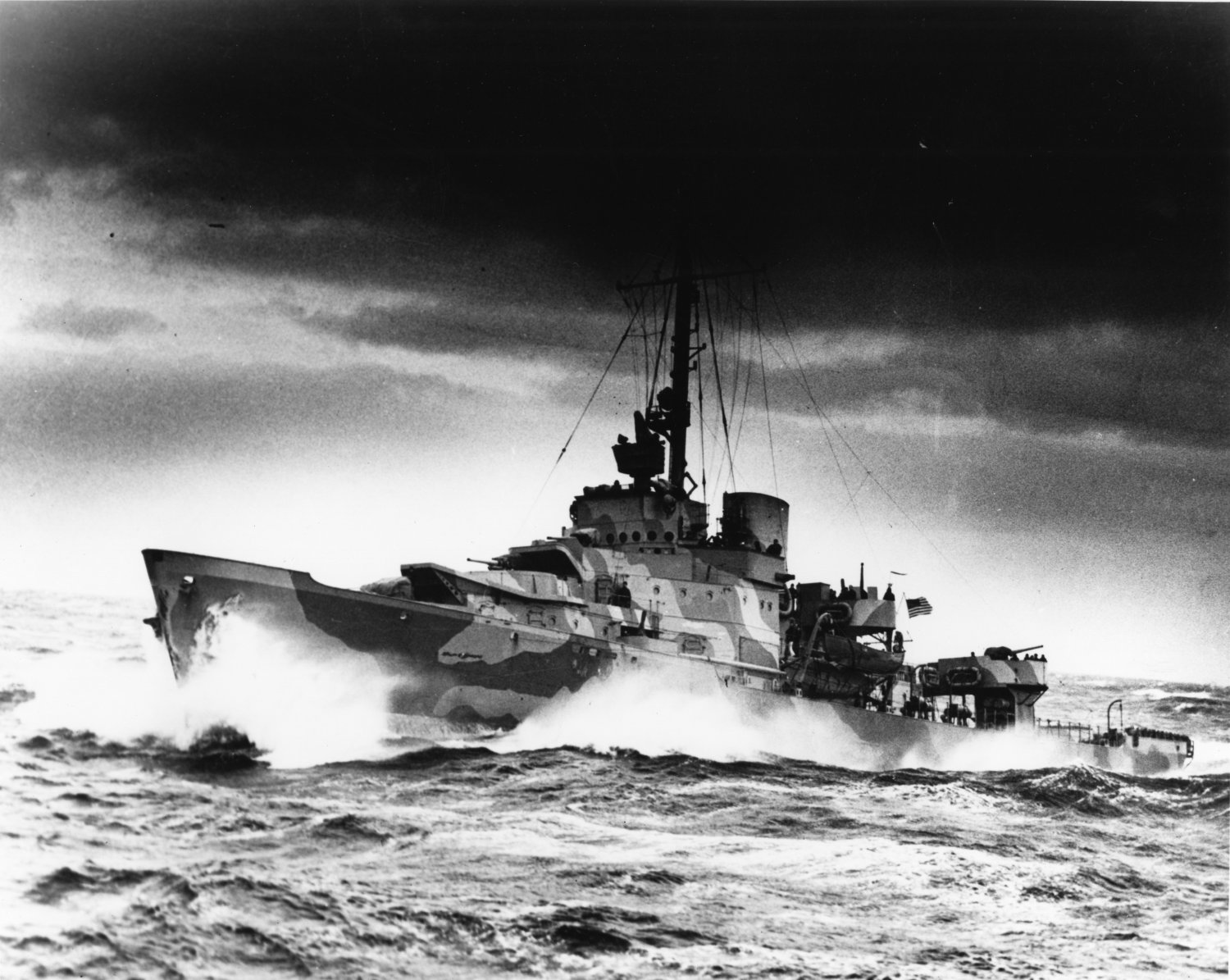
USS Rockford (PF-48) off Naval Operating Base Adak, Alaska, 30 January 1945. Her camouflage paint is Measure 32, Design 16d. Courtesy of the U.S. Naval Institute Photo Collection. U.S. Navy photo NH 94146

1944  The Coast Guard-manned frigate USS Rockford and the Navy minesweeper USS Ardent attacked and sank the Japanese Navy submarine I-12 mid-way between Hawaii and California.  There were no survivors.  In sinking I-12, Ardent and Rockford unwittingly avenged the atrocity I-12 had perpetrated on October 30, 1944 when, after sinking the Liberty Ship John A. Johnson, the submarine rammed and sank the lifeboats and rafts and then machine-gunned the 70 survivors.

Antenna of USCG Rescue 21 system at Cape Hatteras National Seashore. 

2005  The first rescue using the new Rescue 21 command, control and communications system took place off Ocean City, Maryland.  All three persons on board a swamped 20-foot fishing boat were safely rescued.

A Coast Guard C-27J Spartan crew, assigned to Coast Guard Air Station Sacramento, flies over San Francisco, California, during area of responsibility familiarization training, Monday, Feb. 6, 2018. The C-27Js are outfitted with weather radar and communications equipment capable of supporting transport and other Coast Guard missions. Coast Guard photo by Lt. Scott Handlin

2014  The first Alenia C-27J to complete the Coast Guard’s regeneration process arrived at the C-27J Asset Project Office in Elizabeth City, North Carolina, where it was to be used to train and qualify Coast Guard aircrew and maintenance personnel, as well as develop flight and maintenance procedures for Coast Guard-specific mission profiles.  Ultimately the aircraft would receive the equipment and systems needed to perform the full spectrum of Coast Guard missions.

This Day in Coast Guard History, November 12

Based on the Coast Guard Historian’s timeline, https://www.history.uscg.mil/research/chronology/
With inspiration from Mike Kelso

View of the Sturgeon Point Lighthouse in Harrisville, Michigan. The lighthouse was completed in 1870. Photo credit: Dylan L. Tanner

1882  On November 11, the steam-barge H.C. Schnoor struck on the bar off Alcona (MI) at 11 o’clock at night about three hundred yards from the shore (on Lake Huron).  A strong southeast gale prevailed at the time, and there was a heavy sea.  At 8 o’clock in the morning of the next day (November 12) a team came with the news from Alcona to Station No. 5, Tenth District, (Sturgeon Point), about four miles and a half from the scene of the disaster.  After a half-hour for preparation, the keeper was on the road with two teams, one bearing the wreck ordnance and the other the surfboat.  An hour later they arrived and launched the surfboat.  The surf, however, was so heavy that they failed to get alongside the barge and they were obliged to return.  The wreck-gun was then used.  The gear, having been set up, the mate was brought ashore by the breeches-buoy.  As the crew was obliged to work from a point of land so narrow that they could not spread sufficiently to keep the lines apart, they twisted.  The heavy current caused the lee part of the whip-line to foul with the hawser.  Before the lines could be cleared, however, the wind changed and beat down the sea.  The surfboat was launched and took the captain (who had been on shore at Alcona) and the mate back to the barge.  The immediate danger ended with the subsidence of the sea.  The life-saving crew returned to the station.

U.S. Coast Guard wraps up support for Operation Kurukuru 2024, joins Niue in celebrating 50th Constitution Day –USINDOPACOM

Members of an HC-130J Hercules airplane crew from Coast Guard Air Station Barbers Point and Coast Guard Fourteenth District staff pose for a photo with members of the Royal New Zealand Navy at Hanan Niue International Airport in Alofi, Niue, Oct. 19, 2024. The U.S., New Zealand, Australia, the Cook Islands, Fiji, France and Japan were among the countries represented at Niue’s 50th Constitution Day celebration. (U.S. Coast Guard photo, courtesy U.S. Embassy New Zealand)

Below is a news release from USINDOPACOM. I was a little surprised this was not on the Coast Guard News website, but maybe it will show up after the long weekend.

The country in whose waters this operation took place, Niue, is an independent nation in free association with New Zealand.

The population was reported as 1681 in 2022. Niue is considered part of the Realm of New Zealand. They have no armed forces of their own, but their people have New Zealand citizenship and have served in the New Zealand armed forces.

I was not able to find the size of Niue’s exclusive economic zone, but it should be close to the area enclosed by a circle with a radius of 200 nautical miles, or 125,664 sq nautical miles (431,015.5 sq. km) or about 1600 times the land area. Wikipedia notes,

“In 2022, Niue declared its entire EEZ to be a marine park, though enforcement of that declaration would be a challenge. The entire Fisheries Division was reported to have only five staff and there were no locally based patrol boats. Enforcement would depend on stronger support from the New Zealand Defence Forces, though its ability to maintain a continuous presence was limited.”

Since some fish are migratory, protecting their fish from illegal, unregulated, and unreported (IUU) fishing, also protects our fish so we have an interest.

Thanks to Paul for bringing this to my attention.


Nov. 9, 2024

U.S. Coast Guard wraps up support for Operation Kurukuru 2024, joins Niue in celebrating 50th Constitution Day

By Chief Warrant Officer Sara Muir, U.S. Coast Guard Forces Micronesia / Sector Guam

The U.S. Coast Guard recently concluded its support for the Pacific Islands Forum (PIF) Forum Fisheries Agency’s (FFA) Operation Kurukuru, a vital annual operation led by Pacific Island countries across the region’s vast maritime territory from Oct. 21 to Nov. 1, 2024.

This coordinated effort, conducted over two weeks, covered approximately 23.3 million square kilometers, reinforcing regional resilience and promoting sustainable fisheries management across the Pacific. The Coast Guard’s support underscores the United States’ enduring commitment to its Pacific partners, who rely on these rich marine resources for economic stability and food security.

“Our role in Operation Kurukuru is supporting our Pacific neighbors in protecting what matters most to their communities,” said Capt. Jennifer Conklin, lead for Operation Blue Pacific. “From coordinating patrols to participating in Niue’s 50th Constitution Day celebration, the Coast Guard is here to lend our expertise and resources wherever we can make a positive impact. It’s also a chance to celebrate each Pacific Island country’s unique culture and proud sovereignty. By working together, we strengthen regional bonds and show our commitment to supporting a Pacific that thrives on its own terms.”

Throughout the operation, the USCGC Frederick Hatch (WPC 1143) crew from Guam and an HC-130 Hercules aircrew from Air Station Barbers Point, Hawai’i, worked alongside Pacific Island countries’ personnel, strengthening capabilities through patrols, data sharing, and shiprider operations. In Palau’s exclusive economic zone (EEZ) and despite heavy weather, Frederick Hatch conducted a bilateral patrol with a Palau Marine Law Officer aboard under the Palau-U.S. bilateral agreement, building on previous efforts to enhance enforcement and address local maritime challenges and discussing plans for future joint steaming with Palau’s patrol boat crew PSS H.I. Remeliik II. The team also completed inspections of two fishing vessels on the high seas under the Western and Central Pacific Fisheries Council (WCPFC) authority, identifying potential violations and gathering critical data that enables targeted enforcement of sustainable fishing practices.

“Working alongside Palau and our Pacific partners, we build skills together, ensuring a secure and sustainable future,” said Lt. Niki Kirchner-Hope, commanding officer of USCGC Frederick Hatch, who helped lead coordination efforts in Palau. “When we team up with Palauan shipriders, it’s not just about enforcement—it’s about trust, shared responsibility, and protecting the ocean for everyone.”

The U.S. Coast Guard’s HC-130 aircrew conducted extensive aerial surveillance throughout the high seas pockets off the Federated States of Micronesia, key fishing zones. It delivered valuable data to help guide surface assets across the region. The aircrew logged over 45 flight hours and flew more than 11,400 nautical miles, monitoring for illegal fishing activities while also standing by to assist with search and rescue (SAR) operations when needed.

“The HC-130 is truly a workhorse for our missions in the Pacific,” said Conklin. “With its incredible range and versatility, it allows us to cover immense distances, monitor vast areas, and respond quickly to emerging needs, whether that’s surveillance or search and rescue. It’s the ideal aircraft for supporting our partners in this part of the world, where a single search or patrol can span thousands of miles of open ocean.”

This dual role is an example of the U.S. Coast Guard’s unique mission profile in the Pacific, where cooperation and responsiveness are crucial to supporting isolated communities across immense distances.

Both the Hercules and the Frederick Hatch crews were diverted during the operation to support the Chuuk Disaster Control Office’s (DCO) request for assistance in searching for three men reported overboard from a small vessel in Chuuk Lagoon. The crews searched for three days before the DCO suspended efforts.

As part of the operation, the U.S. Coast Guard team joined Niue’s Constitution Day celebrations, marking 50 years of self-governance and deepening diplomatic ties. U.S. Coast Guard representatives met with Niue’s leaders to discuss advancing maritime law enforcement collaboration and future cooperation. The Coast Guard’s Hercules aircrew also hosted a static display for local students, allowing over 100 visitors to learn about the United States’ commitment to Pacific maritime security and environmental protection.

Niue, often called the “Rock of Polynesia,” is a small island country in the South Pacific known for its dramatic limestone cliffs, lush coral reefs, and warm, clear waters. With a population of just over 1,500, Niue is one of the world’s largest coral islands and boasts a rich Polynesian heritage. Despite its remote location, Niue has established itself as a leader in marine conservation, with 40 percent of its EEZ designated as a protected area.

“During Niue’s Constitution Day, our crew had a fantastic time hosting the static display,” added Conklin. “The local students were full of excitement and curiosity—seeing their enthusiasm up close was a special reminder of why we’re here. Moments like these show the importance of the connections we build, not just through our missions but by being part of these communities.”

Participation in the FFA operations is a critical element of the Coast Guard’s Operation Blue Pacific and Operation Rematau initiatives, which aim to strengthen maritime security across Oceania, foster regional partnerships, and counter illegal activities threatening Pacific Island countries’ well-being. By supporting the PIF and working with partners to detect, deter, and disrupt illegal fishing, the U.S. Coast Guard helps ensure Pacific Island communities can continue to benefit from the ocean’s resources. The efforts conducted at sea with partners from the Freely Associated States also build on relationships strengthened under Operation Irensia in Guam in June, which brought together maritime personnel from the Republic of Palau, the Federated States of Micronesia, the Republic of the Marshall Islands, the Royal Australian Navy and Australian Defence Force Pacific Maritime Security Program.

“As the Coast Guard, we have a unique role here, helping build resilience against maritime threats while respecting the lead of our Pacific Island partners,” said Conklin. “By working together, we’re making the region safer, stronger, more secure and more prosperous.”

-USCG-

About Operation Kurukuru
Conducted in the combined area of the 15 participating PIF members’ EEZ and the adjacent high seas pockets, Operation Kurukuru emphasized boarding activities at sea and in port, cooperative surveillance engagements, the utilization of remote sensing data to drive intelligence-led operations, and the use of all available Maritime Domain Awareness (MDA) tools to provide timely and effective MDA information to members. These members include Australia, Cook Islands, Fiji, Federated States of Micronesia, Kiribati, Nauru, Niue, Palau, Papua New Guinea, Nauru, New Zealand, Republic of the Marshall Islands, Solomon Islands, Tuvalu, and Vanuatu. The operation also saw active participation from the Pacific Quadrilateral Defense Coordination Group (Pacific QUADs) countries—Australia, France, New Zealand, and the United States, demonstrating international collaboration in the fight against IUU fishing.

About USCGC Frederick Hatch
The Frederick Hatch is the 43rd 154-foot Sentinel-class fast response cutter named for a surfman and lighthouse keeper who was a two-time Gold Life Saving Medal recipient. They are also the 2023 Hopley Yeaton Award winners for small cutter excellence.

About U.S. Coast Guard Air Station Barbers Point
U.S. Coast Guard Air Station Barbers Point provides critical air support across the Pacific, enhancing maritime safety, security, and environmental protection. Located on the western tip of Oahu, Hawaii, the air station conducts search and rescue, law enforcement, and disaster response missions over vast and remote areas, including the Hawaiian Islands, American Samoa, and the Western Pacific.

About Operation Blue Pacific
Operation Blue Pacific is the U.S. Coast Guard’s strategic effort to support a peaceful, secure, inclusive, and prosperous Pacific region. Focused on partnership, capacity-building, and enhancing maritime governance, the operation emphasizes collaboration with Pacific Island countries to address shared challenges such as illegal fishing, search and rescue, environmental protection, and regional security.

For further details on the U.S. Coast Guard efforts, please contact District 14 Public Affairs at hawaiipacific@uscg.mil.

For further details about FFA or Operation Kurukru, please contact Ernest Ta’asi, FFA Communications Officer, at ernest.ta’asi@ffa.int.

This Day in Coast Guard History, Veterans Day, November 11

Based on the Coast Guard Historian’s timeline, https://www.history.uscg.mil/research/chronology/
With inspiration from Mike Kelso

November 11

1881  The crew of Life-boat Station No. 14, Eleventh District (Racine, WI) rendered service during the severest storm of the season.  The life-saving crew noticed several vessels running north for safety under bare poles and two of them made safely into the harbor.  Observing this, the master of the schooner Lavinda tried to make the same haven, but the vessel became unmanageable, struck the south pier, immediately became waterlogged, and in five minutes was a wreck.  The life-saving crew sprang for the lifeboat and put out to her assistance.  They got alongside and managed to run a line from the wrecked vessel to the station tug H. Wetzel, which had steamed out to her relief.  The tug soon towed her into the harbor.

USCGC Tampa (Coast Guard Cutter, 1912) photographed in harbor, prior to World War I. Completed in 1912 as the U.S. Revenue Cutter Miami, this ship was renamed Tampa in February 1916. On 26 September 1918, while operating in the English Channel, she was torpedoed and sunk by the German Submarine UB-91. All 131 persons on board Tampa were lost with her (111 Coast Guardsmen, 4 U.S. Navy personnel, and 16 passengers consisting of 11 British Navy personnel and 5 civilians.), the largest loss of life on any U.S. warship in combat during the First World War. U.S. Naval History and Heritage Command Photograph.

1918 The Allied powers signed a cease-fire agreement with Germany at Rethondes, France on November 11, 1918, bringing World War I to a close.  Between the wars November 11 was commemorated as Armistice Day in the United States, Great Britain, and France.  After World War II, the holiday was recognized as a day of tribute to veterans of both world wars.  Beginning in 1954, the United States designated November 11 as Veterans Day to honor veterans of all U.S. wars.  Over 8,000 Coast Guardsmen served during the World War I and 111 were killed in action with the enemy.

Cutter Yocona towing environmental bouy (EB-16) off of San Diego underway for deployment. May 19,1975.

1955  CGC Yocona rescued the crew of the sinking fishing vessel Ocean Pride some 50 miles off Cape Lookout, Oregon.  When 60 to 70 mph winds and heavy seas with 30 feet swells made it impossible to launch lifeboats, Yocona came close aboard the sinking fishing vessel to allow all of its crew members to jump on board the cutter to safety.

The U.S. Coast Guard Cutter Healy (WAGB 20) cuts a channel through the multi-year pack ice and snow as Healy transits the Arctic Ocean to the North Pole, September 27, 2022. This is the third time the icebreaker has traveled to the North Pole since its commissioning in 1999. U.S. Coast Guard photo by Deborah Heldt Cordone, Auxiliary Public Affairs Specialist 1.

2022 CGC Healy returned to its homeport of Seattle following its historic 17,000-mile, 124-day deployment in the high Arctic latitudes that included a transit to the North Pole. Healy and its crew traversed the ice-packed Arctic Ocean to the top of the world, reaching the geographic North Pole on 30 September 2022. This was only the second time a U.S. surface vessel had reached 90 degrees north unaccompanied.  In July and August 2022, after a port call in Seward, Alaska, Healy traveled into the Beaufort and Chukchi Seas, going as far north as 78 degrees, while supporting an Office of Naval Research-sponsored team from the University of Washington Applied Physics Department and Woods Hole Oceanographic Institution. The embarked team worked with Healy crew to conduct various evolutions, including deploying and recovering sea gliders, underwater sensors and acoustic buoys, throughout the marginal and pack ice zones as part of the Arctic Mobile Observing System. During transits to and from the Arctic, Healy participated in flight operations in Kotzebue Sound and off the coast of Kodiak Island, Alaska, with Air Station Kodiak MH-60 helicopter aircrews, conducted passing exercises with the CGC Kimball (WMSL 756), and completed patrols of the international maritime boundary line between the U.S. and Russia. In September and October, after a port visit to Dutch Harbor, Alaska, Healy transited north again to conduct multidisciplinary, internationally collaborative research as part of the Synoptic Arctic Survey. The embarked National Science Foundation-funded team collected samples and data to study environmental changes across the Arctic Ocean. Upon reaching the North Pole, Healy conducted two days of science operations and the crew enjoyed several hours of ice liberty. After disembarking all science personnel during a second logistics stop in Dutch Harbor at the end of October, Healy made a final port call in Juneau, Alaska, where friends and family of crewmembers were given the opportunity to sail on the cutter during its final underway leg through the inside passage to Seattle

This Day in Coast Guard History, November 9/10

Based on the Coast Guard Historian’s timeline, https://www.history.uscg.mil/research/chronology/
With inspiration from Mike Kelso

November 9

1970  The installation of the Coast Guard’s Control Data Corporation 3300 Computer System at Headquarters was completed.  A period of system acceptance testing was satisfactorily completed and the computer system was then accepted for use by the Coast Guard.

November 10

Photograph of the Marine Corps War Memorial, which depicts the second U.S. flag-raising atop Mount Suribachi, on Iwo Jima. The memorial is modeled on Joe Rosenthal’s famous Raising the Flag on Iwo Jima.

1775 The official birthday of the U.S. Marine Corps: On this date in 1775 the Second Continental Congress passed a resolution to create a “Corps of Marines.”  Although they were disbanded in 1783 and were not re-established permanently until July 11, 1798, the Marine Corps recognizes November 10, 1775, as its official birthday.  The Marine Corps’ motto is Semper Fidelis (Always Faithful).  On October 21, 1921, Major Edwin McClellan, Officer-in-Charge, Historical Section, Headquarters Marine Corps, sent a memorandum to Major General Commandant John A. Lejeune, suggesting that the original birthday on November 10, 1775, be declared a Marine Corps holiday to be celebrated throughout the Corps.

1913 Lightship No. 82 was lost with all hands during a gale while on station near Buffalo, New York.  Six crewmen were aboard when the lightship went down.  LV-82 was commanded by Hugh M. Williams, Master.

1975 The Great Lakes ore-carrier Edmund Fitzgerald, caught in an unexpected storm on Lake Superior, sank with a loss of all 29 hands.  Coast Guard units helped conduct a search for the ship and survivors although all efforts proved to be futile.

Coast Guard Cutter Reliance patrols the Western Caribbean in support of the Joint Interagency Task Force – South October 2014. The cutter’s crew worked with an aviation detachment from the Coast Guard Helicopter Interdiction Tactical Squadron based in Jacksonville, Fla., to detect and interdict suspected smugglers. (U.S. Coast Guard photo by Petty Officer 3rd Class Clinton McDonald)

2014 CGC Reliance returned to its homeport at Portsmouth Naval Shipyard, Kittery, Maine, following a nine-week patrol in the Caribbean Sea supporting the Joint Interagency Task Force-South.  During the deployment, the 75-member crew of Reliance was responsible for conducting counter drug operations in support of U.S. and international law.  Reliance sailed with an aviation detachment from the Coast Guard’s Helicopter Interdiction Tactical Squadron based in Jacksonville, Florida.  The cutter worked directly with federal and international partners at JIATF-S and the Coast Guard Seventh District to combat transnational organized crime networks operating in the Caribbean Basin.  Reliance’s efforts directly contributed to the prevention of 14 metric tons of contraband from reaching American shores.  During the Reliance’s 63-day deployment, the cutter traveled over 6,000 miles, conducted three law enforcement boardings and conducted more than 100 helicopter launch and recovery evolutions while operating throughout the Western Caribbean.

“Coast Guard accepts delivery of 58th fast response cutter, first to be homeported in Kodiak, Alaska” –CG-9

Coast Guard Cutter John Witherspoon, the service’s 58th fast response cutter, in Key West, Florida, where the Coast Guard accepted delivery on Nov. 7, 2024. The cutter will be homeported in Kodiak, Alaska, after it is commissioned. U.S. Coast Guard photo.

Below is a report from the Acquisitions Directorate (CG-9).

The news release indicates there is only one additional Homeport (Seward, AK) currently planned.

I think the statement that there will be three of the class in Kodiak is new. Previously I had heard two. There are three in Ketchikan. The Wikipedia page indicates that while Frederick Mann (WPC-1160) will go to Kodiak initially, ultimately it will go to Seward, so three in Kodiak may be temporary.

One of the 67 cutters, USCGC Benjamin Dailey (WPC-1123) had a serious fire while in a shipyard and has been scrapped, so there is one fewer than you might assume. That explains why this is #58 but only 57 “are in service.”

I did a post in May speculating on where additional members of the class will be homeported. Since then, we learned that the three additional FRCs I expected to go to D14, will be going to Guam. If my projections are correct, the Coast Guard will be contracting for at least two more FRCs, five if the Coast Guard establishes a base for three in America Samoa. The revised program of record calls for 71 FRCs which would, given the loss of one, mean the Coast Guard will have procured 72, five more than currently contracted, so I think the projections are pretty close.

Bollinger typically delivers four FRCs a year, so we can probably look forward to seeing the final FRC, WPC-1172, commissioned in 2028.


The Coast Guard accepted de358 livery of the 58th fast response cutter (FRC), Coast Guard Cutter John Witherspoon, on Nov. 7 in Key West, Florida. John Witherspoon is the first of three FRCs to be homeported in Kodiak, Alaska.

The cutter’s namesake, John Gordon Witherspoon, became the first African American to command a medium endurance cutter. When he assumed command of Coast Guard Vessel Traffic Services-Houston/Galveston, he became the first African American to command afloat and ashore units. A well-respected, compassionate and admired leader, he served as a popular mentor to an army of “teaspoons,” an affectionate term for those who sought sage counsel from Witherspoon about advancing their Coast Guard careers.

Witherspoon enlisted in the Coast Guard in 1963 and rose to the rank of quartermaster first class within eight years. Witherspoon eventually set his sights on becoming a commissioned officer and successfully received a waiver for the two-year college education requirement for Officer Candidate School. He was commissioned as an ensign in June 1971.

During his service, Witherspoon received the Coast Guard Meritorious Service Medal, two Coast Guard Commendation Medals and the National Association for the Advancement of Colored People Roy Wilkins Renown Service Award.

Witherspoon passed away in 1994 at the age of 54. In honor of his service and guidance to many, the Coast Guard established the Captain John G. Witherspoon Inspirational Leadership Award after his passing, which is given to officers who demonstrate his qualities of “honor, respect and devotion to duty.” The following year, the National Naval Officers Association created the Captain John G. Witherspoon for Excellence in Leadership and Mentoring Award. And in 2003, Witherspoon was inducted into the Caldwell County School’s Hall of Fame in North Carolina.

The Sentinel-class FRCs are replacing the 1980s Island-class 110-foot patrol boats, and possess 21st century command, control, communications, computers, intelligence, surveillance and reconnaissance equipment, with improved habitability and seakeeping. A total of 67 FRCs have been ordered to date to perform a multitude of missions that include drug and immigrant interdictions, joint international operations and national defense of ports, waterways and coastal areas. Each FRC is named after an enlisted Coast Guard hero who performed extraordinary service in the line of duty.

Fifty-seven of the 67 FRCs that have been ordered are in service: 13 in Florida; seven in Puerto Rico; six each in Bahrain and Massachusetts; four in California; three each in Alaska, Guam, Hawaii, Texas and New Jersey; and two each in Mississippi, North Carolina and Oregon. In addition to Kodiak, future FRC homeports include Seward, Alaska.

For more information: Fast Response Cutter Program page