“Coast Guard accepts delivery of 58th fast response cutter, first to be homeported in Kodiak, Alaska” –CG-9

Coast Guard Cutter John Witherspoon, the service’s 58th fast response cutter, in Key West, Florida, where the Coast Guard accepted delivery on Nov. 7, 2024. The cutter will be homeported in Kodiak, Alaska, after it is commissioned. U.S. Coast Guard photo.

Below is a report from the Acquisitions Directorate (CG-9).

The news release indicates there is only one additional Homeport (Seward, AK) currently planned.

I think the statement that there will be three of the class in Kodiak is new. Previously I had heard two. There are three in Ketchikan. The Wikipedia page indicates that while Frederick Mann (WPC-1160) will go to Kodiak initially, ultimately it will go to Seward, so three in Kodiak may be temporary.

One of the 67 cutters, USCGC Benjamin Dailey (WPC-1123) had a serious fire while in a shipyard and has been scrapped, so there is one fewer than you might assume. That explains why this is #58 but only 57 “are in service.”

I did a post in May speculating on where additional members of the class will be homeported. Since then, we learned that the three additional FRCs I expected to go to D14, will be going to Guam. If my projections are correct, the Coast Guard will be contracting for at least two more FRCs, five if the Coast Guard establishes a base for three in America Samoa. The revised program of record calls for 71 FRCs which would, given the loss of one, mean the Coast Guard will have procured 72, five more than currently contracted, so I think the projections are pretty close.

Bollinger typically delivers four FRCs a year, so we can probably look forward to seeing the final FRC, WPC-1172, commissioned in 2028.


The Coast Guard accepted de358 livery of the 58th fast response cutter (FRC), Coast Guard Cutter John Witherspoon, on Nov. 7 in Key West, Florida. John Witherspoon is the first of three FRCs to be homeported in Kodiak, Alaska.

The cutter’s namesake, John Gordon Witherspoon, became the first African American to command a medium endurance cutter. When he assumed command of Coast Guard Vessel Traffic Services-Houston/Galveston, he became the first African American to command afloat and ashore units. A well-respected, compassionate and admired leader, he served as a popular mentor to an army of “teaspoons,” an affectionate term for those who sought sage counsel from Witherspoon about advancing their Coast Guard careers.

Witherspoon enlisted in the Coast Guard in 1963 and rose to the rank of quartermaster first class within eight years. Witherspoon eventually set his sights on becoming a commissioned officer and successfully received a waiver for the two-year college education requirement for Officer Candidate School. He was commissioned as an ensign in June 1971.

During his service, Witherspoon received the Coast Guard Meritorious Service Medal, two Coast Guard Commendation Medals and the National Association for the Advancement of Colored People Roy Wilkins Renown Service Award.

Witherspoon passed away in 1994 at the age of 54. In honor of his service and guidance to many, the Coast Guard established the Captain John G. Witherspoon Inspirational Leadership Award after his passing, which is given to officers who demonstrate his qualities of “honor, respect and devotion to duty.” The following year, the National Naval Officers Association created the Captain John G. Witherspoon for Excellence in Leadership and Mentoring Award. And in 2003, Witherspoon was inducted into the Caldwell County School’s Hall of Fame in North Carolina.

The Sentinel-class FRCs are replacing the 1980s Island-class 110-foot patrol boats, and possess 21st century command, control, communications, computers, intelligence, surveillance and reconnaissance equipment, with improved habitability and seakeeping. A total of 67 FRCs have been ordered to date to perform a multitude of missions that include drug and immigrant interdictions, joint international operations and national defense of ports, waterways and coastal areas. Each FRC is named after an enlisted Coast Guard hero who performed extraordinary service in the line of duty.

Fifty-seven of the 67 FRCs that have been ordered are in service: 13 in Florida; seven in Puerto Rico; six each in Bahrain and Massachusetts; four in California; three each in Alaska, Guam, Hawaii, Texas and New Jersey; and two each in Mississippi, North Carolina and Oregon. In addition to Kodiak, future FRC homeports include Seward, Alaska.

For more information: Fast Response Cutter Program page

“Coast Guard’s “Queen of the Fleet” turns 80” –CG News

USCGC Smilax (WLIC-315)

Below is a news release from CG News.

This announcement leaves me with mixed feelings, pride and amazement that the crews could keep the old girl on the job this long and dismay that it was necessary.

When I was on Duane, she was “Queen of the Fleet”, and it was considered something of a wonder that at 48 years old she was still reliable and “ready to answer all bells,” but now, ships over 50 years old are all too common.

At least, replacements have been contracted for the many overage inland tenders.


Nov. 7, 2024

FEATURE: Coast Guard’s “Queen of the Fleet” turns 80

Coast Guard's 'Queen of the Fleet' turns 80

Coast Guard's 'Queen of the Fleet' turns 80 Coast Guard's 'Queen of the Fleet' turns 80

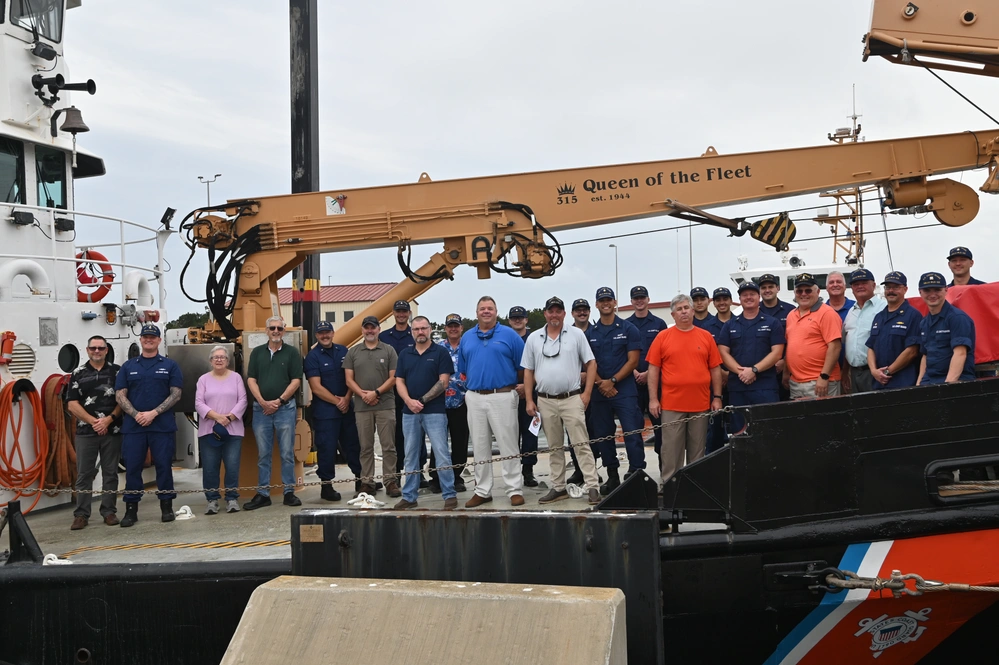
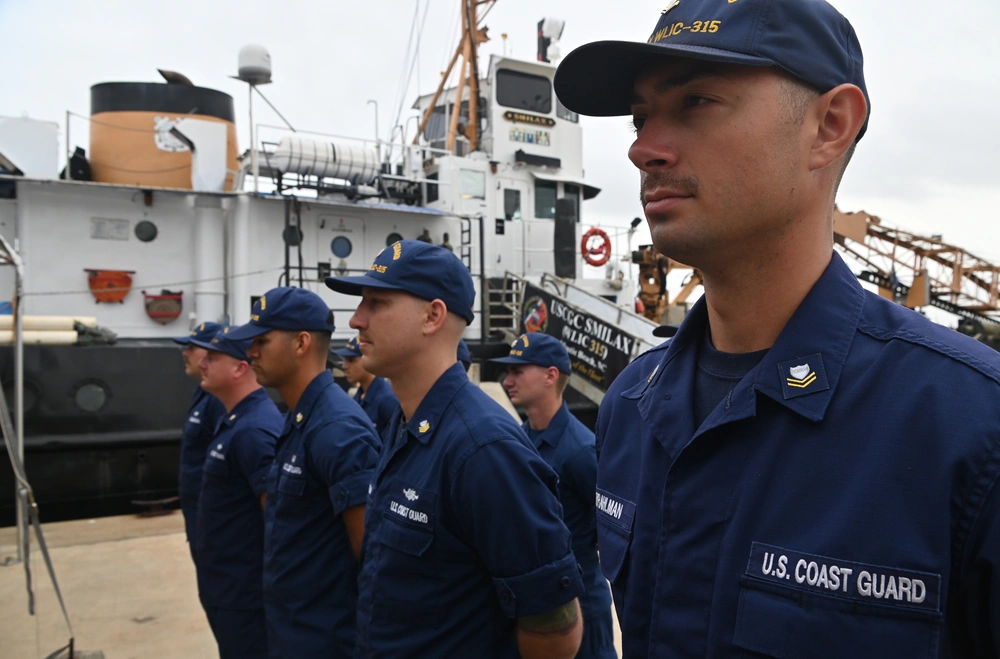
The USCGC Smilax (WLIC 315) celebrated its 80th anniversary on Nov. 7, 2024, during a ceremony attended by current and former crewmembers in Atlantic Beach, North Carolina.

Commissioned Nov. 1, 1944 during World War II, Smilax is the oldest active Coast Guard cutter. It has been recognized as the “Queen of the Fleet” since 2011 when the USCGC Acushnet (WMEC-167) was decommissioned after 67 years of service. This title is symbolized by its gold hull number.

“As long as I’ve been in the Coast Guard, the Smilax has always been regarded as the Queen of the Fleet,” said Chief Petty Officer Jordan Bickford, the executive petty officer of the Smilax. “It’s been a goal of mine to stay and serve in the Aids to Navigation (ATON) afloat community throughout my career. It’s truly an honor to now serve aboard the Smilax, contributing to its legacy.”

The Smilax was built in 1943 by Dubuque Boat & Boiler Works in Dubuque, Iowa. When most other ships were being built in 40 days, the Smilax was built over the course of a year and cost approximately $194,238, making it the most expensive ship in its class.

It was originally homeported in Fort Pierce, Florida but moved to a new homeport in New Smyrna Beach, Florida from June 1, 1954, to Nov. 9, 1965.

After being fitted with new engines and receiving a 70-foot barge, the Smilax was re-classified as a WLI-315, making it an inland buoy tender responsible for short range ATON along the coastal and inland waterways, particularly in shallow waters or areas that larger tenders cannot reach.

It moved to a new homeport in Brunswick, Georgia on Nov. 9, 1965, before being re-classified again as a WLIC on Oct. 1, 1979. As a WLIC, or inland construction tender, the Smilax became responsible for constructing, repairing and maintaining fixed ATON within inland waterways. It remained there until July 1999, when it moved to its current homeport in Atlantic Beach, North Carolina.

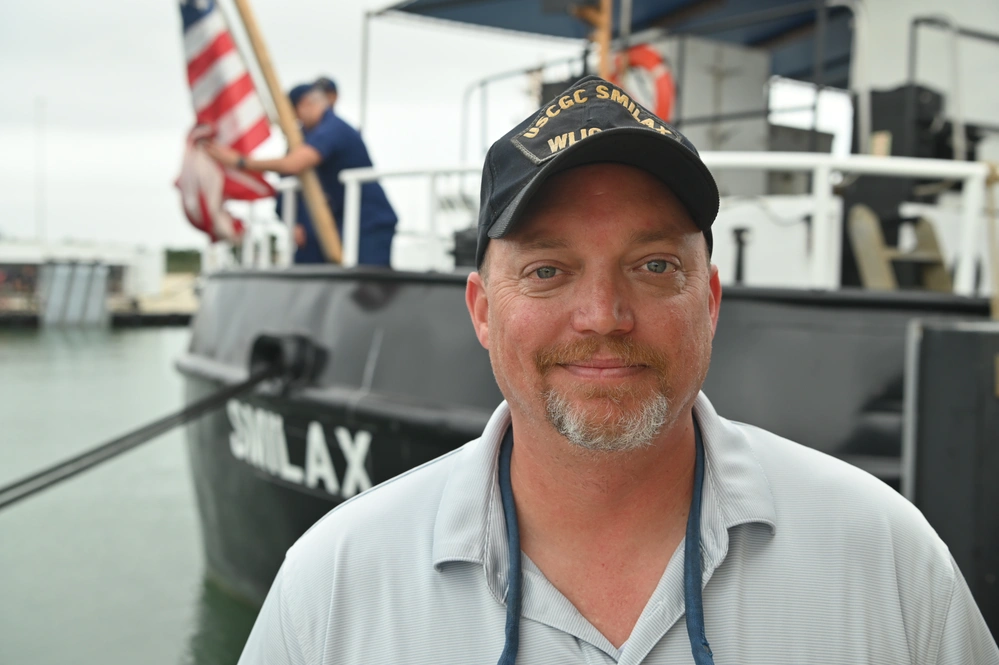
“One ship, one crew, everything says Smilax and they all work together,” said retired Chief Warrant Officer Scott McAloon, former commanding officer of the Smilax, 2010 to 2014. “Everybody’s dirty in a set of coveralls, and it’s just such a fun ship to be part of. These construction tenders, they’ll humble you. From ship driving to getting out on the deck and working, it’s a real special thing.”

Smilax plays a crucial role in maintaining navigation aids in Oregon Inlet, Hatteras Inlet, Ocracoke Inlet and Beaufort Inlet. It oversees 1,226 fixed aids and 26 buoys across the Outer Banks to ensure safe passage for various types of vessels. It also operates a 70-foot barge equipped with a crane capable of lifting heavy aids, making it well-suited for the shallow and shifting waters of the region.

Throughout its history, the crew of the Smilax has engaged in various missions beyond navigation support. They have assisted with search and rescue operations and even salvaged cannons and barrel hoops from the Queen Anne’s Revenge, the legendary pirate ship captained by Edward Teach, better known as Blackbeard.

The cutter represents a vital federal presence on inland waterways and is part of an aging fleet dedicated to maintaining the U.S. Aids to Navigation System.

“The crew is keeping the ship going,” said retired Chief Petty Officer Matthew Hux, former Smilax crewmember. “She keeps going because of all of you and the legacy that comes behind you. So thanks to you, and thanks to my old shipmates.”

-USCG-

This Day in Coast Guard History, November 7/8

Based on the Coast Guard Historian’s timeline, https://www.history.uscg.mil/research/chronology/
With inspiration from Mike Kelso

November 7

1950  The Coast Guard announced that it would open a limited number of Organized Reserve enlistments to male veterans of other services and to males without previous military service in an effort to bring Coast Guard port security training units up to authorized strength without delay.  Heretofore, such enlistments had been offered only to former Coast Guardsmen.

Mara Hope, Water sprayed on fire at Mara Hope, Tanker ship, Port Neches

1984  The tank ship Mara Hope suffered a fire in her engine room that quickly got out of control.  She had lain idle at the Coastal Marine Shipyard on the Neches River for more than a year, but the owners of the Liberian tank ship had crewed the vessel and were working to reactivate the ship when the fire broke out.  Coast Guard personnel and a 32-footer from MSO Port Arthur soon arrived on scene as did a 41-footer from Station Sabine.  Local firefighters also assisted.  It took almost three days to get the blaze under control.  The ship was declared a total loss.  There were no serious casualties.

November 8

U.S. COAST GUARD MANNED COMBAT TRANSPORT LEONARD WOOD CARRIES FIGHTING MEN AND VITAL WAR MATERIALS TO THE ENEMY-HELD INVASION SHORES

1942  Operation Torch, the Allied landings in Vichy-French-held North Africa, commenced.  Coast Guard-manned Navy vessels participated in the assault, including the attack transports USS Leonard WoodJoseph T. Dickman, and Samuel Chase.  Coast Guardsmen also manned the landing craft on the Navy’s USS ArcturusCharles CarrollJoseph HewesWilliam P. Biddle, and Exceller.

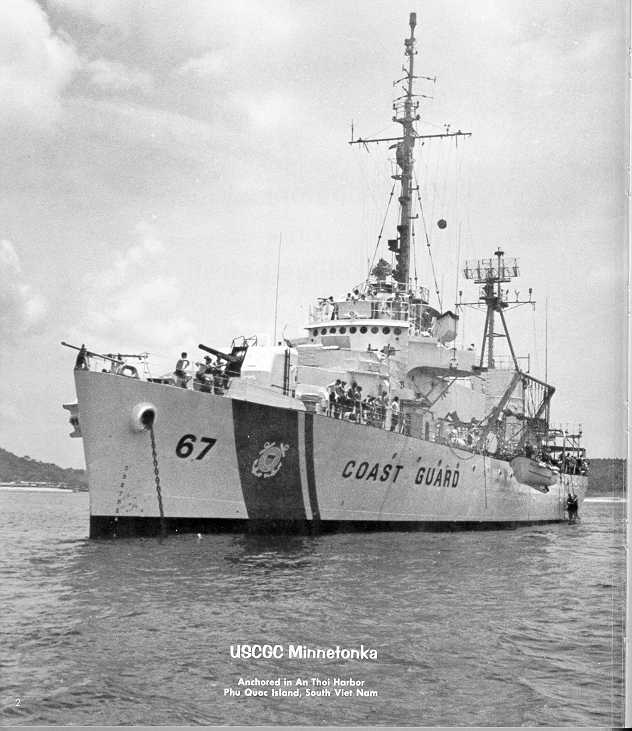
1957 After making contact with CGC Minnetonka on Ocean Station November Pan Am Flight 90944 Romance of the Skies was not heard of again. Wreckage of the aircraft was later found approx 90 miles of the ocean station.  No survivors were found.

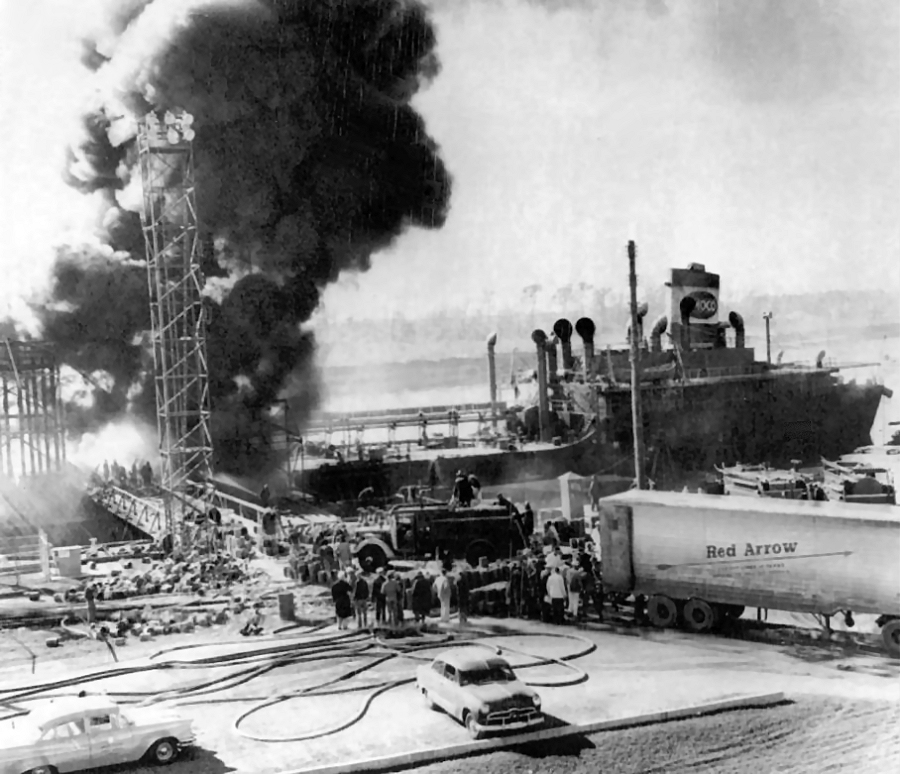
AMACO Virginia Ablaze

1959  The tanker Amoco Virginia, with a cargo of aviation gasoline, exploded and caught fire at Houston, Texas.  U.S. Coast Guard units in the Galveston-Houston area assisted local and Federal agencies in extinguishing the blaze.  For 10 more days, Coast Guard air and surface units controlled a dangerous situation by spreading foam to reduce the fire hazard of leaking aviation gas, directing harbor traffic, pumping out the damaged vessel, and moving her to a safe dock.

“… foam to fight was on its way. At about 7:00 A.M. the U.S. Air Force at Ellington Air Force Base sent ten 55-gallon drums of foam to the scene and another ten barrels at 9:30 A.M. The Coast Guard Houston Port Captain, with approval from the Eighth Coast Guard District office in New Orleans, bought more chemical foam from commercial sources. A veritable air lift was begun to bring foam into Houston through Ellington Air Force Base with the first plane in the airlift arriving at Ellington at 11:59 A.M. Later that afternoon Air Force and Navy aircraft arrived with foam at almost ten minute intervals. This foam air lift continued for seven hours, stopping at about 7:00 P.M. when the Houston Civil Defense spokesman advised no further need for foam. The fire had been brought for the second–but final– time under control. This foam air lift consisted of 47 flights, hauled more than a half million pounds of foam, involved more than 400 Air Force and Navy personnel, and used some 42 Air Force and Navy vehicles.”

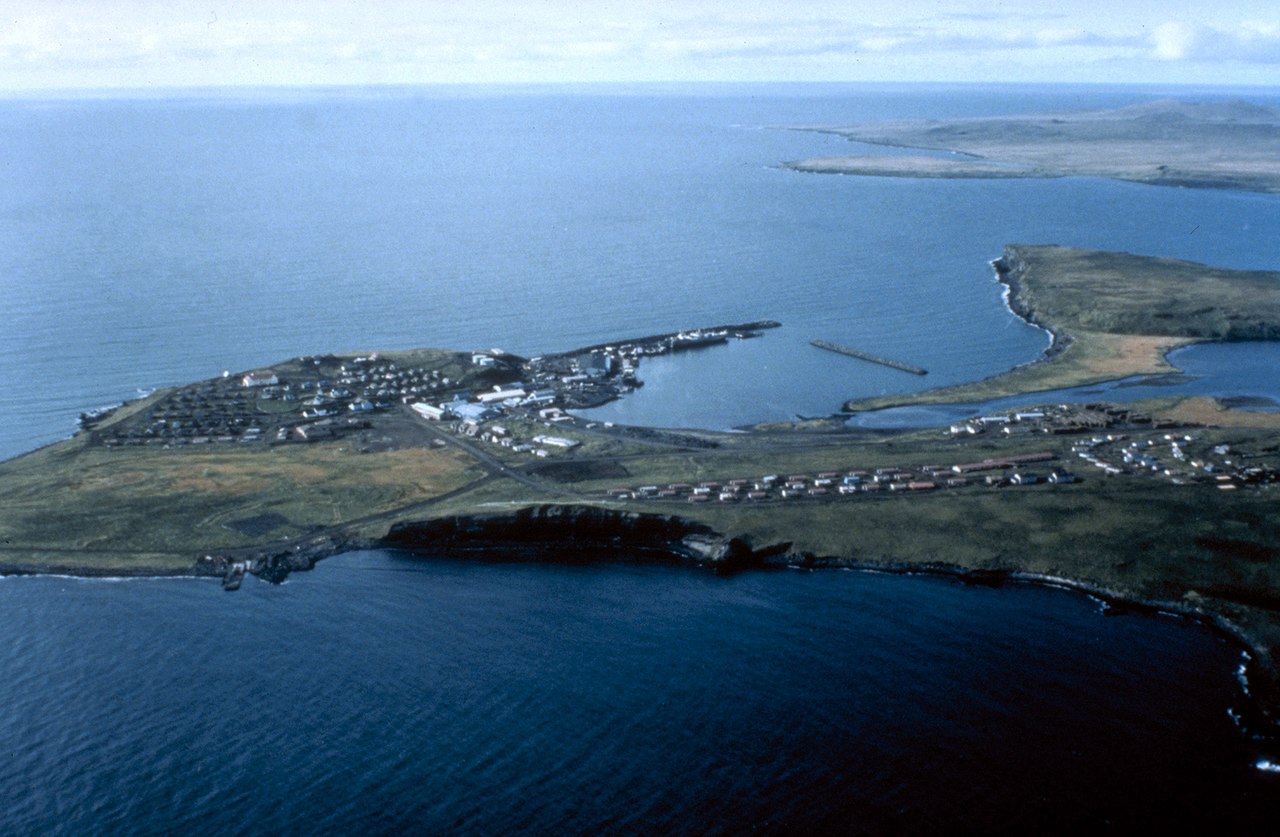
Aerial view of St. Paul. U.S. Army Corps of Engineers, photographer not specified or unknown – U.S. Army Corps of Engineers Digital Visual Library.

1979  The crew of Coast Guard LORAN Station St. Paul Island, Alaska, rescued the crew of the Japanese factory fishing vessel Ryuyo Maru NR Two which had run aground near Tolstoi Point on St. Paul Island during a storm.  The Coast Guardsmen used a makeshift breeches buoy to affect the rescue of all of the 81 crewmen aboard the fishing vessel.

“Philippine Coast Guard to Receive 40 Patrol Boats from France in $438 Million ODA Project” –USNI

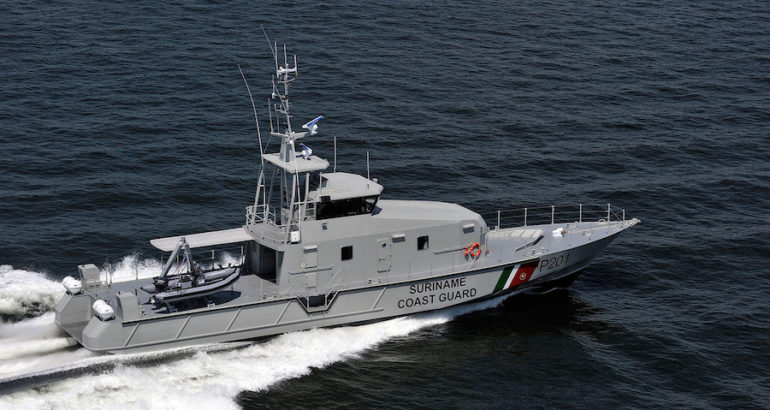
A Suriname Coast Guard FPB 98 patrol boat (Credit: OCEA)

The US Naval Institute News Service reports,

France is set to provide 40 patrol vessels and logistical support to the Philippine Coast Guard following the approval of a $438 million aid project to enhance Manila’s maritime security capabilities across the country’s waters.

The French official development assistance-funded acquisition project of 40 Fast Response Crafts, approved during Tuesday’s National Economic and Development Authority Board meeting, will effectively quadruple the Philippine Coast Guard’s fleet.

The craft are reported to be 30-35 meters in length. 20 are to be built in France and 20 in the Philippines.

There are no specifications for the patrol boats included in the article, but it does state that OCEA is expected be the French shipbuilder that will provide the design and build the first 20. OCEA has already committed to building a shipyard in the Philippines and has previously built vessels for the Philippine Coast Guard (here and here).

There is a good chance the new patrol boats will look a lot like the one pictured above, a class built for Suriname, Algeria, Ukraine, and French Customs. They are powered by two 3,660 HP Caterpillar diesels using waterjets. Specs on the Algerian boats as follows.

  • Displacement: 100 tons
  • Length: 31.8 meters (104’4″)
  • Beam: 6.3 meters (20’8″)
  • Draft: 1.2 meters (3’11”)
  • Speed: 30 knots
  • Range: 900 nmi @ 14 knots
  • Crew: 13

These will be faster and more maneuverable than most of the China Coast Guard and maritime militia vessels that contest Philippines sovereignty in the South China Sea. If they can stand up against Chinese water cannon, they should be a valuable asset.

The Philippine Coast Guard is still not arming even their largest vessels with anything larger than .50 caliber.

DOD Arctic Strategy, 2024, a Critique

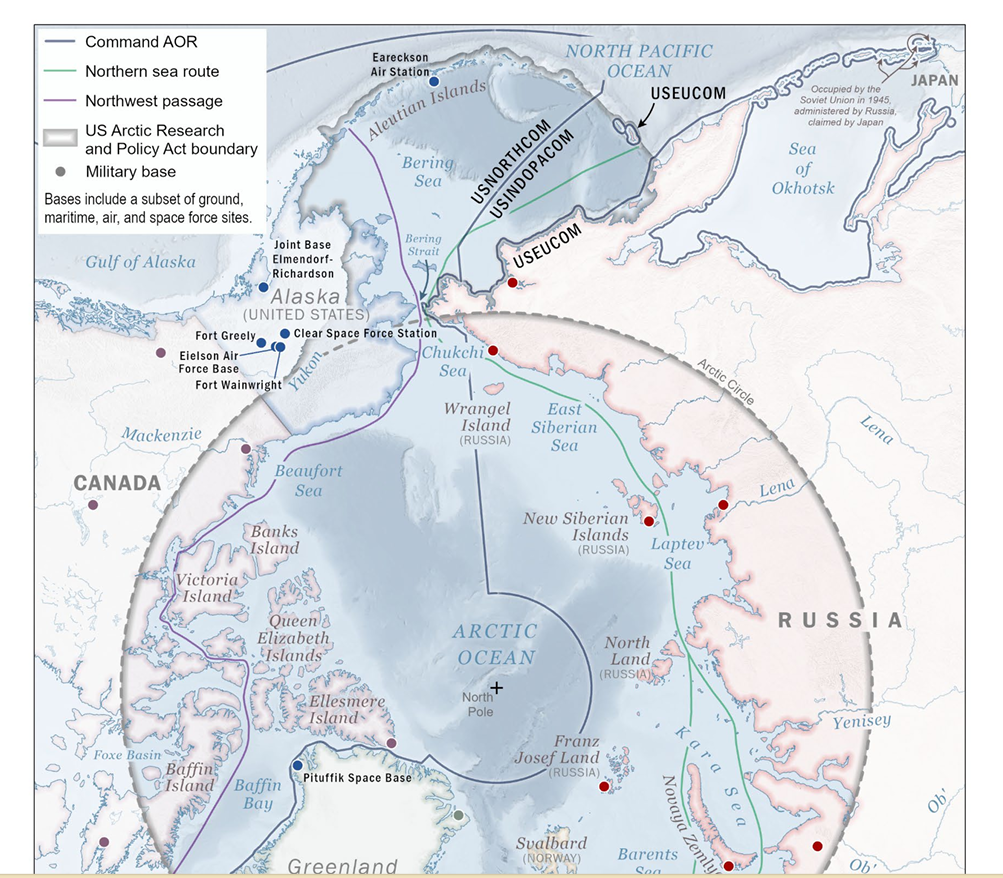
Screen grab from page 2 of the DOD Arctic Strategy, 2024

Here is a link to the new DOD Arctic Strategy here. I found it disappointing. There isn’t much strategy here. I would sum it up as–we are going to keep doing what we are doing, but we are going to do it better. (See critique below.)

“This strategy will strengthen the ability of the United States to build integrated deterrence and effectively manage risk to U.S. interests in the Arctic region by enhancing our domain awareness and Arctic capabilities; engaging with Allies, partners, and key stakeholders; and exercising tailored presence.”

About the US Coast Guard:

The US Coast Guard or USCG was mentioned in three places, once in a caption of a picture of USCGC Healy and these two paragraphs.

DoD will partner with the Department of Homeland Security (DHS), including through the U.S. Coast Guard (USCG), which plays a vital role in maintaining U.S. presence in the Arctic region and supporting domain awareness. The USCG is responsible for operating and maintaining the United States’ icebreaking capability, and DoD will continue to support the USCG’s long-term acquisition of at least eight polar icebreakers that will provide needed icebreaking capability for both military and civilian purposes, including PR/SAR. While disaster response is not a force sizing or shaping requirement, DoD remains ready to support DHS and the Federal Emergency Management Agency in the event of disaster, terrorist attack, or other mass-casualty incident in the Arctic when directed by the President or when requested by a lead Federal department or agency and approved by the Secretary of Defense.

Service-specific, Joint, Interagency, and Combined Exercises. Security and stability in the Arctic depend, in  part, on the Joint Force’s ability to respond rapidly and   effectively to threats in the region. Exercises increase interoperability with Allies and partners, validate plans, train our ability to rapidly deploy to all parts of the Arctic region, and provide an opportunity to test equipment in Arctic conditions. As such, the Joint Force will continue to exercise frequently in the Arctic through Service specific training, joint exercises —to include with USCG— and
combined exercises with our Allies and partners. DoD will
ensure CCMDs with Arctic equities work toward global integration through joint exercises and ensure key exercise lessons inform capability requirements and strategic planning.

That’s it.

About Icebreakers: Icebreakers are mentioned twice, it the paragraph above and here,

The PRC seeks to bolster its operational expertise in the Arctic, where its presence, while limited, is increasing. The PRC operates three icebreakers—the Xue Long, Xue Long 2, and Zhong Shan Da Xue Ji Di—which enable the PRC’s dual civil-military research efforts in the Arctic. Over the course of the PRC’s 13 Arctic research expeditions to date, the vessels have tested unmanned underwater vehicles and polar-capable fixed-wing aircraft, among other activities. People’s Liberation Army Navy (PLAN) vessels have also  demonstrated the capability and intent to operate in and around the Arctic region through exercises alongside the Russian Navy over the past several years.

Critique:

“DoD will reach this end state through a monitor-and-respond approach.”

In other words, we will be reactive rather than proactive. 

The threat to Europe in the Polar regions is just part of the long running NATO defense problem. No real change there, except the formal extension of NATO into Sweden and Finland.

The Air Threat over the Pole to North America is looked after by NORAD. Apparently, NORAD does not look after Greenland, but that does not seem to be a central problem.

Ground operations in the Arctic are always going to be difficult. There may be small unit operations but no need to worry about an invasion of North America coming over the pole. NORTHCOM is exercising both land and air assets that would be needed to deal with realistic threats.

The North Slope oil fields and the associated pipeline are probably a target if we become engaged in a long-term conflict that involves combat in or over the arctic. The oil fields are not mentioned in the strategy,

What has changed?

The opening of the Arctic Ocean to maritime commerce has made it a possible avenue for logistics between Russia and China with the potential for militarily valuable shipments moving both ways between the Russian Arctic coast on one end and the Russian Pacific Coast, North Korea, or China on the other. The weakness of Russian transcontinental land transportation systems makes the Northern Sea Route particularly important.

The door to be shut or left open is the Bering Strait.

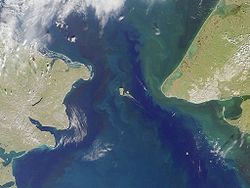
Bering Strait. 44 Nautical miles (82km) wide, with the Diomede Islands in the center.

The “strategy” mentions the Bering Straits only as a choke point,

The Arctic includes multiple strategically significant maritime chokepoints. Reduction in sea ice
due to climate change means chokepoints such as the Bering Strait between Alaska and Russia and the Barents Sea north of Norway, are becoming more navigable and more economically and militarily significant.

We would certainly want to deny use of the Strait by our enemies and ensure that we and our allies have the option to transit through the Strait.

The planned deep-water port in Nome (currently on hold) will be essential to forces that might be used to control access to the Bering Strait. We would also want to make sure St Lawrence Island and Little Diomede remain in US hands. The US might also want to seize Big Diomede. None of these strategic locations are mentioned in the plan.

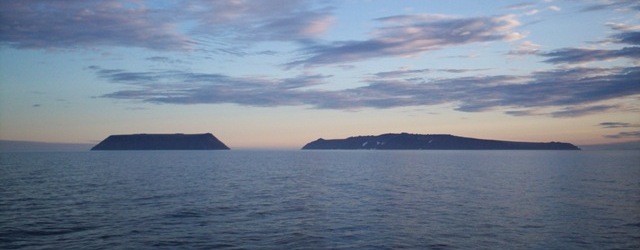
Diomede Islands: Little Diomede Island or Kruzenstern Island (left) and Big Diomede Island or Ratmanov Island in the Bering Sea. Photo is from the north. Photo by Dave Cohoe.

But who is in charge?

First look at the map at the head of this post. They have divided the Arctic so that operations there are under three different Unified Combatant Commands, USEUCOM, USINDOPACOM, and USNORTHCOM. In other words, no one below the President is in charge over the whole area.

These are the Unified Combatant Commander’s Areas of Responsibility. What is not made clear in this graphic is that all of Russia including the larger Asian part is under USEUCOM.

Perhaps most critically, the Pacific interface with the Arctic is under all three COCOMs.

  • USEUCOM is responsible for the Russian land areas in spite of the fact that the Bering Strait is 4521 statute miles from the COCOM’s headquarters in Stuttgart, Germany, and that is the shorter distance West from Stuttgart across the Atlantic and over the US, rather than over Russia. –This has got to be wrong.
  • USNORTHCOM has the Bering Strait and the Eastern half of the Bering Sea but normally they have no significant naval force. Their primary responsibility is the air defense of the US and Canada.
  • USINDOPACOM, which has the naval assets in the Pacific that might be used to attack Russian assets in Asia has responsibility for only the Western half of the Bering Sea below the Bering Strait.

This division of responsibility, placing Russian Asia under USEUCOM, also means that if the US should be at war with both China and Russia, then at least officially, conducting the war in the Pacific would be under two or perhaps three different COCOMs. I doubt this would actually work this way.

“USACE cancels solicitation for Nome’s port expansion project, future uncertain” –KNOM.org

USCGC Alex Haley moored in Nome, AK.

KNOM.org reports,

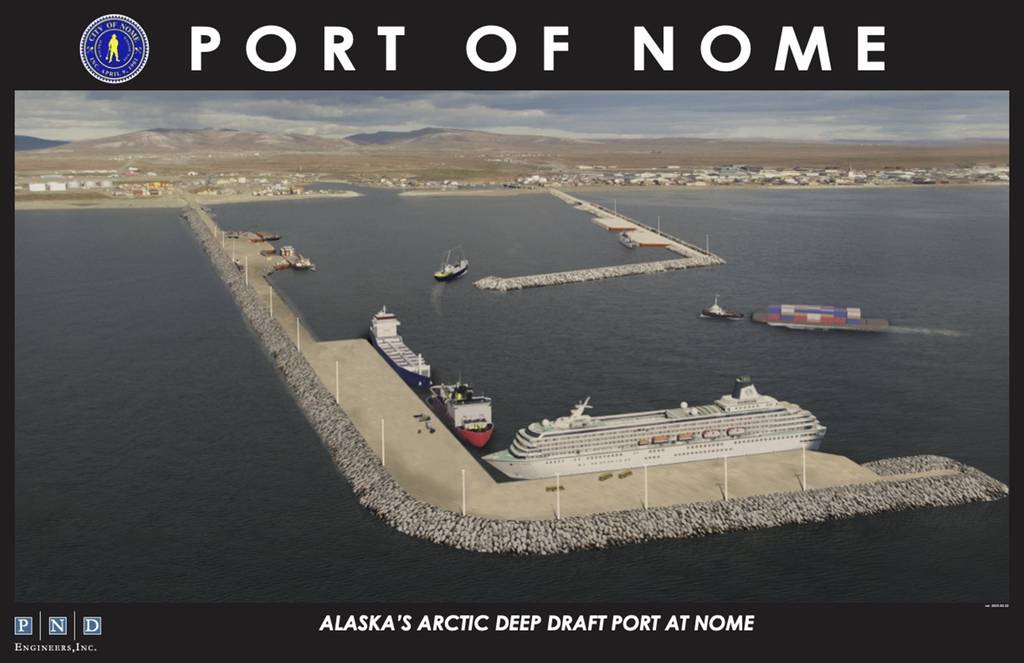
The U.S. Army Corps of Engineers (USACE) says plans to build the country’s first deep draft port in the Arctic are too expensive.

USACE canceled its port expansion contract solicitation on Wednesday, October 16. It cited two key factors: the proposed pricing exceeded both the cost limits set by U.S. law and the available funding for the project.

Plans were to dreg to 40 feet. Sounds like they may need to be another Congressional action before work can proceed.

Rendering provided by the City of Nome shows how the Port of Nome, Alaska, would have appeared following an expansion project that would have cost more than $600 million.  (PND Engineers Inc./City of Nome via AP)

“CIA Has Secret ‘Nonviolent’ Way To Disable Large Ships: Report” –The War Zone

“The Tholian Web,” Star Trek episode 3:9 written by Judy Burns and Chet Richards and directed by Herb Wallerstein, first broadcast on November 15, 1968.

As I have often pointed out, the Coast Guard does not have a quick, reliable way of forcibly stopping a medium to large ship. This capability seems an implicit requirement to do the Coast Guard’s missions. The War Zone reports, the CIA may have such a device.

Mini-Cruise Missile

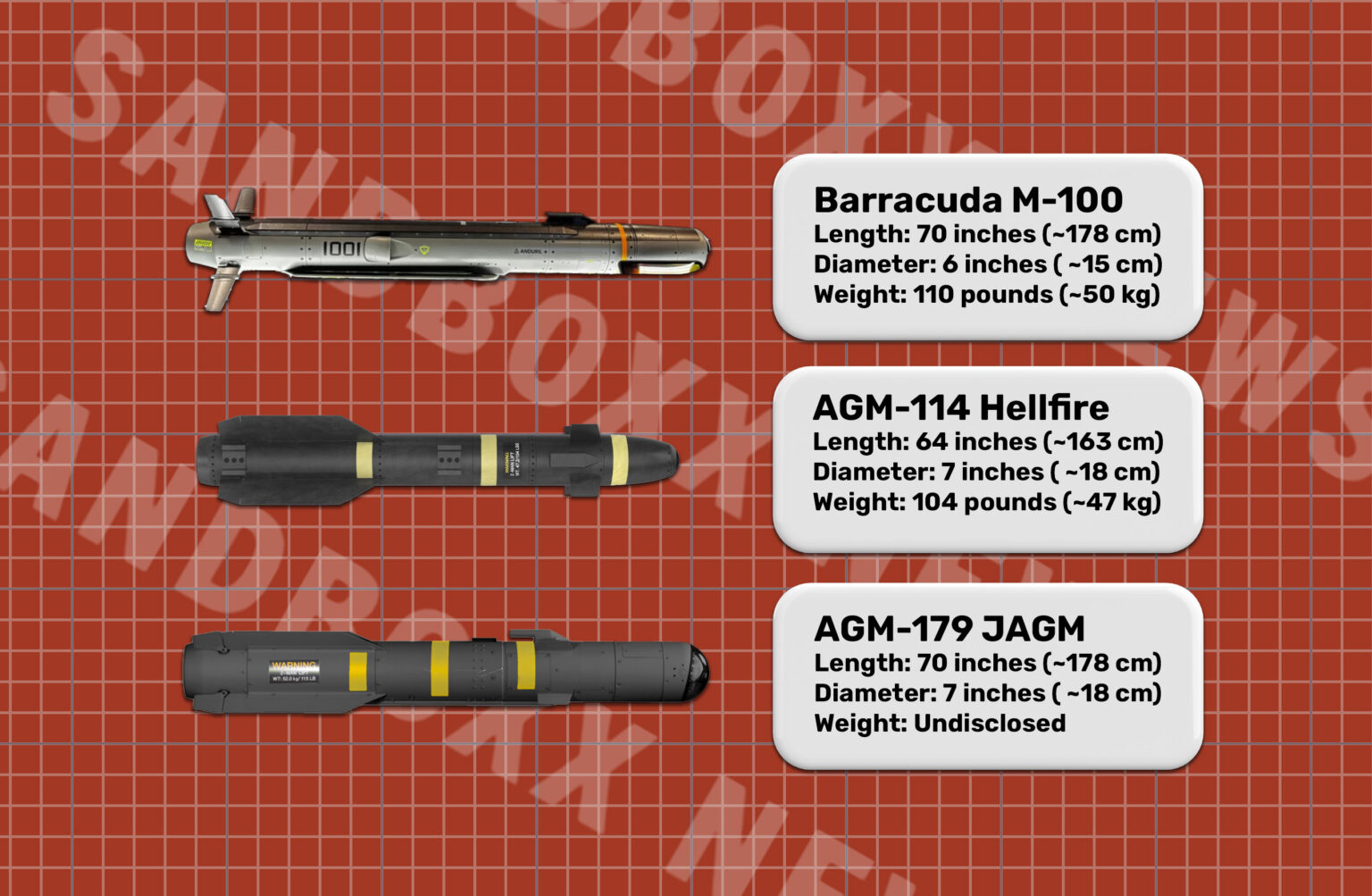
(Graphic by Alex Hollings)

SANDBOXX has a report on a new weapon, “Anduril’s mini-cruise missile is like a Hellfire on steroids.”

I have been advocating for Hellfire, or something similar, for some time as an answer to the possibility of an attack using small, fast, highly maneuverable surface craft (manned or unmanned). It could also work against some aircraft and have at least a minimal capability against an attack using a medium to large vessel. This new weapon seems to be a significant improvement and reportedly at a lower cost. Even if the Coast Guard does not get it, but DOD does, it might free up stocks of Hellfire for Coast Guard use. If the Coast Guard does get the system, it would mean that a single launch platform could cover a very large area, if they could get targeting from units on scene.

Apparently, this is not yet a program of record, but it certainly looks promising and Anduril has a good record of producing affordable innovative weapons.

Differences in capabilities between Barracuda M-100 and the Legacy Hellfire and JAGM are a larger warhead (40 pounds vs 20) and much longer range (138 miles vs at most 21). A disadvantage is lower maximum speed (roughly 500 knots vs 860 knots). The speed difference may not actually be significant over the entire range since Hellfire and JAGM are rocket powered so they don’t necessarily fly under power the entire range, rather they accelerate to a maximum speed, sustain for a period, and then coast to their maximum range. The Barracuda M-100 would be fully powered, accelerating to its maximum speed, over any range Hellfire or JAGM could reach and well beyond that.

The M-100 is the smallest of the Anduril line of Barracuda cruise missiles.

Barracuda line of AAVs and Weapons (graphic created by Alex Hollings using Anduril images)

In the video below, there is more information on the company, the defense industry and what is wrong with it, and even a “Lord of the Rings” connection. It’s almost an hour, but it is very interesting.

This Day in Coast Guard History, November 4/5

Based on the Coast Guard Historian’s timeline, https://www.history.uscg.mil/research/chronology/
With inspiration from Mike Kelso

November 4

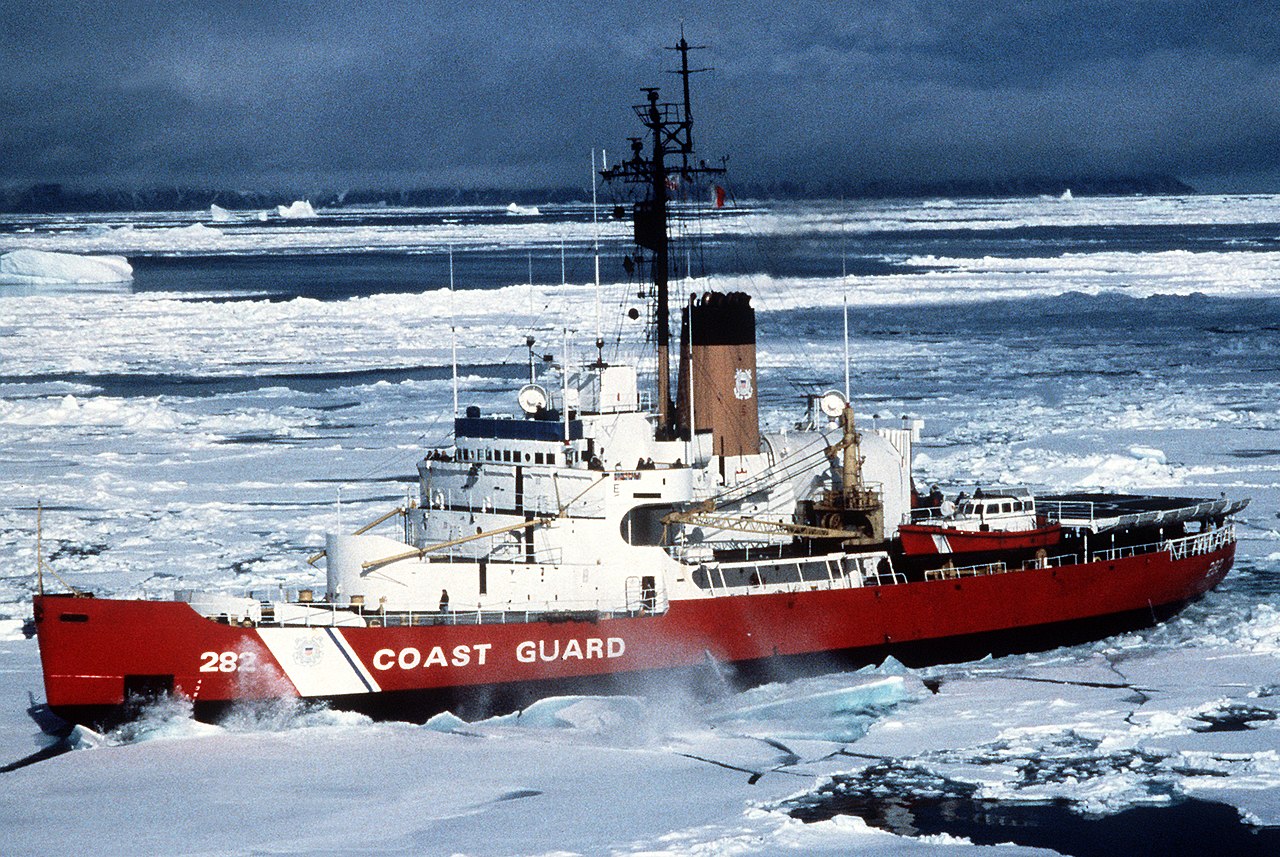
An elevated port bow view of the U.S. Coast Guard icebreaker NORTHWIND (WAGB-282) breaking through ice packs while participating in a joint Denmark-U.S. musk oxen relocation operation. Note the small craft, just aft of funnel, this is the Arctic Survey Boat or Greenland Cruiser.

1984  USCGC Northwind seized the P/C Alexi I off Jamaica for carrying 20 tons of marijuana, becoming the first icebreaker to make a narcotics seizure.

November 5

1897  Rescue from drowning Chicago, Illinois, Lake Michigan: At 9: 30 p.m., the north patrol saw a man run across the driveway and jump into the lake with suicidal intent. The surf knocked him down and was tossing him about when surfmen rushed in and hauled him out.

SAULT SAINT MARIE, Mich. –The Coast Guard Cutter Katmai Bay (WTGB 101) is tied to the pier at Group Sault Saint Marie, Michigan. USCG photo by PA1 Harry C. Craft III

1976  The Coast Guard awarded a contract to Tacoma Shipbuilding Company, Inc., of Tacoma, Washington, for the construction of four 140-foot WYTM icebreaking tugs.

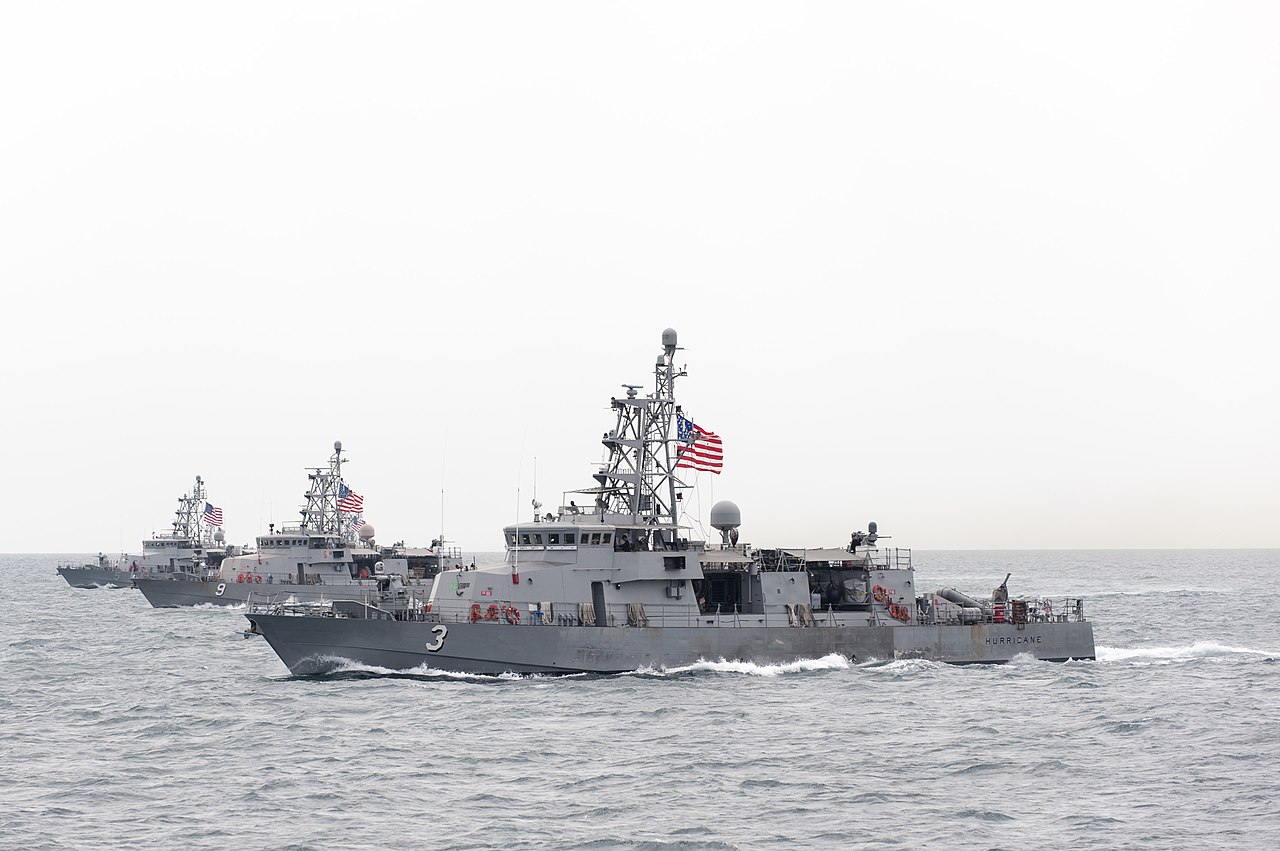
The U.S. Navy Cyclone-class coastal patrol ships assigned to Patrol Coastal Squadron 1 (PCRON 1), USS Hurricane (PC-3), USS Chinook (PC-9) and USS Typhoon (PC-5), transit in formation during a divisional tactics exercise in the Persian Gulf. PCRON 1 was deployed to the U.S. 5th Fleet area of responsibility supporting maritime security operations and theater security cooperation efforts.

2001  Six U.S. Navy Cyclone-Class patrol coastal warships were assigned to Operation Noble Eagle on November 5, 2001.  This was the first time since World War II that U.S. Navy ships were employed jointly with the U.S. Coast Guard to help protect our nation’s coastline, ports, and waterways.

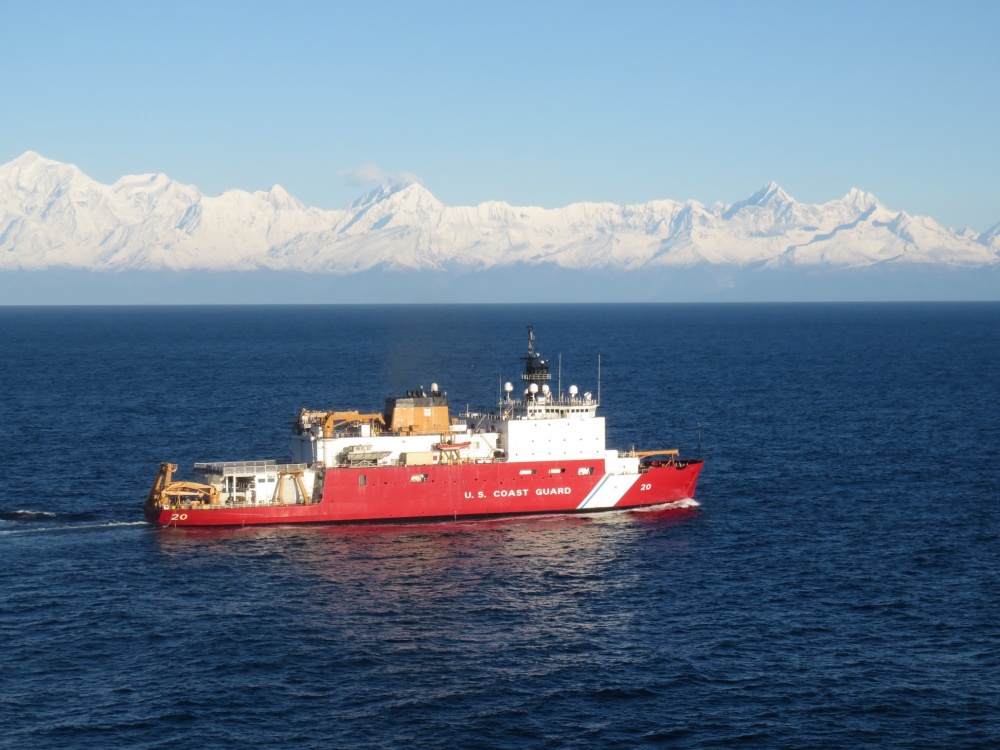
2013  USCGC Healy moored in Seattle, Washington, after completing a 117-day deployment in the Bering Sea, Chukchi Sea, Beaufort Sea, and Arctic Ocean.  During that time, Healy’s crew of 88 successfully conducted three science missions and one Coast Guard mission to further the nation’s scientific knowledge of the Arctic.  The first science mission was a multidisciplinary study sponsored by the Bureau of Ocean Energy Management 90 miles west of Barrow, Alaska, near Hanna Shoal.  Science members collected pelagic and benthic chemical and biological samples, observed physical oceanographic properties, and analyzed the data to establish an ecological baseline for the highly productive and biodiverse area.  The second science mission was a study sponsored by the National Science Foundation (NSF) along the North Slope in the Beaufort Sea and in Canada’s Amundsen Gulf.  The science party focused on identifying geological evidence of a massive flood near the Mackenzie River that occurred about 13,000 years ago and had profound effects on global climate.  The third mission was sponsored by the Coast Guard Research and Development Center and took place near and in the ice pack.  This mission’s focus was to assess the ability of current technologies to respond to oil spills in the Arctic.  The technologies included an unmanned aerial system, an unmanned underwater vehicle, an oil recovery skimmer, and a remotely operated vehicle.  The fourth science mission of the deployment was sponsored by NSF and took Healy north of Barrow on the North Slope and as far east as Amundsen Gulf.  The primary mission objectives were to recover, service, and redeploy a series of scientific moorings anchored to the seafloor.