This Day in Coast Guard History, November 3

Based on the Coast Guard Historian’s timeline, https://www.history.uscg.mil/research/chronology/
With inspiration from Mike Kelso

1883  The keeper and crew of the Smith’s Island Station, Virginia (Fifth District), saw a small schooner flying a signal near Isaac Shoal, five miles away from the station.  They went out to her and found on board the captain of a sloop that wrecked the night before several miles from land.  He had succeeded in swimming to a bar near the beach, where he was picked up by the crew of the schooner.  Finding him suffering from exposure they signaled for assistance.  The lifesaving crew applied bottles of hot water and resuscitated him.  They then landed him in the surfboat and cared for him for six days until he was sent to his home.

“Enhancing Domain Awareness in the Arctic” –Third Fleet

A U.S. Navy P-8A Poseidon takes off at Joint Base Elmendorf-Richardson, Alaska, Sept. 14, 2024. The P-8 Poseidon aircrew assigned to Patrol Squadron (VP) 9 and a U.S. 3rd Fleet Naval and Amphibious Liaison Element (NALE) supported joint and bi-national forces from Alaskan North American Aerospace Defense Command Region and Alaskan Command during Operation POLAR VORTEX by providing maritime domain awareness in conjunction with the 611th Air Operations Center air component to provide domain awareness during operations and exercises in remote regions of Alaska and the Arctic. (U.S. Air Force photo by Senior Airman Quatasia Carter)

Below is a 3rd Fleet press release. Notably missing is any mention of the Coast Guard, that might be understandable, but I have also seen no Coast Guard news release about participation in Operation POLAR VORTEX. If you are doing Maritime Domain Awareness anywhere around Alaska, you would think the Coast Guard would be involved.


Oct. 28, 2024

Enhancing Domain Awareness in the Arctic

By Tech. Sgt. Donald Hudson

During Operation POLAR VORTEX, a Naval and Amphibious Liaison Element (NALE) led by U.S. 3rd Fleet and supported by U.S. Fleet Forces was embedded into the bi-national Alaskan North American Aerospace Defense Command (NORAD) Region at Joint Base Elmendorf-Richardson, Alaska.

The NALE is primarily a function of the Navy Reserve, with Reserve personnel filling roughly 98 percent of NALE billets, given the operational tempo of this unique work. NALE Sailors train in mobilization to billet (MOB to-billet) positions and generally deploy on 90 to 270-day orders, responding both to planned operations and emergent crises, including training exercises, freedom of navigation operations, and humanitarian assistance and disaster relief. MOB-to-billet is the activation (other than for training) of SELRES Sailors to serve in the authorized and funded manpower billet at the command to which they are permanently assigned.

NALE units are attached to U.S. Fleet Forces Command, U.S. Pacific Fleet, U.S. Naval Forces Europe and Africa, and most numbered fleets.

While in Alaska, the NALE worked alongside U.S. Air Force and Royal Canadian Air Force (RCAF) members in the 611th Air Operations Center (AOC) to increase domain awareness in the Arctic region during Operation POLAR VORTEX by instantly linking maritime and air domain awareness.

“The situational awareness the NALE has provided is the most maritime awareness the AOC has had in the 14 years I’ve been here,” said Alaska Air National Guard Col. Jeff Smith, deputy commander, 611th AOC. “It’s been great to see the coordinated efforts between air and maritime domains.”

By co-locating, the NALE and 611th AOC were able to coordinate information instantly to the Joint Force Air Component Commander (JFACC) and provide a detailed real-time operating picture from the surface to air across some of the most remote operating areas in Alaska.

The NALE worked to seamlessly integrate their expertise of maritime domain awareness and employ a Navy P-8 Poseidon alongside joint and bi-national air assets. The cooperation increased tactical performance of joint forces validating command and control and tactical execution of mission objectives between various aircraft including exercising simulated air-to-surface strikes.

“The NALE has been essential to air operations,” said RCAF Brig. Gen. David Moar, deputy commander, Alaskan NORAD Region. “They were key in synchronizing air operations with naval air assets and providing information to enable the JFACC to coordinate and support the maritime component.”

3rd Fleet operations in U.S. Northern Command’s (USNORTHCOM) area of responsibility throughout the Gulf of Alaska aligned with Commander, U.S. Pacific Fleet objectives to demonstrate resolve and credible deterrence in defense of the homeland in the area. The operations also supported USNORTHCOM and NORAD’s mission of homeland defense, aerospace warning and control, and preserving a stable Arctic region in cooperation with U.S. Allies and partners.

“The NALE is an essential part of integrating the Maritime Operations Center (MOC) and AOC to provide multi-domain awareness to both Component Commanders,” said U.S. Navy Capt. Chris “Turtle” Turl, NALE director. “By coordinating information between each Commander’s guidance, the NALE facilitates the planning and execution of the mission to effectively meet the commander’s intent.”

NALE Sailors regularly engage in training exercises, freedom of navigation operations, and humanitarian assistance and disaster relief to enable better integration between joint air assets. The NALE provide the necessary face to-face contact among planner, commanders and staff to ensure mutual understanding, unity of effort and reduce friction between components.

Operating across the vast distances and remote areas in the Arctic comes with many operational hurdles to overcome such as harsh weather and sea conditions causing increased risk to aircrews should an incident occur. Enhancing communication between joint forces is essential to meet the mission while overcoming obstacles and lowering operational risks.

Through joint and bi-national teamwork the NALE and 611th AOC were able to maximize domain awareness and more effectively employ air assets saving time, and costs while reducing risk and increasing efficient use of tactical air assets and manpower.

This Day in Coast Guard History, November 2

Based on the Coast Guard Historian’s timeline, https://www.history.uscg.mil/research/chronology/
With inspiration from Mike Kelso

1820  The Revenue cutter Louisiana captured five pirate vessels during a cruise from Florida to Cuba.

1881  A rowboat with two men and a young girl was going down the Manistee River towards the harbor.  It capsized about a hundred feet abreast of Station No. 5, Eleventh District, Lake Michigan.  One of the men swam to the dock and was helped out by the life-saving crew.  The remaining man tried to swim with his daughter on his back. She began to struggle violently and dragged him under.  The keeper pulled off his outer clothing, swam out, caught the father and daughter as they were sinking for the third time, and succeeded in bringing them to the dock where they were helped up by the rest of the crew.

1929  The U.S. Marine Corps service football team, the “Bulldogs,” defeated the Coast Guard team, the “Bears,” in the annual Presidents Cup 19-0.  The game was played at Clark Griffith Stadium in Washington, D.C.  The Coast Guard team was in fact the Destroyer Force football team of New London, Connecticut which had been “nationalized” to represent the entire service.

USCGC Alert (WMEC-630)

2014  CGC Alert returned to Astoria, Oregon, following a counter-drug patrol in the eastern Pacific Ocean off the coast of South and Central America.  Alert’s crew members successfully conducted a 70-day patrol traveling more than 12,600 miles scouring the eastern Pacific Ocean for illicit traffickers using their two small boats and armed helicopter from Coast Guard Helicopter Interdiction Tactical Squadron from Jacksonville, Florida.  Alert’s crew interdicted three suspected vessels, detained 15 suspected smugglers, and seized over 3,180 pounds of cocaine.

“The Caribbean HMS Trent sets record for drug busts in Caribbean deployment” –The Watch

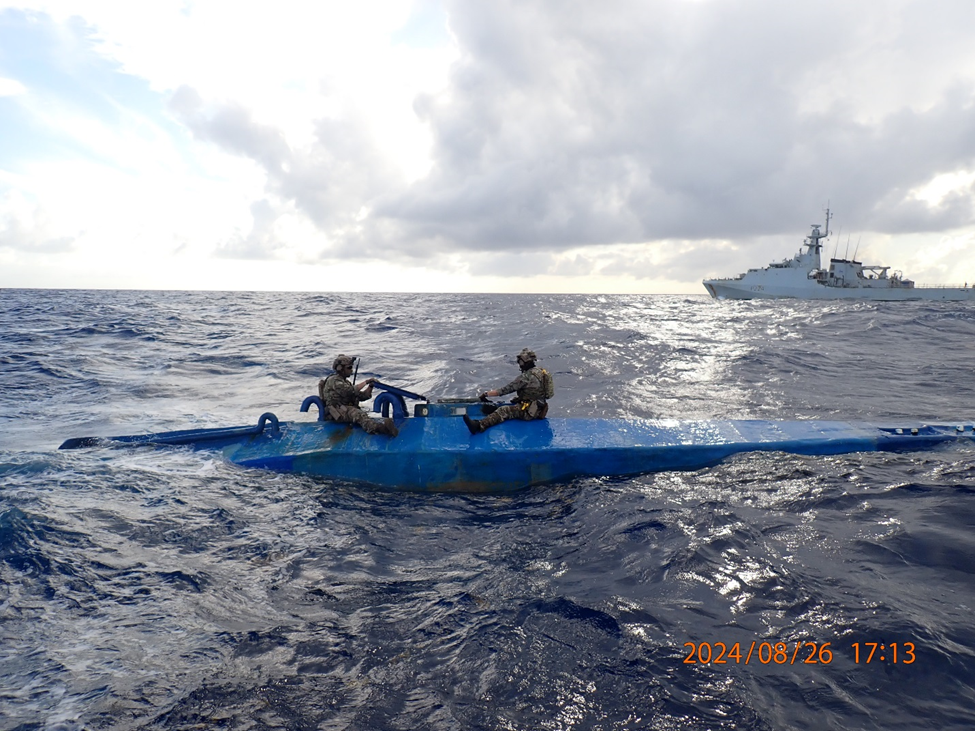
Crew members form U.S. Coast Guard Tactical Law Enforcement Detachment (LEDET) 111 and British Royal Navy team embarked aboard HMS Trent (P244) interdicts a semi-submersible drug smuggling vessel in the international waters of the Caribbean Sea, Aug. 26, 2024. Three suspected smugglers and 1,239 pounds of illegal narcotics from this interdiction were transferred to federal custody for prosecution by the U.S. Department of Justice. (Courtesy image from United Kingdom Royal Navy)

Below is a story from NORTHCOM’s online magazine, “The Watch.” HMS Trent is roughly equivalent to a Medium Endurance Cutter and was operating with a US Coast Guard LEDET on board. You may note that the incident in the photo above occurred after the incident noted in the Watch article. It was actually the eighth intercept by HMS Trent.


THE WATCH STAFF

A U.K. Royal Navy vessel conducted the sixth drug seizure in its 2024 deployment to the Caribbean, confiscating $729 million in illegal drugs. The HMS Trent, a River-class off-shore patrol vessel, has been deployed to the Caribbean to curtail illegal trafficking in migrants, drugs, guns and other contraband as the instability in Cuba, Haiti and Venezuela has worsened. The ship’s mission is to increase security in the region, including overseas territories such as the British Virgin Islands, the Cayman Islands, and the Turks and Caicos Islands.

“This recent operation highlights the Royal Navy’s vital role in maintaining maritime security and upholding international law in the region,” Armed Forces Minister Luke Pollard said in a Royal Navy news release. “We are sending a clear message to drug traffickers that nowhere is safe and we will disrupt and dismantle their operations wherever they are in the world.”

A recent bust occurred on August 8, 2024, after the Trent was alerted to suspected smugglers in a speedboat about 120 nautical miles south of the Dominican Republic. A U.S. maritime patrol aircraft assisted in tracking the fleeing boat until Royal Marines and U.S. Coast Guard personnel aboard the Trent subdued the craft. The smugglers threw 506 kilograms of cocaine overboard, but all the contraband was recovered along with three men who were turned over to U.S. authorities. “Every member of my team can be proud of another significant haul — the sixth this year,” said Tim Langford, HMS Trent commander.

The Trent’s 2024 deployment included seizures of 6,995 kilograms of drugs as part of a multinational cooperative effort with the Coast Guard and the Joint Interagency Task Force (South). “These successful interceptions disrupt Transnational Criminal Organisations and underscore the Royal Navy’s vital role in maintaining maritime security and upholding international law both at home and abroad,” the release stated. “The ship continues to patrol the Caribbean as a reassuring presence to British Overseas Territories during hurricane season (from June to November) and to stem the flow of illegal cargo through the region.”
The Trent replaced the HMS Dauntless, which seized more than $250 million of cocaine in the region in 2023. Last year, the Trent sailed to the Gulf of Guinea to train with African allies, aiding the fight against maritime crime, including piracy and armed robbery, according to Naval-Intelligence.com, a naval affairs news site. The African deployment included the exercise Grand Africa Nemo (GANO), a multinational exercise that includes nations within the Gulf of Guinea and West Africa and international countries such as the U.S. and France. The focus of GANO was to test and develop African nations’ responses to maritime security threats such as piracy and drug smuggling, according to the website.

“U.S. Coast Guard, Canadian forces, and international partners wrap-up Operation North Pacific Guard 2024 ”–D17

A foreign fishing vessel pulling a shark aboard while conducting shark finning operations in the North Pacific, May 12, 2024. Regional Fisheries Management Organizations regulate the process of shark finning through Conservation and Management Measures. These measures require fully utilizing retained catches of sharks and limits on amounts of fins onboard in relation to those sharks. (U.S. Coast Guard courtesy photo)

Below is a news release from District 17 regarding IUU Fisheries enforcement involving not only the US Coast Guard but also Canada, Japan, and S. Korea.

Also thought the video immediately below might be of interest. The Canadian Coast Guard Ship (CCGS) Sir Wilfrid Laurier that was part of the operation looks like a buoy tender, but it is more than twice as large as USCG buoy tenders, larger in fact than the National Security Cutters by full load displacement. She was commissioned in 1986 and is capable of light icebreaking, operating in the Arctic, and has a helicopter deck and collapsable hangar.

The US Coast Guard has started using buoy tenders to do fisheries and to support and resupply fast response cutter including operations in the Western Pacific and Eastern Pacific drug transit areas.

I would not be surprised if the Coast Guard’s next class of buoy tenders were not also designed as similar larger, long range, multipurpose ships but unlike the Canadian ships, armed and faster than 15.5 knots.

USCGC Juniper, oldest of US WLBs is 28 years old and since it seems to take ten years from the initiation of a shipbuilding program to delivery, it is not too early to start thinking about the next generation. An early start might allow us to produce a proven tested prototype before we need to contract to replace the entire class.


Oct. 29, 2024

JUNEAU, Alaska – The U.S. Coast Guard, Canadian forces, and international partners wrap-up Northern Pacific counter Illegal, Unreported, and Unregulated (IUU) Fishing patrol, Operation North Pacific Guard 2024.  

Operation North Pacific Guard is an annual multi-mission effort between international partners that provides surface and air patrols and shares intelligence that guides patrol assets to detect and intercept illicit fishing activity.

The joint mission included U.S. Coast Guard Cutter Midgett, U.S. Coast Guard Air Station Kodiak, U.S. Coast Guard District Seventeen, the United States National Oceanic and Atmospheric Administration, Fisheries and Oceans Canada, the Canadian Coast Guard Ship (CCGS) Sir Wilfrid Laurier, Japan Coast Guard, Fisheries Agency of Japan, and Korea Coast Guard.

As a result of the high seas patrols, air surveillance, and electronic monitoring, the joint crews identified potential instances of illegal harvesting of shark fins and dark vessels, a term for vessels that intentionally turn off their monitoring systems.

U.S. Coast Guard Cutter Midgett patrolled the North Pacific for 65 days and conducted 21 high-seas boardings and inspections which detected four potential violations of conservation and management measures under the Western and Central Pacific Fisheries Commission (WCPFC) and North Pacific Fisheries Commission (NPFC).

U.S. Coast Guard Air Station Kodiak HC-130J Super Hercules airplane crewmembers conducted five 12-day deployments near Yokota Air Base and Misawa, Japan and observed 411 vessels. The crews observed potential shark finning violations and improper fishing vessel markings on multiple vessels.

“IUU fishing is a complex and global problem that calls for an international unified response,” said Capt. Ryan Waters, chief of enforcement for the Coast Guard’s Seventeenth District. “North Pacific Guard is a prime example of a strong, sustained multi-lateral partnership to maximize the impact of collective counter-IUU fishing enforcement efforts and promote the rule of law at sea.”

IUU fishing is detrimental to long-term, stable national security, international relations, and global economics. Up to 27 million tons of fish are caught illegally each year worldwide. The U.S Coast Guard leads U.S. Government efforts in multinational campaigns like North Pacific Guard that counter IUU fishing at-sea, uphold global rules-based order, and promote economic prosperity.

For breaking news, follow @USCGAlaska on X (formerly twitter)

This Day in Coast Guard History, November 1

Based on the Coast Guard Historian’s timeline, https://www.history.uscg.mil/research/chronology/
With inspiration from Mike Kelso

November 1

1843  Secretary of Treasury Spencer issued new “Rules and Regulations for the governing of the Revenue Cutter Service” that centralized control of personnel, promotion and discipline issues under the Revenue Marine Bureau, but left direct superintendence and direction of the individual cutters with the local Collectors of Customs.

1848  The Revenue cutter C. W. Lawrence weighed anchor off Washington, D.C. and set sail down the Potomac River.  The cutter was commanded by Captain Alexander V. Fraser, the first chief of Revenue Marine Bureau, who left that position to take command of the new brig-rigged cutter.  He was ordered to proceed on an epic voyage around Cape Horn via the Hawaiian Islands to San Francisco where the cutter arrived safely on October 31 the following year.

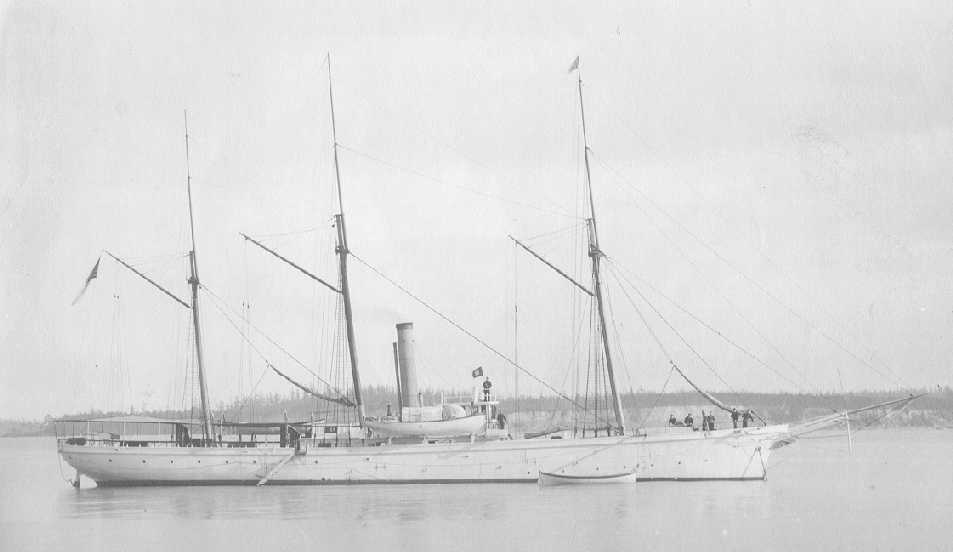
The United States Revenue Cutter Grant, undated photograph.

1903  The first wireless message was received on board a Revenue cutter.  On this date in 1903 USRC Grant received a message transmitted by a shore station installed in the U.S. Customs building at Port Townsend, WA.  The experimental use of a wireless set to coordinate the movements of a cutter at sea with shore-based stations proved to be a success and led to the wide-spread use of radio by all cutters.  The equipment used ashore and on board Grant was installed by the Pacific Wireless Telegraph Company.

1941  President Franklin D. Roosevelt’s Executive Order 8929 transferred the Coast Guard to the Navy Department.

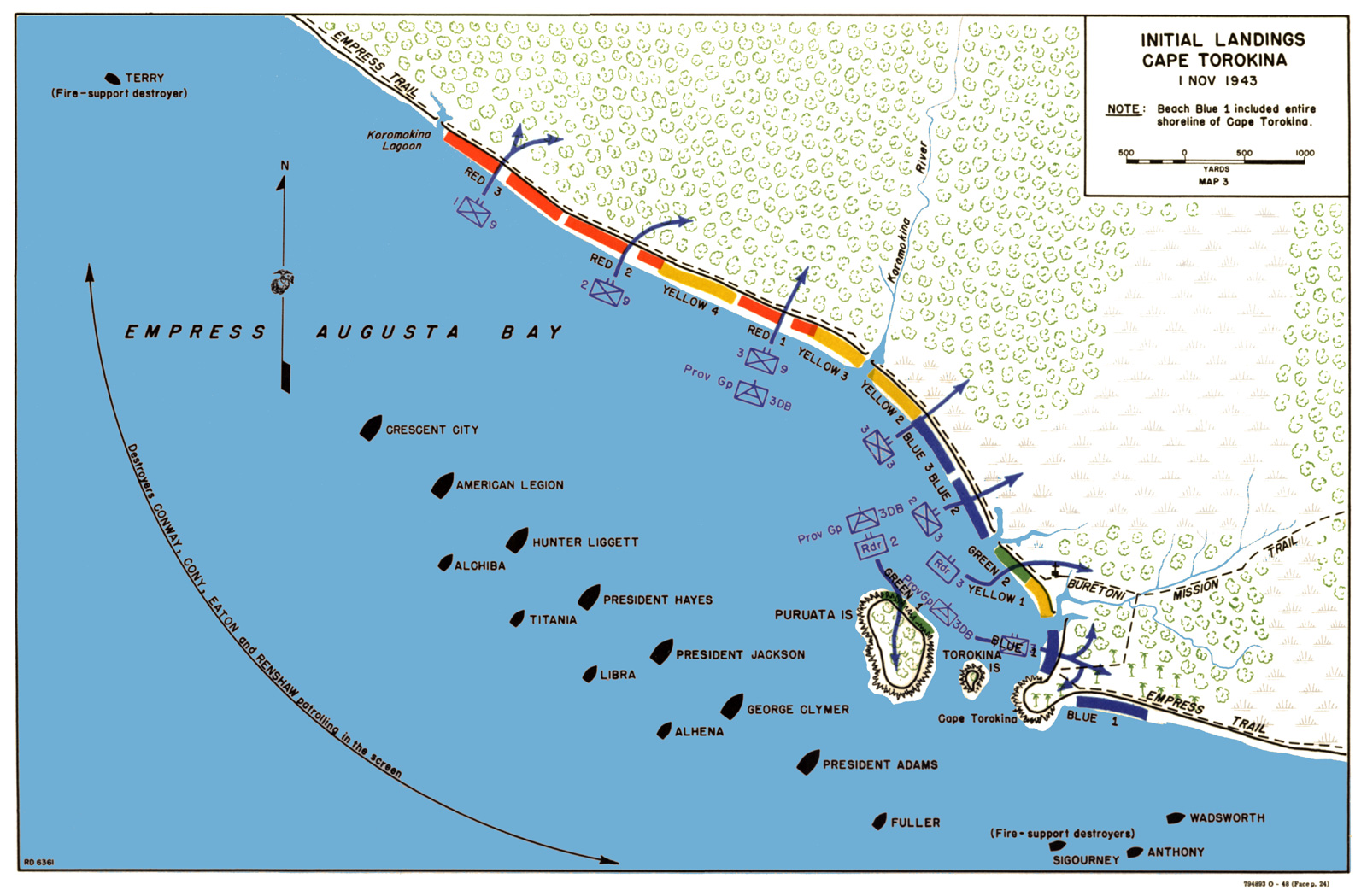
Map depicting the initial US landings on Bougainville, 1 November 1943

1943  The invasion of Bougainville, Solomon Islands, commenced.  Coast Guard units participated in the landings.

1949  The authority to reestablish the Women’s Reserve of the Coast Guard Reserve (SPARS), approved by the President on August 4, 1949, became effective.

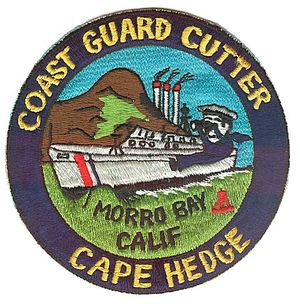
1976  A multi-agency task force investigation led by the San Luis Obispo Sheriff’s Department, and including the Los Angeles Police Department, DEA, Customs and the Coast Guard resulted in the seizure of the Dong Phat on this date in 1976.  CGC Cape Hedge seized the vessel and arrested the four persons on board after the vessel delivered contraband to a shore-side connection.  ON the beach other members of the task force arrested 10 men and seized 200 boxes of Thai sticks with a street value estimated in excess of $30 million.

1984  The largest marijuana bust to date in West Coast history took place when CGC Clover seized the 63-foot yacht Arrikis 150 miles southwest of San Diego.  The yacht was loaded with 13 tons of marijuana. (I was PACAREA Current Ops when this happened. Our intel people made it happen.)

2013  The Coast Guard completed Arctic Shield 2013.  Arctic Shield focused on Western Alaska and the Bering Strait and consisted of a three-pronged approach of operations, outreach and an assessment of the Coast Guard’s capabilities in the Arctic. Several cutters were deployed in support of the operation, including CGCs Polar Star, HealyWaesheNaushon, and SPAR.  The crews aboard the various vessels conducted the Coast Guard’s statutory missions while providing an operational presence and command and control capability in an area where the Coast Guard lacked the permanent infrastructure of a coastal sector.  Coast Guard C-130 Hercules airplane crews were strategically positioned at Eielson AFB in Fairbanks and a forward operating location with MH-60 Jayhawk helicopter crews was established at the Alaska National Guard hangar in Kotzebue to conduct search and rescue, law enforcement, and maritime domain awareness flights.  Arctic Shield capability assessments included the deployment of a vessel of opportunity skimming system aboard the cutter SPAR and a Canadian coast guard vessel.  Healy conducted their science missions and partnered with the Coast Guard Research and Development Center to evaluate equipment. Personnel tested two small unmanned aircraft systems, an unmanned underwater vehicle, a remotely operated vehicle and a Helix skimmer equipped for oil recovery on ice.  Polar Star tested the overall readiness of the icebreaker.  Naushon completed a historic patrol to the region and proved that a Coast Guard patrol boat could operate in the area “in the right season and with proper support,” according to RADM Thomas Ostebo, 17th District Commander.

This Day in Coast Guard History, October 31

Based on the Coast Guard Historian’s timeline, https://www.history.uscg.mil/research/chronology/
With inspiration from Mike Kelso

SS Puerto Rican under tow October 31, 1984, about ten-thirty in the morning, in position approximately 15.5 miles southwest of Point Bonita. US Coast Guard Photo.

1984  The tanker Puerto Rican exploded outside of San Francisco Bay.  Coast Guard units responded.

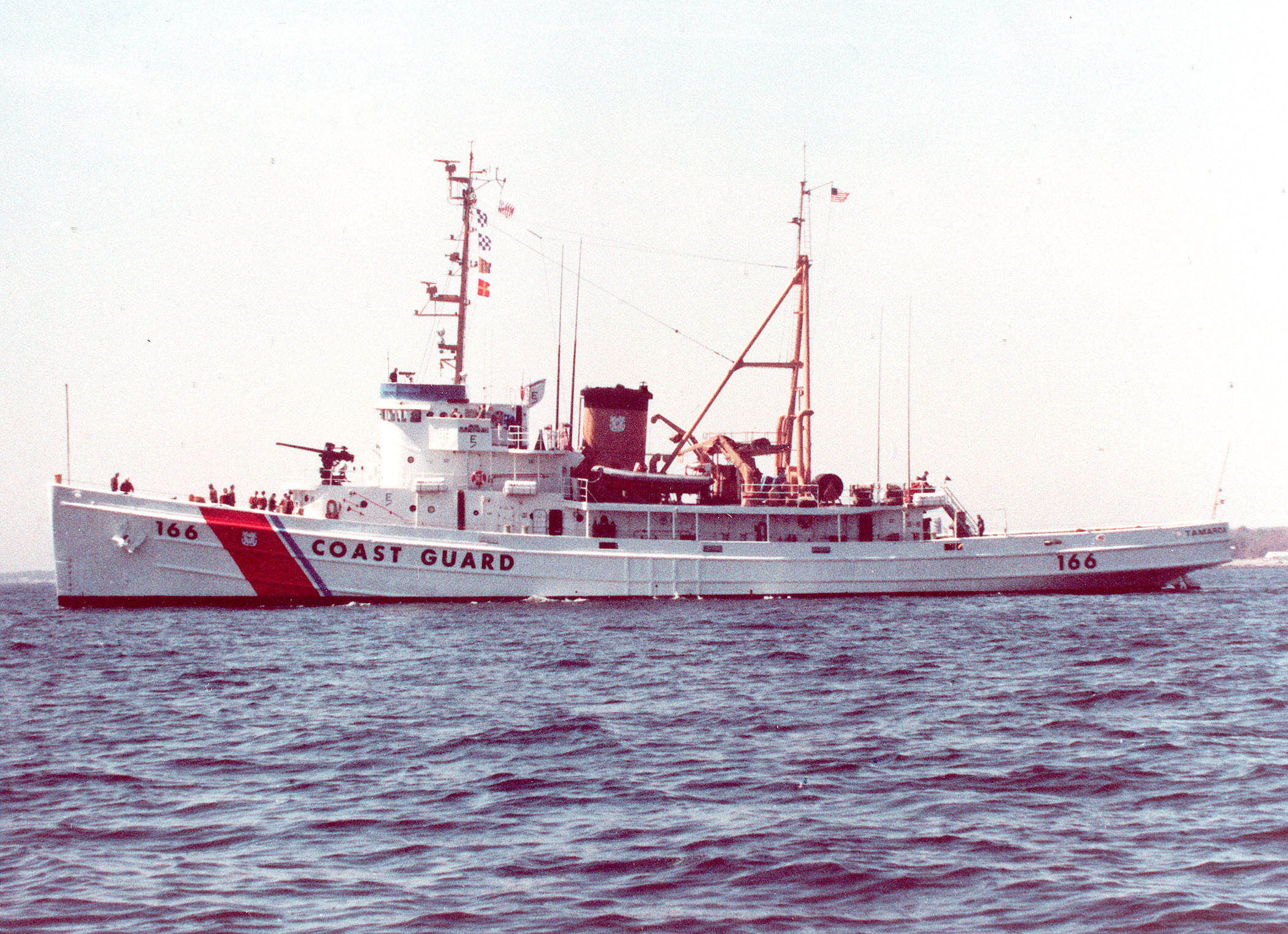
Boston, MA (May 1)–The Coast Guard Cutter Tamaroa (WUEC 166), played a major role in the rescue of an Air National Guard helicopter crew, deployed from Suffolk County, Long Island to assist Coast Guard search and rescue assets. The helicopter was forced to ditch in heavy seas. Tamaroa rescued four and searched vainly for a fifth crewman. U.S. COAST GUARD PHOTO

1991  During an extremely severe winter storm CGC Tamaroa rescued four of five Air National Guard crewmen from an ANG H-60 that had ditched south of Long Island due to fuel exhaustion (the fifth crewman, a pararescue jumper, was never found).  Tamaroa had been attempting to rescue the crew of the sailing vessel Satori the previous day (the three on board Satori were rescued safely by HH-3F CG-1493–see October 30 entry above) when the cutter was diverted to assist the Air National Guard air crew.  Tamaroa was awarded the Coast Guard Unit Commendation, and the events were chronicled in the best-selling book and movie “The Perfect Storm.”

Two USCG cutters (Monomoy (foreground) and Spencer) searching for survivors from EgyptAir Flight 990.

1999  Egypt Air Flight 990 crashed about 60 miles southeast of Nantucket.  Coast Guard units, including CGCs MonomoySpencerReliance, Bainbridge Island, Juniper, Point Highland, Hammerhead, a HC-130 from Air Station Elizabeth City, and an HH-60 from Air Station Cape Cod searched unsuccessfully for any survivors.  All 217 persons on board were killed in the crash.  Coast Guard units then assisted in the recovery effort.

2012  The Coast Guard completed Arctic Shield 2012 after a summer season of sustained operations and outreach efforts in the Arctic.  Arctic Shield 2012 focused on operations, outreach and an assessment of the Coast Guard’s capabilities above the Arctic Circle.  The forward operating location in Barrow consisted of two Kodiak-based MH-60 Jayhawk helicopters with supporting air, ground and communications crews.  The Coast Guard deployed several surface assets to the Arctic including the CGC Bertholf, that provided a persistent operational presence and command and control capability in an area where the Coast Guard lacked the permanent infrastructure of a coastal sector.  Also deployed were two light-ice capable 225-foot sea-going buoy tenders, a 282-foot medium endurance cutter, and a 378-foot high endurance cutter were also deployed to the region to increase offshore operational capability, ensure the safety of mariners, patrol international borders and provide additional search and rescue capabilities.

USCGC Stratton off Unalaska

2014  The Coast Guard concluded Arctic Shield 2014 after a successful season that included deployments of personnel and assets to the Seward Peninsula, Bering Strait, and the Northern Alaska Continental Shelf to conduct a broad range of Coast Guard statutory missions.  Arctic Shield 2014 included deployments by CGCs StrattonHealySPARAlex Haley, and MH-60 Jayhawk helicopters deployed to a forward operating location in Barrow, tribal engagements and assistance, and a range of marine safety activities in many Arctic communities.  Arctic Shield efforts included a first-ever MH-60T Jayhawk helicopter deployment to Stratton in the Arctic Ocean.  The Arctic Shield team executed several challenging and high-visibility search and rescue cases, such as the dynamic rescue of the sailing vessel master aboard the Altan Girl beset in ice northeast of Barrow, and the medevac of a crewmember from the Korean polar research vessel Araon.  Operation Gold Nugget prevention and enforcement activities included 54 at-sea boardings and 36 safety inspections.  The Coast Guard Research and Development Center tested pollution response capabilities and successfully celebrated the first landing of a UAV on a Coast Guard ice breaker.  The Coast Guard National Ice Rescue School provided critical ice rescue training to the three largest Arctic communities.  Prevention activities and outreach spanned 29 villages, training over 2800 children in Kids Don’t Float programs and three mass rescue exercises.

This Day in Coast Guard History, October 30

Based on the Coast Guard Historian’s timeline, https://www.history.uscg.mil/research/chronology/
With inspiration from Mike Kelso

USCGC Chincoteague (WAVP-375) in 1964, date unknown. US Coast Guard photo

1956  CGC Chincoteague, manning Ocean Station Delta in the North Atlantic, received a distress message that the German freighter Helgs Bolten was taking on water and wished to abandon ship as soon as possible.  After reaching the scene some hours later, the cutter found that the high winds and 25-foot seas made it impossible to launch lifeboats.  Two inflatable lifeboats, therefore, were passed by shot line to the freighter, and the 33 crewmen aboard were removed to the cutter unharmed. Chincoteague then stood by the drifting vessel for seven days, while commercial tugs made salvage attempts.  All of the survivors returned on board the cutter to Norfolk, Virginia, while a tug towed Helg Bolten to the Azores.

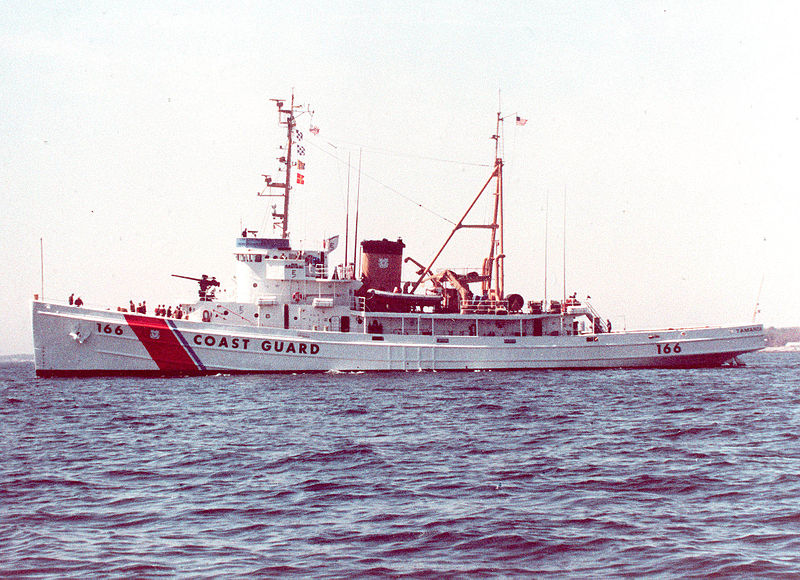
USCGC Tamaroa (WMEC-166), underway 1 May 1990, one year before she would sail into a vicious Halloween storm that later was dubbed “The Perfect Storm.” Her crew saved seven lives then. US Coast Guard photo.

1991  CGC Tamaroa attempted to rescue the three persons on board the disabled sailing vessel Satori 75 miles south of Martha’s Vineyard during a severe winter storm.  Tamaroa launched an RHI which was damaged by the tossing Satori as it drew near the sailing vessel but a Coast Guard  HH-3F, CG-1493, also participating in the rescue, hoisted the three on board Satori and the RHI’s crew to safety.  Tamaroa was then diverted to rescue the crew of a downed Air National Guard H-60.  (See October 31 entry below).

USCGC DILIGENCE

2014  CGC Diligence returned to her homeport of Wilmington, North Carolina following a 45-day patrol in the Caribbean Sea. While on patrol, Diligence served as the operational commander for all Coast Guard assets supporting Operation Southeast Watch in the Windward Pass between Cuba and Haiti.  As the operational commander, Diligence maintained an overt presence in the Windward Pass to prevent and respond to any overloaded or unseaworthy vessels with persons attempting to reach the United States shoreline.  The crew aboard Diligence also conducted counter-narcotics operations in support of Operation Unified Resolve in San Juan, Puerto Rico.  Crew members conducted two inspections of vessels suspected of smuggling narcotics and patrolled the region to counter the flow of illicit traffic.  Under Operation Southeast Watch, the Coast Guard worked alongside interagency and international partners to prevent and respond to illegal maritime migration in the Caribbean Sea and Florida Straits. Under Operation Unified Resolve, the service placed special emphasis on targeting the primary and secondary flow of illicit drugs from South America to Puerto Rico and the U.S. Virgin Islands.  Operation Unified Resolve initially began as a surge operation, but in October 2013, the Coast Guard made it a standing operation and established a new baseline for drug interdiction operations in support of Puerto Rico and the U.S. Virgin Islands.

Coast Guard Cutter Spencer approaches the pier at Coast Guard Yard in Baltimore. U.S. Coast Guard photo.

2015  CGC Spencer returned to its homeport of Boston after a 65-day patrol of the Caribbean Sea. Spencer conducted several search and rescue cases as well as counter narcotics and migrant interdiction operations.  As part of Operation Martillo, Spencer intercepted four go-fast vessels suspected of trafficking drugs, and directly contributed to the seizure of 1,000 kilograms (2,204 pounds) of marijuana and 1,677 kilograms (3,697 pounds) of cocaine worth approximately $50 million.  In addition, 11 suspected narcotic smugglers were taken into custody and were transferred to the offices of the United States Attorneys for prosecution.  In Colón, Panama, Spencer’s boarding teams partnered with the National Aero-Naval Military Service of Panama to conduct a three-day joint boarding of a freighter suspected of smuggling narcotics.  In mid-October while sailing the passage between Cuba and Mexico, Spencer’s crew rescued 24 passengers from a disabled vessel that was caught in 12-15-foot seas. Spencer’s crew was able to safely disembark the Cuban migrants as their vessel ran out of fuel and the sea state worsened.  Martillo, which is Spanish for hammer, was a U.S., European, and Western Hemisphere effort to target illicit trafficking.

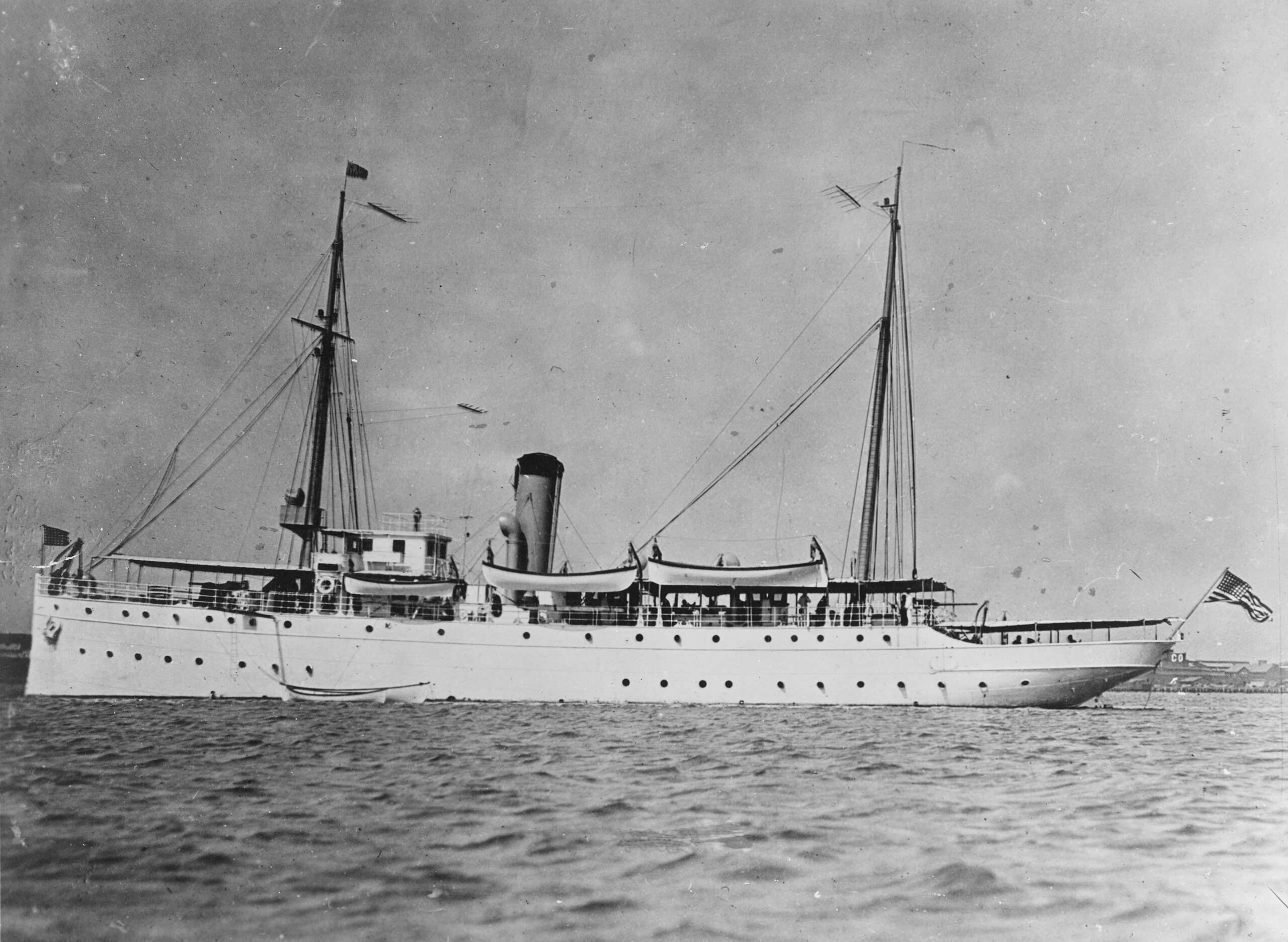
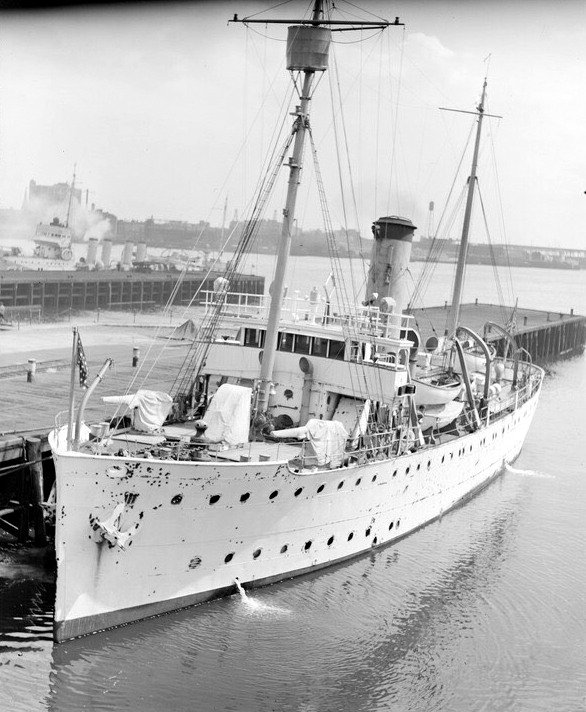
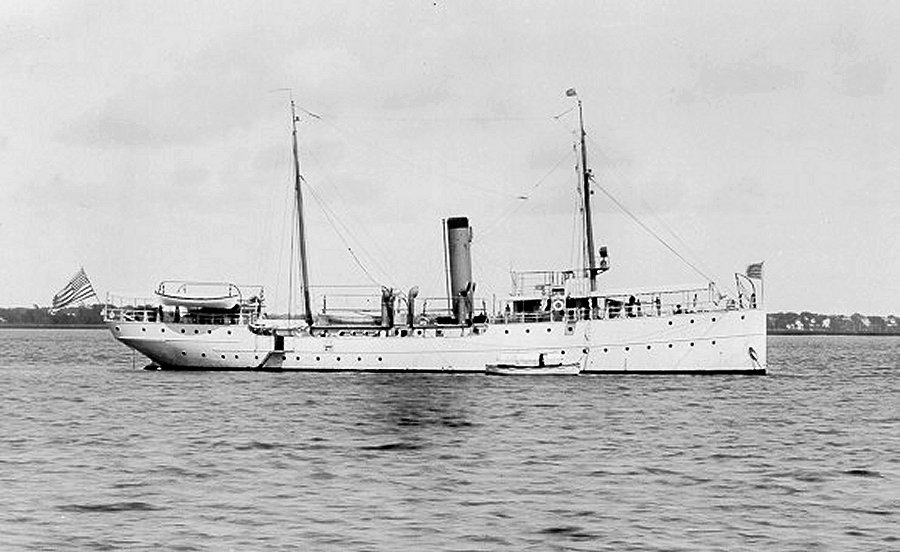
Turn of the Last Century Cutters, USRC to USCGC


USRC Seminole, America’s Cup Races 1901, Library of Congress

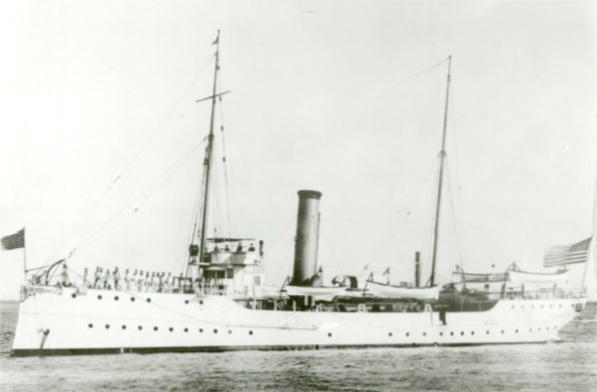
I have seen relatively few photos of cutters from the turn of the century from 19th to the 20th and most of those were of the ships stopped or in port. I ran across the first three photos you see here of Seminole, Onondaga, and Gresham at the Historic Ship Geek Facebook page. and wanted to share them. (Thanks to Charley Seavey.) As you can see, when pushed, they pumped out a lot of black smoke. Several of these ships had interesting careers. I have linked additional information for each.

U.S.R.C. Onondaga, America’s Cup races, 1901. Library of Congress.

U.S.R.C. Gresham, flagship of the patrol fleet, America’s Cup races, 1901, Library of Congress.

A desire to provide a more complete picture prompted me to also post the few pictures I already had from this era and find more.

Six cutters from this era served as convoy escorts in European waters during the first World War, Seneca, TampaOssipeeManningYamacraw, and Algonquin (pictured immediately below).

USRC Seneca, 1908. Eleven Coastguardsmen were lost in an attempt to save the torpedoed steam ship Wellington.

USCGC Tampa (Coast Guard Cutter, 1912) photographed in harbor, prior to World War I. Completed in 1912 as the U.S. Revenue Cutter Miami, this ship was renamed Tampa in February 1916. On 26 September 1918, while operating in the English Channel, she was torpedoed and sunk by the German Submarine UB-91. All 131 persons on board Tampa were lost with her, the largest loss of life on any U.S. combat vessel during the First World War. U.S. Naval History and Heritage Command Photograph.

USCGC Ossipee Moored at the Boston Navy Yard in April, 1932, Boston Public Library, Leslie Jones Collection

May 12 1898, USRC Manning in engagement off Cabanas, Cuba. This is the only photo the Coast Guard Historian’s Office has on file showing a cutter in combat during the Spanish American War. Property of Lieut. G. L. Carden, R.C.S., Lotos Club, 558 Fifth Ave., New York City. Photo No. MVF-152 #10, Acc. 526

USCGC Yamacraw, c. 1914.

Algonquin, no caption/date; Neg. No. 148-2; Marine Photo Shop-Joe D. Williamson photo.

From Wikipedia: “President Woodrow Wilson signed Senate Bill 2337 on 28 January 1915 creating the United States Coast Guard through the merger of the United States Life-Saving Service with the United States Revenue Cutter Service. On that date the newly formed service had 25 sea-going cutters and 19 harbor tugs and launches and 270 stations. The bill authorized 4093 officers, warrant officers, and enlisted men. The service also consisted of one headquarters at Washington, D.C., 17 regional commands, four depots and one academy. Source: King, Irving H. (1996). The Coast Guard Expands, 1865–1915: New Roles, New Frontiers. Naval Institute Press, Annapolis, Maryland. ISBN 978-1-55750-458-6https://archive.org/details/coastguardexpand0000king/mode/2up

Some of the ships of this period continued to see service through WWII.

n 1914, USRC Cutter McCulloch was ordered to Mare Island Navy Shipyard where the cutter’s boilers were replaced, the mainmast was removed and the bowsprit shortened. In 1915, McCulloch became a US Coast Guard Cutter when the US Revenue Cutter Service and US Life-Saving Service were combined to create the United States Coast Guard. (Credit: Gary Fabian Collection)

USCGC Unalga at San Juan, PR, circa 1943, with two 3″/50 guns fore and aft. In 1941 the two 3″/50s were mounted abreast on the forecastle. The decks could not support a centerline gun, so in 1944 the forecastle was strengthened
Photo “U.S. Coast Guard Cutters & Craft of World War II” by Robert L. Scheina

USCGC Tallapoosa, 7 April 1944, This photo affords an excellent view of her armament. She mounts two single 3″/50s fore and aft, two single 20mm guns elevated forward of the aft 3″/50, two Mousetrap ASW rocket launchers on the forecastle, four K-guns on the poop deck, and two long depth-charge tracks on the stern
Photo from “U.S. Coast Guard Cutters and Craft of World War II” by Robert L. Scheina

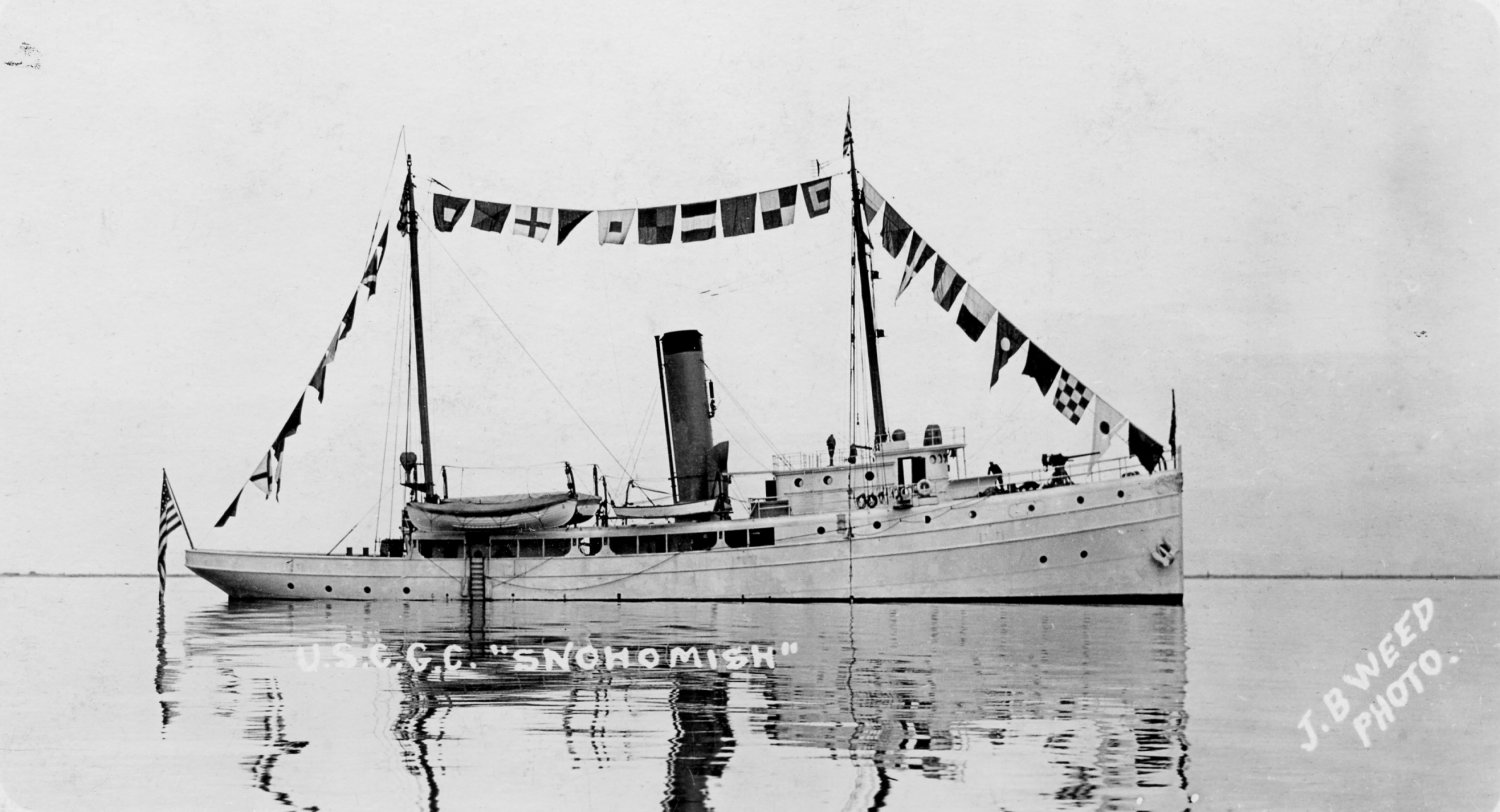
USCGC Snohomish (1908), Photo by J. B. Weed, From the collection of Arthur Heinickle

Wikipedia has an excellent list of Coast Guard cutters.


This Day in Coast Guard History, October 29

Based on the Coast Guard Historian’s timeline, https://www.history.uscg.mil/research/chronology/
With inspiration from Mike Kelso

1883 At a quarter before 4 o’clock In the morning the two surfmen on patrol from the Plum Island Station (Second District), below Newburyport, Massachusetts, discovered a vessel ashore on the south breaker at the entrance of Newburyport Harbor, about half a mile northeast of the station.  A signal was made to her that she was seen and the men hurried to the station and gave the alarm.  The boat reached her shortly after 4 o’clock.  She was the schooner Forest Maid with a crew of seven men bound on a fishing cruise.  While going out over the bar, the wind being light, she had been carried by the strong ebb tide on to the shoal.  The first thing done by her crew was to let go an anchor to hold her, but finding she continued to drive farther on they veered away.  They were disappointed, for she soon fetched up hard and fast with ninety fathoms of cable out.  As the water was still falling nothing could be done until the flood tide.  The life-saving crew remained on board and when the tide began to rise at 8 o’clock, commenced operations by heaving in on the cable.  The wind freshened considerably while they were at work, raising quite a swell, which caused the schooner to pound heavily.  They persevered, however, gaining a little every time she lifted on the seas, so that by 9 o’clock the schooner was safely afloat and on her way back into the harbor, apparently none the worse for the accident.

1965 Secretary of the Navy Paul Nitze requested additional Coast Guard patrol boats for patrol duties in Vietnam.

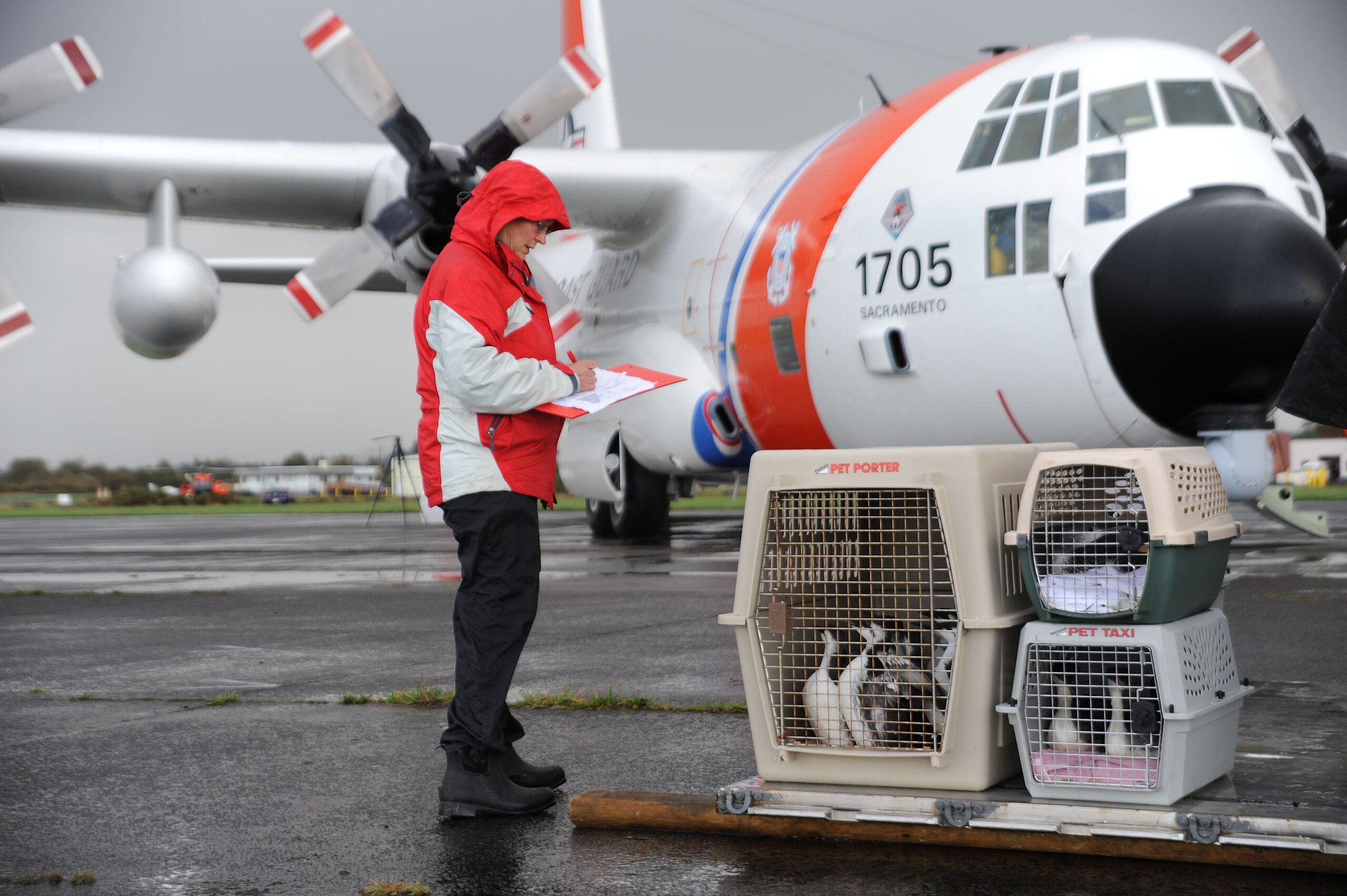
1705, the C-130 Hercules involved in 2009 mid-air collision. U.S. Coast Guard photo by Petty Officer 3rd Class Kelly Parker.

2009 At 19:10 local time on 29 October 2009, Coast Guard Air Station Sacramento Lockheed HC-130H Hercules CG 1705 collided in mid-air with a U.S. Marine Corps Bell AH-1W Super Cobra helicopter. The location of the accident was 15 mi east off San Clemente Island, California. The Hercules was carrying a crew of seven and the Cobra a crew of two people; there were no survivors. Eyewitnesses reported seeing a fireball in the sky. Debris from the collision was reported at the scene. The Hercules was on a Search and Rescue mission to search for a sailboat in distress while the Super Cobra was on a training flight. Two Sikorsky CH-53E helicopters along with USCGC Edisto, USCGC Petrel and USCGC Blackfin were sent to search the area.  USCGC Blacktip, USCGC George Cobb and USCGC Jarvis later joined the search. The search for survivors was cancelled on 1 November 2009 after searching 644 square miles of ocean, including approximately 50 miles of floating debris. The effort was converted to a recovery operation.  All nine individuals in the crash, including seven aboard the Coast Guard plane and two aboard the Marine helicopter were presumed dead (submitted by Lorne Thomas; 12-27-2023).

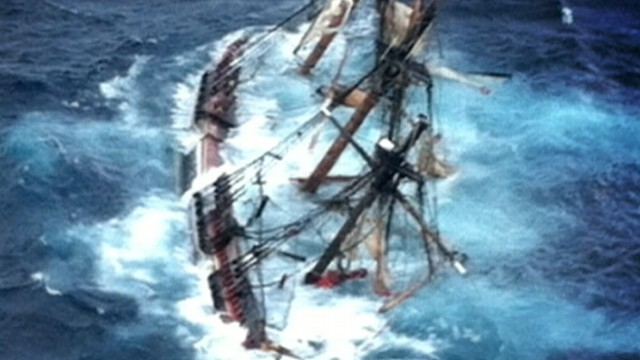
Super Storm Sandy, 2012 Hurricane sinks HMS Bounty, 14 rescued –ABC News

2012 In the early morning hours while caught in the impact zone of Hurricane Sandy more than 90 miles off the coast of Hatteras, NC, HMS Bounty lost power and eventually capsized spilling her 16 crew members in to the sea.  C-130 and MH-60 aircraft were launched from Air Station Elizabeth City, NC and braved the hurricane conditions to rescue 14 crew members who had made it into life rafts.  Another crew member was later recovered unresponsive and the Captain was never found.

2014 An Air Station Clearwater HC-130 aircraft discovered a vessel with 33 persons aboard seven nautical miles east of Boca Raton Inlet, Florida.  Coast Guard Sector Miami diverted CGCs Shrike and Robert Yered and notified local government agencies.  As assets arrived on scene, the persons aboard the vessel began jumping into the water.  Robert Yered assumed On Scene Commander for all responding units and began recovering the persons in the water.  Thirty-three Cuban migrants were safely recovered and were embarked by Robert Yered.

The U.S. Coast Guard Cutter Healy (WAGB 20) cuts a channel through the multi-year pack ice and snow as Healy transits the Arctic Ocean to the North Pole, September 27, 2022. This is the third time the icebreaker has traveled to the North Pole since its commissioning in 1999. U.S. Coast Guard photo by Deborah Heldt Cordone, Auxiliary Public Affairs Specialist 1.

2015 CGC Healy returned to its homeport of Seattle after completing four months of Arctic operations.  The crew’s return marks the completion of an Arctic expedition which culminated in the crews’ historic arrival at the North Pole and was the first time a U.S. surface vessel has reached 90°N unaccompanied.  The crew conducted two separate missions that included operations in the Bering Sea, Chukchi Sea, and Arctic Ocean. Coast Guard Research and Development Center members joined the crew of Healy for the third consecutive year to continue their research of Arctic technologies including: remotely operated vehicles, small unmanned aerial systems, an autonomous underwater vehicle and an unmanned surface vehicle. The crew departed Dutch Harbor, Alaska on August 9 for Geotraces, an international effort to study the distribution of trace elements in the world’s oceans to establish the effects of these elements on global climate change.

Members of U.S. Coast Guard free a sea turtle from a fishing net. US Coast Guard photo

2015 CGC Campbell returned to its homeport of Kittery, Maine on Thursday at 2 p.m. after a 50-day patrol of the North Atlantic.  During the patrol, which spanned an off-shore area from Maine to New York, Campbell was involved in multiple rescues, including towing two disabled fishing vessels over 150 nautical miles offshore. On September 21, 2015, Campbell responded to a report of a sea turtle entangled in fishing gear. Campbell launched their small boat, and the rescue team was able to free the 6-foot long leatherback sea turtle from the fishing line. During the patrol, Campbell traveled to Canadian waters to participate in a joint training exercise with the Canadian Armed Forces and Royal Canadian Mounted Police.  On October 26, 2015, Campbell honored a former shipmate by conducting a burial at sea ceremony for a retired Coast Guard Chief Quartermaster.  Additionally, as part of Campbell’s primary mission they conducted 52 living marine resource boardings resulting in the issuing of 17 violations.