“America’s Coast Guard Faces Impossible Odds Without More Funding” –gCaptain

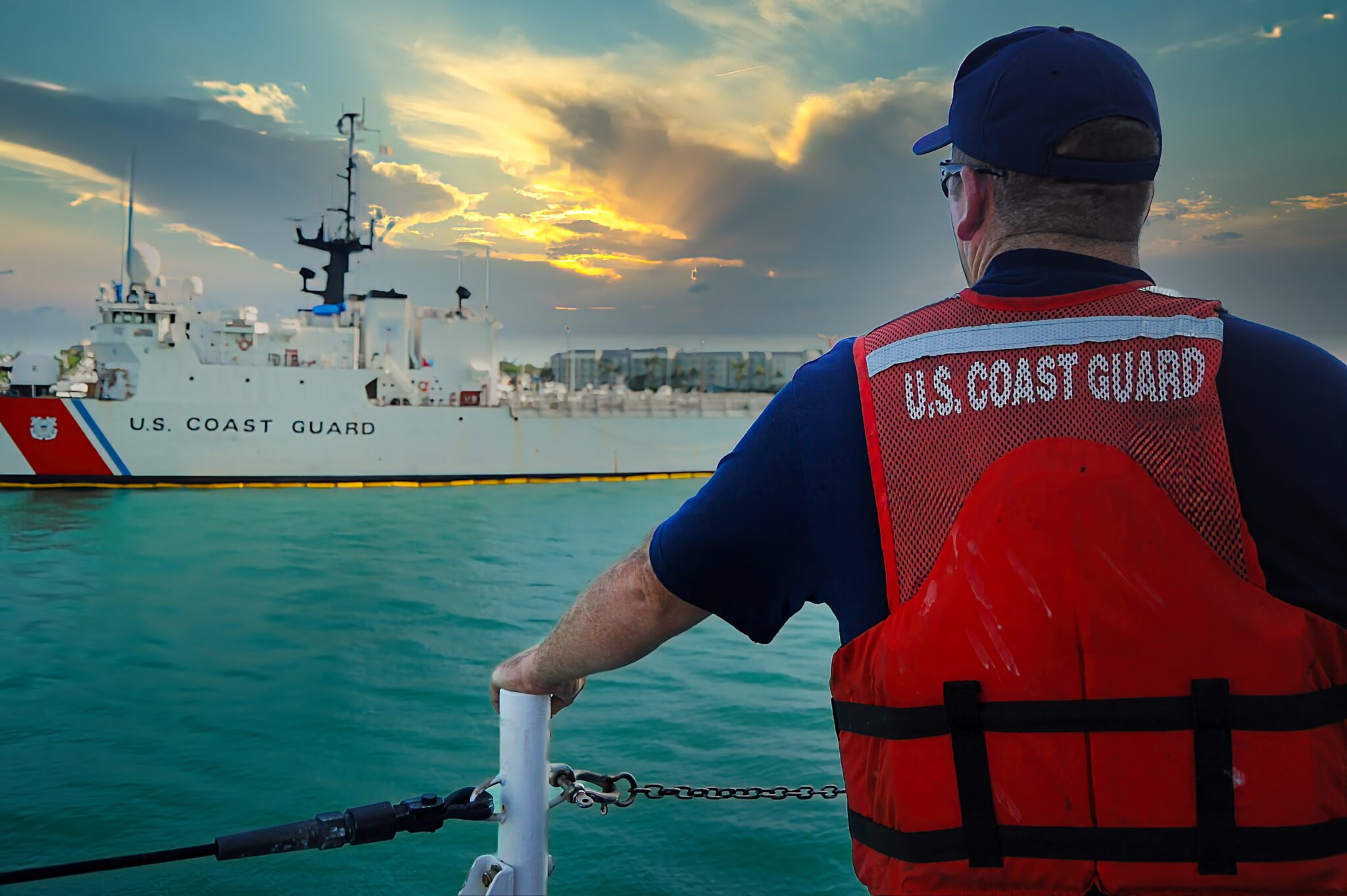
Coast Guard Chief Petty Officer Christian Seay, a chief boatswain’s mate on the Coast Guard Cutter Tampa, looks over to the Coast Guard Cutter Thetis, Key West, Florida. USCG photo by Lisa Ferdinando Sky digitally altered by AI

gCaptain’s John Konrad provides his reaction to the first ever U.S. Coast Guard, the 2024 Operational Posture (OP24). 

Perhaps because the Coast Guard has always been underfunded, he sees the Coast Guard’s current situation even more dire than I do (I will be publishing my own assessment soon), but he also adds an important additional view as a member of the Merchant Marine community.

It fails to address some other massive failures, such as the Coast Guard’s stringent training requirements for U.S. Merchant Mariners, the difficulty in advancing from seaman to officer ranks, and its substantial backlog of medical evaluations. These issues collectively contribute to a mariner crisis that has forced the U.S. Navy to sideline seventeen ships.

These issues should not be ignored.

This Day in Coast Guard History, October 28

Based on the Coast Guard Historian’s timeline, https://www.history.uscg.mil/research/chronology/
With inspiration from Mike Kelso

1919  Congress passed the National Prohibition Enforcement Act, otherwise known as the Volstead Act, on this date.  The Volstead Act authorized the enforcement of the 18th Amendment, ratified on January 29, 1919.  The Act authorized the Coast Guard to prevent the maritime importation of illegal alcohol.  This led to the largest increase in the size and responsibilities of the service to date.

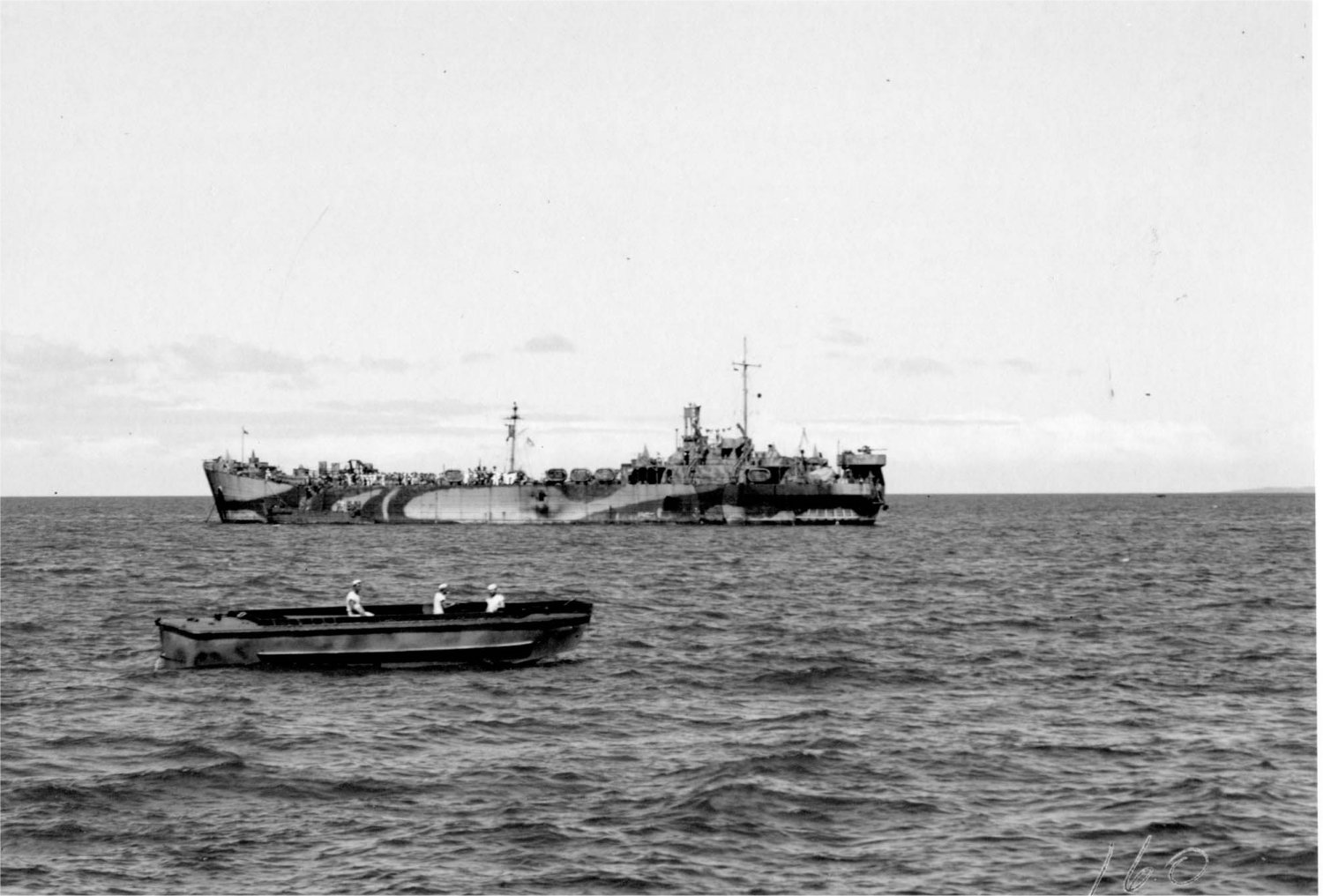
USS LST-71 at anchor in the harbor at Fiji, 12 September 1943.
6th Special Navy Construction Battalion (N.C.B.) Photo

1943  Choiseul, Treasury Islands landing commenced (Coast Guard-manned LST-71 was in second echelon November 1, 1943).

1966  Coast Guard LORAN Station Con Son in Vietnam became fully operational.


More details
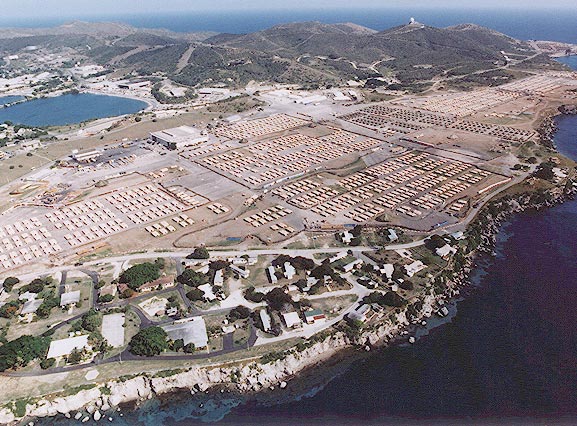
Original caption: “Gitmo airfield converted for 10,000 migrants”

1991  Thousands of Haitian migrants began fleeing their homeland after the overthrow of Haitian President Jean-Bertrand Aristide, prompting one of the largest SAR operations in Coast Guard history.  Cutters and aircraft from as far north as New England converged on the Windward Passage.  In the first 30 days of the operation, Coast Guard forces rescued more than 6,300 men, women, and children who left Haiti in grossly overloaded and unseaworthy vessels.  Seventy-five Coast Guard units ultimately took part in the massive SAR operation and by the end of the year over 40,000 Haitian migrants were rescued.

Tsunami warning after 7.7 earthquake off Haida Gwaii (Queen Charlotte Islands)

2012  The Coast Guard Captain of the Port of Honolulu ordered the evacuation of Honolulu Harbor after a tsunami warning was issued after an earthquake struck the Haida Gwaii archipelago in western Canada.

“America’s Overlooked Armed Force” –Real Clear Defense

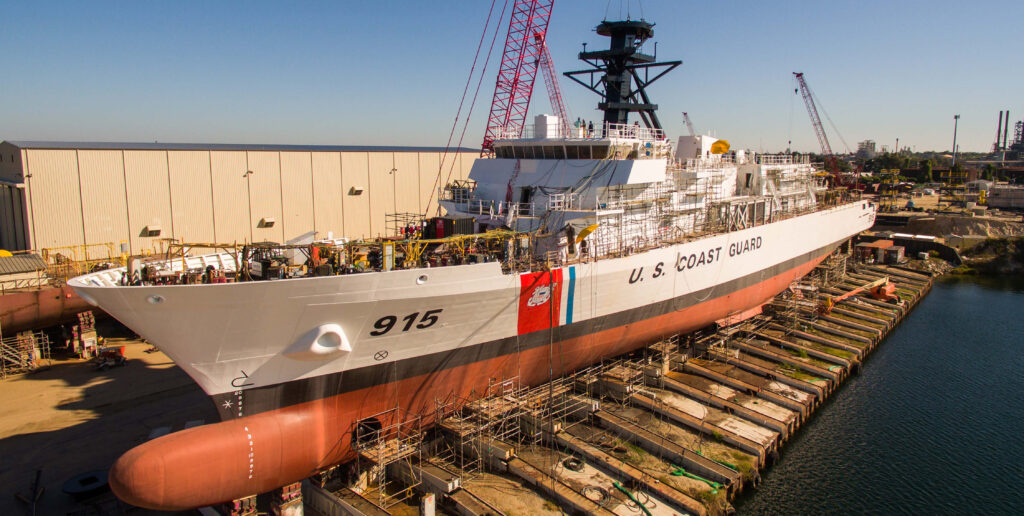
Future USCGC Argus building at Eastern. Eastern Shipyard photo.

Real Clear Defense has a post written by Commander Justin Matejka, national security affairs fellow for the 2024–25 academic year at the Hoover Institution, Stanford University.

It discusses the organizational and political problems the Coast Guard faces in achieving effective management, particularly the disjointed and conflicting oversight in Congress and the lack of a dedicated Departmental advocate.

My personal observation is that while the Congressional oversight process is burdensome and poorly organized, Congress has generally been supportive. Much of our problems stem from a failure to convincingly document the Coast Guard’s needs and value to earn the support of the Executive branch including the DHS. Failure to continuously update the Fleet Mix Study or provide a long-term shipbuilding plan being primary examples.

This Day in Coast Guard History, October 27

Based on the Coast Guard Historian’s timeline, https://www.history.uscg.mil/research/chronology/
With inspiration from Mike Kelso

USCGC BARANOF (WPB-1318) decommissioning.

1997  The crew of CGC Baranof confiscated two .50-caliber sniper rifles, ammunition and other military supplies that were allegedly to be used in an assassination attempt against Cuban President Fidel Castro.  Four Cuban exiles were arrested for illegal possession of firearms after the 46-foot La Esperanza was ordered into Aguadilla, Puerto Rico, by the Baranof.  There a search of the vessel turned up the weapons.  One suspect confessed that the sniper rifles were to be used to assassinate Castro on his arrival on Venezuela’s Margarita Island for the Ibero-American Summit Conference.  A magistrate in the U.S. District Court in San Juan later dismissed the charge of conspiracy to assassinate Castro but let the charges of illegal importation of firearms and making false statements stand.

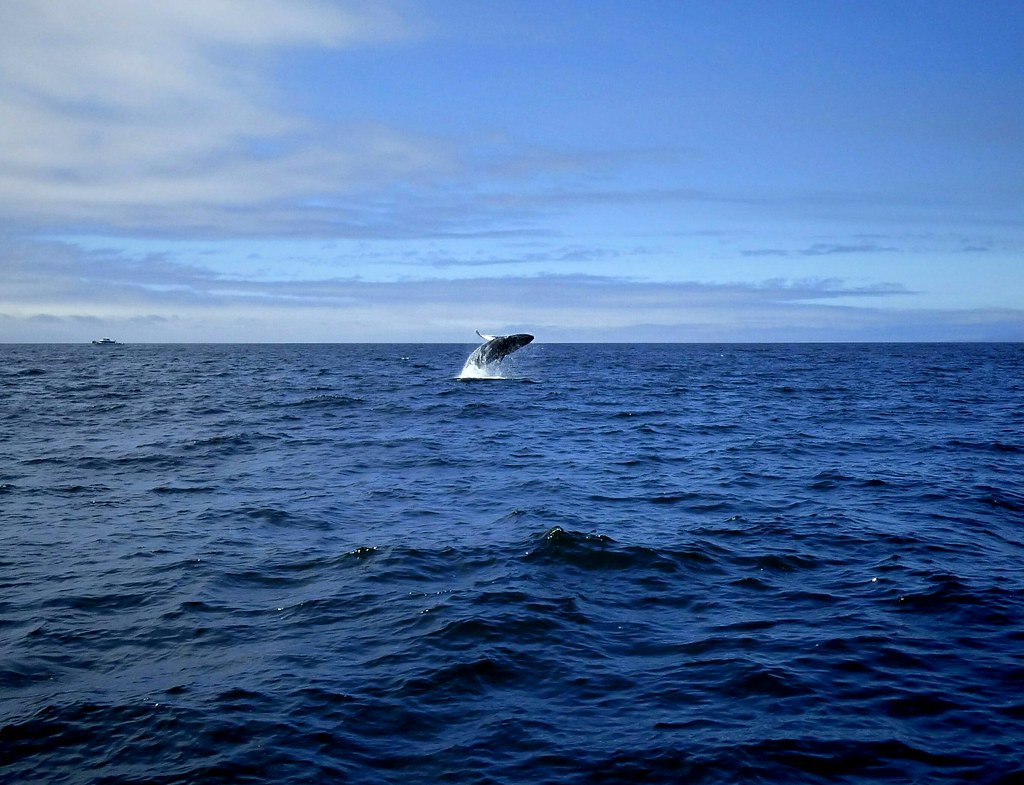
2014  A humpback whale was reported entangled with a weather buoy approximately 25 nautical miles off Moss Landing, California.  The National Oceanic and Atmospheric Administration (NOAA) requested USCG assistance. On October 29, an Air Station San Francisco MH-65 helicopter located the entangled whale and vectored a NOAA vessel to the location.  NOAA officials were able to successfully free the whale and preserve the buoy mooring.  The whale was observed swimming away after it was freed.  NOAA officials believe the whale will survive.

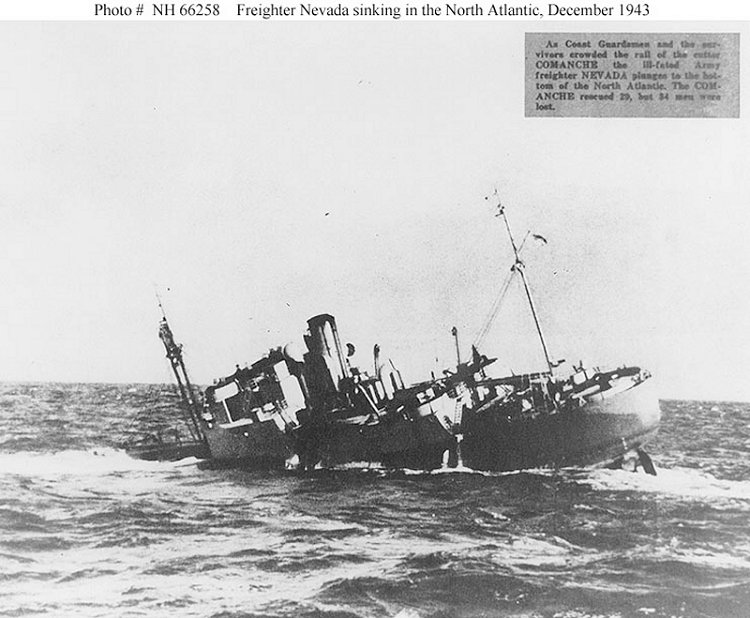
Loss of the US Army Transport Nevada

Photographed from the deck of the USCGC Comanche (WPG-76) as Nevada was foundering in the North Atlantic, circa 15-18 December 1943. Comanche was able to rescue twenty-nine of those on board Nevada, but thirty-four lost their lives during the abandonment of the storm-crippled ship
U.S. Navy Photo NH 66258

The 2 Nov. 2015 edition of Northen Nevada Business Weekly gives us the story of a Greenland Patrol rescue, “Army ship ‘Nevada,’ lost during World War II.”

It was December 1943, 200 miles South of Greenland. USAT Nevada was a small cargo ship, 221 feet long and a little over 2,000 tons. Unlike the Dorchester, torpedoed ten months earlier, USAT Nevada was sunk by a North Atlantic Gale. She became separated from convoy 5G-36. When she started taking on water, she sent out a MayDay. Comanche responded, but it took seven hours for her to get on scene.

Commanche found the ship abandoned and adrift. Even when survivors were located, the seas, exposure, and cold made recovery dangerous. Three were lost trying to transfer from a lifeboat to Comanche. Comanche crewmen in rubber suits rescued five from the icy water.

29 were rescued plus the ship’s mascot. 34 were lost or missing. Storis, Modoc and Tampa joined the search but found no more survivors.

USCGC Comanche (WPG-76); no caption/date/photo number; photographer unknown. Comanche, circa 1943, with her added war-time armament and camouflage.

Commanche was certainly not a first-rate escort. She was commissioned in 1934, 165 ft (50 m) in length, displaced 1,0005 tons, and with only 1,500 HP, had a maximum speed of 12.8 knots, usually less. She would sink no U-boats. At the time she may not have even been equipped with sonar, but at least the crews of the convoyed ships had reason to believe that, if they were sunk, the escorts would attempt to save them.

This Day in Coast Guard History, October 26

Based on the Coast Guard Historian’s timeline, https://www.history.uscg.mil/research/chronology/
With inspiration from Mike Kelso

131107-N-WX059-125 PEARL HARBOR (Nov. 7, 2013) The Bangladesh Navy Ship (BNS) Somudra Joy (F-28) arrives at Joint Base Pearl Harbor-Hickam for a scheduled port visit. From 1972 to 2012 the ship was known as the U.S. Coast Guard Hamilton-class high endurance Cutter USCGC Jarvis (WHEC-725). (U.S. Navy photo by Mass Communication Specialist 2nd Class Sean Furey/Released) Note CIWS, air search radars, and 25mm Mk38 gun mounts have been removed.

2013 BNS Somudra Joy, formerly the Coast Guard Cutter Jarvis, departed Saturday from Alameda, marking a major milestone in international cooperation between the United States and Bangladesh. Joined by a small Coast Guard team of advisors, led by CDR Wendy Tomko, the Bangladeshi crew planned to make port calls at San Diego, Honolulu, Guam and Malaysia on their way to Bangladesh.

Coast Guard Cutter Reliance patrols the Western Caribbean in support of the Joint Interagency Task Force – South October 2014. The cutter’s crew worked with an aviation detachment from the Coast Guard Helicopter Interdiction Tactical Squadron based in Jacksonville, Fla., to detect and interdict suspected smugglers. (U.S. Coast Guard photo by Petty Officer 3rd Class Clinton McDonald)

2022 USCGC Reliance (WMEC 615) returned to homeport in Pensacola on 26 October 2022 after a 63-day Caribbean Sea patrol. Reliance supported the U.S. Coast Guard 7th District throughout their patrol, aiding in missions to interdict and disrupt the flow of illegal drugs and migrant trafficking while supporting national security and strengthening relationships with regional partners throughout the Caribbean. “I am extremely proud of our crew for their adaptability and professionalism throughout the patrol. Regardless of the mission set, whether that was responding immediately to the aftermath of the devastating earthquake in Haiti by conducting critical port assessments or stopping the flow of illegal narcotics, Reliance was always ready to respond to the needs of our Service and our Nation,” said CDR Robert Hill, commanding officer. Significantly, the crew supported the relief efforts in response to the earthquake in Haiti in August, conducting two separate port assessments on Haitian ports to ensure the harbors were safe for vessels to deliver vital aid and assistance to the region following the disaster.  During the patrol, Reliance’s crew intercepted one vessel attempting to smuggle approximately 1,132 lbs. of cocaine and detained a total of four suspected smugglers. Additionally, Reliance received more than 4,291 lbs. of cocaine, ten suspected smugglers, and 96 migrants from other U.S. Coast Guard cutters operating in the region.  The crew also rescued 50 Dominican nationals from an unseaworthy vessel off the coast of Puerto Rico and repatriated 158 migrants to the Dominican Republic’s navy. The 63-day patrol was critical in allowing the cutter crew to work on shipboard training, qualifications, and proficiency to maintain operational readiness. This training enabled Reliance’s team to complete a five-day major shipboard training exercise in Mayport, which tested their readiness in all aspects of damage control, seamanship, and navigational procedures. Reliance, a 210-foot medium endurance cutter, is homeported in Pensacola with a crew of 71.

This Day in Coast Guard History, October 25

Based on the Coast Guard Historian’s timeline, https://www.history.uscg.mil/research/chronology/
With inspiration from Mike Kelso

Appearing very different from its last Greenland visit in 1884, the USS Bear returned in 1944. Unlike in 1884, the Bear relied on a Coast Guard crew during World War II. As part of the Greenland Patrol, it cruised Greenland’s waters and, in October 1941, brought home the German trawler Buskø, the first enemy vessel captured by the U.S. in WWII. (Coast Guard photo)

1941  The Navy formally established the Greenland Patrol by combining the South Greenland Patrol with the three cutters of the Northeast Greenland Patrol.

USCGC Polar Sea

1985  CGC Polar Sea arrived home to Seattle after a voyage through the Northwest Passage by way of the Panama Canal, the east coast, and then Greenland, sparking an international incident with Canada.  She completed the first solo circumnavigation of the North American continent by a U.S. vessel and the first trip by a Polar-Class icebreaker.  She also captured the record for the fastest transit of the historic northern route.  She had departed Seattle to begin the voyage on June 6, 1985.

The Last 76mm Gun Shoot?

Coast Guard Cutter Mohawk’s (WMEC 613) Mk 75 weapon system fires, Aug. 16, 2024, during a gunnery exercise in the Florida Straits. Mohawk was the last Famous-class medium endurance cutter to fire the onboard Mk 75 mm gun weapon system as large caliber weapon systems onboard these cutters are being modernized for the service life extension program. (U.S. Coast Guard photo by Ensign Brian Morel)

Below is a Coast Guard news release. It is otherwise a pretty typical patrol report, but I wanted to call your attention to one paragraph,

“Of note, this patrol marked a significant historical event for the Coast Guard’s Famous-class medium endurance cutter fleet. Mohawk was the last in its class to fire the onboard Mk 75 mm gun weapon system. The largest caliber weapon in the Coast Guard inventory, it has been utilized by Famous-class cutters like Mohawk since they were first commissioned in the 1980’s. Now, large caliber weapon systems onboard Famous-class cutters are being modernized for a service life extension program.”

Does this really mean the Coast Guard is stopping support for all 76mm gun and Mk92 fire control systems even though only six WMEC270s are expected to receive the full life extension program? USCGC Harriet Lane which went through a partial SLEP, has also swapped out her 76mm for a 25mm Mk38, but that still leaves six WMEC270s that will not go through the service life extension program. Will they also lose their 76mm guns?

The 25mm Mk38 is a poor substitute for the 76mm gun that is upgradable and still in service with about 40 countries.


Oct. 23, 2024

Coast Guard Cutter Mohawk returns home from 62-day migrant interdiction operations patrol

KEY WEST, Fla. — The crew of Coast Guard Cutter Mohawk (WMEC 913) returned to their homeport of Key West, Oct. 11, following a 62-day migrant interdiction operations patrol in the Florida Straits.

Mohawk’s crew deployed in support of Homeland Security Task Force – Southeast (HSTF-SE) and Operation Vigilant Sentry (OVS) while underway in the Seventh Coast Guard District’s area of responsibility. While on patrol, crew members worked alongside additional Coast Guard units and partner agency crews to detect, deter and intercept unsafe and illegal migrant ventures bound for the United States.

While at sea, Mohawk crew members interdicted and rescued 41 migrants from unseaworthy vessels. Of these, Mohawk’s crew rescued 25 migrants aboard a single disabled vessel found taking on water in the Florida Straits on Aug. 20. Throughout the deployment, Mohawk cared for a total of 53 migrants, providing shelter, sustenance, hydration and medical care before conducting safe repatriation back to their country of origin.

On Oct. 3, Mohawk’s crew conducted a rescue of four personnel stranded on the remote island of Cay Sal, Bahamas after their seaplane was disabled. Mohawk coordinated with a U.S. Navy P-8 Poseidon airplane and a Coast Guard Air Station Miami HC-144 Ocean Sentry airplane to vector in Mohawk’s small boat crew for the rescue.

Most recently, the crew of Mohawk extended their deployment in response to the approach of Hurricane Milton. Mohawk sortied alongside other Key West-based Coast Guard cutters to avoid potential storm damage and ensure response readiness after the hurricane. Mohawk’s crew also conducted a tow of the Isaac Mayo during the sortie for several days of rough seas as the cutter was disabled due to scheduled maintenance.

Of note, this patrol marked a significant historical event for the Coast Guard’s Famous-class medium endurance cutter fleet. Mohawk was the last in its class to fire the onboard Mk 75 mm gun weapon system. The largest caliber weapon in the Coast Guard inventory, it has been utilized by Famous-class cutters like Mohawk since they were first commissioned in the 1980’s. Now, large caliber weapon systems onboard Famous-class cutters are being modernized for a service life extension program.

To successfully conduct the migrant interdiction mission, Mohawk partnered with U.S. Customs and Border Protection – Air and Marine Operations air and boat crews as well as additional Coast Guard units to include Coast Guard Cutters Charles Sexton (WPC 1108), Raymond Evans (WPC 1110), Isaac Mayo (WPC 1112), Maple (WLB 297), Coast Guard Station Key West, Coast Guard Sector Key West and Coast Guard Air Station Miami.

“Outstanding work by the Mohawk crew. I am very proud of our ability to secure our nation’s maritime borders while maintaining the safety of life at sea,” said Cmdr. David Ratner, commanding officer of Mohawk. “We understand the importance of deterring unlawful and dangerous maritime migration attempts on often overloaded and unseaworthy vessels. One such vessel with 25 migrants on board was disabled with insufficient fuel to make it to land and was taking on water.”

Mohawk is a 270-foot, Famous-class medium endurance cutter with a crew of 100. The cutter’s primary missions are counter-drug and migrant interdiction operations, enforcement of federal fishery laws as well as search and rescue in support of Coast Guard operations throughout the Western Hemisphere. Mohawk falls under the command of U.S. Coast Guard Atlantic Area, which is based in Portsmouth, Virginia. U.S. Coast Guard Atlantic Area oversees all Coast Guard operations east of the Rocky Mountains to the Arabian Gulf.

For information on how to join the U.S. Coast Guard, visit GoCoastGuard.com to learn about active duty and reserve, officer and enlisted opportunities. Information on how to apply to the U.S. Coast Guard Academy can be found here.

“Chinese Ship Expelled From Neighbor’s Waters” –MSN

On Monday (21/10/2024) Indonesian Coast Guard and Navy expelled CCG 5402 (left center) from North Natuna Sea after it was reported to have disrupted seismic survey activities. In the photo, the Indonesian CG vessel, KN Tj data (lower right) is supported by the Indonesian Navy vessel KRI Sutedi Senoputra,  (upper right) Source: X

MSN reports,

“Indonesia on Monday expelled a Chinese coast guard ship from its maritime zone after it allegedly interfered with a seismic survey operation.”

“An Indonesian coast guard cutter approached the Chinese ship, coming within around 8 miles of it and issuing a radio warning. However, the Chinese vessel insisted it was operating within Chinese waters.”

The Indonesian Navy sent reinforcements to support the cutter in the form of a patrol aircraft and a corvette.

“The Indonesian vessels shadowed the Chinese counterpart until it was ultimately expelled from Indonesia’s EEZ, per the statement.”

How long that took is not clear.

The same China Coast Guard ship (bearing an earlier hull number) and a Philippine supply boat engage in a standoff as the Philippine boat attempts to reach the Second Thomas Shoal, a South China Sea reef inside the Philippine EEZ, on March 29, 2014, Jay Directo—AFP

Correlation of Forces:

Correlation of forces is a term the Soviets used, and the Chinese would understand. It means if there were conflict what would be the likely outcome, and in any tense situation, the thought has to be at least in the back of the mind of the players, and will influence decision makers. 

China CGC 5402 is reportedly a Zhaolai class, formerly hull number 3401. The Zhaolai-class China Coast Guard cutters are reported to have a displacement of 4,896 tons and are 99 meters in length. It is a relatively big cutter, but closer to an Offshore Support Vessel than a warship. They go back to at least 2014, and were built before the China Coast Guard began building cutters armed with medium caliber guns. It is not clear if China CGC 5402 is now armed with heavy weapons. In the photo above, a foundation for what would probably be a 76mm gun is visible, but I have seen no photos of this class so armed.

The Indonesian cutter, KN Tanjung Datu, is the largest cutter in the Indonesian CG. It is reportedly 2400 tons, but I suspect the full load displacement is greater considering it is 110 meters (360′) in length with a beam of 15.5 m (51′), making it almost as large as the USCG’s new 4,500 ton Offshore Patrol Cutters. The USCG has exercised with her (photo below). She is armed with a 30mm Mk44 chain gun in a Aselsan SMASH remote weapon station, but the Indonesians did not assume that would be enough. They called in reinforcements in case things went South.

Indonesian Maritime Security Agency vessel KN Tanjung Datu, left, sails alongside U.S. Coast Guard Cutter Stratton during joint exercises in the Singapore Strait in August 2019. IMAGE CREDIT: PO1 LEVI READ/USCG

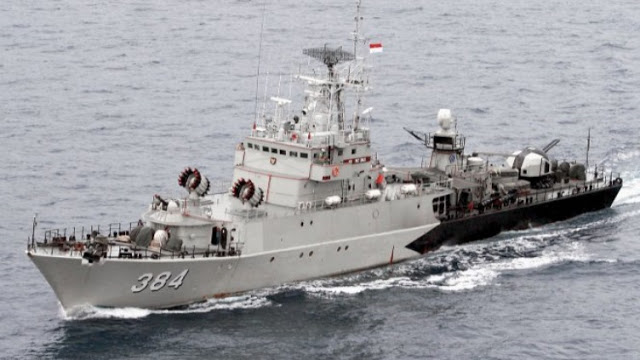
The smallest vessel in the photo at the head of the post (KRI Sutedi Senoputra) was also, by far the most heavily armed. It is only 935 tons, full load, lighter than a WMEC210, and 43 years old, but it is faster than either of the cutters at 24 knots and armed with a twin 57mm, a twin 30mm, and two 20mm. It also has RBU-6000 ASW rocket launchers which may have some anti-surface capability. (see photo below)

The Indonesian Corvette, KRI Sutedi Senoputra, is a former East German Parchim class corvette like this one.

The incident happened within 200 nautical miles of Indonesian territory so attack aircraft would not be too far away.

The Indonesians have been acting aggressively against Chinese fishing vessels in their EEZ. They don’t seem to be unwilling to insist on their rights.

The Chinese probably don’t want to risk an armed conflict before they are ready to attack Taiwan with all the logistical preparation that would require. They seem to have been losing influence in Indonesia, and don’t want further alienate Indonesia and to push them closer to the US.

This Day in Coast Guard History, October 24

Based on the Coast Guard Historian’s timeline, https://www.history.uscg.mil/research/chronology/
With inspiration from Mike Kelso

Cutter Sherman returns home after a 52 day deployment

2014  CGC Sherman returned to its homeport of San Diego after completing a 52-day deployment to the Eastern Pacific Ocean participating in UNITAS 2014 and conducting counter maritime drug interdiction operations.  At the beginning of their deployment, Sherman represented the United States, one of 14 partner nations that participated in UNITAS 2014 from September 12-26.  Toward the conclusion of its deployment, Sherman interdicted two suspected smuggling boats that resulted in the seizure of approximately 120 pounds of cocaine with a wholesale value of nearly $2 million.