1808 Secretary of the Treasury Albert Gallatin requested 12 new cutters at a cost of $120,000 to enforce “laws which prohibit exportation and restrain importations” to support the embargo ordered by President Thomas Jefferson. President Jefferson had ordered an embargo against most European imports and exports to protest the harassment of U.S. sailors by warring European powers. The embargo did not work. The United States went to war with England in 1812 but the Revenue Marine got the new cutters.
1877 The first annual report of the U.S. Lifesaving Service was submitted in published form to the Secretary of the Treasury.
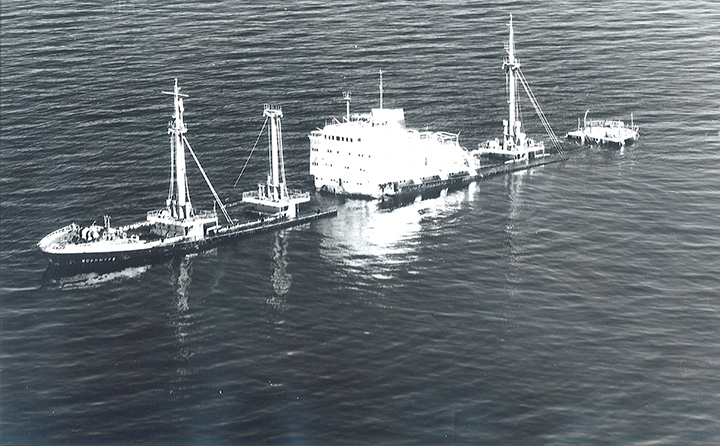
Courtesy Photo The German freighter Nordmeer, which ran aground on Nov. 19, 1966, is seen in this 1967 photo provided by the Thunder Bay National Marine Sanctuary.
1969 The German freighter Nordmeer ran aground on the Thunder Bay Shoal in Lake Huron. Most of her crew safely evacuated to a nearby ship but eight crewmen remained on board to attempt to save their vessel. The weather quickly deteriorated, however, and they radioed for assistance. A Coast Guard helicopter and the icebreaker Mackinaw responded and safely evacuated the eight men while the freighter broke up.
SAN FRANCISCO. The Coast Guard Cutter Waesche transits through the San Francisco Bay for the first time en route to its homeport of Alameda, Calif., Feb. 28, 2010. (U.S. Coast Guard photo by Petty Officer 3rd Class Kevin Metcalf)
2013 CGC Waesche returned from a 109-day deployment in the Gulf of Alaska, Bering Sea and Arctic Ocean to its homeport at Coast Guard Island in Alameda, California on November 29, 2013. While on patrol Waesche’s crew conducted a broad range of operations including maritime law enforcement, search and rescue, maritime surveillance and community outreach. While underway, the crew was on scene for the opening of the red king crab fishing season to help ensure the safety and security of fishermen conducting operations in the Bering Sea. The crew also enforced fisheries laws and regulations to ensure sustainable fishing is practiced in the Gulf of Alaska and Bering Sea. The crew responded to five search and rescue cases including a removal of 14 mariners from a disabled fishing vessel, Alaska Mist, some 160 nautical miles northeast of Dutch Harbor in mid-November. In Unalaska, Alaska, the crew participated in helping with maintenance and upkeep at a high school and several other community relation projects.
1883 The schooner Maggie W. Willard with a crew of five men struck on Sea Horse Rock about two miles west of the Crumple Island Station (First District) on the coast of Maine at 1 o’clock in the afternoon. She was discovered by the station crew, who offered assistance. Finding the vessel in a very dangerous position and leaking the crew’s effects were saved and they were taken to the station. All efforts to get the vessel off failed. That night the schooner drove over the reef and sunk in deep water, becoming a total loss.
November 28
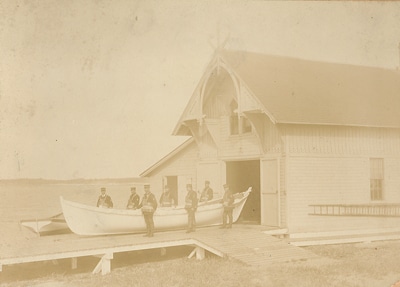
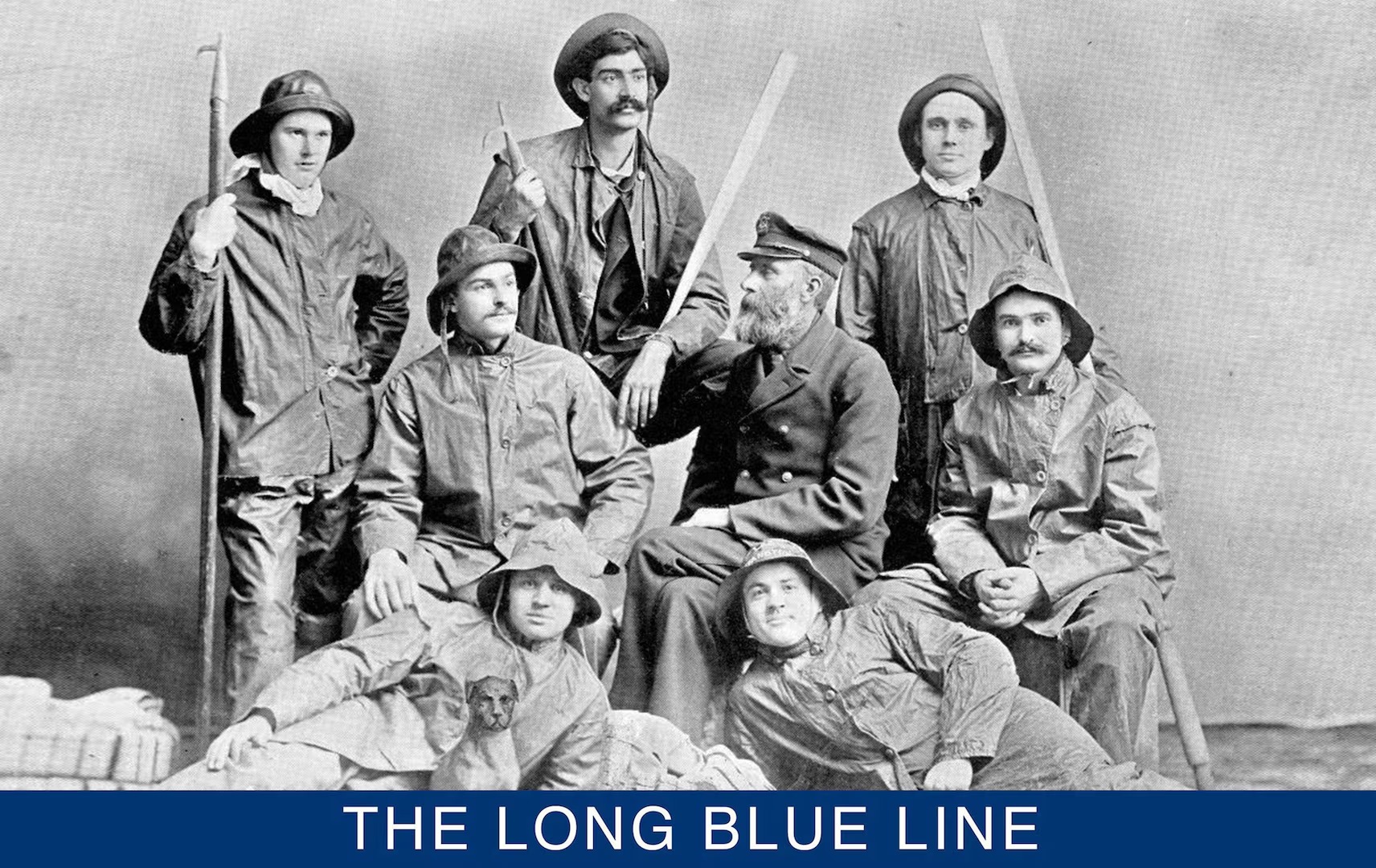
1894 photograph of Keeper Lawson surrounded by his NWU student surfmen. (Courtesy of NWU Deering Library)
1889 The crew of the Evanston, IL, Life-Saving Station earned the Gold Lifesaving Medal for the rescue of the crew of the steamer Calumet. Most of the crew consisted of students from Northwestern University.
1942 Petty Officer Clifford Johnson was on liberty at the Coconut Grove Lounge in Boston on the night of November 28, 1942 when the lounge caught fire. Over 490 persons perished in what was one of the worst fires in the nation’s history. Petty Officer Johnson repeatedly risked his life by entering the fire on four occasions to pull victims from the flames, receiving severe burns over his body. He spent over two years in the hospital recovering from his injuries.
2014 CGC Stratton returned to its homeport at Coast Guard Island in Alameda, California, after a 140-day deployment to the Arctic and Central America. Since departing in July 2014, Stratton’s crew completed a 24,000-mile deployment in support of the nation’s interests in the Arctic and joint counter-drug operations off the coast of California and Central America. During this operational patrol, Stratton’s law enforcement crews seized and disrupted 6.6 tons of illegal narcotics valued in excess of $27.5 Million. Stratton Coast Guardsmen assisted mariners in four separate search and rescue cases. Furthering national strategic goals, the cutter’s crew patrolled the Arctic and conducted interoperability tests with new equipment. Stratton Coast Guardsmen worked closely with the communities in isolated locations of Point Lay, Gamble and Barrow, Alaska. The crew went ashore to schools and civic centers to teach water safety and provide life jackets to community members.
The aftermath of the collision shows the floating wreckage of the Stolt Dagali. U.S. Coast Guard photo.
1964 The Israeli passenger linerShalom and the Norwegian tanker Stolt Dagali collided off Point Pleasant, New Jersey in a dense fog. Nineteen tanker crewmen were killed in the collision which sliced the tanker into two pieces. CGC Point Arden was the first on scene. Five other cutters and “a fleet” of Coast Guard and Navy helicopters soon joined in the rescue and salvage operations, resulting in the rescue of 24 of the tanker’s crew. One injured Shalom crewman was airlifted by a Coast Guard helicopter for medical treatment and survived. No one else from the liner was injured.
“…the accident instantly put into motion one of the largest search-and-rescue operations of the time, combining 11 Coast Guard and Navy helicopters, six cutters, and even the crews of three passing Merchant Marine vessels acting as Good Samaritans. The operation was coordinated by Lt. Junior Grade Joseph DiBella, who was officer in charge at the Rescue Coordination Center in lower Manhattan. Functionally, the 24-year-old was fairly low-ranking for what was shaping up to be a massive effort. When his superior appeared and asked whether DiBella should be relieved, the message from top brass was: No, let him stay in control.” –Miami New Times, February 7, 2017
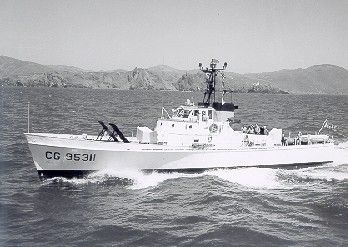
WPB 95311, Cape class cutter similar to USCGC Cape Providence.
1968 While en route from Apia, Western Samoa to Pago Pago, Polynesian Airlines Flight 5WFAA sighted the wreckage of an overturned vessel and reported it to the Federal Aviation Agency Flight Service at Tafuna, American Samoa. CGC Cape Providence (WPB 95335), a 95 foot Cape class patrol boat, moored at Pago Pago on search and rescue standby, was notified of the sighting. With an assist from the Polynesian airliner, the cutter located the disabled fishing vessel named Main Sun No.2 and found 17 survivors clinging to the overturned hull. Despite the rough seas breaking over the hull, the Cape Providence rescued 13 of the survivors, while 4 more were retrieved from the water by the fishing vessel Chie Hong No.20, which had arrived on scene to assist. Two members of the 19-man crew, however, had been trapped in the engine room on the capsized vessel and had perished.
1995 Coast Guardsman Michael E. Earley rescued a 12-year-old boy who had fallen from the Astoria-Megler Bridge into the frigid, swiftly flowing waters of the Columbia River. Petty Officer Earley was on liberty and driving along the highway towards the bridge when he noticed several people on the bridge waving their arms. When he stopped to offer assistance, he saw a young boy struggling to stay afloat in the strong flooding tide of the river. Without hesitation, Petty Officer Earley hurried to the shoreline, tied a rope to his belt, and disregarding his own safety, plunged into the churning 52-degree water and rescued the young boy. He was awarded a Gold Life-Saving Medal for his heroic action.
1996 A Coast Guard HC-130 located a grossly overloaded Haitian freighter off the coast of Haiti. Crewmen from the cutters Dauntless, Chandelier, Monhegan, and Nantucket helped to transfer the largest group of Haitians ever found on a vessel to CGC Northland. One Haitian died of severe dehydration, the other 581 were repatriated.
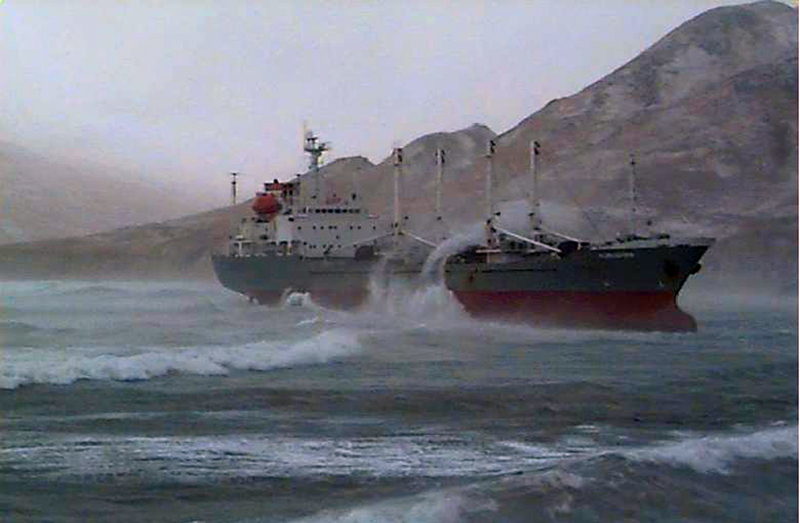
The 370-foot freighter M/V Kuroshima, ran aground in a heavy storm in Summer Bay, Alaska, in 1997. Image credit: USCG
1997 Two crewmen died when the Japanese freighter Kuroshima ran aground in a storm near Dutch Harbor. Bitter weather, with 90-m.p.h. winds and seas at 20 feet, made any air rescue impossible. Eighteen other crewmen were rescued by Coast Guardsmen who used a tow rope to haul a life raft to safety. The Coast Guardsmen were from CGC Midgett that was fortuitously in Dutch Harbor for a mid-patrol break. The freighter was later refloated.
2002 President George W. Bush signed into law a bill that created the Department of Homeland Security, the largest reorganization of the federal government in fifty years. The Coast Guard was one of a number of agencies that transferred to the new Department; the transfer was scheduled to go into effect on March 1, 2003.
1968M/V Triple Crown foundered off the coast of Southern California with a loss of nine lives while retrieving the anchor and chain of a large offshore drilling rig. The Coast Guard investigated.
Elián González with his father and family members that was taken a few hours after their reunion at Andrews Air Force Base on April 22nd, 2000. It is described as “released by the government” on the website of the Public Broadcasting Station from where it is sourced. The Los Angeles Times reported second-hand that the photo was “taken by one of two federal agents who accompanied Elian from Miami and who were invited into the family’s quarters at Andrews Air Force Base.” CNN reported that the photo was released by the US Government. 22 April 2000
1999 Elian Gonzalez, a five-year old Cuban boy, was found on Thanksgiving morning clinging to an inner tube three miles off the coast of Fort Lauderdale, Florida. He was among three survivors of a boating accident which killed 11 migrants fleeing Cuba. The Coast Guard searched from Islamorada to Boca Raton, using a HU-25 and a HH-65 from Air Station Miami, a HC-130 from Air Station Clearwater, CGC Maui, and a 41-foot UTB from Station Fort Lauderdale. The child later gained international notoriety when his father, a Cuban citizen, attempted to have him returned to Cuba, a desire that Elian’s relatives in the U.S. fought through the U.S. court system all the way to the Supreme Court. The Court ruled in his father’s favor and the child was returned to Cuba.
The Coast Guard Deputy Commandant for Operations has issued “United States Coast Guard Force Posture 2024.” Dated October 2024, it is reportedly the first of its kind and a new edition will be published annually. I have appended the Coast Guard News Release regarding the publication below.
“This posture statement informs all audiences about the U.S. Coast Guard’s operational priorities, initiatives, requirements and future challenges across its missions and geographic regions. It conveys how we are “Advancing Mission Excellence” in accordance with the 2022 Coast Guard Strategy and the Department of Homeland Security (DHS) Strategic Plan. This posture statement serves as a window into the breadth and depth of the Coast Guard’s commitments and how it is posturing our workforce, capabilities, and assets to deliver operational services that best serve the American people.
It is organized under four major topics rather than by the eleven statutory missions.
Operating Environment (p.3)
Guiding Principles (p.3/4)
Operating Posture (p.4-7)
Geographic Operating Areas (p.7-11)
I love it, but it does lack a clear summary of what we will do differently. I will try to interpret some of that. Below I provide a readers’ digest version with a few comments, looking first at the eleven Coast Guard missions as listed in 6 U.S. Code § 468, at select Geographic Operating Areas, and finally I will speculate on the long term implications. Given the increased use of the Coast Guard as a tool of foreign policy, I also suggest changes to the Area Commanders’ areas of responsibility (AOR) to make them fit more easily into the national command structure.
MISSIONS
Some of the missions are specifically addressed in the “Operating Posture” section, others are not. The Eleven missions are:
Non-homeland security missions:
Marine safety
Search and rescue
Aids to navigation
Living marine resources (fisheries law enforcement)
Marine environmental protection
Ice operations.
Homeland security missions:
Ports, waterways and coastal security
Drug interdiction
Migrant interdiction
Defense readiness
Other law enforcement.
I will just address them in alphabetical order:
Aids to Navigation:
Aids to Navigation is not called out under a separate heading.
“Our comprehensive approach (to the Marine Transportation System (MTS)) encompasses…Maintaining aids to navigation…” (p.4)
The Coast Guard is reinforcing actions to be “brilliant at the basics” that strengthen…aids to navigation.
The Coast Guard is in the early phase of recapitalizing an aging fleet of inland aids to navigation tenders with new Waterways Commerce Cutters, crucial to maritime commerce in our inland river system. These investments are central to maintaining service delivery in an increasingly complex MTS (Maritime Transportation System–Chuck).
Sounds like minimal changes in the near term but expect improving technology may reduce manpower requirements. Elsewhere there is indications buoy tenders may increasingly be used for non-AtoN missions. This suggests that the number of sea-going buoy tenders (WLBs) is unlikely to be significantly reduced, but their character may change–more on this below.
Defense Readiness
We are increasing attention on the Coast Guard’s defense readiness mission given the increasing threat posed by nation-state competitors. Through integration with Department of Defense efforts, refreshing defense-related plans, and preparedness exercises, we are sharpening readiness to support homeland defense requirements and force deployment commitments for major overseas contingencies. We continue to meet our commitments to North American Aerospace Defense Command (NORAD) for National Capital Region and deployable Rotary Wing Air Intercept and we are adjusting the structure of our Port Security Units (PSU) to address Reserve workforce shortages. We are also integrating PSU elements with DoD expeditionary units to increase their deployment readiness.
This is a welcome recognition of an increasingly hostile world and the emergence of non-state actors who, acting independently or as a proxy for hostile states, can impact national security.
Drug Interdiction is not called out as a separate topic. The only indication of a change is this statement under the section “Western Hemisphere,”
“We will maximize employment opportunities by conducting a mix of missions such as counter drug and combating illegal, unreported and unregulated fishing when appropriate.” (p.9)
Ice Operations:
Ice operations is not called out as a separate mission, but it is addressed in the “Polar Regions” section (p.8/9) of the Geographic Operating Areas section.
Arctic and Antarctic Ice operation will get a big boost as we go from 2 polar icebreakers to eight. In the Arctic there will be a continuing need for non-icebreaking large cutters and we can expect increased exploitation of fixed wing aircraft and particularly satellite for communications and information.
Living Marine Resources
“We will increasingly favor shore-based law enforcement teams and our patrol boat fleet, supported by maritime domain awareness sensors, to ensure we best match this mission.”
Webber class WPCs have proven capable of assuming much of the fisheries protection mission. They can go anywhere fishing vessels can go and stand up to any weather they might be fishing in. So FRCs are stepping up to missions WMECs have traditionally done. Not mentioned, but on the other hand, in Alaska and the distant Pacific there is still a role for larger ships.
Marine Environmental Protection:
There was no section devoted to Marine Environmental Protection as a specific mission. MEP was referred to briefly in the Mission execution section (p.5) Arctic (p.8)
But there was this under “Incident Management and Crisis Response” (p.6)
Management of large, complex incidents is a central Coast Guard competency. Employment of this capability enables success for the most consequential crises and events, builds trust, and supports DHS. However, the Coast Guard does not have a large contingency capacity “in garrison” for emergencies. We will continue to strengthen Coast Guard incident management capacity and proficiency to meet increasing demand, including in the Reserve workforce. The Coast Guard continues to respond to stakeholder requests for assistance for incident management while we prioritize incidents with a Coast Guard nexus and prevent overextending Coast Guard resources.
Marine Safety
There is a lot of activity here,
“The Coast Guard is reinforcing actions to be “brilliant at the basics” that strengthen marine inspection, investigation, Vessel Traffic Services, waterways management, and aids to navigation.”
Changes in the environment include autonomous vessels, offshore renewable energy installations, an emerging space launch and recovery industry, and alternative vessel fuels. All of which require determination of standards.
Migrant Interdiction
“The Coast Guard will deploy cutters and aircraft, and adaptive force packages where practical, sufficient to interdict migrant ventures, save lives, and deter maritime migration. We continue to prepare with partners to respond to a mass migration to mitigate a national crisis. We are also integrating new technology to better anticipate, detect, deter, and interdict migrant ventures.
No significant reprioritization here. This is an area where the Webber class WPCs (20 in D7 alone) have supplemented or replaced WMECs. It is an area where shore based Unmanned Air Systems and Unmanned surface vessels like saildrone could provide persistent initial detection and perhaps reduce demand for fixed wing search aircraft.
Other Law Enforcement
Not surprisingly there is no mention of this “mission” because the Coast Guard does it on an ad hoc incidental basis. The Coast Guard’s specific law enforcement missions, drug and migrant interdiction, marine environmental protection, and fisheries are addressed separately. It is a catchall for any illegal activities. So, no change.
Port, Waterways, and Coastal Security
The Coast Guard’s force posture for this mission was configured for the post 9/11 security environment and the Coast Guard is examining approaches to optimize our capabilities to meet emerging threats. For example, the proliferation of drones poses a growing risk to the MTS and we will continue to employ our counter-UxS technology in conjunction with DHS and other partners to prepare for this threat. We are also taking steps to ensure that our deployable specialized forces are configured for their role as threats and operational needs evolve.
Recognizing and preparing to counter the UxS threat is significant. I’ve already made several suggestions. I hope if we get a hard kill system, it will also improve effectiveness against other potential threats.
This was included under Defense Readiness,
“…we are adjusting the structure of our Port Security Units (PSU) to address Reserve workforce shortages. We are also integrating PSU elements with DoD expeditionary units to increase their deployment readiness.”
To me Ports, Waterways, and Coastal Security is a subset of Defense Readiness once you understand that Defense Readiness is a full time, 24/7 job that does not wait until war is declared or the Coast Guard is transferred to the Navy Department. Attacks like 9/11 or Pearl Harbor, will likely come as a surprise, there may be no time to mobilize before an attack, and our Maritime Transportation System is a likely target.
Search and Rescue:
“Search and Rescue is an enduring, no-fail mission that is deeply ingrained in the Coast Guard’s identity. As it remains a top priority, technical advances now allow us to perform the mission more effectively and with fewer resources.“
SAR success standards are not being lowered, but technology is increasingly taking the search out of search and rescue. Individual units have greater capability so fewer dedicated units may be required. Expect fewer personnel to be assigned to less demanding SAR missions that are also covered by local government first responders.
GEOGRAPHIC OPERATING AREAS
The Operational Posture goes on to discuss specific operating areas. Some of this has been addressed in the mission summaries above, so I will say no more about the Arctic, Western Hemisphere, Middle East and Europe, Caribbean, and Atlantic basin that are discussed individually in the Operational Posture, but I will talk about the Indo-Pacific, Eastern Pacific, and Antarctica.
Indo-Pacific
The Indo-Pacific is a top regional priority given its geostrategic importance, criticality to global trade, and the threat contesting a free, open, and rules-based maritime commons.
Yes, we are paying more attention to the Pacific, the Indian Ocean not so much. We expect to have six Webber class WPCs in Guam. Harriet Lane (WMEC-903) has been moved from Atlantic Area to Hawaii and it looks like a second WMEC may also be moved. Two OPCs each are expected to go to Long Beach and Kodiak. Assuming Alex Healy stays in Kodiak and the last Pacific Area 210 is decommissioned or transferred to Atlantic Area, that will give Pacific Area 13 large patrol cutters–still fewer than the 16 that were in PacArea in 2000 and only 39.4% of the 33 large cutter total I think we have now and will have for the foreseeable future.
Given the great distances involved, the fact that 84% of the US EEZ is in Pacific Area, and because we have an obligation to the Compact of Free Associated States–Federated States of Micronesia, the Republic of the Marshall Islands, and the Republic of Palau–that together have additional EEZ equal to about 50% of the entire US EEZ, it makes no sense for 60% of the large cutters to be in Atlantic Area. More than half of all large patrol cutters should be in Pacific Area.
Eastern Pacific:
“…with declining major cutter and maritime patrol aircraft availability, we will increasingly employ fast response cutters, ocean-going buoy tenders, and adaptive force packages supported by expeditionary logistics.” I am not surprised; this is something that was begun when Admiral Fagan was Pacific Area Commander.
“…we remain committed to supporting the Mexican Navy as they expand their Captain of the Port authorities through increased information sharing, joint training and exercises, and capacity building engagements. This expanded partnership will enhance maritime governance in the Western Hemisphere and contribute to the fight against illicit trafficking of fentanyl and precursor chemicals through Mexican ports into the U.S.”
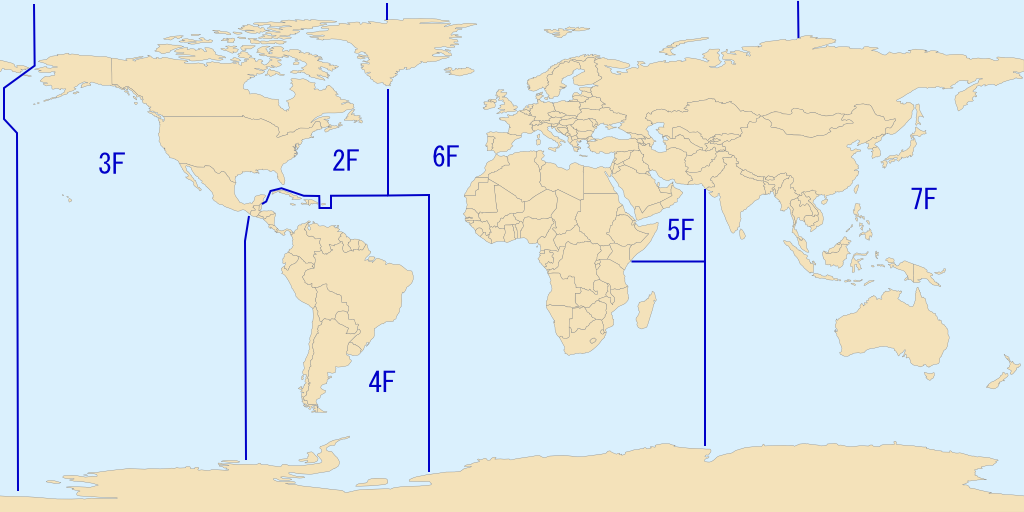
US navy fleets areas of responsibility. Source Wikipedia.
The only mitigating rationale I see for not transferring most of the large cutters to Pacific Area is that the Eastern Pacific drug transit zone is actually closer to Atlantic Area ports than to Pacific Area ports. This is why all of South America is under 4th Fleet, which is an Atlantic Fleet command. Probably an argument should be made for realigning the Coast Guard Area geographic descriptions to match those of the Atlantic and Pacific Fleets. A change of name to Eastern and Western Area might be appropriate and in fact a more accurate description.
Atlantic area includes not only the Atlantic coast but also the great lakes, inland areas, the Gulf of Mexico, Caribbean, and parts of the Arctic and Southern Oceans. Pacific Area also includes inland areas, the Indian Ocean (part of which is under Atlantic Fleet), and parts of the Arctic and Southern Oceans.
A realignment along Fleet dividing lines would also mean the dividing lines would more closely correspond to COCOM areas of responsibility and limit the number of cases where COCOMs would need to deal with both Coast Guard Areas to NORTHCOM. Currently there is also overlap in SOUTHCOM, AFRICOM, and CENTCOM. All three of those COCOMs would only need to deal with the Eastern (Atlantic) Area. That seems to be what is happening with AFRICOM and CENTCOM now anyway. PATFORSWA WPCs, Atlantic Area assets, operate routinely in the Indian Ocean, part of the PACAREA AOR.
Unified Combatant Commander’s Areas of Responsibility.
As Pacific Area assumes more responsibility in the Western Pacific and potentially the Indian Ocean passing off responsibility for all Coast Guard operations in 4th Fleet’s Area of Operations to Atlantic Area might make sense.
Antarctic:
The U.S. priority for Antarctica remains maintaining “a continent reserved for peace and science in accordance with the provisions of the Antarctic Treaty of 1959.”
No real change expected other than more and better icebreakers, but not everyone thinks like the US.
We should have the agility to react to a change from the present “continent reserved for peace and science.” We really have no reason for confidence that Antarctica will not become a zone of Conflict. Fortunately, actions to increase capabilities in the Arctic may also serve us well in Antarctica.
Implications for the Future
Cutter Design:
Patrol Cutters: Moving from “Patrol and Interdict” to “Target and Interdict” suggests that cruise speed endurance may become less important, and that higher max speed and an economical loiter speed may become more important. Greater emphasis on Defense Readiness would also suggest the desirability of greater speed. This suggest that we may want to build fewer than the currently planned 25 OPCs and shift investment to a new design based on a different set of priorities that we can build in greater number; ships with greater speed and increased modularity to accommodate an uncertain future.
Buoy Tenders: Improved aids to navigation may mean tenders will spend less time on routine AtoN maintenance. Still, they will need to be geographically distributed to respond to critical outages. It seems these ships will become more multi-mission by design. They should continue to be able to operate in ice. Their increased use for non-AtoN missions suggest that they may need overflow berthing and more fuel and stores capacity when supporting WPC deployments and to make them more effective in law enforcement roles–more speed, a flight deck and hangar for UAS and a deck gun such as the Mk38 Mod4.
Deployable Teams
Sounds like we will be getting more deployable Law Enforcement Detachments given the proliferation of capacity building objectives. Increased specialization and a desire for continuity in this area may someday result in a new rating.
Thanks to Paul for bringing the video to my attention.
Oct. 25, 2024
Coast Guard unveils first Operational Posture Statement
By Zach Shapiro, MyCG Writer
The Coast Guard just released its first Operational Posture Statement, which outlines the service’s operational priorities, including its plans to adapt to personnel and resource challenges. Vice Adm. Peter W. Gautier, Deputy Commandant for Operations (DCO), unveiled the document Friday during an event at the Center for Strategic and International Studies (CSIS) in Washington, D.C.
Think of the new annual Operational Posture Statement as a tactical annual document that supports the long-term Coast Guard Strategy by providing more specificity.
To improve operational efficiency and effectiveness, for example, the Coast Guard will increasingly use intelligence and data to shift its approach from “patrol and interdict” to “target and interdict.”
And to improve readiness, the Coast Guard will focus on three key elements: the workforce, capabilities, and assets. The Operational Posture recognizes the need to meet increasing demand while addressing workforce and resource shortages. The service will also continue to recapitalize cutters, boats, aircraft, and infrastructure.
The Operational Posture “is our effort to communicate with our stakeholders and be transparent with the American people on how we will confront all of these challenges, this increasing mission demand, and provide the kind of services that Americans deserve,” Gautier said.
Six guiding principles underpin the Operational Posture Statement:
Balance current operations with future readiness
Strengthen maritime governance
Counter strategic competitors while fulfilling our primary responsibility to secure and defend the homeland
Adjust force structure and posture to maximize operational effectiveness while maintaining a high level of support for our people, platforms, and infrastructure
Employ resources holistically to meet growing demands
Leverage intelligence, information, and improved maritime domain awareness to shift from a “patrol and interdict” to “target and interdict” model
These priorities reflect the increasing national and global demands for Coast Guard services. As 90 percent of global trade moves by sea, maritime security is the bedrock of national security and economic prosperity. In the face of rising global maritime tensions, the Coast Guard has a unique and critical role as a law enforcement entity and military agency.
Amidst this evolving environment, Gautier emphasized, the Coast Guard remains committed to its Search and Rescue (SAR) mission. That mission is “a sacred trust with the American people and a no-fail mission. It is our primary lifesaving mission. It defines us as a humanitarian service,” he said.
Moving forward, the Coast Guard intends to release a new Operational Posture Statement annually to outline the ways in which the service is adapting to new challenges and missions to best serve the American people.
To read the Operational Posture Statement in full, please click here.
Faint lighting, suitable for pilots wearing night vision goggles, outlines the flight deck on board U.S. Coast Guard Cutter Bertholf (WMSL 750) in a ghostly green as the ship charts its course at twilight in the Yellow Sea June 2, 2019. The ship is engaged in a Western Pacific deployment in support of the U.S. Navy’s 7th Fleet. U.S. Coast Guard photo by Chief Petty Officer John Masson.
2015 CGC Bertholf returned to its homeport of Alameda after completing a 104-day multi-mission deployment in which the cutter seized over $455 million worth of illegal narcotics. Bertholf was deployed to the Eastern Pacific Ocean in support of Joint Interagency Task Force-South (JIATF-S) Operation Martillo. During this phase the cutter’s crew boarded and seized 11 smuggling vessels, detained 32 suspected narco-traffickers, and prevented more than 30,000 pounds of illegal narcotics from reaching U.S. shores. The cutter’s success on the recent deployment showcases the stamina and flexibility of Bertholf’s hard-working crew, highlighted by the cutter’s interdiction of a self-propelled semi-submersible (SPSS). Bertholf’s boarding teams achieved complete surprise in taking control of the stealthy vessel, and spent over two full days onboard the SPSS ultimately recovering over 15,000 pounds of narcotics. At another point during the deployment, the cutter’s crew pursued nine different go-fast vessels on the high seas in less than seven days. The successful interdictions were enabled by the cutter’s interoperability with other Coast Guard units, as well as assets from the Department of Defense and other agencies supporting the JIATF-S mission. For a portion of the deployment, the cutter traveled to Valparaiso, Chile in support of UNITAS 2015, a multinational naval exercise, partnering with naval forces from 11 countries, including the U.S. Navy. Bertholf ‘s boarding teams conducted joint interdiction operations with Chilean and Mexican forces, boarding simulated rogue merchant vessels to seize smuggled weapons of mass destruction components as part of an international task force.
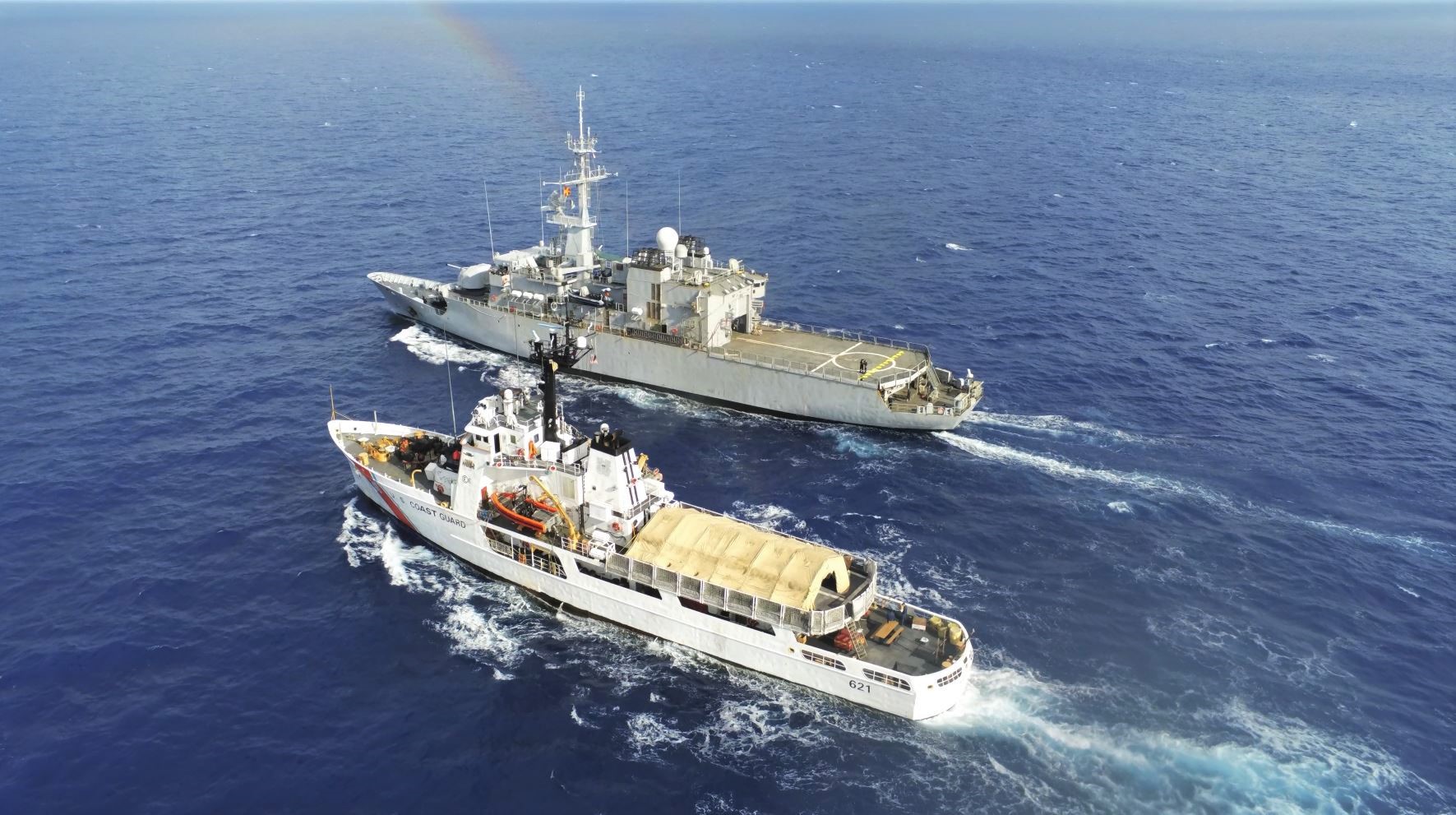
U.S. Coast Guard Cutter Valiant (WMEC 621) and French Navy Frigate FS Ventôse (F733) conduct joint exercises at sea, Sept. 29, 2024, while underway in the Windward Passage. The crew of Valiant conducted a 49-day migrant interdiction operations patrol in the region to protect life at sea and enforce U.S. maritime law. (Photo courtesy of FS Ventôse)
I am posting the CG news release below, partly just because I liked the photo above that accompanied it. (Click to enlarge. There is even a hint of a rainbow.)
The two ships also make an interesting comparison.
Although it is a French Navy ship and classed as a surveillance frigate, FS Ventôse and her Floréal class sister ships along with the newer, larger Lafayette class are the French equivalent of large US Coast Guard patrol cutters.
It is not apparent from the photo, but the French ship is longer–93.5 m (306 ft 9 in)–almost three times Valiant’s displacement.
Ventôse is now 31 years old. The class is expected to be replaced by the European Patrol Corvette beginning in 2030.
Valiant is now 57 years old. Six of her class of 16 are no longer in US Coast Guard service and we are yet to see the first Offshore Patrol Cutter.
First of Floréal class was commissioned 28 years after the first of the Reliance class, only a couple of years before we should have started replacing the Reliance class.
Note the photo was taken from a French helicopter.
Cutters need reconfigurable space if they are to have mission flexibility without the need for greatly increased size. Valiant deployed without a helicopter. Effectively Valiant’s flight deck was used as reconfigurable space. You can see the temporary shelter for immigrants in the photo.
Operating as Valiant did, where they could be supported by land-based aircraft, they probably did not need organic aviation assets for search, but it did mean they probably had no overwatch when they made boardings and certainly no armed overwatch.
Nov. 22, 2024
Coast Guard Cutter Valiant returns home after 46-day patrol in the Windward Passage
NAVAL STATION MAYPORT, Fla. — The crew of Coast Guard Cutter Valiant (WMEC 621) returned to their home port at Naval Station Mayport, Nov. 7, following a 49-day migrant interdiction operations patrol in the Windward Passage.
Valiant’s crew deployed in support of Homeland Security Task Force – Southeast (HSTF-SE) and Operation Vigilant Sentry (OVS) while operating in the Seventh Coast Guard District’s area of responsibility. Throughout the patrol, the crew of Valiant conducted maritime safety and security missions to protect life at sea and enforce U.S. maritime law.
While at sea, Valiant rendezvoused with French Navy Frigate FS Ventôse (F733) during the vessels’ independent patrols off coastal Haiti, where the two crews conducted North Atlantic Treaty Organization (NATO) exercises. Valiant’s crew applied cutter refueling at sea techniques and exercised NATO code signaling with their French counterparts. Valiant’s small boat team received the unique opportunity to perform small-boat operations with a French warship. And Ventôse embarked a team from Valiant for a simulated boarding, where Coast Guard members shared techniques, procedures and best practices with their French counterparts.
International professional exchanges at sea such as these are vital for strengthening partnerships between nations, clearing the path for joint operations where shared missions, such as search and rescue and maritime drug interdiction, overlap.
Additionally, the crew of Valiant provided care for 363 Haitian migrants and conducted their safe repatriation home. Valiant’s crew also transferred nearly 1,000 pounds of illegal narcotics and 14 suspected drug traffickers to proper authorities.
HSTF-SE serves as the Department of Homeland Security lead for operational and tactical planning, command and control, and acts as a standing organization to interdict unlawful maritime migration attempts with federal, state and local partners. HSTF-SE continues to enhance enforcement efforts in support of OVS, which is the 2004 DHS plan to respond to mass maritime migration in the Caribbean Sea and the Florida Straits.
Valiant is a multi-mission, 210-foot, Reliance-class medium endurance cutter. Its primary missions include search and rescue, maritime law enforcement, marine environmental protection, homeland security and national defense operations.
The staff of the Boston District personnel office celebrate VJ day. [190530-G-G0000-3018]
1942 The Coast Guard Women’s Reserve, known as SPARs, was organized.
1970 – Editorial cartoon run during the Kudirka Incident. Credit New York Times
1970Simas I. Kudirka, a Lithuanian seaman, attempted to defect from his Soviet fishing vessel to CGC Vigilant. The incident occurred during a meeting near Martha’s Vineyard between the Soviets and the U.S. on fishing rights. After consulting with the First District command, the cutter’s commanding officer allowed Soviet crewmen to board the cutter and forcibly remove Kudirka.
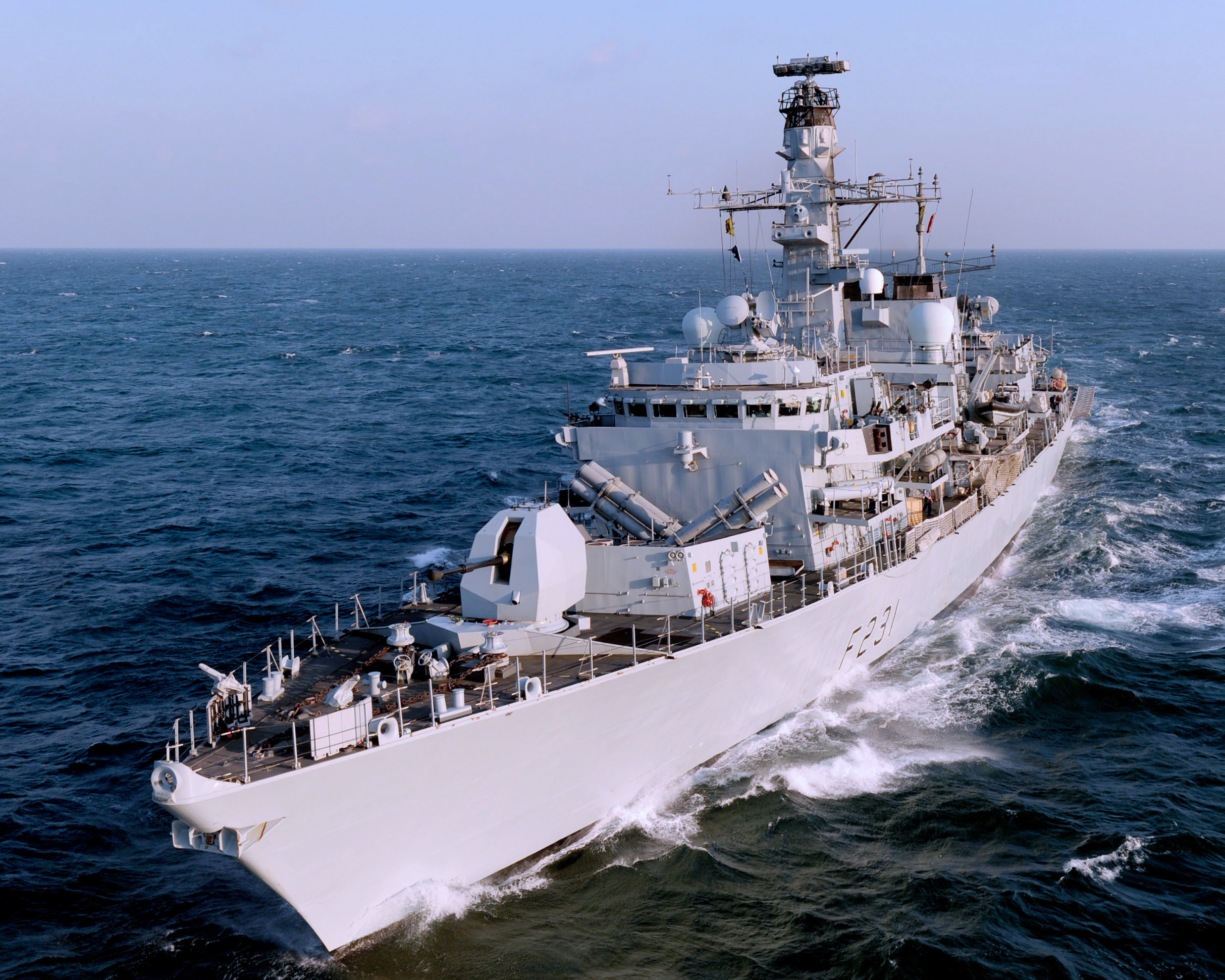
Royal Navy Type 23 frigate HMS Argyll is pictured at the end of Exercise Goalkeeper in the Middle East. Based in Plymouth, HMS Argyll was the longest-serving Type 23 frigate in the Royal Navy. Built in the late 1980s at the Yarrow Yard in Scotstoun on the Clyde (today part of BAE Systems), she was commissioned in 1991. She was decommissioned May 2024.
2014 While on a routine patrol, a Joint Interagency Taskforce South maritime patrol aircraft crew detected a go-fast vessel south of Haiti heading north at 15 knots with fuel barrels and possible contraband on board. Watchstanders from the Coast Guard 7th District Command Center directed HMS Argyll to intercept and conduct a boarding of the vessel. The go-fast began to jettison objects and Argyll launched both of its smallboats. Shortly after, the go-fast vessel with four suspected smugglers aboard became compliant and was boarded by a U.S. Coast Guard law enforcement team assigned to Argyll. The Royal Navy warship’s crew recovered 29 bales of contraband the suspects jettisoned into the water. All bales later tested positive for cocaine. The smuggling vessel was destroyed as a hazard to navigation. In a separate case, the Coast Guard LEDET and crew of Argyll teamed to seize 216 kilograms of cocaine after a Dutch maritime patrol aircraft detected a suspect go-fast and vectored Argyll to the vessel’s location on November 23, 2014. The go-fast vessel was stopped and two suspects were taken into custody. The contraband was offloaded in Mayaguez, Puerto Rico.
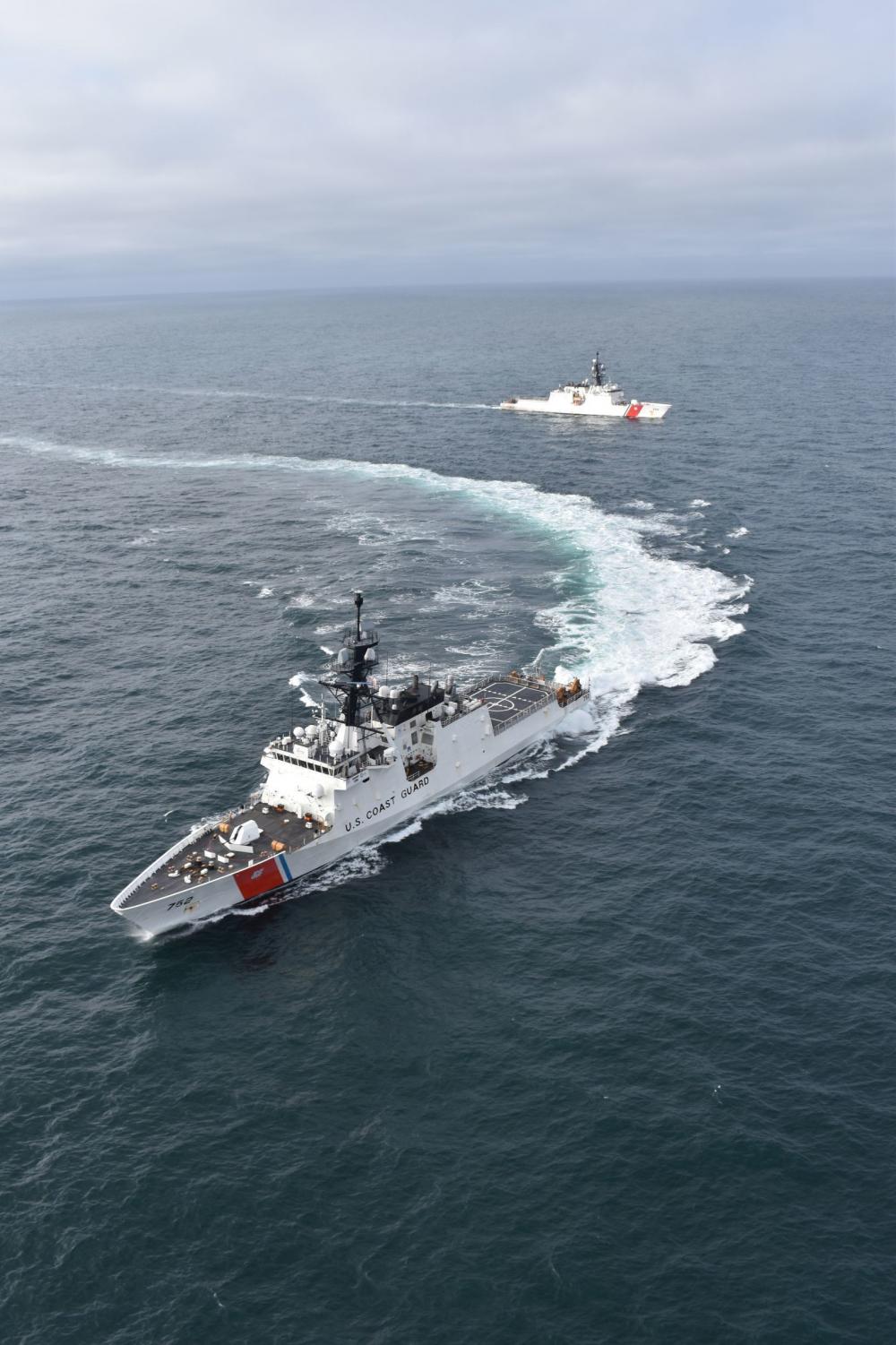
U.S. Coast Guard Cutters Stratton (WMSL 752) and Kimball (WMSL 756) steam in formation while patrolling the U.S.-Russian Maritime Boundary Line (MBL), in the Bering Sea, Sept. 26, 2022. This marked the first time two national security cutters jointly patrolled the MBL above the Arctic Circle. (U.S. Coast Guard courtesy photo).
2022 The Coast Guard Cutter Stratton (WMSL 752) and crew returned to Alameda, Wednesday, November 23, 2022 following a 97-day, multi-mission deployment to the Arctic Ocean and Bering Sea. In August, the cutter and crew departed Alameda to project U.S. sovereignty throughout U.S. Arctic waters, provide search and rescue capabilities in the region, and meet with Alaskan communities. Stratton repeatedly operated along the length of the U.S.-Russian maritime boundary line (MBL) from the Diomede Islands to well above the Arctic Circle, while they patrolled within the U.S. Arctic zone. Stratton also patrolled the U.S.-Canadian MBL in the Beaufort Sea, demonstrating a presence in the distant regions of the Arctic. On September 26, 2024, Stratton and the Coast Guard Cutter Kimball (WMSL 756) became the first national security cutters to jointly patrol the U.S.-Russian MBL above the Arctic Circle. The operational intent was the protection of the sovereign rights of the U.S. and the promotion of international maritime norms through Coast Guard presence and influence in this increasingly strategic and competitive region. Stratton’s crew supported multiple search and rescue cases during their patrol, including rescuing two fishermen from a disabled vessel 180 miles off the Oregon coast while Stratton was transiting to the Arctic. The crew towed a 66-foot disabled fishing vessel toward shore and then transferred the vessel and survivors to a Coast Guard Station Coos Bay 47-foot Motor Lifeboat crew, approximately 45 miles offshore Coos Bay, Oregon. Stratton’s crew also coordinated with Air Station Kodiak aircrews and the Alaska State Troopers to help locate a family stranded on the remote shores of Kotzebue Bay, Alaska, after their boat capsized. Stratton and the Canadian Coast Guard Ship Sir Wilfrid Laurier crews conducted an Arctic search-and-rescue exercise near Point Hope, Alaska. The crews exercised bilateral coordination to locate a simulated vessel in distress using Stratton’s Scan Eagle unmanned aerial system and operations specialists aboard Stratton, who directed the Canadian small boat crew toward the distressed vessel while watching a live feed from the overhead drone. The Canadian small boat located, recovered, and returned the distressed vessel to Stratton. While operating near and above the Arctic Circle, Stratton’s crew conducted multiple outreach events with community members and key leaders in Kaktovik and Utqiagvik on Alaska’s North Slope. The crew also visited the village of Savoonga on Saint Lawrence Island, Alaska.
1906 At the second International Radio Telegraphic Convention, which was held in Berlin, the attendees agreed to adopt the wireless signal “SOS” as the internationally recognized signal for distress at sea. Their thinking was that three dots, three dashes and three dots could not be misinterpreted.
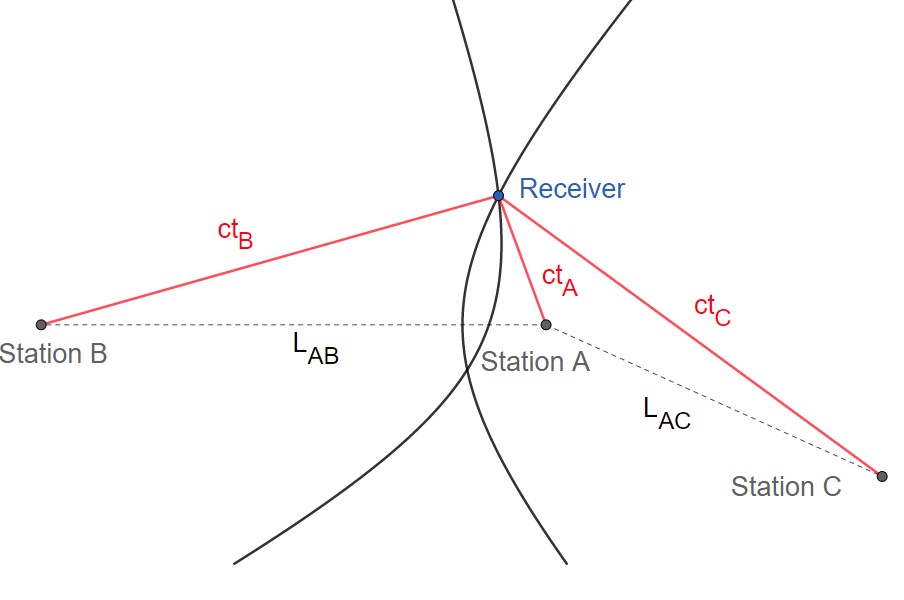
Hyperbolic navigation example (Image: Wikipedia)
1953 A great boon to ocean navigation for aircraft surface vessels was the completion of four new LORAN stations in the Far East. The stations were built at Mikayo Jima, Ryuku Islands; Bataan and Cantanduanes Islands, Philippines; and Anguar, Palau Island in the Carolinas chain.
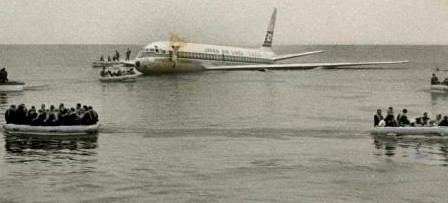
Japan Airlines Flight 2 in the water just short of San Francisco International Airport runway. 22 November 1968. US Coast Guard photo.
1968 A DC-8 with 107 persons on board disappeared from the radar during final approach to San Francisco International Airport. Visibility was 3/4-mile in fog and the ceiling was 300 feet. A Coast Guard helicopter located the aircraft in the water 6,100 yards from the runway with people on the wings boarding life rafts. Within seven minutes, two additional helicopters and a Coast Guard boat were on the scene. All 107 persons were saved.
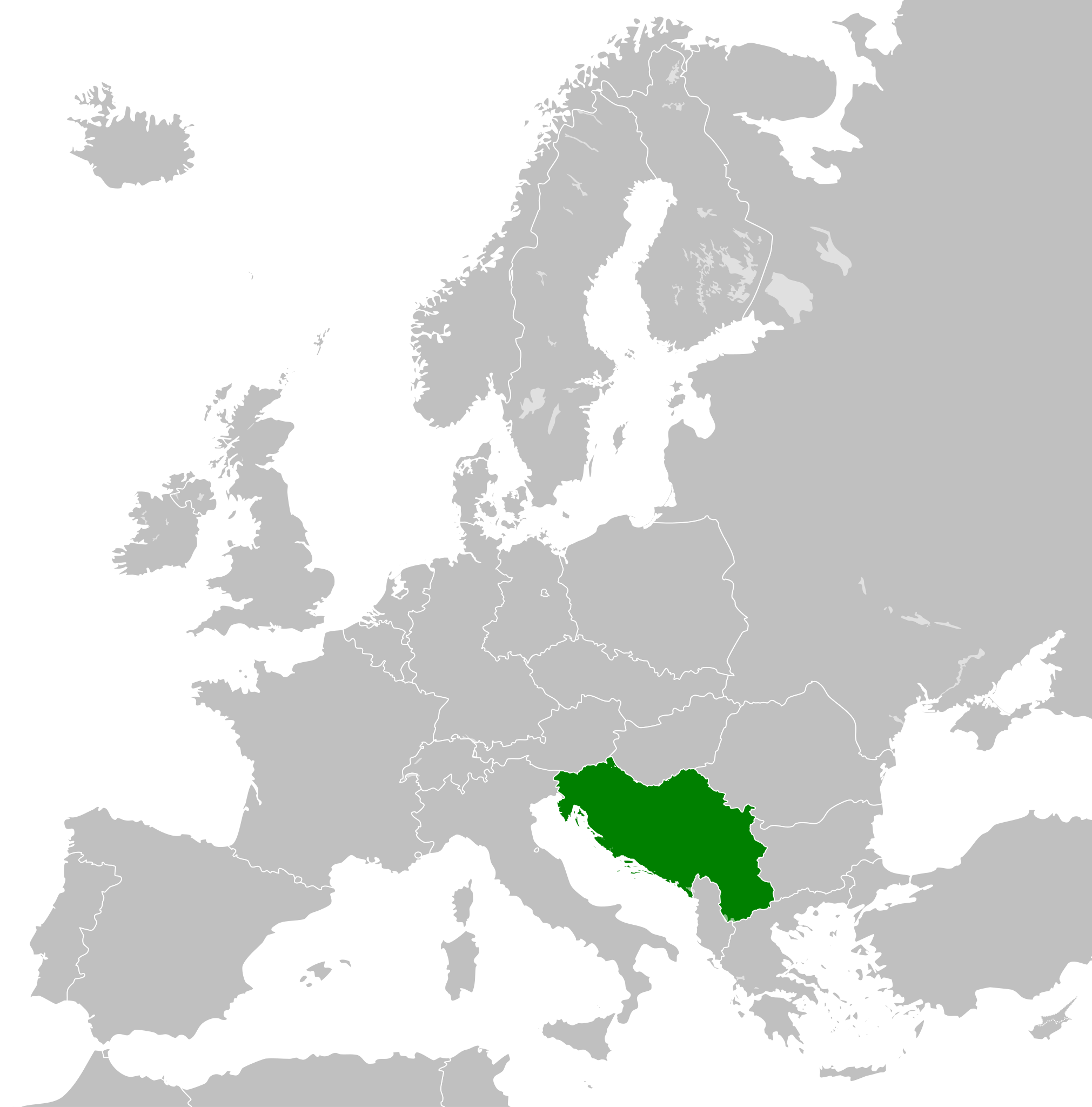
Map of Socialist Federal Republic of Yugoslavia as it was from 1945-1992. Surrounding countries accurate from 1956-1990.
1993 NATO began enforcing United Nations’ Resolutions 713 and 757 that set in place an embargo against the former Federal Republic of Yugoslavia (Serbia and Montenegro). Four Coast Guard LEDETs were deployed to Southern Europe to support the operation and were placed aboard NATO warships.
SAN FRANCISCO. The Coast Guard Cutter Waesche transits through the San Francisco Bay for the first time en route to its homeport of Alameda, Calif., Feb. 28, 2010. (U.S. Coast Guard photo by Petty Officer 3rd Class Kevin Metcalf)
2015 CGC Waesche returned to its homeport at Coast Guard Island in Alameda after a 106-day deployment. Waesche departed Alameda in August on its 18,000-mile deployment ranging from the coast of Southern California to the Arctic Ocean, and the Bering Sea. During this deployment, Waesche’s crew completed two weeks of weapons system testing and certification, patrolled the Arctic in support of Operation Arctic Shield, and enforced federal fisheries laws and safety regulations in the Gulf of Alaska and Bering Sea. Law enforcement personnel aboard the cutter conducted numerous at-sea boardings of fishing vessels to ensure compliance with federal fisheries regulations and conduct spot checks of required safety equipment. The cutter patrolled in the Arctic, furthering national strategic goals by enhancing maritime domain awareness and improving preparedness, prevention, and response capabilities in the region. While in the Bering Sea, Waesche assisted in a search-and-rescue case that resulted in the successful medical evacuation of an ailing fisherman. Waesche crewmembers worked closely with the communities of Dutch Harbor and Barrow, Alaska while in the area. The crew hosted community leaders from Barrow aboard the cutter to discuss the rapidly evolving economic landscape in the Arctic and volunteered during their time ashore to complete several community service projects in the community of Dutch Harbor.
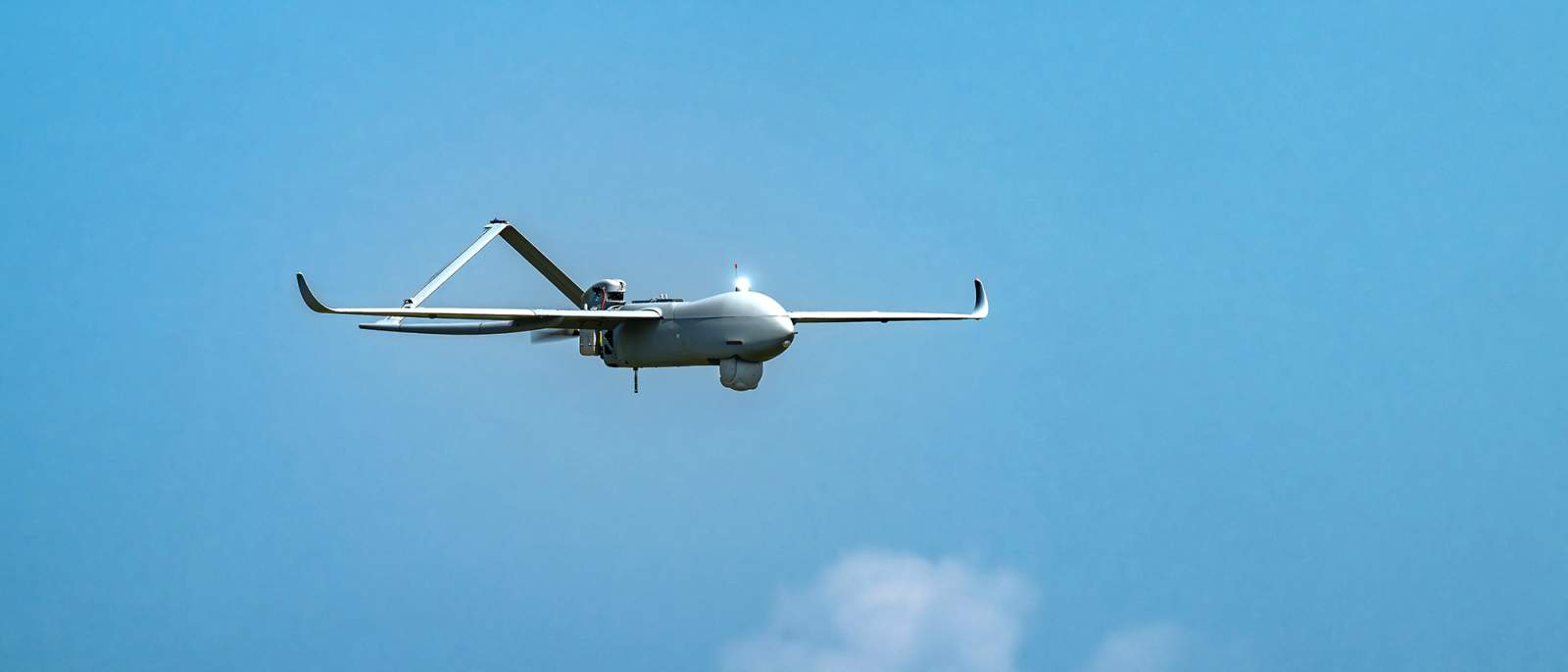
Below are two news releases reporting contracts for Contractor-Owned/Contractor-Operated Aerosonde Uncrewed Air System operation support, first on the Littoral Combat Ships bound for the 5th Fleet (Central Command) and second for an unidentified ship deploying to 6th Fleet (European Command).
Textron Systems Awarded Uncrewed Aircraft System (UAS) Contracts For Three Additional U.S. Navy Littoral Combat Ships (LCSs)
Hunt Valley, Md., November 18, 2024 – Textron Systems Corporation, a Textron Inc. (NYSE:TXT) company, announced today that it has been awarded a task order valued at up to $47 million by the U.S. Navy’s Naval Air Systems Command (NAVAIR) to provide COCO UAS services to three Independence Class Littoral Combat Ships (LCS) deploying to 5th Fleet. This award follows a 2023 contract to provide UAS support to LCSs, bringing the total number of U.S. Navy ships supported by the Aerosonde® UAS to 10.
Textron Systems will deploy its Aerosonde UAS and skilled personnel to provide mission overwatch and extended range intelligence, surveillance and reconnaissance (ISR) services with enhanced mission payloads as seen aboard the Expeditionary Sea Base (ESB)-4 and ESB-5, as well as two DDG-class ships and three LCSs. In December 2023, the Aerosonde UAS took its inaugural operational flight from its first LCS, the LCS-28 USS Savannah.
“Textron Systems has delivered COCO services with our Aerosonde UAS for over a decade, demonstrating the flexibility and value a model like this brings to the services,” said David Phillips, Senior Vice President Air, Land and Sea Systems. “Because we are managing the full life cycle of the system, including technology integration, human factors, spares and repairs, employing the Aerosonde UAS enables the Navy customer to focus solely on their mission. We extend the customer’s capabilities across the mission packages of each ship reliably and quickly.”
The Aerosonde UAS offers multi-mission capability built upon a family of systems which have amassed over 700,000 flight hours over more than 10 years. The system is equipped for multiple payload configurations with both vertical takeoff and landing (VTOL) and fixed-wing options.
NAVAIR Public Release SPR-2024-0803. Distribution Statement A – “Approved for public release; distribution is unlimited”
Textron Systems Awarded Uncrewed Aircraft System (UAS) Contract For Additional U.S. Navy Ship
Hunt Valley, Md., November 20, 2024 – Textron Systems Corporation, a Textron Inc. (NYSE:TXT) company, announced today that it has been awarded a task order valued at up to $17 million by the U.S. Navy’s Naval Air Systems Command (NAVAIR) to provide COCO UAS services to a U.S. Navy ship deploying to 6th Fleet. This award brings the total number of U.S. Navy ships supported by the Aerosonde® UAS to 11.
Textron Systems will deploy its Aerosonde UAS and skilled personnel to provide mission overwatch and extended range intelligence, surveillance and reconnaissance (ISR) services with enhanced mission payloads. In September, Textron Systems was contracted to provide support to three additional Littoral Combat Ships (LCS).
“Textron Systems is committed to enhancing the Navy’s mission sets. The continued use of ISR support demonstrates the benefit of the COCO model and the services our Aerosonde UAS provides to the sailor,” said David Phillips, Senior Vice President Air, Land and Sea Systems. “The flexibility in a COCO mission allows the Navy to extend their capabilities while we as the contractor manage the full life cycle of the system, ultimately resulting in greater efficiency and reliability.”
The Aerosonde UAS offers multi-mission capability built upon a family of systems which have amassed over 700,000 flight hours over more than 10 years. The system is equipped for multiple payload configurations with both vertical takeoff and landing (VTOL) and fixed-wing options.
NAVAIR Public Release SPR-2024-0801. Distribution Statement A – “Approved for public release; distribution is unlimited”












 Chuck Hill's CG Blog