“SECNAV Nominee Commits to Advancing Navy’s Arctic Presence” –Seapower

Kenneth J. Braithwaite, U.S. ambassador to Norway and the nominee to become the next Navy secretary, in 2018. During his Senate Armed Services Committee confirmation hearing on May 7, Braithwaite spoke of the importance of the U.S. foothold in the Arctic to counter “Great Power Competitors” China and Russia. U.S Navy/Mass Communication Specialist 1st Class Theron J. Godbold

The Navy League on-line magazine is reporting that the current nominee for Secretary of the Navy, a former Navy P-3 patrol plane commander, is saying that he will be a strong advocate for a Navy presence in the Arctic.

Braithwaite also told Sen. Dan Sullivan (R-Alaska) that he would be a strong advocate for a strategic Arctic port large enough to handle destroyers and icebreakers. The nearest such port is Anchorage, Alaska, which is 1,500 miles from the Arctic Circle, Sullivan added.

“The great news is the United States Navy has been up there for many, many years,” Braithwaite said. “You may not see them, but they’re up there. As it begins to become more navigable on the surface, we also need to make sure that our presence is noted.”

“We continue to need to be vigilant,” he added. “We continue to need to be present. That requires an adequate-size Navy to be there.”

“It will be a priority of mine.”

We talked about Arctic port development earlier:


“Sonardyne’s New Forward Looking Sonar Supports Collision Avoidance” –MarineLink

Sonardyne Vigilent.  Compact in size and with mounting options for both new build and retro-fit. (Photo: Sonardyne)

MarineLink has an interesting press release concerning a forward looking navigational sonar. Since cutters must frequently depart established traffic areas and venture into shallower areas for SAR or law enforcement, this might be useful.

“Vigilant FLS offers mariners subsurface situational awareness, providing live and past vessel track, detailed 3D bathymetry out to 600 meters and automated warnings of unseen collision hazards on and beneath the waterline out to 1.5 kilometers.”

“Guangzhou Wenchong Ship Factory to build new 10,000-ton cutter for China Maritime Safety Administration” –NavyRecognition

Drawing of future 10,000-ton cutter for China Maritime Safety Administration. (Picture source China Blog)

NavyRecognition is reporting that China is building an over 10,000 ton cutter for their Maritime Safety Administration (MSA). MSA is the only one of the five Chinese Maritime coast guard like organizations that was not incorporated into the China Coast Guard.

“According to information published by the Guangdong Maritime Safety Administration, the new cutter will have a total length of 165 meters, a width of 20.6 meters, a depth of 9.5 meters, and a displacement of 10,700 tons.”

That is 541 feet in length, 67.6 feet of beam, and 31.2 feet of draft. The displacement is probably light displacement rather than full load.

The China MSA appears less militant than the China Coast Guard. No weapons are evident, but that does not mean they don’t have a plan of how to use the ship in wartime. Like some of the large China Coast Guard cutters, this looks like it could be used as an attack transport.

“Islands of ire: The South Korea–Japan dispute” –Baird Maritime

The Liancourt Rocks, known as Dokdo (or Tokto, 독도/獨島, literally “solitary island”) in Korean, as Takeshima (竹島, Takeshima, literally “bamboo island”) in Japanese., Author: 머찐만두 at Naver

Why two nations that should be allies cannot get along.

Baird Maritime has a short feature on the background of the dispute between Korea (both North and South) and Japan over 0.072415 square miles of rocks in the Sea of Japan. Also known as the Liancourt Rocks, they are Dokdo to the Koreans and Takeshima to the Japanese. The post also talks about other sources of bad feeling.

The US would very much like to see more defense cooperation between the two, but history and pride keep getting in the way. As an indicator of how strongly the South Koreans feel about this, they named their largest warship Dakdo after the island group.

Japan should take their case to the international tribunal and then accept the result.

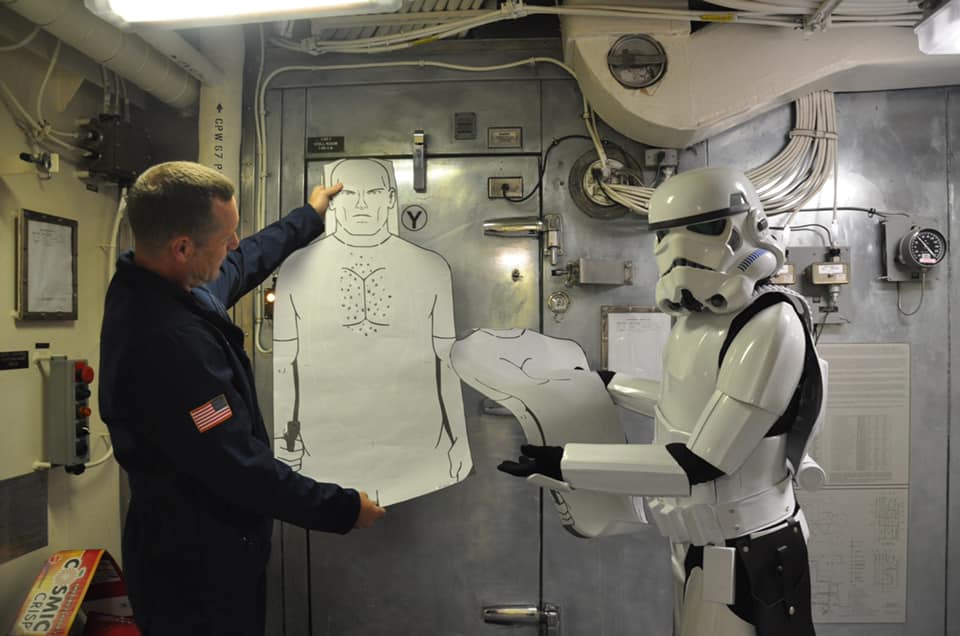
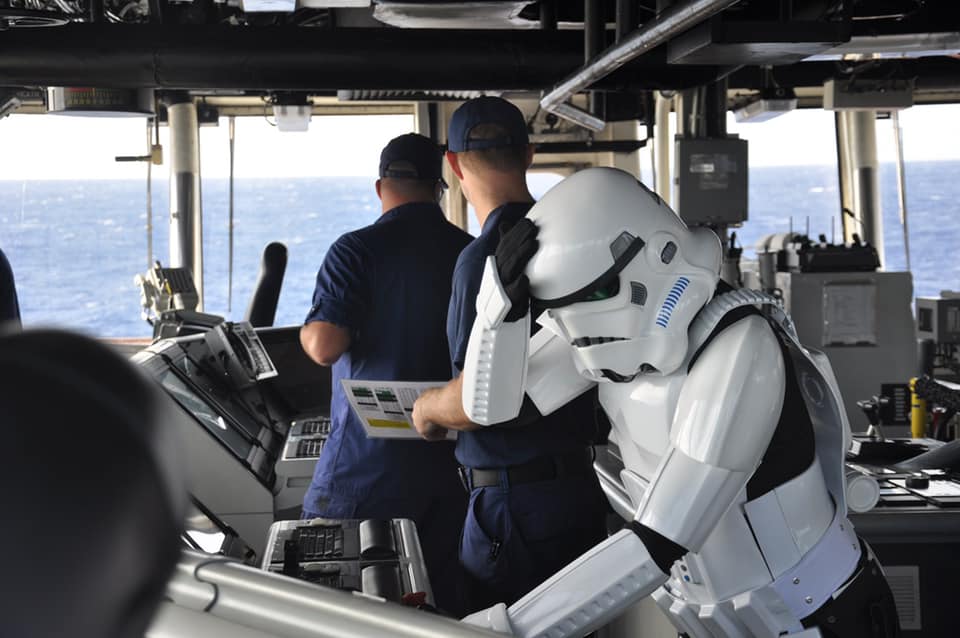
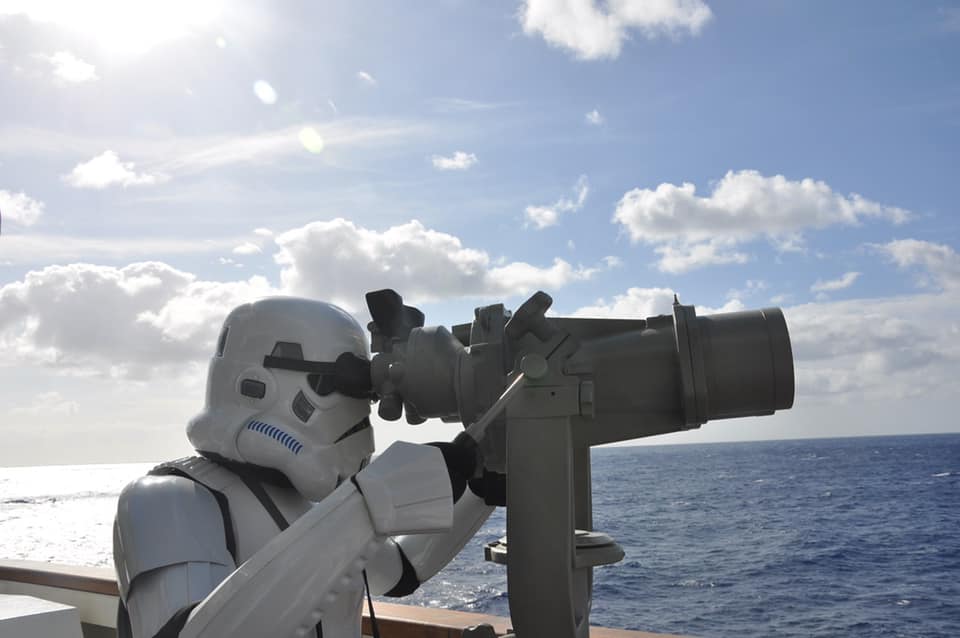
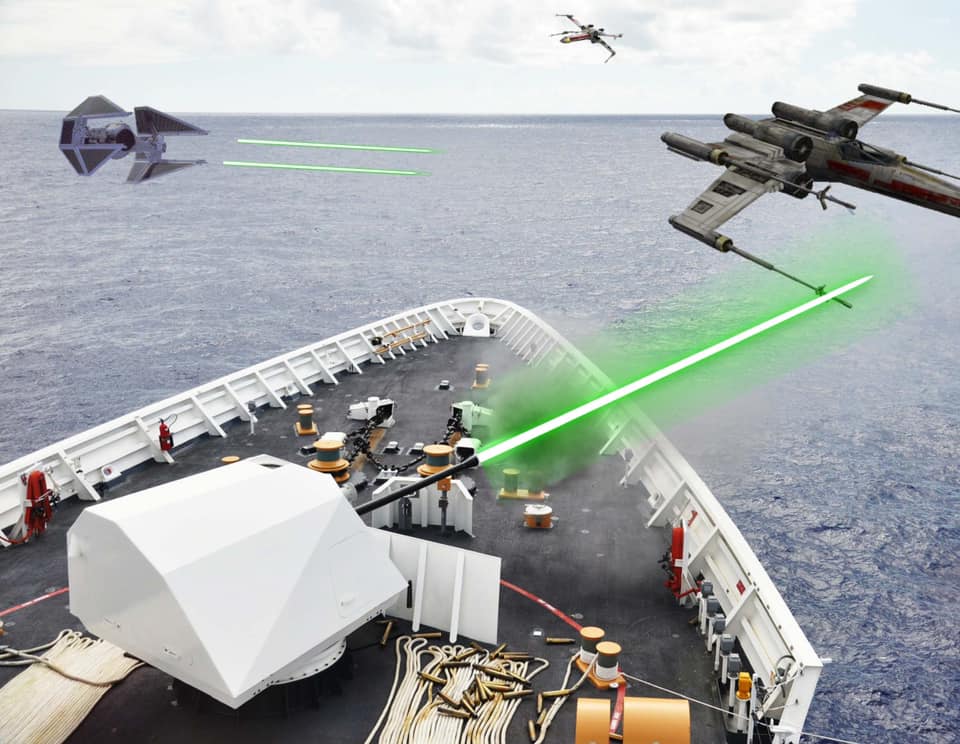
May the 4th Be With You

A typical day on the Imperial Star Destroyer Kimball. (stolen from Kimball’s Facebook page)

Yummm…waffles!

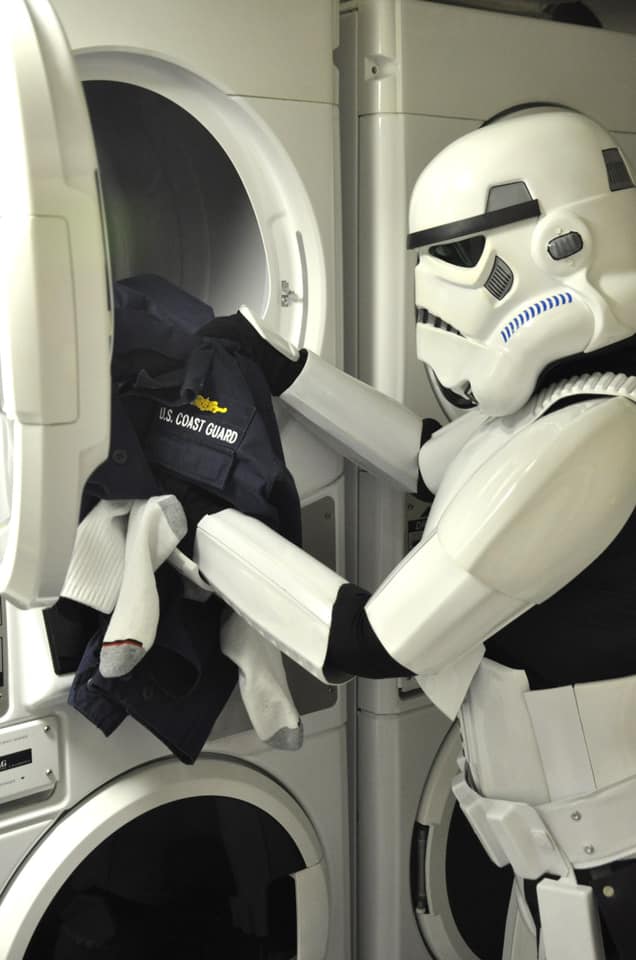
“This isn’t my laundry?!”

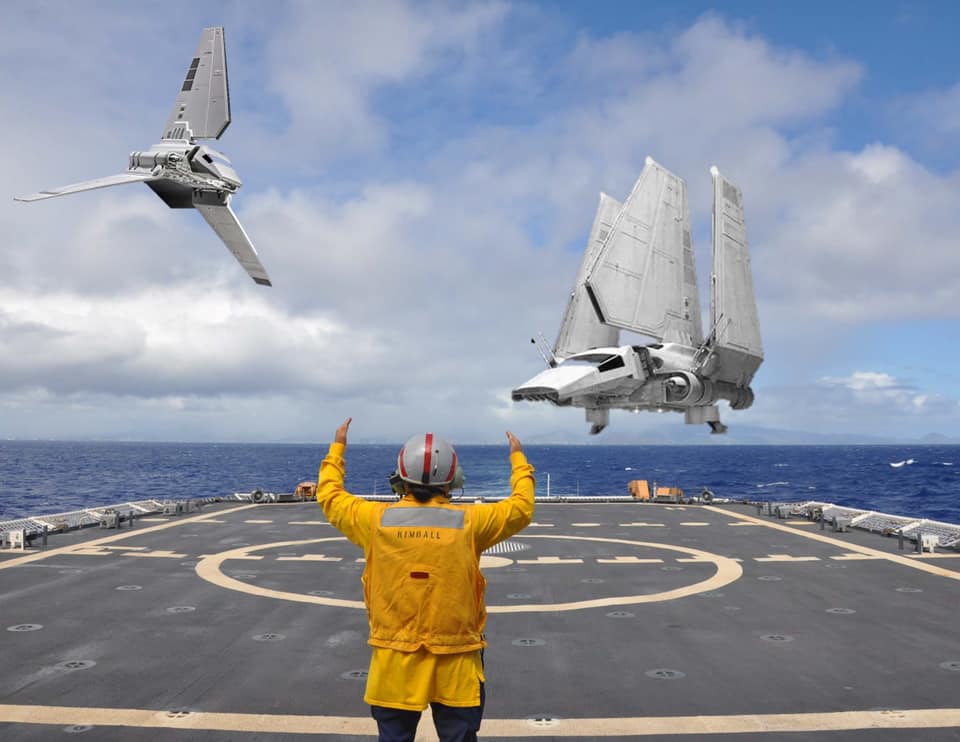
Touch and Goes

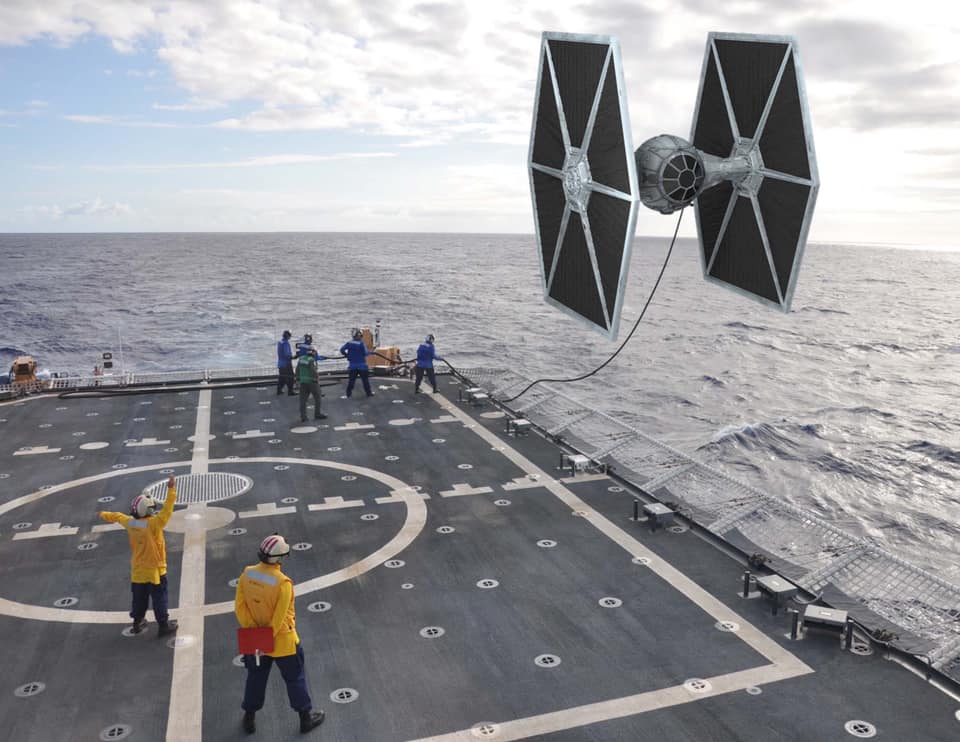
HIFR (Hot In Flight Refuel)

All hands qualified at the range, except for TK-0756 (…again)


TK-0756 on Messcook duty

“What is the password to unlock the Detention Block!?”

Main Control

“Conn, Lookout. Rebel X-wing fighters inbound!”

“Contact bears 115 degrees relative, position angle 2”

General Quarters!


“Austal Australia has been awarded contract to design and build Cape-class Patrol Boats for Australian Navy” –Navy Recognition

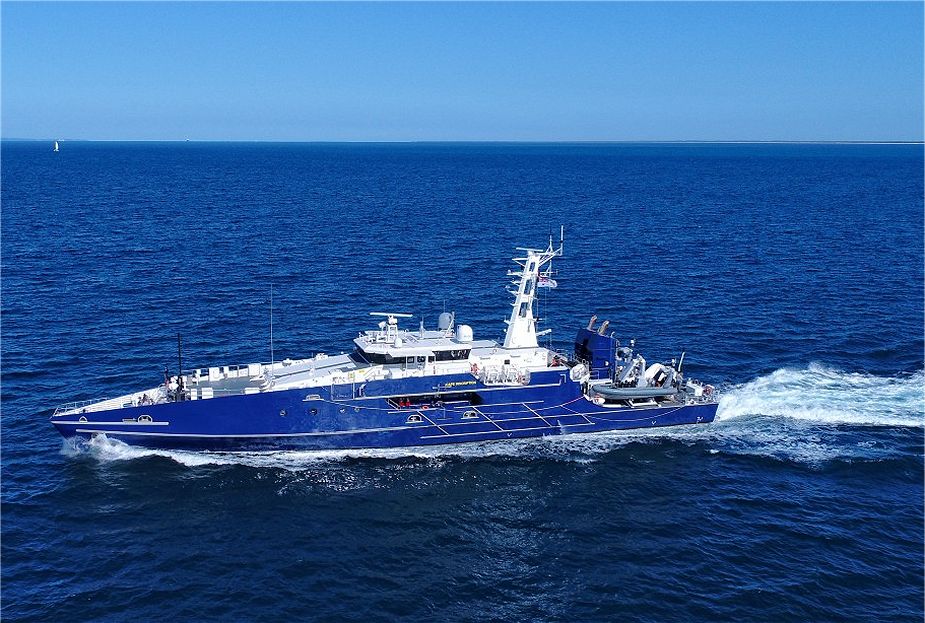
The six new Cape-class patrol boats will extend the fleet of ten ships currently operated by the Australian Border Force and Royal Australian Navy around Australia (Image: ADV Cape Inscription operating with the RAN)

NavyRecognition reports,

Austal Limited is pleased to announce that Austal Australia has been awarded an A$324 million contract to design and construct six evolved Cape-class Patrol Boats (CCPBs) for the Royal Australian Navy.


These “Cape Class” patrol vessels are a bit unusual in size, slotting between typical “inshore” and “offshore” patrol vessels. We talked about this class when Trinidad and Tobago ordered two of them.

This is the information we had on the class earlier, compared to the Webber class.

  • Displacement about twice as large: 700 tons vice 353
  • Length: 57.8 m (190 ft) vice 46.8 m (154 ft)
  • Beam: 10.3 m (34 ft) vice 8.11 m (26.6 ft)
  • Draft: 3 m (9.8 ft) vice 2.9 m (9.5 ft)
  • HP, less: 6,772 vice 11,600
  • Speed, slower: 25 vice 28
  • Crew, smaller: 18 vice 24
  • Boats: two on davits vice one in stern ramp
  • Range: greater, 4000 vice 2500 nautical miles
  • Endurance: greater, 28 vice 5 days

These new ships will have some upgrades including accommodation for 32.

I was a little surprised by this procurement. Not too long ago, Australian Navy’s patrol force consisted of only thirteen 300 ton Armidale class patrol boats. These are being replaced by twelve 80 meter OPVs. None of these larger vessels have been completed so far. In the interim they leased two of these Cape Class. Now they are getting six more, improved versions. Presumably they will retain these even after the larger OPVs are completed, giving them 20 vessels.