Naval Deployments, 29 January, 2024

The chart above and the comments below are from Schizointel on X (Twitter). Note proliferation of Iranian drone carriers, and as noted earlier, the strength of the Indian Navy deployment.


29JAN2024 Updated map of warships operating in Red Sea, Gulf of Oman, Gulf of Aden, Persian Gulf, Arabian Sea.

Updates:

IKE CSG and HMS Diamond (D-34)

IRIS Alborz (72) and MV Behshad spotted on imagery ~70km E of Djibouti.

FS Languedoc (D-653) relieved by FS Alsace (D-656)

PLAN 45th Naval Escort Taskforce continues to conduct naval escorts. China is now considering joining Operation Prosperity Guardian with the 45th Naval Escort Task Force this comes following recent indications from Chinese defense officials in Djibouti that they are Increasingly nervous about “spillover” from this Houthi Attacks.

New Zealand has Joined Operation Prosperity Guardian and will deploy 6 Defense Officials/Staff Officers.

INS Visakhapatnam (D-66) FS Alsace (D-656) USS Carney (DDG-64) Responded to a distress call of M/V Marlin Luanda in the Gulf of Aden, after being struck by ASBM and critical damage control, firefighting material and assistance to the civilian crew, who had depleted their organic firefighting capability. Thanks to this rapid response by the U.S., Indian and French navies, the fire is now extinguished. There were no casualties in the attack, the ship remains seaworthy, and has returned to its previous course.

INS Kochi (D-64) has returned to port.

IRIN 97th Flotilla is preparing for deployment to the Gulf of Aden to relieve the IRIN 94th Flotilla which composed of the Alborz (72) which has been deployed for 80 days. (Unknown which ships are part of 97th Flotilla at this time.

Unnamed IRIN Flotilla Composed of IRIS Bushehr (422) IRIS Tonb (513) another Iranian Drone Carrier Deployed 8 days ago have not been able to locate accurate position yet since it left Bandar Abbas 20JAN2024. Iranian Media listed this deployment as “new combat and training flotilla” and “deployed on a heavy and multidimensional mission and would be trained in the mission to prepare them to take on delicate tasks in the future, detailing that Iranian forces maintained a presence on the high seas and oceans despite the plans of their enemies.”

IRGCN Shahid Mahdavi (110-3) one of Irans Drone carriers is underway in the Gulf of Oman.

Former IRIN 86th Flotilla composed of IRIS Dena (75) IRIS Makran (441) IRIN forward base ship Currently in Bandar Abbas

Does not include all ships under Combined Maritime Force such as CTF 150, CTF 151, CTF 152, CTF 153,


Thanks to Tom Wade for bringing this to my attention. 

“Colombia Joins Combined Maritime Forces in Middle East as 41st Member” –CMF / Another Small Step Toward International Law

MANAMA, Bahrain – Graphic illustration of the flag of Colombia and the Combined Maritime Forces logo. CMF welcomed Colombia, Jan. 21th, as the 41th member of the world’s largest maritime security partnership. 240127-N-NO146-1001.JPG, Photo By: NAVCENT Public Affairs

Below is a news release from Combined Maritime Forces / US 5th Fleet.

I would not normally make a separate post about this, but recently I saw someone remark that International Law has no enforcement mechanism.

Combined Maritime Forces (CMF) is an international law enforcement mechanism.

It is, after all, not a military alliance, it is a law enforcement alliance, and while its police powers are limited, they are nevertheless real. Its power extends beyond national territorial seas and is derived from the concurrence of its members that certain behaviors are unacceptable.

It is not yet effective against nation states, but it does operate against the gray zone agents of nation states.

This is a remarkable development and overtime, hopefully, it will be extended to other geographic areas and broadened in scope.


Colombia Joins Combined Maritime Forces in Middle East as 41st Member

By Combined Maritime Forces Public Affairs | January 27, 2024

MANAMA, Bahrain —Combined Maritime Forces welcomed Colombia as the 41st member of the world’s largest maritime security partnership, Jan 21.

“It is a privilege to have Colombia as an official part of CMF,” said Vice Adm. Brad Cooper, CMF commander. “We welcome the Colombians in the largest international naval coalition, dedicated to maritime security and stability in the Middle East, and protecting some of the world’s most important waterways. I look forward to sharing our experiences and being ‘Ready Together’ with our new partners.”

CMF is comprised of a headquarters staff and five combined task forces focusing on defeating terrorism, preventing piracy, encouraging regional cooperation, and promoting a safe maritime environment. The naval partnership upholds the international rules-based order by supporting security and stability across 3.2 million square miles of water encompassing some of the world’s most important shipping lanes.

“Data Link Solutions to Provide BAE Systems’ FireNet Tactical Systems for US Navy” –BAE News Release

Below is a BAE press release.

I have long felt Coast Guard ships and aircraft could benefit from use of NATO standard data links. They ease coordination and can become essential in complex military operations, but they also provide secure exchange of text, imagery, and voice communications and can prevent “friendly fire” situations like the attack on USCGC Point Welcome.

Availability of Link 16 at Coast Guard district headquarters (if they do not already have it) would also make coordination with DOD assets easier should the District Commander need to ask for their assistance.

The FireNet systems seems to have made installation easier than ever.


The U.S. Navy has awarded Data Link Solutions, a joint venture between BAE Systems and Rockwell Collins, Inc., a contract to provide small form factor (SFF) Link 16 radios, which will be fulfilled using BAE Systems’ FireNet™ Link 16 tactical systems. FireNet is a scalable, secure, and open system architecture communications solution with a unified tactical network to enable Joint All Domain Command and Control (JADC2) operations.
Warfighters today operate in network-centric, information-intensive environments that demand wide data bandwidth, network diversity, and constant connectivity. Large volumes of accurate, reliable information need to be exchanged in real-time to maintain situational awareness. The FireNet system delivers that edge with additional narrow, wide-band, and tactical data link capabilities.
“We have developed a first-of-its kind small form factor system that enables full Link 16 connectivity. FireNet is scalable and modular to give our service men and women a battlefield advantage in network-centric environments across domains,” said Amber Dolan, director of Adaptive Communications and Sensing at BAE Systems. “Using the government’s program of record waveform, we can reduce lifecycle costs, quickly deliver updated capabilities, and enhance mission survivability across manned and unmanned fleets.”
The FireNet system is Crypto Modernization 1 compliant and offers the highest transmit power available in a SFF radio for current and future fleets. The system addresses size, weight, power, and cost (SWaP-C) demands and its applications can extend across rotary-wing aircraft, unmanned vehicles, maritime vessels, and space platforms. It enables additional line-of-sight voice, data, and network communications from very high frequency to S-Band.
With more than two decades of expertise in the radio market, BAE Systems’ narrowband and broadband communication technologies span airborne, maritime, and ground applications across the radio frequency and visible spectrum. These battle-proven, highly-reliable systems also feature multi-band, secure anti-jam voice, data imagery transmission, and network-capable communications. The company’s family of products merges the latest generation wideband, high speed hardware, and software technologies to provide warfighters with the communication solutions they need in the modern battlefield.
Work on the FireNet system will take place at BAE Systems’ Wayne, New Jersey; Austin, Texas; Fort Wayne, Indiana; and Hudson, New Hampshire sites. Qualification and certification will begin in 2024.

The link below is a pdf data sheet on FireNet options including dimensions and size.

“Coast Guard holds groundbreaking ceremony for new Base Charleston campus” –CG News

Base Charleston, The Base is moving from this location.

Below is a news release from CG News (photos of the ceremony at the link). While it seems the Coast Guard is contracting in some areas, it is important to remember that the Coast Guard is also being improved in others. Yes, we are decommissioning or laying up ten cutters, three 210s and seven 87 footers, but we also have 54 FRCs, compared with the 41 WPB 110s that we had when the FRC program started, and we will soon have eleven more.

The Coast Guard is also replacing and weather proofing much of its aging shoreside infrastructure.

Really, the news is not all bad. 

Jan. 26, 2024

CHARLESTON, S.C. — Coast Guard Base Charleston held a groundbreaking ceremony, Friday, for a new 64-acre campus in North Charleston.

Adm. Linda Fagan, Commandant of the Coast Guard, presided over the ceremony.

The 64-acre campus along the Cooper River will support the five Charleston-based national security cutters, their crews and the support personnel with completion expected in late 2026.

Marking a new trajectory for the Coast Guard in Charleston, Base Charleston is slated to become the service’s largest homeport and a base for global operations, training and support.

Since its commissioning in 2015, Base Charleston has delivered customer-focused premiere support to all Coast Guard members, assets, and mission partners from Northern Florida to South Carolina. Moreover, the base generates Coast Guard global operational readiness.

Growth estimates show that the Coast Guard workforce may double in the Charleston area by 2030 and continued prioritization and investment in the future of Base Charleston is needed to make this vision a reality.

As one of the original 10 homeports for the Revenue Cutter Service, the greater Charleston area has proudly supported members of the Coast Guard and its predecessor agencies for more than 230 years.

The Coast Guard footprint in Charleston includes eight major commands; Coast Guard Base Charleston, Coast Guard Sector Charleston, and the Maritime Law Enforcement Academy, as well as numerous tenant commands and personnel in supporting roles throughout the region.

The Coast Guard is a seagoing service; Charleston is the homeport of four Legend-class cutters, the Hamilton (WMSL 753), James (WMSL 754), Stone (WMSL 758) and Calhoun (WMSL 759). The Coast Guard Cutter Friedman (WMSL 760), the eleventh Legend-class cutter, is currently under construction and will be homeported in Charleston. Additionally, the cutters Willow (WLB 202), Anvil (WLIC 75301) and Kingfisher (WPB 87322) are homeported here.

“Boats of the United States Coast Guard” –CG-9

Response Boat, Medium (RB-M). Photo from Vigor

A friend (thanks Lee) brought this little book to my attention.

“Boats of the United States Coast Guard”

Don’t know how I missed this, but seems very comprehensive, 30 pages and 44 different types of craft.

“Coast Guard takes next steps toward all MH-60T helicopter fleet ” –CG-9

Coast Guard to SLEP, Expand MH-60T Helicopter Fleet as Sikorsky Delivers First New Airframe

Below is news from the Acquistions Directorate (CG-9). This is big, but it is going to take a long time. H-65s will be with us until the early 2040s. The Coast Guard intends to increase its H-60 fleet to at least 127, up from 45. Currently the Coast Guard has 98 H-65s or a total 143 rotary wing aircraft. We may be looking at 16 fewer total aircraft, but that is in the distant future and not really a reason for concern. Somehow, I doubt the plan will remain unchanged for 20 years, nor should it


The Coast Guard received approval from the Department of Homeland Security on Oct. 31, 2023, to proceed with acquisition program activities that will continue to extend the service life of the existing MH-60T fleet as well as begin the Coast Guard’s transition to a rotary wing fleet consisting of all MH-60T aircraft. The MH-60T Acquisition/Sustainment Program is authorized to:

  • Move to full rate production of newly manufactured hulls as part of the service life extension program (SLEP) for the existing MH-60T fleet.
  • Conduct Obtain Phase activities and execute low rate initial production of 12 aircraft that will transition three Coast Guard air stations currently operating with the MH-65 to the MH-60T.
  • Begin Obtain Phase activities for aircraft that will transition the remaining Coast Guard air stations to the MH-60T from the MH-65.

Consolidation of the Coast Guard’s rotary wing fleet to a single MH-60T airframe is necessary to mitigate sustainability challenges with the MH-65 short range recovery helicopter and maintain the service’s rotary wing capability until recapitalization in line with the Department of Defense’s Future Vertical Lift program.

The SLEP, now known as Increment 1 of the program, was established in 2017 to extend the service life of the 45 MH-60T aircraft currently in the fleet. These helicopters have been in service since 1990; without the SLEP, 90% of the MH-60T fleet would reach the end of its service life by 2028. To date, two aircraft have already completed SLEP activities.

The SLEP is extending the service life of the existing Jayhawk fleet through replacement of life-limited structural hulls, dynamic components and electrical wiring. All work is being completed by the Coast Guard Aviation Logistics Center (ALC). Because of specialized maintenance completed by ALC approximately every four years, the MH-60Ts that complete the SLEP will have between 12,000 and 20,000 hours of available service life once fielded.

The Coast Guard’s plan to organically grow the MH-60T fleet to at least 127 aircraft, referred to as fleet growth, will occur in two phases, using the same production activities completed in the SLEP. The first fleet growth phase, known as Increment 2 of the program, will organically produce 36 aircraft to convert eight air stations from MH-65 to MH-60T operations. The program has been authorized to produce the first 12 aircraft for this increment and will seek authorization from DHS to produce the remaining aircraft at a later date. Transition of the first air station under Increment 2 is expected to occur in summer 2024.

The air stations not transitioned to MH-60Ts under Increment 2 will be converted as part of Increment 3 of the program. The final air station transition is anticipated to occur in the early 2040s.

Hulls for the MH-60T Jayhawks for both SLEP and fleet growth will come from two sources, either newly manufactured hulls from the original equipment manufacturer, Sikorsky, or conversion of retired Navy hulls to the MH-60T configuration. On Nov. 30, the first newly manufactured MH-60T hull for the SLEP was accepted by the Coast Guard at the Sikorsky plant in Troy, Alabama. Delivery of hulls 2 and 3 is scheduled for early 2024. During full rate production, which starts with hull 4, deliveries should occur monthly. Forty-five new hulls are currently under contract.

The MH-60T is an all-weather medium range recovery helicopter capable of supporting multiple Coast Guard missions requiring rapid response and an extended on-scene presence. It also supports training and transporting cargo and personnel along with search and rescue, law enforcement, and environmental protection missions. It can reach speeds of around 200 mph and can be outfitted with a 7.62 mm machine gun and .50-caliber rifle designed to disable engines on noncompliant vessels as well as armor to protect crews from small-arms fire.

“US approves possible sale of Swiftships patrol boats to Egypt” –Defense Web

Defense Web reports,

“A DSCA statement on 10 January reported the proposed sale of an undisclosed number of 28 metre patrol craft kits and related equipment was approved, at an estimated cost of $129 million.”

This would be the latest in an ongoing program of coproduction of Swiftship patrol boats assembled in Egypt.

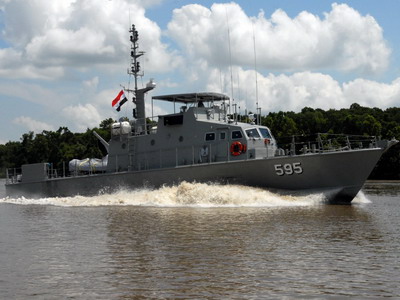
I would question the claim that 49 vessels would make this “The World’s Most Serial Produced Vessel” since there are already 54 Webber class FRCs and there were 73 Coast Guard 87 footers.

Presumably these are going to the Egyptian Coast Guard which is a branch of the Egyptian Army.

A previous contract for 6 of these cost $22.1M or about $4M each. That would suggest that this $129M contract would buy 32 boats. The contract may include some additional equipment to backfit boats already completed or under contract, but still, this should at least bring their entire fleet up to about the 50 boats which is their reported requirement.

“Egypt and Swiftships have started co-market the 28-meter CPC to North African allied partners to the US.”

So, it is possible some of these vessels may go to other North African nations.

Technical specifications are here.

“Embracing opportunities for resilient logistical infrastructure in the Arctic” –The Watch

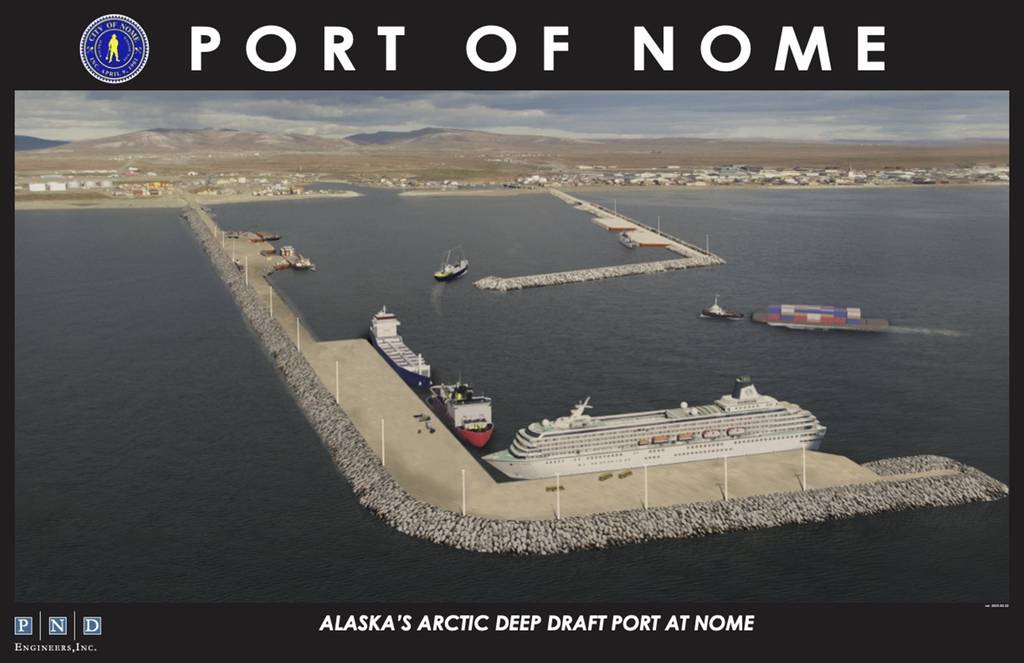
This rendering provided by the City of Nome shows how the Port of Nome, Alaska, will appear following an expansion project that will cost more than $600 million. Shipping lanes that were once clogged with ice for much of the year along Alaska’s western and northern coasts have relented thanks to global warming, and the nation’s first deep water Arctic port should be operational in Nome by the end of the decade. (PND Engineers Inc./City of Nome via AP)

Without offering much detail, the NORTHCOM on-line magazine “The Watch” reports the intention to invest in improvements in three Alaska ports, Port of Alaska (Anchorage), Valdez, and Nome.

None of these ports are above the Arctic Circle, but Nome is very close.

Only the development of a deepwater port at Nome appears to be driven by national security considerations, though modernization in Anchorage and Valdez may offer incidental logistical benefits.

We have been talking about a deepwater port in or near Nome since 2018.

I would not be surprised to see Nome as a future Coast Guard buoy tender homeport and seasonal air station.

Nome’s proximity to the Bering Strait and Russia, all within 150 miles, makes it strategically important.

Port of Alaska (Anchorage). Traveler photo submitted by 2013TravelinFool (Jul 2017)

Port of Alaska (Anchorage) is the only designated Strategic Port in Alaska.  It appears the upgrades are replacements for existing facilities including updated technology.

There is a comprehensive, 121-page plan for Valdez on-line here. It includes some upgrades of the container port but envisions minimal Corps of Engineers support and involvement. Most of the work seems to be in support of tourism, fishing, and local marine industry.

“USCG Leans In Towards First Polar Security Cutter” –Naval News

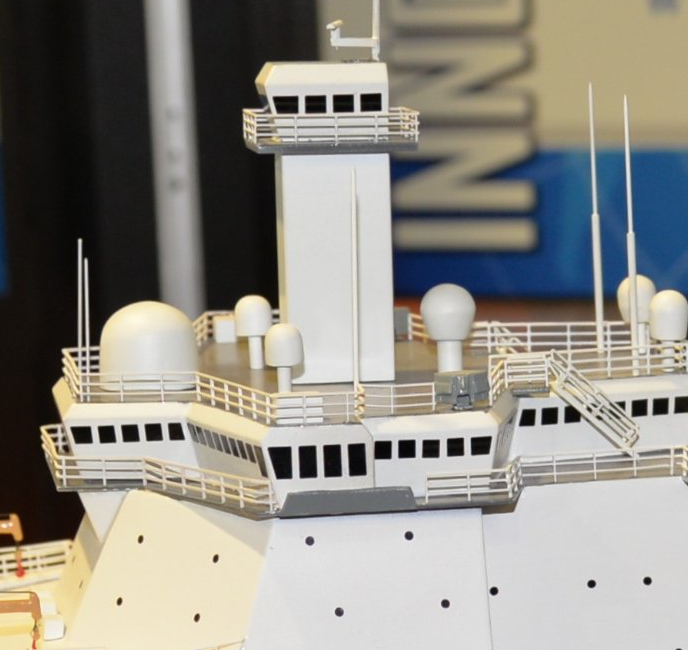
Photo of a model of Halter Marine’s Polar Security Cutter seen at Navy League’s Sea-Air-Space Exhibition have surfaced. Photo credit Chris Cavas.

Naval News reports on Coast Guard remarks about the Polar Security Cutter program at the Surface Navy Association annual symposium.

There is some good news. The Commandant says she is, “100% confident in the design…” The keel has not been laid, but “Welding work is commencing on three build units purchased for the first ship.” (That phraseology does sound a little strange to me.)

She goes on to say,

“I’m focused on fielding the Polar Security Cutters …. [and] getting that first one well into construction, with some predictability around when that ship will come to full operating capacity. We’re working hard with the yard, with the navy, and with the program office to bring some better certainty and clarity around that,” said Adm Fagan.

Which clearly means we do not yet have the predictability, certainty, and clarity the Commandant wants.

Explaining why this is not just an Icebreaker, Rear Admiral Chad Jacoby – USCG Assistant Commandant for Acquisition/Chief Acquisition Officer – told the symposium,

“The distinction there is the Polar Security Cutter is going to do way more than break ice. It will have National Security Cutter-level capabilities, sensors, and equipment on a hull that can go anywhere in the world in any season,” Rear Adm Jacoby continued. “So, we’re not just breaking ice, we’re not just having presence: we’re going to be able to execute almost all USCG missions up in the Arctic, down in the Antarctic, anywhere in the world.”

I look forward to learning what that actually means. It certainly isn’t in terms of installed armament. I don’t see an air-search radar on either the model presented (pictured above) or the illustrations I have seen.

Photo of a model of Halter Marine’s Polar Security Cutter seen at Navy League’s Sea-Air-Space Exhibition have surfaced. Photo credit Chris Cavas.

There do appear to be AN/SLQ-32 antennas on top of the bridge on the model (in gray). Could there also be a SCIF (Sensitive Compartmented Intelligence Facility) like there is on the National Security Cutter? There are also areas where containerized systems could be installed.

To me the most encouraging thing that has happened with regard to this class is that Bollinger took over the project when they purchased the shipyard that is building them. I wish them every success.

“The all-rounder – the 30mm Automated Small Calibre Gun in focus” –Navy Lookout

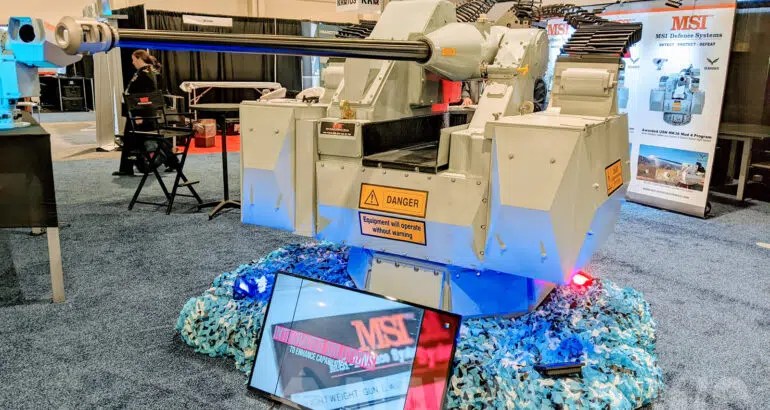
The new Mark 38 Mod 4 30mm naval gun system on display on MSI Defence stand at Sea Air Space 2022.  Photo: NavalNews

This is a three-year-old article, but Navy Lookout, a non-government news site focused on Royal Navy news and analysis, reports how the UK’s Royal Navy came to choose the MSI DS-30M MkII gun mount with the 30mm Bushmaster II Mk 44 chain gun that has also been chosen by the US Navy, under the designation Mk38 Mod4.