“New Gulfstream 700 VIP Jet For U.S. Coast Guard Emerges” –The War Zone

Gulfstream 700 Long Range Command and Control Aircraft.

The War Zone reports,

“We have what appears to be the first look at one of two new Gulfstream 700 (G700) VIP jets for the U.S. Coast Guard. The jet notably has a livery almost identical to that of a 737 Boeing Business Jet (BBJ) with a luxurious VVIP interior and clear ties to the Department of Homeland Security (DHS) rather than a more typical Coast Guard paint scheme.”

“China Coast Guard presence near Japan-controlled islands reaches record high in 2025” –Indo-Pacific Defense Forum

A Japan Coast Guard patrol vessel monitors a China Coast Guard vessel off the Senkaku Islands in the East China Sea in April 2024. KYODO/REUTERS

The Japan Coast Guard is responding to Chinese Coast Guard gray zone provocations in the contiguous zone around the Japan-controlled Senkaku Islands, leading to increased tensions and prompting the Japan Coast Guard to increase the armament on their cutters.

“Chinese government vessels’ approaches to the Senkakus have increased sharply since 2012 when Tokyo bought three of the islands from a private owner. The CCG initially deployed one vessel at a time but now routinely dispatches four at a time, the JCG reported. Since mid-2024, all four vessels have been equipped with deck-mounted autocannons such as 76 mm guns.”

But I wanted to highlight one particular paragraph.

“..the CCG has been rapidly increasing its fleet size and capabilities, including weapons. According to the JCG, the CCG operated 161 vessels with full-load displacement of 1,000 tons or more as of December 2024 compared with the JCG’s 78 vessels in that category.”

Now, how many do we have?

  • 4 Icebreakers
  • 16 WLB (ocean going buoy tenders
  • 10 National Security Cutters
  • 13 WMEC270
  • 8 WMEC 210
  • USCGC Alex Haley
  • USCGC Eagle

53 ships (I think that is right) for a nation with the second largest EEZ on earth (France’s EEZ is slightly larger).

The US EEZ is about two and a half times the size of that of Japan and about five time the sized of China’s claimed EEZ more than half of which is disputed.

Seventh Oil Tanker Seized

Below is a SOUTHCOM news release.

Jan. 20, 2026

Maritime Interdiction Operation, Jan. 20, 2026

Through Operation SOUTHERN SPEAR, the Department of War is unwavering in its mission to crush illicit activity in the Western Hemisphere in partnership with U.S. Coast Guard through the Department of Homeland Security and The Justice Department.

This morning, U.S. military forces, in support of the Department of Homeland Security, apprehended Motor Vessel Sagitta without incident. The apprehension of another tanker operating in defiance of President Trump’s established quarantine of sanctioned vessels in the Caribbean demonstrates our resolve to ensure that the only oil leaving Venezuela will be oil that is coordinated properly and lawfully. As the joint force operates in the Western Hemisphere, we reaffirm that the security of the American people is paramount, demonstrating our commitment to safety and stability.

These operations are backed by the full power our elite joint force team deployed in the Caribbean.

“Coast Guard cutter returns to Florida after escorting recently seized motor tanker” –SE District

U.S. Coast Guard crewmembers transfer from the Coast Guard Cutter Vigilant (WMEC 617) to a motor tanker by a helicopter crew assigned to U.S. Navy Helicopter Sea Combat Squadron 9 in the Atlantic Ocean, Jan. 7, 2026. Vigilant escorted the tanker, which was seized by a joint Coast Guard and Department of War team for conducting illicit activities in the Caribbean Sea. (U.S. Coast Guard photo by Petty Officer 2nd Class Brandon Feehery)

Below is a press release from the Southeast District. This is a 61 year old ship, still doing the job.

Anyone know what this device, pictured below, cropped from photo above, is?

U.S. Coast Guard cutter USCGC Vigilant (WMEC-617). 2 March 2008. Photo by Workman via Wikipedia.

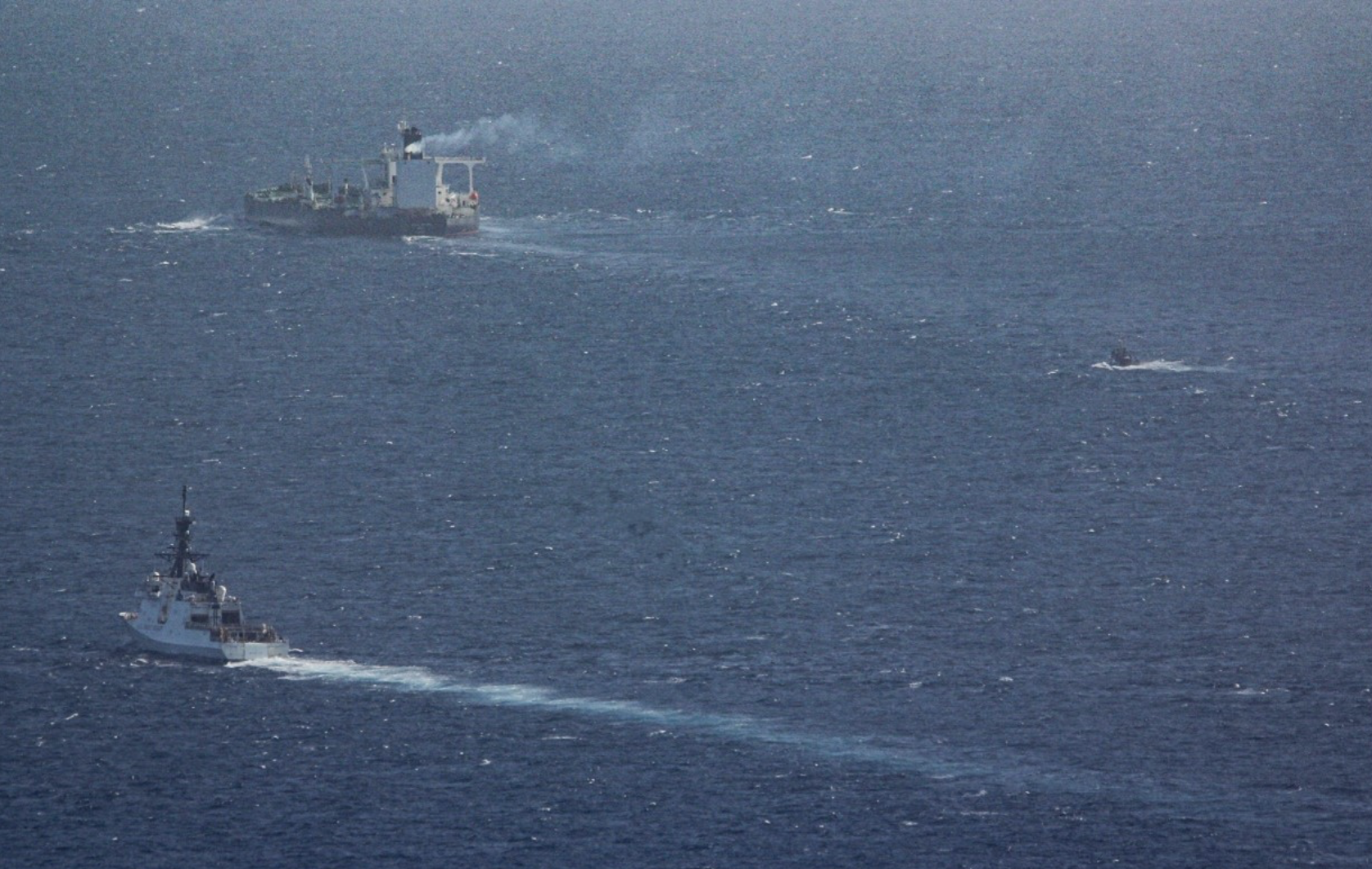
U.S. Coast Guard Cutter Vigilant (WMEC 617), right, sails in the Western Atlantic Ocean while escorting a motor tanker after a right of visit boarding, Jan. 7, 2026. Vigilant escorted the motor tanker, which was seized by a Coast Guard tactical boarding team with support from the Department of War, for operating as a vessel without nationality in the Caribbean Sea. (U.S. Navy Photo)


Jan. 20, 2026

Coast Guard cutter returns to Florida after escorting recently seized motor tanker

CAPE CANAVERAL, Fla. — The U.S. Coast Guard Cutter Vigilant (WMEC 617) returned to Cape Canaveral on Friday after a 33-day patrol in the Caribbean Sea supporting operations Pacific Viper and Southern Spear.

During the patrol, Vigilant escorted a motor tanker, which was seized by a U.S. Coast Guard tactical boarding team with support from the Department of War, for operating as a vessel without nationality in the Caribbean Sea. Vigilant’s crew coordinated with naval and law enforcement partners to transfer personnel and provisions to the tanker. A law enforcement team from Vigilant boarded the vessel to provide security during the 600-nautical-mile transit to the United States.

Cmdr. Steve Welch, commanding officer of Vigilant, said, “I am proud of the crew’s adaptability and professionalism during this mission of national importance. Their performance ensured the safe execution of the operation in partnership with the Department of War.”

Unique statutory authorities enable the Coast Guard to enforce international and domestic law in the maritime domain, deploying assets to conduct missions in U.S. waters and on the high seas. The Coast Guard’s involvement in this seizure was conducted under Title 14, U.S. Code and in accordance with customary international law. The Coast Guard exercises these authorities to protect maritime safety, security, and U.S. interests.

“Coast Guard Cutter Alert returns home after interdicting more than $18.4M in narcotics during 45-day patrol” –Southeast District

Costa Rican Coast Guard and U.S. Coast Guard Cutter Alert (WMEC 630) crew members pose for a photo aboard the cutter in Golfito, Costa Rica, Jan. 2, 2026. Alert’s crew hosted the Costa Rican personnel for a tour of the cutter and embarked MH-65 Dolphin helicopter as well as discussions of ways to strengthen the presence of international counter-drug efforts in the region. (U.S. Coast Guard photo by Ensign Ethan Lasher)

Below is a news release. It is pretty routine but I wanted to point out a couple of things.

This more than 56 year old ship is still doing useful work.

The US Coast Guard has been helping the Costa Rican Coast Guard since the 1980s.


Jan. 15, 2026

Coast Guard Cutter Alert returns home after interdicting more than $18.4M in narcotics during 45-day patrol

Cape Canaveral, Fla. — The crew of the Coast Guard Cutter Alert (WMEC 630) returned to their home port in Cape Canaveral, Thursday, following a 45-day counter-drug patrol in the Windward Passage, Caribbean Sea and Eastern Pacific Ocean.

While underway in the Coast Guard Southeast District area of responsibility, Alert’s crew interdicted a go-fast style vessel trafficking illegal narcotics in the Windward Passage. The crew seized 2,250 pounds of cocaine valued at $18.4 million, seven pounds of marijuana valued at $7,000 and an illegal firearm. The four suspected smugglers on board, narcotics and firearm were transferred to the Bahamas government for prosecution.

“I am immensely proud of my crew’s unwavering dedication,” said Cmdr. Mario Gil, commanding officer of Alert. “Time spent away from family and missed holidays represents a significant sacrifice, which makes their commitment to combating narco-terrorism and protecting our nation’s borders from illicit drugs all the more commendable, as demonstrated by the extraordinary success of this patrol.”

In the region, Alert’s crew also patrolled in support of Operation Vigilant Sentry while underway in the Coast Guard Southeast District area of responsibility. Crew member presence in the vicinity of Haiti served to deter unsafe and illegal migration.

While transiting the Panama Canal, the crew had the distinct honor of hosting Ambassador Kevin Marino Cabrera, U.S. Ambassador to Panama, aboard the cutter for a tour of the ship, discussions about current operations and a Miami-inspired lunch prepared by Alert’s culinary specialists.

The crew also supported U.S. – Panama relations by hosting eight members from Panama’s National Aeronaval Service (SENAN) and Joint Maritime Force – Panama for joint training and a professional exchange of counter-narcotics best practices. Crew members conducted multiple joint pursuit-style, simulated interdictions with vessels and forces from SENAN. This training provided continued support of the Salas-Becker Complementary Agreement of 2002, which created a framework for U.S.–Panama bilateral cooperation to counter illicit drug trafficking by sea and air.

During a port-of-call visit to Golfito, Costa Rica, Alert’s crew welcomed representatives from the Costa Rican Coast Guard aboard for a tour of the ship and an embarked MH-65 Dolphin helicopter from the Coast Guard Helicopter Interdiction Tactical Squadron, based in Jacksonville. The visit fostered joint nation inoperability and strengthened international counter-drug efforts in the region.

While at sea in the Coast Guard Southwest District area of responsibility, the crew conducted boardings to verify and enforce international law at sea in the Eastern Pacific Ocean.

In addition, Alert crew members earned the title of shellback after crossing the equator, a title few sailors earn during a career.

“Successful JAGM Quad Launcher Demo Showcases 90-Degree Vertical Launch And C-UAS Capabilities” –Lockheed Martin

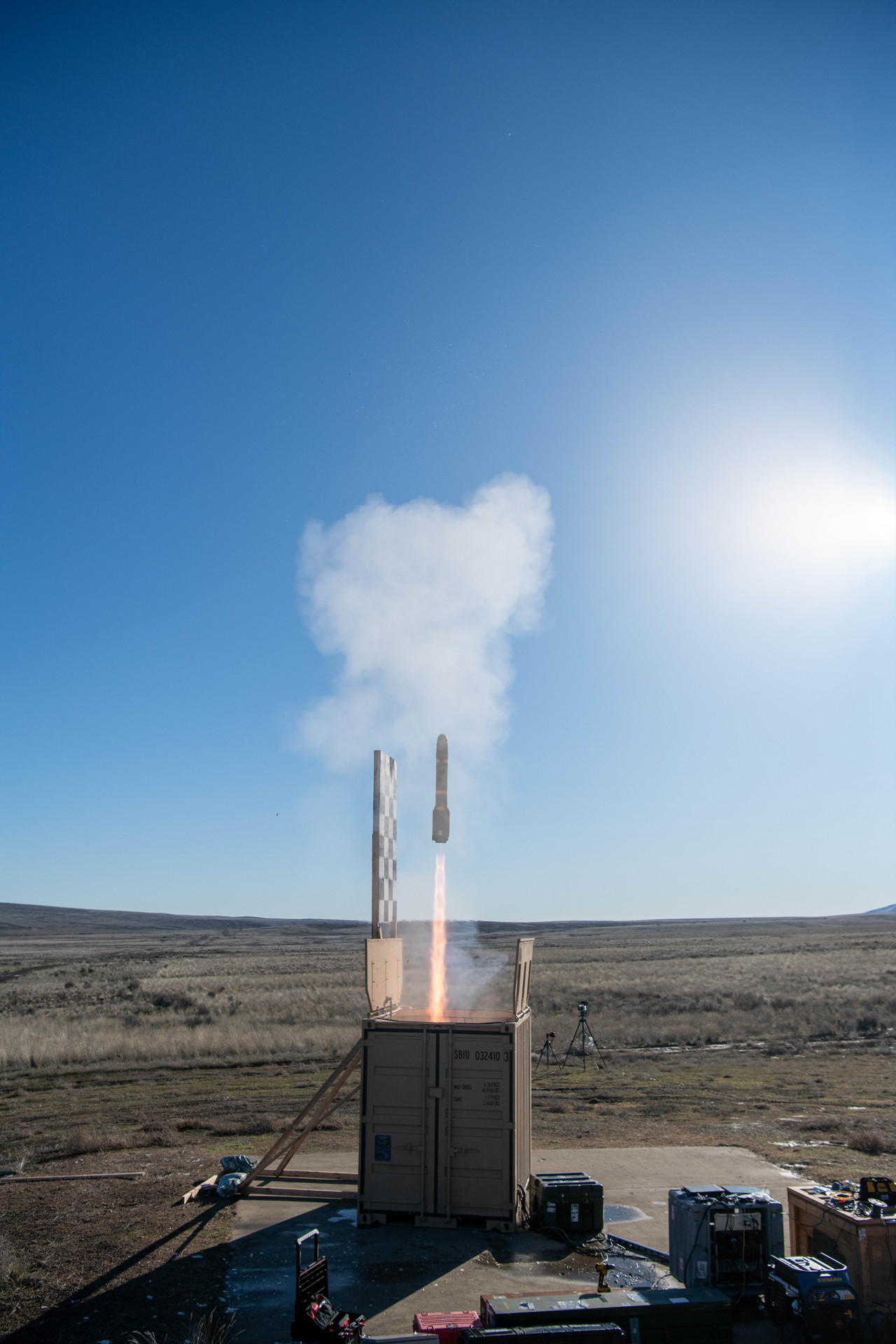
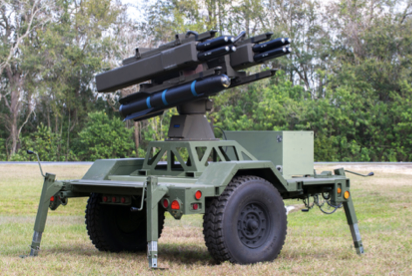
An earlier launch using the JASM Quad Launcher (JQL)

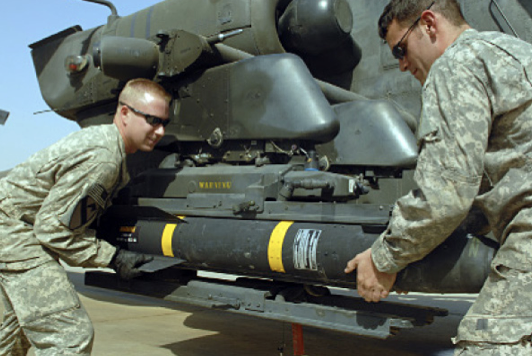
Below is a Lockheed Martin news release. Hellfire, JAGM, and the longer ranged JAGM MR can be fired from this launcher. The launcher has been in the works since 2020.

Lockheed prepare for the first JAGM test fire from a JQL launcher in October 2025. Credit: Lockheed Martin.

Even only one quad launcher would be a huge upgrade in the capabilities of Webber class WPCs. It appears Lockheed has decided they will market the launchers in trainable mounts that allow the canisters to be reloaded with little or no special equipment, either as single quad launchers or as multiple quad launchers mounted together. Our larger cutters might also benefit from adding this capability.

A close-up of the Hellfire/JAGM launchers on the Arleigh Burke model on display at the 2025 Surface Navy Association symposium. Joseph Trevithick


CHINA LAKE, Calif., Jan. 15, 2026 – For the first time, Lockheed Martin (NYSE: LMT) conducted a successful 90-degree launch of a Joint-Air-to-Ground Missile (JAGM) from the JAGM Quad Launcher (JQL) during a demonstration in China Lake, California.

THE BIG PICTURE

  • In the demonstration, JAGM proved its ability to neutralize UAS threat systems.
  • It also demonstrated the versatility of the JQL launcher, which was mounted to a Richard Childress Racing 6×6 Mothership vehicle.

WHY IT MATTERS

  • Validating JAGM & JQL full vertical-launch capability: This demonstration validated JAGM’s full vertical‑launch capability across multiple platforms, including surface‑combatant vessels, which provides a 360‑degree defensive envelope for maritime vessels and other platforms. With JAGM’s advanced dual-mode seeker (SAL/MMW), this integration effort presents JAGM as the ideal munition solution for the U.S. Navy and its allies’ mission-critical needs.
  • Showcasing counter-UAS technology: The successful engagement of a UAS threat with JAGM underscores the missile’s ability to detect, track and neutralize hostile threats including drones, unmanned surface vehicles (USVs) and other air threats. This is an increasingly vital capability that modern naval forces need to address emerging threats.
  • Multidomain mission integration: The integration of JAGM with the JQL highlights Lockheed Martin’s ability to provide flexible, mission‑tailored deployment across air, sea and land environments. Operators can select from a range of engagement envelopes to meet specific user mission objectives.

EXPERT PERSPECTIVES

  • “The successful JQL verticallaunch demonstration confirms that JAGM can be rapidly deployed from a multimissile launcher across a variety of scenarios, while delivering the networkcentric integration our global users demand,” said Casey Walsh, program management director, Lockheed Martin Multi-Domain Missile Systems. “This milestone validates our vision of a unified missile architecture that seamlessly operates across air, land and sea domains, enhancing survivability and flexibility for future combat operations.”
  • “Lockheed Martin continues to push the boundaries of what is possible in vertical launch system development, driving innovation and advancement in the field,” said Edward Dobeck, director, Lockheed Martin Launching Systems. “This proven combat-ready capability meets multidomain deployment objectives today, and provides the same reliability expected of all our launching systems.”

For additional information, visit our website: www.lockheedmartin.com.

About Lockheed Martin

Lockheed Martin is a global defense technology company driving innovation and advancing scientific discovery. Our all-domain mission solutions and 21st Century Security® vision accelerate the delivery of transformative technologies to ensure those we serve always stay ahead of ready. More information at Lockheedmartin.com.

“Coast Guard awards contract to rebuild Station South Padre Island” –CG-9

Below is a post from the Acquisitions Directorate (CG-9).

The location near the Mexican border is obviously significant, but it is also near Starbase, TX.

“Starbase, Texas, is a burgeoning city and SpaceX hub in the Rio Grande Valley near Brownsville, established around SpaceX’s Starship development and launch facilities, becoming an official municipality in May 2025 with hundreds of residents, mostly SpaceX employees, creating a unique space-focused company town known as the ‘Gateway to Mars'” —AI overview.

I presume South Padre Station also supports Operation River Wall. 


Coast Guard awards contract to rebuild Station South Padre Island

The Coast Guard’s Facilities Design and Construction Center awarded a $200 million design-build contract to The Haskell Company Jan. 9 for the comprehensive recapitalization and expansion of Coast Guard Station South Padre Island in South Padre Island, Texas. The award was made as a task order through the National Multi-Award Construction Contract III and is the largest single task order in the history of the Coast Guard’s Military Construction program.

The task order, made possible through the historic investment in Coast Guard shore infrastructure as part of the One Big Beautiful Bill Act, will deliver the design and construction of more than 120,000 square feet of essential facilities and supporting infrastructure, directly enhancing mission readiness and execution for Coast Guard personnel in the region. Preliminary design and environmental work will begin immediately, with project completion anticipated in summer 2028.

The full scope of work under the task order includes:

  • Completion of an environmental assessment, site survey investigations and design services for various facilities.
  • Construction of new station facilities.
  • Construction of unaccompanied personnel housing, additional berthing and mission support facilities.
  • Rebuilding of waterfront infrastructure.
  • Construction of a Joint Operations Center and Customs and Border Protection support space.
  • Forward operations space for Deployable Specialized Forces.
  • Delivery of a new harbor operations center and other mission support facilities.
  • Comprehensive site development, utilities and outfitting.

Station South Padre Island is strategically positioned to support border security, interdict illicit trafficking and ensure the safe and lawful movement of commerce. The rebuild effort will address damages at the boathouse that were caused by a fire in April 2025 and enhance mission capabilities to fully support Coast Guard core missions of securing the U.S. border and maritime approaches, facilitating commerce vital to economic prosperity and strategic mobility and responding to contingencies along the Gulf Coast and surrounding waterways.

The project represents the largest award value for a shore infrastructure construction project in Coast Guard history and will be delivered on the shortest timeline to date. The planning phase was compressed from the standard 18 months to 45 days, while the contracting process was reduced from 15 months to four months.

For more information: Shore Programs

Is Coast Guard PR Digitally Challenged?

In most respects Coast Guard Public Relations does a great job. I see it doing much better than the Navy and DOD in general.

But too frequently when I try to go to a Coast Guard PR site I get this.

Today it was Coast Guard News by Region, United States Coast Guard News, and Acquisitions Directorate (CG-9). Then I try again a little later and they all work.

I do recognize we are using a DOD server. Sometimes I see the same “Safari can’t find the server” when I try to go to DOD sites too. Today none of the DOD sites from my Recommended Blogs List were down.

What’s going on? I’ve asked this question before, but still haven’t seen an explanation.

The NSCs are WFFs or Maybe WPFs or Maybe WPL but not WMSL

The FF(X) based on the design of the Bertholf class national security cutters.

Force Design 2028 declares they want “To transform the Coast Guard into a more agile, capable, and responsive 21st-century fighting force.”

If you want to be useful as a fighting force, it helps if you speak the same language. To a Coast Guardsman, WMSL may mean Coast Guard Maritime Security Cutter, Large, but to the Navy, the “M” immediately identifies a mine warfare ship. The “L” would probably interpret as “large.” WMSM may imply medium, but they are virtually the same size as the WMSLs.

This is a pet peeve of mine. I have written about it several times, but not recently, and maybe the new administration will see my point if someone presents the case to them.

There is another reason the Coast Guard might want to consider a change of designation, aside from the fact that the current designations don’t fit either the Navy or NATO’s systems, that is the adaptation of the Bertholf class as the FF(X). If it is a frigate, then the Bertholfs are Coast Guard frigates, WFF.

I suspect the Coast Guard budget would benefit if its wartime military role were more widely recognized.

I would admit they aren’t everyone’s idea of a frigate, so perhaps WPF. I like that designation because the PF designation has a Coast Guard history. 75 ships of the Tacoma class were designated PF or Patrol Frigate and were manned by Coast Guard crews during World War II, and some were transferred to the Coast Guard post war and carried a WPF designation. (We also had some destroyer escorts designated WDE.)

Tacoma class patrol frigate USS Hutchinson (PF-45) Underway, probably circa February 1946, after being converted for weather reporting service. Courtesy of William H. Davis, 1976. U.S. Navy photo NH 84721

There is not really much difference between the capabilities of the Bertholf class and the Argus class ships, so we could use the same designation for them, but if we must differentiate, how about WPL for the Heritage class.

Looking back, prior to the 1965, our large patrol cutters were all designated WPG, Coast Guard Patrol Gunboats, so WPF or WPL would not be a radical change, more a return to the old system, still in effect in the US Navy.

USCGC Duane (WPG-33) in Godthaab Fjord, Greenland in the Spring of 1941. Her mission was to survey the east coast of Greenland in order to identify sites for airfields. Note the SOC-4 seaplane amidships. Photo courtesy of A. D. Baker III from “U.S. Coast Guard Cutters and Craft of World War II” by Robert L. Scheina.

USCGC Wachusett (WPG/WHEC 44) No caption; 28 January 1966; Photo No. 040166-04; photographer unknown.

USCGC Modoc (WPG-46) USCG photo.

USCG Cutter Ingham WPG 35

USCGC Mohawk (WPG-78) during WWII

USCGC Spencer (WPG-36) in 1942 or 1943. 8 March 1943 German U-boat U-633 was sunk in the North Atlantic south-west of Iceland, in position 58.21N, 31.00W, by depth charges from the US Coast Guard cutter USCGC Spencer. Spencer sank U-175 with assistance of USCGC Duane, on April 17, 1943.