1805 The cutter Louisiana recaptured the merchant brig Felicity from privateers off the mouth of the Mississippi River.
1945 Airship training for U.S. Coast Guard personnel (nine officers & 30 enlisted men) began at Naval Air Station Lakehurst, New Jersey.
1993 Coast Guardsman Gary A. Openshaw rescued five persons in danger of drowning near San Francisco off Baker Beach. For heroically risking his life and saving those five people, the Coast Guard awarded Petty Officer Openshaw the Gold Life-Saving Medal.
1805 The cutter Louisiana engaged two pirate vessels that had been fitted out at New Orleans. Twenty shots were exchanged but the pirate vessels escaped.
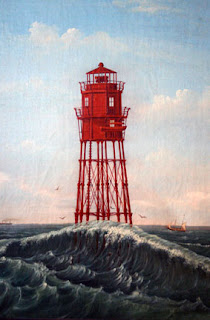
A painting of the original Minot’s Ledge Lighthouse built in 1850
1851 The Minot’s Ledge Lighthouse, the first one built in the United States that was exposed to the full force of the ocean, was swept away by a storm with the loss of the two men manning it. They were Assistant Keepers Joseph Wilson and Joseph Antoine who maintained their station, ringing the lighthouse’s bell, until waves swept the tower away.
USCGC Spencer (WPG-36) in 1942 or 1943. Spencer sank U-175 with assistance of USCGC Duane, on April 17, 1943.
1943 Lieutenant Ross P. Bullard and Boatswain’s Mate First Class C. S. “Mike” Hall boarded the U-175 at sea after their cutter, CGC Spencer, blasted the U-boat to the surface with depth charges when it attempted to attack the convoy Spencer was escorting. These Coast Guardsmen were part of a specially trained boarding party sent to board the submarine to seize any code and cipher related documents and equipment they could find. The damage to the U-boat was severe, however, and it sank after they had boarded it and climbed up the conning tower. Both men ended up in the sea as the U-boat slipped beneath the waves but were pulled from the water unharmed. They carry the distinction of being the first American servicemen to board an enemy warship underway at sea since the War of 1812. The Navy credited Spencer with the U-boat kill. The cutter rescued 19 of the U-boat’s crew and a sister cutter, CGC Duane, rescued 22. One Spencer crewman, RM 3/c Julius Petrella, was killed by friendly fire during the battle.
USCG Cmdr Harold S. Berdine of cutter Spencer talking with US Navy Capt Paul Heineman of the Escort Group A-3 after sinking German submarine U-175, North Atlantic, 500 nautical miles WSW of Ireland, 17 Apr 1943. US Coast Guard photo by Jack January. (The US led escort group was called Heineman’s Harriers.–Chuck)
1987 LT Tom McClay received a direct commission as a flight officer for duty with the Coast Guard’s E2C Hawkeyes. LT McClay was the first Coast Guard flight officer.
USCGC Steadfast (WMEC 623)
2020 The crew of the Coast Guard Cutter Steadfast (WMEC 623) returned home 17 April 2020 to Astoria following a 65-day counternarcotic patrol to the Eastern Pacific Ocean. The cutter intercepted and boarded five suspected smuggling vessels, including one go-fast-style panga, while patrolling international waters off the coasts of Mexico and Central America. Steadfast’s crew apprehended three suspected smugglers and seized 1,252 pounds of pure cocaine worth an estimated $21.5 million. “I am inspired daily by the tenacity and professionalism of this crew,” said Cmdr. Dan Ursino, commanding officer of the Steadfast. “Their resilience to remain focused, in light of the global health crisis and uncertainty back home, has been nothing short of remarkable. Knowing the importance and impact of keeping these harmful substances from reaching our streets help to keep us going.” Steadfast also continued to participate in the Columbia River Maritime Museum’s Mini Boat Project, which connected students from local Oregon elementary schools with their peers in Japan. Students learned about the significance of ocean currents and weather, while building miniature boats to send across the ocean to one another. During this patrol, Steadfast launched two boats, Boat-A-Lohti and Philbert, approximately 200 miles off the southern tip of Baja, Mexico.
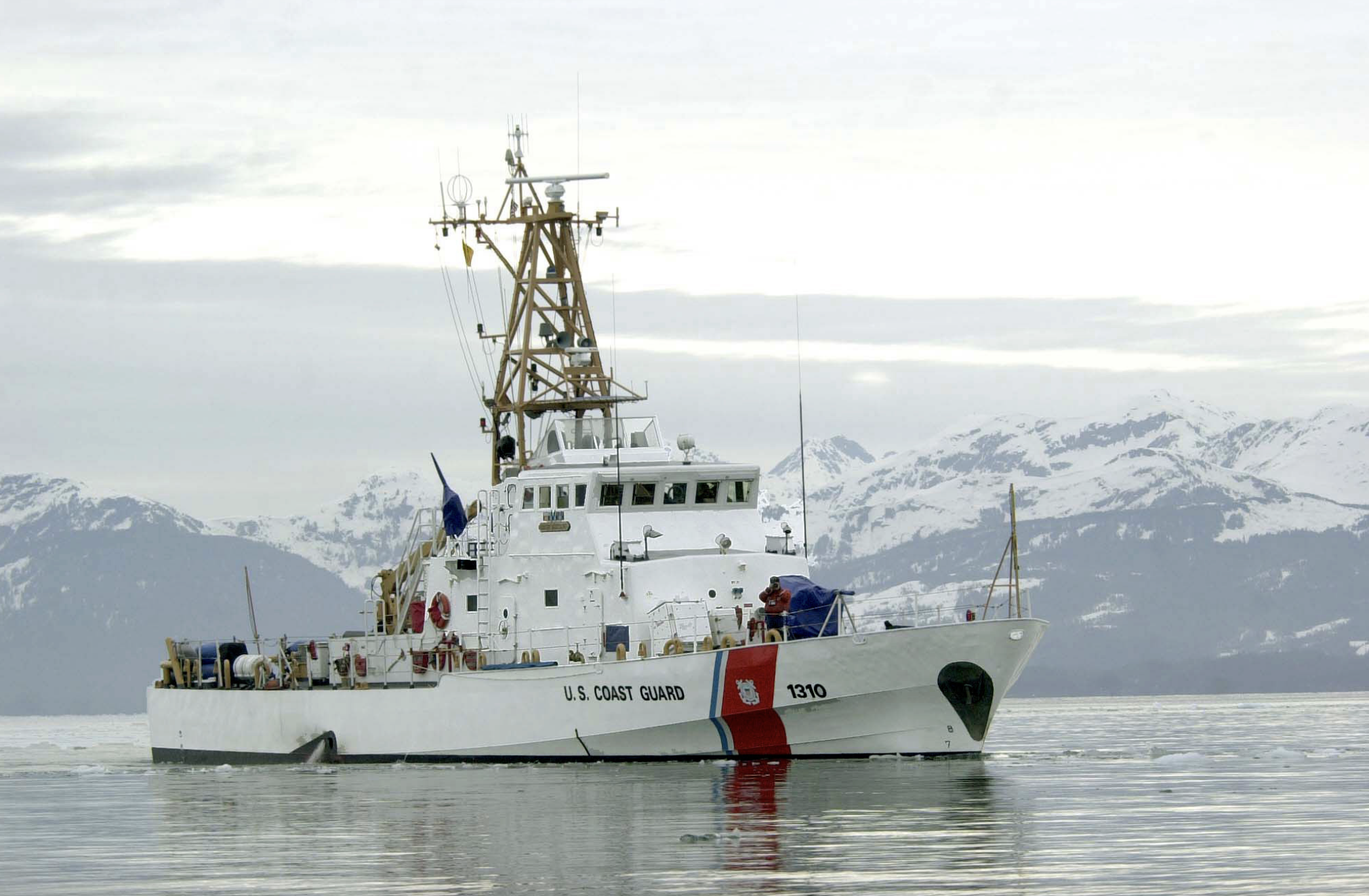
A starboard bow view of the US Coast Guard (USCG) ISLAND CLASS, Patrol Craft, USS MUSTANG (WPB 1310), underway at Port Valdez, Alaska, while providing harbor security during Exercise NORTHERN EDGE 2002. Location: PORT VALDEZ, ALASKA (AK) UNITED STATES OF AMERICA (USA)
The last three US Coast Guard 110 foot Island class WPBs were in Alaska. Mustang in Seward, Naushon in Homer, and Liberty in Valdez. Naushon was decommissioned March 21st. With Mustang decommissioned April 15, Liberty is the last of 49 Island class cutters that have seen service with the Coast Guard.
Coast Guard Cutter Mustang decommissioned after nearly 40 years of service
ANCHORAGE, Alaska — The Coast Guard decommissioned Coast Guard Cutter Mustang (WPB 1310) during a ceremony in Seward, Tuesday.
Capt. Christopher Culpepper, the commander of Coast Guard Sector Western Alaska & U.S. Arctic, presided over the ceremony honoring the nearly 40 years of service Mustang and its crews provided to the nation.
Commissioned on August 29, 1986, Mustang was the 10th Island-Class cutter to join the fleet.
Mustang has been stationed in Seward since it was commissioned, and its crews have since responded to over 200 search-and-rescue cases and completed over 2000 law enforcement sorties.
Mustang is a 110-foot, Island-Class patrol boat, a multi-mission platform that conducted operations to support search and rescue response, marine environmental protection, and national defense.
The Coast Guard is replacing the aging Island-Class patrol boats with Sentinel-Class Fast Response Cutters (FRCs) which feature enhanced capability to meet service needs. There are currently four FRC’s homeported in Alaska, with two more scheduled for delivery in the near future.
“The decommissioning of Mustang is a bittersweet moment,” said Lt. Gabrielle Troise, Commanding Officer of Mustang. “It’s been my honor to be a member of the final crew, and I’m incredibly proud of the legacy we will leave behind within the community of Seward where Mustang has faithfully served since her commissioning.”
If you are a regular reader, you know, the Coast Guard has a requirement implicit in its missions to be able to forcibly stop any vessel, regardless of size, particularly in response to unconventional maritime attacks. This ability needs to be widely and readily available. The Coast Guard does not have that ability with regard to larger ships. Torpedoes can fill this requirement reliably and economically. The Coast Guard might logically also be called upon to enforce blockades in wartime and would require a similar capability.
Unfortunately, the only torpedoes in the US inventory are designed for much more demanding missions than the Coast Guard requires for its peacetime missions–attacking high speed submarines that move in three dimensions at great depths. This has made them much more expensive than they need to be for the Coast Guard missions.
It now appears, we may have a low cost alternative.
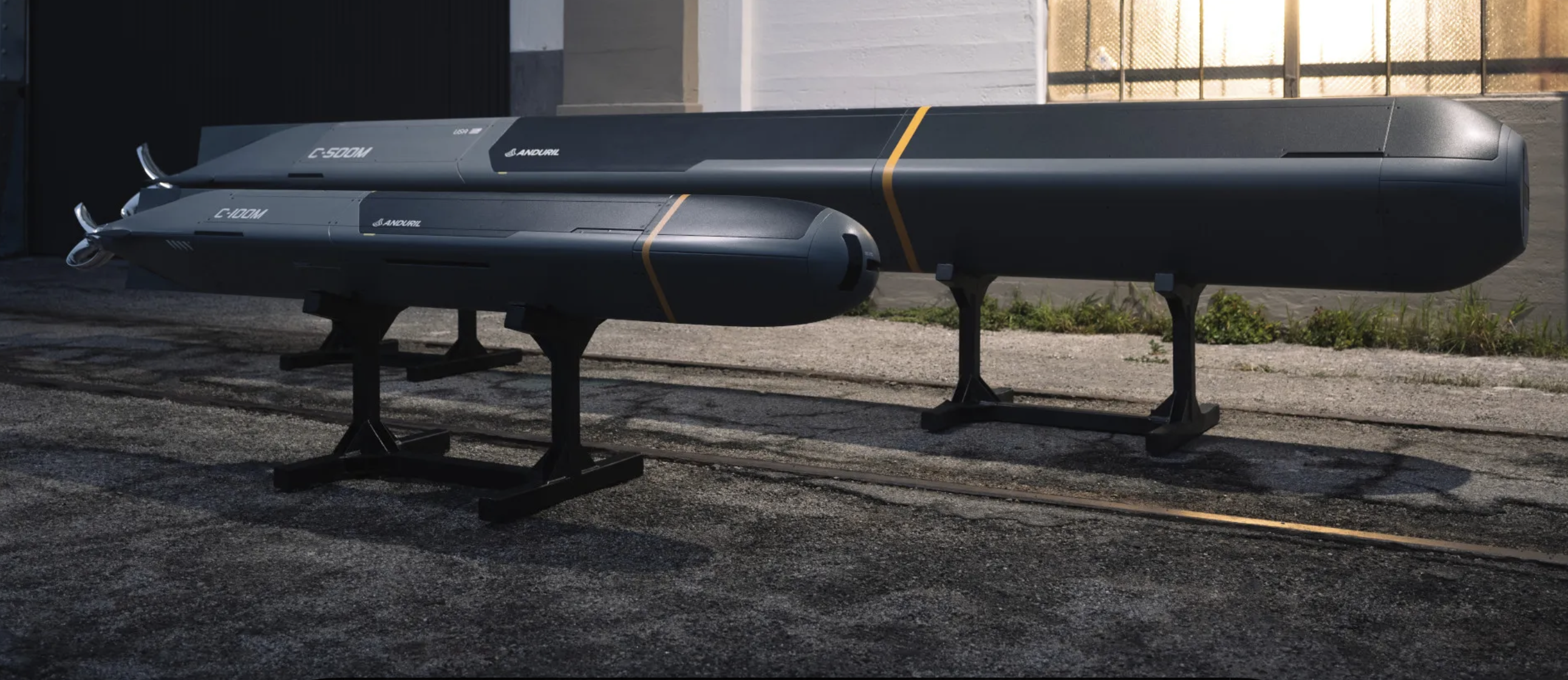
Anduril has rolled out a new family of modular torpedo-like uncrewed underwater vehicles (UUV) called Copperhead. This includes kamikaze types…The Copperhead family of UUVs, which Anduril also refers to as autonomous undersea vehicles (AUV), currently consists of the 100 and 500-pound-class types, as well as “M” munition subvariants of each. The Copperhead-100 has an overall length of just under nine feet (approximately 2.7 meters) and is 12.75 inches in diameter, while the Copperhead-500 is just over 13 and a half feet (just over four meters) long and 21 inches wide…. the company says they can both reach top speeds in excess of 30 knots.
While there are probably other ways to launch, these systems are clearly designed to fit in existing torpedo tubes. Existing torpedoes have been autonomous Unmanned Underwater Vehicles (UUV) all along. Anduril is taking the basic torpedo form and broadening its application, while retaining the option of employing the UUV as a weapon.
The 500 and 100 designations refer to the approximate payload weight, not the weight of the device.
Copperhead 100 is 12.75″ “in diameter” and 106″ in length. These outer dimensions are essentially identical to that of the Mk54 but the diamond (square cross section) shape and the need to maintain near neutral buoyancy suggests it will be lighter, probably about 450 pounds.
Copperhead 500 with a 21-inch diameter and 163-inch length is short for a heavy weight torpedo. It probably weighs about 1700 pounds, a bit less than the USN air launched Mk13 Mod 0 (1,949 lbs. or 884 kg) and about half that of the 288 inch long surface launched Mk15 Mod3 (3,841 lbs. or 1,742 kg) torpedoes of WWII.
The speed for both systems is reported as greater than 30 knots. That is slow for a modern torpedo, but faster than nearly all commercial ships, military auxiliaries, and offshore patrol vessels.
As reusable systems, I would assume these are powered by rechargeable batteries like the SAAB Torped 47. Torped 47 is larger than Copperhead 100 but substantially smaller than Copperhead 500. Torped 47 as a reported range of at least 20 km so I would expect the 100 to have a bit shorter range and the 500 to have a longer range.
Among other things, Copperhead 500 UUVs could be used as a mobile mine. At slow speed it could go at least ten miles on its own, based on the old tech Mk37 based Mk67 mobile mine, so probably substantially further.
They might also be able to do Q-route surveys, checking port approach and departure routes for mines.
The Coast Guard might want to employ these systems as scientific or surveillance assets as well as weapons.
Coast Guard manned Destroyer Escort USS Menges, victim of a German Acoustic Homing Torpedo, May, 1944
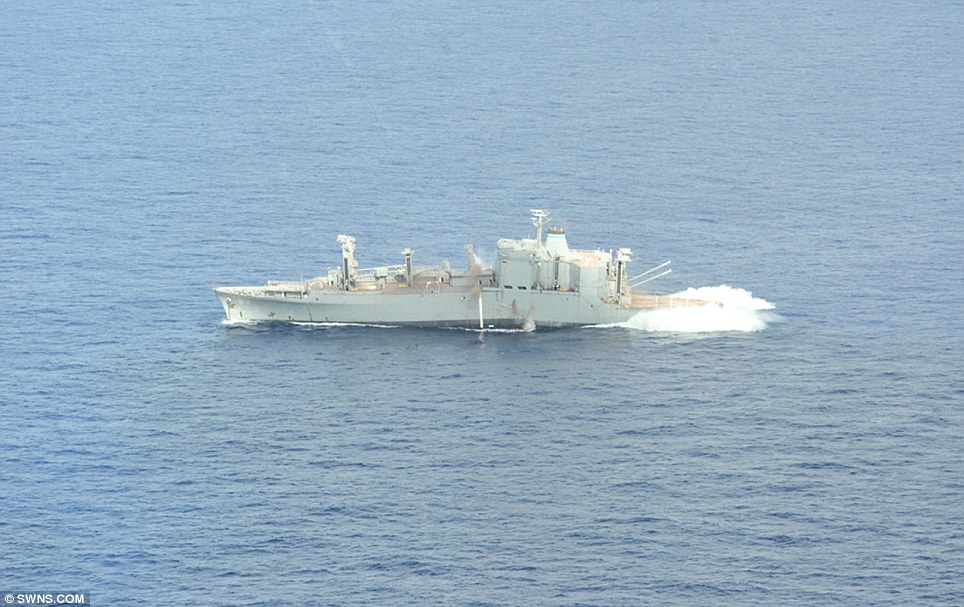
Copperhead 100M would probably be adequate to immobilize most ships if the warhead exploded below the propeller(s) and rudder(s), but if the target managed to limp along after the first hit, a second might be necessary. If it is necessary to sink a target of over 1000 tons, then you would probably need the larger warhead of the 500M and/or multiple hits.
Equipping FRCs and larger cutters to support two Copperhead 100s and one Copperhead 500 might both answer the need for an effective ship stopper and also provide options for otherwise employing UUVs.
USNS Kilauea breaks in half after being hit by the torpedo.
The Coast Guard issued a Request for Information Apr 11, 2025 01:14 pm EDT with a response date of Apr 25, 2025 05:00 pm EDT.
Description
The United States Coast Guard (USCG) is conducting market research to assess the current capabilities of the U.S. and international maritime industrial base to support Arctic Security Cutter (ASC) acquisition efforts. Specifically, the USCG is seeking to increase their understanding of existing icebreaking capable vessels or vessel designs that are ready for construction or already in production.
The USCG is also interested in proven execution and build strategies and the ability of global shipyards to support the construction and subsequent launch of an icebreaking-capable vessel within 36-months of a contract award.
Responses are due no later than 5:00 PM ET on April 25, 2025.
Interested parties shall refer to the attached RFI package for complete submission requirements, technical expectations, and response format guidance. All responses shall be submitted electronically per the instructions provided.
This RFI does not constitute a Request for Proposal (RFP), nor does it guarantee future contract award. Responses will be used solely for market research and planning purposes.
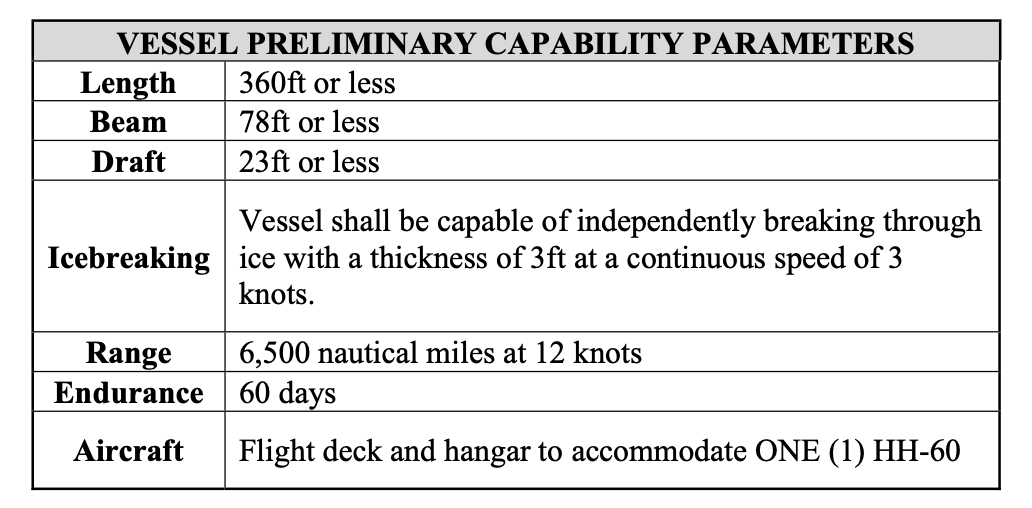
The RFI includes the following preliminary specifications:
What we see here is not particularly demanding. Healy is rated for breaking 4.5 ft at 3 knots. Reportedly Mackinaw can continuously proceed through fresh water ice up to 32 inches (81 cm) thick at 3 knots or 14 inches (36 cm) at 10 knots. It seems likely the ship may not need the 20,000 HP that has defined the lower limit for what the Coast Guard calls a Medium Icebreaker. The similar sized approximately 8,500 ton USCGC Glacier was capable of continuously breaking 4 ft of ice at 3 knots with 21,000 HP.
The maximum dimensions proposed would allow the icebreaker to transit the Saint Lawrence Seaway, meaning these could also serve as Great Lakes Icebreakers.
When the original USCGC Mackinaw was build, the Wind class icebreaker design was altered, making the ship broader with a shallower draft, only 19.5 feet vs 25’9″ for the Wind class. The maximum draft to pass the Saint Lawrence Seaway is 26.5 feet (8.08 meters). Since the draft specified for the Arctic Security Cutter is only 23 feet, I presume there is at least one port they plan to use where that is a controlling depth.
The U.S. Coast Guard’s Homeport portal, a critical online platform for maritime operations since 2005, was permanently taken offline on April 12, 2025, leaving the maritime industry scrambling to adapt to alternative credentialing and verification processes.
The shutdown follows a unplanned period of restricted access that began on March 4, 2025, causing significant disruptions across the maritime sector and preventing employers from verifying crew credentials. gCaptain is told the HOMEPORT system’s inaccessibility has already resulted in job losses for mariners who cannot verify their credentials through the previously available online tools.
From the Homeport page,
The Coast Guard Homeport Internet Portal platform will be decommissioned on 12 April 2025. You will need to use alternate approaches for tasks typically performed through the Homeport platform.
We recognize that Homeport has long been a trusted tool for mariners and the broader maritime community. The Coast Guard is establishing temporary workarounds to ensure essential services remain accessible until we can identify the best permanent approach for each function.
The following pages will provide you with guidance on how to conduct activities previously done through Homeport.
The Coast Guard is responsible for maintaining both the physical and cyber security of our country’s maritime commerce system. The Homeport system is facing increasing costs and system obsolescence. As a result, it is no longer a viable tool for managing the many functions required to ensure the smooth and safe flow of vessel traffic.
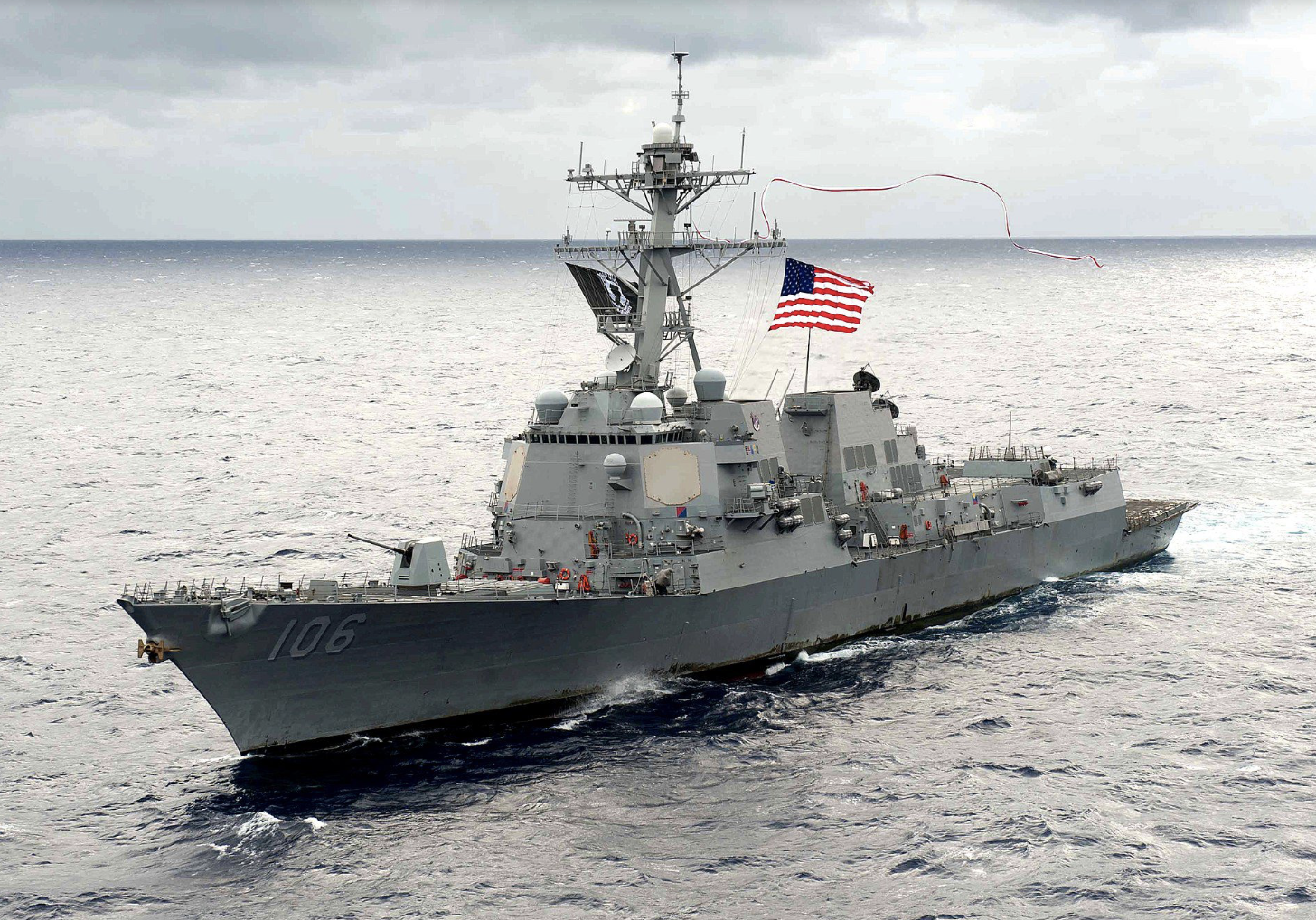
“The US Navy continues to strengthen its southern border security presence with the deployment of USS Stockdale (DDG 106), which departed Naval Base San Diego on April 11, 2025. The Arleigh Burke-class guided-missile destroyer takes over duties from USS Spruance in supporting U.S. Northern Command’s (USNORTHCOM) border security operations.”
There has been a long standing pattern of cruisers and destroyers deploying with and staying close to carriers, but increasingly it seems, the Navy is also using cruisers and destroyers as independent units and not just in support of Coast Guard interdiction efforts.
250407-N-OC941-4089 NAVAL STATION MAYPORT, Florida – (Apr. 7, 2025) – Led by Rear Adm. Carlos Sardiello, Commander U.S. Naval Forces Southern Command/U.S. 4th Fleet, more than 100 Sailors, Marines, and civilians gathered onboard Naval Station Mayport in support of the UNITAS 2025 Mid-Planning Conference. This year’s UNITAS, scheduled for September, is the longest-running, multinational maritime exercise in the world. UNITAS 2025 will combine the efforts of Allies and Partners from across the globe and serve as the warfighting introduction to Navy 250 – the U.S. Navy’s year-long birthday celebration. U.S. Naval Forces Southern Southern Command and the trusted maritime partner for Command/U.S. 4th Fleet is the maritime component of U.S. Caribbean, Central and South America maritime forces leading to improved unity, security, and stability. (U.S. Navy illustration by Chief Mass Communication Specialist John Fischer/Released)
Below is a news release. Hopefully the Coast Guard is planning to participate. I would think an NSC or MEC, FRC, LEDET, and a fixed wing with Minotaur. ECity might even host a foreign aviation unit.
It should be pretty easy, the action will take place off the US East Coast, off Mayport, Camp Lejeune, and Norfolk, Sept. 15 to Oct. 6.
It will include a SINK-EX. The Coast Guard might even get a chance to shoot. (Don’t worry that we might sink the target prematurely.)
April 11, 2025
UNITAS 2025 Mid Planning Conference Concludes
By USNAVSOUTH/4TH FLEET PUBLIC AFFAIRS
Mayport, Fla. – JACKSONVILLE, Fla. – U.S. Naval Forces Southern Command/U.S. 4th Fleet completed the UNITAS 2025 mid planning conference on board Naval Station Mayport in Jacksonville, Apr. 7-11. Held virtually and in-person, the conference brought together commands from the U.S. and partner nations to plan for UNITAS 2025, the 66th iteration of the world’s longest-running multinational maritime exercise.
UNITAS 2025 will feature a range of maritime operations, including a live-fire sinking exercise (SINKEX) and amphibious landings. The exercise will take place Sept. 15-Oct. 6 off the East Coast of the United States, with shore-based events at Naval Station Mayport, Marine Corps Base Camp Lejeune, North Carolina, and Naval Station Norfolk, Virginia.
“The level of participation and plans being developed are paramount to a successful exercise and are all oriented to expanding and strengthening our maritime partnerships,” said Rear Adm. Carlos Sardiello, commander of U.S. Naval Forces Southern Command/U.S. 4th Fleet. “Already steeped in a long history of success, UNITAS 2025 will continue to solidify a legacy of maritime partnerships.
More than 250 representatives from 23 countries and all branches of the U.S. military participated in person and virtually, including Argentina, Belize, Brazil, Canada, Chile, Colombia, Dominican Republic, Ecuador, El Salvador, France, Germany, Greece, Guatemala, Honduras, Jamaica, Japan, Mexico, Panama, Paraguay, Peru, Singapore, Spain, and the United States.
Participants refined the exercise scenario and objectives, the list of participating units and personnel, and logistics and communications plans. UNITAS is designed to strengthen relationships and foster interoperability among participating nations.
UNITAS 2025 will showcase maritime technology, including unmanned and hybrid fleet systems, building on last years integration of unmanned undersea vehicles. The exercise will culminate in high-end warfighting events.
“The combined efforts of all planners have shaped UNITAS 2025 to be the largest and most robust iteration of the exercise to date,” said Patrick Cooper, UNITAS 2025 lead planner. “The level of expertise and enthusiasm of every participant at the MPC has been truly astounding.”
UNITAS 2025 will also help set the stage for events celebrating the U.S. Navy’s 250th anniversary, a monumental event. Planning efforts will continue until the Final Planning Conference (FPC) scheduled to be held in June.
U.S. Naval Forces Southern Command/U.S. 4th Fleet is the maritime partner for Caribbean, Central and South American maritime forces, working to improve unity, security and stability.
Coast Guard Cutter Spencer (WMEC 905) crew member conduct small boat operations while patrolling the Florida Straits, March 21, 2025. Spencer’s crew conducted a maritime border security patrol after completing nearly two years of service life extension upgrades at the Coast Guard Yard in Baltimore. (U.S. Coast Guard photo by Petty Officer 3rd Class Haylee Casey)
Below is a news release from Coast Guard News. Two things surprised me about the news release.
First, while it talks a lot about migrant interdiction there is no mention of actually interdicting anyone.
Second, I had expected Spencer to be transferred into the Pacific following their SLEP. There have been public statements that the Coast Guard would move another WMEC into the Pacific. After having spent two years in the yard, it would have seemed a good time to change homeport. Because cutters operating in the Western Pacific are far from their homeport and repair facilities, you might think a SLEPed ship, that had had its engines replaced, would be more reliable and therefore better suited for patrols far from home.
Since this is the first complete SLEP, perhaps they felt they needed to get more post–SLEP experience. Meanwhile, despite supposed greater emphasis on the Pacific, PACArea now has only 9 large patrol cutters–6 NSCs and 3 WMECs. When I retired PACArea had 14–10 WHECs and 4 WMECs.
April 14, 2025
Coast Guard Cutter Spencer returns home after Operation Vigilant Sentry patrol, service life extension upgrades
PORTSMOUTH, Va. — The crew of Coast Guard Cutter Spencer (WMEC 905) returned to their home port in Portsmouth, Friday, following a 92-day deployment in support of alien interdiction operations in the Florida Straits.
Deployed in support of Homeland Security Task Force – Southeast (HSTF-SE) and Operation Vigilant Sentry (OVS) in the Seventh Coast Guard District’s area of responsibility, Spencer’s crew conducted search and rescue, and maritime border security operations to support the ongoing U.S. mission to protect the maritime borders of America.
On April 6, Spencer’s crew rescued a mariner from a capsized vessel approximately 35 miles northeast of Boynton Beach, Florida. Coast Guard Cutter Margaret Norvell’s crew embarked the survivor who was transferred to the Royal Bahamas Defense Force in good condition.
Prior to the patrol, Spencer was part of the service life extension program (SLEP) for two years getting upgrades at the Coast Guard Yard in Baltimore.
“Although our time in Baltimore was challenging, the officers and crew of Spencer were motivated to get the ship ready for operations and embark on our inaugural post-SLEP patrol,” said Cmdr. Justin Strock, commanding officer of Spencer. “In support Homeland Security Task Force – Southeast, we provided a clear visible deterrent to anyone considering illegal entry into the country.”
Established in 2003, HSTF-SE is the DHS-led interagency task force charged with directing operational and tactical planning, command and control, and functions as a standing organization to deter, mitigate and respond to maritime mass migration in the Caribbean Sea and Florida Straits.
OVS is the 2004 DHS plan that provides the structure for deploying joint air and surface assets and personnel to respond to irregular maritime migration in the Caribbean corridor of the United States. Its primary objectives are to prevent the unnecessary loss of life at sea while deterring and dissuading maritime mass migration alongside our federal, state and local partners.
Spencer is a 270-foot, Famous-class medium endurance cutter. The cutter’s primary missions are alien interdiction, counter-drug operations, enforcement of federal fishery laws, and search and rescue in support of U.S. Coast Guard operations throughout the Western Hemisphere.
1909 The schooner G.A. Hayden grounded northeast of Station Point Judith. The sea being too rough for surfboat, the life-saving crew took the beach apparatus to the wreck and succeeded in reaching her with the second shot. The first of her crew was landed in the breeches buoy at 12:10 am. After 4 trips the last one came ashore at 12:45. The vessel was a total loss.
1986 The Libyan military, on orders from dictator Moammar Gadhafi, fired a missile at Coast Guard LORAN Station Lampedusa off the coast of Italy. The missile fell harmlessly in the Mediterranean and there were no casualties.
April 16
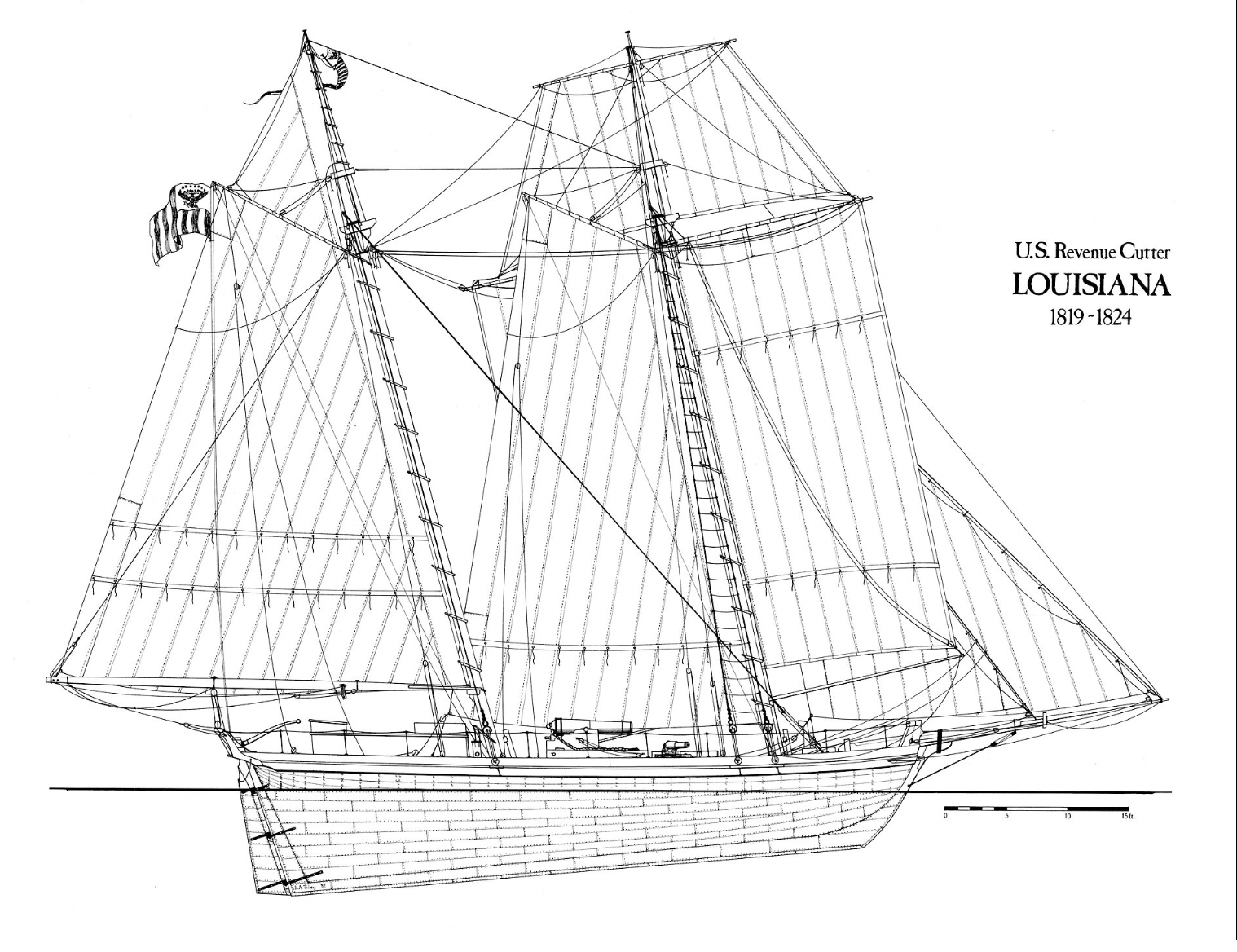
USRC Louisiana
1820 Landing parties from the cutters Louisiana and Alabama destroyed a pirate base on Breton Island.
1908 Congress authorized the creation of the Office of Captain-Commandant and Engineer in Chief. Additionally, commanding officers of vessels were authorized to administer oaths of allegiance and other oaths for service requirements in Alaska.
1944 The Coast Guard-manned destroyer escort USS Joyce, along with her sister warship USS Peterson and a Navy DE sank the German submarine U-550 off New York. The U-boat first torpedoed what was at the time the largest tanker in the world as the convoy it was joining was forming up outside of New York harbor. The destroyer escorts then attacked the U-boat, forcing it to the surface, and then sank it in a surface gun-battle. Joyce rescued the surviving u-boatmen as well as those off the stricken tanker.
1947 The French-owned Liberty ship Grandcamp exploded while loading ammonium nitrate at Texas City, Texas in one of the worst peace-time accidents ever to occur in a U.S. port. Over 500 died and thousands were injured.
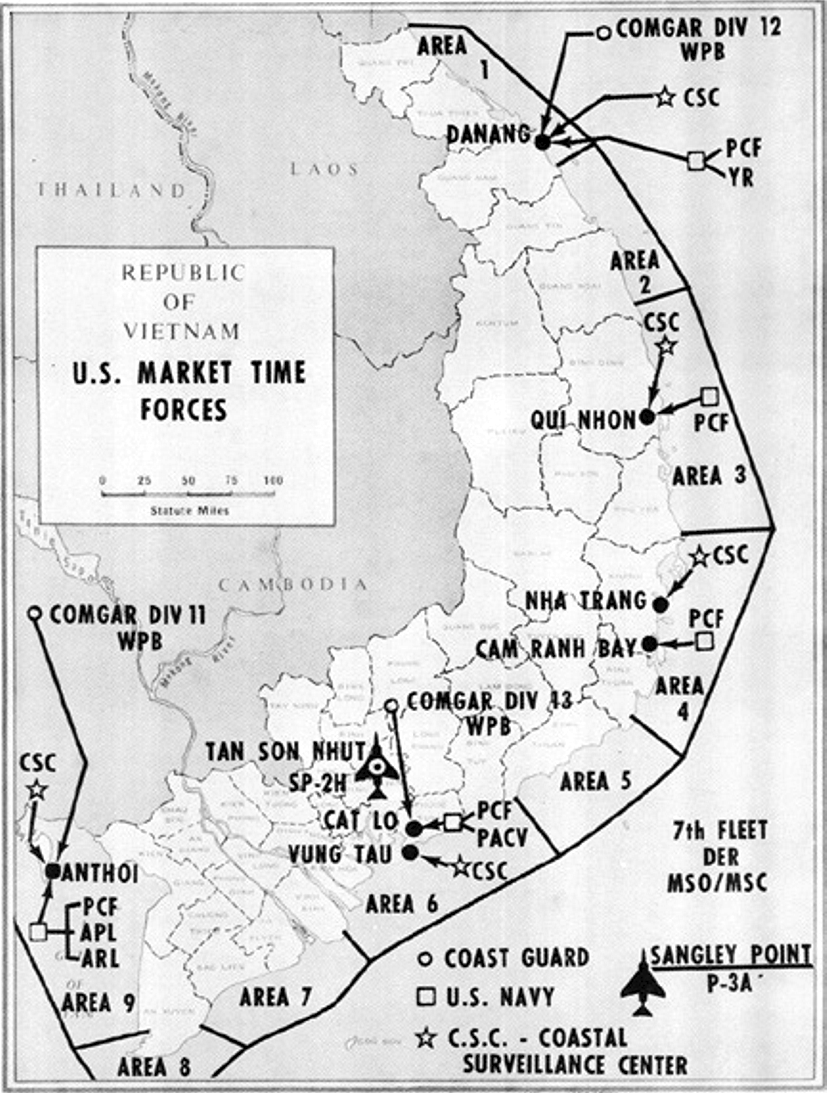
1965 Secretary of the Navy Paul Nitze asked Secretary of the Treasury Henry Fowler for Coast Guard assistance to combat seaborne infiltration from North Vietnam. This naval operation in Vietnam was named Operation Market Time.










 USS Joyce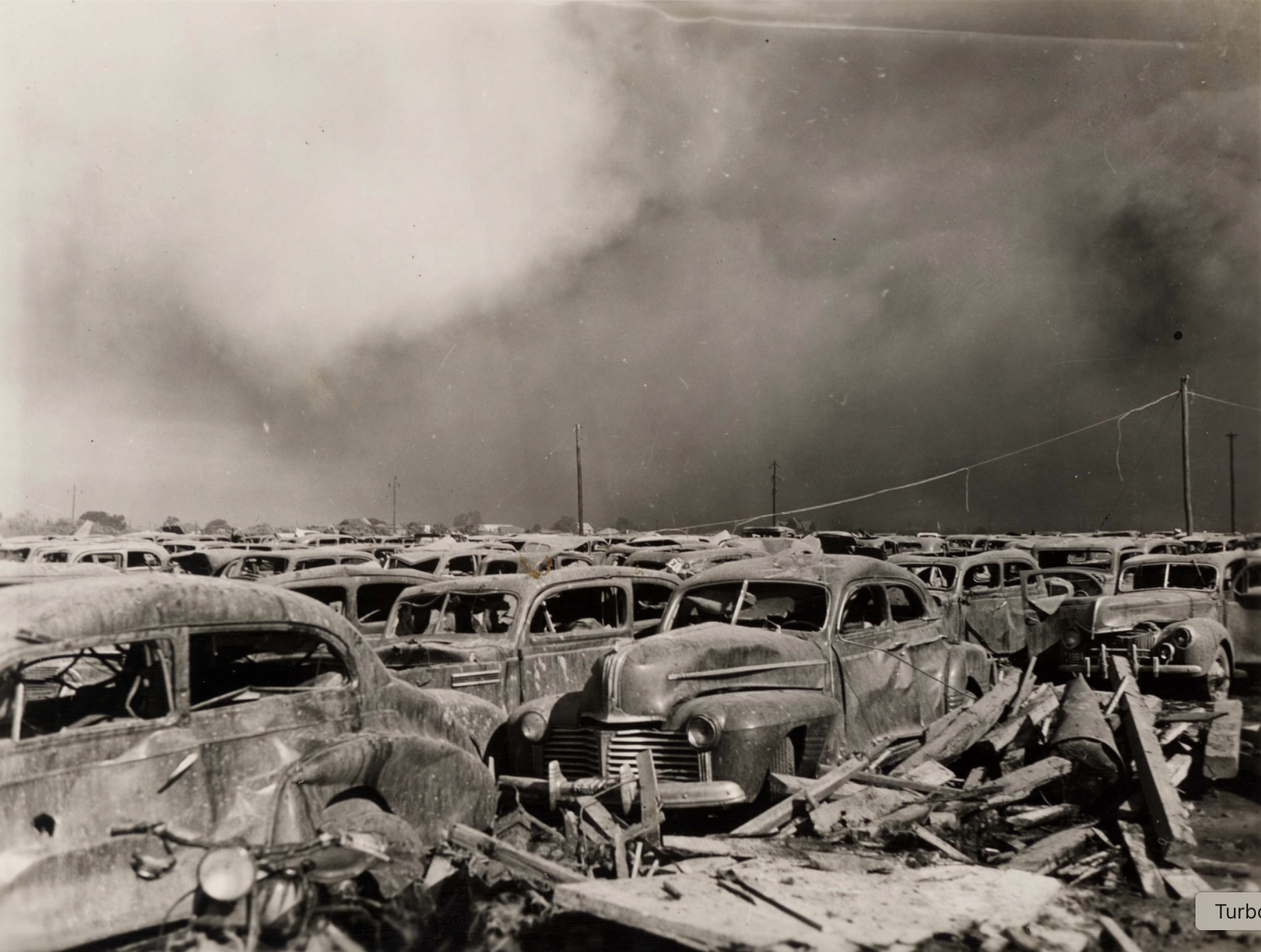
 Chuck Hill's CG Blog