
Photo: Coast Guard Hall PH-3 loads depth charges
This started as a response to a comment by JohnnieZ!, but it got to be too long, and perhaps too important a discussion to not to address more fully. The discussion revolved around:
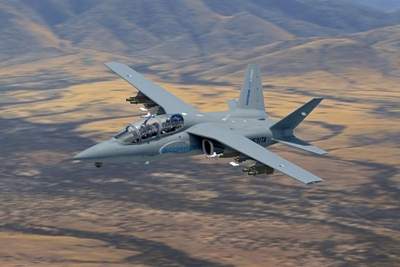
- The Textron Scorpion, a light two seat jet marketed to the Coast Guard among others as an ISR (Intelligence, Surveillance, Reconnaissance) asset (really sort of a manned drone) but with the capability to carry light weapons.
- Manned alternatives to the Coast Guards land-based UAV requirements.
- The Coast Guard’s air intercept mission over Washington DC, now being done by H-65s.
- The use of fixed wing aircraft with an Airborne Use of Force capability in support of Webber class as a substitute for larger cutters with embarked AUF helicopters.
- The possibility of arming CG fixed wing aircraft in general.
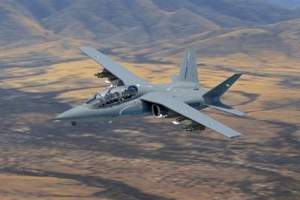
Textron Scorpion
As in many important discussions, there is no simple, obvious answer. I am sure Bill Wells will tell us the roots of this discussion go back to the formation of the Coast Guard’s first aviation unit. The Coast Guard has had a cultural divide between the surface ship side and the aviation side. While surface ships are commonly armed, the aviation side has been traditionally averse to weapons. This has changed somewhat since the advent of the airborne use of force mission, but for some Coast Guard aviators, weapons are still anathema. To some extent this is understandable. Weapons bring additional costs, security concerns, training and maintenance requirements, and a change of self-image.
We will talk about using fixed-wing aircraft, including the three types currently in service or planned (C-130s, C-144s, and C-27Js) as well as the Scorpion and the MC-12/KingAir 350 (an aircraft already in the Customs and Border Protection fleet) in four missions areas,
- ISR (intelligence, surveillance, reconnaissance),
- the DC intercept of general aviation aircraft,
- airborne use of force for law enforcement, and
- stopping a terrorist attack.

Photo: JGSDF LR-2, A Beechcraft 350, Super KingAir, Military designation C-12 Huron
ISR: Incorporating land based UAVs into the Coast Guard’s Maritime Domain Awareness system has proven a bit problematic, due to the requirement to sense and avoid regular air traffic, and the fact that they seem to crash more frequently than expected, making them perhaps more expensive than anticipated. We can of course do this mission with C130s, C-144s, or C-27s, but operating cost is relatively high. There may be a place for manned aircraft with relatively low operating costs, like the Scorpion or MC-12 to replace the unmanned systems. The problem with the Scorpion is, there is no head. It is faster than other Coast Guard aircraft, and if equipped with the right sensors, it could cover a lot of ocean relatively quickly, so perhaps bladder endurance may not be a problem, but I can’t help but think that the King Air’s crew endurance, probably cruising at a lower altitude, is better. I don’t see the Coast Guard even considering the Scorpion unless it wins the competition for the Air Force’s new trainer, which would guarantee its supportability. None of these manned fixed wing aircraft have the potential of an MQ-4C. But then, if the US Navy is actually going to maintain surveillance of US waters, the Coast Guard many not need to do Maritime Domain Awareness ISR, just tap into Navy data.
The DC intercept: The problems with the current use of H-65s for intercepting general aviation aircraft that violate the standing airspace restrictions over the capital is that: (1) Many general aviation aircraft have a higher maximum air speed than the helicopter. (2) Even if the target is slower, the relatively slow speed of the helicopter may make achieving an intercept problematic. (3) If the aircraft is in fact hostile, the helicopter has to hand over the task of destroying it to an interceptor aircraft or missile battery introducing the possibilities of delays and misdirection.
The first questions that come to mind is, why is the Coast Guard doing this rather than the Marines, Army, or Air National Guard? And why only over DC? The Marines, Army, and, I believe, the National Guard have attack helicopters that appear more appropriate than an H-65. The Textron Scorpion might be even better, but there are other alternatives that are already in the US inventory. Other candidates include
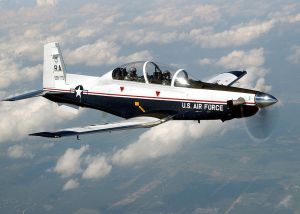
- The Beechcraft T-6A Texan II which is already in service with both the Air Force and the Navy as a trainer aircraft and has been modified as a light attack aircraft. It has a 100 knot speed advantage on the H-65.
- The similar, perhaps even more capable, Embraer A-29 Super Tucano now being built in Jacksonville, Florida.
- Even the MC-12 Super King Air looks like it would work better than the H-65 if equipped with an air to air weapon.
- The H-144, if appropriately armed, would be capable, but probably is more expensive to operate.

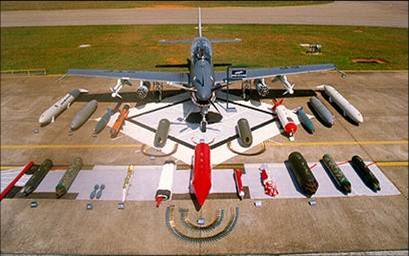
Photo credit: Brazilian Air Force. Super Tucano, the type can handles more than 130 weapon configurations, including 70mm rocket launchers, air-to-air missiles and laser-guided bombs, totally integrated into the aircraft’s mission system, with a laser designator
As far as I know, Coast Guard helicopters are not prepared for air to air combat. Even if we used the existing airborne use of force package, while the .50 caliber sniper rifle might be useful, we certainly don’t want a Coast Guard aircraft shooting a manually aimed machine gun at another aircraft over heavily populated areas.
Airborne use of force for law enforcement: In the Webber class cutters, the Coast Guard has an asset that can perform many of the missions normally expected of a medium endurance cutter, including drug and migrant interdiction, but they do not enjoy the advantage of organic aviation assets. There is no helicopter to augment their search, to chase down high speed contacts, or to use force to compel them to stop. When boardings are performed, they have neither a second boat nor an armed helicopter to provide over-watch as their boarding team approaches a suspected trafficer.
Certainly, shore based aircraft can be used to augment their search, but when it is time to compel a high speed contact to stop what are the options? We could almost certainly mount a heavy machine gun system controlled by an electro-optic device. There are gunship versions of all the aircraft the Coast Guard expects to operate that include electro-optic targeting and roll-on/roll-off palletized gun systems (Harvest Hawk (C-130), MC-27J Praetorian, and AC-235 (CN-235/HC-144)). But would it be accurate enough to do disabling fire as is done by helicopter airborne use of force units? Even if not, the armed over-watch function might be worth doing. Would we have lost BMC Terrell Horne III if the smuggler had known an armed aircraft was supporting Chief Horne’s RHIB? We could probably use a lighter .50 cal. rather than a 25 to 40mm gun, but we might want to have the option of the larger weapon for other reasons.
Stopping a terrorist attack: It is a fair question to ask why the Coast Guard should do this rather than the Army, Navy, Marines, or Air Force? After all, the Army maintained coastal defense fortifications from the founding of the republic until the end of WWII. Until recently the Navy had bases all along the coast with forces organized into Naval Districts (1903-1980) and during WWII they organized the Naval Districts into operational commands called “Sea Frontiers” (1941-1970s) that provided maritime security. The Air Force and Marines certainly also have assets that are capable of performing the mission.
In 1984 the Maritime Defense Zones were established with Coast Guard Area Commanders as third echelon Navy commands. They were primarily intended to counter Soviet forces, but realistically, their concern was always unconventional attacks. When the Soviet Union broke up, the commands appeared to have lost their rational and they were inactivated. But as we found out 9/11, the threat of unconventional attacks remained, and in fact may be increasing. My personal feeling is that the MARDEZ commands should be active at all times.
While the Coast Guard may not have the “Coast Defense” mission in law, the way the Army does, Ports, Waterways and Coastal Security (PWCS), is one of the eleven statutory missions called out in the Homeland Security Act of 2002. If for no other reason than the fact the service is called the Coast Guard, there is some expectation that the Coast Guard will actually guard the coast, at least against unconventional attack.
In some ways the Coast Guard is well positioned to do this. DOD forces concentrate on being forward deployed. When they come back to the US, they stand down, train, and reorganize. Generally they do not have ready crews and ships, boats, or aircraft on standby 24/7. Additionally repeated base closures have resulted in concentration of forces in only a few locations, leaving many ports far from military installations. The Coast Guard on the other hand, has assets and crews that are widely distributed geographically and are either on patrol of on standby ready to react.
As far as I can tell the Coast Guard has relied on its boats, equipped with machine guns to deter or respond to terrorists attacks by small craft, and relies on intelligence and its large cutters and perhaps assistance from other services to deal with threats employing larger vessels.
Should we have the option of arming our fixed wing aircraft? The Coast Guard never used to arm its helicopters or boarding parties, but a need was seen, and it is now routine. Flying armed all the time cuts into the aircraft’s performance reducing speed and range and increasing fuel consumption. Arming aircraft takes time. Weapons require additional training, maintenance, and personnel, and as the weapons become more sophisticated their security raises increasing concern. Still there may be times when it would be desirable to have an armed response, to support units that are inadequately armed, or to respond in cases where surface units are unable to reach the scene in a timely fashion. Guns fired from aircraft also have the advantage of firing down on their target, which is less likely to result in collateral damage than shots fired horizontally from surface units.
Capabilities: We might say, there are five levels of capability we could consider.
- Fire warning shots.
- Disable small vessels (e.g., the ability to destroy an outboard motor).
- Deadly force against exposed individuals.
- Stop or sink small vessels
- Stop or sink medium to large vessels
The first three levels of force are resident in our airborne use of force helicopters now, and if we wanted to replicate the capability in fixed wing aircraft supporting Webber class cutters, it may be possible to do so with a single gun system, perhaps no larger than .50 cal. This modification might also satisfy the need for a system to intercept general aviation aircraft that might prove hostile after violating airspace over DC.
While the fifth capability, the ability to forcibly stop or sink a medium or large vessel, is probably beyond any reasonable adaptation of the Coast Guard’s existing aircraft, there is at least one adaptation that might allow it to deal with small vessel (up to perhaps 100 tons) with a high degree of confidence, and larger vessels with at least some possibility of success (think “Hail Mary”) with minimum impact on the aircrafts’ structure or other capabilities.
The Marines’ Harvest Hawk modification to their C-130 tankers now includes a modification called the Derringer Door, that allows the aircraft to launch precision guided weapons like the unpowered, gravity-dropped, 33 pound, 43 inch long, Griffin A, from inside the aircraft without depressurizing. Use of this system against a moving target would require laser designation provided either by the aircraft or perhaps a unit on the surface.

Photo: Interior of Marine Corps KC-130J , with the Derringer Door modification. In the foreground is a rack for up to ten precision guided munitions. On the left is the modified Paratroop door with two tubes that allow these munitions to be dropped from the aircraft without depressurizing.






 Chuck Hill's CG Blog