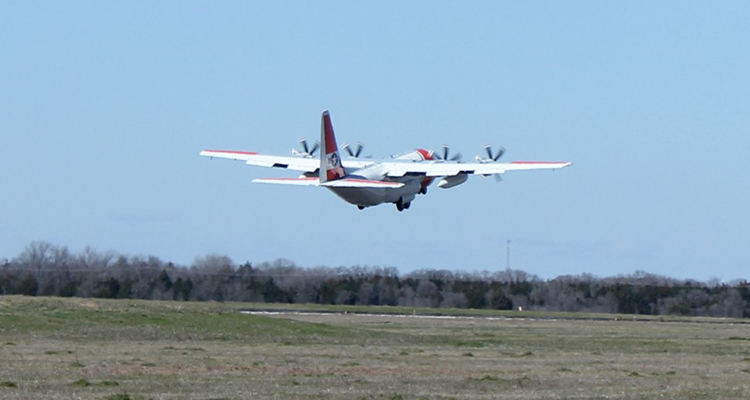
Fixed Wing Aircraft for Oil Spill Dispersal

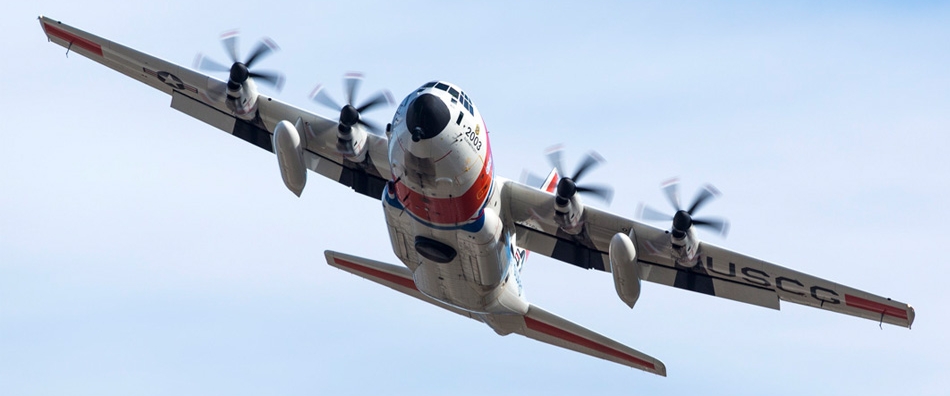
Coast Guard C130J

This from Defense Industry Daily,

Lockheed Martin has delivered the first of eight C-130J-30 Super Hercules aircraft to the Youngstown Air Reserve Station in Ohio as part of a project to modernize the installation’s aging military transport fleet. The plane incorporates a new configuration of aerial spray capability to secure large areas from disease-carrying insects and other pests as well as to disperse oil spills in water surface domains. Lockheed wrote that this function marks the 19th unique mission feature of the C-130J product line. (Emphasis Applied–Chuck)

Usually, we try to recover oil at spills, but using fixed wing aircraft to disperse oil spills might be a capability the Coast Guard could use, either organically or by tapping other service resources.

New Engine for the H-60?

Defense News has a new report, “US Army’s next-gen helicopter engine could fly in Black Hawk next year.

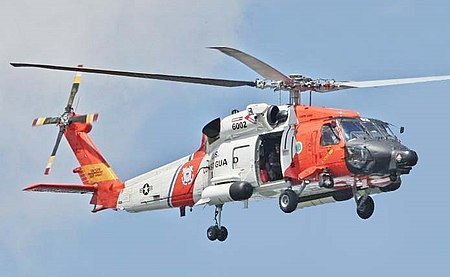
As we know, the Black Hawk is an H-60, and the Coast Guard will continue to have H-60s for a very long time. That means a new engine with improved performance and greater reliability is good news.

The T901 engine will replace the 1970s-era T700 and provide aircraft with a 50% power increase to restore performance. It’s 25% improved fuel consumption reduces energy usage and carbon emissions. The engine is also expected to have more durable components, which will lower life-cycle costs.

25% improved fuel consumption could mean another couple of hundred miles of range or another hour on station. It would also mean lower fuel costs. It might also mean the ability to maintain max speed rather than having to use a more economical cruise speed. Not that we are likely to see it soon, but the potential is there.

“Coast Guard MH-65 Dolphin helicopters retired after 36 years of service in Alaska” –News Release


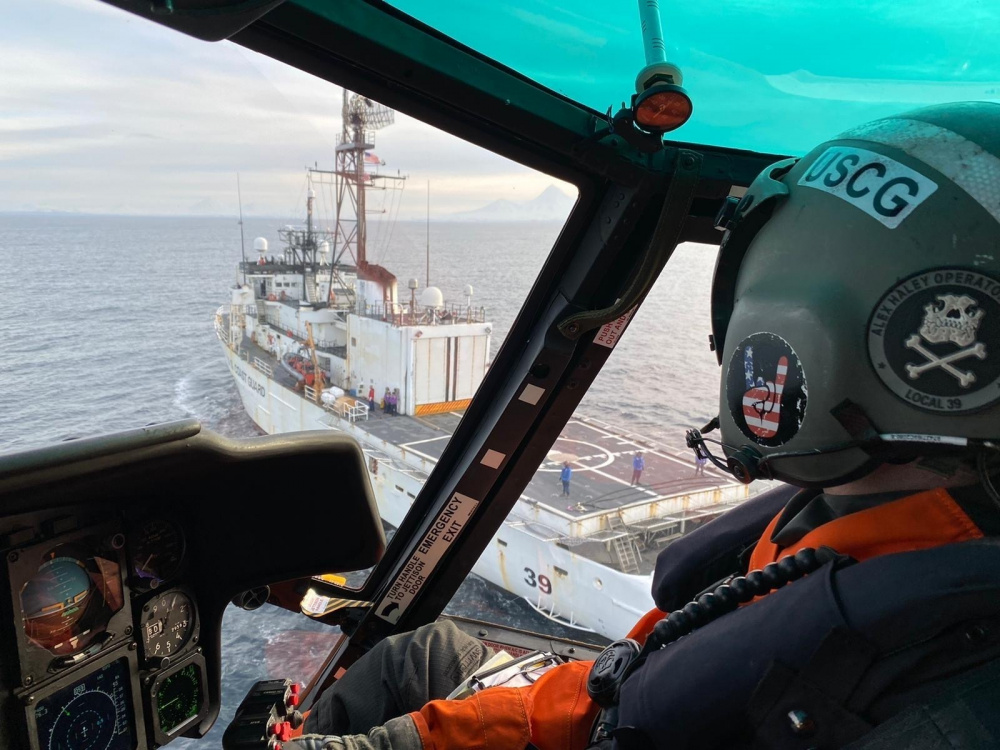
An MH-65 Dolphin helicopter crew based out of Air Station Kodiak and
deployed aboard Cutter Alex Haley, prepares for a helicopter in-flight refueling at sea evolution with the cutter crew during a search and rescue case near Dutch Harbor, Alaska, Wednesday, Dec. 30, 2020. The crew hoisted an injured fisherman from the vessel Magnus Martens and placed him in the care of awaiting Guardian Flight Alaska personnel for further transport to Anchorage. (U.S. Coast Guard photo by Lt. Benjamin DeGroot)

Below is a District 17 news release. This marks an important step in the move to an all H-60 rotary wing fleet and it also means that ships on ALPAT will be moving to operating MH-60s rather than H-65s.

I have to wonder, since recently upgraded MH-65Es will be with us for a very long time, if perhaps we might be able to open a new Coast Guard air station in Guam or the Northern Marianas (probably Tinian where the USAF is refurbishing an air base) and perhaps in American Samoa using H-65s. (I notice, when USCGC Harriet Lane recently deployed to the Western Pacific, she apparently did so without a helicopter, which would have made the ship more effective.) Certainly, the people of these American territories would welcome the additional SAR resources. That additional Western Pacific air stations might also, at least temporarily, operate Coast Guard fixed wing aircraft would also help to counter Illegal, Unreported, Unregulated (IUU) fishing.


 April 24, 2024

KODIAK, Alaska – The Coast Guard retired the Air Station Kodiak MH-65 Dolphin helicopter fleet during a ceremony, Tuesday.

Capt. Timothy Williams, commanding officer of Air Station Kodiak, presided over the ceremony honoring the 36 years of service the MH-65 Dolphin airframe and its crews provided to the Arctic region.

Air Station Kodiak currently has a rotary-wing fleet of six MH-60 Jayhawk helicopters. The unit will shift to a rotary-wing ship-and-shore based fleet of nine MH-60 Jayhawks in 2025.

Air Station Kodiak will be the fourth Coast Guard Air Station to transition to a single rotary wing fleet of MH-60 Jayhawk helicopters. Air Stations Borinquen, Traverse City, and New Orleans all recently completed similar transitions.

“For decades, the cutter and helicopter team were the core of the ALPAT mission,” said Cmdr. James Kenshalo, MH-65 Dolphin pilot. “Together they projected force and protection to the most extreme remote regions of our nation’s territories, operating beyond where help could reach. Countless lives have been saved because of these dedicated crews.”

Commissioned in January of 1988, the Alaksa Patrol (ALPAT) mission executed solely by MH-65 Dolphin aircrews provided Coast Guard Cutters with a reliable airborne asset during Alaska Patrols.

To read more about the Coast Guard MH-65 Dolphin and MH-60 Jayhawk helicopters click the following links:

SRR – MH-65 (uscg.mil)

MH-60T Service Life Extension Program (uscg.mil)

Japan Coast Guard H225 Helicopters

Japan CG Airbus H225 Helicopter

Below is an AirBus news release. The H225 is about the same size as the MH-60J despite the claims in the news release, Wikipedia reports that while the H225 has more power, the MH-60J has a higher speed and greater range.

Japan Coast Guard adds three H225s

Tokyo, 11 April 2024 – Japan Coast Guard (JCG) has placed an additional order for three H225 helicopters, taking its total H225 fleet up to 18. The largest Super Puma operator in Japan received three H225s in December 2023 and one in February 2024 for its growing fleet. The new helicopters will support territorial coastal activities, maritime law enforcement, as well as disaster relief missions in the country.

“The Japan Coast Guard has been an active operator of the Super Puma family helicopters for three decades. This follow-on order demonstrates the customer’s confidence in our products and the dedicated support to their fleet,” said Jean-Luc Alfonsi, Managing Director of Airbus Helicopters in Japan. “We believe the H225 is the perfect choice for JCG’s critical missions for law enforcement, as well as coastal and island protection, given its versatility in all weather conditions. We are committed to fully supporting its existing fleet, as well as its upcoming deliveries, ensuring high availability for its operations.”

JCG’s H225 fleet is covered by Airbus’ highly adaptive HCare Smart full-by-the-hour material support. This customised fleet availability programme allows the national coast guard agency to focus on its flight operations whilst Airbus manages its assets.

As the latest addition to the Super Puma family, the H225 is recognised for its high performance in challenging conditions as well as its outstanding range and payload capacity. The H225 has benefited from Airbus Helicopters’ continuous improvement policy. It is now equipped with new avionics including the largest screens available on the market and an innovative interface that, combined with its renowned autopilot, reduces pilot workload and enables them to focus on the mission at hand.

Offering the industry’s best range, speed, payload and reliability in the 11-ton-category twin-engine rotorcraft, the H225 offers outstanding endurance and fast cruise speed, and can be fitted with various equipment to suit a variety of roles.

24 H225s are currently flown in Japan by Japan’s Ministry of Defence or parapublic operators for various search and rescue missions, VIP, fire-fighting, as well as passenger and goods transportation.

“How Fast Response Cutters Have Transformed Coast Guard Operations In Guam” –Naval News / What About Air Assets?

The crew of USCGC Oliver Henry (WPC 1140) arrives in Pohnpei, Federated States of Micronesia, on Feb. 1, 2024, to download supplies for delivery to the outer islands of the FSM to combat the effects of a current drought. The supplies included 2,000 lbs of rice, three medical kits, 70 gallons of bottled water, and boxes of paper products. (Photo courtesy of U.S. Embassy Kolonia)

Naval News has an excellent article reviewing the additional capabilities Webber class FRCs have provided. It also highlights the vast operating area and associated challenges including necessary maintenance.

U.S Coast Guard Forces Micronesia Sector Guam’s AOR is based on Guam Search and Rescue Region. (U.S Coast Guard Navigation Center) Around 3 million square kilometers or 1.9 million square miles and includes the entirety of Palau, the Federated States of Micronesia, and Republic of the Marshall Islands.

For scale, the distance from the bottom of the area above to the top is 1020 nautical miles. According to the post, “It’s [an area] two thirds the size of the continental United States that we patrol with three ships and 300 people,” (I suspect that was in reference to the Contiguous 48, but it’s a huge area.)

ASSETS:

Something that should not be missed is that the only normally available rotary wing assets in the area are a squadron of Navy MH-60S, and there are no fixed wing SAR or law enforcement assets in the region. If an extensive search is required for any reason, it usually means flying a C-130J over 3,400 nautical miles down from Coast Guard Air Station Barbers Point, Hawaii just to get to Guam.

Major Cutters do occasionally cruise these waters, but it is rare. There is also a 225 foot buoy tender homeported in Guam.

Hopefully these waters will see USCGC Harriet Lane frequently, but on her first Western Pacific patrol, it did not appear she deployed with a helicopter (I believe Barbers Point has only three). Being one of the first four 270s that were built by Tacoma Boat, her flight deck is not strong enough to support the Navy MH-60S so they could not even us her flight deck to extend their range, much less operate from the ship.

Most of the time, there will only be one Coast Guard surface vessel underway in this vast area. Assets are still too few to provide any degree of persistence as a deterrent to Illegal, Unreported, or Unregulated (IUU) fishing. Any vessels involved in IUU fishing would likely have a good idea where our cutters are operating and with no fixed wing search aircraft, our ability to search for IUU perpetrators is extremely limited.

In addition to more cutters, we really need good maritime domain awareness, probably meaning some kind of long-range search aircraft, manned or unmanned, operating routinely in this area. We might consider basing C-27Js in Guam. It is a long way from USCG support, but the Australian Air Force also flies C-27Js, so there might be some synergy there.

“Coast Guard completes air station transitions to upgraded MH-65E with delivery to Corpus Christi” –CG-9

MH-65E cockpit

Below is news from the Acquisitions Directorate (CG-9).

This is a very large deal. The MH-65E looks very much like the Dolphins that entered service about 40 years ago, but they are very different aircraft with more power, a different radar, air borne use of force, and very different avionics.

Extending their life to 30,000 hours, that is 1,250 x 24 hour days or almost three and a half years airborne. Looks like we are getting our money’s worth out of these aircraft.

Looks like his we will be continuing to use the H-65s for some time. This indicates that we will not see an all H-60 rotary wing fleet until the 2040s. By then, all the WMECs should be out of service.


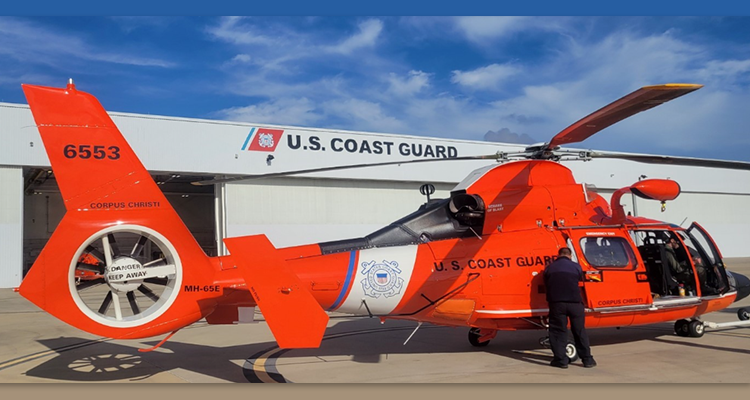
Upgraded MH-65E Dolphin CGNR 6553 is delivered to Air Station Corpus Christi, Texas, Feb. 7, marking the full transition of Coast Guard air stations to the upgraded Dolphin short range recovery aircraft. U.S Coast Guard photo


The Coast Guard reached an important milestone in its MH-65 Conversion and Sustainment program on Feb. 7 when it delivered CGNR 6553 to Air Station Corpus Christi, Texas. This was the third and final upgraded MH-65E for Corpus Christi, which is the last air station to transition to the upgraded short range recovery helicopter.

“The third and final MH-65E delivery to Air Station Corpus Christi marks a significant accomplishment for the H-65 Conversion/Sustainment Program,” said Cmdr. Jen Ahearn, program manager. “All H-65 operational units have now been fielded with modernized aircraft that have received improvements to address reliability and obsolescence issues as well as increase the service life of the asset from 20,000 to 30,000 flight hours. We have heard from the fleet through operational assessments, transition working groups and post-flight reports that the MH-65E upgrade enhances situational awareness and decreases pilot workload, things that are valued by crews executing high-risk, dynamic missions.”

CGNR 6553 was the 79th Dolphin upgraded to the Echo or “E” configuration. The upgrade includes an improved automatic flight control system; enhanced digital weather/surface search radar; installation of a robust command, control, communications, intelligence, surveillance and reconnaissance and computers suite; and modernization of the digital flight deck.

“Successfully fielding this asset to the fleet is a testament to the years of hard work and dedication of professionals committed to improving the Coast Guard’s readiness and short-range recovery capabilities,” Ahearn said. “We still have work ahead of us, but it’s nice to take a pause and recognize this program milestone, especially as we celebrate the H-65’s 40th anniversary this year.”

Another 11 conversions will be completed, for a total of 90, to allow operational aircraft to rotate into programmed depot maintenance, an intensive maintenance process completed at the Coast Guard Aviation Logistics Center that keeps the fleet in its best condition possible.

Continued operation of the MH-65E fleet is needed to maintain the Coast Guard’s rotary wing capability while preparing for the eventual transition to an all MH-60T medium range helicopter fleet sometime in the 2040s.

The MH-65E Conversion/Sustainment program of record was reduced from 98 aircraft based on the notional MH-60T transition schedule. Stopping the program at 90 conversions will help mitigate shortages of Echo replacement parts, sustaining the existing fleet longer.

The upgraded MH-65E aircraft increases aircrew situational awareness through its standardized “glass cockpit” technology. In addition to improved search and rescue capabilities, the advanced navigation systems allows pilots to safely maneuver through the highly congested, complex air traffic that can be encountered during a disaster response.

Adding a third MH-65E to Air Station Corpus Christi enhances the station’s ability to carry out its missions throughout its 11,250 square-mile jurisdiction. That area covers Texas from the U.S. southern border, north to the Colorado River and westward, including the entire state of New Mexico as well as 200 nautical miles offshore in the Gulf of Mexico.

“Being the last unit in the Coast Guard to transition to the 65E was a unique experience,” said Cmdr. Mary Bender, Air Station Corpus Christi deputy of operations. “We had the advantage of watching each unit transition before us and we tried to use the wisdom gained to create as seamless of a transition as possible. Our maintenance team has been truly amazing as they work to understand and repair this model.”

Bender recalls the first search and rescue case they conducted with the upgraded Echo. “It was a week after we received our second bird, and it was the ‘standard Coast Guard Day,’ low visibility, fog and icing on the way. A man had experienced anaphylactic shock, was intubated and running out of oxygen on a rig 180 nautical miles offshore. Our crews safely transported the patient to land, and he survived.

“We were so thankful to have all the new modes and ADS-B (Automatic Dependent Surveillance-Broadcast) while conducting the very unique mission during less-than-ideal conditions,” Bender said.

For more information: MH-65 Short Range Recovery Helicopter Program page

Why the “J-model” C-130s Make Such a Difference

LIMA, PERU, 10.06.2023, Courtesy Photo, USCG District 11
The aircrew of the Coast Guard 2007, an HC-130 based out of U.S. Coast Guard
Air Station Barbers Point, Hawaii, poses for a picture with observers from the Peruvian Navy and Air Force, in Lima Peru, October 2023. During the course of two weeks, Peruvian observers accompanied the USCG aircrew as they conducted overflights of the fishing fleet on the high seas during Operation Southern Shield 2023. (U.S. Coast Guard photo by pilot-in-charge, Lt. Zachary Hunter.) Note the six bladed props that identify the C-130J. 

Below is a news release, “Coast Guard accepts 16th missionized HC-130J into fleet,” from the Acquisitions Directorate (CG-9). There is more here than the announcement of a newly missionized aircraft. The post goes on to talk about the advantages the C-130Js bring to the service, particularly in the Pacific.

The C-130Js provide a 20 percent increase in speed and a 40 percent increase in range over the HC-130H, as well as much improved avionics. The Coast Guard is moving to a fleet of 22 HC-130Js and retiring all their C-130Hs.

The Coast Guard also has 14 HC-27Js and 18 HC-144s all being equipped with Minotaur.

HC-130J Characteristics

  • Length: 97 feet 9 inches
  • Wingspan: 132 feet 7 inches
  • Height: 38 feet 11 inches
  • Maximum Weight: 175,000 pounds
  • Cruise Speed: 320 knots true airspeed
  • Range: 4,900 nautical miles
  • Endurance: 20+ hours

HC-130J Features

  • Standardized Minotaur mission system across all Coast Guard fixed-wing aircraft
  • Real-time tracking and Rescue 21 integration to enhance common operating picture and maritime domain awareness
  • Advanced radar and electro-optical/infrared sensors for search and rescue, law enforcement and intelligence gathering missions; the Coast Guard’s Super Hercules is the first HC-130 aircraft in the world with a 360-degree, belly-mounted, multimode surface search radar
  • Commonality of command, control, communication, computers, cyber, intelligence, surveillance and reconnaissance components and capabilities with those on the Coast Guard’s medium range surveillance aircraft

Minotaur Features

  • Commonality of command, control, communications, computers, cyber, intelligence, surveillance and reconnaissance components and capabilities across all Coast Guard fixed-wing surveillance aircraft
  • Interoperability with multiple Defense and Homeland Security department platforms
  • Real-time tracking and Rescue 21 integration to enhance common operating picture and maritime domain awareness
  • Automatic Dependent Surveillance – Broadcast technology to receive traffic and weather broadcasts and information about other aircraft, including identification, position and altitude
  • Tactical screen replay to review a target’s entire flight in seconds and track the target via its trajectory, even if the target stops broadcasting information or otherwise evades the sensors

The Coast Guard has nine air stations operating fixed wing search aircraft. There are six in the Atlantic Area, which includes the Gulf of Mexico.

  • Cape Cod, MA (C-144)
  • Elizabeth City, NC (C-130, C-27, C-144)
  • Miami, FL (C-144)
  • Clearwater, FL (C-130)
  • Mobile, AL (C-144)
  • Corpus Christi, TX (C-144)

There are only three Coast Guard air stations operating fixed wing search aircraft in the Pacific Area.

  • Sacramento (C-27)
  • Barbers Point, HI (C-130)
  • Kodiak, AK (C-130)

Kodiak and Barbers Point certainly needed the additional range and on-station time that the C-130Js provide.

Barbers Point is the only Coast Guard air station in the 14th District, despite the fact that the 14th District includes 48% of the entire US’s Exclusive Economic Zone (EEZ), and has additional responsibilities to assist the Federated States of Micronesia (FSM), the Republic of the Marshall Islands (RMI), and the Republic of Palau under the Compact of Free Association which together have an EEZ total equal to more than 49% that of the US.


Coast Guard accepts 16th missionized HC-130J into fleet

The Coast Guard’s 16th fully missionized HC-130J takes off for its first test flight following the year-long missionization and Block Upgrade 8.1 modification at L3Harris in Waco, Texas. U.S. Coast Guard photo.


The Coast Guard accepted delivery of its 16th fully missionized HC-130J long range surveillance aircraft, CGNR 2016, Feb. 19 following completion of Minotaur mission system integration and Block Upgrade 8.1 installation at L3Harris in Waco, Texas.

The aircraft was delivered to Air Station Elizabeth City in Elizabeth City, North Carolina, returning that air station to its full complement of five HC-130J aircraft. The air station was temporarily operating with four aircraft while an Elizabeth City HC-130J was assigned to Air Station Barbers Point, Hawaii, to complete the transition of that facility to HC-130J operations.

The more advanced engines, six-blade propellors and Minotaur-integrated sensors of the HC-130J enable the Coast Guard to better respond to mariners in peril by improving response times, extending time on scene for search and rescue and law enforcement patrols, and increasing effectiveness and versatility. Regarding the latest air station transition, the improvements are ideally suited for Barbers Point’s vast jurisdiction – 12.2 million square miles of open ocean, atolls and island chains, which make up the Coast Guard’s Fourteenth District.

Three recent natural disasters in Air Station Barbers Point’s area of responsibility have highlighted the value of the improved aircraft, especially the 26% increase in patrol range over the legacy HC-130H.

  • A Barbers Point HC-130J flew 2,300 miles to be the first aircraft on scene after Typhoon Mawar struck Saipan in May 2023, performing overflight assessments and delivering critically needed relief supplies. Over a week, the aircraft flew over 97 flight hours and dispatched 400,000 pounds of cargo and 169 passengers.
  • Barbers Point aircrews responded when wildfires burned thousands of acres in Maui, Hawaii, in August 2023, providing search and rescue and damage assessment along with moving passengers and cargo for disaster relief.
  • Barbers Point HC-130J aircrews answered the call when Tropical Cyclone Lola slammed the island nation of Vanuatu in October 2023, assessing the damage to ports, airports and critical infrastructure. Aircrews also delivered over 80,000 pounds of relief supplies.

The HC-130J and its Minotaur system also play a vital role in identifying and monitoring illegal fishing by providing surveillance and gathering intelligence on suspicious fishing activities. That information is shared with local and national authorities and aids in determining what vessels need to be boarded for inspection.

The service’s Super Hercules aircraft carry out many Coast Guard missions, including search and rescue, drug and migrant interdiction, cargo and personnel transport, and maritime stewardship, as well as providing critical support to Department of Homeland Security partners. The aircraft also can serve as a command and control or surveillance platform capable of identifying and classifying objects and sharing that information with operational forces.

For more information: HC-130J Long Range Surveillance Aircraft Program page and Minotaur Mission System page

“Structural Cracks Ground All U.S. Coast Guard C-27J Spartan Patrol Aircraft” –Forbes

A Coast Guard C-27J Spartan crew, assigned to Coast Guard Air Station Sacramento, flies over San Francisco, California, during area of responsibility familiarization training, Monday, Feb. 6, 2018. The C-27Js are outfitted with weather radar and communications equipment capable of supporting transport and other Coast Guard missions. Coast Guard photo by Lt. Scott Handlin

Forbes reports,

“Structural cracking has forced the U.S. Coast Guard to ground its entire fleet of 14 C-27J Spartan maritime patrol aircraft…”

“Coast Guard to SLEP, Expand MH-60T Helicopter Fleet as Sikorsky Delivers First New Airframe” –Seapower / Implications for Cutters

Coast Guard to SLEP, Expand MH-60T Helicopter Fleet as Sikorsky Delivers First New Airframe

The Navy Leagues on line magazine, Seapower, reports,

“The U.S. Coast Guard has confirmed plans to expand is MH-60T Jayhawk helicopter fleet and make it the standard service-wide helicopter. The service life-extension of the current MH-60T fleet is being highlighted as Sikorsky, a Lockheed Martin company, delivers the first of 45 replacement MH-60T airframes to the Coast Guard.”

There is a lot of information here.

  • The Coast Guard currently has 48 MH-60T.
  • Generally, six are being overhauled.
  • 45 of these will receive new hulls.
  • 12 new hulls will be delivered annually.
  • Electric tail folding will be added to MH-60s beginning in 2024.

That suggests the SLEP program for the existing Fleet will go through FY 2027, but there is also an intent to replace all H-65s with H-60s. Ultimately the Service expects to have 127 H-60s. That is 79 additional H-60s. Growth will involve both new construction and additional Navy conversions. Sounds like we may still be as much as 13 years from full conversion to a full H-60 fleet, about 2036, but perhaps earlier.

H-65s will continue to operate from cutters for some time.

So, what about the H-65s and the smaller cutters that may not be able to operate the H-60? The nine “B class” 270s should be able to operate H-60s, but the 210s and four “A Class” 270s cannot. The last of those will probably be decommissioned about 2032, certainly no later than 2035.

Aviation Logistics Center (ALC), CGAS Elizabeth City should be wrapping up the MH-65E SLEP program about now, having begun full rate production in November 2019 at a rate of 22 aircraft a year. The SLEP reportedly added 10,000 hours to the life of each aircraft, so the H-65s will probably outlast the cutters that can only operate the smaller helicopter.

C-27J Gets Minotaur

A Coast Guard C-27J Spartan crew, assigned to Coast Guard Air Station Sacramento, flies over San Francisco, California, during area of responsibility familiarization training, Monday, Feb. 6, 2018. Coast Guard photo by Lt. Scott Handlin

Below is a news release from the Acquisitions Directorate (CG-9):

Looking at the Coast Guard’s fixed wing fleet, this is the first of the 14 C-27Js to be equipped with Minotaur, but 14 of the 18 HC-144s are so equipped as are 15 C-130Js. A contract has been awarded for conversion of C-130J numbers 17 and 18 with options for conversion of numbers 19 to 22.


The Coast Guard successfully performed the first flight of the newly missionized HC-27J prototype aircraft, CGNR 2712, today at Naval Air Station (NAS) Patuxent River, Maryland. The milestone flight is part of the Coast Guard’s effort to enhance its fixed-wing surveillance aircraft fleet with improved capabilities to gather, process and transmit information during maritime patrol aircraft joint operations.

The flight was a culmination of efforts by the Coast Guard’s Aviation Projects Acquisition Center and Medium Range Surveillance Aircraft program office along with Naval Air Systems Command’s Naval Air Warfare Center Aircraft Division AIRWorks Team and the original equipment manufacturer, Leonardo Aircraft Division (LAD). The first flight of the HC-27J was a modified functional check flight and was tailored to exercise the program’s Safety of Flight and Safety of Test systems prior to fully proceeding into the flight test phase. The initial flight tests will be performed by the Naval Air Systems Command Test and Evaluation Squadron (VX-20) HC-27J test team with support from the Coast Guard and LAD at NAS Patuxent River.

The Coast Guard is in the process of missionizing 14 C-27J aircraft that were transferred from the U.S. Air Force under the National Defense Authorization Act of 2014. As originally delivered, the C-27Js were outfitted with weather radar and communications equipment. Missionization refers to the process of integrating specialized equipment, such as radar, sensors and processors, that enhance the aircraft’s effectiveness in carrying out Coast Guard missions. The Coast Guard is using Minotaur mission system architecture developed by the Navy across its fixed wing fleet to integrate the specialized components such as surface search radar and electro-optical/infrared sensors because it offers significant increases in speed and memory capability.

For more information: Medium Range Surveillance Program page and Minotaur Program page