Unfunded Piority List

The US Naval Institute has published an online copy of the DOD’s unfunded priority list. The Navy’s list runs pages 9-13 of the 49 page document reproduced there.

Which got me to thinking, where is the Coast Guard’s unfunded priority list? Do we have one? If not, shouldn’t we? The FY2015 budget proposal includes only two Fast Response Cutters. First on the list, four more. The additional 14 C-27Js still leave us four Maritime Patrol Aircraft short of the program of record. Four more C-144s (or C-27s) please. There is a documented requirement for three heavy and three medium icebreakers. Lets fix the Polar Sea. To do all its statutory missions, the Coast Guard Fleet Mix Study  indicated we need nine National Security Cutters not eight and not 25 Offshore  Patrol Cutters but 57. We are not ready to order the OPCs yet, but a ninth NSC is something we could use right now. Plus the Coast Guard needs replacements or rebuilds for the inland fleet of tenders and the 65 foot icebreaking tugs. Incidentally the Fleet Mix Study says the Coast Guard need 65 Maritime Patrol Aircraft (listed as C-144s in the study) not the 36 in the program of record or the 32 in the works currently.

The Commandant has been saying the Coast Guard needs $2.5B a year in AC&I. Why not tell Congress how we would spend it. If I remember correctly, Congress has in fact asked for this. The Coast Guard would be remiss in not providing it.


Decommissioning the 110s

File:USCGC Mustang (WPB-1310).jpg

Photo: USAF photo, USCGC MUSTANG (WPB 1310), underway at Port Valdez, Alaska, while providing harbor security during Exercise NORTHERN EDGE 2002.

The Coast Guard recently commissioned its eighth Webber Class Fast Response Cutter, and it has accepted the ninth. Since these are replacements for the 110 foot Island class, we should not be surprised that Island class cutters are being decommissioned.

This is the first I have heard about since the decommissioning of the 123 conversions: USCGC Bainbridge Island (WPB-1343).

The FY2015 budget provides for decommissioning eight 110s.

The Coast Guard plans on 58 Webber class, so presumably they would want to retain enough 110s to provide a total of 58 larger patrol craft with the 110s filling in until replaced by the new ships. It does not look like this will happen. Since the decommissioning of eight Island class as a result of the failure of the 123 conversion, there have been 41 Island class WPBs. Adding the Webber class WPCs currently commissioned that gives the Coast Guard a total of 49 large patrol craft. It appears the total will not exceed 49 at any time in the foreseeable future.

If 110s are decommissioned at the same rate Webber class are built, the number may stabilize at 49. If on the other hand the Coast Guard is unable to keep these older vessels going, the total is likely to drop. If that happen, as little as I like the idea of multiple crews, perhaps it is time to look at multi-crewing the Webber Class. .

Navy Department Budget, a Comparison

Here is an overview of the Navy Department’s FY2015 budget request: http://www.finance.hq.navy.mil/FMB/15pres/DON_PB15_Press_Brief.pdf A much shorter summary of the Coast Guard’s FY2015 budget proposal can be found here: http://www.fiercehomelandsecurity.com/story/papp-budget-falloff-results-smaller-coast-guard/2014-03-12

The Navy Department’s FY2015 budget authorizes 698,259 positions (323,600 Navy, 182,700 Marines, and 191,959 civilians). The Navy’s budget is down, but it is still $148B. Its equivalent of the Coast Guard’s AC&I budget (Procurement plus Infrastructure) is $39.9B.

By comparison the Coast Guard budget request includes 49,093 positions, a total budget of $9.8B, and $1.08B for AC&I.
In terms of personnel the Coast Guard is roughly 7% or one fourteenth the size of the Navy Department (and about one eighth the size of the Navy itself). If its budget were proportional, the Coast Guard would have an AC&I budget of $2.81B and a total budget of $10.41B.
There is not much difference in the per capita budget overall, but the difference in investment is huge. An equivalent AC&I budget would be 160% greater than the current request.  (The difference in the R&D budgets are even more significant.)
As similar organizations, I think this is a clear justification, of the Commandant’s assertion, that the Coast Guard really needs an AC&I budget of $2.5B to get healthy. If anything, after years of underfunding, it needs more.

New Budget Process

Fiercehomelandsecurity is reporting that the Department (DHS) is initiating a new budget process, that would make it more top down.

DHS is building a process where it will define its mission and objectives, then determine what resources it needs and look across components to avoid overlaps and inefficiencies.

“My impression is that the DHS budget process is too stovepiped,” Johnson told the House Appropriations subcommittee on homeland security, during a March 11 hearing.

Johnson, a former general counsel for the Defense Department who took over at DHS in December, said he used the DoD budget process as a model.

Perhaps this is what is needed to make the Department a bit more coherent in its approach to its missions. Perhaps it would be too much to hope for, but perhaps the Department will see that Customs’ Aviation and Marine units largely unnecessarily duplicate Coast Guard assets.

I don’t have any problem with the Department defining mission and objectives or eliminating  overlaps and inefficiencies. I do think they might be out of their depth in determining what resources it needs.

The new Secretary comes from the DOD and looks to their process as a model, but DOD is not necessarily the most efficient of organizations. DOD staff over and above the armed services themselves, is grossly inflated and part of the reason is that there is a lot of second guessing of the services expertise by an ever growing civilian bureaucracy, a model DHS cannot afford to duplicate.

OPC Multi-Year Procurement-a Clarification

I have been made aware that the earlier post on this topic might lead to some confusion. Lets look at it in more detail. This is what the bill actually says about this,

“SEC. 215. MULTIYEAR PROCUREMENT AUTHORITY FOR OFFSHORE PATROL CUTTERS.

” In fiscal year 2015 and each fiscal year thereafter, the Secretary of the department in which the Coast Guard is operating may enter into, in accordance with section 2306b of title 10, United States Code, multiyear contracts for the procurement of Offshore Patrol Cutters and  associated equipment.”

First, it should be apparent that this applies only to the Offshore Patrol Cutter (OPC). This will not help with the Fast Response Cutter (FRC) program.

Second it refers specifically to section 2306b of title 10, the section governing muti-year procurements (MYP), which brings with it some specific requirements, one of which is that to be eligible for consideration for a multi-year procurement, the program must be  “stable.” In the case of shipbuilding, this usually means that the first ship is at least complete. That will probably be in 2020, by which time, at least the first three ships should have already been contracted.

There is a form of contracting that would provide many of the advantages of multi-year procurement (MYP) that can include these first few ships, this is Block Buy Contracting (BBC) as was used at the start of the Navy’s current submarine program, but that was not what was authorized.

Clearly the House Transportation and Infrastructure Committee wants to allow the Coast Guard to exploit potentially more efficient forms of contracting, but the potential of multi-year procurement of OPCs is still years away. If they want to realize savings earlier, they will need to authorize Block Buy Contracting for the Offshore Patrol Cutters and/or Multi-Year Procurement for the Fast Response Cutters.

There is another issue here also. That is the disagreement between the Department and Administration (in the form of OMB) on one side and the Coast Guard and some members of Congress on the other about what elements of the project must be funded before it is considered fully funded and a contract can be awarded. This is a funding approach question. and it is actually not directly connected to the contracting mechanism. Authorizing MYP does not resolve this disagreement. The Department and Administration’s apparent reticence may be symptomatic of a desire to delay committing, which would work against the long term commitment required for a multi-year procurement, but it should be obvious to anyone that while the final number of OPCs may be open for debate, the Coast Guard does need at least the eleven that are currently planned to be included (one contracted and ten as options) in the initial construction contract.

Multi-Year Contract for the Offshore Patrol Cutter?

FierceHomelandSecurity is reporting a bill, H.R.  4005, out of the House Transportation and Infrastructure Committee (the Coast Guard’s traditional authorizers) that would set authorization levels for the Coast Guard in FY2015 and 2016. “No large spending increases under proposed Coast Guard reauthorization

Their write up contained an unexpected and pleasant surprise,

“Among its provisions would be one authorizing the service to enter into a multiyear contract for procurement of Offshore Patrol Cutter ships. The Coast Guard and its advocates have a long-standing argument with the Office of Management and Budget over whether it should have multiyear funding for ship procurement. The Coast Guard contends it keeps the per-unit cost of new ships down; OMB prefers to have ships fully funded before the service lets a new acquisition contract.”

Congressional Researcher Ronald O’Rourke has been pointing out the advantages of multi-year contracts for years, “Multiyear Procurement (MYP) and Block Buy Contracting in Defense Acquisition: Background and Issues for Congress” (pdf), Congressional Research Service, Ronald O’Rourke and Moshe Swartz, June 27, 2012.

Frankly, I had little hope it would be applied to the OPC, and only hoped it might be  applied to the Fast Response Cutters, “Six More FRCs and Approval of Full Rate Production, Time for a Multi-Year Contract.

It is hugely advantageous, in saving money for the American Tax Payer, and it eliminates uncertainty for both the contractor and for the Coast Guard. All the most successful Navy shipbuilding contracts are multiyear including those for both SSNs and Burke Class destroyers.

Now lets hope the bill becomes law and that a multiyear contract is awarded.

CG Cuts=30% Increase in Drugs

The US Naval Institute’s News Service has a summary of Admiral Papp’s testimony before the House’s Homeland Security Subcommittee on Border and Maritime Security. He outlines what he sees as the effect of budget cuts and sequestration.

He connected the cuts to a general decline in patrol activity,

“Papp acknowledged the sequestration’s impact in another way in answering a question about why the Coast Guard’s patrols in the air and on the water declined by more than 6,000 hours last year because of “asset failures,” in the words of a Department of Homeland Security inspector general’s report.”

Loaning LCS to the Coast Guard

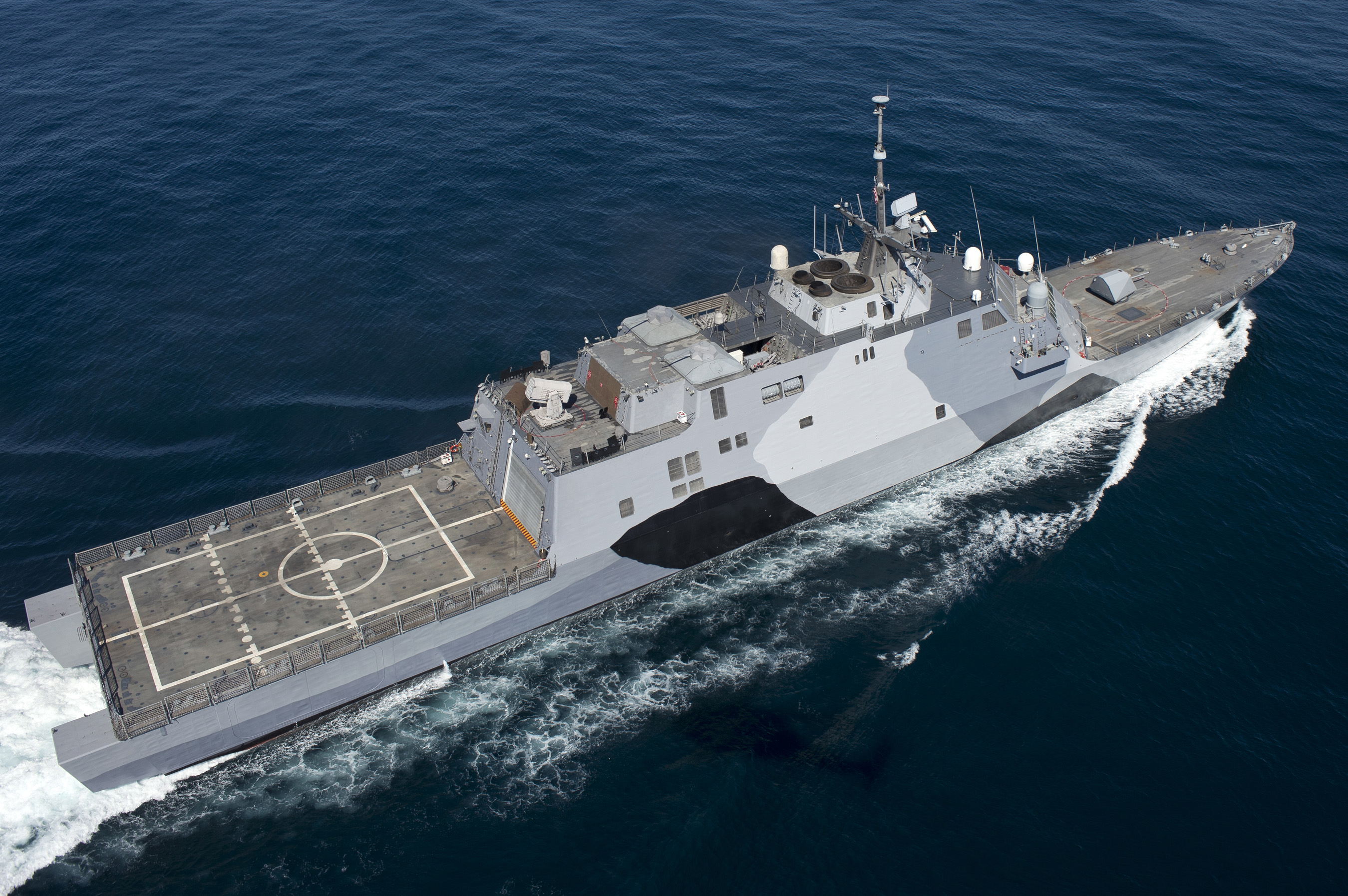
File:USS-Freedom-rear-130222-N-DR144-367.jpg

Photo: 130222-N-DR144-367 The littoral combat ship USS Freedom (LCS 1), Mass Communication Specialist 1st Class James R. Evans

This is a rather radical proposal, one that I never thought I would make, but the situation with the Coast Guard’s cutter fleet is almost certain to go from bad to worse as increasing age, budget cuts, and sequestration take effect. It is a long term problem and will take a long term solution.

The Eighth NSC should be funded in FY 2015 and hopefully, we will see this last ship of the class completed by 2019. But the NSCs only replace the 378 foot High Endurance Cutters (and only on an 8 for 12 basis). The Medium Endurance Cutters, some older than any of the 378s, still need replacement and the current plan is very slow to do so.

The first of the Offshore Patrol Cutters (OPCs), destined to replace the existing medium endurance cutters (WMECs), is not expected until 2020, followed by one in 2021, one in 2022, and two per year for the following years until a total of 25 are delivered, presumably in 2033.

The normal life for ships like WMECs is assumed to be 30 years. If we assume no change of plan, the last 210 should be replaced when the 14th OPC is completed. That will, presumably, be in 2028, and the last 210 will be at least 59 years old.

File:USCGC Reliance WMEC 615.jpg

USCG photo, USCGC Reliance (WMEC-615), 210 foot cutter

If we assume that the last 270 is decommissioned when the 25th OPC is delivered, about 2033, then the last 270 will be at least 43 years old at that time.

File:USCGC Harriet Lane (WMEC-903).jpg

USCG photo, USCGC Harriet Lane (WMEC-903), 270 foot cutter

I propose that the Navy start lending the Coast Guard half of their Littoral Combat Ships (LCSs) as they are completed. They would be used as interim replacements for the Coast Guard’s oldest medium endurance cutters, until there are sufficient Offshore Patrol Cutters (OPCs) to replace them all. There is ample precedence both for the Navy transferring ships to the Coast Guard and for Coast Guard manning of Navy ships.

I am not suggesting the Coast Guard keep them, because they are not the ship we want ultimately, but they would be an improvement over the ships we have now.

The LCS Program:

The Navy has already bought or contracted for 24 LCS. Multi-year contracts awarded in FY 2010 fund the building of 20 LCS of two classes, over five years, in addition to the four previously funded, two Freedom class and two Independence class annually. Originally the intention was to build 55, the Navy cut that to 52 and now it looks like DOD may stop the program at 32 ships. The jury is still out on the final number, and congressional support, particularly from the states where they are built has been strong. Even at only 32 that is an additional 28 ships yet to be completed.

Defense Industry Daily has an excellent summary of the LCS program you can access here.

The proposal:

Beginning as soon as possible, perhaps beginning with LCS 5, man half the LCSs with Coast Guard crews and put them under Coast Guard control, while continuing construction of the NSCs and OPCs as planned.

What’s in it for the Coast Guard:

Compared to the existing 210, 270, and 282 foot WMECs, the Coast Guard will be operating newer, larger, more capable ships, with much improved aviation facilities. LCSs are capable of hangaring and supporting both helicopters and UAVs, while the 270 is limited to a single helicopter in a retractable hangar and the 210s have no hangar at all. The LCSs are also much more capable of dealing with large numbers of Alien Immigrants, particularly if holding facilities are provided in the reconfigurable space. They are also much more capable of running down fleeing drug suspects in go-fast boats. The LCS are designed to operate with relatively small crews.  Currently the “core crew” is 50. In all probability, Coast Guards operating concepts would result in a crew similar in size to that of a 210 (75). So the crew costs should not be substantially different from those of the 210s, and might be lower than those of the 270s.

Most importantly, these newer ships will be supportable while this will become increasing difficult as the older cutters age.

What’s in it for the Navy:

The Navy will be able to call on the ship in wartime, but will not have the operating cost associated with running the ships on a daily basis.  The navy will save on manning, fuel, and maintenance. If they are looking for a way to reduce operating costs while preserving wartime capability, this is a viable option.

The  Navy already sees these ships as contributing to the counter narcotics effort. Handing them over to the Coast Guard would result in direct benefit to the drug enforcement effort without the Navy having to divert manpower and other resources.

The Timeline:

The program might work like this:

Vessels delivered to the CG:        Totals under Coast Guard control:     LCSs returned USN
FY                 LCS        OPC                    LCS        OPC
2016                 2                                       2
2017                 2                                       4
2018                 2                                       6
2019                 2                                       8
2020                 2          1                         10             1
2021                 2          1                         12             2
2022                 2          1                         14             3
2023                 2          2                         16             5
2024                 2          2                         18             7
2025                             2                         16             9                                        2
2026                             2                         14           11                                        2
2027                             2                         12           13                                        2
2028                             2                         10           15                                        2
2029                             2                           8           17                                        2
2030                             2                           6           19                                        2
2031                             2                           4            21                                       2
2032                             2                           2            23                                       2
2033                             2                           0            25                                       2

If this program were implemented as described, the last 210 could be replaced seven years earlier than currently planned, in 2021 instead of 2028, so that when replaced it will be “only” 52 years old. The last 270 could be replaced in 2024, instead of 2033, nine years earlier than planned, when the last 270 is 34 years old.

File:US Navy 100329-N-1481K-293 USS Independence (LCS 2) arrives at Mole Pier at Naval Air Station Key West.jpg

U.S. Navy photo by Naval Air Crewman 2nd Class Nicholas Kontodiakos, USS Independence (LCS-2) showing her large flight deck

Rethinking Polar Sea–Another Alternative–Renovate, Simplify, Make Her Arctic Station Ship

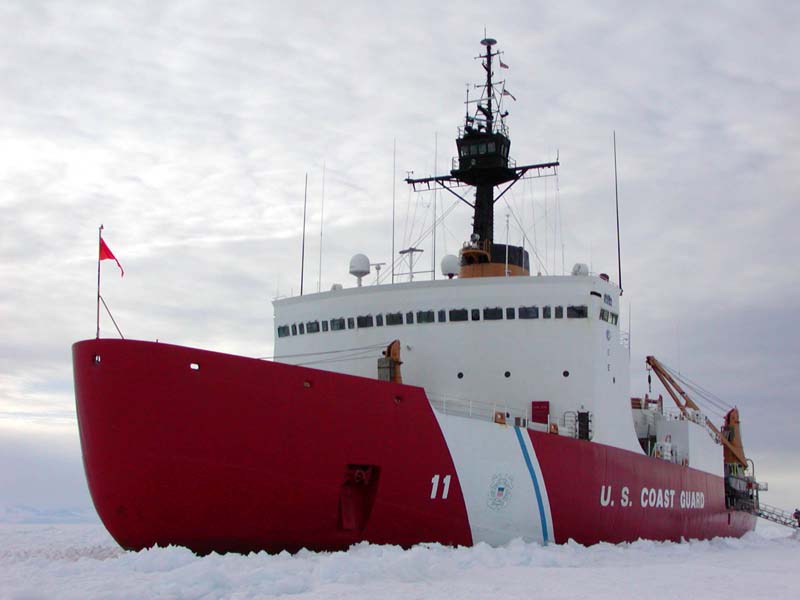
File:USCGCPolarSea.jpg
USCGC Polar Sea (WAGB-11): US Coast Guard Photo
The question of whether the Polar Sea should be reactivated has been kicking around for a while. After all, the Navy and the Coast Guard have been saying the country needs three heavy and three medium icebreakers. The proposed new icebreaker is projected to cost about $1B and will not increase the size of our icebreaker fleet. It will simply arrive in time to replace the Polar Star. The renovation of the Polar Sea was projected to cost on the order of $100M and provide seven to ten years of additional life. If you compare that to $1B for 30 years for a new icebreaker that sounds like a good trade-off, so why not?
FierceHomelandSecurity is reporting that the Coast Guard has told Congress they can do without her,
“Although a second heavy icebreaker would provide redundancy, the cost of this redundant capability would come at the expense of more pressing and immediate operational demands.
This is the conclusion of a report to Congress entitled “USCGC Polar Sea Business Case Analysis” dated November 07, 2013, that I will refer to simply as the analysis. download (pdf): Their summarized findings:

“A total of 43 mission critical systems in five general categories were assessed and assigned a condition rating. Overall, Propulsion, Auxiliary and Prime Mission Equipment are rated Poor to Fair, while Structure and Habitability are rated Fair to Good. POLAR SEA reactivation is estimated to cost $99.2 million (excluding annual operations and support costs) to provide 7-10 years of service to the Coast Guard. Given the age of the icebreaker, operations and support costs are projected to rise from $36.6 million in the first year of operation to $52.8 million in the tenth year of operation. Combining reactivation costs and point estimates for operating costs, reactivation would cost $573.9 million. Accounting for operational and technical uncertainties, using a 90% Confidence Level Risk Analysis, the total potential cost rises to $751.7 million.

“Arctic seasonal icebreaking demands through 2022 can be met with existing and planned Coast Guard assets, as current requirements do not justify the need for heavy icebreaking capability in the Arctic. Heavy icebreaker capability is needed to perform Operation Deep Freeze in Antarctica, but Coast Guard assets may not be the only option available to the National Science Foundation to support this activity. Although a second heavy icebreaker would provide redundancy, the cost of this redundant capability would come at the expense of more pressing and immediate operational demands. POLAR STAR, when fully reactivated, will provide heavy icebreaker capability until a new icebreaker can be delivered to meet both current and emerging requirements.”

It does not take much reading between the lines to see that the real issue here is not the one time renovation cost, it is the high annual cost of maintaining a complex plant that is increasingly unsupportable. Congress might fund the renovation costs, but the annual maintenance costs are likely to be taken out of hide and the projected $36.6M to $52.8M per year is just too much for the increased capability. The conclusion that restoring her to her original configuration is not a viable option is probably reasonable, but it is the only alternative. Because

Polar Sea’s basic structure is sound. Quoting the analysis,

“Based on the results of the inspection, the structure is rated EXCELLENT and the average remaining service life for the structure remains 25+ years. No significant wastage or corrosion was noted and no major repairs have been necessary since the last report.”

Maine Engines and Propellers:

The Polar Class have always been “maintenance intensive” and a good part of the reason is the complexity of her nine engine propulsion system and her controlable pitch propellers (CPP).
The complexity of her six diesel engines and three gas turbines is rather self explanatory. That they are now old and virtually unsupportable makes the problems even more obvious, but the propellers merit additional explanation. Quoting from the analysis (p.16),
“The CPPs are rated POOR.

“The following discussion is quoted from the Polar Service Life Extension Project (SLEP), Option A, Scope and Feasibility Analysis submitted by M. Rosenblatt and Son! AMSEC LLC, May 2006 and is an excellent description of the challenges that still confront the CPP system: Controllable Pitch Propellers and Associated Hydraulic Systems. This remains the most significant problem that must be solved if the cutters are to continue to provide reliable service. The propellers are subject to particularly severe conditions during heavy icebreaking conditions and a significant failure may lead to cancellation of a mission, as well as presenting the potential for leakage of hydraulic fluid to the environment. There are issues relating both to the propeller hubs themselves and the internal hydraulic system components. The following discussion will continue to address the propeller hubs separately from the rest of the CPP system for three reasons: 1) their current condition is  different than the rest of the system, 2) the likelihood for a known fix is different, and 3) the propeller hubs cannot be repaired while the ship is deployed or while in the water which vastly impacts operational availability.
“Propeller Hubs. The hubs are rated POOR. In recent years, it has been necessary to dry dock the cutters and inspect the propeller hubs after every heavy icebreaking deployment. Throughout the 50 years of experience with the two Polar Class ships, the interval between hub overhauls has never been more than two heavy icebreaking missions. According to the Coast Guard Technical Point of Contact for the CPP hub overhaul contract, every time the hubs have been overhauled there has been some unusual wear, scoring, cracking, leaking, broken parts or other indicator that it was appropriate that the hubs be overhauled before an additional heavy icebreaking mission was attempted. In other words, there has been no indication that overhauls were unnecessarily being performed at too short an interval. Over the past 25 years, dozens of modifications have been made to the hubs attempting to eliminate the negative conditions found. Typically corrections in one spot have lead to new symptoms in another location. Sizes, clearances, and material strengths are in critical balance. While the hubs have undoubtedly been improved over the past 25 years, their service life without overhaul remains relatively short.
Overall Condition:
The following is the “Reader’s Digest” version of the Analysis’ report on the summary of the ship’s condition:
POOR:
Overall main propulsion system
Main propulsion diesel engines
Controllable Pitch Propellers (CPP)
Ship Service Diesel Engine
Uncontaminated Seawater System
Electrical distribution system (parts and technical support)
Cargo Cranes
FAIR:
Propulsion Gas Generators and Turbines
Propulsion Control System: Switchgear, Rectifiers, and Exciters
Machinery Control and Monitoring System (MCAMS)
Ship Service Diesel Generator (SSDG)
Steering Gear
Ventilation System
Fire Main and Flushing (Seawater) System
Sanitary Systems
Aqueous Film Forming Foam (AFFF) Systems
Central Hydraulic System (CHS)
Anchor Windlass
Bus transfer switches
Electrical distribution system (preservation).
Habitability
GOOD:
Propulsion Generators
Aft Stem Tube Bearings (as yet untested)
Forward Stem Tube Bearings
Cooper Split Roller Bearing
Lube Oil Purifiers
Evaporators
Incinerator
Oily Water Separator
Fresh Water Systems
Chilled Water System
Halon Systems
400 Hz Switchboard
Electrical distribution system (mechanical)
EXCELLENT:
Reduction Gears
Propulsion Shafting
Thrust Bearing
Emergency Diesel Generator (EDG)
Auxiliary Boilers
Helicopter Power Supply
Local Monitoring & Alarm System
Diesel Fuel Transfer & Purification System
Structural
UNTESTED:
Boat Davits
REMOVED:
Electronics systems
Outfit and spares
An Opportunity in the form of a Problem:
The Coast Guard has been using a National Security Cutter over the last two summers to provide the equivalent of a Coast Guard Section afloat in the absence of infrastructure ashore, effectively a helicopter airstation, a small boat station, communications, and command and control. These very expensive ships certainly have a number of desirable characteristics, but they are hardly what one would envision if planning an Arctic station ship from scratch. The hull is simply not strong enough for the environment. Not only is it not an icebreaker, it is not even ice strengthened.
If we take advantage of the Polar Sea’s still robust hull, by spending more money up front (Congress would have to appropriate it, it could not come out of hide) and replace the engineering plant with good choices that both reduce manning and increase reliability, we might have effectively an additional medium icebreaker for up to 25 years.
Yes, it would take more planning and more money up front, but with a bit of redesign and reconstruction it appears the Coast Guard could have an icebreaker of at least 18,000 horsepower with fixed pitch props that could be tailored for an Arctic Station Ship role freeing the NSCs and/or the Polar Star for more normal patrol functions. The six main prop diesel generators could be replaced by perhaps three modern diesel generators, and the three turbines removed altogether. Used as main propulsion generators, three MTU 20V 1163 diesels like the ones on the Bertholf Class would allow any two engines to drive the three existing electric motors at full power. Allowing the existing motors to run in reverse would probably require a new propulsion control system, but the existing system is only rated as fair now anyway. A new digital system would almost certainly be more flexible and easier to maintain and would probably require fewer watch standers. 18,000 horsepower using the existing motors, is way down from her current designed combined diesel and gas turbine output, is more than many of the world’s icebreakers, and more than either of the National Science Foundation’s icebreakers. If more power were deemed essential, it might be possible to put one LM2500 on the center shaft and still get the benefits of a greatly simplified and modernized engineering plant. The Ship Service electrical system might also be updated to provide the capability for one generator to handle the entire load, something the ship does not currently have. It might even be possible to add retractable fin stabilizers (removal of the turbines having made more room in the hull) or at least a rudder roll stabilization system added (the rudders system does need work). Stabilization is desirable in that it would allow her to operate boats and helicopters in more severe conditions.
By re-engining the Polar Sea, the Coast Guard would not only get a more reliable ship, requiring a smaller crew, potentially cheaper to operate than a National Security Cutter, it would also leave free up the Polar Sea’s existing engines and propellers and possibly other systems to use as spares to keep Polar Star functional and free her from duties in the Arctic.