“Canada, U.S. conduct live-fire exercises, ship exchanges in Bering Sea” –The Watch


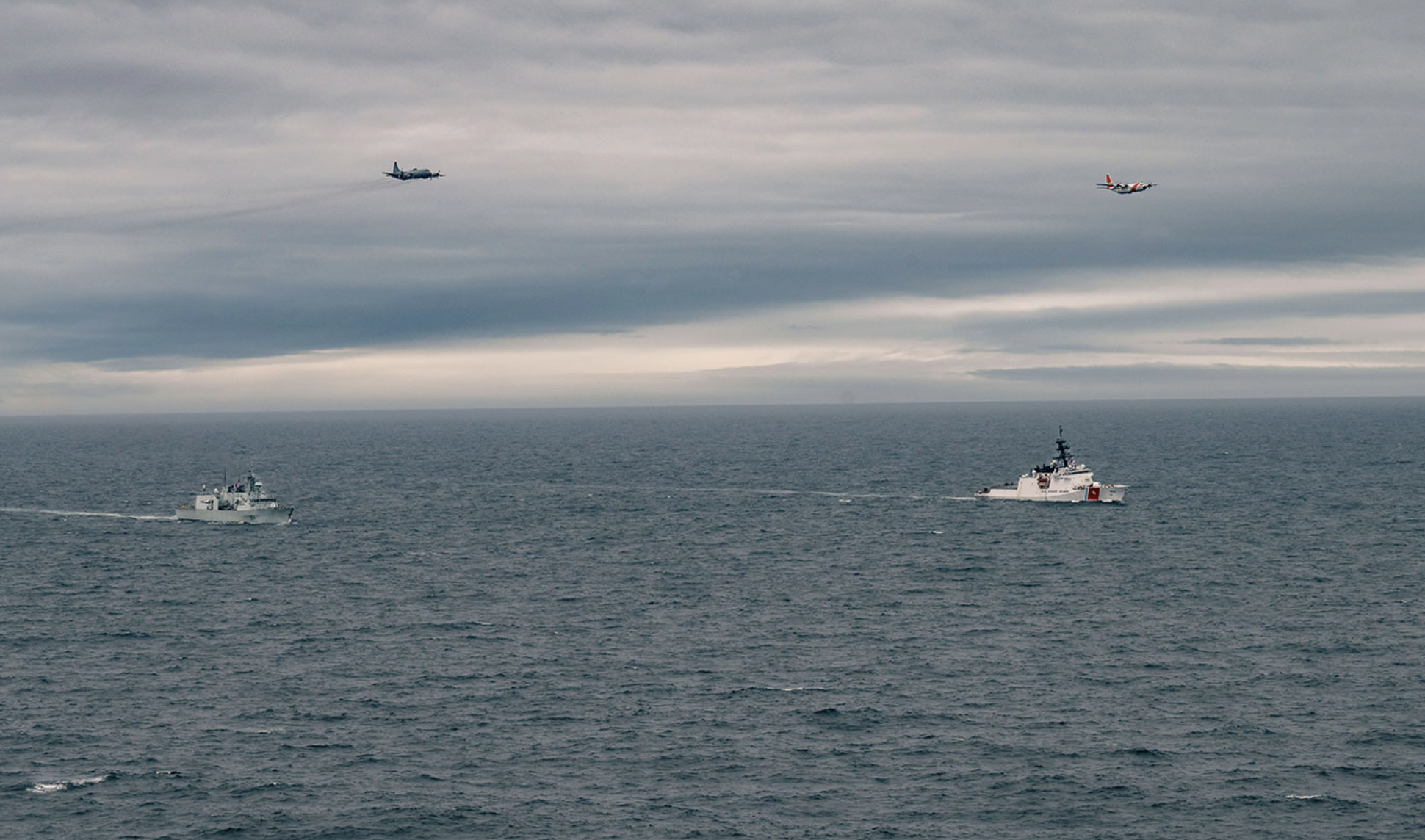
The Royal Canadian Navy ship Regina and the U.S. Coast Guard cutter Waesche sailed through the Bering Sea together for a week in last August 2025, conducting maritime maneuvers, including live-fire exercises, in Operation Latitude. U.S. ALASKAN COMMAND

NORTHCOM’s on-line magazine The Watch reports on a week of joint operations between  USCGC Waesche and Canadian Forces including particularly the Frigate Regina. The two ships are in some ways surprisingly similar, sharing the 57mm Bofors gun, Phalanx CIWS, and LM2500 engine.

The story goes on to describe other exercises the Canadian Navy is conducting.

“Canada’s HMCS Margaret Brooke embarks on historic Antarctic mission” –The Watch

2022. HMCS Margaret Brooke finished warm weather trials on the ships cooling systems. HMCS Harry DeWolf conducted an Op Caribbe with the USCG.

NORTHCOM’s online magazine, “The Watch” reports,

For the first time, a Royal Canadian Navy (RCN) vessel will circumnavigate South America and visit Antarctica, as the HMCS Margaret Brooke marks the debut of Operation Projection 2025. The Harry DeWolf-class vessel left Halifax, Nova Scotia, on January 10, 2025, on the historic four-month mission.

So presumably she is in or near the Antarctic now.

“…National Research Council scientists will join the ship in Punta Arenas, Chile, for a two-week tour south of the Antarctic circle…”

The US Coast Guard would consider HMCS Margaret Brooke a light icebreaker because her 12,000 HP, same as the old Wind Class, falls below their 20,000HP lower limit for a “medium icebreaker.” As an Arctic Offshore Patrol Vessel, this is not a type the US Coast Guard has identified a requirement for.

In addition to a helicopter she reportedly is equipped with a vertical take-off and landing drone. 

Canada’s Contribution to Drug Interdiction Effort

A recent Marine Link post regarding a joint Canadian, Colombian, US drug interdiction, “Canadian, U.S. Coast Guards Team on Caribbean Sea Drug Bust”,

On March 1, 2025, His Majesty’s Canadian Ship (HMCS) Harry DeWolf successfully assisted a United States Coast Guard (USCG) Law Enforcement Detachment (LEDET) in conducting a seizure of 750 kilograms of cocaine in the Caribbean Sea. This seizure, supported by Colombian air and maritime assets, has an estimated street value $18.8 million.

HMCS Margaret Brooke and HMCS Harry DeWolf 

also included the graphic at the head of the post.

Notably the Canadian vessels involved are Canadian Navy rather than Canadian Coast Guard. All actual law enforcement actions were taken by embarked USCG teams acting under USCG authority. HMCS Summerside, Edmonton, and Yellowknife are smaller than WMEC210s, at 55.3 m (181 ft 5 in) in length. Canadian interdictions were done in the Eastern Pacific as well as in the Caribbean/Atlantic.

190729-N-AD499-1166 SEATTLE (July 29, 2019) The Royal Canadian Navy Kingston-class coastal defence vessel HMCS Edmonton (MM 703) participates in a parade of ships in Elliott Bay during the 70th annual Seattle Fleet Week. Seattle Fleet Week 2019 is a time-honored celebration of the sea services and provides an opportunity for the citizens of Washington to meet Sailors and Coast Guardsmen, as well as witness firsthand the latest capabilities of today’s maritime services. (U.S. Navy photo by Mass Communication Specialist 3rd Class Victoria Foley/Released)

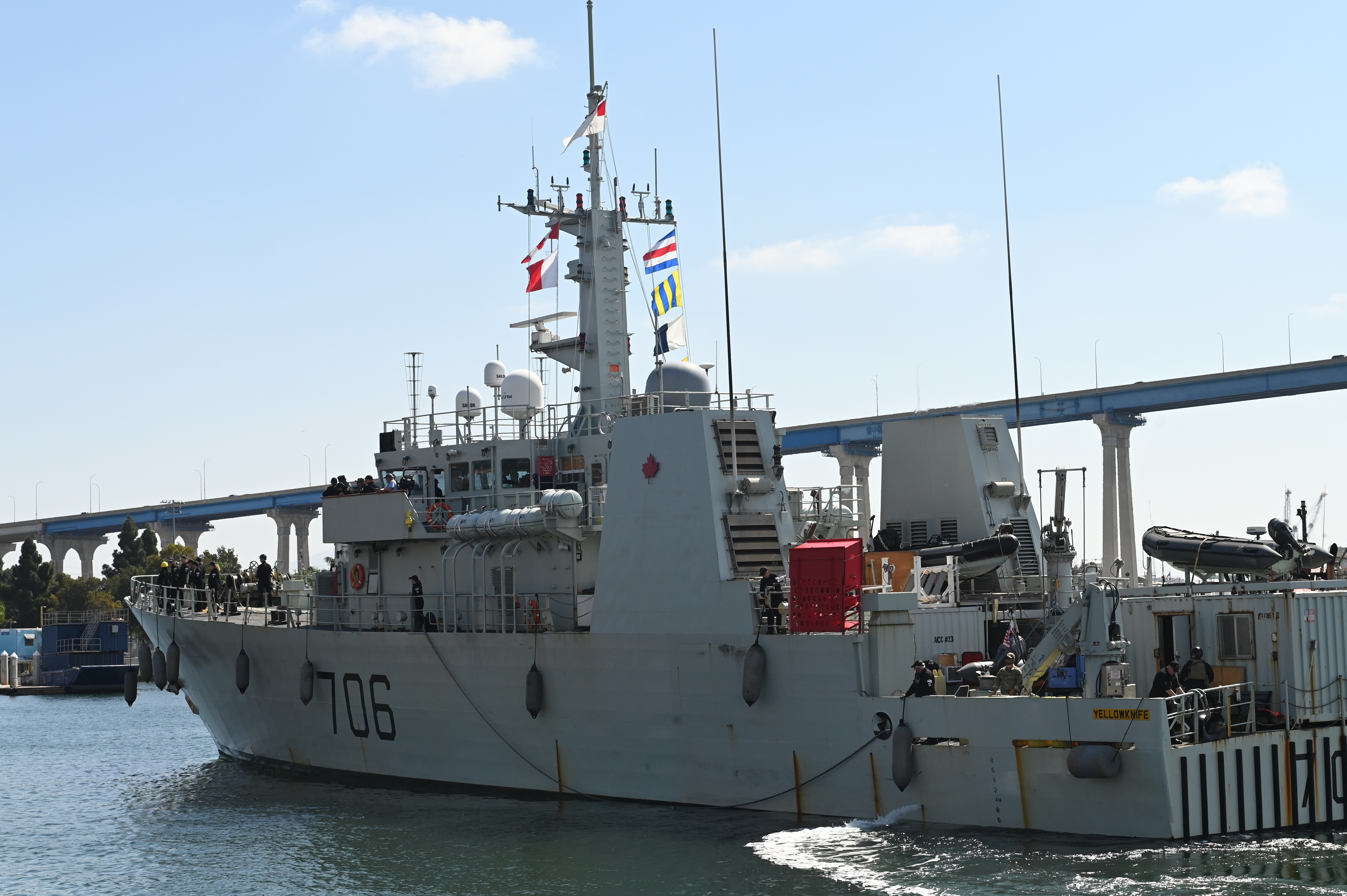
Her Majesty’s Canadian Ship Yellowknife (HMCS-706) pulls into the Port of San Diego to offload $44.2 million worth of cocaine, Sept. 12, 2024. The Yellowknife’s crew interdicted a panga-style boat 430 miles southwest of Acapulco, Mexico, September 5 during a Eastern Pacific counter-narcotics patrol under the direction of U.S. Coast Guard District 11 and Joint Inter-Agency Task Force South. (U.S. Coast Guard photo by Chief Petty Officer Levi Read/Released)

“Seaspan to Build Made-In-Canada Heavy Polar Icebreaker” –Seaspan News Release

Canadian Polar Icebreaker to be built by Seaspan

Below is a news release from Canadian shipbuilder, Seaspan.


March 7, 2025 – North Vancouver, BC – Today, Seaspan Shipyards (Seaspan) has been awarded the construction contract to build one of the Canadian Coast Guard’s (CCG) new heavy polar icebreakers.

The polar icebreaker will be built entirely in Canada at Seaspan’s Vancouver Shipyards, located in North Vancouver, British Columbia. With the contract now in place, Seaspan is ready to cut steel on this ship and begin full-rate construction on Canada’s newest vessel under the National Shipbuilding Strategy (NSS). Construction of this ship will support the work of a team of more than 1,000 local shipbuilders and a broad Canadian supply chain of over 800 Canadian companies contributing massive strategic value, innovation and economic benefits to Canada.

Building this complex and densely-outfitted multi-mission ship will mark the first time a polar icebreaker has been built in Canada in more than 60 years and will have more advanced capabilities than the CCG’s current heavy icebreakers. Once delivered, this made-in-Canada heavy polar icebreaker will be one of the most advanced and capable icebreakers in the entire world. It will be one of only a handful of Polar Class 2 ships in operation and will allow for the CCG to operate self-sufficiently year-round in the high-Arctic, down to temperatures at -50°C.

The new polar icebreaker will be the seventh vessel designed and built by Seaspan under the NSS. It will also be the fifth Polar Class vessel to be built for the CCG, and one of up to 21 icebreaking vessels overall that Seaspan is constructing.

Functional design of the polar icebreaker was completed in 2024 by Seaspan, prior to the start of construction. For this ship, Seaspan worked extensively to build out the largest marine design and engineering team in Canada, which includes Seaspan employees and Canadian partners, while simultaneously working alongside established Finnish companies who have extensive experience in designing Arctic-going vessels.

Seaspan is the only Canadian shipyard with the expertise, facilities, and domestic supply-chain to build polar icebreakers in Canada. Official start of construction for this new heavy polar icebreaker is scheduled for April 2025.

QUOTES

“Today’s contract signing is the next step in our journey of fulfilling the vision of the National Shipbuilding Strategy, which is to build ships for Canada, in Canada, by Canadians. The NSS is demonstrating that a made-in-Canada approach is not only possible, but also imperative to our security and sovereignty. We look forward to starting construction on this ship next month, and to building more Polar Class vessels for Canada and our Ice Pact partners.”

  • John McCarthy, CEO, Seaspan Shipyards

“The contract awarded to Seaspan’s Vancouver Shipyards for the build of a new polar icebreaker is a significant step forward for Canada’s economic and natural resource sectors. This advanced vessel will not only ensure safe and efficient navigation in our polar regions but also support the sustainable development of our natural resources. By enhancing our icebreaking capabilities, we are opening new opportunities for economic growth, scientific research and environmental stewardship. This project exemplifies our commitment to leveraging cutting-edge technology to benefit our economy and protect our unique polar environments for future generations.”

  • The Hon. Jonathan Wilkinson, Minister of Energy and Natural Resources and MP for North Vancouver

“Today marks a significant milestone in our commitment to enhancing our nation’s maritime capabilities. The contract awarded to Seaspan’s Vancouver Shipyards for the build of a new polar icebreaker underscores our dedication to ensuring safe and efficient navigation in Arctic regions. This state-of-the-art vessel will not only strengthen our icebreaking fleet, but will also support critical scientific research and environmental protection efforts, and ensure national security in the Arctic. We are proud to take this step forward in strengthening our maritime infrastructure for safeguarding Canada’s sovereignty in the Arctic.”

  • The Hon. Jean-Yves Duclos, Minister of Public Services and Procurement and Quebec Lieutenant

“The National Shipbuilding Strategy is providing the Canadian Coast Guard with its fleet of the future. The polar icebreaker to be built by Vancouver Shipyards will be able to operate in the Arctic year-round, further bolstering our ability to deliver crucial services to Northern communities and support Canadian sovereignty in the Arctic.”

  • The Honourable Diane Lebouthillier, Minister of Fisheries, Oceans and the Canadian Coast Guard

“Our partnership with Seaspan to construct a polar icebreaker underscores our government’s steadfast commitment to ensuring the Canadian Coast Guard can continue to protect Canada’s sovereignty and interests, while also revitalizing Canada’s shipbuilding industry, creating high-paying jobs and maximizing economic benefits across the country.”

  • The Honourable François-Philippe Champagne, Minister of Innovation, Science and Industry

QUICK FACTS

  • The polar icebreaker will be 158 metres long and 28 metres wide, with a design displacement of 26,036t.
  • Highlights of key design features, include:
    • IACS Polar Class 2 (PC2) Heavy Icebreaker
    • More than 40MW of installed power
    • Ice-classed azimuthing propulsion system
    • Complex, multi-role mission capability
    • Scientific Laboratories
    • Moon Pool (to allow for safe deployment of equipment from within the ship)
    • Helicopter flight deck and Hangar
    • Vehicle Garage and future Remotely Piloted Aircraft System (RPAS) capability
  • Seaspan has already gained significant experience designing and building Polar Class vessels including three offshore fisheries science vessels which are now in service with the CCG; an offshore oceanographic science vessel that will be delivered to the CCG in the coming months; and a class of up sixteen multi-purpose icebreaking vessels (also Polar Class) that is currently in Construction Engineering.
  • Seaspan is one of the most modern shipyards in North America, following its privately funded $200M+ shipyard modernization, development of a skilled workforce and state-of-the-art, purpose-built infrastructure to deliver large, complex vessels.
  • Under the NSS, Seaspan has become a major economic and job creation engine. According to an economic analysis conducted by Deloitte, Seaspan has contributed $5.7 billion to Canada’s GDP between 2012-2023, while also creating or sustaining more than 7,000 jobs annually.
  • Seaspan’s NSS supply-chain has now grown to ~800 Canadian companies from coast-to-coast, with more than half being SMEs.

“Canadian shipyard in talks to buy US shipbuilder amid trade war talk” –Defense News

Canada’s Polar Icebreaker

After the continued frustration of the Polar Security Cutter program, the ICE Pact agreement between Finland, Canada, and the US seems promising, but we have heard little about how it will work or what it will produce. Forbes discusses the possibilities here.

We may be seeing the first steps of implementation as Canada’s Davie shipyard, which has already purchased a shipyard with a long history of building icebreakers in Finland, seeks to buy a shipyard in the US. There aren’t many possibilities, I would guess either the old Navy yard in Vallejo that has been doing the five year rolling service life extension on Polar Star or the Philly Shipyard currently building “National Security Multi-Mission Vessels” for the merchant marine academies.

Defense News reports.

Davie, a Quebec shipbuilder set to play a key role in a joint icebreaker production agreement between Canada, the United States and Finland, is moving forward with plans to expand its operations south of the border despite a looming trade war threatening the continent.

As part of the expansion, the Canada-based multinational shipbuilder has set out to acquire an American shipyard, which would secure an initial and important footprint in the U.S. for the company.

Davie is expected to build Canada’s second in class large Polar Icebreaker and six “Program” Icebreakers.

Davie is very clearly specializing in icebreakers while continuing to produce ice strengthened commercial ships.

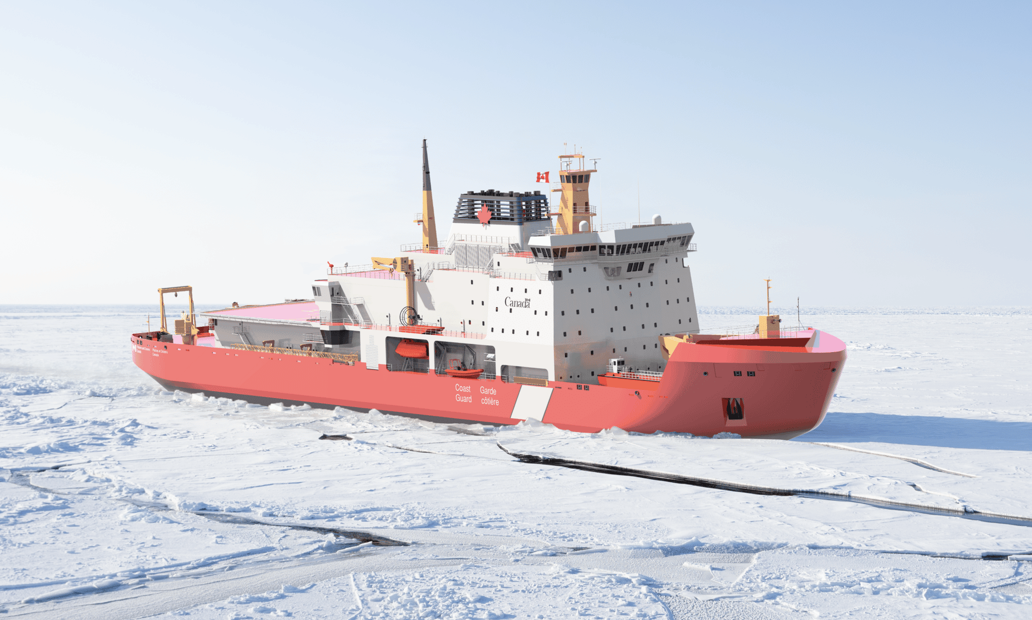
The first of Canada’s Polar Icebreakers (pictured above) is being built by Seaspan, with the second of class being built by Davie. These will be heavy icebreakers, even by US Coast Guard standards, bigger and more powerful than the Polar Security Cutters.

  • Length Overall 158.2m (519 ft)
  • Beam: 28m (91 ft 10 in)
  • Draft: 10.5m (34 ft 5 in)
  • Classificaton: LLoyd’s Polar Class PC2
  • Installed Power: 46 MW (61,687 HP)
  • Top Speed: 18 knots
  • Icebreaking 2.5m @ 3 knots continuous
  • Design Displacement: 26,000 tons
  • Complement: 100 Persons

Canada’s “Program Icebreaker.” Six are planned.

The design for the six “Program Icebreakers” might provide a basis for both the Coast Guard’s Arctic Security Cutter (medium icebreaker program) and the new Great Lakes icebreaker. (It would be a substantial improvement of USCGC Mackinaw and  we really need some medium icebreakers.) Their specifications are:

  • Length: 100-110 m (328 to 360 ft)
  • Beam: under 23.8 m (78 ft) for Great Lakes;
  • Draft: 6-8 m (20 to 26 ft)
  • Icebreaking: Capable of maintaining 3 knots in 1.4 m (4.6 ft) of ice
  • Accommodations: more than 30 crew and program teams of 34
  • Range: 20,000 nautical miles at 12 knots
  • Able to operate and maintain one medium helicopter
  • Significant general and containerized cargo capacity

Canadian Coast Guard Multi-Purpose Vessel Recapitalization

Canadian CG MPV. Credit Aker Arctic.

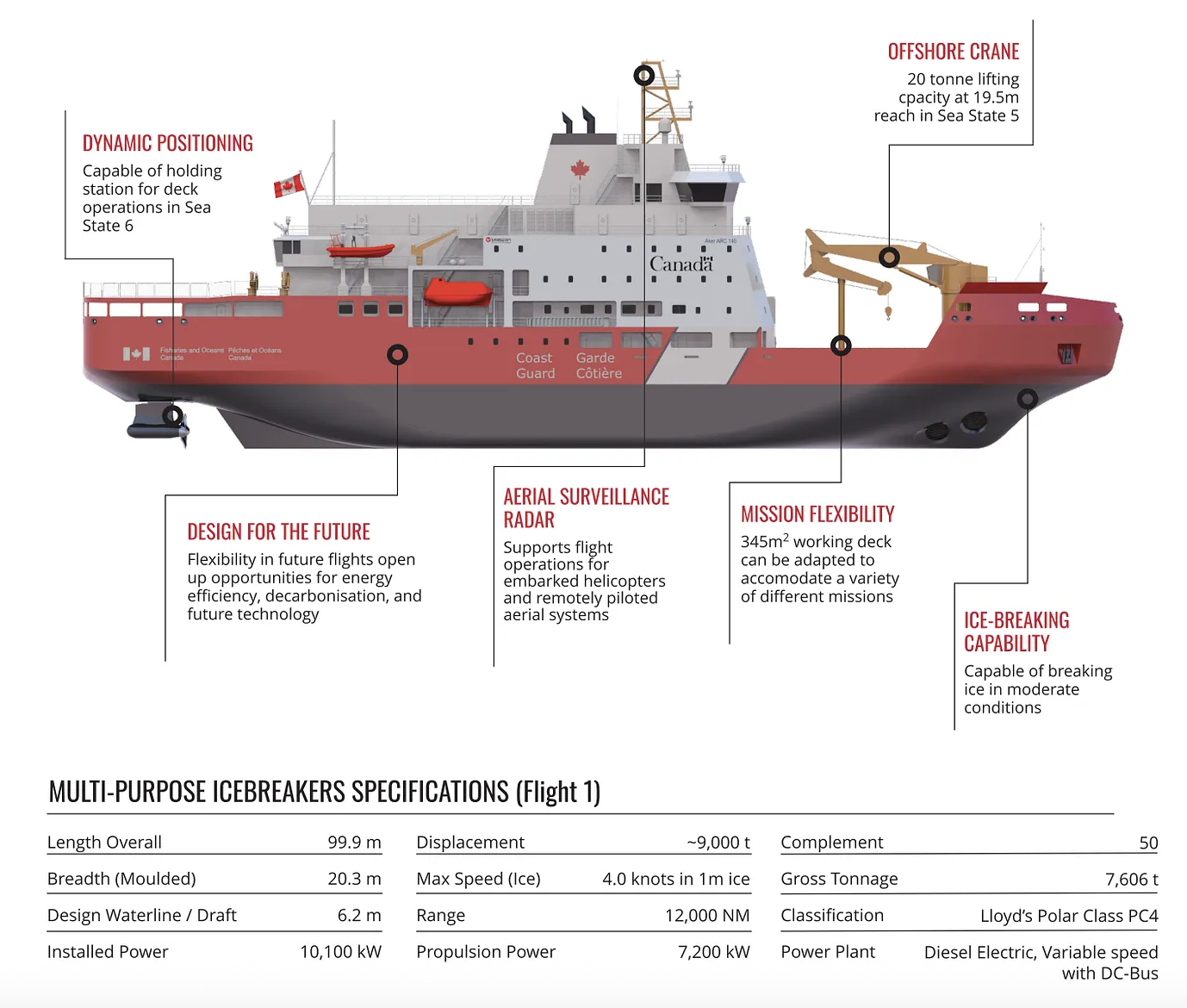
Below is a press release from Seaspan Shipyards regarding a contract awarded for the Canadian Coast Guard’s Multi-Purpose Vessel program. We talked about these ships earlier. I am going to repeat some of that earlier post here. Much like USCG Juniper class buoy tenders or the Great Lakes Icebreaker Mackinaw, these Canadian ships are made to both tend buoys and break ice. But these ships will be a lot bigger than the Mackinaw and it appears they can also support a helicopter and probably UAS.

CHARACTERISTICS:

  • Displacement: about 8,500 tons
  • Length, overall: 99.9 meters (328′)
  • Beam: 20.3 meters (66.7′)
  • Draft: 6.2 meters (20’4″)
  • Propulsion: diesel-electric; two azimuthing propulsion units
  • Range 12,000 nautical miles

The relatively shallow draft was a design requirement. 

Canadian CG MPV. Credit Aker Arctic.

ICE CLASS: 

These ships will be Canadian Ice Class 4, meaning they will have the capability to maintain a speed of 3 knots through ice 4 feet thick. The Canadian Coast Guard will consider these heavy icebreakers. We don’t have any figures on horsepower, but they probably will have less than 20,000 HP which, in the USCG system, would classify them as light icebreakers.

Compared to the US Coast Guard’s “heavy” Great Lakes icebreaker, Mackinaw (3,500 tons and 73m), these will be more powerful and more than twice as large. These might be a good design for the planned second USCG Great Lakes icebreaker.

IMPLICATIONS FOR THE USCG:

Aside from possible use of the design for Great Lakes icebreaker, these might be pretty close to what the USCG needs for their planned medium icebreakers. Certainly, consultation with Canadian counterparts will sharpen the focus of the US design effort. We might also have reasons to limit beam and/or draft.

I might add that, ships like these could make good companions (tenders/mother ships) for support of distant FRC operations, carrying fuel, supplies, and air assets.


Seaspan Shipyards Progresses to Next Phase of Designing and Building Multi-Purpose Vessels for the Canadian Coast Guard

 March 26, 2024 – North Vancouver, BC – Seaspan Shipyards (Seaspan) has been awarded the Construction Engineering (CE) and Long Lead Items (LLI) contracts for the pre-construction work of the Canadian Coast Guard’s (CCG) first six Multi-Purpose Vessels (MPV).

Following the successful completion of the vessel’s Basic Design review in late 2023, Seaspan was awarded the CE and LLI contracts to complete the design and engineering work and to procure long lead-time material and equipment to ensure readiness to proceed with the construction of the first six ships of the up to 16 vessel fleet.

“This milestone demonstrates the tremendous capabilities in marine design and engineering that have been developed through the National Shipbuilding Strategy.  Our team, along with our partners from coast to coast, are excited to move to the next phase of this program, and ultimately provide the Canadian Coast Guard with the vessels they need to manage and safeguard Canada’s coastlines. A long run of ships like the MPV program enables Seaspan to continue to drive improvement and generate greater efficiencies, while ensuring we have stability for the next generation of shipbuilders, marine engineers and designers and supply chain in Canada,” said John McCarthy, Chief Executive Officer, Seaspan Shipyards.

“The designers and the ship builders of Seaspan Vancouver Shipyard – are playing key roles in taking the Canadian Coast Guard’s new multi-purpose vessels (MPVs) out of the drawing room and into the open ocean. The contracts announced today are an important milestone to getting these ships completed and represent an important investment in North Vancouver. This will secure good jobs while advancing the delivery of the MPVs to significantly expand the operational capacity of our Coast Guard for years to come.” – The Honourable Jonathan Wilkinson, Minister of Energy & Natural Resources and MP for North Vancouver.

The MPVs will be Polar Class 4 vessels, allowing them to carry out multiple missions including icebreaking in moderate ice conditions and assisting in shipping and flood control, search and rescue, environmental response, as well as maintaining Canada’s marine navigation system composed of approximately 17,000 aids to navigation. The new fleet of MPVs will replace the existing fleet of High Endurance Multi-Tasked Vessels and Medium Endurance Multi-Tasked Vessels.

“The Canadian Coast Guard saves lives at sea, maintains waterways open and safe for the movement of goods and services, protects the marine environment and supports Canadian sovereignty and security. The Multi-Purpose Vessels will be key assets for the Canadian Coast Guard’s future fleet, giving our personnel the modern, reliable tools they need to continue their vital work from coast to coast to coast,” said Mike Kelloway, Parliamentary Secretary to the Minister of Fisheries, Oceans and the Canadian Coast Guard.

Seaspan has already gained significant experience designing and building Polar Class vessels including three Offshore Fisheries Science Vessels which are now in service with the Canadian Coast Guard; an Offshore Oceanographic Science Vessel that is currently under construction; and a heavy Polar Icebreaker, the first of its kind to be designed and constructed in Canada in 60 years. Seaspan is preparing to cut steel on the Polar Icebreaker in late 2024 with the recent completion of a prototype block, ensuring that proper processes, procedures, and equipment are in place to build a vessel of this complexity.

QUICK FACTS ABOUT THE MULTI-PURPOSE VESSELS

  • With a displacement of 8,500 tonnes, the Multi-Purpose Vessels will be 99.9 metres long and 20.3 metres wide, and able to accommodate up to 50 personnel.
  • The area of operation for the MPV will include:
    • Year-round operations in Canada’s eastern and western seaboards, within Canada’s Exclusive Economic Zone (EEZ)
    • Year-round operations in the Gulf of St. Lawrence, the St. Lawrence River, and the Great Lakes
    • Seasonal (summer) operations in the western and lower Arctic
  • Under the NSS, Seaspan has become a major economic and job creation engine. According to an economic analysis conducted by Deloitte, Seaspan has contributed $5.7 billion to Canada’s GDP since 2012, while also creating or sustaining more than 7,000 jobs annually.

SOCIAL MEDIA

Twitter: @Seaspan
LinkedIn: Seaspan ULC
Instagram: @SeaspanULC
Facebook: Seaspan

ABOUT SEASPAN

Seaspan, a division of Seaspan ULC, is a leader in Canada’s ship design, engineering, building and ship repair industry. With modern facilities and a dedicated workforce of approximately 3,900 in North Vancouver and Victoria, the company has proven itself to be a trusted and strategic partner on a range of complex projects for both government and the private sector.

Canada’s New Icebreaker Fleet

Current Coast Guard Icebreakers:  CCGS Henry Larsen  (medium icebreaker, top photo), CCGS Terry Fox (heavy icebreaker, bottom photo)Current Coast Guard Icebreakers: CCGS Henry Larsen (medium icebreaker, top photo), CCGS Terry Fox (heavy icebreaker, bottom photo)
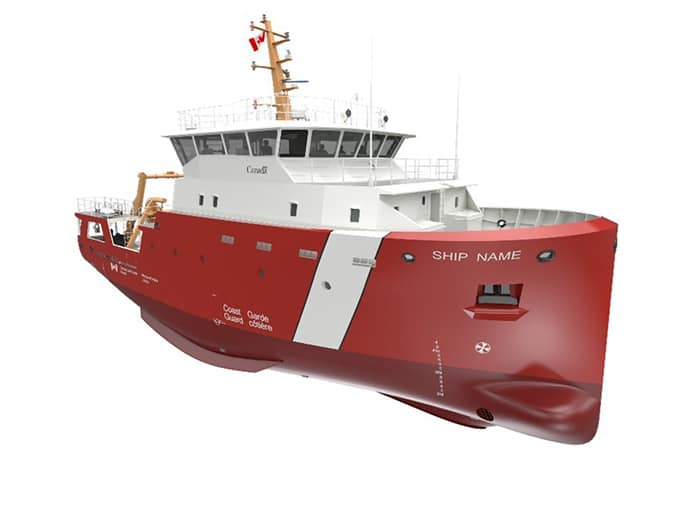
Below are two news releases, first a release by Chantier Davie Canada Inc. (Davie) and second a statement from the Canadian Coast Guard.

The release from Davie is new (it also has an illustration). The Canadian Coast Guard statement dates from July 2019. I added it because it outlines what is expected of the new icebreakers.

The Davie news release says these will be the “largest and most advanced icebreakers ever built in and for Canada.” Currently the largest Canadian Icebreaker is CCGS Louis S. St-Laurent which is 15,324 tons full load, 119.8 m (393.04 ft) in length, and has three electric motors, 3 × 6,714 kW, or 27,011 HP total. Presumably these will be larger and more powerful, still the new icebreakers may turn out to be medium icebreakers, at least according to the US Coast Guard classification system that is based on horsepower, e.g. 20,000 to 45,000 HP are medium icebreakers.

The Davie release also notes, “Davie is a part of Group Davie, which in November 2023 acquired Finland’s Helsinki Shipyard, the world leader in icebreaker design and construction.” Maybe a good idea to buy the expertise you need.


March 26, 2024

Lévis, Canada – March 26, 2024 – Chantier Davie Canada Inc. (Davie) today announced it has been awarded its first National Shipbuilding Strategy (NSS) contract by the Government of Canada for the design of the six-ship fleet of Canada’s future Program Icebreakers. This major milestone marks the beginning of Davie’s NSS work package to replenish Canada’s Arctic fleet and each initiative under the contract will help advance upcoming design, construction, delivery and support phases for these strategic ships.

The Honourable Jean-Yves Duclos, Canada’s Minister of Public Services and Procurement (PSPC) said: “This first contract awarded to Chantier Davie under the National Shipbuilding Strategy brings us a step closer to providing the Canadian Coast Guard with the next generation Arctic ships. They will be among the most advanced, sustainable and durable vessels tailored to the world’s harshest environments. The new fleet will be symbolic of Canada’s Arctic presence and crucial to keeping our country open for business year-round.”

Davie President and CEO, James Davies, said: “This is a momentous first step in our journey to deliver a fleet of the largest and most advanced icebreakers ever built in and for Canada. My heartfelt thanks go to the dedicated teams at Davie, the Canadian Coast Guard and PSPC. They have spent countless hours preparing for this historic milestone. Now, we can’t wait to get working on renewing Canada’s Arctic fleet.”

Davie will establish a Program Icebreaker project management and design office, providing compelling opportunities for current and future generations of Canadian shipbuilders. Davie is committed to recruiting teams of highly skilled shipbuilding professionals, who will drive all aspects of constructing the world’s largest order book of heavy icebreakers.

Moreover, Davie will engage critical subcontractors to design and certify the vessel to established safety, environmental, and performance standards. Building on Davie’s proven track record of delivering vessels of exceptional quality and performance, this early phase is fundamental in guaranteeing sustained operational readiness and capability to best serve the CCG’s missions.

Julian Kenney, Program Director for the Program Icebreakers at Davie, said: “Embarking on the design and construction of Canada’s new icebreaker fleet is a great source of pride for everyone at Davie. We have a strong partnership with the Canadian Coast Guard and our top priority is to design and build the icebreakers Canada needs to keep our waterways open, protect our environment, and secure the Arctic.”

About Davie

Based in Québec, Canada since 1825, Davie is a world-class designer and builder of specialist, mission-critical ships such as icebreakers, ferries and warships for government and commercial customers. Davie became a partner in the Government of Canada’s National Shipbuilding Strategy on April 4, 2023. This historic agreement is for the design and construction of the largest and most technologically advanced ships ever constructed in and for Canada. The initial $8.5 billion package of work includes seven heavy icebreakers and two large hybrid-powered ferries. Davie is a part of Group Davie, which in November 2023 acquired Finland’s Helsinki Shipyard, the world leader in icebreaker design and construction. Find out more at davie.ca and helsinkishipyard.fi.

For further information, please contact: Marcel Poulin Director, External Affairs and Industrial Participation, Davie marcel.poulin@davie.ca +1 581 992-8564


Canadian Coast Guard’s new Icebreakers

Backgrounder

As part of the Government of Canada’s National Shipbuilding Strategy and in accordance with the Canadian Coast Guard’s fleet renewal planning, six new icebreakers will be built for the Coast Guard. These icebreakers are fundamental to year-round safe and efficient movement of ships and goods in Canadian waters.

The new program icebreakers will replace the Coast Guard’s heavy and medium icebreakers that operate in Atlantic Canada and the St. Lawrence waterways during the winter and in the Arctic during the summer.  In Atlantic Canada, these program icebreakers help ensure year-long ferry service, escort ships through ice-covered waters and the clearance of ice from harbours and wharfs, which is essential to Canada’s commercial fisheries. In the Arctic, they provide icebreaking support to ships with vulnerable cargoes, such as dangerous goods and perishable products, and support vessels transporting cargo that is a vital part of the northern communities’ sealift and resupply.

The new program icebreakers will be built at a third strategic shipyard that will be selected through a competitive process under the National Shipbuilding Strategy.

“Head of Royal Canadian Navy Outlines Ottawa’s Pacific Strategy” –USNI

This is starting to get a little old, but I am trying to catch up.

US Naval Institute reports on a Center for Strategic and International Studies (CSIS) interview with Vice Adm. Angus Topshee, Commander, Royal Canadian Navy, Chief of the Naval Staff, that discusses their Navy’s increased emphasis on the Pacific.

I have included the video of the interview above.

Three AOPSs at pier before the commissioning ceremony for HMCS Margaret Brooke (AOPV-431). Canadian Navy photo

He discusses operating with the Coast Guard for drug interdiction, icebreaking, and fisheries beginning about time 9:00. The new Arctic Offshore Patrol Ships are expected to play important roles in these activities.

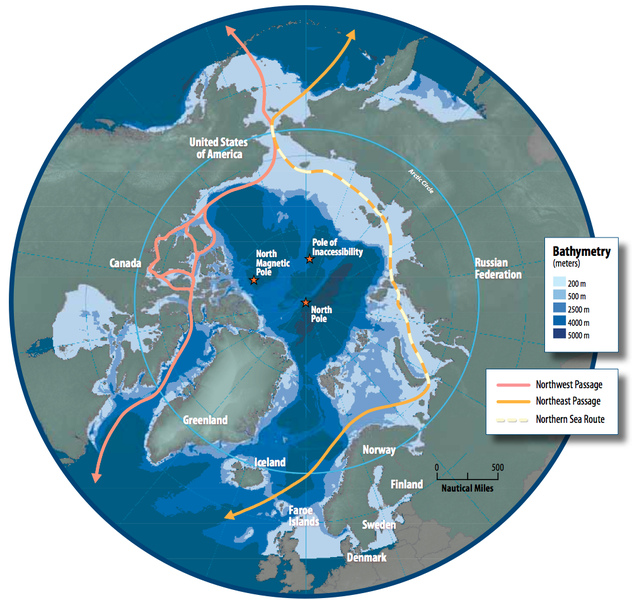
Map of the Arctic region showing shipping routes Northeast Passage, Northern Sea Route, and Northwest Passage, and bathymetry, Arctic Council, by Susie Harder

He explains why he does not see the NW Passage (which includes Alaskan waters) as a future international trade route (12:30).

He anticipates an end to the moratorium on fishing in the Arctic (14:30).

Discusses response to “Gray Zone” threats to undersea infrastructure (15:30).

Discussed war in Ukraine (19:00). Re sinking of Moskva, “Cruise missiles should not sink ships” (20:30). Drones (21:00). AI (24:50).

Where will they concentrate their efforts–Indo-Pacific (27:00). AOPS will be used for Fisheries in the Western Pacific.

Artic is an expeditionary theater, you have to bring everything with you, because there are no port facilities (29:00). Looking to create dual use facilities.

Recruiting (31:30). National Shipbuilding program (35:30), Technology sharing.

“Canada orders first hybrid Coast Guard vessel” –Marine Log

Canada’s first hybrid Coast Guard vessel. [Image: Robert Allan Ltd.]

Marine Log reports,

“Public Services and Procurement Canada has awarded Gaspé, Quebec, shipbuilder Chantier Naval Forillon a CAD 55.5 million (about US$40.5 million) contract to build Canada’s first hybrid Coast Guard vessel: the new Near-Shore Fishery Research Vessel (NSFRV). The vessel is among those that was listed when Canada announced plans, back in May, to invest about US$1.8 billion in renewing the Canadian Coast Guard’s small vessel fleet.

Its primary job is not something the US Coast Guard does. It’s not large, 32 meters (105′), and it’s not cheap, but it does incorporate a lot of interesting technology that should cut fuel costs. It gets by with a very small crew, five plus six Fisheries and Oceans scientists, but then it is not expected to do law enforcement or a lot of boat ops or boardings.

“U.S., Canada Coast Guards, Royal Canadian Air Force conduct search and rescue exercise near Herschel Island, Yukon” –D17

Herschel Island in the arctic, location circled. Basic map is NASA Blue Marble image, with the circle drawn in Inkscape. via NASA World Wind

Below is a press release from District 17 (Alaska). Except for the mention of the Arctic, this sounds like a pretty routine SAR exercise but look at the map above. This was more than 150 miles north of the Arctic Circle, on the Northwest Passage, North of the Canadian mainland. The helicopter would have deployed from Kodiak on the South side of Alaska more than 800 miles South. Click on the link above to see the video.

Oct. 3, 2023

(VIDEO AVAILABLE) U.S., Canada Coast Guards, Royal Canadian Air Force conduct search and rescue exercise near Herschel Island, Yukon

ANCHORAGE, Alaska – The U.S. Coast Guard and Canada Coast Guard conducted a cooperative search and rescue training exercise near Herschel Island, Yukon, Canada, on Saturday.

The exercise centered around the French cruise ship Le Commandant Charcot, whose crew simulated an onboard fire with severe personal injuries and a complete evacuation of the vessel.

The crew of a U.S. Coast Guard HC-130 aircraft from Air Station Kodiak were first to respond to the simulated distress call and acted as the on-scene commander for the exercise, coordinating response efforts and relaying communications.

Later a Royal Canadian Air Force HC-130 crew responded to drop medical supplies and response personnel onto Herschel Island where exercise participants that were acting as injury victims awaited treatment.

A U.S. Coast Guard MH-60 Jayhawk helicopter crew from Air Station Kodiak also responded by lowering a rescue swimmer onto the deck of the cruise ship to hoist mannequins acting as injured crew members.

“The increase in human activity in the arctic means there may be a potential for increased Search & Rescue response there as well,” said Captain Brian McLaughlin, Chief of Incident Management at U.S. Coast Guard District Seventeen. “Exercising the Coast Guard’s capabilities to operate in one of the most demanding and remote regions in the world, while simultaneously identifying the associated challenges, highlights the critical importance of these joint exercises and their influence on future operational success along our shared maritime border with Canada.”

The exercise, which took more than a year to plan, is part of the Coast Guard’s ongoing commitment to a safe and secure arctic.

Correction: The title of this press release was changed to reflect all entities involved.