Where is Our Air Cover?

I am not really suggesting this, but having some Air National Guard on call would be comforting.

There is a hole in US defenses and the Coast Guard is likely to be the first to see the threat, “Who yah gone call?”

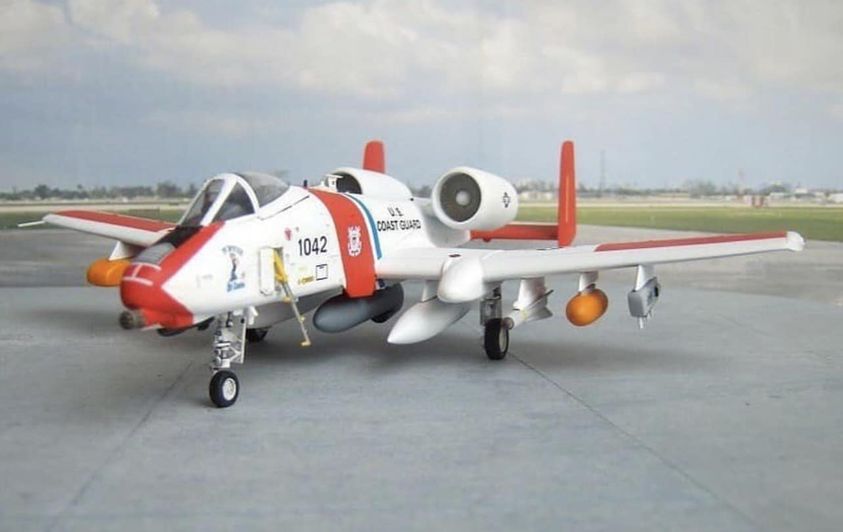
  • MSN reports on the growing maritime role of Air Force A-10s.
  • A bit more on how A-10s have been used in a maritime role here and here
  • I also seem to remember seeing that A-10s based in S. Korea have also trained to counter N. Korean small boats. A-10s can be a powerful anti-shipping weapon system.

If a threat, in the form of a merchant ship with containers that may be filled with missiles, mines, terrorists, a dirty bomb, a nuclear bomb, or whatever horror the mind of man can imagine, should be headed for the US, the Coast Guard is the most likely agency to detect the threat. But then what?

Can your local sector commander or even district commander call for air support from a DOD unit poised to strike a target at sea in a timely manner? I don’t think so.

NORAD, the North American Aerospace Defense Command, does have a modest number of aircraft on standby, prepared to intercept air threats, mostly air national guard, but they are not trained, equipped, or prepared to take out maritime targets.

I have (several times) suggested that the Coast Guard needed at least the ability to forcibly stop any vessel, regardless of size. That would presumably allow DOD forces sufficient time to organize a response because we don’t have one pre-packaged.

I would feel a lot more comfortable if DOD units, assigned an anti-shipping role, were on standby, practiced and exercised, ready to respond to a Coast Guard call for help.

They might be Marine cruise missiles, Army attack helicopters, or Navy maritime patrol aircraft, but Air Guard A-10s look promising. This could also prepare these units for an anti-shipping role in wartime.

Target designation is always a problem in multiunit operations. Every Coast Guard unit should have at least a hand held laser target designator to allow them to mark a target for DOD units.

I know an attack using a merchant ship seems unlikely, at least in peacetime, but 9/11 was unlikely and look at the fallout from our failure to respond appropriately to the hijackings in progress, not just those killed on the ground on that day, but also two fruitless wars.
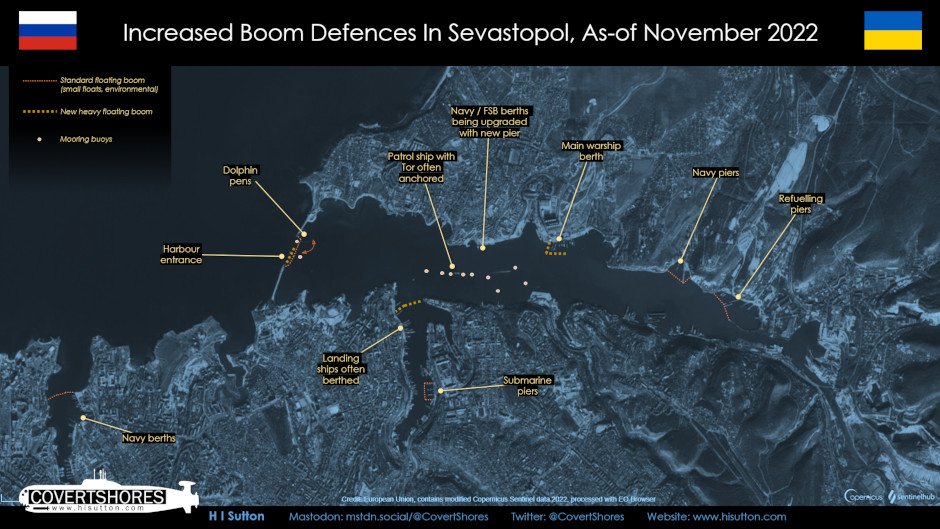
USV Attacks on Sevastopol and Novorossiysk

I certainly applaud the exploits of the Ukrainian Navy in taking the fight to the Russians using innovative means, here and here, but let us look at this from the prospective of the defender.

Naval Blogger Cdr Salamander offers some thoughts on the lessons of the recent attack on the Russian Navy Base in Sevastopol, but I think he may be selling the Russians short, under estimating the effort they put forth and suggesting that we would have done much better.

Quite properly he puts the attack in a historical context and calls for the US to be ready for similar attacks on US assets in US ports, but I have to take issue with his apparent belief that the Russian did not attempt to prepare for this type of attack.

This is another demonstration that the military culture of Russia is broken. The human element in the Sevastopol was manifested in the complete lack of preparation for the attack in spite of the warnings so clearly provided in September.

The Russians have a history of their ships being attacked in port that goes back to at least the Russo-Japanese war when the Japanese opened the war with a torpedo attack on the Russian fleet inport in Port Author. The unpleasant experience was repeated in WWI and WWII. As a result they have a relatively robust coastal and harbor defense organization, maybe better than ours.

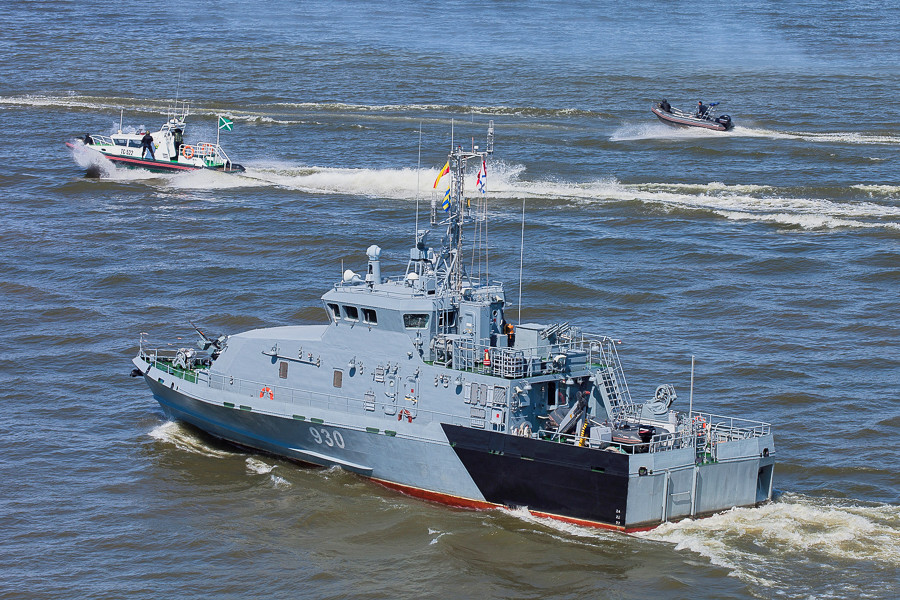
Grachonok class anti sabotage ship P-351 in Astrakhan. Photo credit Mil.Ru

The Russians have built a number of “anti-sabotour” boats that are equipped with DP-64 anti-sabotage grenade launchers and DP-65 remotely-controlled rocket grenade launcher system, a type of weapon I don’t believe we have in the US inventory. Reportedly there are ten of these anti-sabotour boats stationed in the Black Sea.

The Russians do not appear to have taken the most obvious and immediate steps to address this cheap, low-tech threat. They did not have significant barriers in place at the entrance to their harbors or around their ships’ berths. They did not have Sailors on watch with weapons at the ready.

Actually the Russians did have a physical barrier, probably a net. The shape of the bow, the shallow draft, and waterjet propulsion of the Ukrainian USVs may have allow them to jump the net.

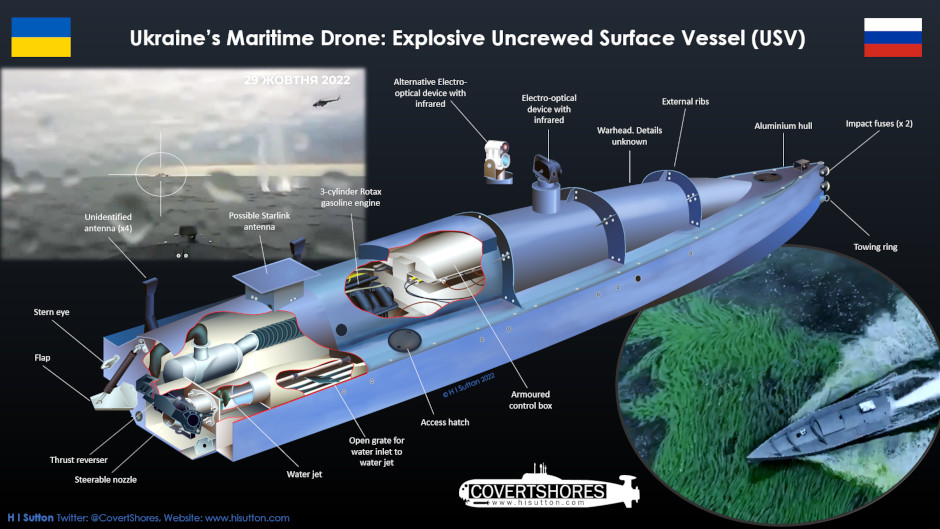
The video above, taken by one of the attacking craft, shows an armed helicopter shooting at the craft. It seems likely this helicopter was there and airborne when the attack occured because it was part of a defense plan.

The Ukrainians applied the “quantity has a quality of its own” principle. I believe I saw a report that nine USVs were used in the attack. If only three ships were damaged, then it appears the Russians successfully countered 67% of the threat. Additionally the response might have resulted in the Ukrainians damaging easier targets, closer at hand, rather than the ones they had originally intended. From the Ukraininan point of view, the damage may have been less than they had expected or hoped for, nevertheless we see it as a success. Unfortunately for the defenders, anything less than 100% success is a failure.

Achieving 100% success is not as easy as the referenced post seems to suggest. Crew served Ma Duce .50 cal. are not adequate weapons. If the Russians had had something like APKWS, in the right places, I doubt those ships would have been damaged.

An Observation on the Ukrainian Attack Craft: 

Since our first glimpse of these Ukrainian suicide drone boats, I have wondered about the “external ribs” as they are labeled above. Certainly they could be structural, but that seemed unlikely.

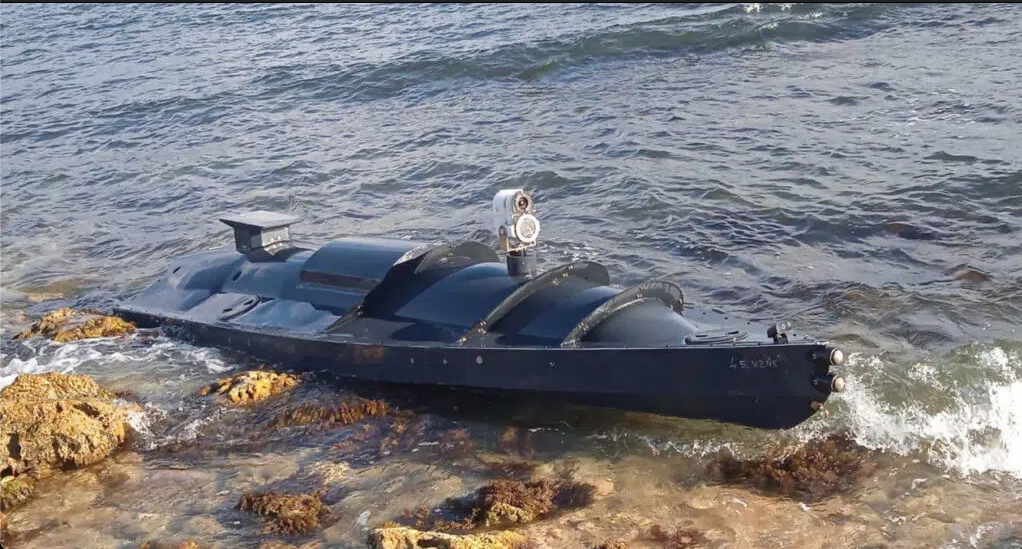
The most likely way to detect these craft at night is by their IR signature or seeing their wake. If the craft is pointed at you, those “ribs” might obstruct the view of the hot portions of the craft and its wake. They would also minimize light reflected from the inevitably wet top portion of the craft.

Image of the suspected Ukrainian USV circulating on Russian social media. Image via Naval News

Boom Defense, Everything Old is New Again

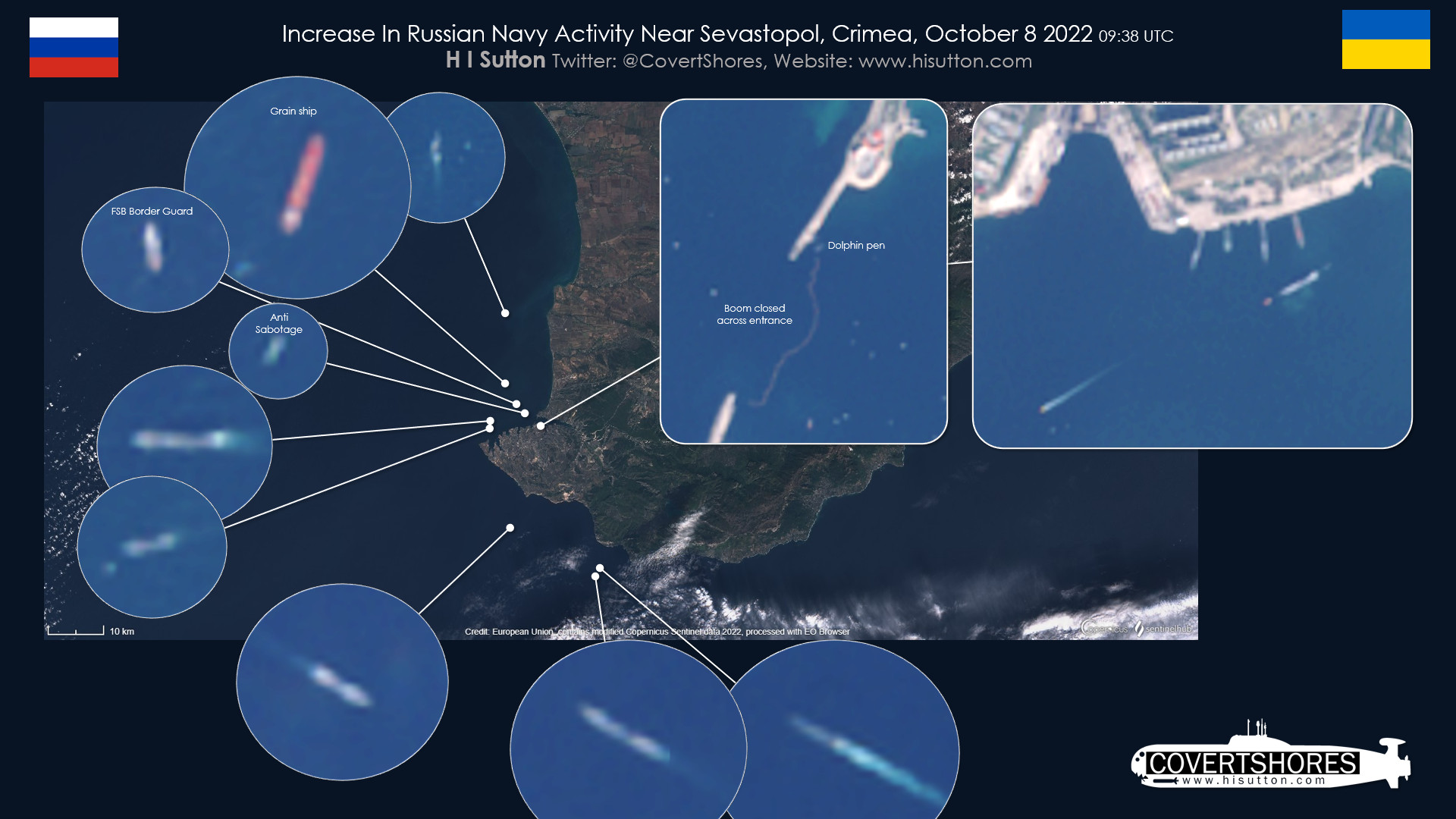
A little footnote on the War in Ukraine. This is from Covert Shores “Attack On Kerch Bridge: Initial Geolocation Of Damage.” A section at the bottom of the post is a look at increased Russian activity after the attack on the bridge.

Take a look at the detail picture of the harbor, above, top, near the center, second from the right. The thin wavy line is a boom or net accross the entrence to Sevastopol harbor.

Steel floats for anti-submarine nets, 1953

Anti-submarine nets were common during WWII, and booms go back to at least the American Revolution if not to antiquity. This may be in response to Ukraine’s apparent use of unmanned surface vessels. I have seen some barriers deployed around aircraft carriers moored at North Island in San Diego.

What does this have to do with the Coast Guard? Buoy tenders were commonly used as Net Tenders during WWII, opening and closing the anti-submarine nets.

Armed unmanned surface and subsurface vehicles are providing a new reason to deploy nets and barriers. We may see a return of these systems.