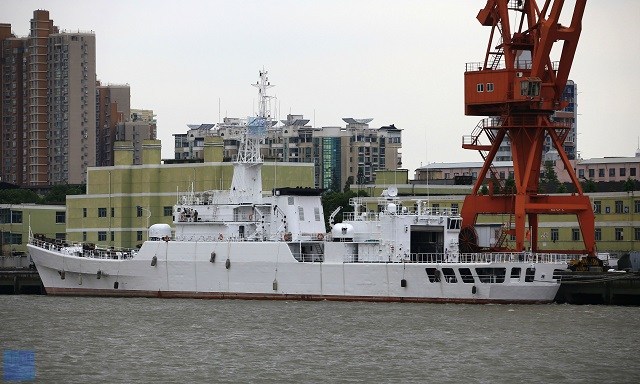
“China’s bullying won’t deter Philippines’ South China Sea sovereignty, Coast Guard says” –Indo-Pacific Defense Forum

I haven’t published much about China’s bullying of the Philippines lately. That doesn’t mean it has stopped. Rather it has become routine.

This report from the Indo-Pacific Defense Forum may serve as an update.

The video above does suggest why having a reinforced hull or at least an extra turn of speed might be desirable.

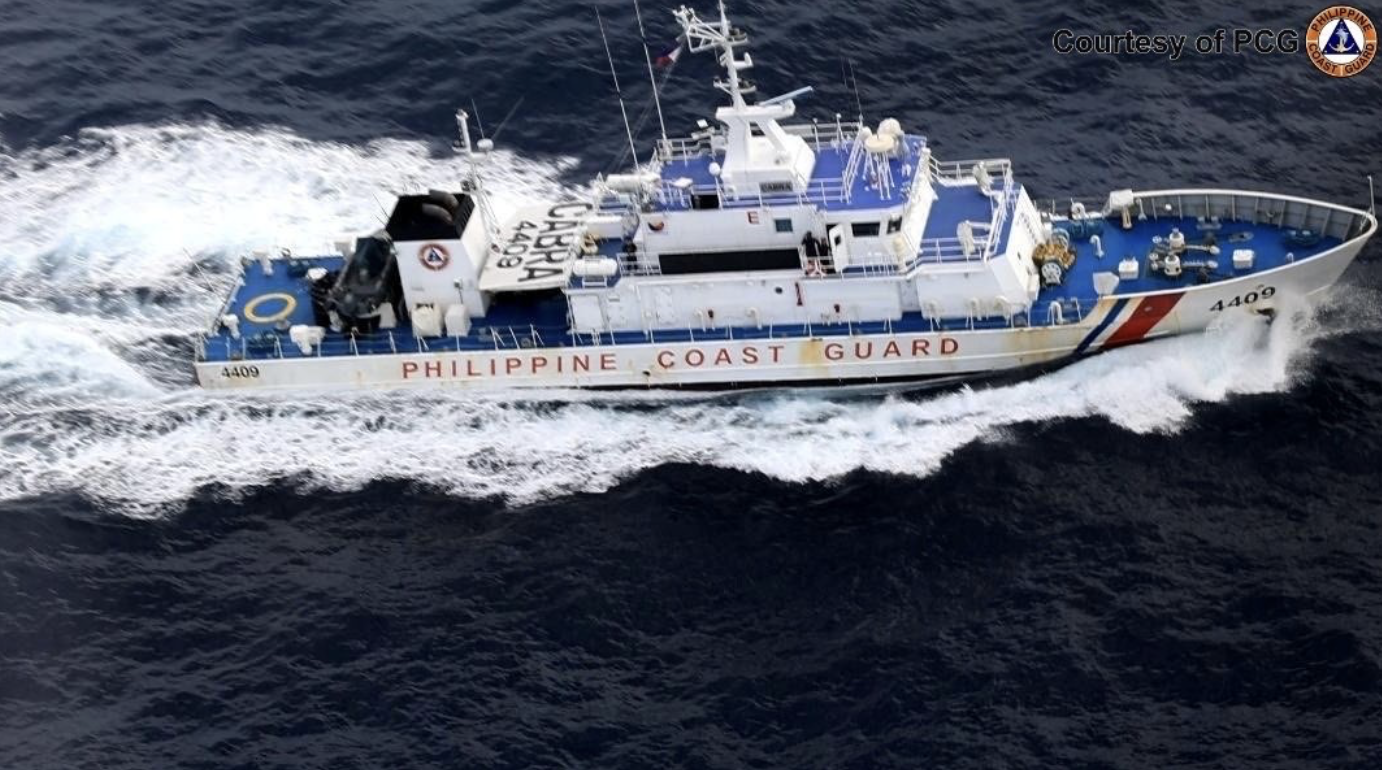
BRP Cabra (Philippine Coast Guard photo)

BRP Cabra is one ten 44.5 m (146 ft), 25 knot Japanese built Parola-class cutters commissioned 2016-2018.

The China CG vessel in pursuit is a 98 meter Shucha II class OPV.

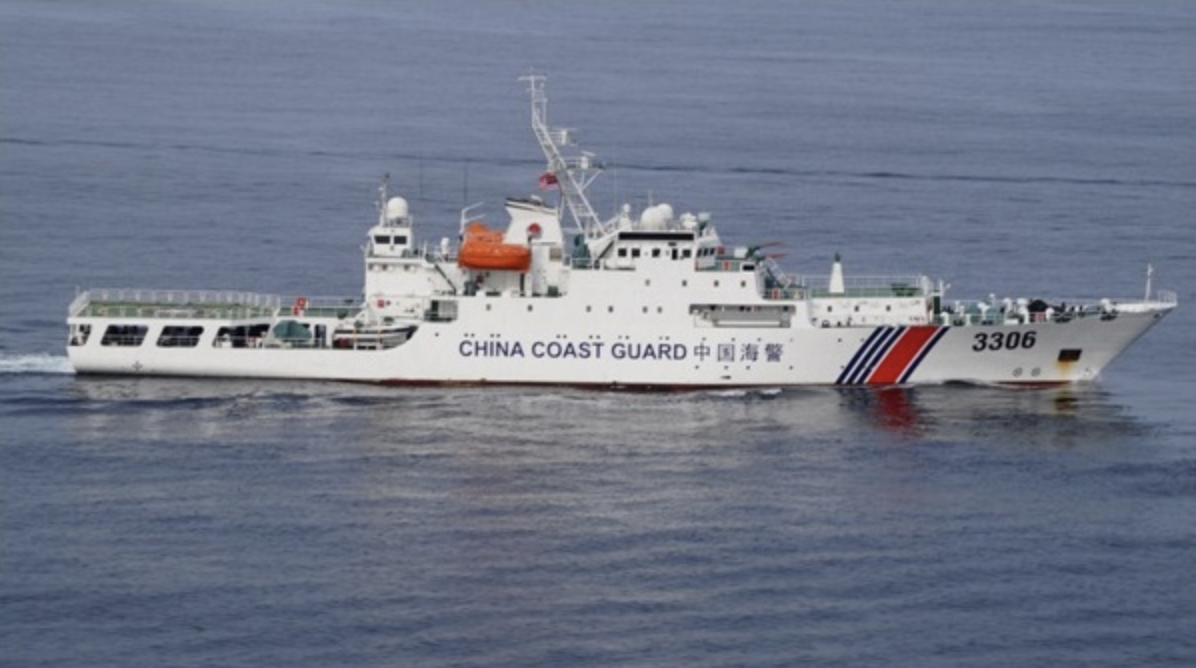
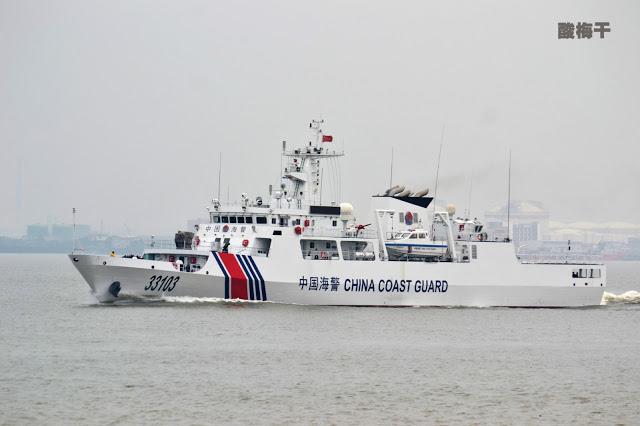
China Coast Guard Shucha II-class cutter Haijing 3306 (renamed to Haijing 3301). A sister ship of the China CG vessel in the video.

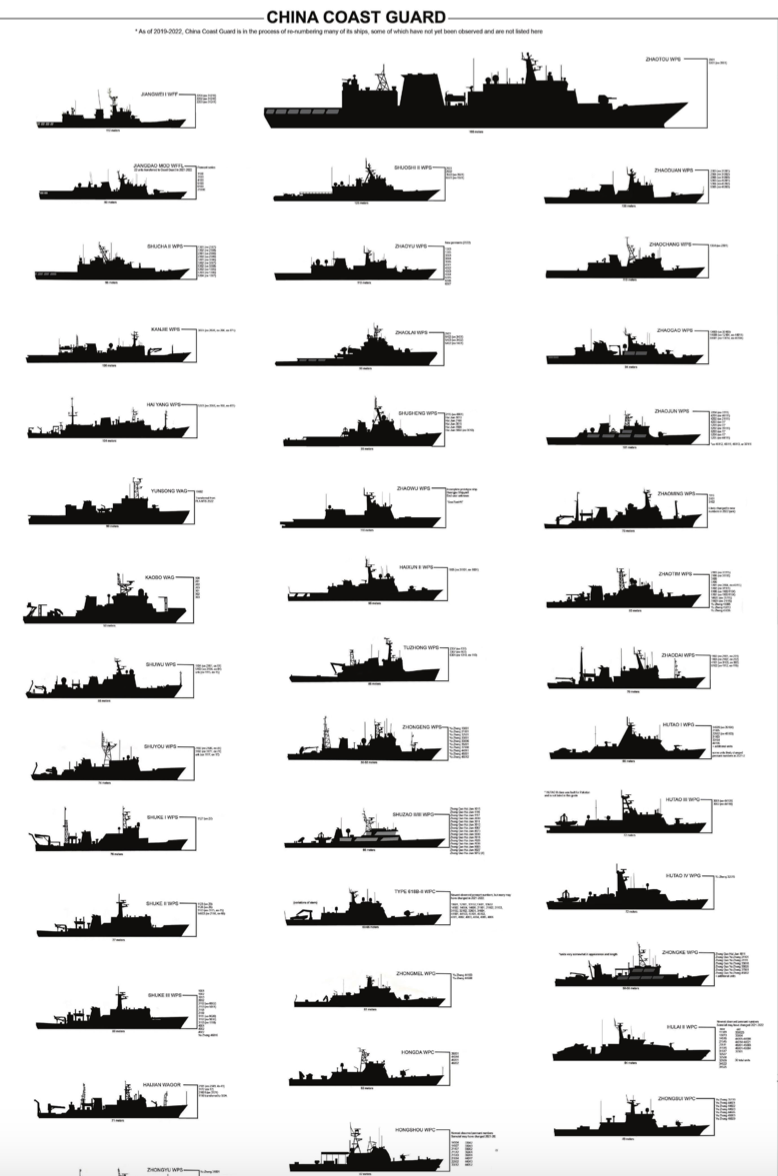
Just a partial listing of China Coast Guard from “Office of Naval Intelligence’s Chinese People’s Liberation Army Navy, Coast Guard, Ship Identification Guide


“Indonesia’s New President Makes Three Stunning Concessions to China” –Real Clear Defense

Indonesian Maritime Security Agency vessel KN Tanjung Datu, left, sails alongside U.S. Coast Guard Cutter Stratton during joint exercises in the Singapore Strait in August 2019. IMAGE CREDIT: PO1 LEVI READ/USCG

Real Clear Defense reports,

“Indonesia’s new president, Prabowo Subianto, needed only three weeks in office to make three big concessions to China.

In a joint statement with President Xi Jinping in Beijing on 9 November, Prabowo acknowledged Chinese maritime claims that Indonesia had long rejected. Despite leading the most populous Muslim-majority country, he affirmed China’s right to deal with Xinjiang as it pleased. He also endorsed China’s vague vision of the geopolitical order, something that Indonesia has long been wary of.”

This is a disappointing turnabout. Indonesia had appeared to be a leader in ASEAN in rejecting expansive Chinese maritime claims.

“Chinese Maritime Safety Officers Beat Vietnamese Fishermen During South China Sea Interdiction, Say Officials” –USNI

Personnel from the China Maritime Safety Administration board and attack the crew of the Vietnamese fishing vessel QNg 95739 TS. Screenshot of a Maritime Safety Administration video released by SCSPI on Sept. 29, 2024. 

The US Naval Institute News Service reports an incident in which personnel of the China Maritime Safety Agency boarded a Vietnamese fishing vessel. The boarding was resisted by the Vietnamese fishermen (see the video below) and when the Chinese agents came aboard, they severely beat the fishermen with metal rods.

This is just another example of the Chinese attempting to intimidate their perceived enemies by using brutal, but usually less than deadly force. There have been conflicts with India and the Philippines at similar levels of violence. Chinese fishermen have also responded with similar levels of violence when being boarded by South Korean Coast Guard.

I am surprised this was done by the China Maritime Safety Agency rather than by the China Coast Guard. This may reflect an attempt by the Maritime Safety Agency to enhance its status in the Chinese government, perhaps even an effort to prove its continued relevance.

Where this happened is not stated. Presumably it was inside China’s self-declared Nine Dash Line, but outside China’s internationally recognized Exclusive Economic Zone (EEZ) and probably within Vietnam’s EEZ.


“How a new Vietnam-Indonesia deal will affect South China Sea disputes” –Defense News

Defense News reports that Vietnam and Indonesia have agreed on demarcation of their respective EEZs where they had previously been in dispute.

Peaceful settlement of conflicting SE Asian nation claims would go a long way toward presenting a united front against China’s expansive 9 Dash Line claims and clarify IUU fisheries enforcement.

“Practically, the successful Indonesia-Vietnam EEZ [exclusive economic zone] demarcation will help both countries to resolve illegal, unreported, and unregulated (IUU) fishing, which has been a serious bilateral irritant and a broader issue involving third-party countries, including China and Thailand,” according to Bich Tran, a visiting fellow writing in the Fulcrum, a publication of the ISEAS—Yusof Ishak Institute in Singapore.

“Philippines Says China Ship Used Laser Against Coast Guard” –Real Clear Defense

RealClearDefense reports,

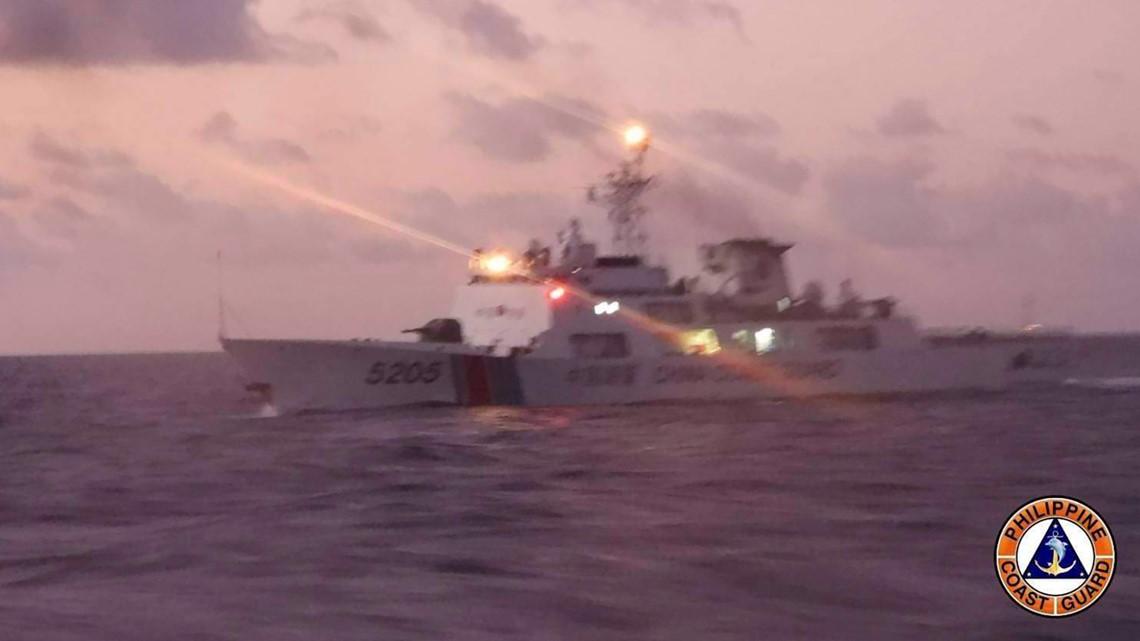
 “The Philippines on Monday accused a Chinese coast guard ship of hitting a Philippine coast guard vessel with a military-grade laser and temporarily blinding some of its crew in the disputed South China Sea, calling it a “blatant” violation of Manila’s sovereign rights.”

The incident occurred near Second Thomas Shoal, as the Philippine cutter BRP Malapascua was escorting a resupply mission to the BRP Sierra Madre, a Philippine LST deliberately, permanently grounded on Second Thomas Shoal. (Video here). Apparently the resupply effort was turned back.

Philippine CG statement on the incident here.

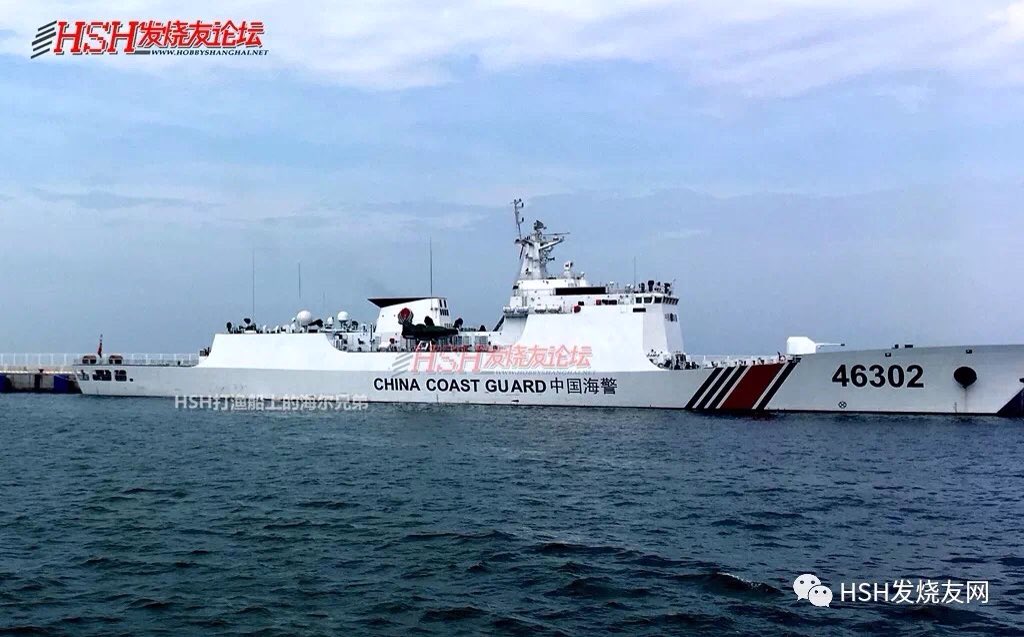
None of the Philippine Coast Guard cutters seem to be armed with anything larger than a .50 cal. machine gun, so they are at a disadvantage in facing down a large China CG cutter armed with a 76 mm gun, like the one in the photo above.

“Indonesia stands up to PRC’s aggressive moves in South China Sea” –Indo-Pacific Defense Forum

A China Coast Guard ship is seen from an Indonesian naval vessel during a patrol north of Indonesia’s Natuna islands. (Antara Foto via Reuters)

Indo-Pacific Defense Forum reports,

“Indonesia has successfully defended its sovereignty off the northwest coast of the island of Borneo by standing up to aggressive incursions by the People’s Republic of China (PRC), which maintains that its widely dismissed territorial claim in the South China Sea gives it authority to enter the area unimpeded.”

Indonesia is demonstrating it is possible to resist China’s bullying without starting a war.

“China Coast Guard to be allowed to use force in case of territorial infringement” –People’s Liberation Army Daily

This Chinese People’s Liberation Army Daily post concerning use of deadly force, linked here, may be particularly interesting for its call out of the US Coast Guard.

Law enforcement on land, sea and in airspace under its own jurisdiction, with the use of weapons on necessary occasions, are the rights granted to sovereign states by international law. The Japan Coast Guard (JCG) also stipulates that lethal weapons can be used when enforcing the law in waters under its own jurisdiction. For the US Coast Guard (USCG), the use of force is even more common, and it is even planning to apply long-arm jurisdiction to China.

Admiral Karl Schultz, Commandant of the USCG, claimed to strengthen deployment in the Asia-Pacific region and participate in security patrols in the waters surrounding China in response to Chinese maritime militia’s declaration of sovereignty in the South China Sea in April last year. Robert O’Brien, US National Security Advisor, announced on October 24 that the USCG would deploy Enhanced Response Cutters in the Western Pacific. . Without providing any evidence, he accused Chinese fishing boats of illegal fishing and claimed that the sovereignty of the United States and its neighbors in the Pacific had thus been threatened.

If they should choose to employ force against one of our cutter in their claimed “Nine Dash Line,” it is likely they would attempt to get several units in at very close range before opening fire, as they did in this engagement.
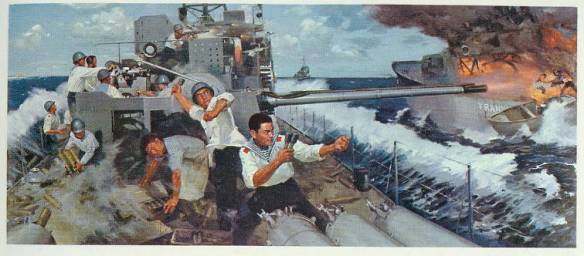
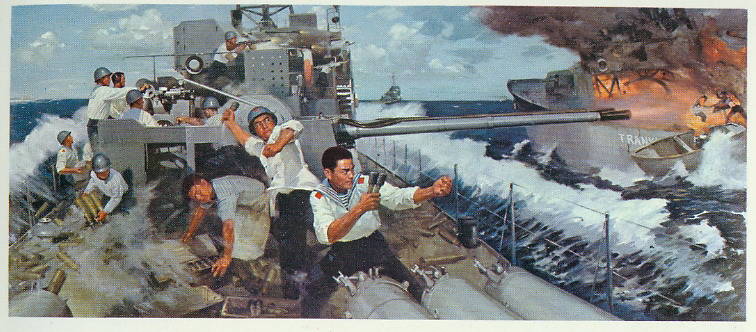
Chinese depiction of the fighting Battle of Paracels Islands

Next time we send a cutter into this area, it might be a good idea to have a squad of Marines along armed with shoulder fired missile or rocket launchers.

Might also be a good idea to provide a bit of ballistic protection (and here) for our .50 cal. gun crews. Not too difficult because you can buy it on the GSA catalog.

Most China Coast Guard Cutters are not as well armed or as fast as the Bertholfs, but there are exceptions. In all likelihood they would be more interested in causing casualties and chasing us off, than actually sinking a cutter. This is more likely to serve their purpose without getting themselves in a war. Not that I think such an attack would go unanswered, but they, or a mid-level commander, might be foolish enough to think they could get away with it. Still probably better not to have a lone cutter doing “Freedom of Navigation Operations,” although air cover might be sufficient. Really I would like to see an international repudiation of their claims in the form of an multi-national demonstration.

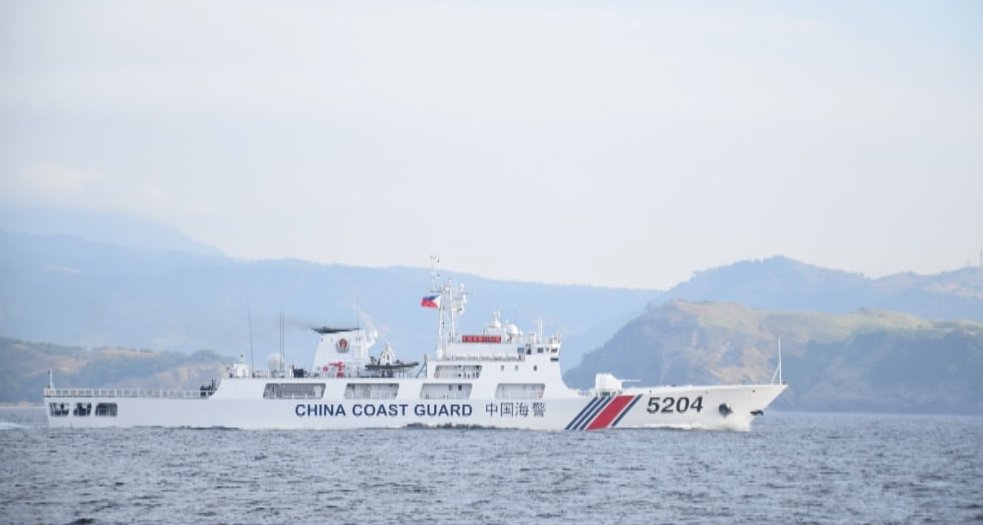
Combinations of CCG cutters with weapons larger than 14.5mm machine guns could be extremely dangerous at close range. Some of those are shown below.
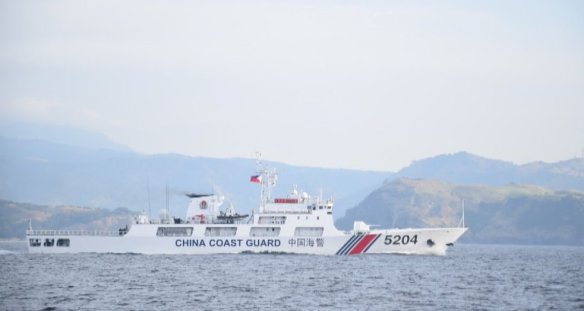
The China CG version of the Type 056 Corvette


China Coast Guard Cutters Converted  from Type 053H2G frigates