The Navy’s New Design for Maintaining Maritime Superiority–CNO

Download the pdf here.

Recently the new Chief of Naval Operations has issued a document , “A Design for Maintaining Maritime Superiority” that outlines how, hopefully, the US Navy can maintain a maritime superiority our foes will recognize and avoid confronting.

If you are looking for anything specifically regarding the Coast Guard here, you will not find it (other than the cutter in the formation on the cover). The Coast Guard is not mentioned even once, but it does talk about some things that are Coast Guard related. Perhaps we should not feel bad about this. It only mentions the Marine Corps once.

He talks about three forces that are changing the environment: 

  • The first global force is the traffic on the oceans, seas, and waterways, including the sea floor – the classic maritime system.
  • A second increasingly influential force is the rise of the global information system – the information that rides on the servers, undersea cables, satellites, and wireless networks that increasingly envelop and connect the globe.
  • The third interrelated force is the increasing rate of technological creation and adoption.”

Obviously the Coast Guard facilitates and regulates marine traffic and is tapped into the global information system. In wartime, these contacts will become essential. He also talks about new trade routes opening in the Arctic, that will only be reliable if we have new icebreakers. He also talks about illegal trafficing.

“This maritime traffic also includes mass and uncontrolled migration and illicit shipment of material and people.”

For once, finally, a document explicitly recognizes the competition,

“For the first time in 25 years, the United States is facing a return to great power competition. Russia and China both have advanced their military capabilities to act as global powers. Their goals are backed by a growing arsenal of high-end warfighting capabilities, many of which are focused specifically on our vulnerabilities and are increasingly designed from the ground up to leverage the maritime, technological and information systems. They continue to develop and field information-enabled weapons, both kinetic and non-kinetic, with increasing range, precision and destructive capacity. Both China and Russia are also engaging in coercion and competition below the traditional thresholds of high-end conflict, but nonetheless exploit the weakness of accepted norms in space, cyber and the electromagnetic spectrum. The Russian Navy is operating with a frequency and in areas not seen for almost two decades, and the Chinese PLA(N) is extending its reach around the world.

“…Coupled with a continued dedication to furthering its nuclear weapons and missile programs, North Korea’s provocative actions continue to threaten security in North Asia and beyond.

“…while the recent international agreement with Iran is intended to curb its nuclear ambitions, Tehran’s advanced missiles, proxy forces and other conventional capabilities continue to pose threats to which the Navy must remain prepared to respond.

“…international terrorist groups have proven their resilience and adaptability and now pose a long-term threat to stability and security around the world.”

He recognizes budgetary limitations.

“There is also a fourth ‘force’ that shapes our security environment. Barring an unforeseen change, even as we face new challenges and an increasing pace, the Defense and Navy budgets likely will continue to be under pressure. We will not be able to “buy” our way out of the challenges that we face. The budget environment will force tough choices but must also inspire new thinking.”

Throughout there is an emphasis on understanding history and the strategic concepts of the past. There is also a recognition of the need to work with partners.

“EXPAND AND STRENGTHEN OUR NETWORK OF PARTNERS: Deepen operational relationships with other services, agencies, industry, allies and partners – who operate with the Navy to support our shared interests.

Other than the Marine Corps, the US Navy has no closer partner than the USCG. The partnership has been a long and successful one, but I would like to see the Navy be a better partner to the Coast Guard.

What I want to see:

If we have “run out of money, now we have to think.” One thing we can do, is to try to get the maximum return from the relatively small investment needed to make the Coast Guard an effective naval reserve force.

  • We need explicit support from the Navy at every level, particularly within the Congress and Administration, for Coast Guard recapitalization.
  • We need an explicit statement from the Navy that they expect the Coast Guard to defend ports against unconventional threats, so that they can keep more forces forward deployed.
  • We need the Navy to supply the weapons we need to defend ports against unconventional attack with a probability approaching 100% ,including small missile systems like Hellfire or Griffin to stop small, fast, highly maneuverable threats and light weight anti-ship torpedoes that target propellers to stop larger threats, and we need those systems on at least all cutters of Webber class and larger.
  • We need to reactivate the Coast Guard’s ASW program and insure that all the new large cutters (NSC and OPC) have and ASW capability, if not installed on all of the cutters, at least planned, prototyped, tested, and practiced on a few ships (particularly in the Pacific).

(Note there is another post on this looking at the “design” from a Navy point of view.)

New ISR Sensor

Australia's Maritime Safety Authority will induct new search and rescue aircraft in the near future, with enhanced capabilities. Four Bombardier Challenger 604 jet aircraft will enter service from August 2016 and onwards.

Navy Recognition reports installation of a new type of sensor on four Australian medium range search aircraft. (Looks a lot like an HU-25 doesn’t it? It is a contracted SAR resource.)

This new sensor, Sentient Vision’s Kestrel Maritime ViDAR (Visual Detection and Ranging), is apparently a computer aided visual recognition system intended to detect objects as small as people in the water. A claimed advantage over human lookouts is that system performance does not degrade due to fatigue like human observers.

Apparently this technology is being tested on Scan Eagle and Firescout Unmanned Air Systems too. It is claimed that the system improves the search function on these UAS as much at 80 times that of unaided Electro-Optic systems.

It was reportedly tested by the USCG  “in 2014 and managed to detect small targets at a distance of more than 20nm.” I tried to find out a little bit more about the Coast Guard test, and apparently it was associated with the experiments with an aerostat deployed from the Healey.

Anyone know if this system has a future in the USCG?

Equipment for the Offshore Patrol Cutter

IMG_4134

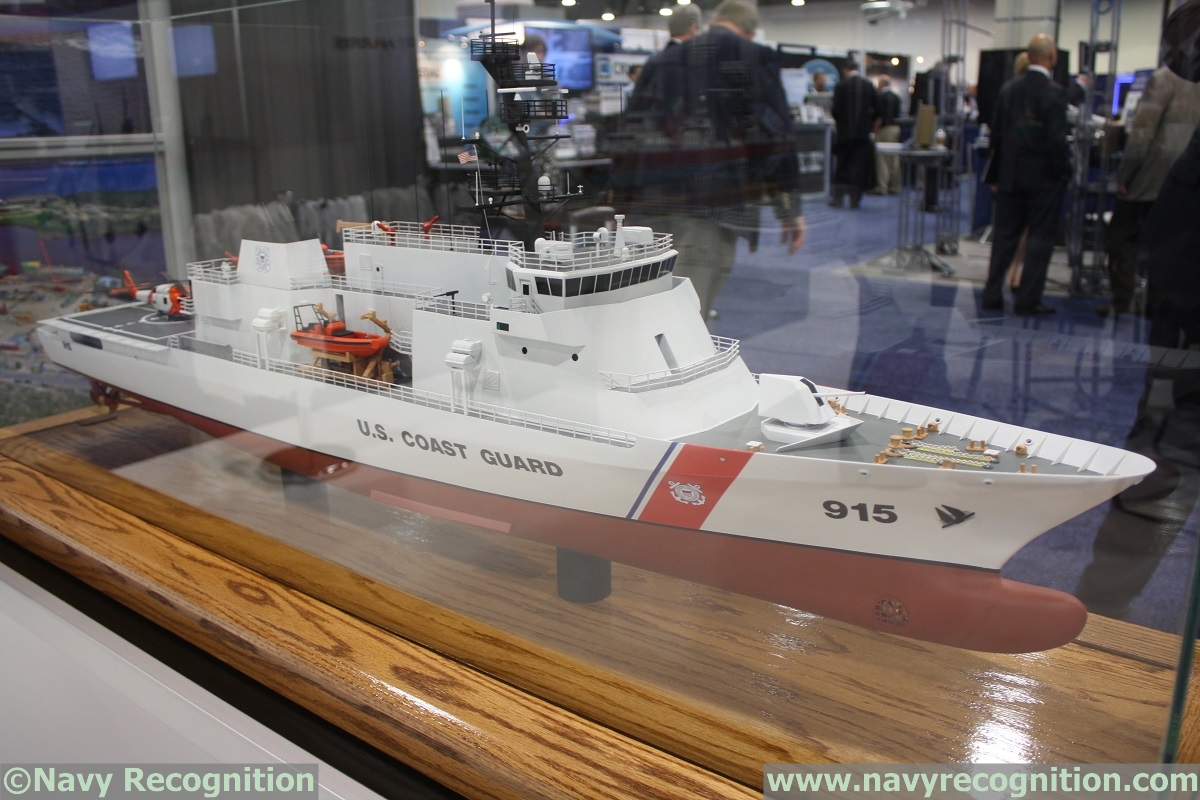
The National Fleet Plan had some clues regarding equipment that we can expect on the Offshore Patrol Cutter (OPC). Apparently there will be a lot of commonality between the Navy’s LCS and future generation frigates, the Coast Guard’s Offshore Patrol Cutters (OPC), and the Bertholf Class NSCs. My last discussion of the equipment on the OPC can be found here: “Offshore Patrol Cutters (OPC), the Other LCS” which contains information not addressed here. Generally the information below does not look much different but I will try to point out any significant differences.

Command, Control, and Communications (Ref. Section 5.5):

The recommended NTNO (Navy Type Navy Owned–Chuck)systems to meet C3 commonality and interoperability for the OPC are as follows: MIL UHF LOS 225-400 MHZ (Digital Modular Radio (DMR), ARC-210, PRC-117); MIL UHF SATCOM (DMR, ARC-210, PRC-117); Messaging (DMR SATCOM, ARC-210, PRC-117); Tactical Data Link (LINK 11; Joint Range Extension (JRE) Link-16, forwarded LINK 22); VACM (KY-100M, KY-58M, KYV-5M). (p. 22)

I am very pleased to see LINK 11, 16, and 22 on the list although this is probably a “junior edition” of these systems. These systems are becoming so ubiquitous if you don’t have them, you are more of a burden than an asset. The table on page 24 seems to indicate that the OPCs will not have an airsearch radar, but will have a multi-mode radar that will be common with Navy systems (p.50). Its not clear what that will really mean for the ship’s capabilities. As far as I can tell, the only air search on the NSCs is the EADS 3D TRS-16 which is also a multimode radar combining air search, surface search, and fire control functions. This radar is likely to be replaced by the newer EADS Cassadian TRS-4D multi-function radar.

Sensors (Ref. Section 5.6): The OPC will have a multi-mode radar, Electronic Warfare Systems, Decoy launching system, Sensitive compartmented information Network, TACAN, and CCOP (Cryptologic Carry-On Program).

 The recommended systems to meet Sensor commonality and interoperability for the Offshore Patrol Cutter are as follows: TACAN; Multi-Mode Radar; IFF; SEWIP (SLQ-32/SSX-1 replacement); and MK-160 Gun System. (p. 25, 5.6.b.2)

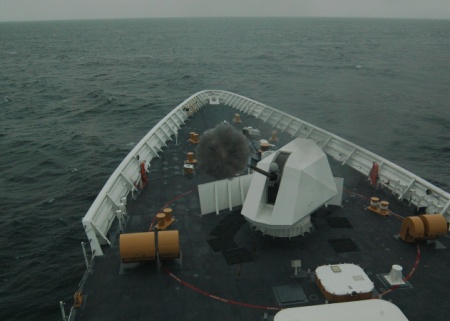
NSCfires57mm

Weapon Systems: The OPC will have a 57mm, 25mm, and .50 cal guns. (It is not addressed in this document, but there have been indications that two of the .50 cal. are to be mounted in stabilized remotely controlled weapon stations. The 25mm will presumably be a Mk38 mod2 or 3) The OPCs will not incorporate either a CIWS or degaussing (p.32). (I do have reason to suspect that the OPC is fitted for upgrade to include CIWS.)

It will also have ADNS (Automated Digital Network System), Sensitive Compartmented Information Network (SCI-Networks), Consolidated Afloat Networks and Enterprise Service (CANES).

Notes on the Ship’s Signals Exploitation Equipment System and Unmanned Aircraft System, “OPC has the same space, weight and power requirements (as the NSC–Chuck) reserved but a system has not been selected.” (p. 24)

It appears the gun firecontrol system, may include only Electro-Optical control cued by the multimode radar, and that it will not include the AN/SPQ-9B which is used on the National Security Cutters (I think this may be a change).  There is a note on the Gun Fire Control System: “OPC will have a fire control radar capability (MMR-presumably multimode radar–Chuck) to provide tracking information and slew of the GWS camera, but slew and fire of the GWS cannon remains under manual control.” (p.24) Hopefully, an integration of the multimode radar with the weapon 57mm and perhaps the 25mm will permit blind firing of these systems, otherwise some visibility conditions may preclude effective fire control and certainly reaction times, particularly against air targets, will not be as good as they might have been.

Kites for Energy Savings and Maritime Domain Awareness

gCaptain is reporting that, since 2012, the Irish Naval Service has been experimenting with using kite sails to give their ships a fuel saving boost and to hoist aloft surveillance equipment up to 300 meters (1000 feet) into the air.  They now consider the technology mature enough to be commercialized.

Putting sensors at 1000 feet gives a horizon distance of 38.7 miles compared with 8.7 miles for a more typical height of 50 feet.

The Irish Naval Service, their missions, and their ships look more like the US Coast Guard than the US Navy. This technology might have applications for the Coast Guard. Perhaps it is worth a look by the Research and Development Center.

It looks like the Navy may be working on something that looks similar, TALONS, but is only intended to hoist sensors, not improve fuel economy.

Mini-Aegis Possible for Corvette (or Cutter) Sized Ships

NavyRecognition reports on the presentation of the Raytheon’s AN/SPY6(V) Air and Missile Defense Radar at the recently completed SEA-AIR-SPACE trade show.

This is the radar that has been selected to go on the Flight III version of the Burke class DDG. Most of the emphasis has been on larger installations, but the good news for the Coast Guard is that these systems are modular, based on two foot square elements than each constitute a separate radar, so that it can be scaled down as well as up. These fixed arrays would normally be arranged with four arrays positioned to each cover a 90 degree sector. Raytheon claims arrays consisting of nine elements arranged in a 3×3 square (6 ft x 6 ft) provides performance similar to the 12 foot octagonal AN/SPY-1D on existing Burke class DDGs. It appears the intention is that the Flight III ships will have roughly octagonal arrays consisting of 37 elements, 14 foot across. There is also an option for an even larger array of 69 elements in an octagonal 18 foot diameter array.

These radars are reportedly capable of performing virtually every type of radar function including air and surface search and firecontrol. Reportedly the radar will be “qualified” in 2017 and the initial operational capability will be attained in 2023, presumably with the first flight III DDG.

When might we consider using these?

The Bertholf was commissioned in 2008 so the class will start needing mid-life renovations some time after 2023.

The Offshore Patrol Cutter construction program is expected to be stretched out with funding over 15 years and deliveries will probably extend from FY2021 to FY2035. Over so long a period it would not be unreasonable to expect that there will be a “B class” with updated systems. By that time, these systems may be so common it may be reasonable to replace the planned radar suite with these fixed systems.

At the very least, at some point it might be advisable to convert at least one of each class to accept this or a similar system as a prototype for war emergency conversion. This might be something DOD would pay for.

Office of Naval Research, “Naval Future Force Science and Technology Expo”

Don’t often mention “trade shows.” I don’t think I ever have, but this is one that the CG might want to attend.

What: Naval Future Force Science and Technology EXPO
When: Feb. 4-5, 2015
Where: Walter E. Washington Convention Center in Washington, D.C.

Among the things the Coast Guard might benefit from are developments in Maritime Domain Awareness, ship design and survivability, and developments in unmanned systems.

Perhaps not immediately applicable to the Coast Guard, but looks like they will also have a good discussion on development of electromagnetic railguns. These might have the advantage for the Coast Guard of being effective ship stoppers, while having the advantage of requiring no explosives be carried on the ship–a good reason for the new ships to have robust generator capacity.

C4ISR Upgrades Unfunded, Impacting Operations–DHS IG

FierceHomelandSecurity is reporting that the DHS Inspector General has found reduced funding CG funding for C4ISR upgrades has had an adverse effect on operations.

The Homeland Security Department’s inspector general said these aircraft and ships will continue to rely on obsolete technology that will also cost more to operate and maintain. And the Coast Guard hasn’t addressed how and when it will implement these upgrades in revised plans…For example, some older cutters use surface search radar systems that contain almost two-decade old technology, which should’ve been replaced 10 years ago, the report said. In another example, the Coast Guard was planning to upgrade aircraft that use 1990s video and sensor technology to provide surveillance and other functions…”For example, Coast Guard personnel aboard one legacy cutter reported experiencing problems with a malfunctioning surface search radar system, including the need to reboot the system several times a day and system breakdowns while at sea,” the report said…The IG also said that certain aircraft system’s video and mission processor overloads and must be restarted, which could take 30 minutes, if operators try to update a common operating picture with large amounts of data.

Sonar Systems for Vessels as Small as Webber Class WPCs

ThalesCAPTAS1
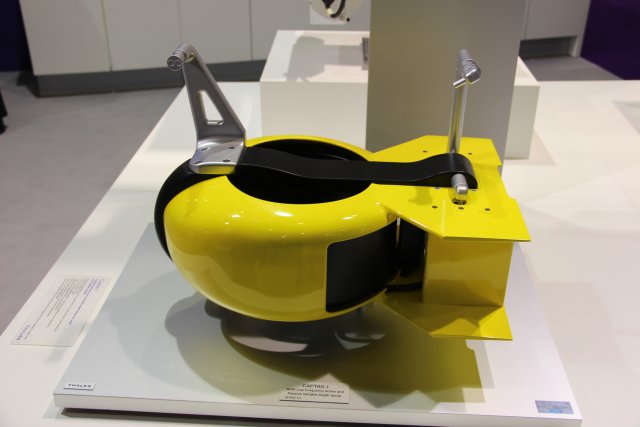
Photo credit: NavyRecognition. Thales CAPTAS 1

As expected, the EuroNaval 2014 trade show is offering some interesting products. This one might be of interest if the Coast Guard ever decides to get back into the ASW mission. Thales, maker of some of the most highly respected sonars in the world, is offering both hull mounted and towed active/passive sonars for vessels as small as 300 tons. The towed sonar is the CAPTAS 1, joining two previous members of a family of systems that share common technology. The Largest of these, the CAPTAS 4 is being evaluated for the ASW module for the LCS.

Autonomous Unmanned Swarm Boats, Asset Protection, AMIO, Drug Interdiction?

Naval Open Source Intelligence pointed me to a report by the Office of Naval Research (ONR) on the use of multiple unmanned surface assets to protect an asset and if necessary initiate a coordinated attack.

“The technology—called CARACaS (Control Architecture for Robotic Agent Command and Sensing)—is under development by ONR, and can be put into a transportable kit and installed on almost any boat. It allows boats to operate autonomously, without a Sailor physically needing to be at the controls—including operating in sync with other unmanned vessels; choosing their own routes; swarming to interdict enemy vessels; and escorting/protecting naval assets.”

Why should the Coast Guard care? The Coast Guard also protects vital maritime assets including passenger ships, vessels with dangerous cargos, and Navy assets including major ships and ballistic missile submarines so there is that direct application.

The system also appears capable of providing a persistent patrol capability that might be useful in Interdiction Operations. We cannot put a boat crew in a RHIB and send them off to operated as an independent extended sensor for 24 hours, but we could do that with an automated RHIB.