“Ensuring Coast Guard Readiness Act”

The Geoje Shipyard Boasts the World’s Greatest Dock Turnover Rate
The dock turnover rate is the number of ships that a dock can launch ships. The greater the turnover rate indicates the more sophisticated shipbuilding capacity and production efficiency.
In addition, dock turnover rate is the most reliable yardstick for measuring shipyard’s technical capacity and production efficiency. The largest dock at SHI’s Geoje Shipyard, Dock No.3,is 640m long, 97.5m wide, and 13m deep.

Marine Link has an article, “S. Korea Shipyards Soar as U.S. Bill Eyes Navy, USCG Ship Construction Options” that reports

Senators Mike Lee (R-UT) and John Curtis (R-UT) have introduced two new bills aimed at enhancing the readiness and capabilities of the United States Navy and Coast Guard. The “Ensuring Naval Readiness Act” and the “Ensuring Coast Guard Readiness Act” seek to modernize shipbuilding processes and strengthen partnerships with allied nations to expedite maritime procurement.

The Coast Guard bill would allow”... the Coast Guard to construct a vessel or a major component of the hull or superstructure in a foreign shipyard if:
• The shipyard is located in a NATO country or in an Indo-Pacific country with which the U.S. has a current mutual defense agreement;
• The cost is cheaper in such shipyard than would otherwise be in a domestic shipyard;
• The Commandant of the Coast Guard to certifies, prior to construction of a U.S. vessel, that the foreign shipyard is not owned or operated by a Chinese company or multinational domiciled in China

Of course this is only a bill. 

Polar Star is Home–Finally

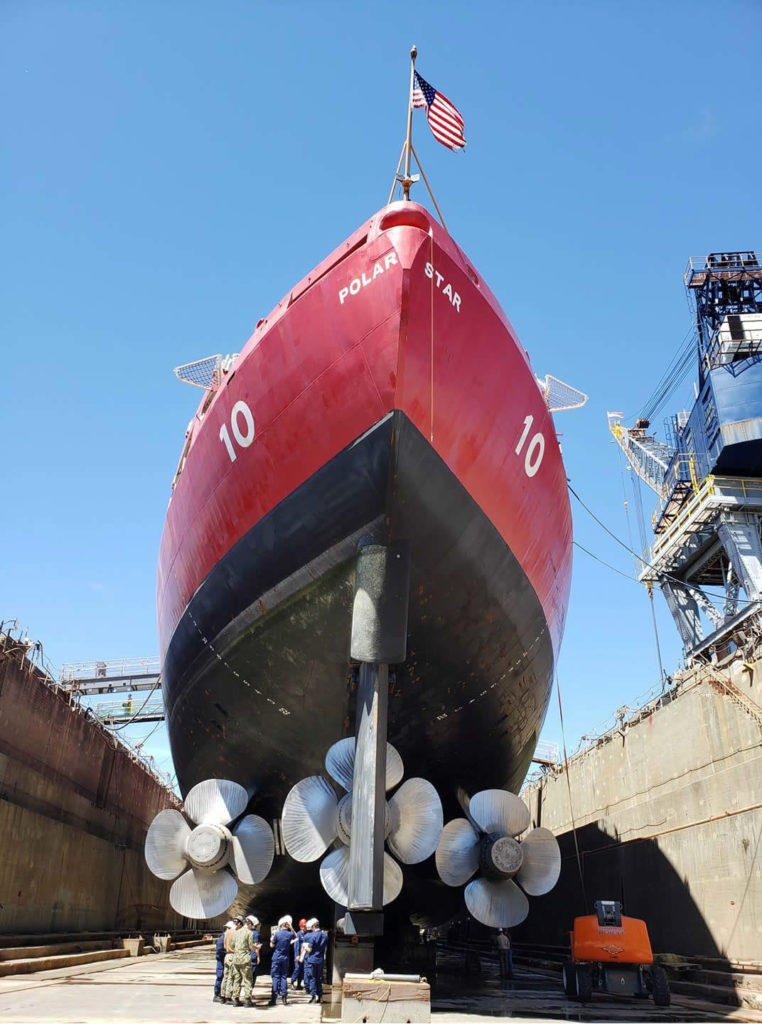
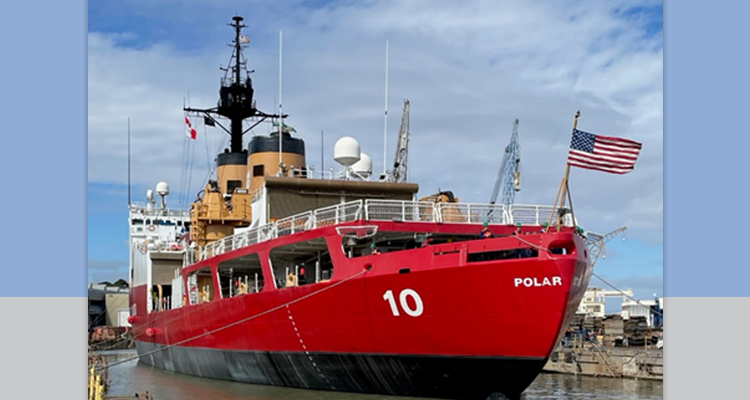
Polar Star at Mare Island Dry Dock LLC undergoing the fourth phase of its five-year Service Life Extension Project. U.S. Coast Guard photo by Cmdr. Jeremy Courtade.

Below are two news releases, first one from Coast Guard News, the second from the Acquisitions Directorate (CG-9).

The Coast Guard has been working very hard to make sure that Polar Star can meet her annual commitment to open a path for resupply of the Antarctic Base at McMurdo, but it has to have been hard on the crew. They just completed the fourth phase of a five-part Service Life Extension Program (SLEP), but unlike the single phase SLEPs and MMAs we are seeing with the buoy tenders and medium endurance cutters at the Coast Guard Yard, here the crew stays aboard. After 138 days on the resupply mission, instead of returning to Seattle, their homeport, they went to Vallejo, California, where they spent about 140 days. Altogether, 285 days away from homeport, and over a one-year period, more days in Vallejo than in homeport.

Polar Star has only one more of these to go, but it looks like the Crew of USCGC Healy is going to go through the same 5-year SLEP cycle, where they will spend more time in Vallejo than in their homeport. This is just wrong. There are only two yards on the West Coast that can accommodate ships of this size. The Navy, with its huge presence, is a strong competitor for the use of the one in Seattle. By contrast the Bay Area has virtually no Navy presence. It is likely the Icebreakers will have to use the yard in Vallejo for almost all their drydocking. Maybe it is time to change their homeport to somewhere in the San Francisco Bay Area, maybe even Vallejo.

Improvements are planned for Base Seattle, largely on the assumption that the Polar Security Cutters (PSC) will be based there, but they can expect to run into the same problem. Given the greater size of the PSCs and the long-term probability the Navy presence in Seattle will remain large and may well increase, the problem is not going away. The dry dock in Vallejo was built to accommodate battleships. It is big enough.
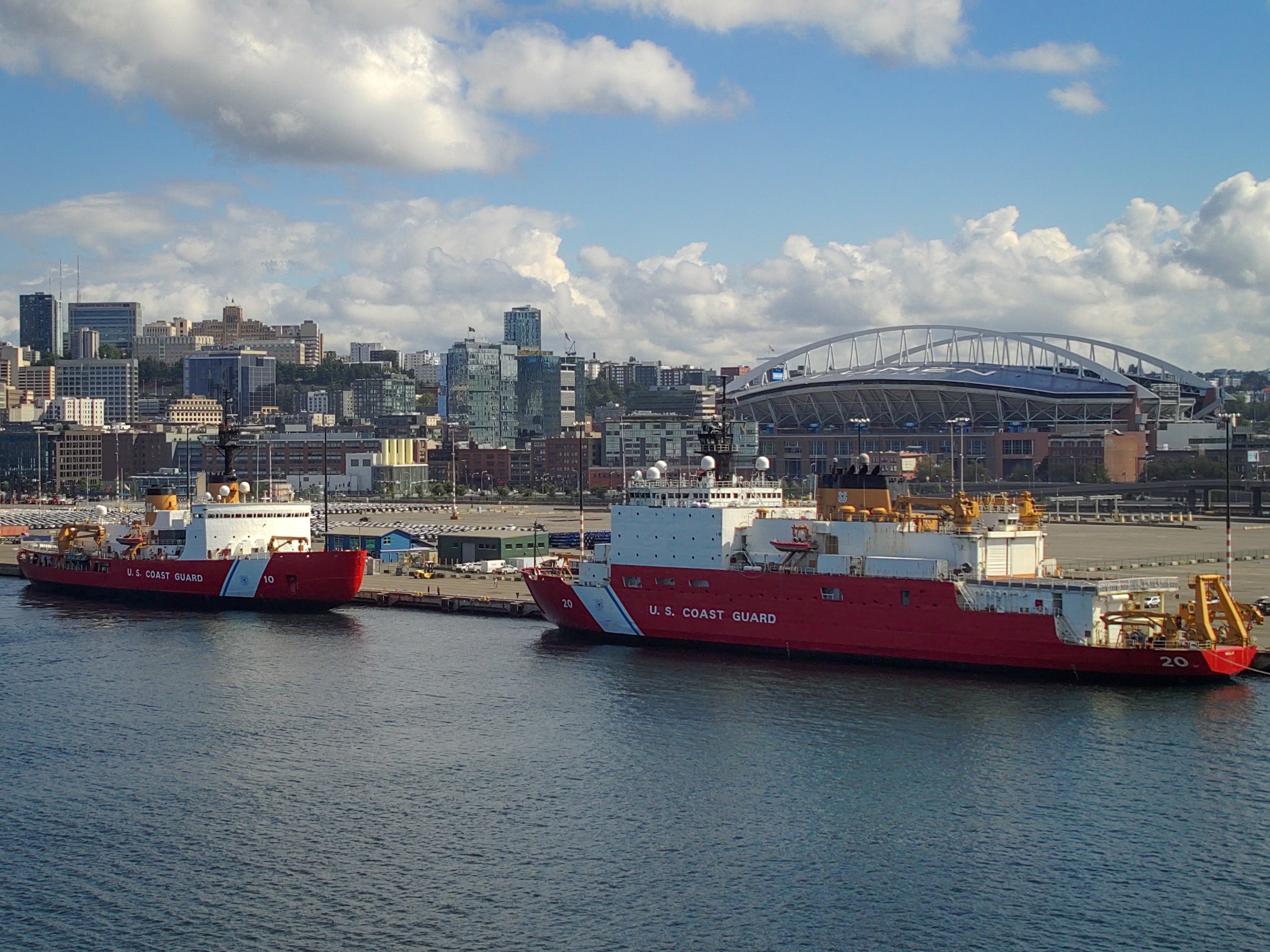

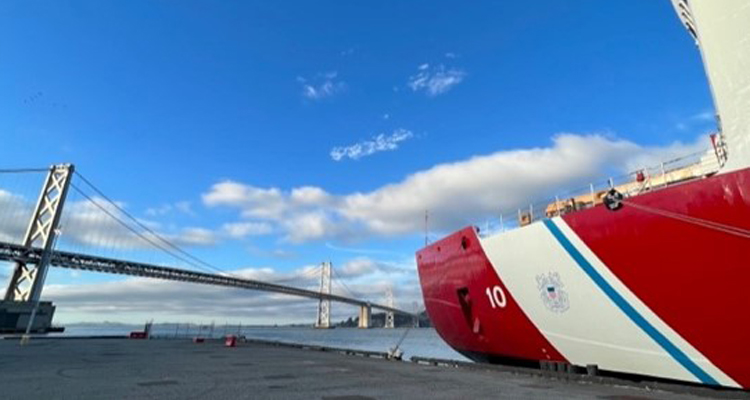
U.S. Coast Guard Cutter Polar Star (WAGB 10) (left) sits moored next to U.S. Coast Guard Cutter Healy (WAGB 20) at Coast Guard Base Seattle, Aug. 25, 2024. The Polar Star and Healy are routinely deployed to Arctic and Antarctic locations to support science research or help resupply remote stations. (U.S. Coast Guard photo by Lt. Chris Butters)

Aug. 28, 2024

Coast Guard heavy icebreaker returns to Seattle following Antarctic deployment, months-long Service Life Extension Project in California

SEATTLE — The U.S. Coast Guard Cutter Polar Star (WAGB 10) and crew returned to Seattle, Sunday, after 285 days away from the cutter’s home port.

Following a 138-day deployment to Antarctica supporting Operation Deep Freeze 2024, the Polar Star reported directly to Mare Island Dry Dock (MIDD) LLC. in Vallejo, California, to commence the fourth phase of a five-year Service Life Extension Project (SLEP).

The work completed at MIDD is part of the in-service vessel sustainment program with the goal of recapitalizing targeted systems, including propulsion, communication, and machinery control systems, as well as effecting significant maintenance to extend the cutter’s service life.

Polar Star’s SLEP work is completed in phases to coordinate operational commitments such as the cutter’s annual Antarctic deployment. Phase four began on April 1, 2024, targeting three systems:

  • Boiler support systems were recapitalized, including the electrical control station that operates them.
  • The heating, ventilation and air conditioning (HVAC) system was refurbished through the overhaul of ventilation trunks, fans and heaters that supply the cutter’s berthing areas.
  • The flooding alarm system was redesigned, providing the ability to monitor machinery spaces for flooding from bow to stern.

Additional work not typically completed every dry dock included removing and installing the starboard propulsion shaft, servicing and inspecting both anchor windlasses, inspecting and repairing anchor chains and ground tackle, cleaning and inspecting all main propulsion motors and generators, installation of an isolation valve to prevent seawater intrusion into the sanitary system, and overhauling the fuel oil purifier.

Phase four of Polar Star’s SLEP took place over approximately 140 days and represented a total investment of $16.8 million. By replacing outdated and maintenance-intensive equipment, the Coast Guard will mitigate lost mission days caused by system failures and unplanned repairs. The contracted SLEP work items and recurring maintenance is taking place within a five-year, annually phased production schedule running from 2021 through 2025.

The Coast Guard is investing in a new fleet of polar security cutters (PSC) that will sustain the service’s capabilities to meet mission needs in both the Arctic and Antarctic regions. The SLEP allows Polar Star to continue providing access to the Polar regions until the PSCs are operational and assume the high latitude missions. Polar security cutters will enable the U.S. to maintain defense readiness in the Polar regions; enforce treaties and other laws needed to safeguard both industry and the environment; provide ports, waterways and coastal security; and provide logistical support – including vessel escort – to facilitate the movement of goods and personnel necessary to support scientific research, commerce, national security activities and maritime safety.

“Completing a dry dock availability is a positive milestone, and despite challenges due to being away from home port, our crew’s energy and resilience inspires me every day,” said Capt. Jeff Rasnake, Polar Star’s commanding officer. “The amount of time and effort put into Polar Star and its mission is truly remarkable. The dedication and teamwork displayed across all stakeholders exemplifies the Coast Guard’s flexibility and commitment to ensuring the continued success of Operation Deep Freeze as well as strengthened partnerships among nations invested in the Antarctic latitudes. I look forward to observing how this crew will continue to grow as a team and to discovering what we can accomplish together.”

Along with the rigorous maintenance schedule, Polar Star held a change of command ceremony on July 8, 2024, in Vallejo, where Rasnake relieved Capt. Keith Ropella as the cutter’s commanding officer. Rasnake served as the deputy director for financial management procurement services modernization and previously served as Polar Star’s executive officer. Ropella transferred to the office of cutter forces where he will oversee the management of the operational requirements for the cutter fleet and develop solutions for emerging challenges facing the afloat community.

Polar Star is the Coast Guard’s only active heavy polar icebreaker and is the United States’ only asset capable of providing year-round access to both polar regions.

Commissioned in 1976, the cutter is 399 feet, weighing 13,500 tons with a 34-foot draft. Despite reaching nearly 50 years of age, Polar Star remains the world’s most powerful non-nuclear icebreaker with the ability to produce up to 75,000 horsepower. Polar Star’s SLEP is important to the survival of the Antarctic mission and crucial to the well-being and success of Polar Star and crew during these long missions.


Coast Guard completes fourth phase of service life extension work on Polar Star

Coast Guard Cutter Polar Star completed the fourth phase of its five-year Service Life Extension Project (SLEP) at the Mare Island Dry Dock LLC in Vallejo, California. The cutter departed the San Francisco Bay Area on August 22, for its homeport in Seattle.

The SLEP, a key initiative within the Coast Guard’s In-Service Vessel Sustainment (ISVS) Program, aims to extend the service life of the Polar Star by modernizing targeted systems, including propulsion, communication, and machinery control systems. Concurrent with the SLEP work, crews conducted significant maintenance efforts to ensure the cutter remains capable of operating within some of the most extreme environmental conditions on earth.

SLEP work on the Polar Star is conducted in phases to align with the cutter’s operational commitments, such as the cutter’s annual Antarctic deployment. Phase four began on April 1, 2024, focusing on the following systems:

  • Heating, ventilation and air conditioning systems were refurbished with ventilation trunks, fans and heaters to improve air circulation and maintain comfortable living environment for the ship’s crew during extended deployments.
  • Boiler support systems were recapitalized, including the electrical control station that operates them to generate reliable heating and steam supply to the water maker.
  • The flooding alarm system was redesigned to enable the crew’s ability to monitor the ship’s machinery spaces for flooding from bow to stern.

Additional work completed during this phase, beyond routine dry dock maintenance, was critical to ensuring the Polar Star’s operational readiness. This included significant overhauls and inspections of key propulsion and anchoring systems that are essential for the cutter’s operational performance.

Kenneth King, Program Manager for the ISVS Program, commented on the milestone, saying, “I am tremendously proud of the joint In-Service Vessel Sustainment Program, the Long Range Enforcer Product Line team and their significant efforts in completing Phase 4. Our dedicated professionals continue to exemplify our service’s core values to ensure Polar Star meets its multifaced missions in the polar regions until the arrival of the Polar Security Cutter Fleet.”

For more information:In-Service Vessel Sustainment Program page and Polar Security Cutter Program page.

“Marine News’ 2024 US Shipbuilding Report” –Marine Link

Future USCGC Argus at launch Eastern Shipyard. Presumably the furture USCGC Chase in the background. 

Marine Link has a report that gives us a look at how shipbuilders look at their industry and their relationship with Government.

This includes comments from both Ben Bordelon, president and CEO of Bollinger Shipyards that is building the Fast Response Cutters and the new Polar Security Cutters, and Joey D’Isernia, the chairman and CEO of Eastern Shipbuilding Group that is building the first four Offshore Patrol Cutters.

There is also a good deal of discussion about new technology being applied to tugs that the Coast Guard might want to consider if we choose to replace the 65 foot and 140 foot icebreaking tugs.

This banner hangs over a passageway in one of the shops at Bollinger’s Lockport shipyard.

Is Cutter Maintenance Falling Behind?

Coast Guard Cutter Waesche prepares to refloat from drydock in Seattle, Wash., May 22, 2018. The Waesche is a 418-foot Legend-class National Security Cutter homeported in Alameda, California. US Coast Guard photo.

Have recently seen some indication that the Coast Guard is not keeping up with ship maintenance. Specifically, a statement that Surface Forces Logistics Center (SFLC) had a $250m shortfall last year. $350m this year, and that availability’s have been canceled and deferred.

Am asking those among the readership who have firsthand knowledge of this for comment.

Is it true, and if so, is this because of

  • unexpected problems, e.g. unplanned maintenance?
  • new ships are more maintenance intensive?
  • old ships are getting harder to maintain?
  • we have more hulls now than before?
  • shipyard costs are higher than expected?

In other words, what’s going on?

“…acquisition of this shipyard will ensure the successful delivery of the Waterways Commerce Cutter (WCC) Program” –Birdon America


Below is a Birdon America press release. More money invested in American shipyards is always good news.

Thanks to Lee for bringing this to my attention.


Birdon Strengthens Portfolio with Acquisition of Metal Shark Boats Shipyard
5 February 2024

On 31 January 2023, Birdon America Inc. acquired Metal Shark Boats’ 32-acre shipyard in Bayou La Batre, Alabama. This acquisition brings a fully developed shipyard into Birdon’s growing portfolio of facilities throughout the US and will allow us to provide a further range of shipbuilding and repair services.

The acquisition of this shipyard will ensure the successful delivery of the Waterways Commerce Cutter (WCC) Program, a vital component of Birdon’s $1.187 billion contract to design and build 27 new vessels for the U.S. Coast Guard.

Birdon Group CEO, Jamie Bruce said, “The investment in this facility will not only ensure we deliver on our promise to the US Coast Guard, but it will also provide an opportunity for our subcontract partners in southern Alabama to build and install all components of these vessels in one location.”

“I am extremely grateful to Metal Shark CEO Chris Allard and his team for collaborating diligently with us, in a short period, to complete this deal,” he said.

As part of the acquisition, Metal Shark’s existing workforce will transfer to Birdon and will continue to execute the current order book of repair work. In the near term, Birdon plans to make significant capital outlays in the shipyard’s infrastructure as a further investment in the future. This will foster job creation, accelerate technological advancement, and provide positive growth to the region’s economy. A direct result will be the creation of 300 new jobs in the area over the next two years.

This is a fully developed shipyard fronting a dredged deepwater inlet. It includes five steel buildings for fully self-contained fabrication and construction work, with over 1,700′ of waterfront, a 660-ton Travelift, multiple cranes, and all required equipment for the construction of steel and aluminum vessels up to 300’ in length and 1,500 tons launch weight. The shipyard is situated just minutes from the Intracoastal Waterway with direct access to the Gulf of Mexico.

“AUSTAL USA EXPANDS MANUFACTURING CAPACITY WITH DESIGN FOR NEW FACILITY AND SHIPLIFT” –News Release

Austal’s planned new assembly building and ship lift. Ships featured in the illustration, Constellation class FFG, 496 ft (151.18 m) loa, and an Offshore Patrol Cutter, 360 ft (110 m), provide scale.

Below is a Austal USA news release.

June 2022 Austal was awarded a contract with options for up to eleven Offshore Patrol Cutters (OPCs #5 to #15). OPC #5 was in the FY2023 budget. It appears OPC #6 will be in the FY2024 budget. I expect we may see OPC #5 delivered in 2027, #6 in 2028, #7 in 2029 and both #8 and #9 in FY2030.

Eastern launched the future USCGC Argus, OPC #1, in Oct. 2023. Even so, it is not expected to be commissioned until 2025. Eastern has said they will deliver OPC#4 in 2026. I have a hard time being that optimistic. It might be more reasonable to expect delivery of one per year, #2 in 2025, #3 in 2026, and #4 in 2027.

If Eastern turns out a good product at a competitive price, a renegotiation of their contract options for five more cutters included in the original contract could accelerate procurement of these long-delayed ships, and reduce the resource shortfall that now seems inevitable.


FEBRUARY 6, 2024

MOBILE, Ala. – Austal USA announced the start of design for a new manufacturing facility signifying a major expansion of the company’s Mobile, Ala. shipyard capability.  The infrastructure expansion, which will be to the south of Austal USA’s current waterfront facility, will include a new assembly building, waterfront improvements, and a new shiplift system.  Start of construction on the project is planned for summer 2024.

The construction of this new building and waterfront support area, which includes a Pearlson-designed shiplift, continues the expansion Austal USA began in March 2021 with the groundbreaking of the steel panel line. In addition to the manufacturing capacity of the new buildings, the shiplift will provide a safe and reliable system to launch ships as they are completed in the assembly buildings. The system will also enable retrieving ships and bringing them back on the land-side facility.

“With the steel panel line in full production our expansion focus has shifted to the erection and launch facilities required to support our growing backlog,” commented Austal USA acting President Michelle Kruger.  “This new facility is continuing evidence of the close relationship we have with our local community including our community leaders; local, state and federal political leaders; and, regional organizations such as the Mobile Area Chamber of Commerce.”

Austal USA has partnered with Pearlson & Pearlson Inc, program manager and owner’s representative; Kiewit Infrastructure South Co., lead for design and construction; and, Pearlson Shiplift Corporation, designer and builder of the shiplift system, to execute the project.  The new assembly building will consist of three bays and enable erection of recently awarded steel ship contracts as well as provide the flexibility to manufacture modules for submarine and other surface ship programs.  The assembly building will be approximately 400 feet long by 480 feet wide providing over 192,000 square feet of covered manufacturing space occupying four and a half acres.

The Pearlson-designed shiplift system will feature an articulated lifting platform approximately 450 feet long by 125 feet wide, capable of lifting and launching vessels in excess of 18,000 long tons. This capacity will facilitate the launch and docking of the U.S. Navy Constellation-class Frigates, TAGOS-25 class Ocean Surveillance Ships, Independence-variant Littoral Combat Ships, and the U.S. Coast Guard Heritage-class Offshore Patrol Cutters.

When complete Austal USA’ s Mobile, Ala. facility will include a 117,000 square foot steel panel line, two module manufacturing facilities totaling over one million square feet of covered manufacturing space optimized for serial production, and seven assembly bays providing over 400,000 square feet of indoor erection space.  In all, the Mobile facility covers 180 acres and, when this project is complete, over 1.5 million square feet of indoor manufacturing space.

“Coast Guard completes third phase of Polar Star service life extension program” –CG-9

2020, As with previous Dry Docks, the three pitch propellers were removed, overhauled, and reinstalled. Photo: Official USCG Polar Star Facebook

Below is a news release from the Acquisitions Directorate (CG-9). Polar Star spent 19 weeks, almost four and a half months away from homeport in the shipyard. They did pretty much the same thing for the past two years and the plan is to continue to do it for two more years. The Service Life Extension Program (SLEP) is necessary because the Icebreaker (Polar Security Cutter) program has been so long delayed in both initiation and execution.

Coast Guard Cutter Polar Star undocking in Vallejo, California, after successfully completing phase three of its service life extension program. U.S. Coast Guard photo by LT Louis Simione.


The Coast Guard has completed the third of five planned phases of Coast Guard Cutter Polar Star’s service life extension program (SLEP) as part of the In-Service Vessel Sustainment Program.

Accomplished in Vallejo, California by Mare Island Dry Dock, the work encompassed a 132-day, $15.6M dry-docking evaluation along with service life extension machinery efforts. Annual maintenance accompanied SLEP funded improvements to shipboard equipment and numerous vital system upgrades for fire detection, communications and monitoring water quality.

Polar Star will return to Seattle to commence preparations for the 2024 Operation Deep Freeze deployment. The next SLEP phase is scheduled to begin in April 2024.

The Polar Star SLEP addressed targeted systems such as propulsion, communication and machinery control systems for recapitalization. Major maintenance extends the service life of Polar Star beyond that of its original design. By replacing obsolete, unsupportable or maintenance-intensive equipment, the Coast Guard is mitigating the risk of lost operational days due to unplanned maintenance or system failures. The contracted SLEP work items and recurring maintenance are taking place within a five-year, annually phased production schedule running from 2021 through 2025. Each phase is coordinated so that operational commitments will still be met.

Polar Star is the Coast Guard’s only active heavy polar icebreaker. The Coast Guard is investing in a new fleet of polar security cutters that will sustain the service’s capabilities to meet mission needs in both the Arctic and Antarctic regions.

For more information: In-Service Vessel Sustainment Program page and Polar Security Cutter Program page.

“Pakistan’s New OPV – PNS Yarmook – Is At NAVDEX 2023” –Naval News

Sister ship: GULF OF OMAN (Nov. 11, 2021) Pakistani corvette PNS Tabuk sails alongside amphibious dock landing ship USS Pearl Harbor (LSD 52) during a passing exercise in the Gulf of Oman, Nov. 11, 2021. (U.S. Navy photo by Mass Communication Specialist 3rd Class Sang Kim)

Naval News reports on a tour of a recently completed Damen designed Offshore Patrol Vessel. The vessel itself, PNS Yarmook (271), is a very typical modern OPV. What is not typical is the way it is being armed.

A medium caliber gun (57-76mm) and a pair of auto-cannon (20-30mm) seems to be the norm. Instead, it is to be a 30 mm Aselsan SMASH remote weapon station, two Aselsan STAMP remote weapon systems, (presumably with .50 cal. machine guns) and a Phalanx Block 1B close-in weapon system, and eight Harbah sub-sonic, anti-ship cruise missiles (ASCM) with land attack capability. This missile, at 1350 kg, is about twice as large as Harpoon (1523 lbs / 691 kg) and 50 kg or 110 pounds heavier than the Tomahawk. It is more than three times larger than Naval Strike Missile.

Pakistan is building another, slightly larger class of OPVs. Presumably, they will also be armed with ASCM. These, like the Yarmook class, are being built by the Damen yard in Galati, Romania.

“Bollinger to acquire Halter Marine and STEHMO” –Marine Log/Polar Icebreaker Progam in Trouble?

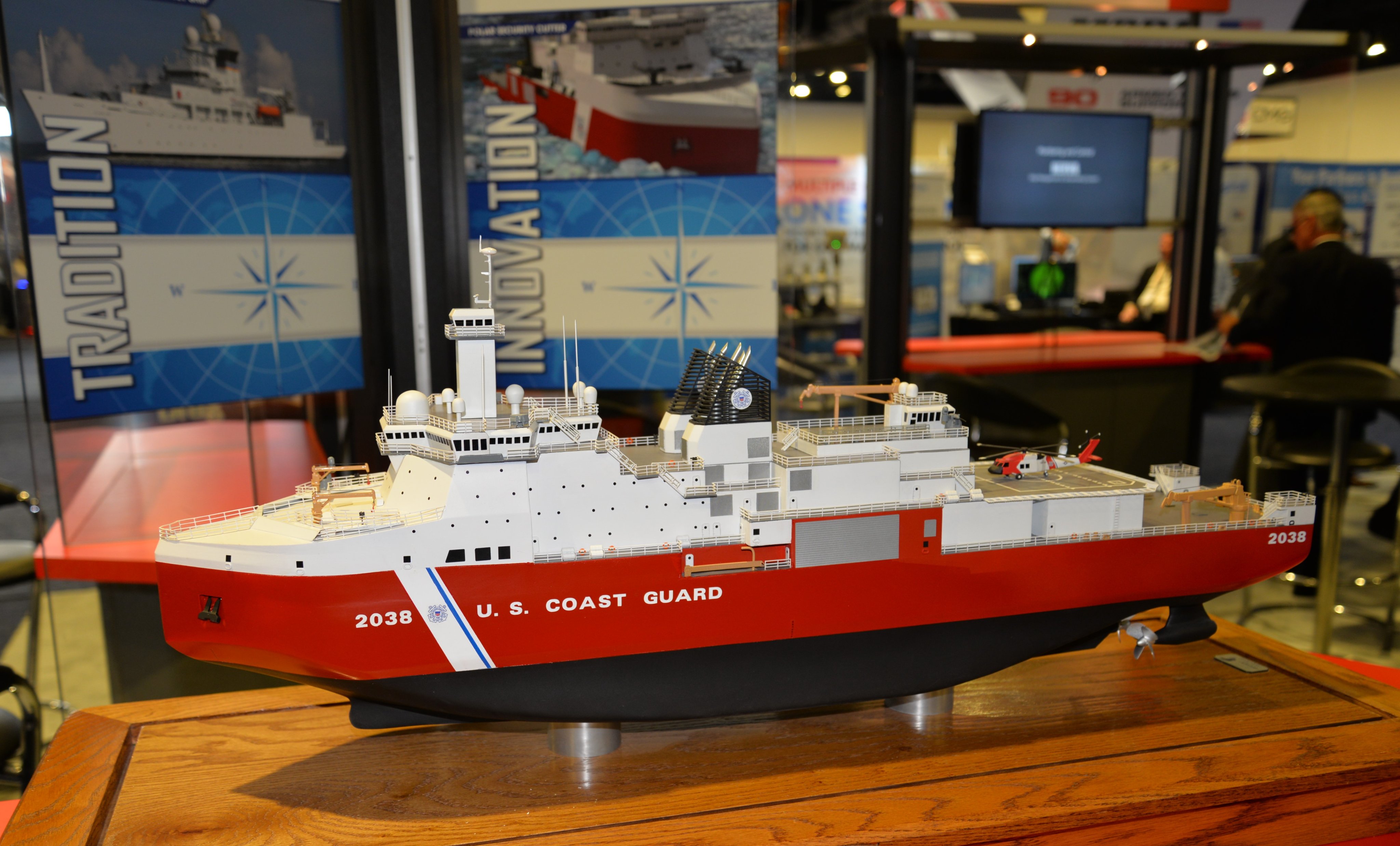
Photo of a model of Halter Marine’s Polar Security Cutter seen at Navy League’s Sea-Air-Space Exhibition have surfaced. Photo credit Chris Cavas.

There are two closely related posts here that are significant for the Polar Security Cutter (heavy icebreaker) program. The first is an announcement that Bollinger is acqiring VT Halter and ST Engineering Halter Marine and Offshore, Inc from Singapore’s STE. The second article is from Forbes by industry observer Craig Hooper, published shortly before the announcement. It reports that, it appears VT Halter underbid the PSC contract and was headed for a disasterous loss. The schedule of delivery has slipped more than once. VT Halter has still not started cutting steel for the ship more than three years after the contract award.

I can’t say this is exactly good news, but solutions begin by recognizing you have a problem. We have had a series of warning signs and at least now there seems to be a change in management to a team with a proven track record.

“Polar Star arrives at homeport after completion of dock work and sea trials during second phase of service life extension project” –CG-9

Photo: Official USCG Polar Star Facebook

The Acquisitons Directorate (CG-9) reports that USCGC Polar Star has returned to Seattle, after at least 146 days away from homeport (April 8 to Sept. 1) following the second phase of a five phase Service Life Extension program at Mare Island Dry Dock, Vallejo, California.

Now that is a long time. I know steps have been taken to mitigate the hardship this time away from homeport has caused, but knowing the ship will be spending months every year in Vallejo, wouldn’t it be worthwhile to change the ships homeport? It might also have allowed the ship to make an Arctic Summer cruise.

After all that is going into remaking this ship, I wonder if perhaps we will keep it around, even after the second Polar Security Cutter is delivered?


Polar Star arrives at homeport after completion of dock work and sea trials during second phase of service life extension project

Sept. 1, 2022 —

Polar Star

Coast Guard Cutter Polar Star sits moored in San Francisco following completion of dock trials on Aug. 12, 2022, for the second phase of its service life extension project completed by Mare Island Dry Dock. U.S Coast Guard photo.


Coast Guard Cutter Polar Star has completed sea trials for the second phase of its service life extension project (SLEP), as part of the In-Service Vessel Sustainment Program, and returned to its homeport of Seattle. The remaining contracted production work will be completed by Sept. 30 at the homeport, as well as final testing of the newly installed machinery control systems.

Polar Star commenced the second phase of SLEP work items and recurring maintenance on April 8. Service life extension program work is taking place over a five-year, annually phased production schedule that runs through 2025, and each phase is coordinated to support operational commitments, such as the annual Operation Deep Freeze deployment to Antarctica, and to take advantage of planned maintenance availabilities. During the second phase, all of the galley equipment was recapitalized, reflecting the modern upgrades of commissary equipment available on extended voyage seagoing ships.

In addition, Naval Surface Warfare Center Philadelphia Division and Coast Guard Yard installed two machinery control systems. The Coast Guard Machinery Control System (CGMCS) recapitalizes the Main Propulsion Control and Monitoring System that was installed during Polar Star’s reactivation in 2013. The CGMCS increases system reliability and operator familiarity, as this newly installed propulsion control system is standard across much of the service’s surface fleet. The new Propulsion Power Distribution System replaced the analog diesel electric propulsion suite that was installed when Polar Star entered service in 1976. The new system features improved reliability as compared to the legacy system and reduces maintenance requirements that previously took approximately 45 days and 1,600 maintenance-hours to complete.

The Polar Star crew will conduct integrated operational testing of both new systems prior to departing for Operation Deep Freeze in 2023. The cutter regularly completes Operation Deep Freeze deployments to resupply McMurdo Station in Antarctica.

Polar Star is the Coast Guard’s only active heavy icebreaker. The 399-foot cutter supports nine of the 11 Coast Guard statutory missions. The Coast Guard is investing in a new fleet of polar security cutters (PSC) that will sustain the service’s capabilities to meet mission needs in both the Arctic and Antarctic regions. The first PSC is on contract for delivery in 2025.

For more information: In-Service Vessel Sustainment Program page and Polar Security Cutter Program page

Keyword