“Iran’s ‘Zulfikar’ Submersible Torpedo Boat” –Covert Shore

Covert Shores reports on Iran’s version of an unusual asymmetric threat that originated in North Korea. Used by the Islamic Revolutionary Guard Corps, PATFORSWA may encounter these.

“I originally interpreted these to be Special Operations assets intended as a form of swimmer delivery vehicle. This would be consistent with related types in North Korean and Vietnamese service. In that role the torpedoes would be for self-defense. However, I now view them more as submersible torpedo boats intended to sink ships with torpedoes.”

The torpedoes are 12.75 inch (324mm) light weight anti-surface homing torpedoes. (243mm noted in the diagram above is apparently a typo.) We can’t take too much comfort in the fact that these are not heavy weight torpedoes. Heavy weight torpedoes frequently break ships in half, but because water is not compressible, the 100 pound warhead of a typical light weight torpedo still has about one half the impact of the 600 pound warhead of a typical heavy weight torpedo. These smaller torpedoes can seriously hurt even a large ship, possibly including immobilizing it, and making it an easier target for follow on attacks. Used against a vessel the size of PATFORSWA’s Fast Response Cutters, they would be fatal. Assuming these are wake homers, it might be wise to learn the maneuvers used to defeat wake homing torpedoes.

It is unlikely these little submersibles can go very deep or that they have much mobility while submerged. Even so, much of the Persian Gulf is shallow, so there are certainly places where they could rest on the bottom, lying in wait.

Coast Guard Submarine?

Covert Shores reports the Rubin Design Bureau, which has designed most of Russia and the Soviet Union’s submarines, has proposed a submarine for the Russian Coast Guard.

“The BOSS (Border and Offshore Submersible Sentry) submarine is a concept which has been around for a few years. It is unlikely that Russia will ever build it, but it is all the same an interesting possibility.”

Apparently, the Russian Coast Guard did not ask for a submarine, but the design bureau thinks, even if they don’t want it, it might be exportable.

It’s small, about the size of a World War II vintage German Type VII U-boat, “…60 – 70 meters (197 – 230 feet) long depending on customer configuration, and displaces around 1,000 tons.” Being submersible it could submerge to wait out rough weather.

I do kind of like the way it’s equipped, boat for boarding, VTOL UAS for search, gun for firing warning shots, 10 km range small surface to surface missiles for engaging small fast highly maneuverable targets, and torpedoes capable of forcibly stopping any size vessel.

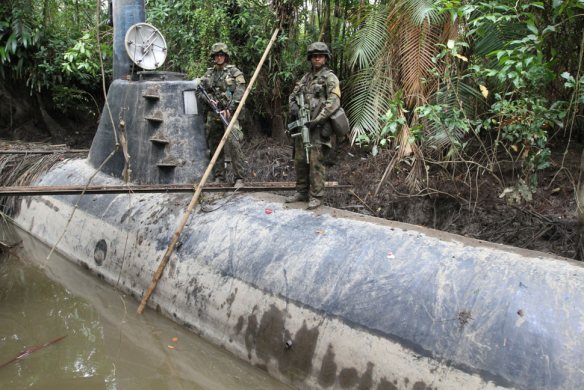
Narcosubmarines: Nexus of Terrorism and Drug Trafficking?–CIMSEC


There is decent post on CIMSEC looking at the possibility of terrorists using the vehicles developed by drug smugglers to carry out an attack. The author also does a pretty good job of explaining why smugglers might be unlikely to cooperate. There is also a worthwhile bibliography associated with the post that appears to have been an academic treatise.

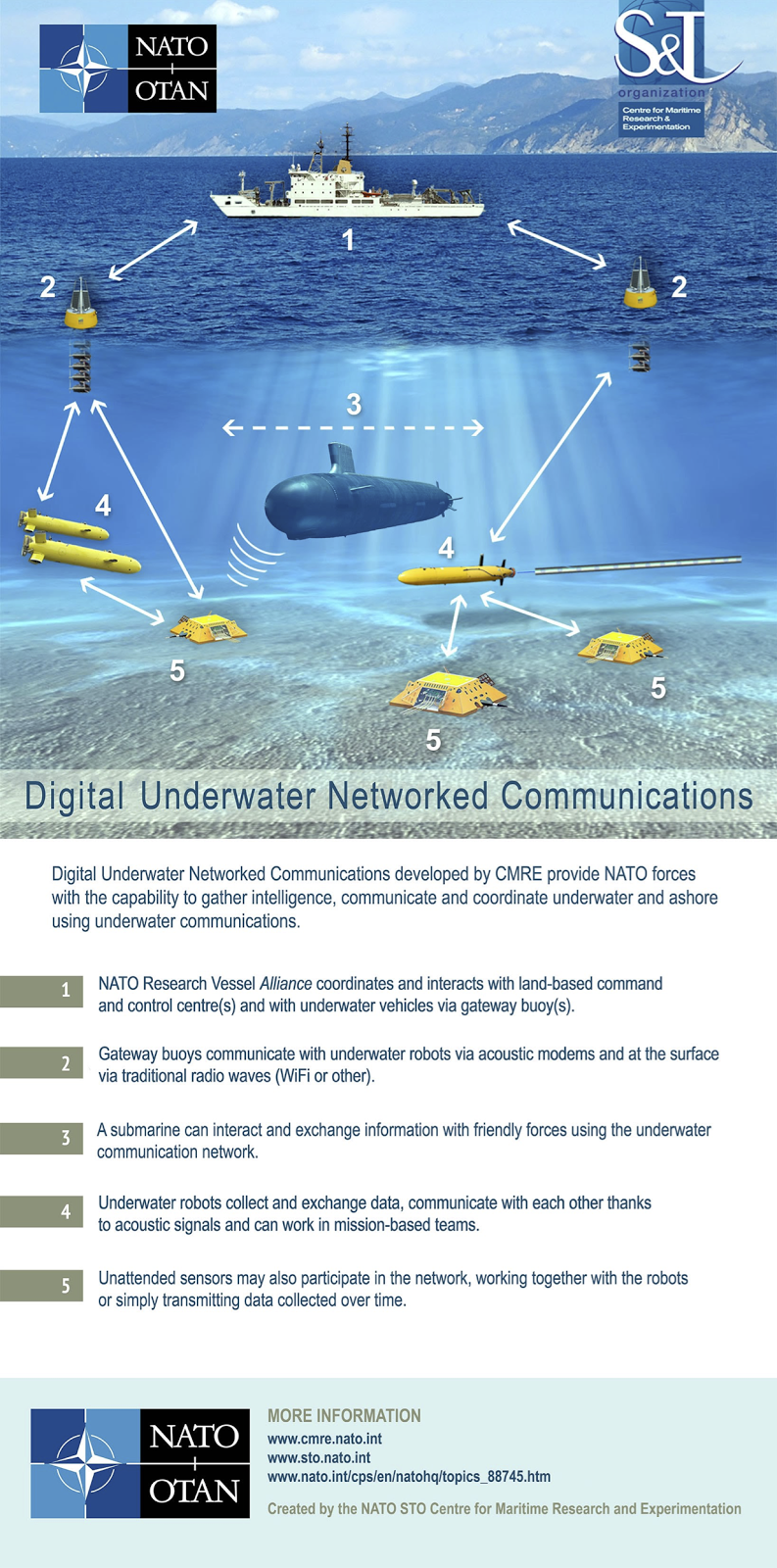
JANUS, the Standard Underwater Language

NATO has announced,

The NATO Science and Technology Organization’s Centre for Maritime Research and Experimentation has developed a standard for underwater acoustic communications called JANUS, which is recognised as a NATO standard by all NATO Allies since 24 March 2017. This marks the first time that a digital underwater communication protocol has been acknowledged at international level and opens the way to develop many exciting underwater communication applications.

I think this might become important to us. It is not just a military system.

Thanks to EagleSpeak for bringing this to my attention.