“First Coast Guard aerial vehicle pilot gets his wings” –MyCG

Lt. Cmdr. Ryan Major awarded U.S. Navy Aerial Pilot (AVP) insignia at the RAS Exposition
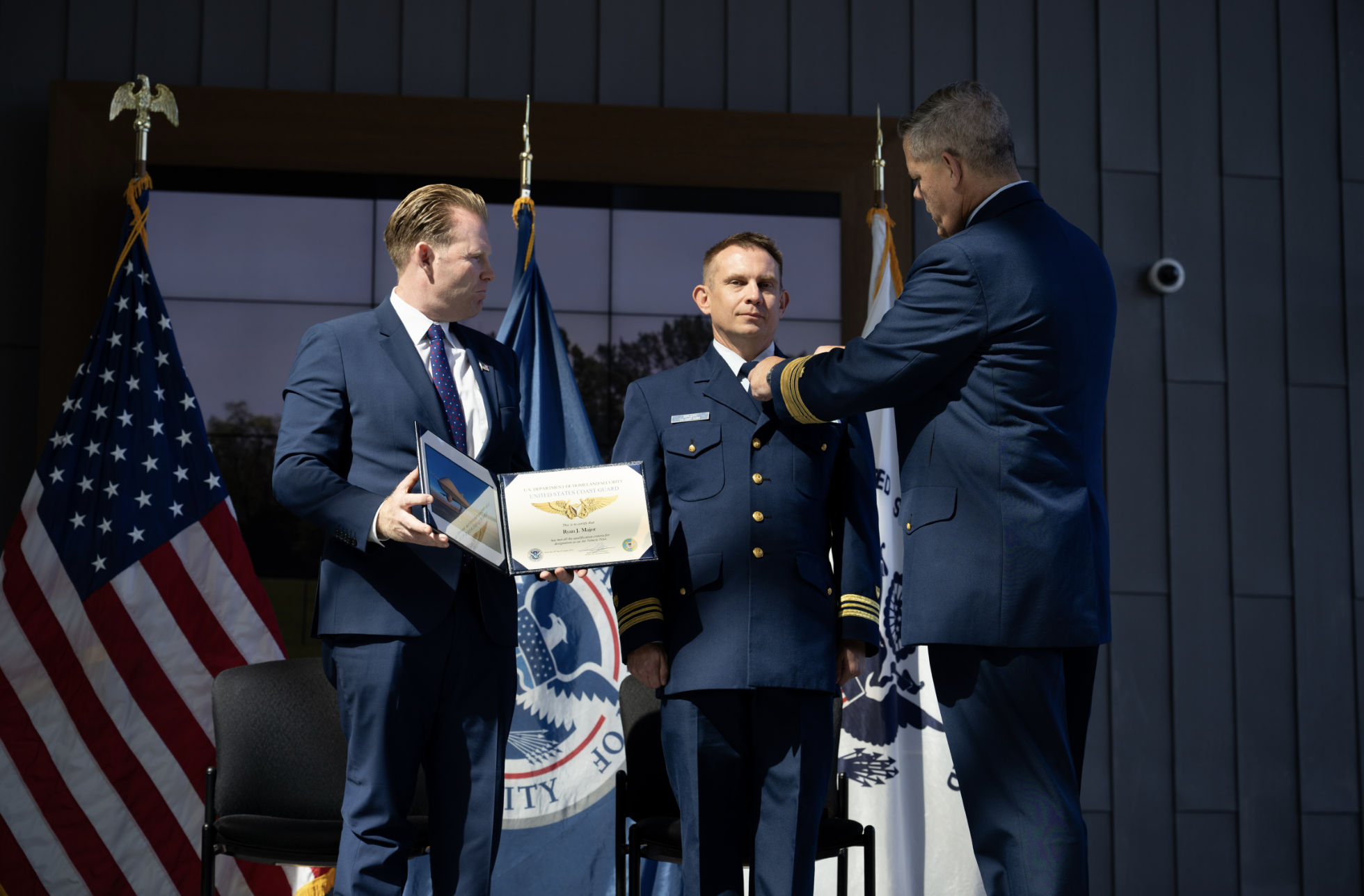
Vice Commandant Adm. Thomas Allan presents Lt. Cmdr. Ryan Major the U.S.Navy Aerial Pilot (AVP) insignia at the Robotics and Autonomous Systems (RAS) Exposition held at Coast Guard Headquarters in Washington, D.C. on August 26, 2025. Major is the first Coast Guard UAS pilot to receive this distinction who has not completed traditional military flight training.

Below is a MyCG story.

The decision to buy shore based Medium Altitude Long Endurance MQ-9 drones along with this appear to mark a major shift away from the Coast Guard’s past dependence on Customs and Border Protection and Contractor Owned/Contractor Operated UAS. (The relationship with Customs and Border Protection remains close.)

We may be seeing the birth of an entire new community. I have been hoping to see UAS be made more an integral part of the Coast Guard.


Sept. 24, 2025

First Coast Guard aerial vehicle pilot gets his wings

By Kathy Murray, Senior Writer, MyCG

Navy Aerial Vehicle Pilot (AVP) insignia

As a boy, Lt. Cmdr. Ryan Major was fascinated with flying. Not only had his great grandfather flown B-25s in WW II, two of his cousins became military pilots and his parents both worked for the airline industry. “I grew up around aviation and have always loved it,” he says.

So, Major was understandably thrilled last month when he became the first Coast Guard aerial vehicle pilot to earn his wings.

Major, an unmanned aircraft systems (UAS) aviator based in San Angelo, Texas, took the stage to receive this honor during the Robotic and Autonomous Systems (RAS) Exposition held at Coast Guard headquarters on August 26. As his parents watched from the audience, Vice Commandant, Adm. Tom Allan pinned the Navy Aerial Vehicle Pilot (AVP) insignia to his uniform.

“We are entering a new era of Coast Guard aviation where unmanned systems will play and increasingly vital role,” Allan said. “So we’ve opened up MQ-9 Flight Assignments to a broader range of qualified personnel.”

To Major, the recognition marked the culmination of an aviation career he’s been building for more than 20 years. Even prior to joining the Coast Guard in 2004, Major completed civilian flight training and became a certified flight instructor. Once in, he excelled as an aviation electronics technician and got a bachelor’s degree in aeronautical science. He served as a rotary wing sensor instructor, then later earned a commission and worked at the Coast Guard Research and Development Center (RDC) and managed projects at C5 ISC.

When the Coast Guard solicited for the new insignia, Major was working as an IT/Project Management Officer. But having accumulated more than 1,500 manned civilian flight hours over his career, he knew he had the required time in the air. “I jumped at it,” he said.

To qualify for the AVP, Major also had to complete the approved Customs and Border Protection Air and Marine Operations (CBP AMO) initial MQ-9 flight training course and local training syllabus. Historically, only Coast Guard aviators have been eligible for assignment to this JPO. But because of the unique differences between manned and unmanned aircraft, this requirement was recently adjusted to allow Coast Guard members who meet the CBP MQ-9 hiring requirements to also be eligible for assignment.

Coast Guard officials determined Major’s civilian training and certifications, together with his CBP MQ-9 training exceeded the typical requirements to wear the AVP insignia.  As a result, he is now designated as Coast Guard MQ-9 Aircraft Commander and assigned the AVI 13 officer subspecialty code.

“Being an MQ-9 pilot was my pathway to become a Coast Guard pilot,” says Major, noting he’s always enjoyed being part of a crew with a common mission. “I also like the interoperability aspect of working the CBP AMO.”

The AVP insignia is reminiscent of traditional aviator wings. It features an inverted delta displayed on the shield centered on two cross anchors and flanked by wings.

Establishing a new pilot insignia for UAS pilots who operate the MQ-9 paves the way for a new career path in the service and is part of a larger initiative to expand the use of robotics and autonomous capabilities across all Coast Guard missions. In July, a program executive office—the RAS PEO—was set up to accelerate the adoption of uncrewed systems (UxS) in the field as part of Force Design 2028 modernization efforts.

This rapidly evolving technology is expected to be the biggest enhancement to operations since the inception of aviation.  The RAS PEO will focus on testing and acquiring unmanned aircraft, surface, subsurface, and space systems and developing a future-ready workforce equipped to use them in the field.

The Coast Guard received $24.59 billion in the spending bill the President signed in July.  Some $266 million of that is earmarked to purchase as many as four MQ-9 drones to assist with migrant and drug interdictions.  These long-range drones, which can operate up to 24 hours collecting intelligence in a 60-to-80-mile radius, are significant force multipliers for the Service.
“Japan Coast Guard to acquire four additional unmanned aircraft” –Naval News

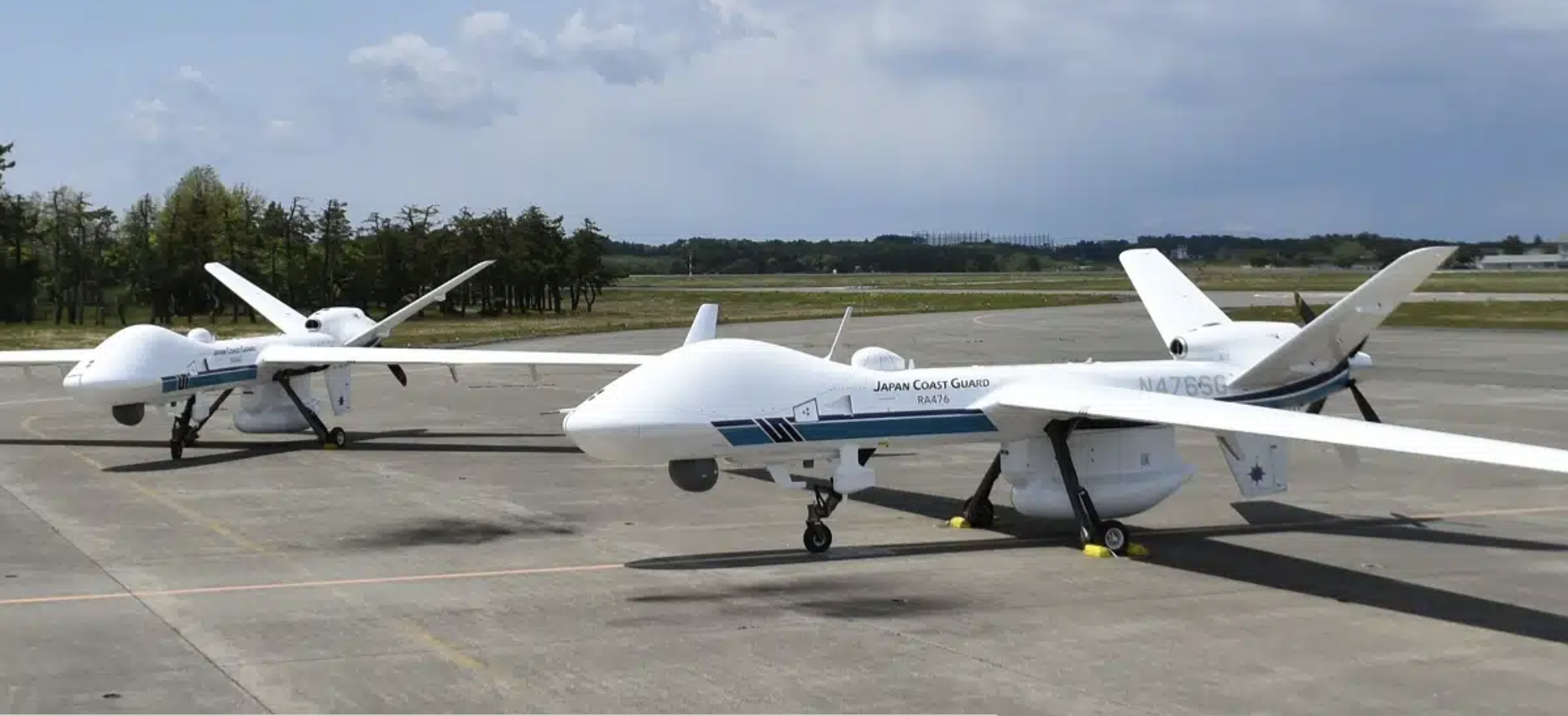
Two MQ-9B SeaGuardians of the Japan Coast Guard. JCG picture.

Naval News reports,

At the end of August 2025, the Japan Coast Guard (JCG) released its preliminary budget request for fiscal 2026. The request revealed plans to procure four additional unmanned aircraft for maritime surveillance of Japan’s surrounding waters.

The budget documents do not specify a model name, but based on past developments this is believed to refer to the MQ-9B SeaGuardian.

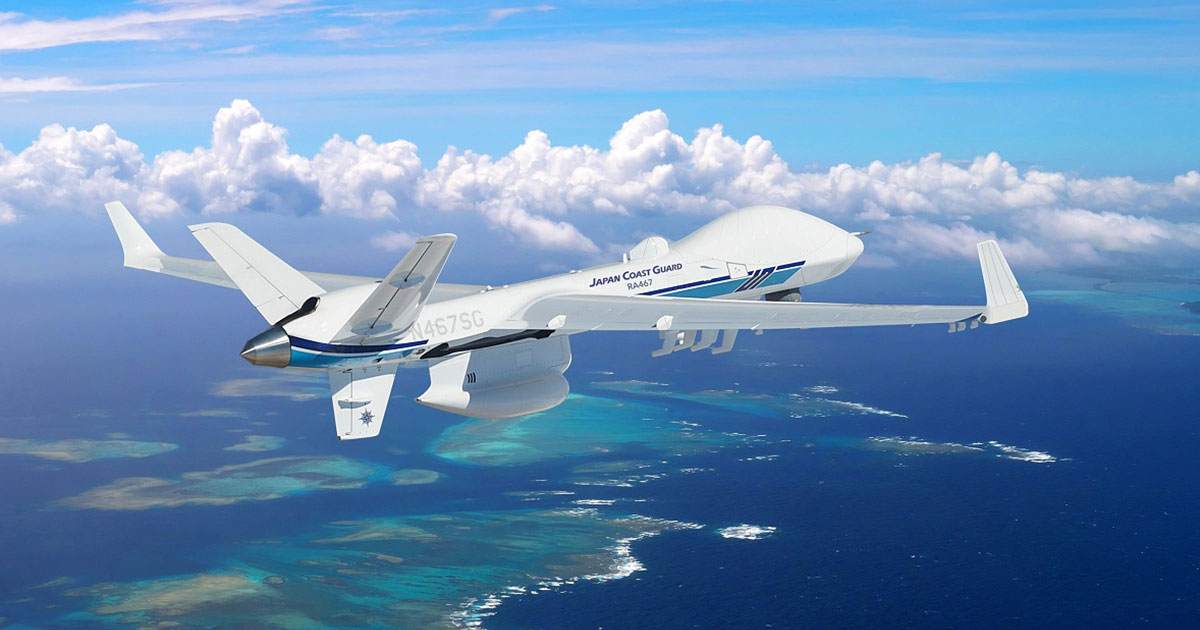
The Japan Coast Guard first looked at the SeaGuardian in 2020. They leased three in 2022. The three were subsequently purchased.

Two additional MQ-9Bs are scheduled to be deployed by March 2026. Including the aircraft requested in the current preliminary budget, the JCG will hold a total of nine MQ-9Bs by fiscal 2028. All of these airframes are planned to be acquisitions (purchases), not leases.

The US Exclusive Economic Zone is about 2.5 times as large as that of Japan, so we would need about 23 aircraft to have about the same coverage as the Japanese are planning.

Only a little over two weeks ago we got the word that the Coast Guard would be spending $266M to buy its own shore based Medium Altitude Long Endurance (MALE) Unmanned Air Systems (UAS).

At the time I asked why the Coast Guard would be buying the MQ-9A rather than the MQ-9B that is optimized for maritime operation and has been selected by several navies and coast guards. Still have not seen any rationale. Maybe it was just a misunderstanding.

The first USCG shore based UAS are likely to look for drug smugglers and migrants, but they would also be very useful in the broad reaches of the Pacific, far from any existing Coast Guard air station.

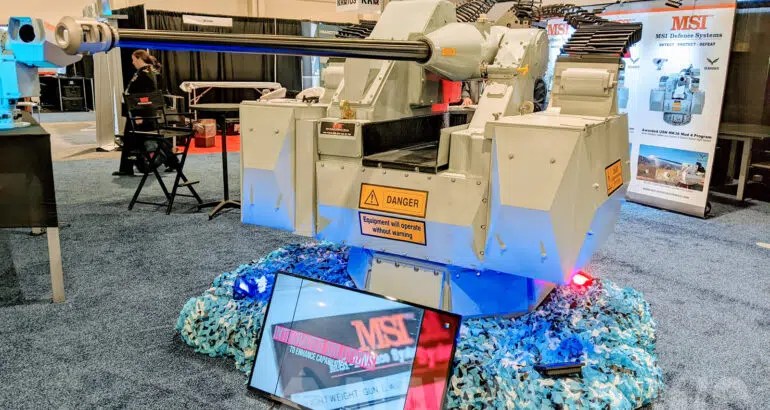
German Navy Adopting 30x173mm Air Burst Weapons / So Should the Coast Guard

The new Mark 38 Mod 4 30mm naval gun system on display on MSI Defence stand at Sea Air Space 2022. Photo: Naval News

Army Recognition’s Navy News reports,

“…on 11 June 2025 … a public tender released via the official German e-procurement platform marks the beginning of a strategic modernization effort in the German Navy’s close-range defense capabilities. In a context where drones and asymmetric threats are playing an increasingly prominent role in contemporary conflicts, the Bundeswehr is initiating a structural transformation of its naval weapons systems.

“At the core of this reform is the introduction of a new 30×173 mm caliber, intended to progressively replace the currently deployed 27 mm light naval guns. This development aims to improve effectiveness against light aerial targets, especially drones, but also surface and land-based threats, by using programmable airburst munitions. The doctrinal shift reflects operational requirements and signals a lasting change in the defensive posture of German naval vessels.”

The gun that is being replaced is in some respects a better weapon than the 25mm the Coast Guard currently uses. It fires a heavier projectile, over a greater distance and has a much higher rate of fire, but apparently they have decided that an airburst projectile is necessary to deal with the drone threat.

The Coast Guard should probably come to the same conclusion. It now appears that an attack by unmanned air or surface craft is the most likely form of terrorist attack. Air burst projectiles are the best available, reasonably priced, hard kill systems for both self-defense and close in force protection.

Unlike the German Navy, the 30x173mm round is already in service with the US Navy and is expected to arm the Polar Security Cutter.

The new large cutters are getting 57mm guns which should be effective, but the FRCs are the units most likely to encounter this threat. The 30 mm would also be more effective against larger threats. We have been told that it is possible to replace a few parts and upgrade existing 25mm mounts to 30mm mounts. If so, we should be doing this.

“Coast Guard offloads over $517.5 million in illicit drugs interdicted in Eastern Pacific Ocean” –D7

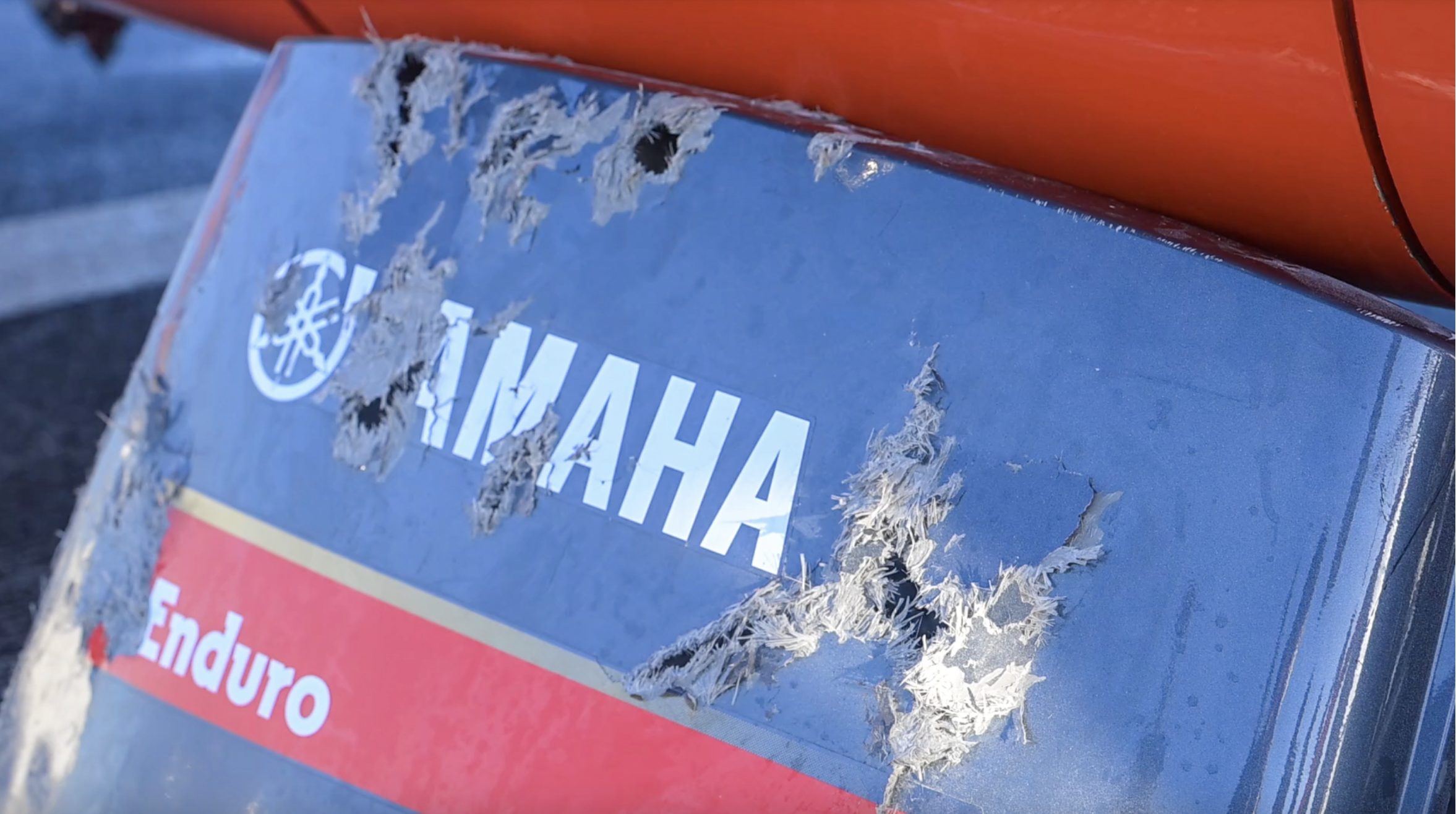
An engine cowling rests against an MH-65 dolphin helicopter at Port Everglades, on March 20, 2025. After attempts to stop a non-complaint vessel failed, the Coast Guard’s Helicopter Interdiction Tactical Squadron was authorized to use force, including disabling fire. (Coast Guard photo by Petty Officer 3rd Class Nicholas Strasburg)

Below is a news release from District Seven. I don’t pass along every ship’s off load of  drugs because they have gotten to be routine, but this patrol was anything but routine.

  • For one ship to interdict 12 drug smugglers in a single patrol is unusual.
  • This interdiction of four go-fast vessels operating in company moving almost as if in formation was unusual.

“On Feb. 19, Stone’s embarked UAS crew detected multiple suspicious vessels approximately 110 miles south of the Galapagos Islands, Ecuador. Stone’s embarked HITRON aircrew employed airborne use of force tactics to compel the non-compliant vessels to stop, and their boarding teams interdicted four go-fast vessels, apprehending eight suspected smugglers and seizing approximately 10,885 pounds of cocaine.”

  • Success of the UAS was notable.
  • The location of that interdiction is unusual in that it is probably at least 500 nautical miles west of Ecuador and well South of Colombia, the country we normally think of as the source for cocaine.

(Could the four vessels intercepted Feb. 19 have been on the way to meet a larger vessel offshore? –either to transfer the load or to refuel?)

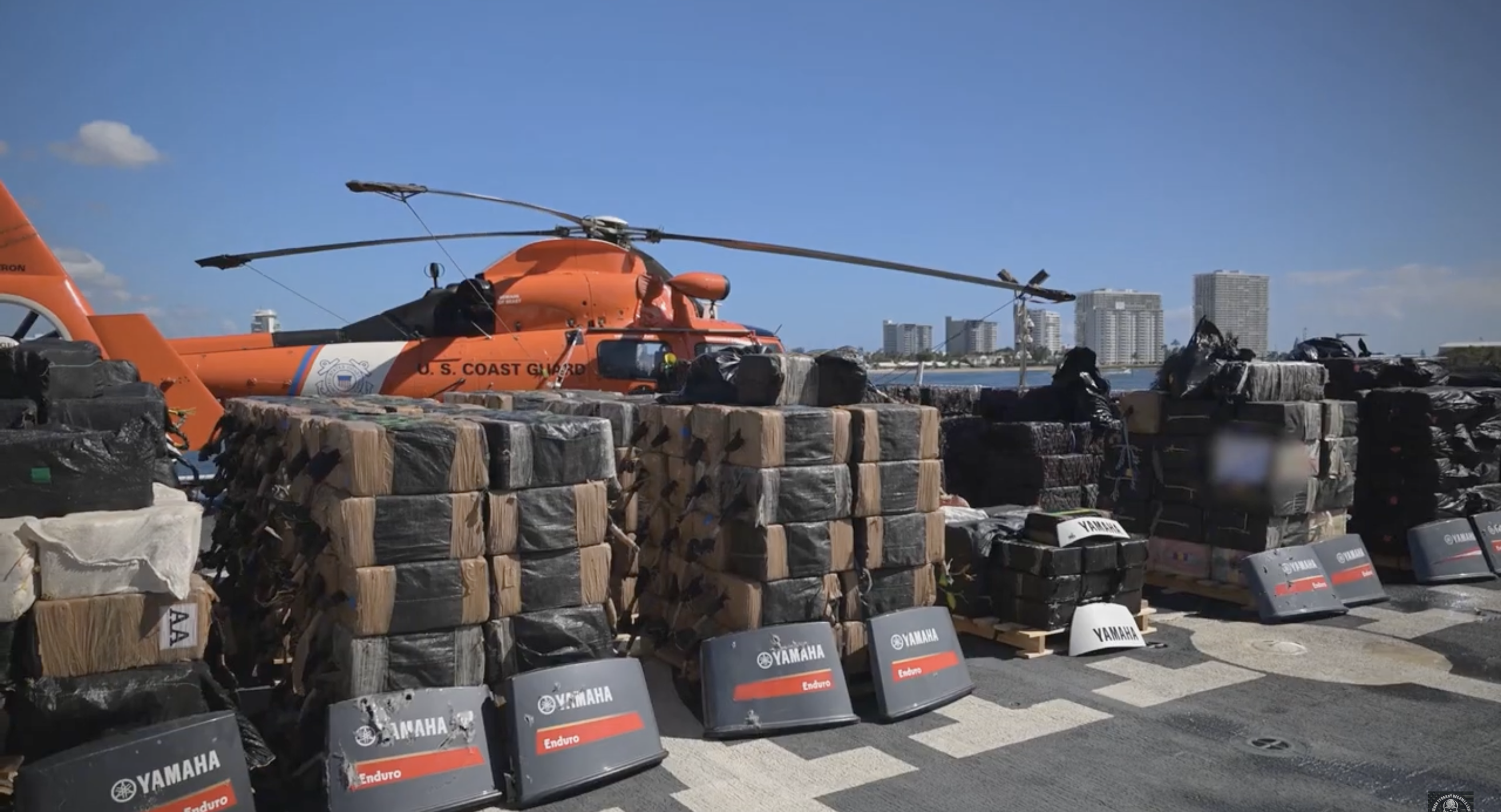
The photo above, at the head of this post, was the first thing that really got my attention, but apparently, that cowling was not unique.

USCGC Stone (WMSL-758) delivers $517.5 million in illicit drugs interdicted in Eastern Pacific Ocean. Along side are displayed cowlings of outboard motor disabled by the Airborne Use of Force crew from the Coast Guard’s Helicopter Interdiction Tactical Squadron (HITRON) based in Jacksonville, FL.


March 20, 2025

Coast Guard offloads over $517.5 million in illicit drugs interdicted in Eastern Pacific Ocean

MIAMI – The crew of U.S. Coast Guard Cutter Stone offloaded approximately 45,600 pounds of illicit narcotics worth more than $517.5 million at Port Everglades, Thursday.

The seized contraband was the result of 14 interdictions in international waters of the Eastern Pacific Ocean, and 35 suspected smugglers were transferred ashore to face federal prosecution in U.S. courts.

“You heard it said before that the Coast Guard’s national security cutters are game changers in the counter-drug mission, but they still require a crew of men and women willing to serve on or over the sea, and place themselves in harm’s way,” said Capt. Jonathan Carter, commanding officer of Stone. “I’m incredibly proud of our crew’s performance and their efforts to combat narco-terrorism this deployment. In one exceptional case, the crew interdicted four go-fast vessels in 15 minutes, seizing nearly 11,000 pounds of cocaine that will never be mixed with deadly fentanyl to threaten American lives here at home.”

On Dec. 21, Stone’s embarked aircrew from Coast Guard Helicopter Interdiction Tactical Squadron detected a suspicious vessel in international waters approximately 321 miles west of Ecuador. Stone’s boarding team interdicted the go-fast vessel, apprehended three suspected smugglers and seized over 1,630 pounds of cocaine.

On Dec. 22, a maritime patrol Dash-8 aircrew detected a suspicious vessel in international waters approximately 180 miles southeast of the Galapagos Islands, Ecuador. Stone’s embarked HITRON aircrew and boarding team interdicted the low-profile go-fast vessel, apprehended three suspected smugglers and seized approximately 12,220 pounds of cocaine.

On Jan. 9, a maritime patrol Dash-8 aircrew detected a suspicious vessel in international waters approximately 148 miles west of Salinas, Ecuador. Stone’s embarked HITRON aircrew and boarding team interdicted the go-fast vessel, apprehended three suspected smugglers and seized approximately 2,370 pounds of cocaine.

On Jan. 28, Stone’s embarked unmanned aircraft system (drone) crew detected a suspicious vessel in international waters approximately 459 miles south of Manzanillo, Mexico. Stone’s boarding team interdicted the vessel, apprehended five suspected smugglers and seized approximately 3,885 pounds of cocaine.

On Jan. 30, Stone’s embarked UAS crew detected a suspicious vessel in international waters approximately 715 miles off Mexico. Stone’s boarding team interdicted the vessel, apprehended two suspected smugglers and seized approximately 3,800 pounds of cocaine.

On Jan. 31, Stone’s embarked UAS crew detected a suspicious vessel in international waters approximately 630 miles off Mexico. Stone’s embarked HITRON aircrew employed airborne use of force tactics to compel the non-compliant vessel to stop, and the boarding team apprehended three suspected smugglers and seized more than 2,565 pounds of cocaine.

On Feb. 12, Stone’s embarked UAS crew detected a suspicious vessel in international waters approximately 655 miles south of Mexico. Stone’s embarked HITRON aircrew employed airborne use of force tactics to compel the non-compliant vessel to stop, and the boarding team apprehended three suspected smugglers and seized more than 3,640 pounds of cocaine.

On Feb. 18, Coast Guard Cutter Mohawk’s crew detected and boarded a sailing vessel approximately 70 miles northwest of Isla Malpelo, Colombia. Mohawk’s boarding team apprehended three suspected smugglers and seized approximately 635 pounds of cocaine.

On Feb. 19, Stone’s embarked UAS crew detected multiple suspicious vessels approximately 110 miles south of the Galapagos Islands, Ecuador. Stone’s embarked HITRON aircrew employed airborne use of force tactics to compel the non-compliant vessels to stop, and their boarding teams interdicted four go-fast vessels, apprehending eight suspected smugglers and seizing approximately 10,885 pounds of cocaine.

On Feb. 25, Mohawk’s crew detected and interdicted a suspicious vessel approximately 230 miles south of Costa Rica. Mohawk’s boarding team apprehended three suspected smugglers and seized approximately 1,600 pounds of cocaine and 330 pounds of marijuana. Costa Rican authorities took custody of the fishing vessel, suspects and bulk contraband for prosecution.

On March 10, Stone’s embarked HITRON aircrew detected a suspicious vessel in international waters approximately 270 miles southeast of the Galapagos Islands, Ecuador. The HITRON aircrew employed airborne use of force tactics to compel the vessel to stop, and Stone’s boarding team interdicted the go-fast vessel, apprehending two suspected smugglers and seizing approximately 3,980 pounds of cocaine. The transfer of custody from this case will occur at a later date.

“The fight against drug trafficking and transnational criminal organizations doesn’t begin at our U.S. maritime borders,” said Cmdr. David Ratner, commanding officer of Mohawk. “Our efforts to defend Americans at home begins with denying drug traffickers access to maritime routes and disrupting the flow far out at sea where we operate alongside interagency and strategic regional partners like Costa Rica.”

The following assets and crews were involved in the interdiction operations:

Detecting and interdicting illicit drug traffickers on the high seas involves significant interagency and international coordination. Joint Interagency Task Force-South, in Key West, conducts the detection and monitoring of aerial and maritime transit of illegal drugs. Once an interdiction becomes imminent, the law enforcement phase of the operation begins, and control of the operation shifts to the U.S. Coast Guard for the interdiction and apprehension phases. Interdictions in the Eastern Pacific Ocean are performed by members of the U.S. Coast Guard under the authority and control of the Eleventh Coast Guard District, headquartered in Alameda, California.

The Coast Guard continues increased operations to interdict, seize and disrupt transshipments of cocaine and other bulk illicit drugs by sea. These drugs fuel and enable cartels and transnational criminal organizations to produce and traffic illegal fentanyl, threatening the United States.

Each of these interdictions initiate criminal investigations by federal law enforcement partners. Several were tied to the transnational criminal organizations responsible. Drug evidence from these cases is linked to cartels recently designated as foreign terrorist organizations by the U.S. government, including Sinaloa and Cartel Jalisco Nueva Generaciόn. These interdictions denied those criminal organizations more than half a billion dollars and provide critical evidence for their total elimination.

USCGC Stone is one of four 418-foot Legend-class national security cutters homeported in Charleston, South Carolina under U.S. Coast Guard Atlantic Area Command. The U.S. Coast Guard Maritime Law Enforcement Academy where Coast Guard boarding officers train to conduct these missions, in Charleston, celebrated its 20th anniversary on March 14.

For breaking news, follow us on X (formerly Twitter). For additional information, find us on Facebook and follow us on Instagram.

Make a difference on land, at sea or in the air with the Coast Guard. Visit GoCoastGuard.com to learn more about active duty and reserve, officer and enlisted opportunities. Information on how to apply to the U.S. Coast Guard Academy can be found here.

“Operation Southern Spear: Latest Development in Operationalizing Robotic and Autonomous Systems” –4th Fleet

Commercial operators deploy Saildrone Voyager Unmanned Surface Vessels (USVs) out to sea in the initial steps of U.S. 4th Fleet’s Operation Windward Stack during a launch from Naval Air Station Key West’s Mole Pier and Truman Harbor, Sept. 13, 2023. (U.S. Navy photo by Danette Baso Silvers/Released)

Below is a news release from U.S. Naval Forces Southern Command/U.S. Fourth Fleet.

This involves the Coast Guard and the opposing forces are drug smugglers.


Jan. 27, 2025

By U.S. Naval Forces Southern Command/U.S. 4th Fleet Public Affairs

U.S. Naval Forces Southern Command/U.S. 4th Fleet is advancing the Navy’s Hybrid Fleet Campaign through Operation Southern Spear, which will start later this month in U.S. Southern Command Area of Responsibility (USSOUTHCOM AOR) and at U.S. 4th Fleet Headquarters at Naval Station Mayport.

“Southern Spear will operationalize a heterogeneous mix of Robotic and Autonomous Systems (RAS) to support the detection and monitoring of illicit trafficking while learning lessons for other theaters,” said Cmdr. Foster Edwards, 4th Fleet’s Hybrid Fleet Director. “Southern Spear will continue our (4th Fleet’s) move away from short-duration experimentation into long-duration operations that will help develop critical techniques and procedures in integrating RAS into the maritime environment.”

Specifically, Operation Southern Spear will deploy long-dwell robotic surface vessels, small robotic interceptor boats, and vertical take-off and landing robotic air vessels to the USSOUTHCOM AOR. 4th Fleet will operationalize these unmanned systems through integration with U.S. Coast Guard cutters at sea and operations centers at 4th Fleet and Joint Interagency Task Force South. Southern Spear’s results will help determine combinations of unmanned vehicles and manned forces needed to provide coordinated maritime domain awareness and conduct counternarcotics operations.

U.S. 4th Fleet is conducting Operation Southern Spear in support of our Navy’s Project 33 targets to operationalize RAS. Using RAS to increase presence in, and awareness of, strategically and economically important maritime regions will help decision-making, strengthen sovereignty, and facilitate regional cooperation.

“Operation Southern Spear is the next step in our Hybrid Fleet Campaign,” said Rear Adm. Carlos Sardiello, Commander, U.S. Naval Forces Southern Command/U.S. Fourth Fleet. “We look forward to the results of Southern Spear. Hybrid Fleet operations increase our collaboration with partners in the region while furthering the Navy’s tactics, techniques, procedures, and processes.”

U.S. Naval Forces Southern Command/U.S. 4th Fleet is the trusted maritime partner for Caribbean, Central and South America maritime forces leading to improved unity, security and stability.

“Guide To Iran’s Navy & IRGC’s Drone Carriers, Forward Base Ships, and Covert Intelligence Ships” –Covert Shores

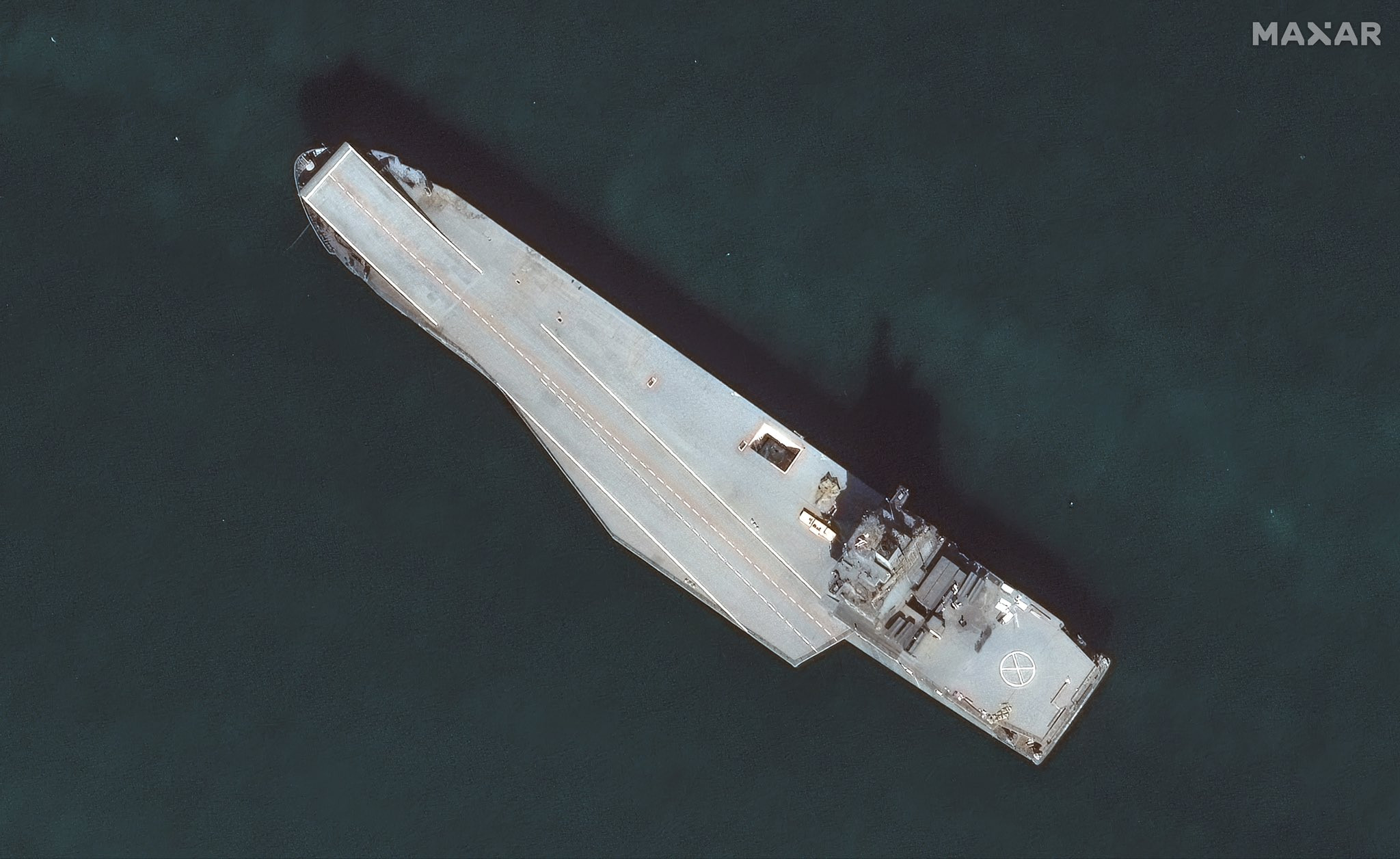
Satellite image of the drone carrier I.R.I.S. Shahid Bagheri (C-110-4) by Maxar Technologies. Note the open aircraft lift and boxed anti-ship missiles behind the superstructure. There appears to be a UAV under netting ahead of the superstructure. This may be a Gaza or similar type

Well, drones are in the news so why not. Drone carriers are becoming a type.

“Covert shores” has an excellent overview of how Iran is converting merchant ships to fulfill naval tasks.

Some are armed with ballistic or cruise missiles.

What About Drones?

You may have heard about an incident where a 47 foot MLB was tracked by 12 to 30 objects that were thought to be Unmanned Air Systems.

The War Zone has a post that talks about this and other recent incidents, reports, and conspiracy theories that involve drone, “Coast Guard Ship Stalked by Unidentified Aircraft, Iran Drone Mothership Claim Shot Down by DoD.” More here and here.

Drones are hot sellers. There are a lot of them, and there will be many more after Christmas. With the reports of use of drones in the war between Ukraine and Russia, activities involving drones are starting to receive a lot of public attention, and it is not surprising that many see them as potentially dangerous or at least a threat to privacy. Drones flown at night have probably also resulted in a number of UFO sighting reports. Plus, a lot of drone operators are not aware or ignore FAA regulations that apply to them.

Opinions about the size and speed of drones seen at night are extremely unreliable, but there are ways to identify drones that are operating legally. I will try to provide some basic information and point toward the current regulations.

Why are they hard to track? Large drones are not hard to track if they are operated at altitude. On the other hand, small drones operated at low altitudes are very hard to pick up on radar. They are down in the clutter. Virtually all of these sightings are probably small drones of less than 55 pounds, the vast majority less than five pounds.

Air search radars frequently exploit doppler effect to pick moving targets out of the clutter, but most drones are slower than the speeds necessary to trigger a detection by doppler–they are close to the ground and move at speeds similar to that of millions of cars.

In addition to being small, most drones are made of non-radar reflective materials like foam and plastic. There is very little that would return a radar signal other than the motors and wires.

Why don’t the operators show up electronically? Most radios used to control drones now are frequency agile and relatively short range so they may be difficult to recognize. They have to be frequency agile because they use the same radio frequencies common in household electronics, so short bursts on a 2.4 GHZ frequency are indistinguishable from thousands of others. Also, drones may fly a preprogrammed route with no additional radio frequency required. Drones can also be programmed to follow a person or presumably any moving object.

Are they doing anything illegal? FAA Regulations Part 107 applies to both recreational and commercial use of small, civil, unmanned aircraft systems–small meaning 55 pounds (25 kg) or less. As the operator of remote-control model airplanes that are, like multi-rotors, considered drones, I am somewhat familiar with the issues.

Some things are specifically illegal without a specific waiver or exemption. Waivers may be relatively easy to obtain. I regularly get one where I fly.

  • Flying a UAS beyond the line of sight of the person or team controlling the drone
  • Flying more than 400 feet above ground level.
  • A single pilot operating more than one aircraft simultaneously
  • Flying at night or during twilight without required lighting.
  • Operating in restricted air space. (Restricted areas may be temporary like over sporting events or effectively permanent like around airports and over Washington DC.)

Flying or hovering over your house at less than 400 feet is probably not illegal, but flying over people exposed on the ground may be. Harrasing people on the ground with a drone is definitely illegal.

How can they be detected and identified? Perhaps most relevant is the requirement to have a remote ID module if flown outside of a “Federally Recognized Identification Area (FRIA)” (typically a defined area around a remote-controlled model airfield registered and approved by the FAA).

So that solves the problem, right? No! The ID modules are short range, I have heard 2 miles or less. Operated low or where terrain blocks the signal, it is going to be less, so to even detect the signal you have to be relatively close. There are applications for smart phones that allow anyone to access the ID module signal, but generally law enforcement has received no training and in fact has no knowledge that these are available.

So, what should we do? We are in a transition period. Going from a time when drone sightings were rare, to a time when they will be routine. Amazon is planning on using drones to drop packages. Drones are useful. They are not going away. Seeing lights in the night sky that move irregularly and that you cannot identify is probably not a reason for concern. We really don’t want people shooting at lights in the sky.

Irresponsible drone operation may require enforcement. FAA’s stated enforcement strategy is first to try to educate before moving on to fines. There no specific acts identified as felonies under part 107 but negligent operation causing significant damage or violation of restricted airspace would certainly be covered by other laws including laws applied to operation of larger aircraft.

Perhaps Coast Guard units need to be trained in the use of drone ID applications.

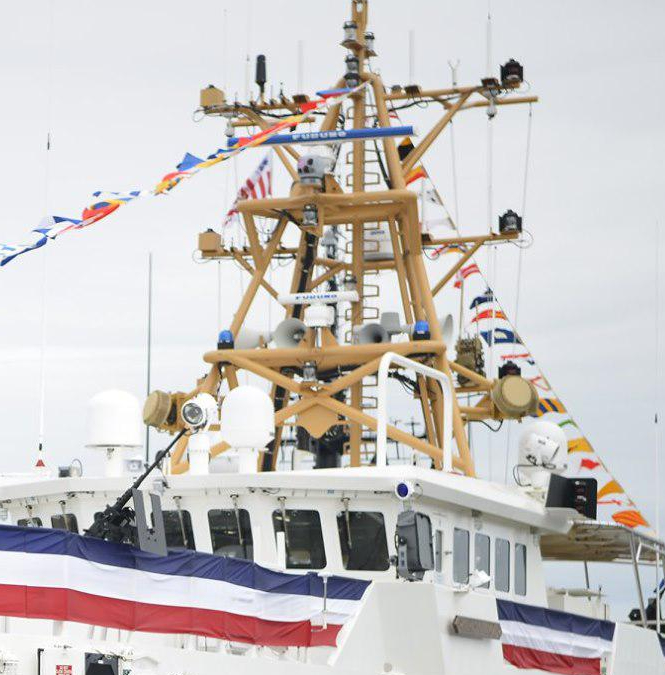
Use of Force: As we know, drones can be used as weapons and as they become more common place, there is more likelihood the Coast Guard will need to take them down for force protection, defense readiness, and Ports, Waterways, and Coastal Security. The cutters of Patrol Forces Southwest Asia (PATFORSWA) have been fitted with short range, high resolution, drone detection radars and what appear to be electronic countermeasures, so are getting some experience with drone detection, passive countermeasures, and possibly hard kill countermeasures as well.

The Coast Guard’s missions may require use of force. In some cases, electronic warfare may be sufficient. Directed energy weapons seem to hold promise, but 30mm guns with air burst ammunition and APKWS 70mm guided rockets have proven capability and provide additional capability against other threats.

  • USCGC Charles Moulthrope (WPC-1141) prior to departure for PATFORSWA. Small drone detection radars are visible low on the mast. 

Aerosonde UAS–Two Navy Contracts

Textron Aerosonde UAS

Below are two news releases reporting contracts for Contractor-Owned/Contractor-Operated Aerosonde Uncrewed Air System operation support, first on the Littoral Combat Ships bound for the 5th Fleet (Central Command) and second for an unidentified ship deploying to 6th Fleet (European Command).


Textron Systems Awarded Uncrewed Aircraft System (UAS) Contracts For Three Additional U.S. Navy Littoral Combat Ships (LCSs)

Aerosonde® UAS Increases Maritime Contractor-Owned/Contractor-Operated (COCO) Missions

Hunt Valley, Md., November 18, 2024 – Textron Systems Corporation, a Textron Inc. (NYSE:TXT) company, announced today that it has been awarded a task order valued at up to $47 million by the U.S. Navy’s Naval Air Systems Command (NAVAIR) to provide COCO UAS services to three Independence Class Littoral Combat Ships (LCS) deploying to 5th Fleet. This award follows a 2023 contract to provide UAS support to LCSs, bringing the total number of U.S. Navy ships supported by the Aerosonde® UAS to 10.

Textron Systems will deploy its Aerosonde UAS and skilled personnel to provide mission overwatch and extended range intelligence, surveillance and reconnaissance (ISR) services with enhanced mission payloads as seen aboard the Expeditionary Sea Base (ESB)-4 and ESB-5, as well as two DDG-class ships and three LCSs. In December 2023, the Aerosonde UAS took its inaugural operational flight from its first LCS, the LCS-28 USS Savannah.

“Textron Systems has delivered COCO services with our Aerosonde UAS for over a decade, demonstrating the flexibility and value a model like this brings to the services,” said David Phillips, Senior Vice President Air, Land and Sea Systems. “Because we are managing the full life cycle of the system, including technology integration, human factors, spares and repairs, employing the Aerosonde UAS enables the Navy customer to focus solely on their mission. We extend the customer’s capabilities across the mission packages of each ship reliably and quickly.”

The Aerosonde UAS offers multi-mission capability built upon a family of systems which have amassed over 700,000 flight hours over more than 10 years. The system is equipped for multiple payload configurations with both vertical takeoff and landing (VTOL) and fixed-wing options.

NAVAIR Public Release SPR-2024-0803. Distribution Statement A – “Approved for public release; distribution is unlimited”


Textron Systems Awarded Uncrewed Aircraft System (UAS) Contract For Additional U.S. Navy Ship

Aerosonde® UAS Increases Maritime Contractor-Owned/Contractor-Operated (COCO) Missions

Hunt Valley, Md., November 20, 2024 – Textron Systems Corporation, a Textron Inc. (NYSE:TXT) company, announced today that it has been awarded a task order valued at up to $17 million by the U.S. Navy’s Naval Air Systems Command (NAVAIR) to provide COCO UAS services to a U.S. Navy ship deploying to 6th Fleet. This award brings the total number of U.S. Navy ships supported by the Aerosonde® UAS to 11.

Textron Systems will deploy its Aerosonde UAS and skilled personnel to provide mission overwatch and extended range intelligence, surveillance and reconnaissance (ISR) services with enhanced mission payloads. In September, Textron Systems was contracted to provide support to three additional Littoral Combat Ships (LCS).

“Textron Systems is committed to enhancing the Navy’s mission sets. The continued use of ISR support demonstrates the benefit of the COCO model and the services our Aerosonde UAS provides to the sailor,” said David Phillips, Senior Vice President Air, Land and Sea Systems. “The flexibility in a COCO mission allows the Navy to extend their capabilities while we as the contractor manage the full life cycle of the system, ultimately resulting in greater efficiency and reliability.”

The Aerosonde UAS offers multi-mission capability built upon a family of systems which have amassed over 700,000 flight hours over more than 10 years. The system is equipped for multiple payload configurations with both vertical takeoff and landing (VTOL) and fixed-wing options.

NAVAIR Public Release SPR-2024-0801. Distribution Statement A – “Approved for public release; distribution is unlimited”

“Japan Buys Two SeaGuardians from GA-ASI” –News Release

Below is a news release from General Atomics Aeronautical Systems, Inc.

The SeaGuardian is a maritime variant of the MQ-9B that includes sense and avoid systems that allows it to operate safely in airspace with manned aircraft.

SeaGuardians are reportedly operated in a maritime role for Australia, Belgium, Canada, India, Italy, Japan, the Netherlands, and the UK.


Japan Buys Two SeaGuardians from GA-ASI

SAN DIEGO – 15 August 2024 – The Japan Coast Guard (JCG) has signed a contract for the purchase of two SeaGuardian® Remotely Piloted Aircraft (RPA) from General Atomics Aeronautical Systems, Inc. (GA-ASI), scheduled for delivery in 2025. This follows JCG’s ongoing Company-Owned, Contractor-Operated agreement with GA-ASI for operating SeaGuardian, which began in April 2022.

“Since JCG started operating SeaGuardians, they have been used for various JCG missions including supporting search and rescue and disaster response specifically during the 7.6 magnitude earthquake early this year near the Noto Peninsula of Ishikawa Prefecture and maritime surveillance during the 2023 G-7 Summit in Hiroshima, and the system has performed efficiently and effectively,” said GA-ASI CEO Linden Blue.

SeaGuardian is a medium-altitude, long-endurance RPA system that can fly for 24 hours or more, depending on the configuration.

GA-ASI has strengthened its Maritime Wide Area Surveillance (MWAS) for Japan with Optix+, which gathers information from the SeaGuardian sensors, as well as other data sources, displaying the full picture of surveillance information for its operator. This functionality makes it easy to task and direct its Intelligence, Surveillance and Reconnaissance (ISR) information in real time. GA-ASI’s Optix+ software suite rapidly correlates and exploits collected data into an easily shared common operational picture. Having multi-source correlated data enables automatic detection of anomalous behaviors over waters.

About GA-ASI

General Atomics Aeronautical Systems, Inc. (GA-ASI), an affiliate of General Atomics, is a leading designer and manufacturer of proven, reliable RPA systems, radars, and electro-optic and related mission systems, including the Predator® RPA series and the Lynx® Multi-mode Radar. With more than eight million flight hours, GA-ASI provides long-endurance, mission-capable aircraft with integrated sensor and data link systems required to deliver persistent situational awareness. The company also produces a variety of sensor control/image analysis software, offers pilot training and support services, and develops meta-material antennas.