More on the Webber Class WMECs

The Coast Guard Cutter Robert Ward (WPC-1130) is shown shortly after mooring for the first time at its homeport at Coast Guard Base Los Angeles-Long Beach, Oct. 31, 2018. The Robert Ward is the second of four new Fast Response Cutters to be stationed in San Pedro, which will help to protect the people, ports and waterways of the region and maintain security for the global supply chain and critical infrastructure within California. (U.S. Coast Guard photo by Chief Petty Officer Brandyn Hill)

Attended the commissioning of the 30th Webber class cutter, USCGC Robert Ward (WPC-1130) today, March 2.. Eleventh District Commander and Commander Pacific Area were there, and their remarks made it clear that they will try to get the most out of these little ships.

They noted that one of the class was off Central America in the Eastern Pacific drug transit zone and another was in Kwajalein (about 2125 nautical miles from Oahu). As noted earlier these vessels are performing missions that previously would have required a medium endurance cutter.

I asked crew members about what seems to be a relatively limited notional endurance of five days. I was told that they had gone six or seven days between replenishment, but once again the limited capacity of the washer/dryer was mentioned as I had heard in a comment on an earlier post. Might be worthwhile to look into a higher capacity washer/dryer and finding a bit more food storage.

In any case, these vessels are doing things that no Coast Guard patrol boats have done before.

“The Coast Guard Does Not Exist Solely for Preparing for War” –USNI

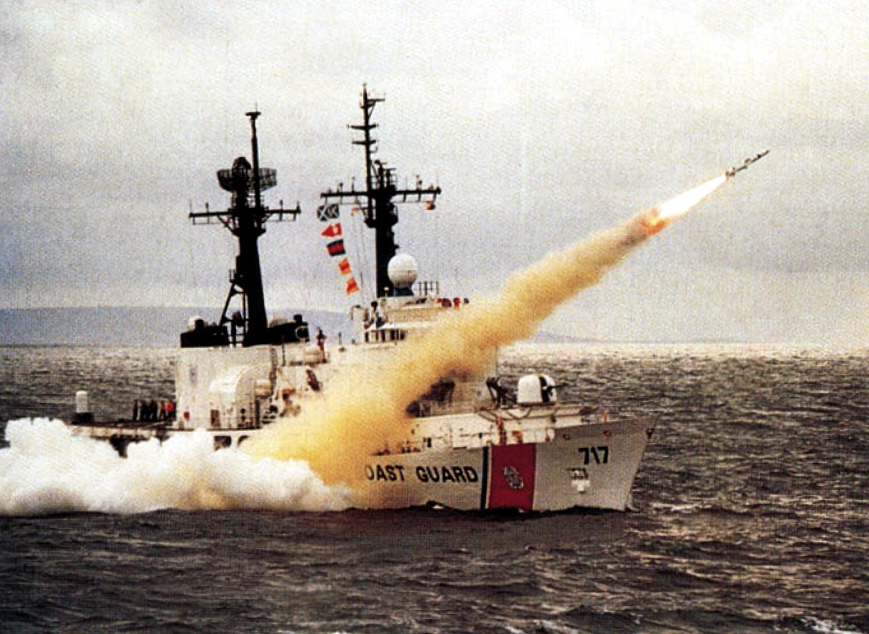
USCGC Mellon seen here launching a Harpoon anti-ship cruise missile in 1990.

The US Naval Institute Blog has a post by Cdr. Shawn Lansing, USCG, that addresses the question of the Coast Guard’s proper place in the Federal government, specifically countering arguments proposing moving the Coast Guard to the DOD. The author also spoke against increasing the military readiness of Coast Guard assets, so let me address the two issues separately.

Should the Coast Guard be part of the DOD?

Here we agree with a resounding NO. Most of the Coast Guard’s missions are outside the DOD’s sphere of interest. (I do think it might be better if the Coast Guard’s budget were considered outside the DHS budget since half of the Coast Guard’s missions are outside the DHS sphere)

Most of the arguments in favor have as their underlying assumption, the DOD is awash in money so the Coast Guard will be well funded. Since Sequestration began in 2013, short term, the Navy seems to have done better in the budget battles than the Coast Guard, but taking the long view I see it otherwise.

I can remember when the Navy was, in terms of personnel, 22 times larger than the Coast Guard. Now it is only about eight times larger. I could not find figures to support the 22 times figure. It was about 50 years ago. It was during the height of the Cold War and the Vietnam War; the Navy had about 900 ships, but looking back at some of my older books, I found personnel figures for 1982, 1999, and 2013. (Numbers of Navy ships by year and type are available here.)

In 1982 the Navy had 555 ships and a total of 548,475 active duty uniformed personnel, the Coast Guard 33, 799, meaning the Coast Guard was 6.15% the size of the Navy, or  the Navy was 16.3 times as large as the Coast Guard.

In 1999 the Navy had 336 ships and a total of 372,696 active duty uniformed personnel, the Coast Guard 35,511, meaning the Coast Guard was 9.53% the size of the Navy, or  the Navy was 10.5 times as large as the Coast Guard. 

In 2013 the Navy had 285 ships and a total of 317,464 active duty uniformed personnel, the Coast Guard 42,190, meaning the Coast Guard was 13.3% the size of the Navy, or  the Navy was 7.5 times as large as the Coast Guard. 

The Navy has been in a long and steady decline, while the Coast Guard had enjoyed moderate growth. Over the 31 years from 1982 to 2013 the number of personnel in Navy fell 42% while the comparable number for the Coast Guard went up 25%.paralleling a US population growth of 36.5% for the same period.

Somehow I cannot imagine that if the Coast Guard had been part of the DOD during that period, that they would have grown the Coast Guard while the Navy and Marine Corps shrank.

Should the Coast Guard increase its Naval Mission Capabilities?

The author quotes the Coast Guard’s first Commandant, Commodore Ellsworth Bertholf,, “the Coast Guard does not exist solely for the purpose of preparing for war. If it did there would be, of course, two navies—a large one and a small one, and that condition, I am sure you will agree, could not long exist.”

For some reason the author seems to think that this idea rules out a more combat ready Coast Guard. Combat readiness is not the Coast Guard’s reason for being, but it is one of our missions.

Naval tasks are not the reason the Coast Guard exist, but the Coast Guard will do them because it is a ready asset that can be diverted from its normal missions when an urgent need exists, just as the Navy sometimes does humanitarian missions because it is a ready asset that exists for other reasons. To do them when required, with any expectation of success requires planning and preparation. 

It is true that combat readiness has a cost. It may require additional personnel and additional training, but the cost of adding a combat capability to a Coast Guard asset that would exist for other reasons, is far less than providing the same capability in an additional Navy asset in addition to a Coast Guard asset without that capability.

It is logical that the degree of effort the Coast Guard puts into readiness will vary with the apparent threat. That is why I find the decision to remove the Harpoon anti-ship missiles and ASW capabilities from the 378s after the collapse of the Soviet Union was logical. Now the situation is changing. The situation in the Pacific is starting to bare an uncanny resemblance to the situation in the late 1930s, except that China is potentially a much more dangerous adversary than Japan ever was. Unlike Japan prior to 1945, China has an industrial capability that approaches and in some respects, particularly ship building, exceeds that of the US. Russia is not the Soviet Union. It is now China’s junior partner, but if its weight is added to that of China, the balance looks even more challenging, and the trend line looking to the future does not look good.

So far the Navy and Coast Guard have not done much about planning the Coast Guard’s role in a near peer conflict. Creative use of Navy owned equipment on cutters and augmentation by Navy Reserves could lessen the impact on the Coast Guard budget. We could see a lot more synergy between the Coast Guard and the Navy Reserve. Planning the use of Navy Reserve ASW helicopters and crew augmentation by Navy Reserve sonar techs and ASW trained officers seem appropriate. They could also augment Coast Guard assets during more routine operations to exploit Navy capabilities such as towed array sonars for law enforcement operations.

There is also the side benefit that the sensors required for Naval roles may make the cutters more capable in low enforcement, migrant interdiction, and SAR.

The Coast Guard proudly claim to be a military service at all times, once again it is time to act like one.

Bertholf’s argument, quoted above, did not mean he did not send cutters to escort convoys in WWI.


“After Shutdown, Grounded Planes and Delayed Repairs Ripple Through Coast Guard” –The New York Times

“You can get the money, but you can never get the time,” The New York Times reports on the continuing ill effects of the 35 day partial government shutdown.

“The government shutdown that ended last month has taken a lasting hit on the Coast Guard, which has grounded aircraft, stopped major ship repairs and will leave parts of an air station in Puerto Rico without emergency generators for the start of hurricane season because of a backlog that will take months to process.

“Internal documents obtained by The New York Times show that the Coast Guard’s ship maintenance command lost at least 7,456 productive workdays — or 28.5 years’ worth of workdays — as a direct result of the partial shutdown, which furloughed 6,400 civilian employees.”

Comparison, the Chinese Navy of 2030 and USN

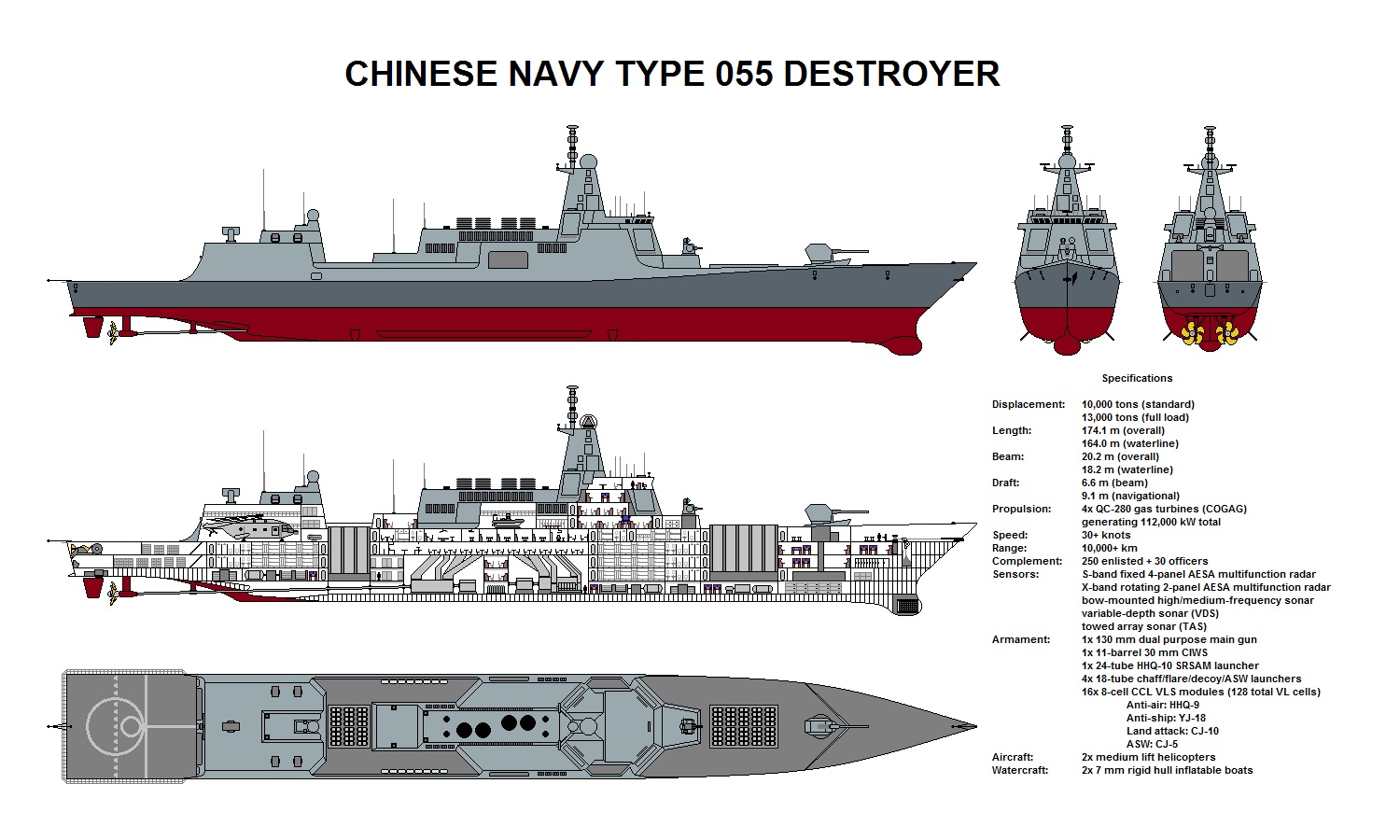
The Diplomat has an excellent report entitled “Predicting the Chinese Navy of 2030.” It is apparent the Chinese are now building at a rate that exceeds that of the US. They started behind. Already they are the largest navy in the world in terms of numbers of ships. In terms of personnel, it is about 80% the size of the USN. Every year the US margin in both quantity and quality for each type of ship narrows. Plus the US Navy is scattered all over the world while their fleet is concentrated in the Western Pacific, although it appears they will be creating Carrier Strike Groups and Amphibious Ready Groups which will mirror the US Navy’s ability to project power anywhere in the world.

The bottom line projections in the Diplomat article are:

  • At least four aircraft carriers (two ski jump, two catapult)
  • 16-20 055/A destroyers (12,000 ton category)
  • 36-40 052D/E destroyers (7,000 ton category)
  • 11 older destroyers
  • 40-50 054A/B frigates (4,000-5,000 ton category)
  • 12 older frigates
  • 60 056/A corvettes
  • Anywhere from eight or more SSBNs (including four to five existing SSBNs)
  • Anywhere from 16 or more SSNs (including six to eight existing SSNs)
  • Approximately 60 SSKs
  • At least three 075 LHDs (36,000 ton category)
  • At least eight 071 LPDs (25,000 ton category)
  • 25 to 30 type 072 LSTs (4,800 tons)

At least some of the approximately 83 Type 022 catamaran missile boats built 2004 to 2011, are likely to be around as well.

For comparison, the current US Navy fleet can be found here. Despite the proclaimed intent of having 355 ships in the US “battle force” actual number (currently about 288 including 60 logistics and support ships) will change only slowly, with most of the changes being in number of small surface combatants (Littoral Combat Ships and Frigates). The number of submarines will actually decline.

Based on the Navy’s “Report to Congress on the Annual Long-Range Plan for Construction of Naval Vessels for Fiscal Year 2019” page 12, table A3-4, the Navy’s 2030 inventory of comparable combatants will be:

  • 11 Carriers
  • 97 Large surface combatants (CG/DDG)
  • 41 Small surface combatants (LCS/FFG)
  • 11 Ballistic missile submarines (SSBN)
  • 45 Nuclear powered attack submarines (SSN)
  • 37 Amphibious assault ships (I think 12 big deck LHA/LHD and 25 LPD/LSD)

To make this clearer I will aggregate the results as fractions with the Chinese numbers on top as the numerator and the USN numbers on the bottom as denominator (Chinese/USN). A + sign is to indicate there may be more.

  • 4/11 carriers
  • 63/97 to 71/97 large surface combatants
  • 112/41 to 122/41  Small surface combatants
  • 8+/11 Ballistic missile submarines (SSBN)
  • 16+/45 Nuclear powered attack submarines (SSN)
  • 60/0 conventionally powered submarines (SSK)
  • 3+/12 big deck amphibs (LHA/LHD)
  • 8+/25 medium amphibs (LPD/LSD)
  • 25-30/0 smaller amphibious assault ships (LST)

The size of the Chinese submarine fleet may not increase, it is already more numerous than the US fleet, but the increasing quality, including more SSNs is troubling.

Unless the US increases its warship construction rate, the comparison for 2040 will look much worse. Equipping modern Coast Guard vessels for naval missions as part of the “National Fleet” could make a huge difference in any future conflict.


“Naval Group: Four OPVs for Argentina” –Marine Link

Photo: Offshore Patrol Vessel L’Adroit built by Naval Group as a private venture 

MarineLink is reporting the French Shipbuilder Naval Group will provide four Offshore Patrol Vessels to Argentina including the L’Adroit completed in 2012 and three similar new construction vessels

L’Adroit had been constructed as a private venture demonstrator which was operated by the French Navy for several years.

Specs for L’Adroit, using various sources, are:

  • Length: 87 meters (285 feet)
  • Beam: 14 meters (46 feet)
  • Range: 7,000-8,000 nmi at 12 knots
  • Speed: 20-21 knots
  • SHP: 8,100
  • Boats: two RHIBs up to 9 meter launched from two ramps in the stern
  • Helicopter: up to 10 tons plus hangar. Has operated small vertical take off UAS.

“The three new OPVs will also be adapted to navigation in the cold waters of the southern seas thanks to structural reinforcement. All four ships will be equipped with a remotely-operated 30 mm cannon.”

Schiebel S-100

A Schiebel S-100 conducts trials aboard the L’Adroit. A four-person detachment for the S-100 can be embarked on L’Adroit when the UAV is aboard. Schiebel photo

Presumably these will replace the 80 meter Fassmer designed OPVs Argentina had planned but never built.

L’Adroit was one of the vessels I pointed to as a possible basis for Cutter X.

Photo: L’Adroit’s hangar doors looking forward from the flight deck

Coast Guard Gets $578M Above President’s Budget Request in Appropriations Deal” –Homeland Security Today

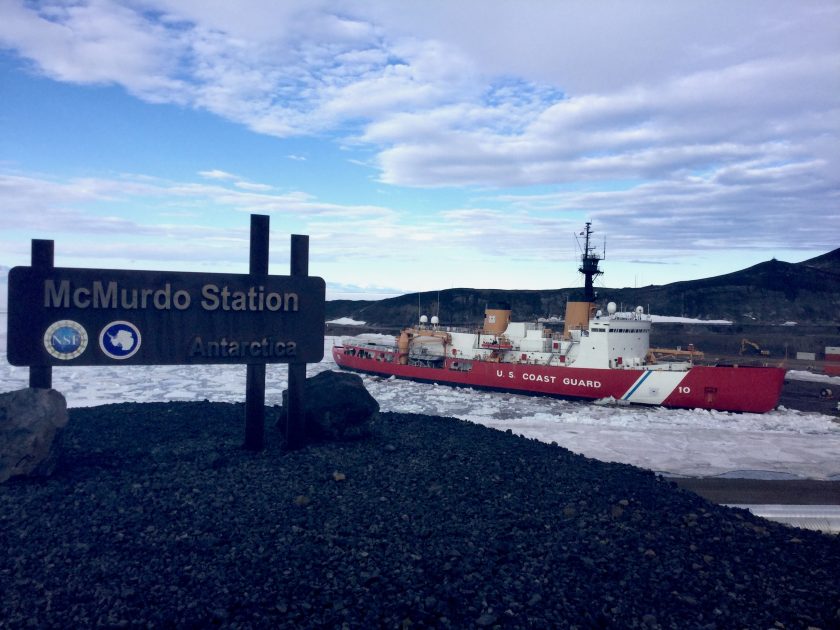
USCGC Polar Star at McMurdo Station, 2019

Homeland Security Today is reporting the newly passed Coast Guard budget contains some very good news, including $655M for the new Polar Security Cutter.

The total budget is approximately $12,016M. This is about $92M less than last year, but that budget was remarkable in funding two National Security Cutters (#10 and #11). Presumably it contains funding for the second Offshore Patrol Cutter and long lead time items for the third. These were included in the original request, but were not mentioned in the report.

The Coast Guard gets $15 million for an additional 250 military personnel in the legislative agreement, $12.9 million for the 2019 pay raise, and $2 million to increase child care benefits and cost of living increases.

The bill is reported to include a couple of reporting requirements that may indicate where the Congress thinks the Coast Guard should be heading.

The bill directs the USCG to submit a plan within 120 days for a one-year pilot program to address illegal, unreported, and unregulated fishing, which “leads to billions in losses for the global fishing industry and is a source of financing for illicit activity such as piracy, drug trafficking, human trafficking, and slavery.”

Within 180 days, the USCG is required to give relevant committees “an assessment of the Coast Guard’s ability to conduct maritime law enforcement activities in the high seas in support of international partners.” (emphasis applied–Chuck)

The illegal, unreported, and unregulated fishing could just be in reference to helping Micronesia. The law enforcement activities with partners could be about drug enforcement, but that is already pretty well understood. Could this mean we might be helping the Vietnam or the Philippines with their Chinese fisheries problems?

There is “$5,000,000 for survey and design work to support the acquisition of a Great Lakes icebreaker.” Based on earlier discussions, this ship would be at least as capable as the current USCGC Mackinaw.

The budget includes six additional Webber class “Fast Response Cutters,” four toward the 58 in the program of record and a second pair toward the replacement of the six 110s in South West Asia.

Aviation did reasonably well. “…$105,000,000 for the HC-130J aircraft program; $95,000,000 to recapitalize MH-60T aircraft; $8,000,000 to fund both the planned avionics upgrades and the costs associated with the service life extension project for HH-65 aircraft.”

It is gratifying to see that our “Unfunded Priorities List (UPL)” made a difference since frequently in the past we had no UPL. $119M was allocated for UPL items.

FRC and C-130J Team-up for Drug Bust off Costa Rica

The Coast Guard Cutter Donald Horsley conducts sea trials off the coast of Key West, Florida, on April 5. The Donald Horsley is the Coast Guard’s 17th fast response cutter and was commissioned in San Juan, Puerto Rico, on May 20, 2016. (U.S. Coast Guard photo by Eric D. Woodall)

Below you will find a Fifth District news release. It focuses on the actions of the crew of a Coast Guard Air Station Elizabeth City, NC, C-130J during the seizure of a small boat (panga) smuggling cocaine of the coast of Costa Rica, but there is another story here. The vessel they are cooperating with is USCGC Donald Horsley, a Webber class 154 foot cutter, based in San Juan, Puerto Rico. That means she was operating almost 1,300 nautical miles from her home port. These “Fast Response Cutters” continue to exceed our expectations. 

united states coast guard

Multimedia Release

U.S. Coast Guard 5th District Mid-Atlantic
Contact: 5th District Public Affairs
Office: (757) 398-6272
After Hours: (757) 434-7712
5th District online newsroom

Eyes in the sky: one air station’s Herculean efforts to stop drug smugglers
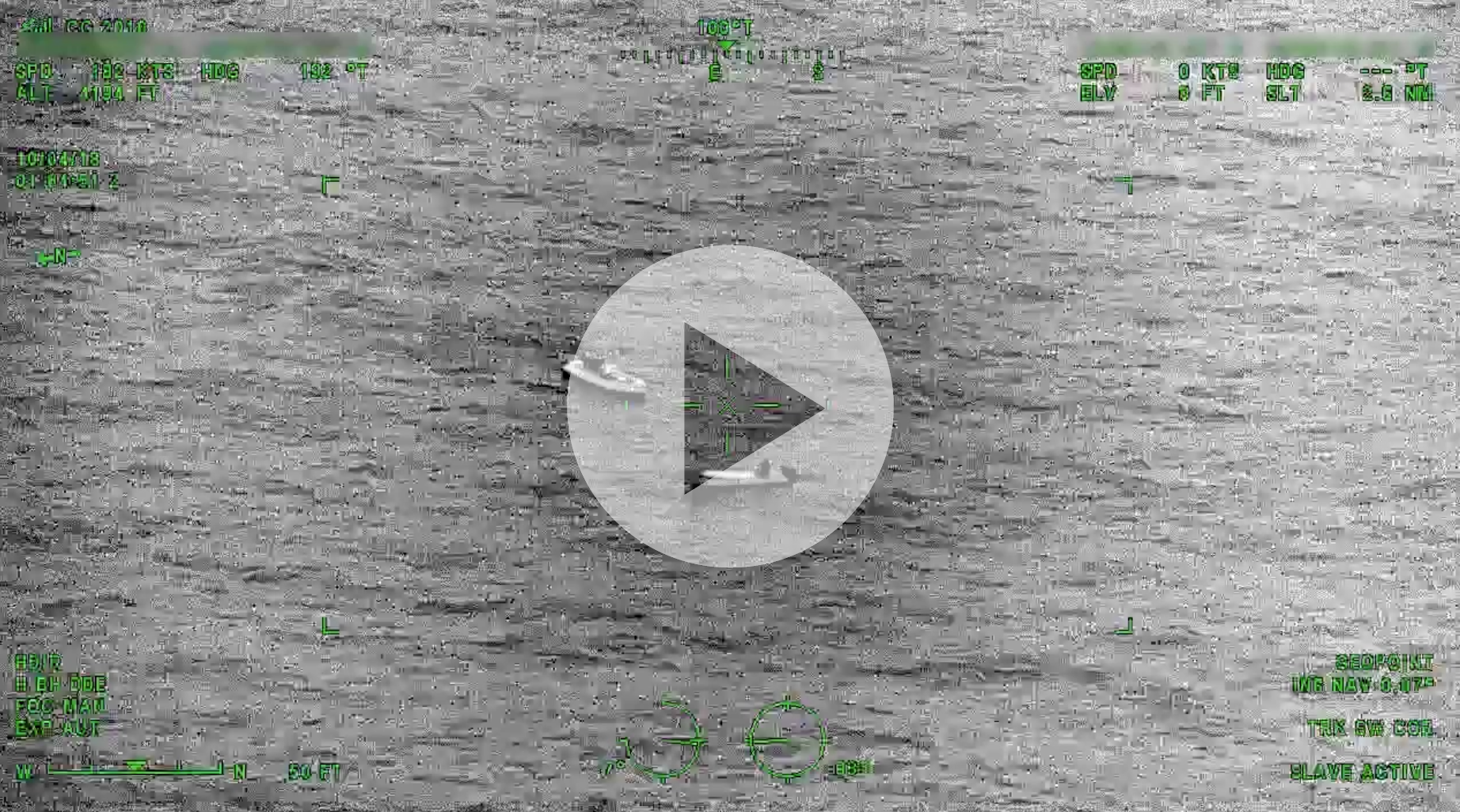
Eyes in the sky

Editors’ Note: Click on images to download high resolution version.

Story by Petty Officer 2nd Class Corinne Zilnicki

It was completely dark in the middle of the Caribbean Sea on the evening of October 3, 2018.

Dense bands of cloud shrouded the moon, obscuring all light. Storms intermittently rumbled to life, dampening the darkness with sheets of rain.

Five thousand feet above the sea, a large white airplane sliced through the gloom, its telltale orange stripe and Coast Guard shield obscured by the shadows.

Pilots and crew members inside the HC-130 Hercules airplane did not mind the obscurity; in fact, it was a critical part of their mission.

They had been sent into the black, windy night to search for a particular vessel, a Panga boat suspected of transporting cocaine northward. Beyond their “search box,” a targeted area in international waters off Costa Rica, the aircrew was armed only with the HC-130’s sensory equipment, years of training and their own intuition.

Petty Officer 1st Class Matt Lotz, a seasoned mission system operator aboard the Hercules, utilized all three to locate the target. Wrestling with various filters and scan methods, he used the plane’s installed camera to spot and track the Panga boat down below, despite the pitch-black night.

Still hovering far overhead, the Hercules crew initiated the “end game,” the final stage of the mission during which aircrews help surface assets locate targets. Coast Guard Cutter Donald Horsley, the nearest asset, steamed toward the Panga and launched a small boat crew to close the final distance.

Little did the crews know, the end game would be rife with difficulty that night.

“The small boat crew experienced some technical difficulties,” said Lt. Patrick Spencer, aircraft commander of the HC-130. “Matt thought outside the box. He figured out a way to talk directly to the small boat so he could direct them to the target.”

Acting as the boat crew’s aerial navigator, Lotz guided them within 50 feet of the Panga.

The pursuit was short, but lively, with the Panga crew leading the Coast Guard team in wild arcs through the darkness.

With the Hercules aircrew serving as their eyes in the sky, Cutter Donald Horsley’s crew seized 600 kilograms of cocaine that night, a haul valued at approximately $17 million.

“When we get to see the end game, the actual drug bust, it gives the crew a sense of accomplishment,” said Lt. j.g. Zachary Georgia, an HC-130 pilot at Air Station Elizabeth City who routinely participates in Joint Interagency Task Force South’s counter-narcotics missions.

The sense of pride and the exciting departure from routine are two reasons that the air station’s members voluntarily deploy to Central America each year, according to Georgia.

In 2018, HC-130 crews from Air Station Elizabeth City conducted more than 100 JIATF South aerial patrols, directly contributing to the arrests of 34 suspected drug smugglers and the interdiction of 27,000 kilograms of narcotics, worth over $745 million.

“Keeping these harmful drugs off the streets of America is significant,” said Capt. Joseph Deer, commanding officer of Air Station Elizabeth City. “Without these intercepts and the deterrent presence of law enforcement authorities, the flow of drugs into the U.S. would be exponentially higher.”

While working in Central America, the aircrews operate from several different locations, and their patrol coverage varies wildly during their deployments. When the crews receive task direction from JIATF South, they are directed to search an expansive area, to investigate a known target, or to insert themselves into the end game of an ongoing case.

“Flexibility is key,” said Petty Officer 1st Class Trevor Tufts, an aviation maintenance technician in charge of the HC-130’s mechanical functions while airborne. “We don’t actually know where we’re going until we get the pre-mission brief each day. I’ve had the location change 10 minutes before departure.”

While their predominant goal is to help stop the trafficking of illicit drugs, the deployed Coast Guard crews have to adapt to ever-changing circumstances on the fly.

“During my last JIATF mission, we were out looking for drug smugglers, but we found a boat that had capsized instead,” Georgia said. “So the search and rescue case took precedence.”

Coast Guard aircrews work with a diverse array of entities and agencies while deployed in support of JIATF South, including the U.S. Navy, U.S. Air Force, U.S. Customs and Border Protection, and law enforcement agencies of surrounding nations. But according to the Coast Guard crews, the HC-130 Hercules airplane is what truly distinguishes them from their many teammates.

“We can offer twice the range of some of the other planes working down there,” Spencer said. “We simply have the best plane for the mission.”

Air Station Elizabeth City is home to five HC-130J Super Hercules airplanes, the more advanced version of older HC-130H airplanes, which Tufts said is an important distinction. The J-model of the HC-130 touts increased air speed, increased flight time, a camera equipped with infrared sensors, and a 360-degree surface search radar, all features that help aircrews efficiently hunt down drug smugglers.

Mission system operators like Lotz arguably benefit from the airplane’s equipment the most; as the person simultaneously communicating with JIATF South and other entities, monitoring the radar for possible targets, recording footage of action down below, and directing the movements of surface assets, he said he appreciates the HC-130’s various trappings.

“For an MSO, it’s our time to shine,” Lotz said. “I love it. I’d do it forever.”

While only a fraction of Air Station Elizabeth City’s 300 members deploy to Central America during their tour, their commanding officer said the unit is fully committed to supporting the JIATF South mission for the foreseeable future, and that everything they accomplish is achieved through a group effort by all five commands on base.

“We will continue to build on the excellent program that those before us have put in place, ever improving our training and equipment for those that follow in our footsteps,” Deer said. “I am confident the 300 professionals at Air Station Elizabeth City are up to the challenge.”

Sensor Operators on C-130J

Coast Guard MH-65E Program Completes Low Rate Initial Production, Begins Initial Operational Test And Evaluation –CG-9

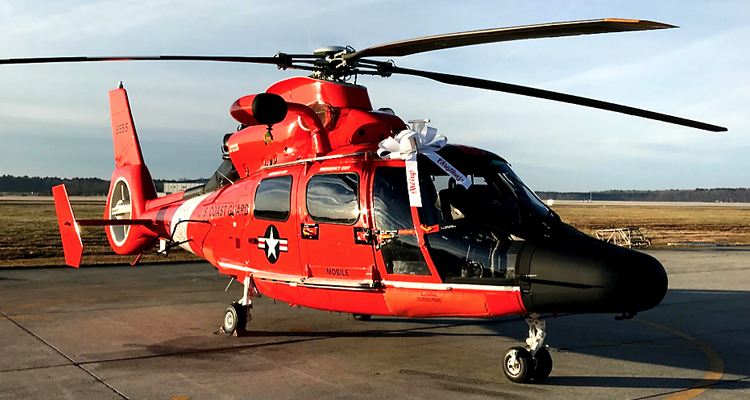
H-65 short range recovery helicopterThe Coast Guard completed Service Life Extension Program activities and an avionics upgrade on an H-65 short range recovery helicopter as part of a joint production line Dec. 18, 2018. Photo courtesy of U.S. Coast Guard.
The following is taken verbatim from the Coast Guard Acquisitions Directorate web site. 

The Coast Guard is completing the first phase of production and moving to full-rate production on concurrent Service Life Extension Program (SLEP) and avionics upgrades of the service’s H-65 short range recovery helicopters.

The avionics upgrades include reliability and capability improvements for the Automatic Flight Control System; installation of a digital cockpit display system and an upgraded digital weather/surface search radar; integration of a robust Command, Control, Communications, Computers, Intelligence, Surveillance and Reconnaissance (C4ISR) suite and modernization of the digital flight deck with Common Avionics Architecture System (CAAS), common with the Coast Guard H-60 medium range recovery helicopter and similar Department of Defense aircraft. Once the upgrades are complete, the helicopter is redesignated an MH-65E.

At the same time, the Coast Guard is completing SLEP activities to replace five major structure components – the nine-degree frame, canopy, center console floor assembly, floorboards and side panels. These mission-critical improvements are designed to extend the service life of the helicopter by 10,000 flight hours.

Work was finished Dec. 18, 2018, on the first H-65 – CG 6556 – to complete SLEP activities and the avionics upgrade in a joint production line. Termed low rate initial production (LRIP), this first phase allows the service to review and validate improvements required after the initial work on the prototype and validation/verification (CG-6587) aircraft. During this phase, Coast Guard teams discovered that the wire analysis system was not completely ready for full production. On-the-spot corrections were made to remedy the problem and rolled into the production process for future aircraft.

The avionics upgrades and SLEP are being completed at the same time to achieve schedule and cost efficiencies. The Coast Guard will also sequence the installation of new upgrade components after SLEP and programmed depot maintenance is complete, avoiding unnecessary rework that would be required if the efforts were conducted separately.

Initial Operational Test and Evaluation Begins

On Jan. 7, 2019, the H-65 Program with Commander Operational Test and Evaluation Force began initial operational and test evaluation (IOT&E) activities on two of the three aircraft that have been converted to the Echo configuration, the LRIP and validation/verification aircraft. IOT&E is the evaluation process used to demonstrate the MH-65E’s airworthiness and ensure the aircraft meets operational requirements and associated performance requirements, and is able to safely and effectively perform the Coast Guard missions prior to fleet induction.

Twenty-one ground events and 56 flights have been planned for IOT&E. There will be three test periods and one make-up test period that take place in a three-month window.

A final test report of data collected from both the operational assessment and IOT&E will be used to support a decision for the program to move into full rate production. The program anticipates an ADE-3 decision in the first quarter of fiscal year 2020.

Projected completion of the MH-65E conversion for all 98 aircrafts is fiscal year 2024.

For more information: MH-65 program page

Capacity Building in the Philippines

Found this on Facebook, posted by fellow CIMSEC member Armando J. Heredia. That lead me to the original source. You can find more photos there. 

US Government opens new training facility for Philippine Coast Guard

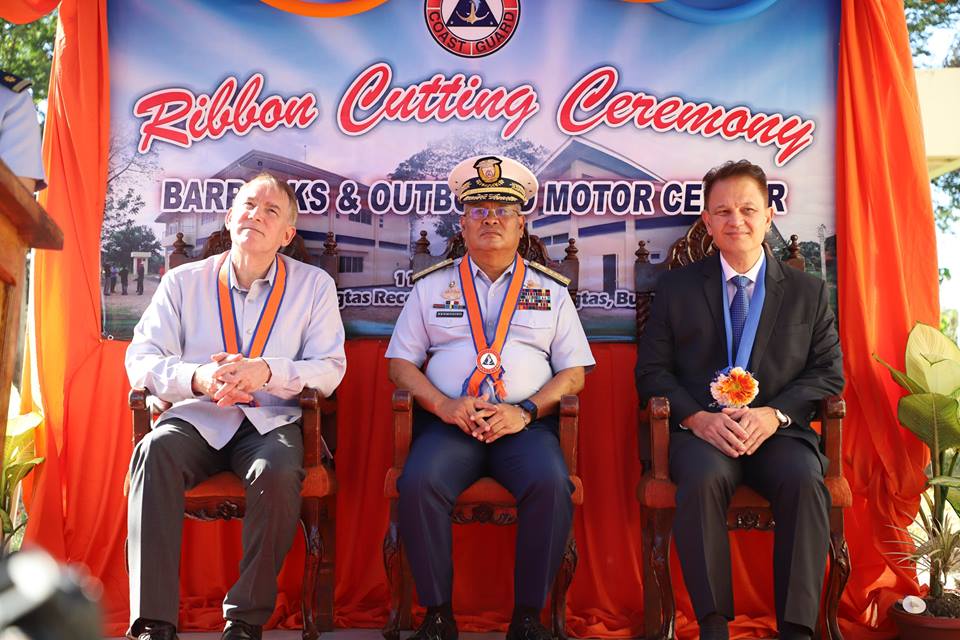
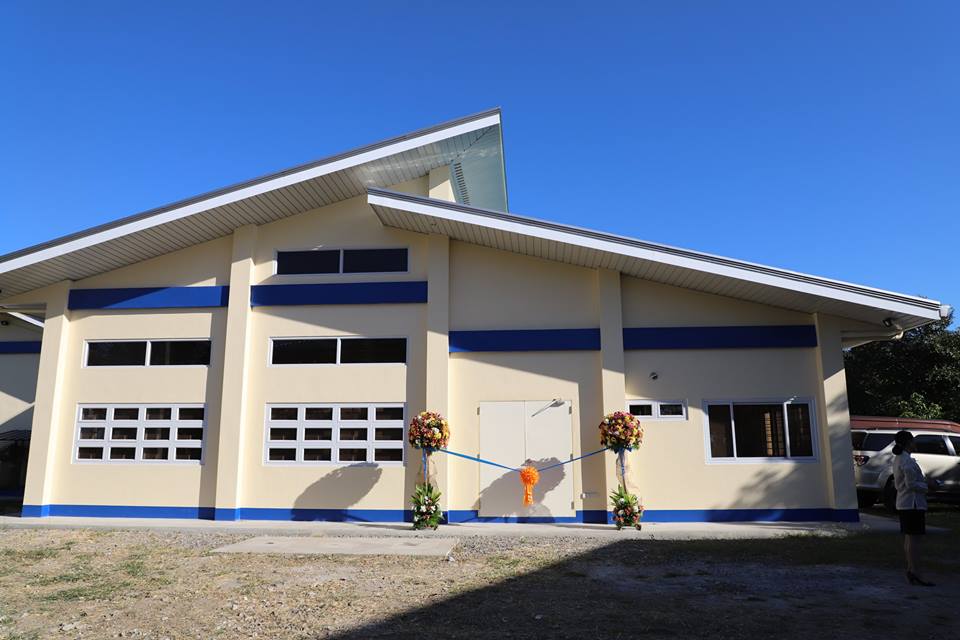
The Philippine Coast Guard and United States Government jointly held the ceremonial ribbon cutting and soft opening of the newly constructed Outboard Motor Center Training Facility in Balagtas, Bulacan today, February 11, 2019.

The event was graced by the Coast Guard Commandant, Admiral Elson E Hermogino; United States Embassy Deputy Chief of Mission, John C Law; and the Deputy Director of the Joint Interagency Task Force-West (JIATF-W), Capt Earl Hampton Jr USN (Ret).

The Outboard Motor Center of Excellence will enhance the Philippine Coast Guard’s capacity to train and sustain its workforce and equipment. It consists of classrooms, barracks and an outboard motor maintenance lab built under local contract managed by the U.S Naval Facilities Engineering Command.

The facility is a joint project between the PCG, U.S Coast Guard, the JIATF-W, the Joint U.S Military Assistance Group (JUSMAG), and the U.S Department of State Bureau of International Narcotics and Law Enforcement Affairs which is approximately worth 156 million Pesos.

In its inventory, the PCG has 300 aluminum boats and 50 rubber boats with outboard motors deployed nationwide.

The PCG frontline units rely heavily on these aluminum and rubber boats in fulfilling its mandate. These assets are primarily used in the coastal law enforcement patrols, search and rescue operations and monitoring of environmental laws compliance.

Last year, at least 40 PCG personnel were sent to US Coast Guard Training School in Virginia to undergo different shipboard courses to include training on the maintenance of outboard motors. For this year, the US Government will place a mobile training team inside the training facility in Bulacan to train qualified PCG personnel to become instructors.

Photos by Tanod Baybayin