MarineLink has a short article about modern fiber ropes/line/cable. Really this is clearly a commercial for rope/line manufacturer, Phillystran, but it does have some interesting information about one of the basic tools of the Coast Guard.
“The Myanmar government is to establish a coast guard force to safeguard its 2,080-km-long coastline and territorial waters, according to a coordination meeting held at the Ministry of Transport and Communication on January 22.”
Myanmar has an EEZ of 532,775 square km or about 4.6% of that of the US, but it does extend our to 200 miles from the shore. They also have some offshore islands, and a claim to continental shelf.
We don’t know what sort of organization or equipment the new Myanmar Coast Guard will have, but their Navy (19,000 personnel) has an eclectic collection of vessels and equipment from China, Russia, India, the US, and Israel, plus some indigenously produced vessels built in a naval shipyard provided by China.
Myanmar has had human rights issues.
It is not unlikely that they might welcome some training assistance from the US Coast Guard.
The first question was about the Polar Security and the Commandant gave the sort of answer we have come to expect, essentially, we need six icebreakers, at least three of them need to be heavy, and we need one now.
The second question was about head count and the Commandant made the point that we are down in personnel and purchasing power compared to a decade ago. There was a comment that I find particularly encouraging, “We’ve done a ‘mission requirements’ analysis that Capitol Hill assigned to us.” It is not clear if this is essentially a manning study, which I suspect it may be, or if it perhaps includes other resource requirement. For quite some time, I have suggested we need to do an updated Fleet Mix Study. The last (and only) one was done about ten years ago.
Not surprisingly, considering the orientation of the interviewer, there was much discussion about the Marine Inspection/Prevention side of the Coast Guard.
There was a question about virtual aids to navigation and it appears the Commandant put to rest fears that we would be replacing physical aides to navigation with virtual ones, but rather that we would be adding AIS to physical aids. We would sometimes use virtual aids after a disaster, when needed to restore safe navigation as quickly as possible.
Best you read the interview, rather than just my interpretation.
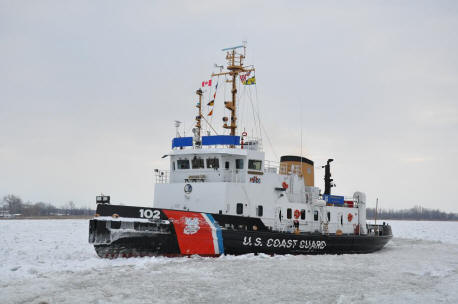
R 301515 JAN 19 FM COMDT COGARD WASHINGTON DC//CG-7// TO ALCOAST UNCLAS //N01650// ALCOAST 020/19 COMDTNOTE 1650 SUBJ: WINNER ANNOUNCEMENT – 2018 HOPLEY YEATON CUTTER EXCELLENCE AND SUPERIOR CUTTERMAN AWARDS 1. The Douglas Munro Chapter of the Surface Navy Association is honored to announce and congratulate the recipients of the 2018 Hopley Yeaton Cutter Excellence and Superior Cutterman Awards. Each of the winners were selected from amongst a highly competitive pool of nominees. This year’s winners are: A. Cutter Excellence Award (Large Cutter): CGC HAMILTON (WMSL 753) B. Cutter Excellence Award (Small Cutter): CGC BRISTOL BAY (WTGB 102) C. Superior Cutterman Award (Officer): CWO Jared Crotwell – CGC BRISTOL BAY (WTGB 102) D. Superior Cutterman Award (Enlisted): SK2 Mathew Wilson – CGC JAMES (WMSL 754) 2. Hopley Yeaton Cutter Excellence Award (Large): A. Masterfully balancing law enforcement operations in the Caribbean Sea, Eastern Pacific, and natural disaster response, the crew of CGC HAMILTON seized 4,983 kilograms of cocaine, detained 19-suspected narco-traffickers, and directed post-hurricane response operations in 2018. The crew conducted two separate and simultaneous multi-vessel (go-fast) interdictions employing airborne use of force and multiple synchronized long-range cutter boat intercepts. In the middle of a major dockside availability, CGC HAMILTON executed a storm-evasion sortie ahead of Hurricane FLORENCE after restoring severely degraded systems and equipment. The cutter went on to lead a Surface Action Group of seven cutters, executing vital command control on behalf of Sector North Carolina, conducting damage assessments of Wilmington and the Cape Fear River, and assisting Stations Oak Island, Wrightsville Beach, and Ft. Macon by removing debris and repairing station response infrastructure. B. Honorable Mentions for the Large Cutter Award are: CGC HARRIET LANE (WMEC 903) CGC SPENCER (WMEC 905) CGC MACKINAW (WLBB 30) 3. Hopley Yeaton Cutter Excellence Award (Small): A. The crew of CGC BRISTOL BAY capably balanced critical maintenance periods and operational commitments, and sailed 143 days away from homeport, amassing 2,010 underway hours, 112% of their programmed employment standard, with less than 24 hours of unscheduled maintenance on a 39 year old cutter. CGC BRISTOL BAY performed 80 direct assists of commercial vessels during 1,174 hours of icebreaking, which facilitated domestic and international trade on the Great Lakes. The crew played a pivotal role in completing 2018 OPERATION SPRING RESTORE, servicing 129 floating aids in 12 days following a casualty to another buoy tender and providing a reliable aids to navigation constellation to mariners. Servicing 207 floating aids in total, CGC BRISTOL BAY achieved an annual Aid Availability Rating of 99.7%, exceeding targeted standards. B. Honorable Mentions for the Small Cutter Award are: CGC DONALD HORSLEY (WPC 1117) CGC BAILEY BARCO (WPC 1122) CGC BONITO (WPB 87341) 4. Hopley Yeaton Superior Cutterman Award (Officer): A. CWO2 Crotwell, a 13 year cutterman assigned as Engineer Officer aboard CGC BRISTOL BAY, compressed maintenance efforts into port calls achieving a maintenance currency rating of 89.1%. As a result, CGC BRISTOL BAY did not log a single day of unscheduled Charlie amidst 1,174 operational hours of icebreaking. CWO2 Crotwell also led CGC BRISTOL BAY through a 60 day, $512,000 dockside availability. While many of the crew experienced some measure of rest and recuperation after a grueling year of 2,010 underway hours and 143 days away from homeport, CWO2 Crotwell carefully managed completion of 19 contracted work items while leading preparations for Tailored Ship’s Training Availability. Routinely arriving to the cutter before dawn and departing with merely enough time to say goodnight to his family, he worked an exhaustive pace to repair the unit’s weight handling gear. Displaying innovation and skill, he designed a trouble-shooting process to isolate the source of hydraulic power loss on the buoy handling crane. B. Honorable Mentions for the Superior Cutterman Award (Officer) are: CWO2 Justin Young-CGC HEALY (WAGB 20) CWO2 James Cullers-CGC WAESCHE (WMSL 751) CWO2 Adam Barton-CGC WALNUT (WLB 205) 5. Hopley Yeaton Superior Cutterman Award (Enlisted): A. SK2 Wilson, a six year cutterman, serves as a Pursuit Crewman and Gunner on CGC JAMES’ law enforcement team. In 2018, SK2 Wilson participated in 3 interdictions resulting in the seizure of 1,957 kilograms and detention of 11 suspected narco-traffickers. Additionally, he served as a boat crewman during Airborne Use of Force recertification and coordinated internal “Boat Colleges” to train and qualify aspiring coxswains and crewmen. Tirelessly working 12 hour shifts, SK2 Wilson supported Hurricane MARIA response operations for nearly two weeks to reconstitute Sector San Juan and assist with transporting parts, critical food supplies, and passengers critical to relief efforts. When not directly involved in reconstitution efforts, SK2 Wilson led and participated in work parties to clear storm debris at Sector San Juan and Coast Guard housing in Puerto Rico. SK2 Wilson leaps at every challenge and opportunity presented to him. SK2 Wilson stands qualified engineering machinery watches, serves as a small boat engineer and crewman, chairs the LDAC, serves on the unit’s boarding and pursuit teams, and fills flight quarters billets, all while delivering exceptional performance in his role as an SK2 and pursuing a college degree. SK2 Wilson processed $126K in backlog funding in less than three days overcoming latent underway internet connectivity and a hectic pace of operations to ensure all funds were properly obligated. B. Honorable Mentions for the Superior Cutterman Award (Enlisted) are: ME1 Kelly Brockett-CGC MUNRO (WMSL 755) BMC Christopher Hopton-CGC DILIGENCE (WMEC 616) BMCS Matthew Jordan-CGC BLACKTIP (WPB 87326) 6. The SNA will coordinate with OPCONs to recognize this year’s winners. 7. Bravo Zulu and great work to all of this year’s Hopley Yeaton Award recipients and nominees. As always, we continue to be impressed by the sheer volume of praiseworthy nominees, as well as the high quality award write-ups. Thank you to all commands for submitting and reviewing nominations. 8. RDML Michael P. Ryan, Assistant Commandant for Capability, sends. 9. Internet release is authorized.
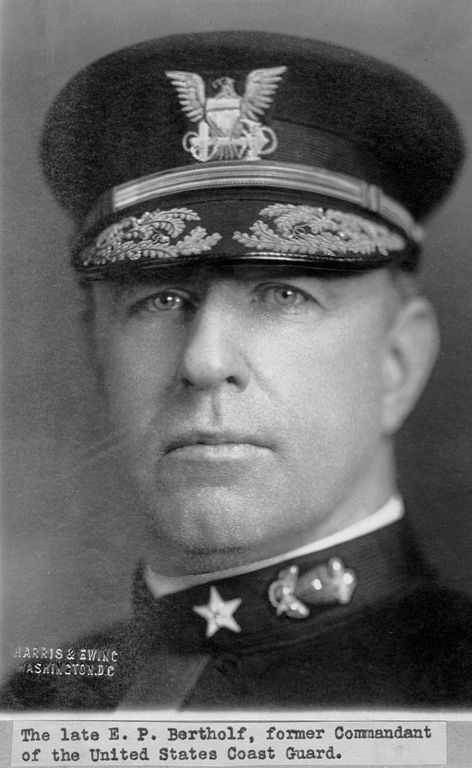
Photograph of Ellsworth P. Bertholf, Commandant of the U.S. Revenue Cutter Service from 1911 to 1915 and Commandant of the U.S. Coast Guard from 1915 to 1919. Coast Guard photo.
We all know August 4th as Coast Guard Day, but it was actually January 28, 1915 that the Coast Guard was formed by the joining of the Lifesaving Service with the Revenue Cutter Service by Act of Congress.
Take a look at the law in the link above. Its is pretty detailed and shows how different things were then. Of course it has been 104 years.
USCGC Kimball (WMSL 756) arrives in Honolulu Dec. 22, 2018. (U.S. Coast Guard photo by Chief Petty Officer Sara Muir/Released)
Commissioning of at least two recently delivered vessels have been delayed due to the partial government shutdown.
The seventh Bertholf class NSC USCGC Kimball was to have been commissioned in Hawaii in January. Not sure when the rescheduled commissioning is.
USCGC Robert Ward (WPC-1130) was to have been commissioned Feb. 2, but it has been postponed until March 2 (I plan to go)..
Problem of course is that there may be another shutdown before these rescheduled commissionings.
The Coast Guard Cutter Robert Ward (WPC-1130) is shown shortly after mooring for the first time at its homeport at Coast Guard Base Los Angeles-Long Beach, Oct. 31, 2018. The Robert Ward is the second of four new Fast Response Cutters to be stationed in San Pedro. (U.S. Coast Guard photo by Chief Petty Officer Brandyn Hill)
Pardon me a moment while I rant.
Forcing people to work without pay is called slavery. It was supposed to have been abolished in the US more than 150 years ago. When a worker is hired, military or civilian, they and the employer enter into a contract. When the government fails to pay its workers, it has broken that contract. Private enterprise could not get away with this.
It is not that the money was not available. The Treasury continued to receive taxes. It is not like the government was not going to ultimately pay people who actually did no useful work during this period, so the American Tax payer has had to pay people not to work.
All that is required is to change the law to permit people already hired to be continued to be paid until their employment is terminated.
This is not political. This is good government. This is doing what is right by your employees. Congress on both sides should want this. Republicans should want to deny some future Democrat President the opportunity to hold Congress and the American people hostage to a presidential agenda, just as surely as Democrats want it now.
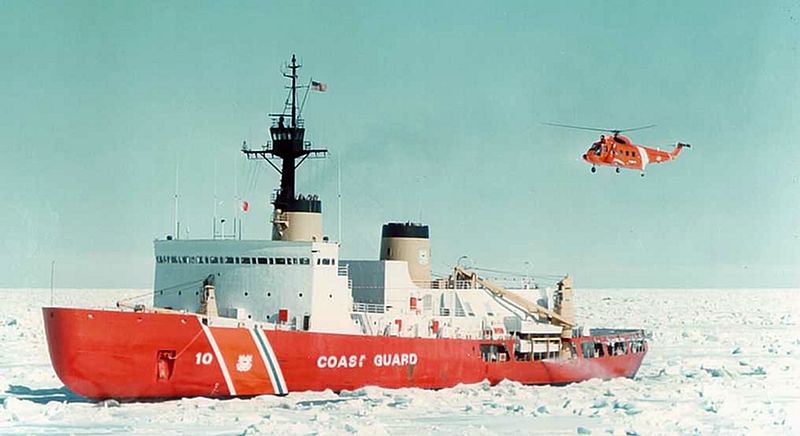
While we have this government shutdown, progress on the new Icebreaker (Polar Security Cutter) has certainly slowed, if not stopped entirely. Meanwhile the Polar Star and her crew soldier on. Naval Today reports:
During this year’s deployment, one of the ship’s electrical systems began to smoke, the Coast Guard said, causing damage to wiring in an electrical switchboard, and one of the ship’s two evaporators used to make drinkable water failed.
The ship also experienced a leak from the shaft that drives the ship’s propeller, which halted icebreaking operations in order to send scuba divers in the water to repair the seal around the shaft. A hyperbaric chamber on loan from the US Navy aboard the ship allows Coast Guard divers to make external emergency repairs and inspections of the ship’s hull.
The Polar Star also experienced ship-wide power outages while breaking ice. Crew members spent nine hours shutting down the ship’s power plant and rebooting the electrical system in order to remedy the outages.
No one knows how long the crew can keep her going, but there is a good chance we are going to see serious problems before the new ship is ready.
I am providing a copy of an ALCOAST found linked on Vince Patton’s Facebook page (Thanks Vince).
ALCOAST 013/19 – JAN 2019 UPDATE TO EXPANDED CGMA LOAN LIMITS AND PROCESS
U.S. Coast Guard sent this bulletin at 01/18/2019 05:14 PM EST
R 181702 JAN 19 FM COMDT COGARD WASHINGTON DC//CG-1// TO ALCOAST UNCLAS //N07220// ALCOAST 013/19 COMDTNOTE 7220 SUBJ: UPDATE TO EXPANDED CGMA LOAN LIMITS AND PROCESS A. ALCOAST 434/18 COAST GUARD MUTUAL ASSISTANCE (CGMA) AVAILABILITY DURING THE LAPSE IN DHS APPROPRIATIONS B. ALCOAST 012/19 EXPANDED LIMITS TO CGMA LOANS DURING LAPSE IN APPROPRIATIONS 1. This notice announces a further increase to Coast Guard Mutual Assistance (CGMA) interest free loans. As donations continue to pour in to CGMA, we will continue to evaluate the maximum amount that a member may borrow. There is no limit to the number of loans that a member may request from CGMA; only a total loan ceiling. 2. Updated total limit for CGMA lapse assistance interest-free loans: a. Up to $1500 for personnel with dependents; b. Up to $1000 for personnel without dependents; c. An unchanged condition is that if individual circumstances dictate, any person may apply for funds in excess of the established limits (a-b above). They must personally visit a local CGMA representative to complete the full application process. 3. Procedures: Procedures for both requesting a loan and recoupment remain the same. 4. Current lapse in appropriations information can be found at: http://www.dcms.uscg.mil/budget, this site contains authoritative documents, Frequently Asked Questions, an interactive mailbox, a Resources Guide, a helpline, and other useful information. As always, CG SUPRT is available to help (1-855-CG SUPRT (247-8778)) https://www.cgsuprt.com/. 5. For more information on how to receive assistance, please see your local CGMA representatives. 6. RDML Matthew Sibley, Acting Assistant Commandant for Human Resources, sends. 7. Internet release is authorized.

 Photo by Danny Cornelissen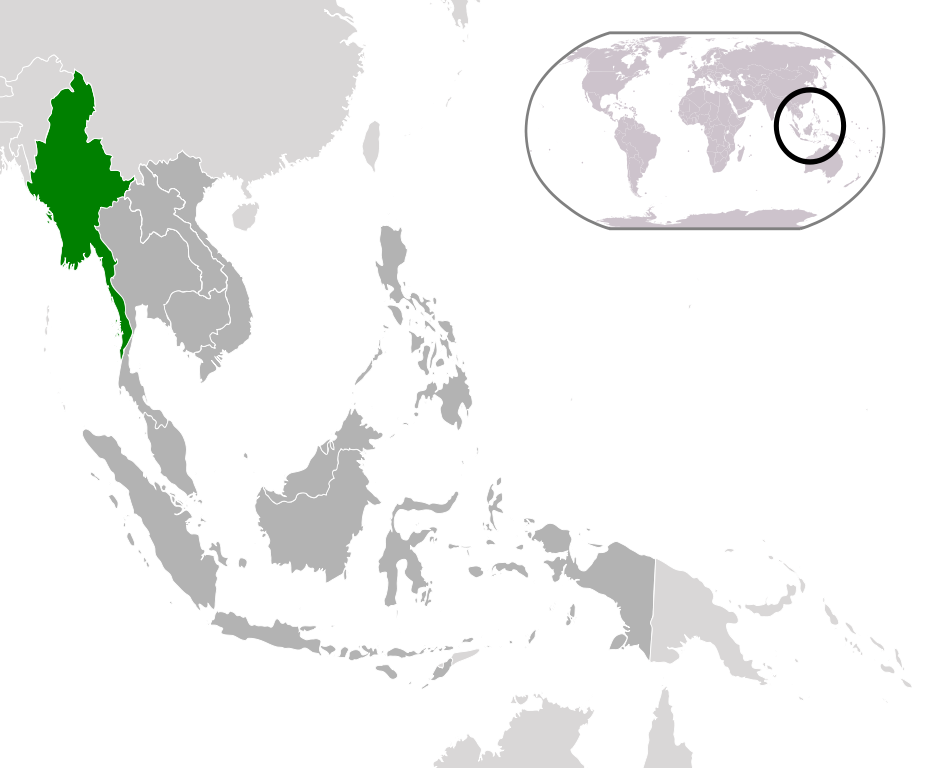
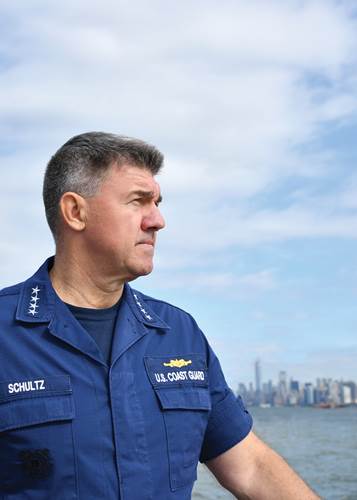 Coast Guard Commandant Adm. Karl Schultz,. U.S. Coast Guard photo illustration by Petty Officer 1st Class Jetta Disco.