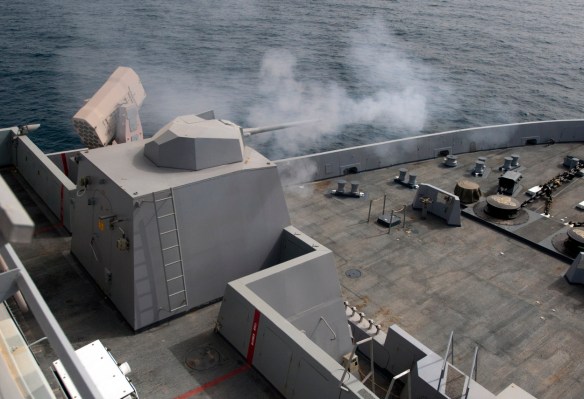
The MK46 Mod 1 weapon system fires a round during a live-fire qualification exercise aboard the amphibious transport dock ship USS New Orleans (LPD-18). US NAvy Photo
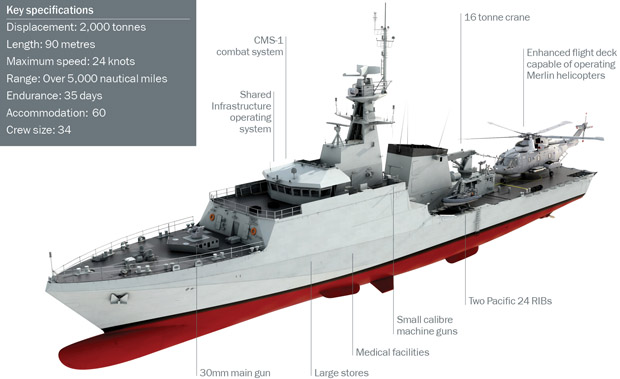
DefenseNews reports on the controversial decision to replace the planned installation of the 57mm Mk110 on the DDG-1000s with the smaller, lighter 30mm Mk46.
The remarks by the project manager in defense of the decision seem to raise questions regarding the Coast Guard’s choice of the 57mm Mk110.
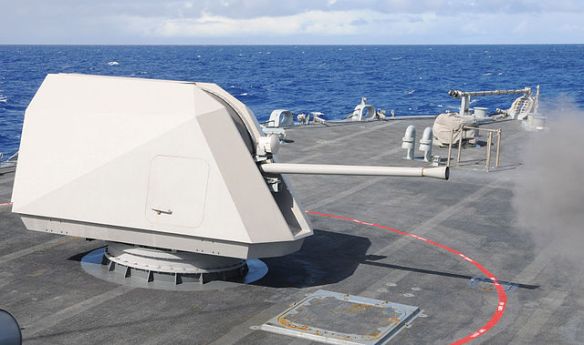
Photo: Mk110 57mm gun on USS Freedom (LCS-1) during surface gunnery test firing
The Mark 110 57mm gun, “was nowhere near meeting the requirements,” said Capt. Jim Downey, program manager for the DDG 1000 Zumwalt class.
In fact, Downey said, the 57mm gun — selected years ago for the DDG 1000 as a close-in weapon and in service as the primary gun for the littoral combat ship and Coast Guard national security cutters — is overrated.
“They were significantly over-modeled on the lethality,” he said. “The results of the actual live test-fire data was that the round was not as effective as modeled.”
For the DDG 1000’s particular requirements, however, Downey said the 30mm met more overall performance points than the 76mm or 57mm guns. All three guns were part of his program review, with the 30 coming in just ahead of the 76 and significantly ahead of the 57.
The program manager also contends the lighter weight of the Mk46 was not a consideration.
“That is absurd, the fact that we changed the guns for weights,” he said in a September interview. “The weight had zero, absolutely, 100 percent nothing to do with the decision on the guns.”
Still it is hard not to believe the choice was a result of a misguided, overly restricted decision criteria. Surely the criteria had to focus on effectiveness against swarms of small fast surface vessels, because the Mk46 has no AAW capability. Even this scenario has to be called into question because of the short effective range of the 30mm.
One retired senior surface warfare officer questioned the choice of the 30mm, which, he said, was effective only to about 2,200 yards.
“If they’re going to use the 30mm as the answer, they’re going to let some ships get in pretty close,” he said.
“When you look … at engaging swarm boats, [the 30mm] can’t even begin to engage effectively until they’re about a mile from the ship, and by then you’re in rocket-propelled grenade range,” the retired senior officer said. “The 57,” he added, “has an effective range of about two to three miles.”
Even if the criteria are flawed, the DDG-1000 program manager seems to know something about the 57mm that the Coast Guard does not. We probably should look at his team’s data.
As I have stated before, in order to minimize the probability that extemporized weapons could disable a cutter, the Coast Guard needs a standoff range of at least 4,000 yards so I cannot see how the 30mm is a good choice.
Still, if the 30mm more effective than the 57mm in the anti-surface mission, perhaps it is time to reconsider the choice of primary weapons for the OPCs? Should we go back to the 76mm or perhaps consider the 5″. Or should we dispense with a medium caliber gun entirely in favor of small guided missiles, with perhaps a weight/space/moment reservation for later installation if we become engaged in a prolonged major conflict?
The Coast Guard must also consider countering small fast surface craft but only in small numbers, with the likely complication that they would likely attempt to avoid the cutter rather than closing the range to attack it, and for that I believe small guided missiles are a better choice than any gun.
Earlier we talked about how the OPC might be designed for wartime, but built for peacetime. Recently I have come to believe the peacetime weapons outfit of virtually all cutters, WPC (perhaps WPB) and above, should include a stabilized heavy machinegun mount like the Mk38, some small precision guided weapons (like SeaGriffin, Hellfire, or Brimstone), and light weight anti-surface torpedoes (not to say they should not have other systems). This would allow all these cutters to fire warning shots (with the Mk38), destroy small, fast targets (using the guided weapons), and immobilize even large ships from outside the effective range of extemporized weapons (using the torpedoes). Right now, I don’t believe there is a light weight torpedo with an anti-surface capability in the US inventory, so we need some other system to provide this capability, until we can get the Navy to provide an appropriate torpedo, and we need to have it on relatively small cutters because when the need is recognized the NSCs and OPCs are not likely to be available.
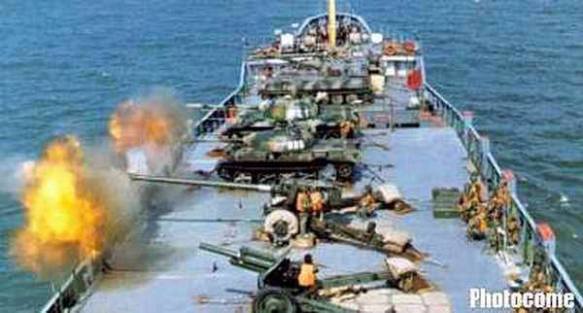
Photo: Extemporized weapons–actually a Chinese test



 Chuck Hill's CG Blog