Chuck Hill's CG Blog

Chuck Hill's CG Blog

Operation Nanook

The Arleigh Burke-class guided-missile destroyer USS Delbert D. Black (DDG 119) sails alongside the U.S. Coast Guard Cutter Northland (WMEC 904) and the Royal Canadian Navy offshore patrol vessels HMCS Margaret Brooke (AOPV 431) and HMCS Harry DeWolf (AOPV 430) during Operation NANOOK, Aug. 18, 2024. OP NANOOK is the Canadian Armed Forces’ annual series of Arctic exercises designed to enhance defense capabilities, ensure the security of northern regions, and improve interoperability with Allied forces. (U.S. Navy Photo by Mass Communication Specialist 3rd Class Rylin Paul)

Below is a 2nd Fleet news release regarding the Canadian lead NANOOK exercise.

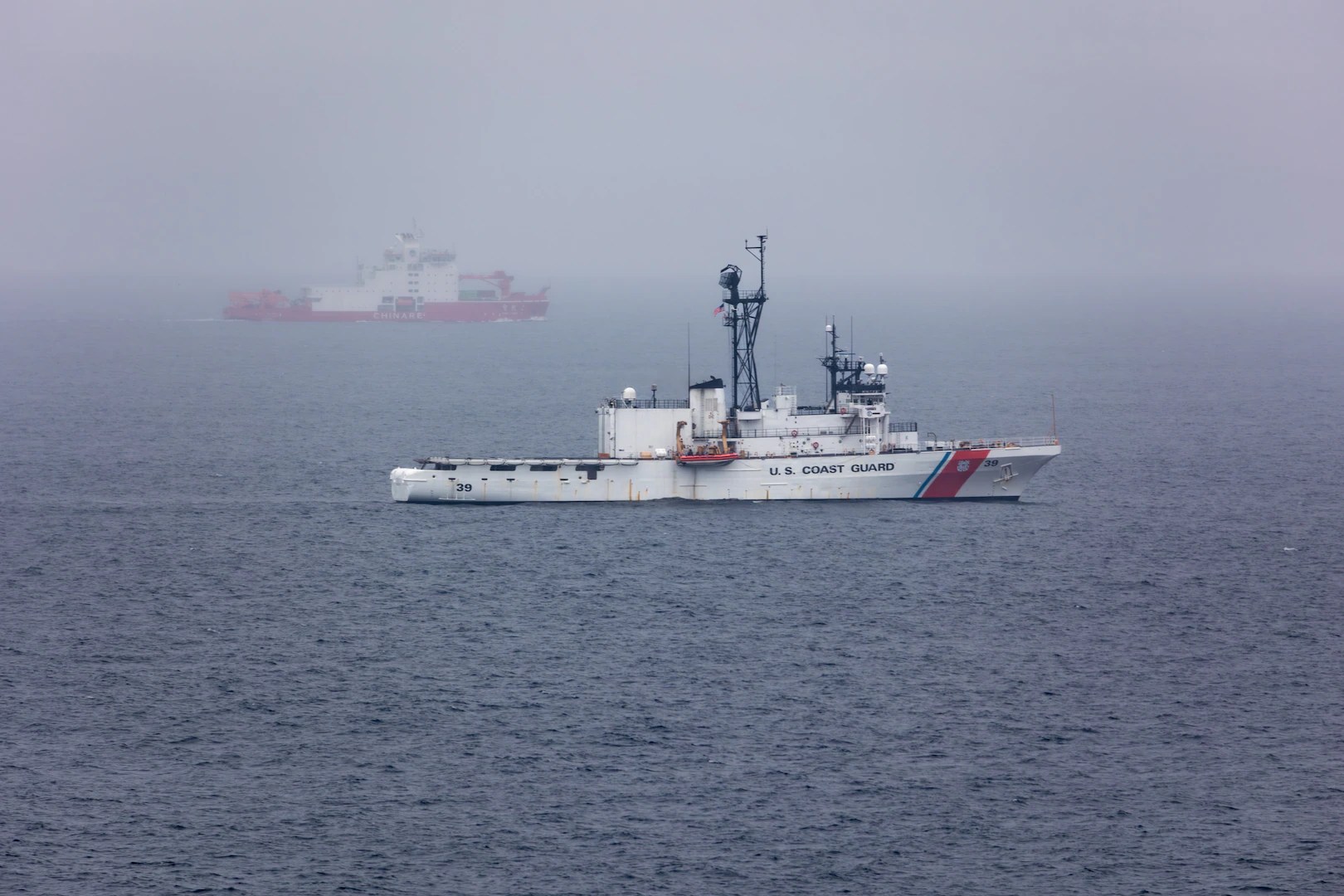
The Coast Guard has been participating in Operation NANOOK since at least 2010 initially with a buoy tender, but since 2020 with WMEC270s like Northland, and in 2021 with both a WHEC270 and a Fast Response Cutter.

Of the five ships that participated in the exercise, USS Delbert D. Black (DDG 119), Royal Canadian Navy’s Harry DeWolf-Class Offshore Patrol Vessels, HMCS Margaret Brooke (AOPV 431) and HMCS Harry DeWolf (AOPV 430); the Royal Danish Navy’s Knud Rasmussen-Class Patrol Vessel, HDMS Lauge Koch (P572); the U.S. Coast Guard Cutter, USCGC Northland (WMEC 904), all were offshore patrol vessels except the DDG. The Canadian and Danish ships were ice strengthened. The US ships were not.

Since the exercise took place in August the weather was probably about as mild as it gets at these high latitudes. It is not clear if the exercise included operations above the Arctic Circle.


NORFOLK, VIRGINIA, UNITED STATES

08.27.2024

Story by Petty Officer 2nd Class Anderson W Branch

Operation NANOOK 2024, an annual exercise led by the Canadian Armed Forces (CAF) and supported by the U.S. 2nd Fleet and U.S. Coast Guard, successfully concluded on August 26, 2024.

The exercise, which is the largest of its kind in the Arctic, highlighted the ability of multinational forces to interoperate effectively in the challenging northern environment, further strengthening the long-standing partnership between Canada and the United States.

Vice Adm. Doug Perry, Commander of U.S. 2nd Fleet, emphasized the importance of this partnership, stating, “Our partnership with Canada is built on a foundation of mutual respect and shared interests, particularly when it comes to securing the Arctic region. OP NANOOK demonstrated the strength of our collaboration and our shared commitment to maintaining stability in these strategic waters.”

Perry added, “The challenges posed by the Arctic environment require us to be adaptable and resilient. This year’s exercise has shown that our combined forces are more than capable of meeting those challenges head-on.”

OP NANOOK has consistently served as a critical platform for enhancing polar interoperability among Allied forces, and this year was no different. The exercise saw participation from the Royal Canadian Navy, the U.S. Coast Guard, the U.S. Navy, and the Royal Danish Navy. These forces engaged in a variety of complex maritime operations, including Maritime Interdiction Operations, gunnery exercises, search and rescue simulations, and fleet maneuver drills in the frigid waters near Nuuk, Greenland.

“This exercise is a testament to the strength and unity of our alliances,” said Perry. “Each year, OP NANOOK brings our nations closer together, enhancing our ability to operate effectively in the Arctic and ensuring that we are prepared for any contingency.”

The participation of the U.S. 2nd Fleet in OP NANOOK underscores the fleet’s commitment to Arctic operations as part of a broader strategy to ensure homeland defense and security in the northern regions. Earlier this year, the 2nd Fleet demonstrated its global readiness during Arctic operations in Steadfast Defender 2024, further solidifying its role as a key player in Arctic defense.

“Training in the North is particularly crucial as it increases our understanding of the unique operational and sustainment challenges experienced in the Arctic. By seizing every opportunity to train in this environment, we also further solidify our partnership among NATO allies while ensuring our readiness for future operations” emphasized Royal Canadian Rear Adm. David Patchell, Vice Commander of U.S. 2nd Fleet. “The importance of interoperability and shared experiences between NATO countries cannot be overstated. Through regular joint exercises in the Atlantic and Arctic regions, we continuously enhance our capabilities and strengthen our bond.”

As the Arctic continues to gain strategic importance, the U.S. Navy remains committed to working closely with its Arctic allies to ensure environmental stewardship and maintain stability in the region. The completion of OP NANOOK 2024 has provided participating forces with invaluable experience and has further reinforced the collective deterrence capability of allied and partner nations.

Participating units included the Royal Canadian Navy’s Harry DeWolf-Class Offshore Patrol Vessels, HMCS Margaret Brooke (AOPV 431) and HMCS Harry DeWolf (AOPV 430); the Royal Danish Navy’s Knud Rasmussen-Class Patrol Vessel, HDMS Lauge Koch (P572); the U.S. Coast Guard Cutter, USCGC Northland (WMEC 904); and the U.S. Navy’s USS Delbert D. Black (DDG 119).

With the conclusion of OP NANOOK 2024, participating units have returned to their respective homeports, better equipped to face the evolving challenges of the Arctic and to continue protecting shared interests in this increasingly vital region.

U.S. 2nd Fleet, reestablished in 2018 in response to the changing global security environment, develops and employs maritime forces ready to fight across multiple domains in the Atlantic and Arctic in order to ensure access, deter aggression and defend U.S., allied, and partner interests.

Air Operations in the Western Pacific–Operation NASSE / Island Chief

U.S. Coast Guard personnel from District Fourteen and Air Station Barbers Point pose for a photo with a member of the Royal New Zealand Air Force and Forum Fisheries Agency at the Regional Fisheries Surveillance Centre (RFSC) in Honiara, Solomon Islands, Aug. 13, 2024. An HC-130 Hercules airplane crew from Air Station Barbers Point toured the RFSC as part of their participation in Operation Island Chief, during which they searched over 232,100 square miles in the South Pacific to detect any illegal, unreported and unregulated fishing activity. (U.S. Coast Guard courtesy photo)

Below are two news releases reporting US Coast Guard participation in Operation NASSE, a joint Australia, France, New Zealand, and the U.S. effort in support of the Forum Fisheries Agency (FFA) in Honiara, Solomon Islands and the Western and Central Pacific Fisheries Commission.

Barbers Point HC-130Js flew in support of the mission July 1-12 and Aug. 5-16.

(While the second news release refers to an Operation Island Chief, the data reports, “Joint efforts for Operation Nasse covered over 7 million square miles, with the Coast Guard contributing…” so I may be a bit confused. Is Island Chief part of NASSE or entirely separate? At any rate, Coast Guard fixed wing aircraft have been operating out of New Zealand, Vanuatu, and Guadalcanal to counter Illegal, Unregulated, Unreported (IUU) fishing.)

This post from 2022 provides background on Operation NASSE.


HONOLULU – The U.S. Coast Guard completed participation in Operation Nasse, a three-month operation conducted by Australia, France, New Zealand, and the U.S. to safeguard the invaluable marine resources of Pacific Island nations and the Western Central Pacific Ocean, July 12.

From July 1-12, an HC-130J Hercules airplane crew from Coast Guard Air Station Barbers Point patrolled the South Pacific High Seas in and around the Exclusive Economic Zones of Australia, New Caledonia, Fiji, New Zealand, Tonga, Niue, and the Cook Islands to detect, investigate and report any illegal, unreported and unregulated (IUU) fishing activity.

During the operation, the Coast Guard collaborated with Pacific Quadrilateral Defense Coordinating Group (Pacific QUAD) partners to enhance their Monitoring, Control and Surveillance (MCS) tools and communications to support regional and national maritime surveillance efforts.

The wide-ranging operations were supported by the Pacific Islands Forum Fisheries Agency’s (FFA) Regional Fisheries Surveillance Center (RFSC) and several FFA members to reinforce the conservation work of the Western and Central Pacific Fisheries Commission (WCPFC) on the high seas. Alongside the P-QUAD partners, Fiji, Vanuatu, and the Cook Islands participated in the operation for the first time.

Coast Guard participation in Operation Nasse is part of Operation Blue Pacific, an overarching multi-mission Coast Guard endeavor promoting security, safety, sovereignty, and economic prosperity in the Pacific while strengthening relationships between partner nations.

“Oceania is vast, and the challenges of illegal fishing require a united front,” said Lt. Cmdr. Keith Arnold, HC-130J aircraft commander for U.S. Coast Guard Air Station Barbers Point. “Collaborating with the Pacific Quad and other regional partners to combine our resources and expertise to enhance monitoring tools is crucial to countering illegal fishing activities in Oceania. Sharing data, strengthening our communication networks, and coordinating patrols allows us to create a more comprehensive picture of what’s happening on the water in the region. This collaborative approach sends a strong message to those engaged in illegal fishing: we will work together to stop these activities and protect these vital resources.”

Joint efforts for Operation Nasse covered over 16,000 square miles, with the U.S. Coast Guard contributing:

  • Over 58 hours of flight time
  • 37 vessels sighted and analyzed
  • Four potential Conservation and Management Measures (CMM) violations reported
  • 240 hours of analyst-to-analyst collaboration and training

Located in Honolulu, U.S. Coast Guard District Fourteen covers more than 14 million square miles of land and sea, conducting operations over the Hawaiian Islands, American Samoa, Saipan, Guam, Singapore and Japan.

For more information follow us on FacebookX, and Instagram.


Aug. 19, 2024

U.S. Coast Guard completes Operation Island Chief in Pacific region

Coast Guard District 14 External Affairs – Office: (808) 535-3230 / After Hours: (808) 265-7748

HONOLULU – The U.S. Coast Guard completed Island Chief, a 13-day operation to safeguard the invaluable marine resources of Pacific Island nations and the Western Central Pacific Ocean.

From Aug. 5-16, an HC-130 Hercules airplane crew from Coast Guard Air Station Barbers Point patrolled the South Pacific High Seas in and around the exclusive economic zones of Fiji, Federated States of Micronesia, Kiribati, Palau, Papua New Guinea, Nauru, Republic of Marshall Islands, Solomon Islands, Tuvalu and Vanuatu to detect, investigate and report any illegal, unreported and unregulated (IUU) fishing activity.

The Hercules crew worked with the Regional Fisheries Surveillance Centre, a part of the Forum Fisheries Agency (FFA) in Honiara, Solomon Islands, to reinforce the conservation work of the Western and Central Pacific Fisheries Commission.

Coast Guard participation in Operation Island Chief is part of Operation Blue Pacific, an overarching multi-mission Coast Guard endeavor promoting security, safety, sovereignty and economic prosperity in the Pacific while strengthening relationships between partner nations.

The Coast Guard conducted Operation Island Chief alongside the Pacific Quadrilateral Defense Coordinating Group (Pacific QUAD), in support of the Pacific Islands FFA and its members.

FFA Director General Dr. Manu Tupou-Roosen highlighted the significance of the FFA-led Operation Island Chief 2024, coordinating surveillance efforts for participating Members.

“Operation Island Chief reinforces FFA’s commitment to sustainable fisheries management and maritime security in the Pacific,” said Dr. Tupou-Roosen. “This operation exemplifies the spirit of regional collaboration and determination among Pacific Island nations. The compliance checks of vessels and operators through a robust regional surveillance operation ensures effective management regime and preserving our marine resources, as well as securing the livelihoods and food security of our people.”

“Given the vastness of the Pacific region, close collaboration between U.S. Coast Guard personnel, patrol assets and regional partners is integral to sustained success in combatting IUU fishing across the region,” said Marc Stegman, IUU fishing strategic advisor, Coast Guard District Fourteen.

Joint efforts for Operation Nasse covered over 7 million square miles, with the Coast Guard contributing:

  • Over 37 hours of flight time
  • Over 10,500 miles flown
  • Over 232,100 square miles searched
  • Three missions flown from Vanuatu and four missions flown from Solomon Islands
  • 70 vessels sighted and analyzed

Located in Honolulu, U.S. Coast Guard District Fourteen covers more than 14 million square miles of land and sea, conducting operations over the Hawaiian Islands, American Samoa, Saipan, Guam, Singapore and Japan.

For more information follow us on FacebookX, and Instagram.

“USCG RDC: Vessels, Tech, Partnerships Help to Thwart Narcotics, Human Smugglers” –Marine Link

Maritime Object Tracking Technology or MOTT. Image courtesy US Coast Guard RDC

Marine Link has a story about the Coast Guard Research and Development Center (RDC), including the origin of the devices in the photo above. In addition to making the position of jettisoned contraband, I presume they might also be useful in the case of a man overboard.

They are also working on sense and avoid capabilities to allow over the horizon operation of small UAS that can be operated from units without a flight deck, and there is more.


ICE Pact

USCGC Healy and CCGS Louis S St.Laurent

BreakingDefense has an article reviewing the Geopolitical situation in the Arctic and the rationale behind the Icebreaker Collaboration Effort Pact, or ICE Pact.

Notably missing from the article was any suggestion of the greater aims of the PACT. Apparently, there is much more to this than the currently planned icebreakers for the US and Canadian Coast Guards.

Several of Finland’s icebreaker vessels moored in the South Harbour at the port of Helsinki in Helsinki, Finland, May 3, 2023. Finland is among the most active builders of icebreakers. (Andrey Rudakov/Bloomberg via Getty Images)

From an earlier The War Zone report,

In an ambitious effort to counter Chinese and Russian influence in the High North, the U.S., Canada and Finland have created a resource-pooling plan to help meet a projected demand for as many as 90 icebreakers among allied nations over the next decade. These vessels offer a critical capability in a region with increasing strategic significance.

:…if we look at Allied nations that are trying to purchase icebreakers over the next decade, it’s 70 to 90 vessels.”

I don’t really see a market for 90 icebreakers that only break ice for other ships to follow. Neither report talked about potential changes in Antarctica, but both poles may see more research followed by mineral extraction and possible over-fishing. The ships building now will still be relatively young when the Antarctic Treaty is up for renegotiations in 2048, if it lasts that long, and establishing a strong negotiating position requires commitment between now and then. Allies in South America, Australia, and New Zealand will certainly be concerned about developments in Antarctica.

There may be a market for large numbers of ships that can safely transit the margins of the Arctic Ocean either as a short cut between the Atlantic and Pacific or for access to minerals in the Arctic.

Theoretically there are three possible shipping routes through the Arctic. Only the Northern Sea Route is seeing significant commercial exploitation.

 “The distance from Shanghai to German ports is over 4,600km (about 2,900 miles) shorter via the Northern Route than via the Suez Canal.”

Russia sees the Northern Sea Route as a money maker charging fees for Russian pilots and Russian icebreaker support.

Naturally potential users may hope to avoid Russian fees by transiting areas just North of the Northern Sea Route. Icebreaking hulls might make that possible, but as long as they are transiting Russia’s EEZ, Russia is likely to demand use of their services and payment of the fees under the pretext of protecting the environment.

This is likely to result in raised tensions in the Arctic.

Other icebreakers might be warships, patrol vessels, tankers or container ships. They might be support vessels for mineral extraction industry. I doubt that many will be full-time heavy icebreakers.

Russia needs lots of icebreakers partly because they have ports serving a large mineral extraction industry in the Arctic. The US is already extracting oil from the North Slope but has not needed a lot of icebreakers to support that industry, because they built the pipeline to Valdez. Drilling for oil in the Arctic Ocean is going to be challenging for a very long time because of icefloes, but Canada has a lot of land area including many islands, in the Arctic where minerals might be found, so we might see development in the Canadian high north, similar to what we see in the Russian Arctic.

There is more here, Canadian Shipbuilder Davie Wants to Invest in the U.S.

“U.S. Coast Guard Cutter Healy arrives in Seattle following scientific research, onboard fire” –CG News

The Coast Guard Cutter Healy (WAGB 20) returns to Seattle following a two-month Arctic patrol, Aug. 16, 2024. The Healy is the United States’ largest Polar icebreaker and was commissioned in 2000. (U.S. Coast Guard photo by Petty Officer 2nd Class Taylor Tracy)

Below is a Coast Guard News release.

Actually, sounds like they got a lot of this season’s Arctic research completed.

Also appears the redundancy that frequent contributor “Tups” talked about in an earlier comment section kept both shafts turning. These were his comments.

“The general layout is pretty standard and inherently pretty redundant: a split power plant and main switchboard, cross-connected propulsion transformers, and double-wound propulsion motors. The design ensures that in the event of any single component failure — diesel generator, switchboard, propulsion transformer, frequency converter, or even some components within the propulsion motor — both shafts would remain turning. This is extremely important on an icebreaker as a non-rotating propellers can be easily damaged by ice. Of course the ship’s operational capability would be limited and a lower-priority mission would likely be cancelled.”


Aug. 16, 2024

U.S. Coast Guard Cutter Healy arrives in Seattle following scientific research, onboard fire

The Coast Guard Cutter Healy (WAGB 20) returns to Seattle following a two-month Arctic patrol, Aug. 16, 2024. The Healy is the United States' largest Polar icebreaker and was commissioned in 2000. (U.S. Coast Guard photo by Petty Officer 2nd Class Taylor Tracy) The Coast Guard Cutter Healy (WAGB 20) crewmembers conduct mooring operations after returning to their Seattle home port, Aug. 16, 2024. The Healy is the United States' largest polar icebreaker and was commissioned in 2000. (U.S. Coast Guard photo by Petty Officer 2nd Class Briana Carter) The Coast Guard Cutter Healy (WAGB 20) crewmembers conduct mooring operations upon returning to their home port at Coast Guard Base Seattle, Aug. 16, 2024. The Healy conducted a two-month Arctic patrol. (U.S. Coast Guard photo by Petty Officer 2nd Class Briana Carter) The Coast Guard Cutter Healy (WAGB 20) returns to Seattle following a two-month Arctic patrol, Aug. 16, 2024. The Healy is the United States' largest Polar icebreaker and was commissioned in 2000. (U.S. Coast Guard photo by Petty Officer 2nd Class Briana Carter)
Members of the U.S. Coast Guard Cutter Healy (WAGB 20) deck department and the embarked science party aboard Healy deploy a subsurface mooring in the Beaufort Sea, July 14, 2024. This mooring is equipped with multiple sensors that collect oceanographic data pertaining to the physical, chemical, and biological properties of the Arctic Ocean. U.S. Coast Guard photo. U.S. Coast Guard Cutter Healy (WAGB 20) transits near West Seattle as the cutter approaches its homeport at Coast Guard Base Seattle, Aug. 16, 2024. The crew returned home following a two-month Arctic patrol. (U.S. Coast Guard photo by Petty Officer 1st Class Steve Strohmaier) USCGC Healy (WAGB 20) steams alongside USCGC Kimball (WMSL 756) near Unimak Pass, Alaska, July 3, 2024. Healy, a polar icebreaker, and Kimball, a national security cutter, patrol the waters around Alaska to maintain maritime safety, security, and stability in the region. U.S. Coast Guard photo by Chief Warrant Officer Brian Williams. Members of the U.S. Coast Guard Cutter Healy (WAGB 20) deck department and the embarked science party aboard Healy deploy a subsurface mooring in the Beaufort Sea, July 16, 2024. This mooring is equipped with multiple sensors that collect oceanographic data pertaining to the physical, chemical, and biological properties of the Arctic Ocean. U.S. Coast Guard photo by Ensign Daniella Tipton.

SEATTLE — U.S. Coast Guard Cutter Healy (WAGB 20) arrived in Seattle Friday after conducting scientific research in the Pacific sector of the Arctic Ocean in support of the Arctic Observing Network, funded by the U.S. National Science Foundation (NSF).

Healy’s crew and embarked researchers conducted more than 150 conductivity, temperature, and depth (CTD) casts to investigate the circulation and properties of the water, monitored for signs of harmful agal blooms, and collected observations on marine mammals and birds in the Bering, Chukchi, and Beaufort Seas.

Additionally, two subsurface moorings were deployed that are equipped with multiple sensors collecting oceanographic data on the physical, chemical, and biological state of the Arctic Ocean. This year’s work builds on more than two decades of research to improve understanding of the Pacific Arctic ecosystem in a changing climate.

On July 25, 2024, while underway in the vicinity of Banks Island, Northwest Territories, Canada, Healy experienced an electrical fire on a transformer impacting one of the ship’s two main propulsion motors. The crew swiftly extinguished the fire with no personnel casualties. Healy’s crew and contractors restored power to the affected motor. However, out of abundance of caution, the cutter returned to Seattle to ensure all redundant systems are fully operational before returning to the Arctic.

“Healy’s crew and scientific researchers completed valuable data collection throughout the Bering Sea and the eastern Beaufort Sea in support of the Arctic Observing Network,” said Capt. Michele Schallip, Healy’s commanding officer. “While transiting to a collection site, we suffered a fire on a transformer. I am immensely proud of the crew for quickly extinguishing the fire and limiting damage to that equipment. In the Arctic, there are few rescue resources, and ice-covered waters make it difficult for rescue assets. Crews operating in polar waters must be well-trained for emergency response, and responsible operation includes addressing any system degradation on a vessel before continuing operation in the high latitudes.”

Healy is the United States’ largest polar icebreaker and the Coast Guard’s only icebreaker designed and equipped with scientific instrumentation by the NSF to support Arctic research. The platform is ideally specialized for scientific missions, providing access to the most remote reaches of the Arctic Ocean. Healy is designed to break 4.5 feet of ice continuously at three knots and can operate in temperatures as low as -50 degrees Fahrenheit.

“Globally deployable Coast Guard units conclude participation in RIMPAC 2024” –Coast Guard News & Why No Missiles On Cutters?

U.S. Coast Guard Diver 2nd Class Connor Madsen, Regional Dive Locker West, cuts line, freeing a bundled chain to hook it onto a sunken buoy during a training exercise with the Republic of Korea Navy Underwater Construction Team divers off the coast of Oahu, Hawaii, July 18, during Exercise Rim of the Pacific (RIMPAC) 2024. Twenty-nine nations, 40 surface ships, three submarines, 14 national land forces, more than 150 aircraft, and 25,000 personnel are participating in Exercise Rim of the Pacific (RIMPAC) 2024 in and around the Hawaiian Islands, June 27 to Aug. 1. The world’s largest international maritime exercise, RIMPAC provides a unique training opportunity while fostering and sustaining cooperative relationships among participants critical to ensuring the safety of sea lanes and security on the world’s oceans. RIMPAC 2024 is the 29th exercise in the series that began in 1971. (U.S. Navy photo by Chief Mass Communication Specialist Kathleen Gorby)

Below is a press release from Coast Guard News.

RIMPAC 2024 was a big complex event. I had hoped to hear more about the Coast Guard’s participation, perhaps a release from each of the units, like the Pacific Strike Team did (linked in the news release), particularly news about the National Security Cutter (NSC) Midgett’s participation.

Was her CO a task force commander? Did she host a Navy helicopter? Did they do an anti-submarine exercise? NSCs did these things in the previous two RIMPACs.

This is what we got about Midgett’s role,

“Coast Guard Cutter Midgett conducted a broad spectrum of operations with the Canadian MV Asterix, Italian Navy offshore Patrol Vessel ITS Montecuccoli, Arleigh Burke-class guided-missile destroyer USS Kidd (DDG 100), Royal Brunei Navy offshore patrol vessels KDB Darussalam and KDB Darulaman, Mexican Navy frigate ARM Benito Juarez and the ROK Navy submarine Lee Beom-seok. Operations covered both national defense as well as humanitarian assistance and disaster relief missions.”

Seven surface ships, embarked helicopters, and a submarine. That looks like a task force and Midgett’s CO was probably the senior officer among the ships’ crews, but someone else might have been assigned to command the task force. The presence of a submarine suggests ASW exercises. Some of the photos that accompany the news release give us some clues.

The U.S. Coast Guard helicopter tie-down team aboard legend-class cutter USCGC Midgett (WMSL 757) secures a Mexican navy Panther Helicopter ANX 2161 during Exercise Rim of the Pacific (RIMPAC) 2024 off the coast of Hawaii, July 14.  (U.S. Coast Guard photo by David Lau)

Legend-class cutter USCGC Midgett (WMSL 757) hosts a multi-ship interdiction and boarding exercise with Italian Navy offshore patrol vessel ITS Montecuccoli (P 432), who fast-roped a boarding team of seven onto Midgett simulating an at-sea boarding of a suspected arms smuggling vessel during Exercise Rim of the Pacific (RIMPAC 2024), July 15, while underway in the Pacific Ocean. (U.S. Coast Guard photo by David Lau)

The press release linked above also has a photo of Midgett’s 57mm Mk110 gun firing. We can also be pretty sure Midgett did an underway replenishment.

Would love to hear more from people who were there.


I will make one observation. Of the six surface combatants, Midgett was the only one that did not have missiles of any sort.

  • Obviously, USS Kidd, a DDG, is well equipped with 96 VLS cells for very sophisticated missiles.
  • Italian offshore Patrol Vessel ITS Montecuccoli would probably be considered a frigate in any other navy. It is about a third larger than Midgett and has 16 full size VLS and eight ASCMs.
  • Mexican Navy ARM Benito Juarez , classified as a “long-range ocean patrol ship,” is about two thirds the size of Midgett and has eight Mk41 VLS and a SeaRAM system. 
  •  Royal Brunei Navy offshore patrol vessels KDB Darussalam and KDB Darulaman,  are a little more than one third the size of Midgett. Each can be equipped with four Exocet anti-ship cruise missiles. 

Of the five missile carriers, four are described as Offshore Patrol Vessels. That is what Midgett is.

The Coast Guard seems to be allergic to putting missiles on their ships, as if they are super weapons reserved only for the most sophisticated ships. Why I reported to the Academy in 1965, 59 years ago, that may have been the case, but now they come in all sizes and shapes. There is a good reason for this proliferation. They are effective. Many require very little training and little or no maintenance. They can provide an outsized effect at relatively low cost.

A common argument is that the price of a cannon projectile is far less than the cost of a missile, but that limited view misses the point that total lifecycle costs for missile systems may be much less than the cost of a gun system and its magazine load out of hundreds of rounds.

Maybe if you expect to do shore bombardment, firing thousands of ammunition at a target area, rather than a particular point, maybe guns are the smart choice, but the smaller the number of expected engagements, the smaller the number of rounds expected to be fired in each engagement, and the quicker you need to take out the threat, the more attractive missiles become.

Is seeing a missile system on a Coast Guard cutter going to make it look more threatening or aggressive, assuming we want to avoid looking like we can defend ourselves?

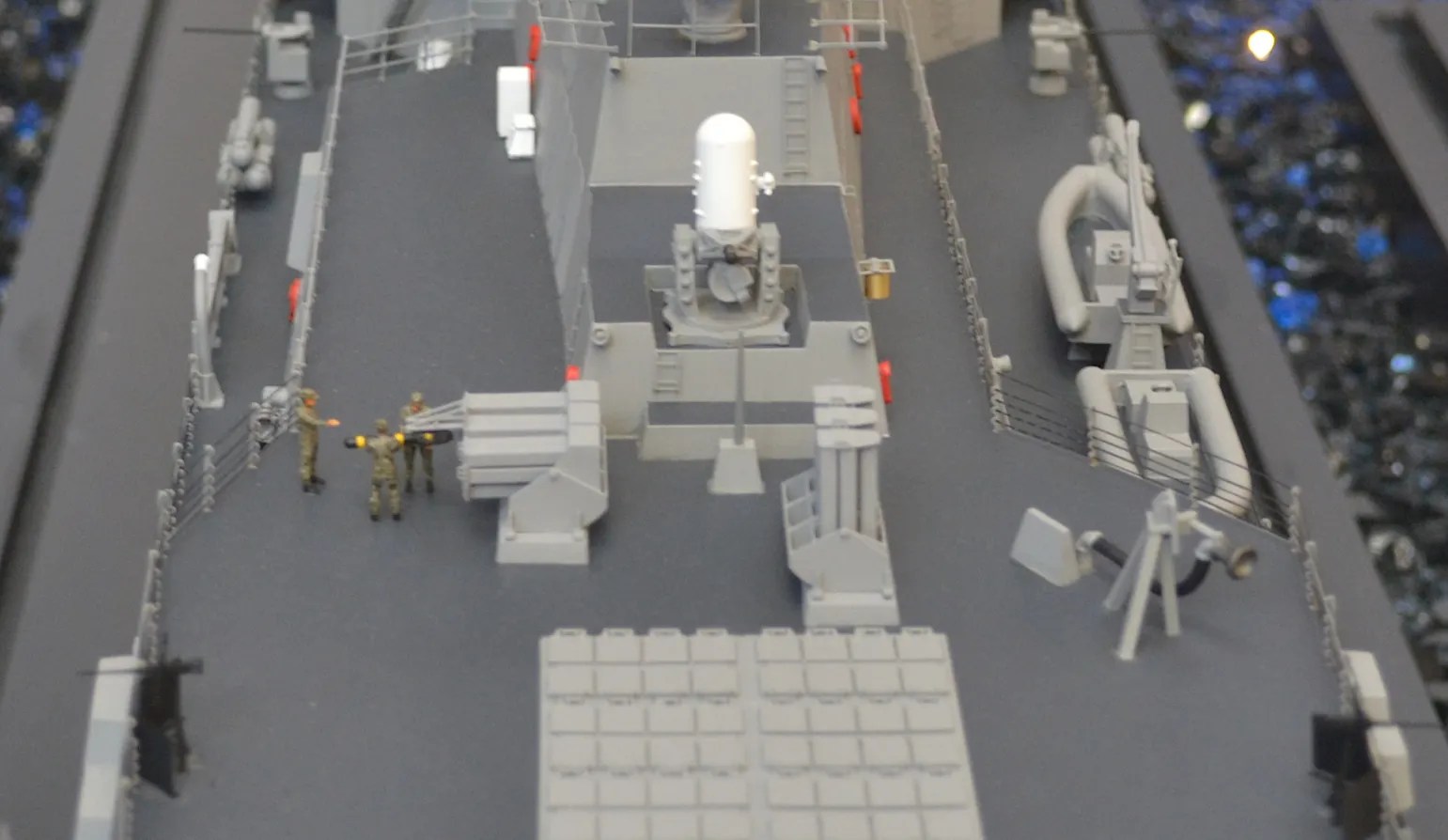
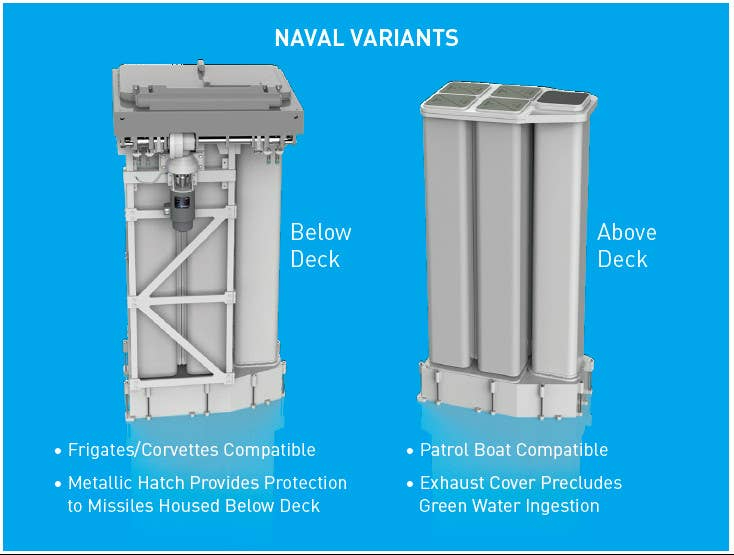
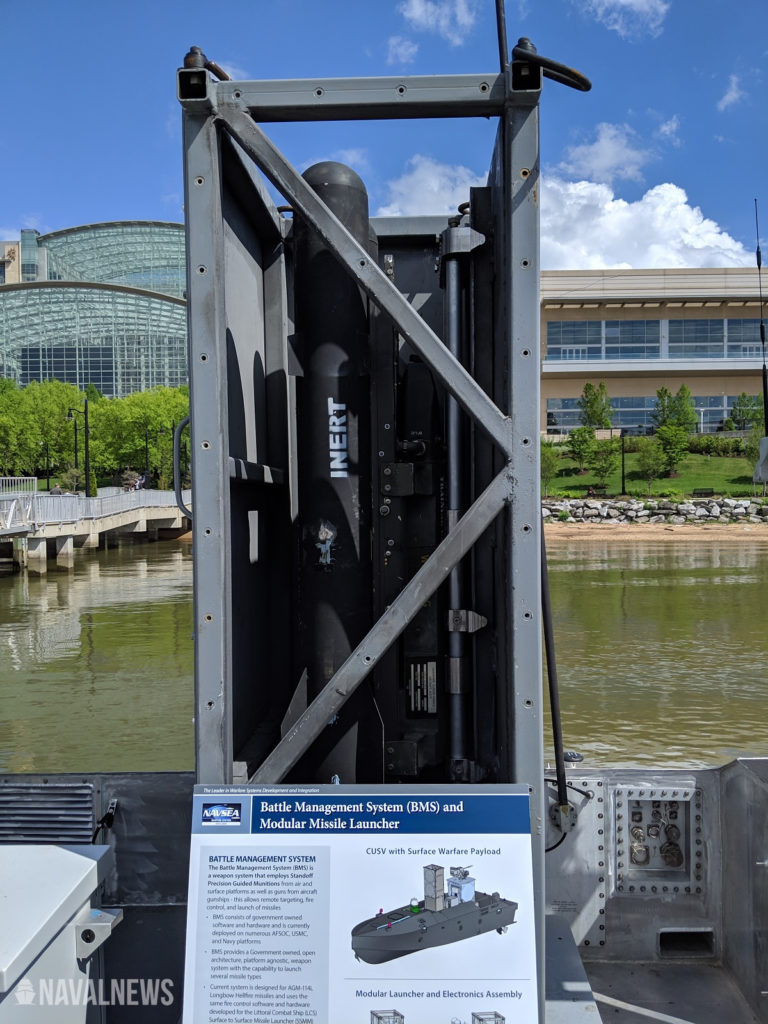
Guns, even as small as the 57mm Mk110 are pretty obvious and recognizable. Missile launcher can be much less obvious and may be overlooked entirely. Vertical Launch systems (VLS) barely protrude above the deck. Launchers for APKWS, Hellfire and similar systems may escape notice entirely. (My wife says most warship just look like a pile of junk.)

Guided weapons offer other advantages as well:

  • There is less likelihood of collateral damage.
  • We can put missiles on smaller platforms that could never mount guns with similar capability.
  • Visible missiles systems can be temporarily removed much easier that gun systems. (It can be very obvious whether or not a ship is carrying anti-ship cruise missiles like Harpoon or Naval Strike Missile.)

Aug. 10, 2024

Globally deployable Coast Guard units conclude participation in RIMPAC 2024

HONOLULU – Four Hawaii-based and two California-based Coast Guard units, all globally deployable, concluded operations at the Rim of the Pacific (RIMPAC) 2024 Exercise and returned to service of the residents of Hawaii and the Pacific region, Aug. 1.

U.S. Coast Guard Cutters Midgett (WMSL 757) and Juniper (WLB 201), the Regional Dive Locker Pacific, Port Security Unit (PSU) 311, the Pacific Strike Team and Maritime Safety and Security Team (MSST) Honolulu partnered with military members from Peru, Mexico, Republic of Korea, Italy, Brunei and Japan throughout the in-port and at-sea portions of the RIMPAC Exercise, which ran from late June to early August. The exercise marked a series of “firsts” for Coast Guard participation.

PSU 311 was the first PSU to deploy to a RIMPAC exercise, where they set up a forward-deployed security force on land and on sea. They conducted vessel escorts of high-value U.S. and partner nation ships and patrolled both on land and water. They hosted advisors from the Naval Cooperation and Guidance for Shipping group in their tactical operations center – an essential international service in protecting merchant ships traveling through hazardous areas. They also partnered with MSST Honolulu and divers from the Coast Guard and the Republic of Korea (ROK) Navy to conduct underwater port surveys following a simulated natural disaster, a key part of the port reopening process that is essential to saving lives in emergencies.

The Coast Guard Pacific Strike Team also completed a first-of-its-kind deployment, partnering with forces from Mexico and Peru to conduct urban search-and-rescue exercises on water and land. A full summary of their efforts is available here.

The Coast Guard Regional Dive Locker Pacific completed its most thorough humanitarian response exercise at RIMPAC to date, partnering with the ROK Navy to conduct harbor surveys, underwater pier inspections, and land and shipboard-based buoy salvage operations. Their collaboration will prove instrumental in speedy response to future disasters.

Coast Guard Cutter Midgett conducted a broad spectrum of operations with the Canadian MV Asterix, Italian Navy offshore Patrol Vessel ITS Montecuccoli, Arleigh Burke-class guided-missile destroyer USS Kidd (DDG 100), Royal Brunei Navy offshore patrol vessels KDB Darussalam and KDB Darulaman, Mexican Navy frigate ARM Benito Juarez and the ROK Navy submarine Lee Beom-seok. Operations covered both national defense as well as humanitarian assistance and disaster relief missions.

“The global maritime environment is too large and complex for any one nation to safeguard – we have always relied on strong international partnerships to serve the larger Pacific community,” said Vice Adm. Andrew J. Tiongson, Commander of Coast Guard Pacific Area and Commander of Defense Force West. “In RIMPAC and beyond, we continually work with our partners to remain integrated and prepared. Through exercises, real-world operations, and a spirit of collaboration, we work together for a free and open Indo-Pacific region.”

RIMPAC 2024 was the 29th exercise in the series that began in 1971. As the world’s largest international maritime exercise, RIMPAC combines force capabilities in a dynamic maritime environment to demonstrate enduring interoperability across the full spectrum of military operations.

“Coast Guard Cancels Icebreaker Healy’s Arctic Mission” –USNI

US Naval Institute News Service reports,

“An electrical fire in a transformer forced USCGC Healy (WAGB-20), one of two American icebreakers, to cancel its Arctic mission, USNI News has learned.”

The fire and Healy’s return to port have been mentioned in comments here at least a couple of time, but this clearly puts an end to any possibility the ship might be quickly repaired and return to the Arctic this year. “This is the second time in four years that a fire cut Healy’s summer mission short.”

The post talks a bit about “…controlled parts exchange with other ships at the pier. That’s a fancy term for cannibalization.” That helps keep Polar Star and the medium endurance cutters operational, but Healy is one of a kind so that is not even a possibility for some systems.

Keeping ships reliable and underway as they approach and pass 30 years of age gets increasingly difficult and possibly uneconomical. In this case, where we have no “bench strength,” it could be disastrous.

“Coast Guard Cutter Eagle and USS Constitution get underway in Boston with a 21-gun salute” –CG News

The U.S. Coast Guard Cutter Eagle (WIX 327) passes USS Constitution in Boston Harbor during the ship’s July Fourth turnaround cruise as part of Boston Navy Week. Boston Navy Week is one of 15 signature events planned across America in 2012. The eight-day event commemorates the bicentennial of the War of 1812, hosting service members from the U.S. Navy, Marine Corps and Coast Guard and coalition ships from around the world. (U.S. Navy photo by Sonar Technician (Submarine) 2nd Class Thomas Rooney/Released)

Below is an Atlantic Area news release on Coast Guard News. Wish I could see this.

Coast Guard Academy Cadets climb the rigging of Coast Guard Cutter Eagle (WIX 327) while underway July, 30, 2024. The Eagle serves as a classroom at sea for Academy Cadets and future leaders in the Coast Guard. (U.S. Coast Guard photo by Petty Officer 3rd Class Matt Thieme)

Aug. 7, 2024

BOSTON — U.S. Coast Guard Cutter Eagle (WIX 327) is scheduled to rendezvous with USS Constitution at approximately 11:30 a.m. Friday, in the vicinity of Castle Island, in Boston, Massachusetts, where the Constitution will fire a 21-gun salute.

Constitution will also fire a 17-gun salute as it passes U.S. Coast Guard Base Boston, the historic site of Edmund Hartt’s Shipyard where Constitution was built and launched on October 21, 1797.

Media members interested in riding in with Eagle for this transit can coordinate through Petty Officer Kate Kilroy at katlin.j.kilroy@uscg.mil. Those interested should RSVP by 3 p.m. Thursday and plan to be at Coast Guard Base Boston no later than 7:45 a.m. Friday.

Eagle will moor at Coast Guard Base Boston following the transit. On Saturday and Sunday, Eagle will be available for free tours for the following dates and times:

  • Saturday (10 a.m. to 7 p.m.)
  • Sunday (10 a.m. to 7 p.m.)

Military members and first responders with valid ID can attend tours one hour prior to posted tour times.

Media is invited to tour Eagle and conduct interviews from 10:00 a.m. to 11:00 a.m. on Saturday. Those interested should RSVP at katlin.j.kilroy@uscg.mil by 5 p.m. Friday.

At 295 feet in length, Eagle is the largest tall ship flying the stars and stripes and the only active square-rigger in United States government service. Eagle has served as a classroom at sea to future Coast Guard officers since 1946, offering an at-sea leadership and professional development experience as part of the U.S. Coast Guard Academy curriculum.

Eagle is a three-masted barque with more than 22,300 square feet of sail and six miles of rigging. The cutter was constructed in 1936 by the Blohm and Voss Shipyard in Hamburg, Germany. Originally commissioned as the Horst Wessel by the German navy, Eagle was a war reparation for the United States following World War II.

Additional information about the Eagle can be found here. The Eagle’s design dimensions can be found here.

For more information about Eagle, including port cities, tour schedules, and current events, follow the “United States Coast Guard Barque EAGLE” Facebook page or on Instagram @barqueeagle. All U.S. Coast Guard imagery is in the public domain and is encouraged to be shared widely.

Thanks to Paul for bringing this to my attention.

“Coast Guard participates in multinational exercise near Galapagos Islands” –Coast Guard News

The U.S. Coast Guard joined coast guards and navies from 13 nations, between June 24 and July 9, in an exercise hosted by Ecuador to align international mission priorities seeking to ensure the defense, security, multinational cooperation and governance of the maritime domain of the Eastern Pacific Ocean. (U.S. Coast Guard photo)

Below is a release from Coast Guard News. More photos and a video there. 

This is another outstanding performance by a Webber class WPC. District Eleven has sent Fast Response Cutters (FRC) down to the Eastern Pacific Drug transit zones before, but this is further and unlike previous deployments, the little ship was not accompanied by an accompanying larger vessel. 

No reason this size vessel should not be able to do it, but it requires a lot of planning. Fortunately, there is a new Expeditionary Logistics Element to provide support.

I would note that, despite the fact that the Atlantic Area has far more FRCs and at least 20 of them are closer to the Eastern Pacific than the four FRCs based in San Pedro, no Atlantic Area FRCs have made it into the Eastern Pacific. Perhaps this is a prototype operation, a proof of concept. Pac Area has proven its possible.


U.S. Coast Guard District 11, Aug. 6, 2024

ALAMEDA, Calif. – The U.S. Coast Guard joined coast guards and navies from 13 nations, between June 24 and July 9, in an exercise hosted by Ecuador to align international mission priorities seeking to ensure the defense, security, multinational cooperation and governance of the maritime domain of the Eastern Pacific Ocean.

The Eleventh Coast Guard District employed the Coast Guard Cutter Benjamin Bottoms, a 154-foot Fast Response Cutter, and subject matter experts to engage in professional exchanges with international partners completing a variety of exercises centered around countering illegal, unreported, and unregulated (IUU) fishing operations.

“Fostering strong diplomatic and operational relationships between the U.S. and partner nations is essential in having improved maritime security and governance,” said Capt. Jason Hagen, Eleventh District chief of Enforcement Division. “By participating in exercises like Galapex, the U.S. Coast Guard can assess and understand operational capabilities of other nations in the IUU domain, which strengthens future joint multi-agency and multi-national maritime operations.”

During the exercise, participants simulated real-world scenarios to refine response strategies for IUU fishing activities. The exercise helped participating nations to develop and refine procedures in enforcing maritime law.

“As the sole U.S surface asset to participate in the exercise, the cutter executed our first unsupported expeditionary patrol to the Southern Hemisphere in the Eastern Pacific area of operations,” said Lt. Cmdr. Allice Gholston, commanding officer of the USCGC Benjamin Bottoms (WPC-1132). “The crew engaged with 14 partner nations both on land and at sea and did so in impeccable fashion. We encourage the continued partnership with the Ecuador Navy in future iterations of Galapex.”

Transiting 3,500 miles from homeport to Ecuador and Galapagos Islands, the crew pushed the boundaries of mission sets and downrange operations. The ability to conduct expeditionary operations in support of our Central and South American partners could only be possible with the support of the Coast Guard’s Expeditionary Logisitics Element (LOG-X), providing foreign port contracting services and advanced medical staffing through the deployable independent duty health services technician billet.

Working with the CG Attache in the U.S. Embassy Quito, the cutter enacted the ship rider program under the maritime bilateral agreement with Ecuador, hosting an Ecuadorian Coast Guard officer while underway.

The scenarios were run out of Ecuador’s Maritime Operations Center in Salinas, Ecuador. Drills included nine ships including the cutter Benjamin Bottoms operating as a task force and implementing standard procedures and considerations for illegal, unreported, and unregulated (IUU) fishing operations within the South Pacific Regional Fisheries Management Organization (SPRFMO) high seas boarding inspections.

“AC-130J Ghostrider Hammers Amphibious Warship During Rare Appearance At Sinking Exercise” –The War Zone

The War Zone provides a video of one minute and 36 seconds of a RIMPAC2024 SINKEX.

The firing platform is an Air Force AC-130J and the weapons used were a 105mm (4.1″) howitzer and a 30mm chain gun.

As noted previously, to respond to a terrorist threat, the Coast Guard needs to be able to forcibly stop any ship, regardless of size. I don’t think the weapons the Coast Guard has can do that. So, I wanted you to see the effects of the weapons used in the video.

We already know that 30mm rounds, weighing about twice as much as the 25mm rounds, are much more effective. In a US Navy test against boats (65 feet long or smaller), the 30mm did nine times the damage to the hull and five times the damage inside the hull. The 25mm rounds, exploding on impact, failed to even penetrate the 1/4 inch aluminum hull of the Mk3 target boat.

Against larger targets, is even the 30mm gun used in the new Mk38 Mod4 effective? It appears the rounds may be exploding on impact. You would not want to be out on deck when this happening, but it appears the rounds may be exploding on contact and not penetrating.

The 57mm round is about 7 times larger than the 30mm, but still relatively small for a naval gun.

You see a hit from the 105mm at 30 seconds. The 105mm fires a 33 pound projectile, about 5 and a half times larger than the 57mm. It would have probably killed anyone in the bridge, but even it did relatively little damage to the structural integrity of the ship. It did not seem that any of the damage effected the engineering plant or the watertight integrity of the ship.

Getting a mobility kill on a ship with gun fire is extremely difficult. What the Coast Guard has is not what it needs.

More here, here, and here.