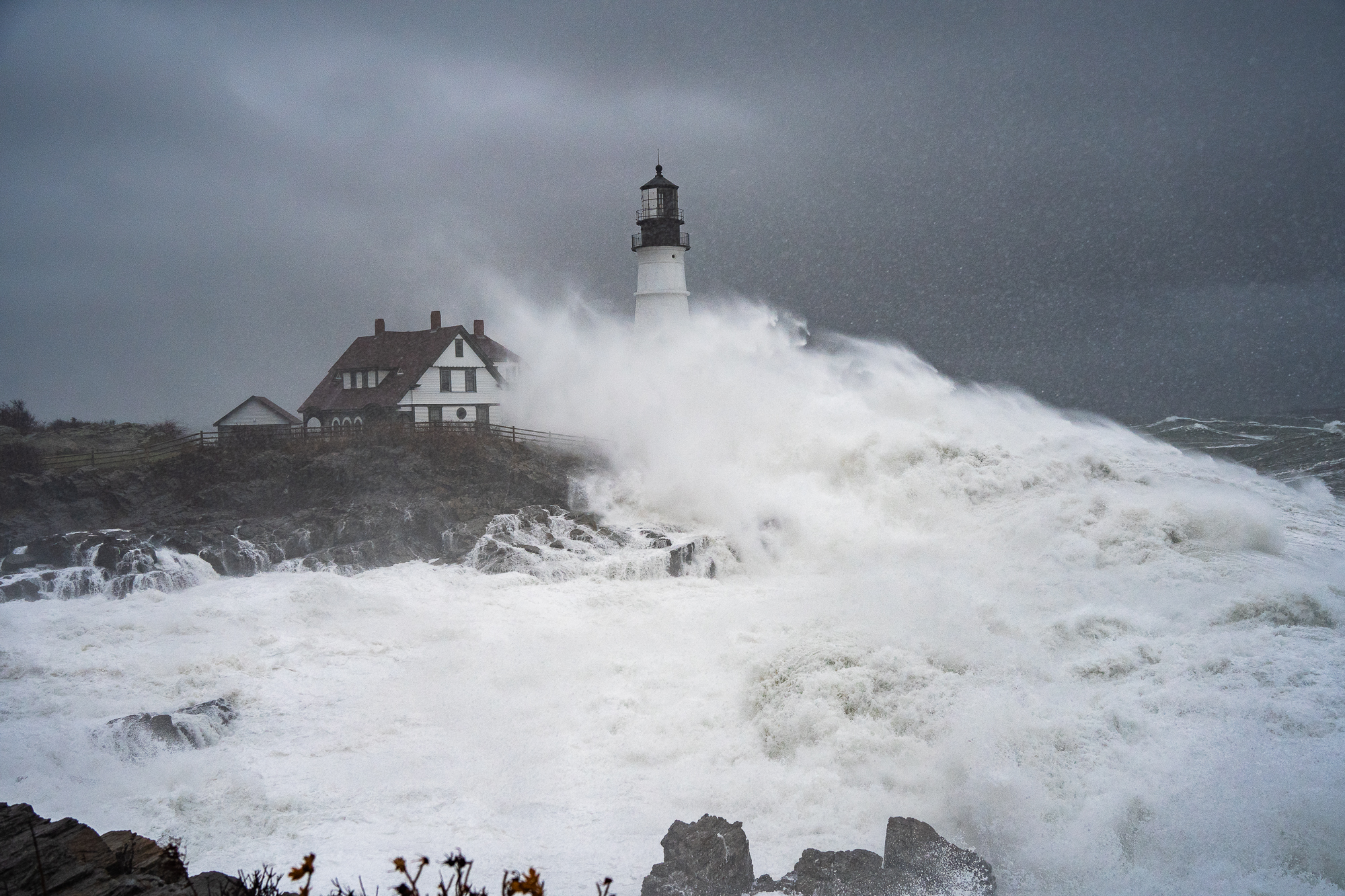
The Wave -“After reviewing my images, I determined that I captured the wave that took out the door and window at Portland Head Lighthouse. I’m not happy about it, but I am in awe of the power of nature. I believe this is a historic capture.” #mewx #maine #winterstorm #elliott 12:00 PM · Dec 23, 2022 Benjamin Williamson @photographmaine
A Boston television station reports damage to Portland Head Light in Portland, Maine. I pulled the photo above off Facebook earlier today.
I have a personal attachment to the light, since I sailed out of Portland for two years as XO of cutter Duane. The light was always first sight of home and visited the light several times.
Fortunately, it all looks repairable.
Thanks to Paul for bringing the TV report to my attention.
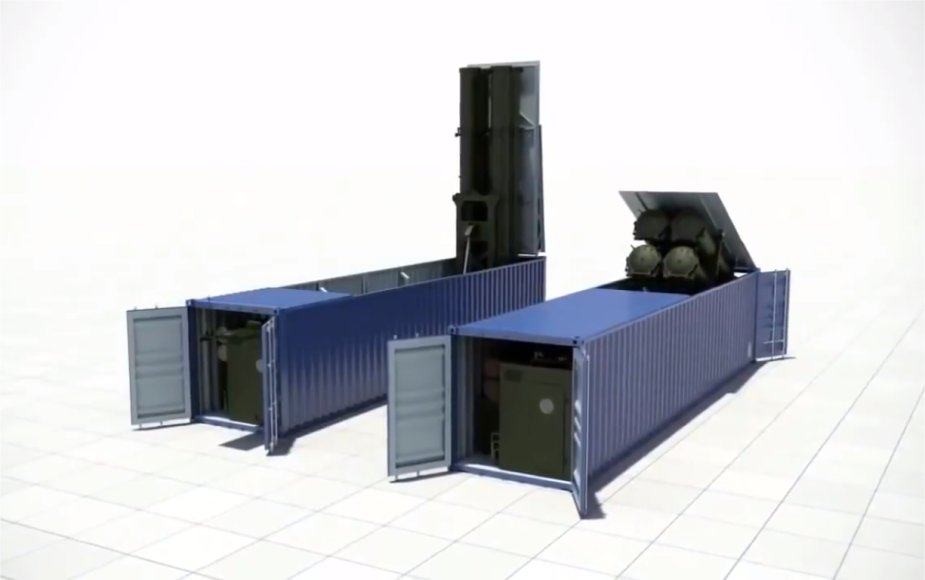
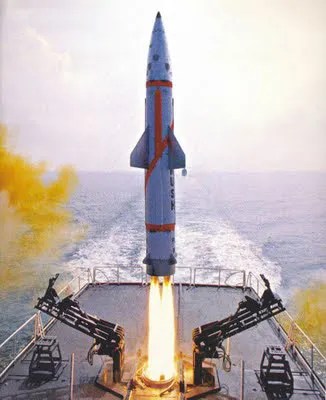
“Artist rendering of containerized missile system for the Indian Navy. (Picture source: Defence Decode)” Note this same illustration was used to portray a Russian system and later a Chinese system.
“According to information published by the Indian MoD on December 17, 2022, containerised missile systems are being inducted by the Indian Navy to enhance operational capability and augment flexibility in operations.”
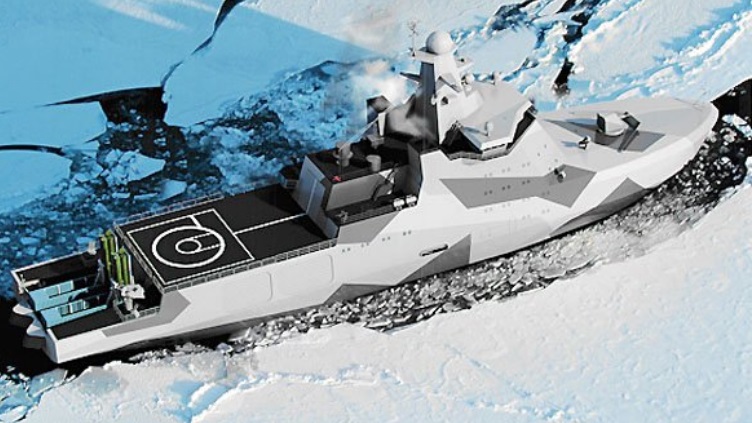
We have seen reports of similar containerized weapon systems before from China and Russia. We have seen artist concepts (and here) of containerized missile systems on Russia’s new Navy and Coast Guard icebreaker class (below), but we have not actually seen them mounted.
Project 23550, Ivan Papanin class icebreaking patrol vessel with towing capability and containerized cruise missiles.
This is the first time I have actually seen a Navy actually state explicitly that such a system was being procured.
Why should this be of interest to the Coast Guard?
Terrorist might use a similar system.
We have to worry that in the opening round of a near peer conflict, cruise missiles might be launched from apparently innocent looking container ships.
Containerized weapon systems might be a way to quickly improve the weapons capability of Coast Guard cutters should the need arise.
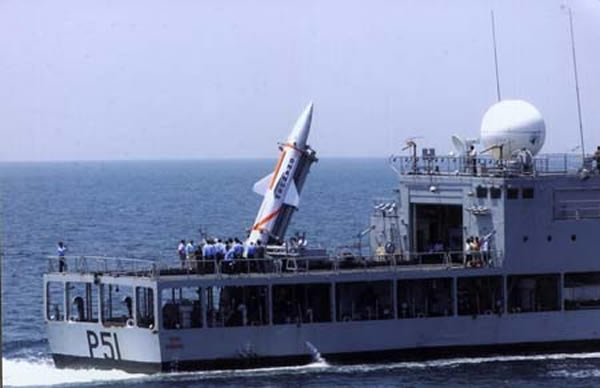
India has already demonstrated a willingness to mount missiles on their offshore patrol vessels, although it was essentially only a test.
The Coast Guard had only a minor role in this incident, but it does concern deck seamanship.
It also seems, the Navy is not holding itself to Coast Guard established industry standards and consequently may be putting the passengers, staff, and crew in unnecessary danger.
The commentator on the video is well qualified so his comments should be taken seriously.
This class is now very old. It is probably time for it to be replaced with ships that are better thought out.
U.S. Coast Guard Cutter Munro and Japan Coast Guard Patrol Vessel Large Aso, transit together in formation during a maritime engagement in the East China Sea Aug. 25, 2021. U.S. Coast Guard members aboard the Munro deployed to the Western Pacific Ocean to strengthen alliances and partnerships and improve maritime governance and security in the region. (Photo courtesy of Japan Coast Guard)
“…With the Gray Zone, you can’t have enough [U.S.] Coast Guard forward,” said VADM Thomas responding to a question regarding partnering the U.S. Coast Guard with the U.S. Navy. “They’ve been great partners [the U.S. Coast Guard] and they’ve been pushing forward as much as they can, and I think it’s a capacity issue (but the right tool for the job)” since the U.S. Coast Guard works with the INDO-PACOM ally nations’ coast guards.
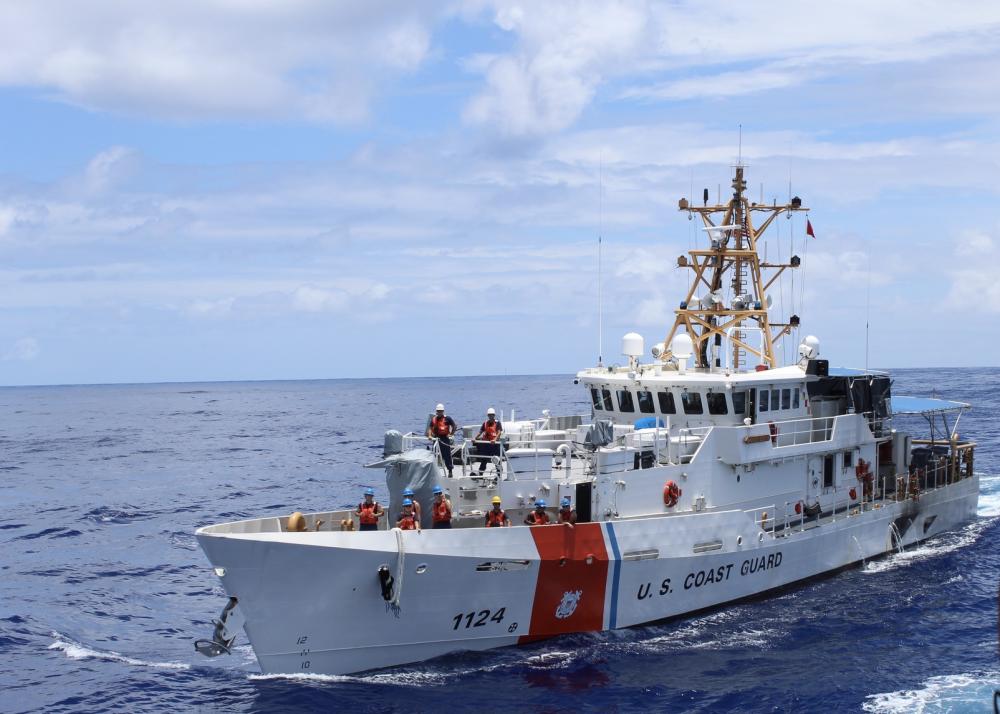
From a previous patrol. The Coast Guard Cutter Oliver Berry conducts a patrol in and around American Samoa, covering 8,169 nautical miles. The crew sought to combat illegal, unregulated, and unreported fishing and other maritime threats across the Pacific to protect the United States and our partner’s resource security and sovereignty. (U.S. Coast Guard photo courtesy of the CGC Juniper)
The U.S. Coast Guard Cutter Oliver Berry returned home to Honolulu this week in time for holiday festivities following a 38-day expeditionary fishery patrol in the South Pacific.
The Oliver Berry’s crew conducted 12 fisheries boardings, identified 16 fishery and safety violations and completed 18 community relation events while sailing from Honolulu to Kiribati, Samoa, the kingdom of Tonga and American Samoa during the 7,000-nautical-mile patrol before returning to its homeport on Tuesday, according to a news release.
These extraordinary voyages by these little ships are becoming routine. Also an indication of how difficult it is to prosecute IUU.
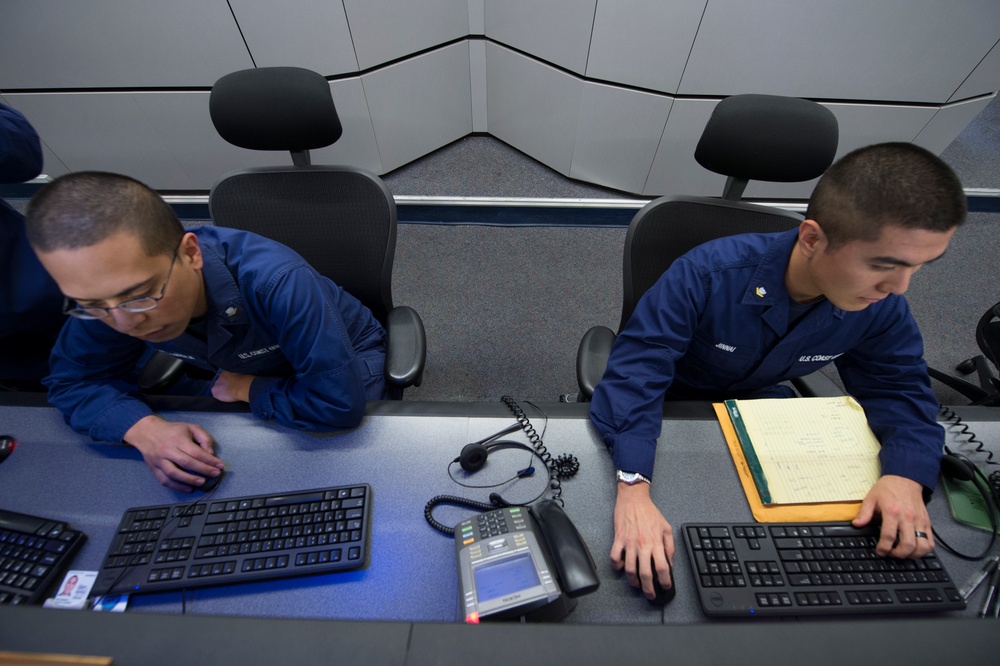
Coast Guard Information Systems Technicians inside a server room at the Telecommunication and Information Systems Command (TISCOM) Jan. 24, 2013. U.S. COAST GUARD / Petty Officer 2nd Class Etta Smith
The Drive reports on a test of a new warhead for the “Advanced Precision Kill Weapon System” (APKWS)
The Advanced Precision Kill Weapon System, or APKWS, laser guidance kit designed by BAE Systems has been tested in a surface-to-surface role with a new highly versatile, multi-purpose warhead that is capable of taking on armor and other targets. The new warhead is provided by General Dynamics Ordnance and Tactical Systems. The test demonstrated added flexibility for not only the APKWS itself, which is most often employed in air-to-ground applications against more lightly armored targets, but also for all platforms that are capable of firing APKWS rockets.
A screenshot from the General Dynamics video showing the launcher configuration used during the test. Credit: General Dynamics
The test also demonstrated a new launcher.
The report was quite complete, providing background and an update on the entire program.
If you have been reading this blog regularly, you know I think APKWS would be a good fit for the Coast Guard as a precision weapon that would be highly effective against small, fast, highly manueverable threats while minimizing the possibility of collateral damage. Its relatively new proximity fuse also makes it effective against Unmanned Air Vehicles which appear to be an emerging threat. APKWS might even be effective against small ships if used in quantity.
For larger threats Hellfire or its replacement, JAGM, would be a better choice, but because this is so much cheaper and available in larger quatities, it appears much more likely. APKWS would probably be a better choice for PATFORSWA where the threat includes large numbers of small craft and UAVs.
We may have seen the video below, but it does suggest that the system is suitable for the 85 foot Navy MkVI patrol boat, so its certainly suitable for cutters of similar size and larger.
Below is a post from MyCG. Above is a recitation of “Coast Guard Cutter Waesche’s Dance with Fire” by the author, Chief Petty Officer Melissa Mathis.
2 cutterman win 2022 Eight Bells contest to celebrate afloat service
By Kathy Murray, MyCG Writer
One author spoke of combating a shipboard blaze. Another reflected on standing watch.
Yet both winners of 2022 Eight Bells writer awards succeeded in capturing the teamwork and camaraderie that makes it special to be a cutterman.
Chief Petty Officer Melissa Mathis won the Eight Bells poem competition for “Coast Guard Cutter Waesche’s Dance with Fire”. Mathis, based in Alameda, California, was in the combat information center (CIC) when a fire broke out on board Waesche in September 2020. Her poem describes the feelings and experiences of crew members as they worked to control the damage and put out the blaze.
Chief Warrant Officer John O’Brien won the Eight Bells essay competition for “Four to Greats!”. O’Brien works as the main propulsion assistant aboard the Coast Guard Cutter Bertholf, also based out of Alameda. His essay took readers with him to stand underway watch in the engine room, conveying the excitement of a new day at sea.
Eight Bells – A Sea Service Celebration, has been held annually since 2017 to recognize and remember the hard work done by all who serve on cutters. This includes cuttermen, cuttermen-to-be, and those who work ashore to support cutters.
The ringing of eight bells signals the end of a watch. It is one of the traditions and routines that have bonded the afloat community together for 232 years.
This year’s celebration took place on Oct. 18. Members submitted 15 poems and essays from across the Coast Guard. A panel that included members from the Office of Cutter Forces, the Douglas Munro chapter of the Surface Navy Association board, and other esteemed cuttermen, judged the entries. The winning entries are posted on the CG-751 Portal page. (CAC required).
Resources:
Winner of the 2022 Eight Bells – A Sea Service Celebration ALCOAST 434/22
Eight Bells – A Seas Service Celebration on 18 October 2022 ALCOAST 348/22
The 40PB shows its speed in this photo and is armed with a .50cal M2 heavy machine gun at the bow, 7.62mm miniguns and acoustic devices amidships, and a M240B at the stern. The radar, electro-optical camera, and FLIR are visible on the short mast above the cabin. Metal Shark photo.
The United States will send 40 armored riverine boats to Ukraine as part of the latest assistance package.
The riverine boats are part of a $400 million aid package announced Friday. It’s the second time the U.S. is sending riverine boats to Ukraine as part of ongoing assistance in response to the Russian invasion.
The type of boat was not identified. The last boats the US sent to Ukraine were 44 foot patrol boats built by Metal Shark. They are not armored but they can have armor panels installed.
The Coast Guard Cutter Oliver Berry conducts a patrol in and around American Samoa, covering 8,169 nautical miles. The crew sought to combat illegal, unregulated, and unreported fishing and other maritime threats across the Pacific to protect the United States and our partner’s resource security and sovereignty. (U.S. Coast Guard photo courtesy of the CGC Juniper)
Forbes reports on what might be an unexpected problem for the Coast Guard, a shortage of cooks to fill afloat billets. Consequently, there are now high bonuses for those who are qualified and want to cook for the Coast Guard.
Anyone who has spent any time afloat knows how important the cooks are to a ship’s morale.
The article reminds us that contracting out food preparation for shore units adversely affects coastie cooks sea/shore ratio and drive people out of the service.
There is also a bit of insight into what is necessary to allow Webber class WPCs to make those long Pacific deployments.




 Chuck Hill's CG Blog