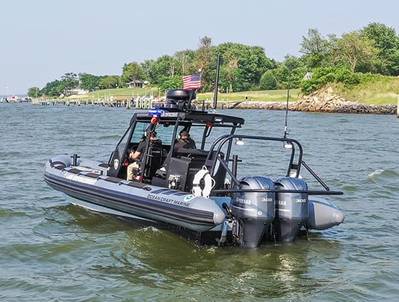
“DHS S&T Tests Innovative Autonomous Surface and Underwater Ocean Surveillance Technology” –Seapower

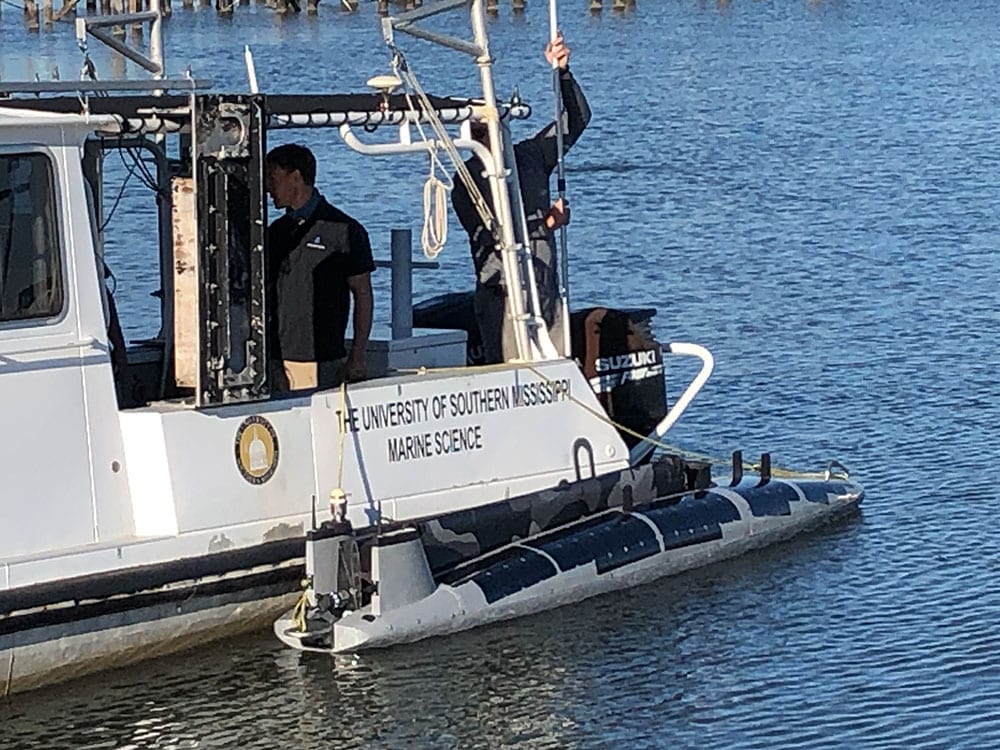
A Triton unmanned underwater vehicle, shown at the University of Southern Mississippi upon completion of its acceptance testing in 2020. UNIVERSITY OF SOUTHERN MISSISSIPPI

The Navy League’s on-line magazine “Seapower” reports that,

“DHS S&T teamed up with the Coast Guard, University of Southern Mississippi (USM), the U.S. Naval Research Laboratory (NRL), the Applied Research Laboratory (ARL) at Penn State, Ocean Aero, Inc., Cherokee Nation Strategic Programs (CNSP), and the Homeland Security Systems Engineering and Development Institute (HSSEDI), to develop, acquire, evaluate, and test specialized, environmentally powered (wind and solar), multi-mission capable, unmanned surface and underwater vessels.”

This looks interesting and the fact that the Department is involved makes it doubly promising.
“3 Charged Over 2018 Duck Boat Sinking on Table Rock Lake” –gCaptain

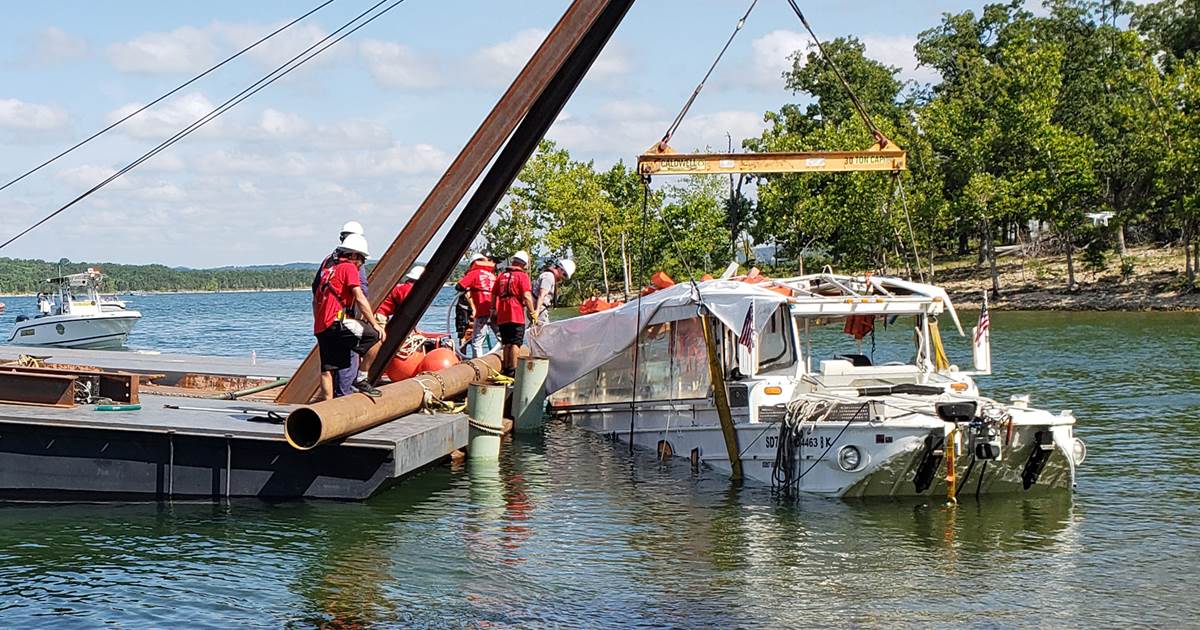
The Coast Guard oversees the removal of Stretch Duck 7 from Table Rock Lake in Branson, Missouri, July 23, 2018. U.S. Coast Guard Photo

It has taken a while but, gCaptain reports,

“The captain of a World War II-era duck boat and two other employees at “Ride the Ducks Branson” have been hit with criminal charges in relation to the sinking of the Stretch Duck #7 on Missouri’s Table Rock Lake in 2018, resulting in the death of 17 people.

“The Missouri attorney general’s office announced a total of 63 charges against Scott McKee, the boat’s Captain, and Operations Supervisor Charles Baltzell and General Manager Curtis Lanham.

“Coast Guard icebreaker departs for months-long Arctic deployment, circumnavigation of North America” –PACAREA

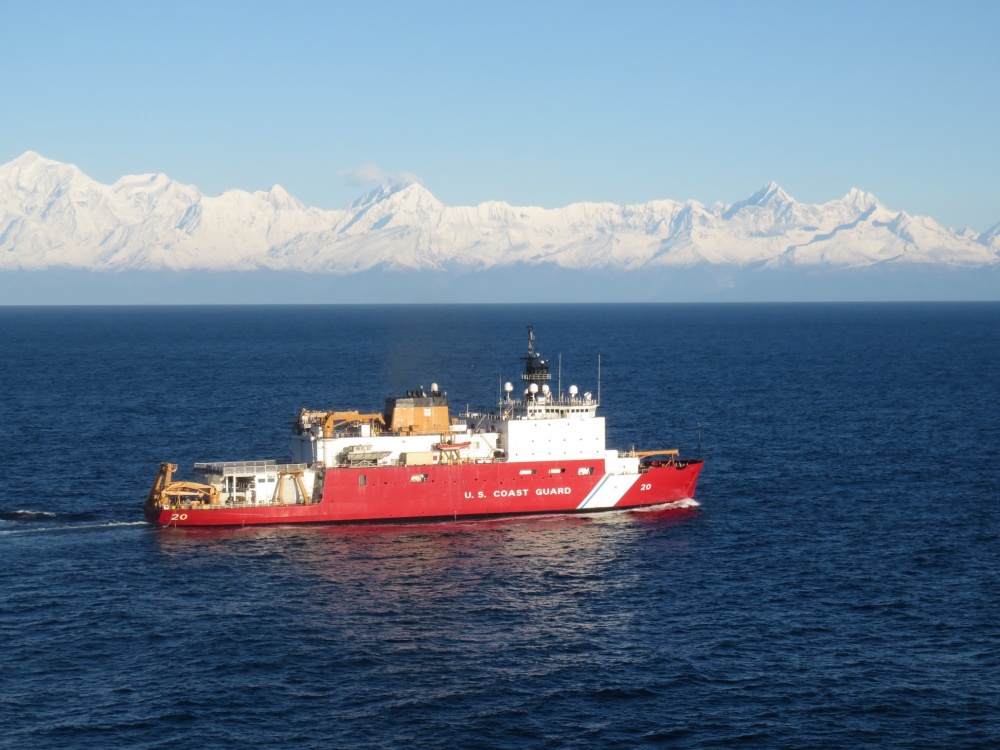
USCGC Healy (WAGB-20) U.S. Coast Guard photo by Lt. Kellen Browne.

Below is a Pacific Area news release quoted in full. While the press release makes this sound routine, the circumnavigation of North America, which will presumably include transit through the North West Passage, is very different from her normal routine.

It is a bit discouraging to see the statement, “The Polar Security Cutter is still in the design phase…”

united states coast guard 
U.S. Coast Guard Pacific Area News Release July 16, 2021

Coast Guard icebreaker departs for months-long Arctic deployment, circumnavigation of North America

SEATTLE — The Coast Guard Cutter Healy (WAGB 20) departed Seattle on Saturday, July 10, for a months-long Arctic deployment and circumnavigation of North America. 

The crew aboard Healy, a 420’ medium icebreaker, will provide U.S. surface presence in the Arctic, conduct high latitude science and research missions, engage in exercises and professional exchanges with foreign navies and patrols, and conduct other operations as directed throughout the deployment. 

Healy is scheduled to circumnavigate North America via the Northwest Passage and the Panama Canal.  Healy’s deployment supports the Coast Guard’s Arctic Strategy while providing critical training opportunities for Polar sailors and future operations in the Arctic. 

The crew will promote U.S. interests along the U.S. and Russia maritime boundary line. 

“Healy’s deployment provides opportunities to deepen the Coast Guard’s cooperation and commitment with our Arctic allies and partners and to support scientific exploration to increase understanding of the changing Arctic environment and associated impacts,” said Coast Guard Pacific Area Commander Vice Adm. Michael McAllister. 

The Healy deploys annually to the Arctic to support multiple science missions and Operation Arctic Shield, the service’s annual operation to execute U.S. Coast Guard missions, enhance maritime domain awareness, strengthen partnerships, and build preparedness, prevention, and response capabilities across the Arctic domain. 

Commissioned in 1999, Healy is one of two active Polar icebreakers in the Coast Guard’s fleet. The Seattle-based Coast Guard Cutter Polar Star (WAGB 10) is a heavy Polar icebreaker commissioned in 1976. 

The U.S. Coast Guard is recapitalizing its Polar icebreaker fleet to ensure continued access to the polar regions and to protect the country’s economic, commercial, environmental, and national security interests.  The Polar Security Cutter is still in the design phase, and Halter Marine is working toward completing the necessary work to begin construction on this incredibly complex, state-of-the-art icebreaker. The contract delivery date for the first Polar Security Cutter is 2024. 

“Social media posts reveal gruesome marine life slaughter by Chinese fleet” –IndoPacific Defense Forum

Indo-Pacific Defense Forum reports some disturbing news about the practices of at least some Chinese Long Line Fishing Vessels.

“Videos and images recovered from social media posts by non-Chinese crew members on PRC fishing vessels have revealed gruesome, large-scale slaughter of marine mammals in the South Pacific. They depict Chinese boat captains ordering their crews to haul in whales that have been snagged in fishing lines. The whales’ heads are hauled on deck and hydraulic fluid poured into their blowhole to suffocate them. The animals are then shocked with prods or electric power lines shoved in their eyes and mouth. Finally, the whales are decapitated, still alive — by hacksaw.”

“Unmanned Platforms project USSPs is granted EU funding through EDIDP” –European Defense Review

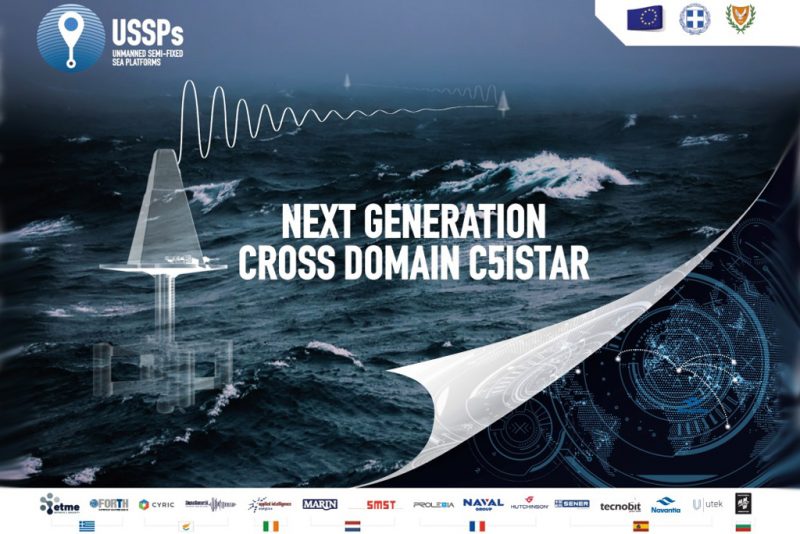
European Defense Review provides a first look at an EU funded Maritime Domain Awareness effort using “Unmaned Semifixed Sea Platforms,” 

“USSPs will develop a highly autonomous, energy efficient unmanned platform prototype, based on miniaturized oil platform technologies and with a wide range of aerial, surface and submarine sensors. It can be deployed in any geographical area, including deep water, and in adverse environmental conditions, so it will be very versatile in operation.”

Naval News reports that Naval Group has been selected as technical coordinator.

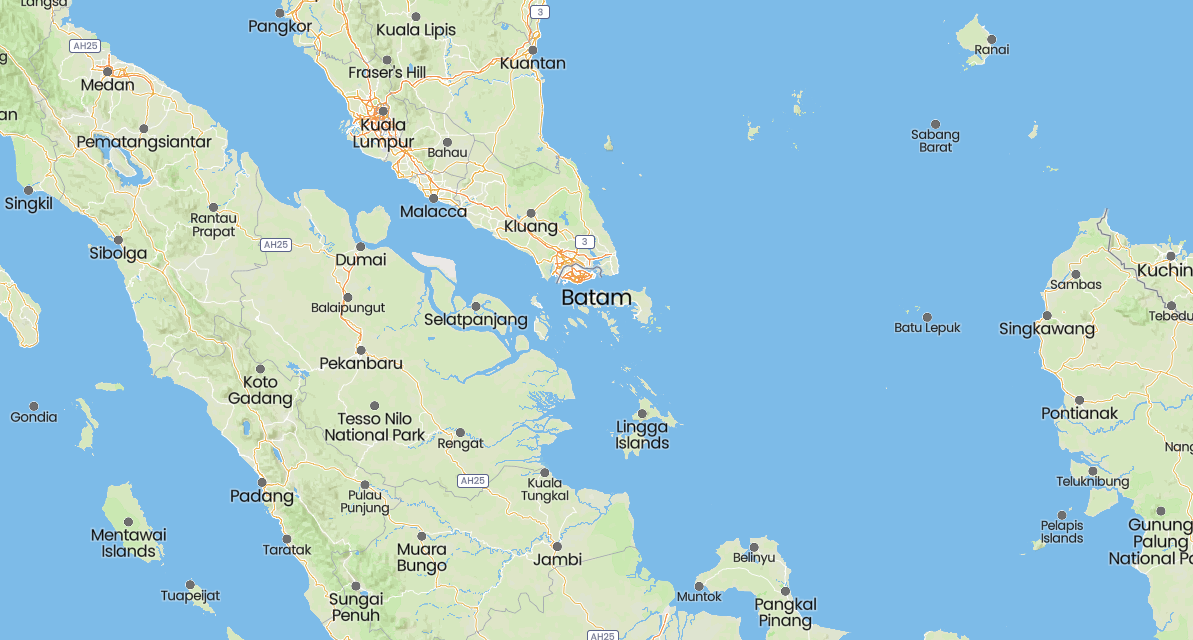
U.S., Indonesia building maritime training base in Batam

The IndoPacific Defense Forum reports on the construction of a training facility for the Indonesian Coast Guard, known as Bakamla.

“The training center is a collaborative effort by Bakamla, which was established in 2014, the U.S. Coast Guard; the U.S. State Department’s Bureau of International Narcotics and Law Enforcement Affairs and the U.S. Department of Defense.”

Batam lies just 32 kilometers south of Singapore, across the Straits of Malacca, perhaps the busiest waterway in the world.

Incidentally, Indonesia has a second agency that seems to have overlapping, coast guard style duties.

“OPERATIONALIZING THE ARCTIC” –Modern War Institute

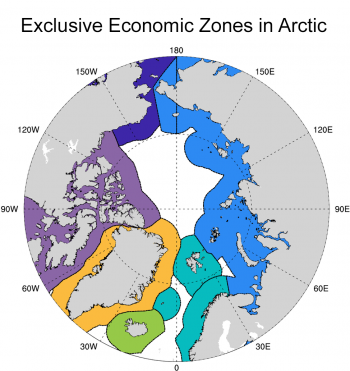
This map show the exclusive economic zones (EEZs) within the Arctic: Canada (purple), Greenland (orange), Iceland (green), Norway (turquoise), Russia (light blue), and USA (dark blue). Credit: DeRepentigny et al., 2020

Here is a critique of DOD Arctic Strategies from Modern War Institute. The authors find them long on platitudes and short on actionable courses of action. No mention of the Coast Guard or the Coast Guard’s Strategy.

As I have pointed out before, we never seem to see US Navy Pacific Fleet surface ships North of the Aleutians, much less in the Arctic.

“The current political and defense budgetary climates are such that the poles have been an afterthought in recent strategic discourse, only coming into clearer focus since 2019. The United States is an Arctic state but has continued its focus on near-term threats instead of long-term strategic challenges and realities. Today the United States is waking up to the realities of burgeoning strategic competition in the Arctic, but the result has been to hastily move toward Arctic strategies riddled with big words but little substance. The logistics of Arctic operations are extraordinarily complex. Everything slows in the cold; construction of infrastructure takes longer and is more expensive than a similar project elsewhere. The Arctic presents challenging climates, seasonally limiting conditions, and general unpredictability. And yet none of these Arctic truths seem to influence the prescriptions embedded within the US Arctic strategies. The Pentagon can—and must—do better if we are to achieve strategic success in a region of the world becoming increasingly more significant to the defense of our homeland. Defining the longer-term strategic interests of the United States within the region is a necessary step toward providing the unity of effort and the funding required of the services to meet future challenges.”

After pointing out that the Navy does not have icebreakers, there is a throw away line in the post that makes one wonder, “The United States does not need more icebreakers or more skibirds.” Otherwise they seem to be on point.

Icelandic Association for Search and Rescue (ICE-SAR)

First I saw a report by Baird Maritime that ICE-SAR (Icelandic Association for Search and Rescue) had contracted for construction of three 17 meter (55.8 foot) self-righting rescue vessels (pictured above) with Kewatec AluBoat of Finland, with options for ten additional vessels.

I tried to find out more about the boats, but was unable to find more technical details, but there are more pictures here. I did also find an interesting photo essay about ICE-SAR here.

While they do operate some smaller rescue craft, it appears they operate 12 “all weather lifeboats” 15.82 meters (51.9 feet) in length and one 14.6 meters (47.9 feet) in length. Replacing these would justify the total of 13 mentioned above.

ICE-SAR all weather lifeboat Hannes Þ. Hafstein under her former name Einar Sigurjónsson

Their new 17 meter boat might be a candidate to replace the Coast Guard 52 foot MLBs. They do include a couple of features not found on the 52 foot MLBs, a stern launched boat and a fire monitor. I would also like to know if these boats will be to some extent ice capable. We could use something like this in Alaska.

Iceland’s ICE-SAR 17 meter. Illustration from Kewatec

“How the US Space Force plans to improve Arctic communication” –C4IRSNet

An illustration of HawkEye 360’s first satellite constellation, called Pathfinder, orbiting Earth. HawkEye 360/UTIAS Space Flight Laboratory

C4IRSNet reports what appears to be good news for improved communications in the Arctic, long a problem for icebreakers operating there. A Space Force plan to lease low earth orbit satellites could substantially improve communications for everyone in the high North.

“Ocean Craft Marine Builds Patrol Boat for NOAA in Hawaii” –Marine Link

(Photo: Ocean Craft Marine)

Marine Link reports on the imminent delivery of a 9.5 meter, “custom-designed high-performance boat to the National Oceanic and Atmospheric Administration (NOAA) Office of Law Enforcement (OLE), Pacific Islands Division headquartered in Hawaii.”

The feature that caught my attention and distinguishes this RHIB from many others is the console.

“OCM partnered with the design team at Shockwave Seats to design and then build a five-man fully shock-mitigating operator-console. The console is known as an Integrated Control Environment or “ICE-Console” and is fully-free-floating with three-axis of movement while suspended on 12 inches of travel supported by six pneumatic Fox Racing shock-absorbers. The ICE Console’s purpose is to insulate the boat’s operators and equipment from the jarring impacts caused by wave action at sea.”