Chuck Hill's CG Blog

Chuck Hill's CG Blog

Happy Birthday, US Navy

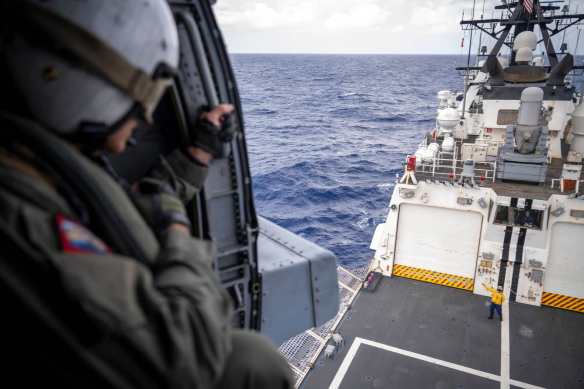
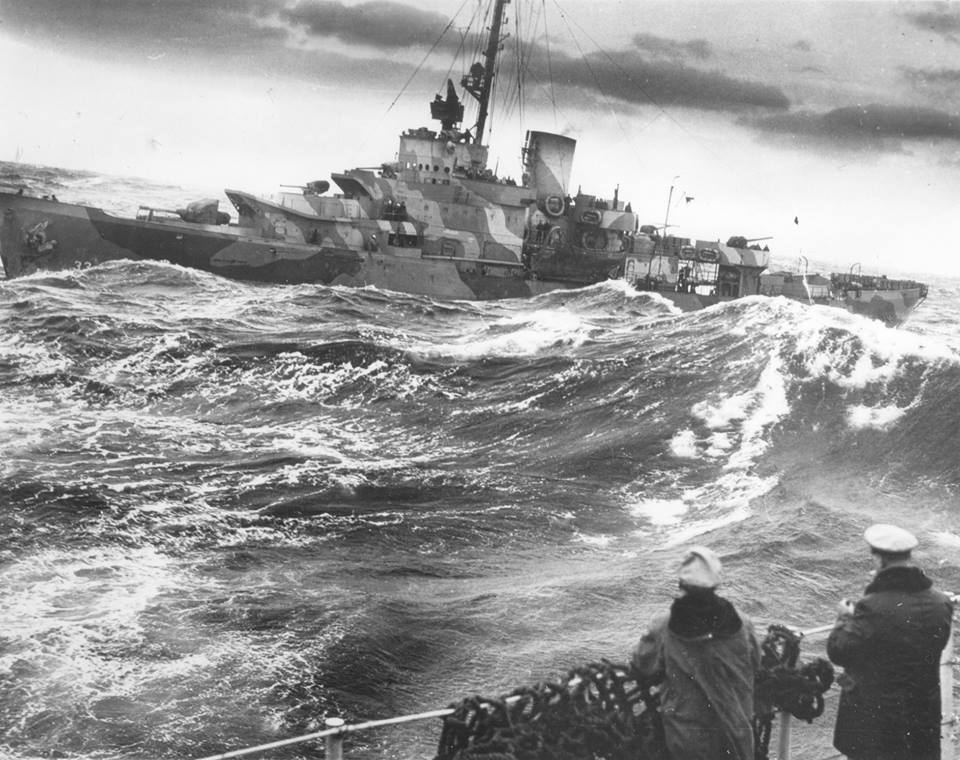
Despite inter-service rivalry, kidding, and way to many jokes about how tall we have to be, to be Coasties, we are, when the chips are down, brothers in arms. Glad they are on our side.


united states coast guard

R 131205Z OCT 21
FM COMDT COGARD WASHINGTON DC
TO ALCOAST
BT
UNCLAS
ALCOAST 376/21
SSIC 1000
SUBJ: 246TH BIRTHDAY OF THE UNITED STATES NAVY
1. On behalf of all members of our United States Coast Guard team,
I salute the Navy on 246 years of honorable service to our Nation.
2. A 13 October 1775 resolution of the Continental Congress
established the United States Navy with “a swift sailing vessel,
to carry ten carriage guns, and a proportionable number of swivels,
with eighty men, be fitted, with all possible dispatch, for a
cruise of three months…” Since that time, the U.S. Navy and the
U.S. Coast Guard have been partners in ensuring America’s national
interests are advanced across the global maritime domain. With a
shared investment in the free flow of maritime commerce, U.S. naval
power remains foundational to the global economy, as well as the
projection of national sovereignty through both rapid response and
sustained global operations.
3. We are honored to operate alongside the U.S. Navy as proud
partners in the Naval Service, and remain committed to prevailing
in day-to-day competition, crisis, and conflict with integrated
all-domain naval power focused on advancing both global prosperity
and security.
4. We look forward to continued shared success and partnership in
service to our great Nation. Happy Birthday and Semper Fortis.
5. ADM Karl L. Schultz, Commandant, United States Coast
Guard, sends.
6. Internet release is authorized.

“Coast Guard releases request for information for boats to support waterways commerce cutters” –CG-9

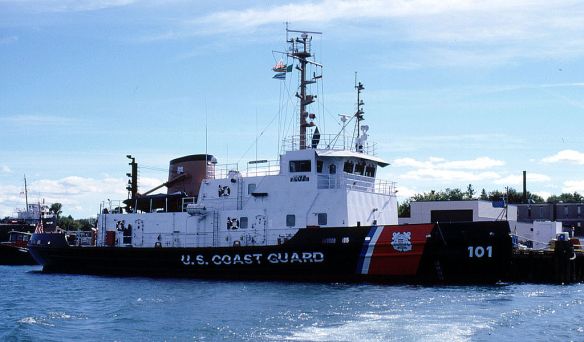
Shown above are Coast Guard indicative designs of a river buoy tender, inland construction tender and inland buoy tender.

The Coast Guard seems to be taking a real interest in new boats recently. This from the Acquisitions Directorate (CG-9).

The boats are expected to be a maximum of 21’6″ length over all and powered by two outboards

Coast Guard releases request for information for boats to support waterways commerce cutters

The Coast Guard released a request for information (RFI) on Sept. 29 to gather information about state-of-the-market and current industrial capabilities to support cutter boats for the waterways commerce cutter (WCC).

A single-design cutter boat is needed to support the 30 new WCCs. The WCC fleet will consist of river buoy, inland construction and inland buoy tenders. The Coast Guard intends to outfit each river buoy tender with two cutter boats and each inland construction tender and inland buoy tender with one cutter boat, totaling up to 56 cutter boats including spare hulls, over approximately 10 years.

The Coast Guard is seeking information about domestic firms’ capabilities and experience in designing and building boats that meet the top-level WCC cutter boat requirements provided in the RFI.

The full RFI is available here. Responses are due at 11 a.m. Eastern time Nov. 1, 2021.

For more information: Waterways Commerce Cutter Program page

“The Case for Stock Boats” –Marine Link

A boat crew from Station Valdez, Alaska, conducts underway training near the station Aug. 18, 2018, in a new 29-foot response boat-small II (RB-S II). The Coast Guard placed a delivery order for 20 additional RB-S IIs Feb. 4, 2019. U.S. Coast Guard photo.

If we want good quality boats built in the US, delivered on time and on budget, our partners in the boat building industry need to be successful.

MarineLink brings us an industry report of the experience of Metal Shark, builder of the Coast Guard’s 29 foot second generation Response Boat, Small (RB-S II).

In addition to the Coast Guard boats mentioned, Metal Shark is also building the Navy’s “Defiant” 40 foot force protection patrol boat.

Metal Shark’s winning PB(X) design, dubbed 40 PBX, is a 40 ft, welded-aluminum pilothouse patrol boat that can achieve sprint speeds in excess of 35 kt. Source: Metal Shark

More Webber Class WMEC

A pile of seized drugs, estimated to be $96 million, is transfered off the Coast Guard Cutter Forest Rednour in San Diego, Sept. 24, 2021. The seizure and bullet-ridden boat engine cover were processed and transferred to federal authorities. U.S. Coast Guard photo by Petty Officer 1st Class Adam Stanton.

Another news release highlighting the surprising capability of the Webber class cutters.

Photos here.

united states coast guard

News Release

U.S. Coast Guard 11th District PA Detachment LA/LB

LA-based cutter returns home after 32-day deployment, drug offload in San Diego

SAN PEDRO, Calif. – The Coast Guard Cutter Forrest Rednour returned home on Sept. 26, following a 32-day patrol.

The crew disrupted illegal narcotics smuggling, seizing more than 5,000 pounds of cocaine that was offloaded in San Diego, Friday. The drugs, worth an estimated $96 million, were seized in international waters of the Eastern Pacific Ocean off the coast of Mexico.

“The crew excelled during this patrol; their hard work and skill was apparent and allowed the cutter to weather a hurricane, conduct international engagements, and stop a vessel carrying approximately two metric tons of cocaine, all while in a 154-foot ship, 1,800 nautical miles and two time zones from home,” said Lt. Drew Ferraro, commanding officer of the Rednour.

During the Rednour’s deployment, the crew participated in a passing exercise with the Monte Albán, an Armada de México vessel, off the coast of Mexico.

“This deployment tested crew endurance and provided the same level of logistics challenges normally faced by much larger ships, but the Rednour crew navigated each obstacle with their usual dedication, professionalism, and teamwork,” Ferraro said. “Thank you to our outstanding logistics and finance team, and the shore-side coordinators that made this patrol successful. Lastly, thank you to the families and loved ones back home who supported us during this patrol and held down the home front during our absence.”

On April 1, 2020, U.S. Southern Command increased counter-narcotics operations in the Western Hemisphere to disrupt the flow of drugs. Numerous U.S. agencies from the Departments of Defense, Justice, and Homeland Security cooperated in the effort to combat transnational organized crime. The Coast Guard, Navy, Customs and Border Protection, Federal Bureau of Investigation, Drug Enforcement Administration, and Immigration and Customs Enforcement, along with allied and international partner agencies, play a role in counter-drug operations.

The fight against drug cartels in the Eastern Pacific Ocean and the Caribbean Sea requires unity of effort in all phases from detection, monitoring, and interdictions, to criminal prosecutions for these interdictions by United States Attorney’s Offices from the Middle District of Florida, the Southern District of Florida and the Southern District of California. The law enforcement phase of counter-smuggling operations in the Eastern Pacific Ocean is conducted under the authority of the Eleventh Coast Guard District, headquartered in Alameda, CA. The interdictions, including the actual boardings, are led and conducted by members of the U.S. Coast Guard.

The Forrest Rednour is a 154-foot fast response cutter, commissioned in 2018 and homeported in San Pedro, California.

Three Part Webinar Follows USCGC Healy

A three part Webinar will discuss USCGC Healy’s transit of the Arctic Ocean and North Atlantic. I have reproduced most of the information below. The original is here.


Marine ecosystems don’t start and stop at international borders, so when it comes to the effects of climate change on the ocean, we’re all in the same boat. An effective response requires teamwork.

To that end, NERACOOS and CIOOS Atlantic have teamed up to host a three-part webinar series featuring discussions with local experts on scientific, economic, and policy issues facing coastal communities spanning the Arctic to the Northeastern seaboard of the United States.

Each of the three seminars will coincide with part of the voyage of the U.S. Coast Guard Cutter Healy, which has partnered with Canada to undertake a research cruise circumnavigating North America. As the Healy passes through the Arctic, Newfoundland and Labrador, Nova Scotia and the Gulf of Maine, experts in a variety of subjects will speak about the challenges they’re encountering, and how we can come up with solutions that transcend borders.
Use the links below to register for each webinar
Sign up to receive event updates and reminders
(You will only receive emails related to these webinars; this is not a newsletter subscription)

Email Address

Speaker Lineup for September 22nd: The Arctic
Agenda

(All times are Eastern, GMT-5; agenda subject to change)

  • 12:00-12:05- Welcome, review agenda
  • 12:05-12:15- Opening remarks by Melanie Zimmerman, U.S. Consul General
  • 12:15-12:25- Update from USCGC Healy from Bob Pickart, Senior Scientist
  • 12:25-13:10- Panel #1: State of the Science
    • 12:25-12:50-
      • Christina MacDonald, Arctic Eider Society
      • Kristin Schild, University of Maine
      • Lorenz Meire, Greenland Climate Research Centre
      • Mark Patterson, Northeastern University
    • 12:50-13:10- Discussion & audience Q&A
  • 13:10-13:55- Panel #2: Policy, Economic & Community Perspectives
    •  13:10-13:35-
      • Andrew Arreak, SmartICE
      • Chris Flanagan, Baffin Fisheries
      • Michael Sfraga, Wilson Center Polar Institute
    •  13:35-13:55- Discussion & audience Q&A
  • 13:55-14:00- Wrap-up & adjourn

“Coast Guard Pacific Area hosts North Pacific Coast Guard Forum Summit” –News Release

Winkel Tripel projection, WGS84 datum, central meridian : 150°E. Source Wikipedia Commons, Author: Eric Gaba

PACAREA news release.

united states coast guard

News Release

U.S. Coast Guard Pacific Area
September 17, 2021

Coast Guard Pacific Area hosts North Pacific Coast Guard Forum Summit

Admiral McAllister

Editors’ Note: Click on images to download high resolution version.

ALAMEDA, Calif. – The commander of U.S. Coast Guard Pacific Area, an Alameda-based unit that oversees U.S. Coast Guard activities from the U.S. western states to Asia and from the Arctic to Antarctica, hosted an annual forum summit with coast guard counterparts from five countries Tuesday through Thursday.

During this year’s North Pacific Coast Guard Forum Summit, forum members gathered virtually over the course of three days to discuss topics such as challenges in the North Pacific, the need for coordinated responses to those challenges, and Japan Coast Guard’s best practices and lessons learned while supporting the Tokyo Olympics. 

The North Pacific Coast Guard Forum formed in 2000, and it comprises the coast guard and maritime law enforcement agencies of Canada, China, Japan, South Korea, Russia, and the United States. Its six main areas of focus are combating illegal trafficking, combined operations, emergency response, fisheries enforcement, information exchange, and maritime security. A non-binding memorandum of cooperation all participating nations signed governs it.

“I am thrilled that coast guard leaders from six nations with common maritime interests made time to come together for three days to discuss our countries’ shared challenges in the North Pacific region,” said Vice Adm. Michael F. McAllister, commander, U.S. Coast Guard Pacific Area and U.S. Coast Guard executive agent for the forum. “The forum presents us the invaluable opportunity to communicate best practices, learn from each other and share information on myriad topics including search and rescue, counterdrug, pollution response, illicit trafficking, and illegal, unreported and unregulated fishing, among others.”

By the conclusion of the summit, forum members prepared a renewed memorandum of cooperation for signature by the heads of the delegation and completed many of the final plans for this year’s multi-mission multilateral exercise, which the Canadian Coast Guard plans to host virtually in October.

On a rotating basis, each forum nation hosts two annual weeklong multi-lateral meetings. The first is an experts meeting held each spring and the second is the summit meeting in the fall.  The multi-mission multilateral exercise is the exercise component of the forum. At the conclusion of this year’s summit, South Korea assumed the host nation duties for 2022. 

,

USCGC Munro trains with Royal Australian Navy

HMAS Sirius conducts a dual replenishment at sea with HMAS Canberra and USCG Cutter Munro as HMAS Anzac sails behind, during Indo-Pacific Endeavour 2021.

Sounds like Munro is having an interesting and unusual deployment, though these WestPac deployments are getting more common. Below is a Pacific Area news release.

united states coast guard

News Release

U.S. Coast Guard Pacific Area
Sept. 16, 2021

U.S. Coast Guard cutter engages in maritime training with Royal Australian Navy

Photo of USCG Munro and Royal Australian Navy Photo of USCG Munro and Royal Australian Navy
Photo of USCGC Munro and Royal Australian Navy Photo of USCGC Munro and Royal Australian Navy

Editors’ Note: Photos courtesy of Royal Australian Navy. Click on images to download high resolution versions.

ALAMEDA, Calif. — U.S. Coast Guard members aboard the Alameda-based Coast Guard Cutter Munro (WMSL 755) participated in a cooperative three-day at-sea exercise with the Royal Australian Navy in the South China Sea Saturday through Monday.

The joint training engagement included joint operations, professional exchanges, and multi-unit maneuvering at sea to strengthen interoperability between the U.S. Coast Guard and Royal Australian Navy.

“These at-sea engagements with our long-standing partners in the Indo-Pacific region provided an excellent joint training opportunity for the crew,” said Munro’s Commanding Officer Capt. Blake Novak. “Enhancing cooperation and building trust strengthens our relationship with the Royal Australian Navy while expanding our regional security cooperation initiatives.”

The U.S. Coast Guard has a long history of cooperation with the Royal Australian Navy. The U.S. and Australia, along with New Zealand and France, make up the Pacific Quadrilateral Defense Coordinating Group or P-QUAD. P-QUAD endeavors to enhance maritime security in the Western and Central Pacific Ocean in partnership with the Pacific Island Countries through organizations such as the Fisheries Forum Agency.

“The United States and Australia have deep and abiding interests throughout the Pacific,” said Vice Adm. Michael F. McAllister, commander, U.S. Coast Guard Pacific Area. “As leaders in maritime safety and security, our forces are dedicated to upholding regional sovereignty, stability and security. Through joint operations with Australia, we strengthen our interoperability with an ally deeply committed to promote international rules and norms within the Indo-Pacific.”

“The Royal Australian Navy has enjoyed multiple opportunities throughout the year to work with the United States in the Indo-Pacific,” said Capt. David Teitzel, Royal Australian Navy, Commander Task Group 635.3. “Being able to operate with a United States Coast Guard cutter like USCGC Munro has strengthened how we interoperate and boosts how we work together in the interest of regional security. I thank Munro for their time in-company and we look forward to sailing with the United States Coast Guard again.”

Munro, a 418-foot national security cutter, departed its homeport of Alameda in July for a months-long deployment to the Western Pacific. Operating under the tactical control of the U.S. 7th Fleet, the cutter and crew are engaging in professional exchanges and capacity-building exercises with partner nations, patrolling and conducting operations as directed.

National security cutters like Munro feature advanced command and control capabilities, aviation support facilities, stern cutter boat launch and increased endurance for long-range patrols, enabling the crews to disrupt threats to national security further offshore.

As both a federal law enforcement agency and an armed force, the U.S. Coast Guard is uniquely positioned to conduct defense operations in support of combatant commanders. The service routinely provides forces in joint military operations worldwide, including the deployment of cutters, boats, aircraft and deployable specialized forces.

Additional photos of the exercise provided courtesy of the Royal Australian Navy are available here.

“Chinese Warships Sailing Near Alaska’s Aleutian Islands Shadowed By U.S. Coast Guard” –Small Wars Journal

US Coast Guard Captain Tim Brown, USCGC Bertholf’s commanding officer, communicates with a Chinese warship near Alaska in August 2021.

Small Wars Journal has reported,

“The U.S. Coast Guard recently released a set of pictures of the Legend class cutter USCGC Bertholf shadowing a group of four Chinese warships sailing in America’s Exclusive Economic Zone near Alaska’s Aleutian Islands back in August. The emergence of these pictures follows the editor-in-chief of Global Times, a newspaper under the direct control of the Chinese Communist Party, taking to Twitter to criticize U.S. Navy operations in the Pacific that routinely challenge many of Beijing’s widely disputed maritime territorial claims, especially in the South China Sea and the Taiwan Strait, and warn of tit-for-tat activities on the part of the People’s Liberation Army Navy.”

The PLAN task force apparently consist of a type 055 very large destroyer or cruiser,

a Type 052D destroyer,

a Type 903 replenishment ship,

160805-N-AI605-081 PEARL HARBOR (AUG 5, 2016) Chinese Navy replenishment ship Gaoyouhu (996) departs Joint Base Pearl Harbor-Hickam following the conclusion of Rim of the Pacific 2016. (U.S. Navy Photo By Mass Communication Specialist 1st Class Rebecca Wolfbrandt/RELEASED)

and an intelligence-gathering ship with the hull number 799.

This is of course a bit unusual, but not something to be alarmed about. Given the current size and capability of the Chinese Navy (PLAN) we could expect them to transit within 20 miles of San Francisco or Los Angeles.

We recognize their right to do that.

But (there is always that but), having 176 vertical launch cells transiting a few miles away from major US cities does require a bit of mental adjustment, and it suggests maybe we are not as well prepared as we might be.

I almost hope they do it. The American public needs a wake-up call.

Think the Navy could sortie a couple of DDGs on short notice to shadow them?

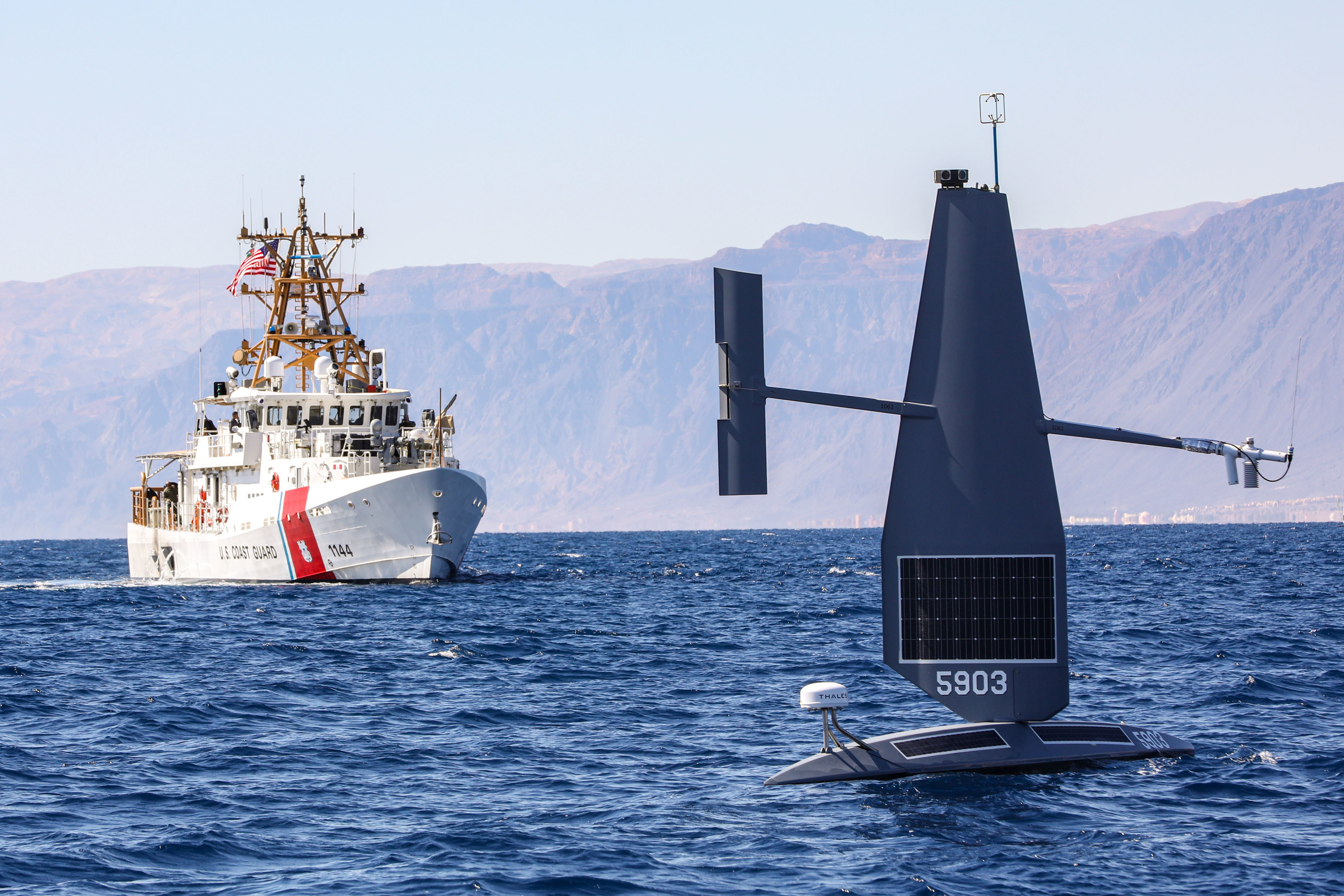
“NAVCENT Establishes Task Force for Unmanned System Operations” –Seapower

MetalCraft Marine 7 meter “The Watcher” Autonomous Surface Vessel (ASV)

Seapower reports that the Navy has set up a task force within NAVCENT (the naval component of CENTCOM) to use and mature unmanned systems.

TF59 “is designed to integrate unmanned systems and AI. Task Force 59 is the first U.S. Navy task force of its kind … taking efforts from across the Navy, concentrating them here in a forward operating environment — a forward fleet — to gradually move toward development and integration.”

The Coast Guard’s PATFORSWA is part of NAVCENT. I can’t help but believe that they will be seen as the most convenient units to use to test some of these systems. The task force commander, Capt. Michael Brasseur, is a former Cyclone class Coastal Patrol CO, so he has certainly worked with the Coast Guard in the past.

The launch ramp in the stern of the Webber class might be useful for launching unmanned surface and subsurface vessels.

The Coast Guard might get some personnel experienced in working with unmanned systems as a result.