Canada’s Multi-Purpose Vessels

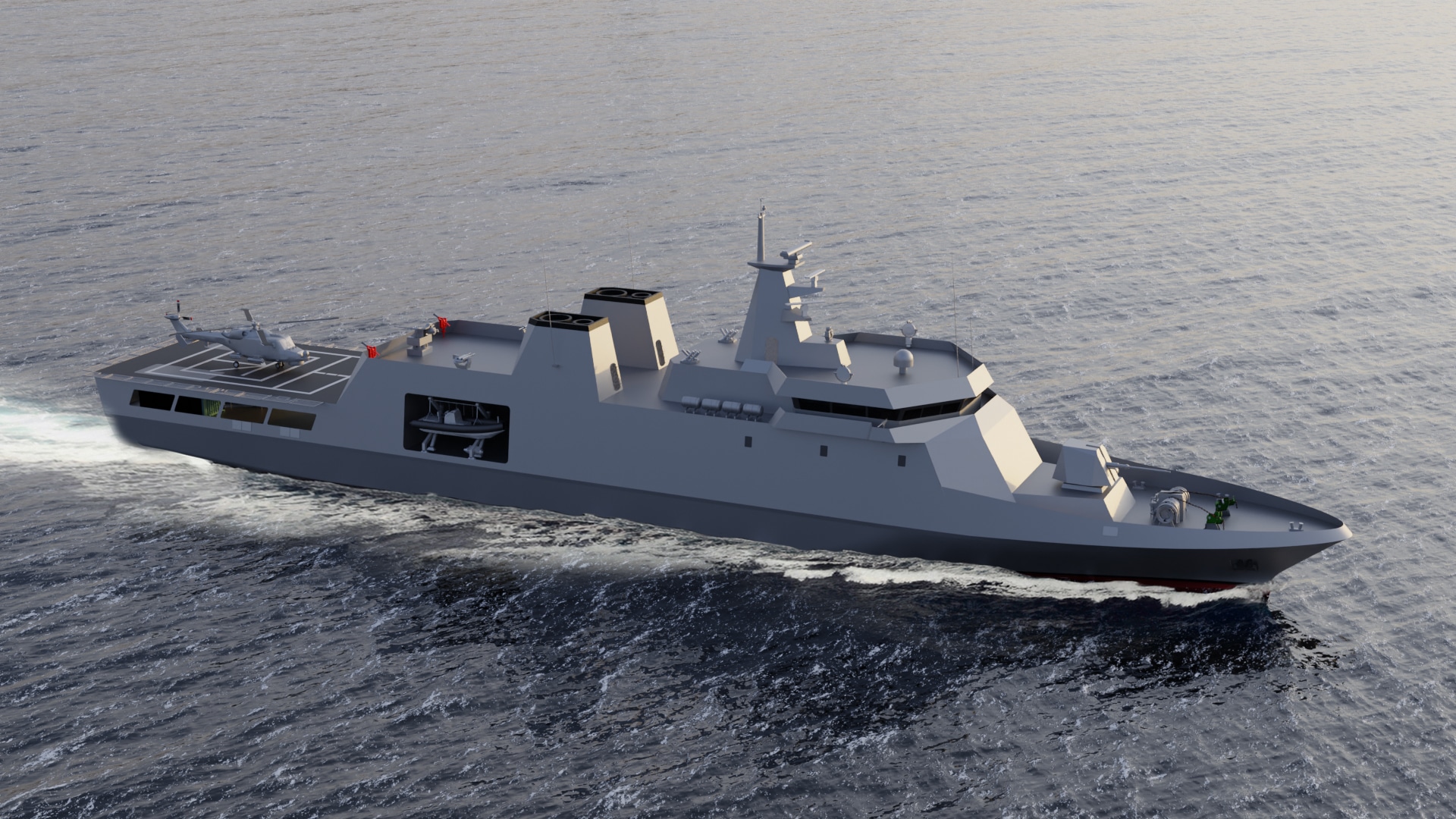
Canadian CG MPV. Credit Aker Arctic.

Canada has a project to replace a large part of the Canadian Coast Guard fleet with up to 16 Multi-purpose Ships at an estimated cost of $14.2 billion (Canadian), with the first ship to be delivered in 2029.

There has not been a lot of reporting about this class, but frequent contributor Walter pointed me to two sources, Seaspan Shipyards and designer Aker Arctic. It appears they have very concrete ideas about what the class will look like.

Canadian CG MPV. Credit Aker Arctic.

MISSIONS:

According to Aker Arctic,

The MPVs will also perform cargo missions, bringing supplies to northern communities, carry out search & rescue and patrol missions, in addition to icebreaking. Most of their time will be spent on the St Lawrence River, the Great Lakes, and along the Canadian East Coast. Additionally, they will have a summer Arctic mission leaving from Victoria in British Columbia and travelling north around Alaska to the Canadian Arctic.

Due to the wide variety of tasks, the long-distance mission to the western Arctic, and the fact that some of the waterways have a limited depth, the vessel needed to be compact with a shallow draught, narrow beam, high endurance, and with a large cargo capacity.

CHARACTERISTICS:

  • Displacement: about 8,500 tons
  • Length, overall: 99.9 meters (328′)
  • Beam: 20.3 meters (66.7′)
  • Draft: 6.2 meters (20’4″)
  • Propulsion: diesel-electric; two azimuthing propulsion units

As is the case with all Canadian Coast Guard cutters, they have no fixed armament. It does look like it could host a medium sized helicopter and containerized systems, including perhaps below the hangar deck.

RANGE:

To me the most surprising characteristic of the ship is its range, 12,000 nautical miles. This was apparently driven by a summer Arctic mission from Victoria in British Columbia, north around Alaska to the Canadian Arctic.

ICE CLASS: 

These ships will be Canadian Ice Class 4, meaning they will have the capability to maintain a speed of 3 knots through ice 4 feet thick. The Canadian Coast Guard will consider these heavy icebreakers. We don’t have any figures on horsepower, but they probably will have less than 20,000 HP which, in the USCG system, would classify them as light icebreakers.

Compared to the US Coast Guard’s “heavy” Great Lakes icebreaker, Mackinaw (3,500 tons and 73m), these will be more powerful and more than twice as large. These might be a good design for the planned second USCG Great Lakes icebreaker.

IMPLICATIONS FOR THE USCG:

Aside from possible use of the design for Great Lakes icebreaker, these might be pretty close to what the USCG needs for their planned medium icebreakers. Certainly, consultation with Canadian counterparts will sharpen the focus of the US design effort. We might also have reasons to limit beam and draft.

U.S. Coast Guard participates in Exercise Argus 2023

The USCGC Sycamore (WLB 209) crew participates in a navigation exercise with HDMS Knud Rasmussen (P570), a Royal Danish Navy Knud Rasmussen-class patrol vessel and the FNS Fulmar (P740), a French Navy patrol vessel, off the coast of Southern Greenland, June 13, 2023. Deployed forces demonstrated U.S. Coast Guard capabilities to build partner capacity and expertise in search and rescue, navigation, and damage control. These efforts solidify key strategic relationships while achieving mutual Danish, Greenlandic, and U.S. goals in the North American Atlantic Arctic and Northwest Atlantic Ocean. (U.S. Coast Guard photo by Lt. Cmdr. Katherine Blue)

Just passing along this very nice photo and caption from the Defense Visual Information Distribution Service (DVIDS). I have added links to describe the vessels involved.

USS/USCGC Chincoteague (AVP-24/WAVP/WHEC-375)/RVNS Lý Thường Kiệt (HQ-16)/RPS Andrés Bonifacio (PF-7)

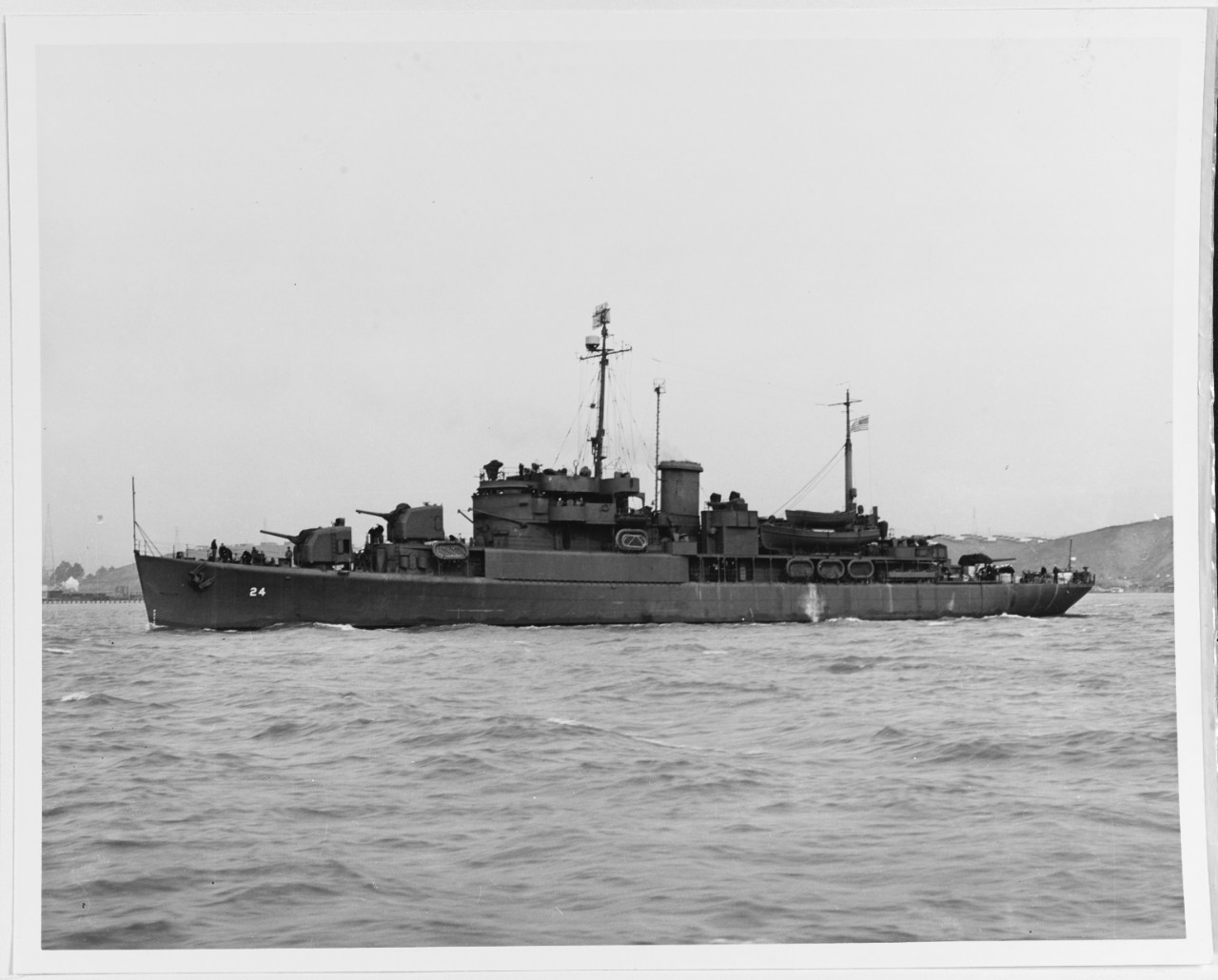
Title: USS Chincoteague (AVP-24) Photographed on 27 December 1943 off the Mare Island Navy Yard following repairs to severe battle damage incurred in July 1943. One of the four 5/38 guns in her original armament has been replaced by a quadruple 40mm mount. Photograph from the Bureau of Ships Collection  in the U.S. National Archives. Catalog #: 19-N-57482

Recently finished reading “USS Chincoteague the Ship That Wouldn’t Sink” by Frank D. Murphy. It is a small, large print book, the first-person story of a young sailor, then 19, and his first ship, a newly commissioned small seaplane tender, USS Chincoteague, that endured eleven air attacks 16-17 July 1943, only three months after she had been commissioned.

I had a personal interest because my first ship, USCGC McCulloch, the former USS Wachapreague, was also Barnegat class ship.

The attacks on Chincoteague were during a period when the US was moving up the Soloman Island Chain. The Allies had invaded New Georgia, but the fighting was heavy, and the Japanese were making a strong effort to push the allies off the island.

Consolidated PBY-5A Catalina. US Navy photo.

USS Chincoteague was anchored in Sabot Bay, Santa Cruz Islands, Southeast of the Soloman Islands, servicing a squadron PBY patrol planes when the attacks began. When an attack was expected she would get underway to maneuver. Between attacks she would return to service her brood of sea planes.

Attacks on the 16th caused only minor fragment damage. During attacks on the 17th, she received two damaging near misses that caused flooding and fires, then a direct bomb hit that wrecked the after engineroom killing ten crew members, followed by another near miss that dented the hull and knocked the remaining engines offline. Dead in the water, having taken on 663 tons of water, she had a negative GM, and was listing 12 to 18 degrees, it looked as if she would be sunk by the eleventh attack when four Marine Corsairs arrived splashing three of the attackers and driving off the fourth.

After repairs to the forward engineroom, which powered the starboard shaft, the ship got underway at 2350, but at 0245 on the 18th one of the engines was overheating. In an attempt to deal with the overheating, control of the engine was lost, and it ran away in spite of a closed throttle, causing a severe fire that forced the crew to abandon the engineroom.

The ship was taken in tow and, after temporary repairs at Espiritu Santo, was towed by to the West Coast where complete repairs were made including addition of eight 40 mm anti-aircraft guns and additional 20 mm guns. Ultimately, she would earn six battle stars.

You can read the full original damage report here.

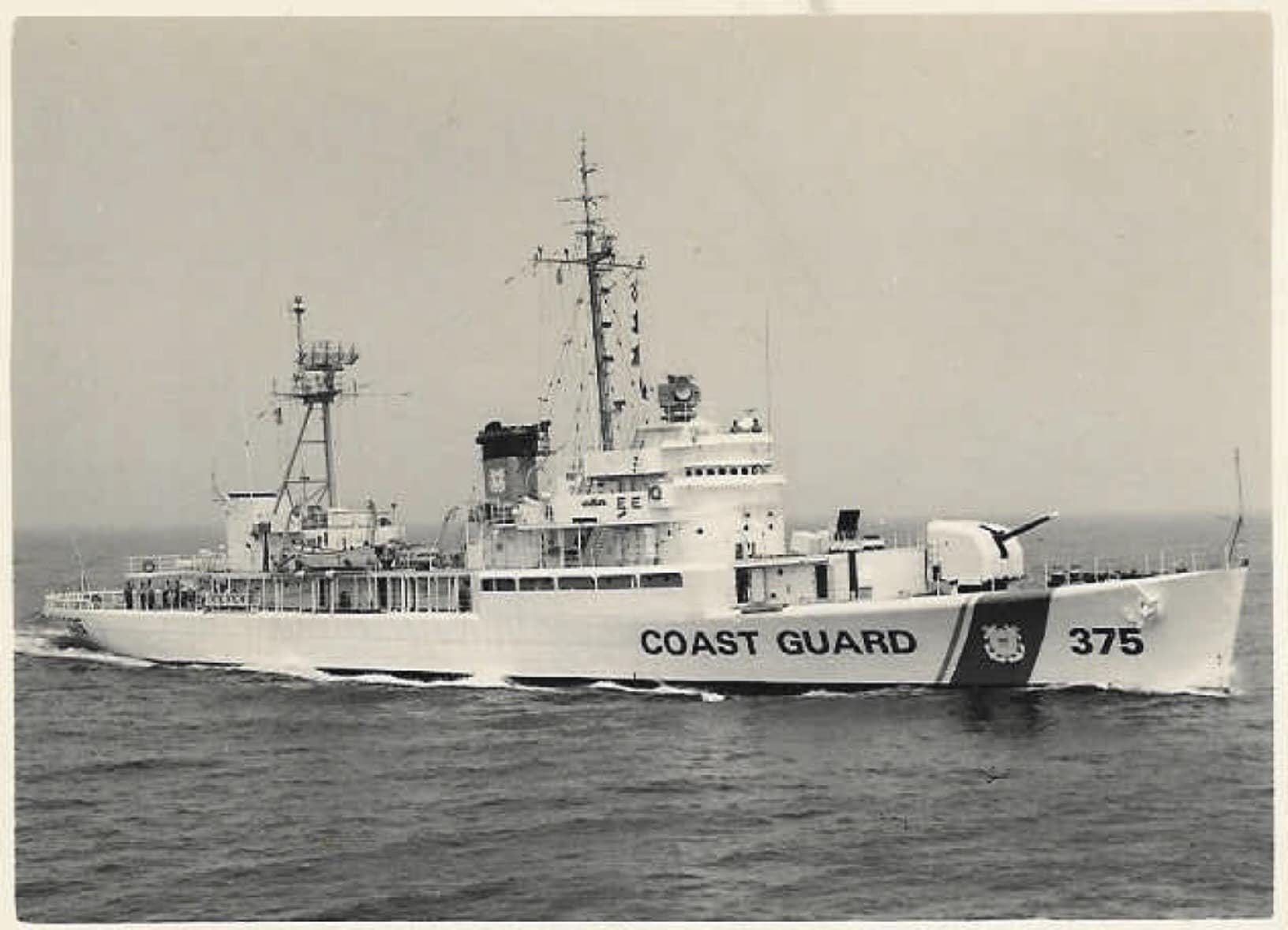
USCGC Chincoteague (WHEC-375) seen here late in her service with the Coast Guard, armed with a single 5″/38, Mk 56 Gun Fire Control System, torpedo tubes for ASW torpedoes, and Hedgehog ASW mortar.

In the 1940s Chincoteague and 17 of here sisters were transferred to the Coast Guard, where they primarily served as weather ships on a number of “Ocean Stations.” In Coast Guard service, these were referred to as the Casco Class.

As part of “Vietnamization” Chincoteague and six of her sister Coast Guard cutters were turned over to the South Vietnamese.

After being turned over to the South Vietnamese, the former Chincoteague, along with another former Coast Guard cutter of her class and two former US Navy ships fought the Chinese Navy in the “Battle of the Paracel Islands,” 16 January 1974.

RVNS Lý Thường Kiệt (HQ-16), the former USCGC Chincoteague

As the South Vietnamese government collapsed, the former Chincoteague along with five other ships of the class (the former Yakutat, Bering Strait, Castle Rock, Cook Inlet, and McCulloch) crowded with hundreds of refugees made their way to the Philippines. In 1976 these ships were turned over to the Philippine Navy as the Andrés Bonifacio class, with four of them commissioned and two (the former Yakutat and Cook Inlet) retained to provide spare parts. They remained in service until at least 1985.

The former USS/USCGC Absecon continued in service with the Vietnamese People’s Navy perhaps as late as 2000 and was probably the only Barnegat class ship ever armed with guided missiles, the SS-N-2 Styx and the SA-N-5 Grail.

Exercises–RIMARCTIC? and Unmanned in UNITAS in July

National Defense has a short post, “JUST IN: Gilday Calls for Massive International Exercise in Arctic.” It talks about doing an exercise comparable to RIMPAC in the Arctic. Chief of Naval Operations, Adm. Michael Gilday is almost certainly talking about an exercise on the Atlantic side of the Arctic, in the Norwegian Sea, above the Greenland-Iceland-UK gap. If the Exercise were held as far North as the Barents Sea, the Russians would probably get very excited.

The Arctic Circle runs just North of Iceland and North of the upper end of the Baltic Sea. Credit: CIA

The Coast Guard would almost certainly participate. The Canadians already host an Arctic Exercise, Nanook, but it is very small scale. It takes place west of Greenland and the US Navy has not generally participated.

(I have serious doubts that this RIMARCTIC is ever going to happen, at least not as something on the scale of RIMPAC. Everyone wants to go to Hawaii.)

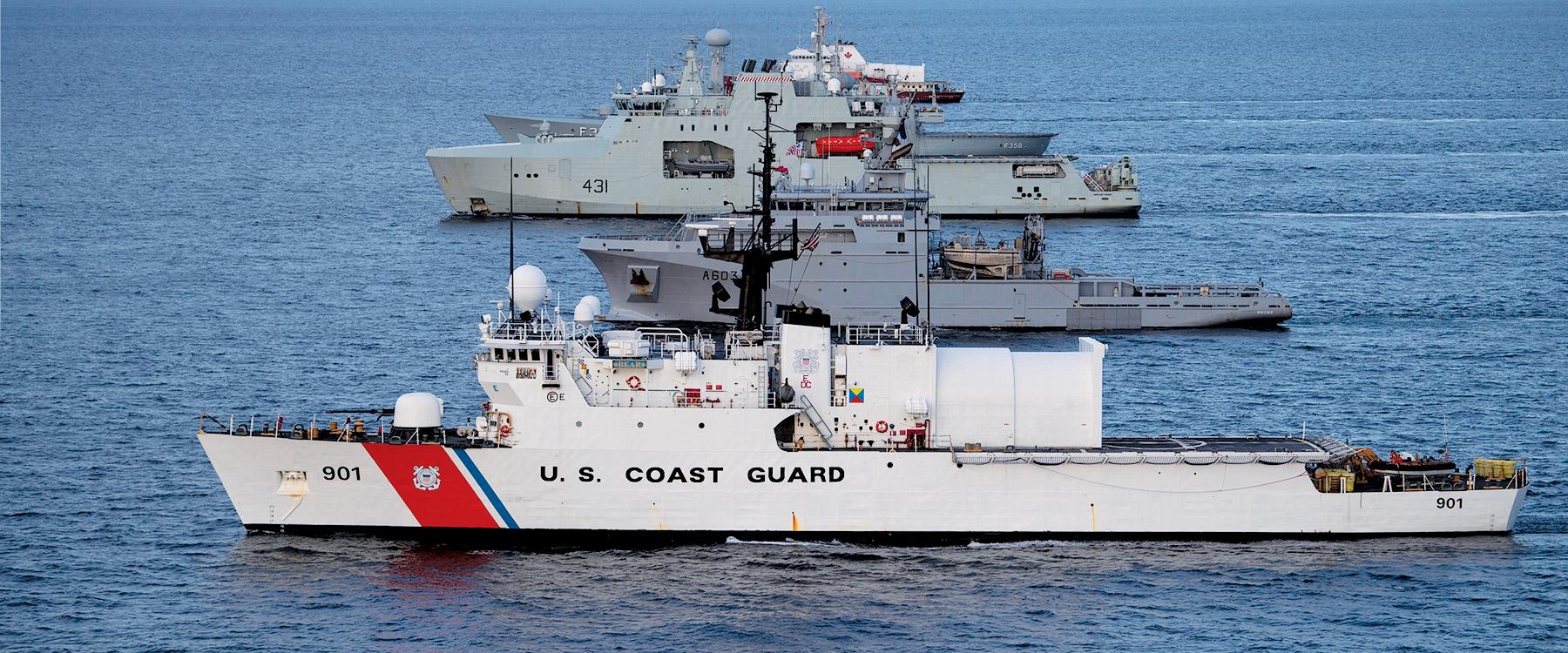
The USCGC Bear (WMEC-901) and allied ships from Canada, Norway, France, and Denmark steam in formation in the North Atlantic Ocean during Operation Nanook in August 2022. 

The post also talks about China’s massive investment in Oceanography and there is an interesting footnote. We have heard 4th Fleet would be start experimenting with Unmanned systems soon, paralleling what has been done in 5th Fleet with Task Force 59. Apparently, it will begin with UNITAS.

The Navy plans to introduce unmanned vessels to their South American partners as a part of the UNITAS naval exercise in July. Uncrewed surface and subsurface boats can monitor sea lanes and search for nefarious activities such as drug smuggling and illegal fishing, he said.

These “potentially unmanned [capabilities] give us, along with allies and partners —which is really key here — the ability to keep an unblinking eye on that kind of activity and collect data,” he said.

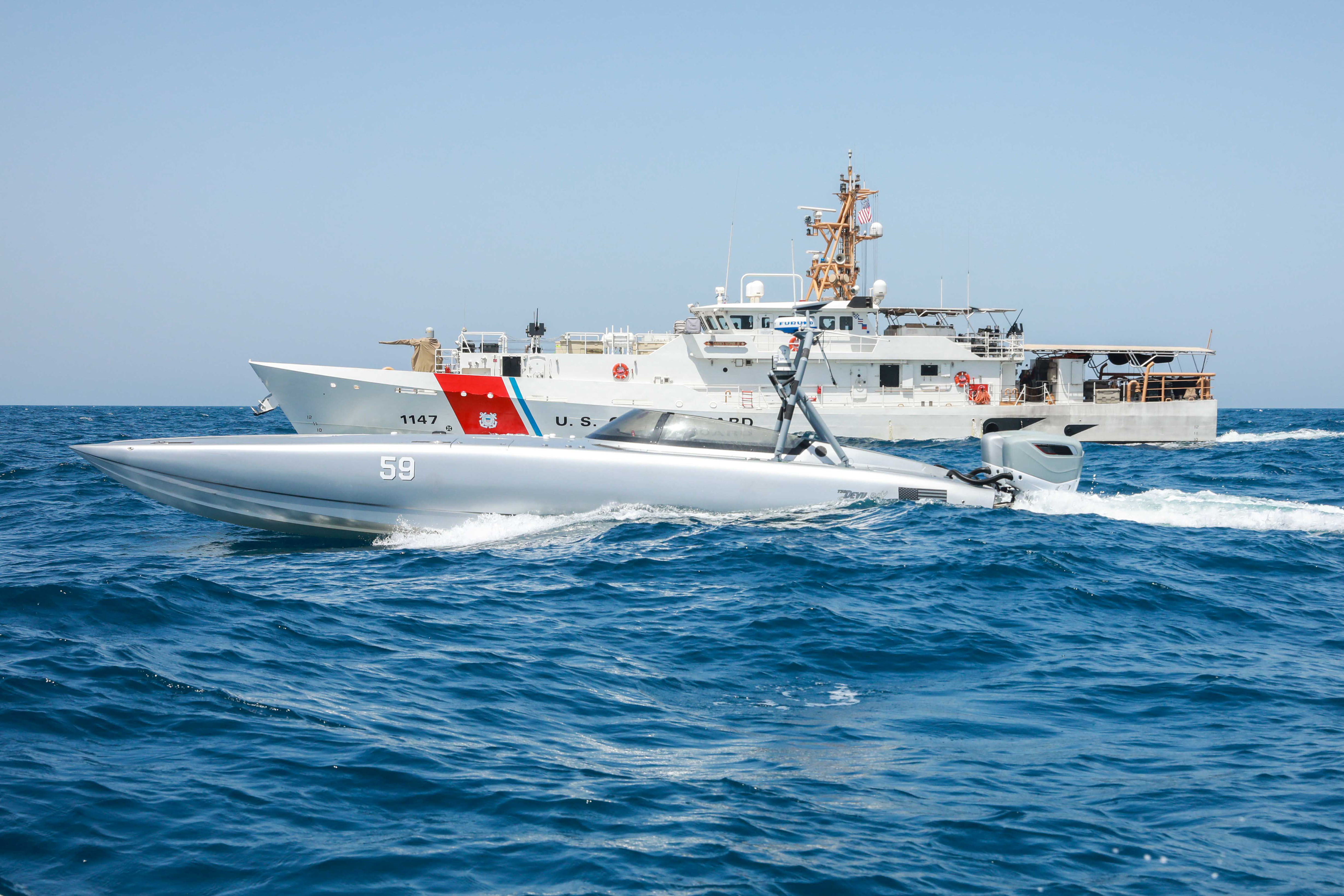
The Coast Guard fast response cutter Clarence Sutphin Jr. sails alongside an unmanned surface vessel in the Persian Gulf during exercise Eagle Resolve 23, June 1, 2023. Eagle Resolve is a combined joint all-domain exercise that improves interoperability with the U.S. military and partner nations, including Saudi Arabia.

“Italian commandos storm Turkish ship to foil migrant hijackers” –The Telegraph

The heavily armed commandos dropped onto the ship from helicopters. ©IMPA

The Telegraph reports,

“Italian special forces stormed a cargo ship after 15 “illegal migrants” armed with knives attempted to hijack a ship and take its crew hostage.”

The Brits had a similar incident in 2018, involving four migrants, also without firearms. “Special forces retake cargo ship after stowaways threatened staff” –The Telegraph (UK)

The Coast Guard does train for this sort of thing. “CBS Reports on MSRT Exercise

Even in a benign environment, fast roping can be dangerous. “Two FBI Agents Die in Maritime FAST Roping from Helicopter Training Exercise

Not to take anything away from the professionalism of the Italian commandoes, but if you are going to do something like this, you hope the opposition will be something like the Italians faced, desperate untrained people without a plan or organization, without firearms. One man with an RPG or a .50 caliber could ruin your entire day. Even when confronted by “peaceful protesters,” things can go terribly wrong. “Israeli Navy intercept of Gaza aid convoy turns deadly

There are sometimes alternatives, “Israeli Blockade–Lessons Applied

If you consider worst case, this is what we might be facing. “Potential Terrorist Threat Weapons

“Replenishing Controversy: The US Navy’s New Tanker Program” –gCaptain

gCaptain has a post that looks at a Navy proposal to build ten smaller underway replenishment ships, but it goes on to provide an overview of US sealift capacity (see the video above, included in the gCaptain post), and it finds that it is pretty poor.

“…amateurs talk strategy, but professionals talk logistics.”

Why should the Coast Guard care?

Any merchant marine construction in the US is going to be subject to Coast Guard oversight.

The health of America’s shipbuilding industry is in the Coast Guard’s interest.

It would be nice to have enough underway replenishment ships to be able to keep one on station in the Eastern Pacific to support drug interdiction efforts. Might make operating groups of Webber Class WPCs in the drug interdiction role in the drug transit zone more practical. It might even be possible to fly supporting Coast Guard rotary wing or UAS assets from a T-AOL.  It would probably be good to have one in Oceania as well.

Because there are so few US owned merchant ships, and because the MSC and MARAD sealift ships are old, unreliable, and use outdated technology, it is difficult to find crews for them. Then there might also be a problem of getting the mariners we do have, to take what is likely to be a hazardous job.

The Navy has already told MARAD that in wartime they would be on their own. That they should not expect the Navy to protect them.

Take a look at what happened in WWII. The Coast Guard ended up crewing 351 US Navy and 288 Army ships and craft. Many of the Navy vessels and most of the Army vessels were logistics ships. If the Navy has trouble crewing logistics ships, they might well commission them and put Coast Guard crews on them.

The Coast Guard should support MSC and MARAD recapitalization. 

Some Observations on a Change of Command

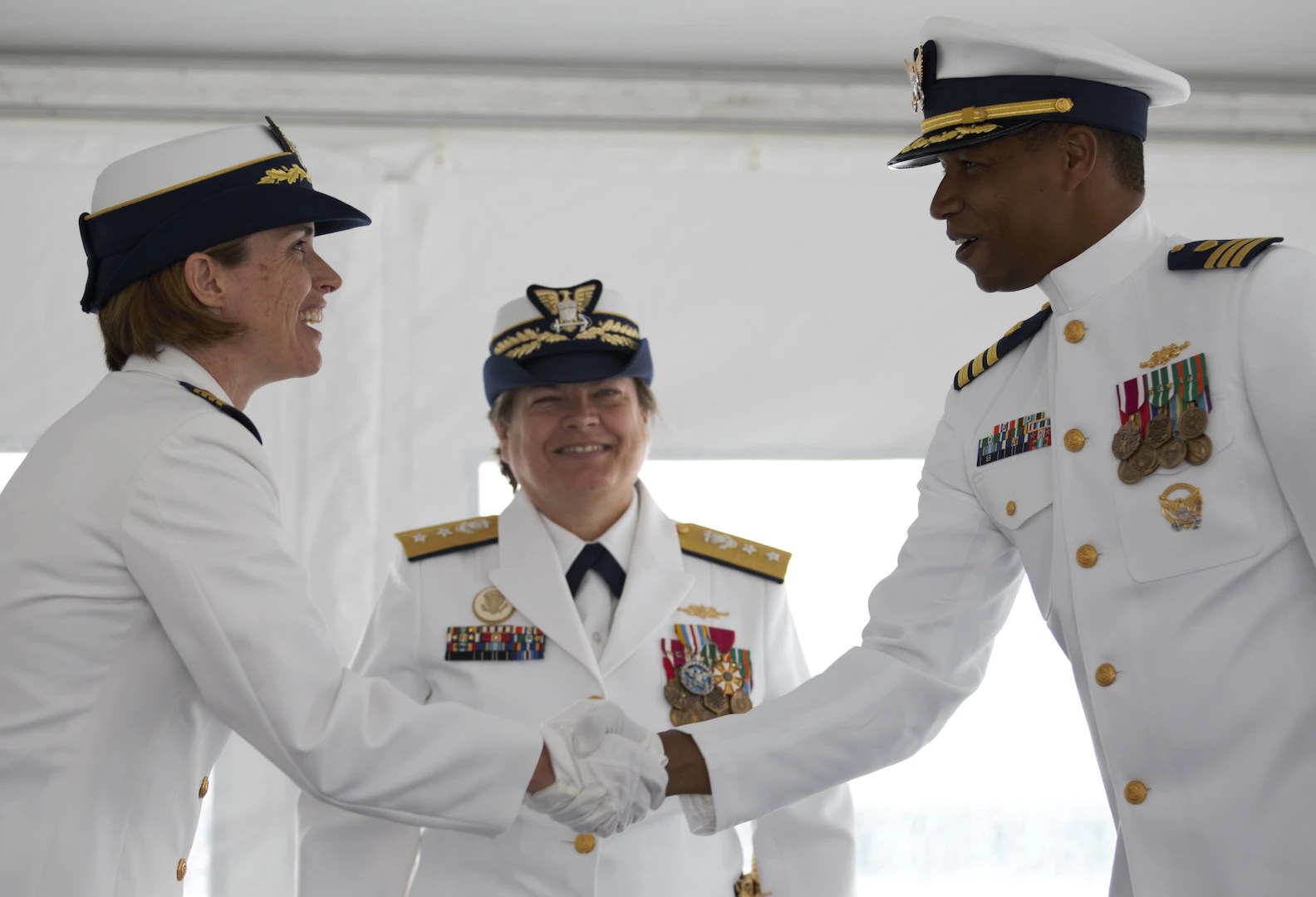
Cmdr. Jonathan Harris relieved Capt. Anne O’Connell as commanding officer of the USCGC Campbell (WMEC 909) during a change of command ceremony, Friday, 9 June, 2023, at Naval Station Newport. Rear Adm. Laura Dickey, deputy commander of Coast Guard Atlantic Area, presided over the ceremony.

Reading over this simple news release, there are a couple of things that stood out for me.

Having graduated from the CG Academy when it was all male and nearly all white, proud to see the apparent opportunities the Coast Guard now offers to women and minorities.

Second, and the reason I am posting this is,

“Harris previously served as the USCGC Hamilton’s (WMSL 753) executive officer.”

That is the way it ought to be. You should not get command of a major cutter without having served as either a department head or XO, preferably of a major cutter.


June 9, 2023

USCGC Campbell holds change of command ceremony

NEWPORT, R.I., — U.S. Coast Guard Cmdr. Jonathan Harris relieved Capt. Anne O’Connell as commanding officer of the USCGC Campbell (WMEC 909) during a change of command ceremony, Friday, at Naval Station Newport.

Rear Adm. Laura Dickey, deputy commander of Coast Guard Atlantic Area, presided over the ceremony.

Harris previously served as the USCGC Hamilton’s (WMSL 753) executive officer.

“I am extremely excited to take command and look forward to serving at sea with the Campbell crew, a team who delivers outstanding mission results by saving lives and enforcing the law,” said Harris.

O’Connell served as the commanding officer of Campbell from July 2021 to June 2023. O’Connell’s next assignment will be the director of the Commandant’s Advisory Group at Coast Guard Headquarters in Washington, D.C.

The change of command ceremony marks a transfer of total responsibility and authority from one individual to another. It is a time-honored tradition to formally demonstrate the continuity of authority within a command conducted before the assembled crew and esteemed guests and dignitaries.

Campbell is a 270-foot, Famous-class medium endurance cutter. The cutter’s primary missions are counter-narcotics operations, migrant interdiction, living marine resources protection, and search and rescue in support of U.S. Coast Guard operations throughout the Western Hemisphere.

For information on how to join the U.S. Coast Guard, visit GoCoastGuard.com to learn about active duty, reserve, officer, and enlisted opportunities. Information on how to apply to the U.S. Coast Guard Academy can be found here.

“SEA To Provide KRAITSENSE ASW System For A South-Asian Navy’s OPV Program” –Naval News

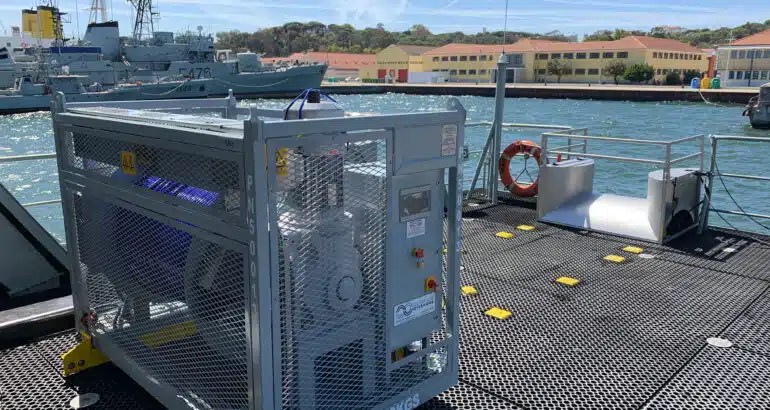
KRAITSENSE ASW System. Photo credit: SEA

Naval News reports,

“UK-based anti-submarine warfare (ASW) solutions provider SEA has been awarded a contract to supply two of its innovative ASW systems, KraitSense, to a South-East Asian Navy for a new offshore patrol vessel (OPV) programme.”

I found another photo, below, in an earlier report.

KraitSense low profile passive sonar system. SEA picture.

It these systems perform reasonably well; they would be an attractive mobilization option for giving OPVs an ASW role. Even if not equipped with ASW weapons, adding sensors that can be coordinated with other surface and air weapons carriers would be helpful.

The SE Asian Customer?

Artist impression of the future Philippine Navy OPV to be constructed by HHI. HHI image.

Who is the SE Asian country with, “With a vast coastline and high number of islands within their jurisdiction…” Think the Philippines may be most likely.

Hyundai Heavy Industries (HHI) is building six offshore patrol vessels (OPV) for the Philippine Navy (not their Coast Guard). At about 2400 tons, 94.4 meters (309 ft 9 in) in length, with a speed of 22 knots, they are pretty typical medium sized OPVs, except for one thing, Wikipedia reports that their armament, in addition to 76 and 30 mm guns, includes two sets of triple lightweight anti-submarine torpedo tubes. There is no indication of an ASW sensors. It is reported to have spaces for Multi-Mission Containerized Modules. The flight deck and hangar are sufficient for support of an ASW helicopter and/or UAS.

“Philippine, US, Japanese coast guards carry out anti-terror drill in disputed waters” –Radio Free Asia

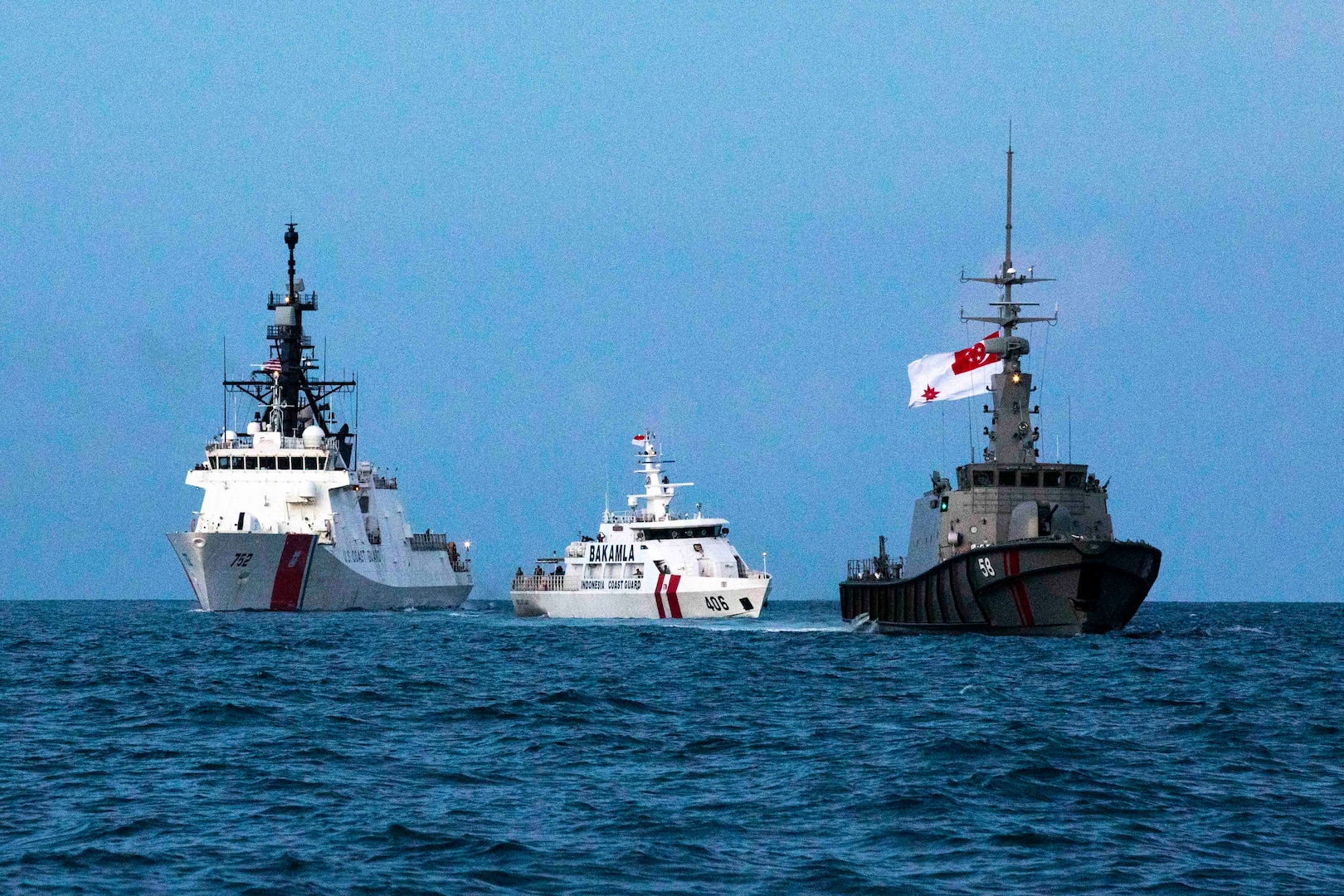
GlobalSecurity.Org has a report on a tri-lateral Counter-Terrorism exercise conducted by the US, Japan, and Philippine Coast Guards. This was part of an exercise discussed earlier. The USCGC Stratton was the USCG contingent. The photo above was taken a bit earlier and shows Stratton exercising with vessels from Indonesia and Singapore.

USCGC Bayberry (WLI-65400) to be Decommissioned

Below is a news release

June 5, 2023

MEDIA AVAILABILITY: Coast Guard to hold special status ceremony for Cutter Bayberry

Editor’s note: Media interested in attending should contact the Coast Guard’s 5th District Public Affairs Office at 410-576-2541 no later than 10 a.m. Tuesday and include the names of those coming to attend the event.

WHO: Rear Adm. Shannon Gilreath, commander, 5th Coast Guard District, Capt. Baer, commander, Coast Guard Sector North Carolina, and Senior Chief Christopher Thompson, officer in charge, USCGC Bayberry.

WHAT: A special status ceremony will be held to recognize the accomplishments of the Cutter Bayberry and the change of the cutter’s operational status, signifying the beginning of being decommissioned from active Coast Guard service after 69 years.

WHEN: Wednesday, June 7 at 10:00 a.m.

WHERE: Station Oak Island, 300 Caswell Beach Road, Oak Island, NC 28465

PORTSMOUTH, Va. — The media is invited to attend a scheduled special status ceremony in preparation for removing the USCGC Bayberry from Coast Guard service.

The Bayberry was built by Reliable Welding Works in Olympia, WA, and spent its first 17 years in the San Francisco area, with a 3 year stay in Rio Vista CA, before returning to Seattle in 1971.

When it returned to Washington, it was retrofitted with a 60-foot barge for operations and was the only one of its kind. The cutter also became a primary deployer of the Vessel of Opportunity Skimming System, an oil spill recovery system. The Bayberry’s operations in Seattle spanned from 1971 until 2009 when it was relocated to Oak Island.

The Bayberry’s recent accomplishments include post-hurricane Dorian operations, where the crew led a waterways reconstitution mission, completed a complex voyage correcting 40 aids to navigation discrepancies, enabling the rapid resumption of ferry service, and facilitating the delivery of emergency supplies to 700 residents stranded on Ocracoke Island. In 2021, when extensive shoaling suddenly compromised Oregon Inlet Channel and no other capable asset was available to respond, the cutter led a 400-mile mission to the Outer Banks to retrieve and relocate five buoys that dangerously misled mariners, significantly enhancing the safety of this busy waterway, preserving search and rescue capabilities, and sustaining the local economy.