“Lantern room lifted off Scituate Lighthouse as $2 million restoration begins” –The Patriot Ledger

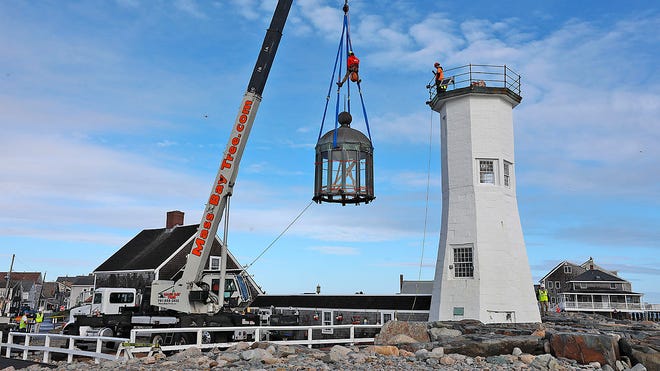
The top of  the Scituate Lighthouse is removed to make way for a replacement Thursday, Oct. 6, 2022.

Photo by Gregg Derr/The Patriot Ledger

Report of an historic lighthouse preservation effort from The Patriot Ledger.

The lantern room of the Scituate Lighthouse was removed Thursday morning after preservation experts discovered the iron columns connecting the room to the tower are severely corroded…The lantern room of the 211-year-old lighthouse will be completely rebuilt through a $2 million project paid for by the Scituate Community Preservation Fund. The work includes putting in a new frame, new window frames, new copper cladding and glazing.

“Stage 2 of the Coast Guard offshore patrol cutter moves forward” –CG HQ News Release

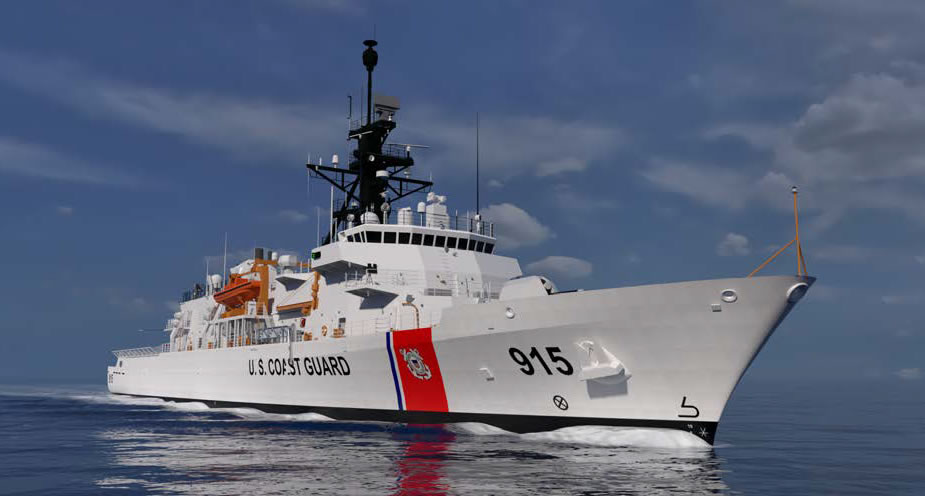
Artists rendering from Eastern Shipbuilding Group

Below is a news release. Just minutes before I saw this, I recieved an email from Jessica Ditto, Eastern’s VP, Communications

As you might have seen, ESG is going to the Court of Federal Claims (COFC) to challenge the OPC stage II award decision. COFC is not an appeal, but a new proceeding that allows ESG to seek the disclosure materials that have been withheld by the government in the GAO protest. Here is our statement:

“The federal procurement process is designed to be fair and transparent. Ordinarily, the government discloses reasonable justification for its award decisions to the attorneys representing the parties in a protest. The government has declined to voluntarily disclose the information that might offer that justification. As a result, we are seeking the information and justification through a different legal pathway,” said Joey D’Isernia, President of Eastern Shipbuilding Group, Inc.

News Release

U.S. Coast Guard Headquarters
Contact: Headquarters Public Affairs

Stage 2 of the Coast Guard offshore patrol cutter moves forward

WASHINGTON — The Coast Guard today issued a notice to Austal USA, the offshore patrol cutter (OPC) Stage 2 contractor, to proceed on detail design work to support future production of OPCs. The Coast Guard issued the notice following the withdrawal of an award protest filed in July with the Government Accountability Office by an unsuccessful Stage 2 offeror.

The Coast Guard on June 30, 2022, awarded a fixed-price incentive (firm target) contract through a full and open competition to Austal USA to produce up to 11 offshore patrol cutters. The initial award is valued at $208.26 million and supports detail design and long lead-time material for the fifth OPC, with options for production of up to 11 OPCs in total. The contract has a potential value of up to $3.33 billion if all options are exercised.

The Coast Guard’s requirements for OPC Stage 2 detail design and production were developed to maintain commonality with earlier OPCs in critical areas such as the hull and propulsion systems, but provide flexibility to propose and implement new design elements that benefit lifecycle cost, production and operational efficiency and performance.

The 25-ship OPC program of record complements the capabilities of the service’s national security cutters, fast response cutters and polar security cutters as an essential element of the Department of Homeland Security’s layered maritime security strategy. The OPC will meet the service’s long-term need for cutters capable of deploying independently or as part of task groups and is essential to stopping smugglers at sea, interdicting undocumented non-citizens, rescuing mariners, enforcing fisheries laws, responding to disasters and protecting ports.

For more information: Offshore Patrol Cutter Program page.

“Coast Guard awards River Buoy, Inland Construction Tender detail design and construction contract” –CG HQ News Release

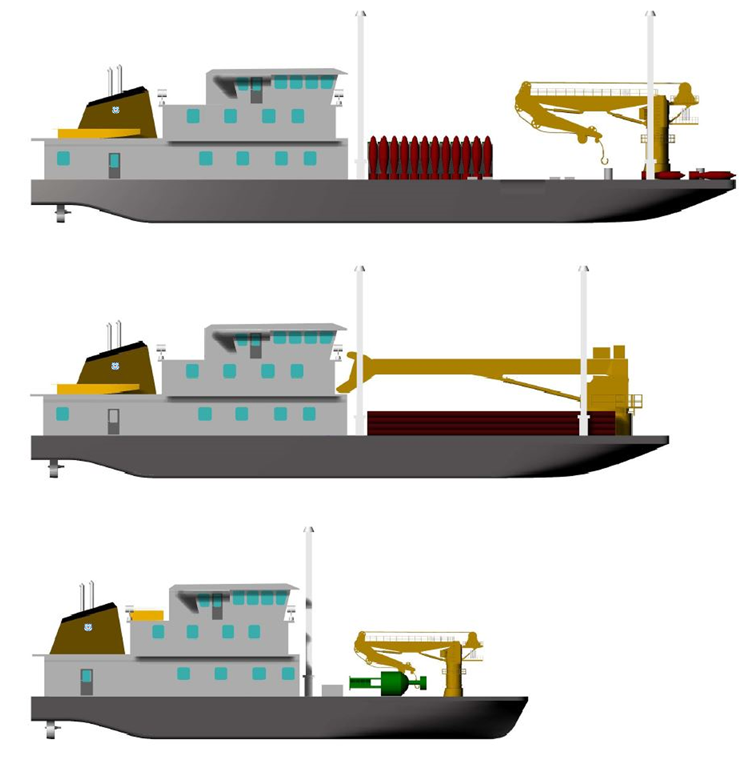
Shown above are Coast Guard indicative designs of a river buoy tender, inland construction tender and inland buoy tender.

The news release is below.

Congressional Research Service has an Aug. 30, 2022, two page explanation of the program.

For background, my most recent previous related posts:

“Ohio River Bomb Spree Shows Need For New Coast Guard Waterways Commerce Cutters” –Forbes Nov. 2021

“Coast Guard releases request for information for boats to support waterways commerce cutters” –CG-9 Oct. 2021

“Waterways Commerce Cutter: It’s Time for an Upgrade” MarineLink June 2021

Update, “Coast Guard Waterways Commerce Cutter (WCC) Program: Background and Issues for Congress” –CRS Feb. 2021

There are others: https://chuckhillscgblog.net/?s=waterways+commerce+cutter&submit=Search

 News Release

U.S. Coast Guard Headquarters


Coast Guard awards River Buoy, Inland Construction Tender detail design and construction contract

WASHINGTON – On Oct. 5, 2022, the Coast Guard Waterways Commerce Cutter (WCC) Program awarded Birdon America, Inc. of Denver, Colo., an indefinite-delivery, indefinite-quantity firm fixed price contract with economic price adjustments for the detail design and construction of its river buoy and inland construction tenders.

The initial award is worth $28.49 million. The contract includes options for the construction of a total of 16 river buoy tenders and 11 inland construction tenders.

If all contract line items are exercised, the total contract value is estimated at $1.19 billion.

River buoy tenders service short-range aids to navigation (ATON) on the western rivers. They set, relocate and recover buoys to mark the navigable channel in the rivers as the water level changes and also establish and maintain fixed aids, lights and day beacons.

Inland construction tenders construct, repair and maintain fixed ATON within inland waterways along the Eastern Seaboard and Gulf of Mexico. They are the only Coast Guard platform with the capability to drive and remove piles, erect towers and effect major structural changes. 

The Coast Guard has a statutory mission to develop, establish and maintain maritime ATON.  WCCs will perform a critical part of this mission on the inland waterways and western rivers. The WCCs will replace the legacy inland tender fleet, which has an average vessel age of over 57 years and includes ships still in service at 78 years old. This contract award ensures the Coast Guard will continue to meet its vital missions throughout the Marine Transportation System.

“This contract award is an important milestone for the new inland fleet that will improve our operational capability on the Western Rivers, and Inland Waterways” said Adm. Linda Fagan, Commandant, U.S. Coast Guard.

The new WCCs will have greater endurance, speed and deck load capacity than their predecessors. The ships will also feature improved habitability and will accommodate mixed-gender crews.

More information on the WCC: Waterways Commerce Cutter program page

Former USCGC MUNRO is in the hands of New Owners

SeaWaves reports,

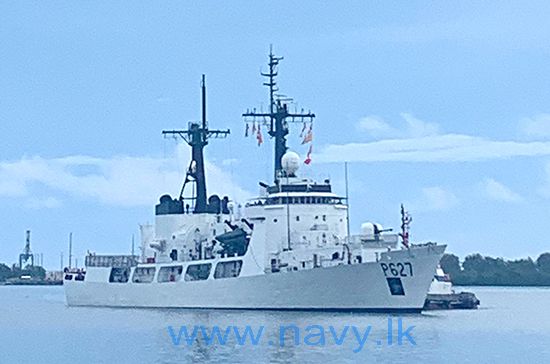
Sri Lanka Navy officially took delivery of the EX-United States Coast Guard Cutter, USCGC Douglas Munro, provided by the United States, on 26th October 2021. Subsequently, she was designated with the Pennant Number P 627 in SLN Fleet and underwent certain modernization equipped to suit the operational needs of the Sri Lanka Navy. The ship departed for Sri Lanka from the Port of Seattle, United States on 03rd September 2022.

Sri Lanka now has three former US Coast Guard cutters, two 378s, Sherman and Douglas Munro, and a 210, the former USCGC Courageous.

Wikipedia has a listing of where the 378s are now.

“Coordinating combat exercise operations from the inside of the cutter” –MyCG

MyCG has a story about the experience of personnel manning USCGC Bear’s CIC during Operation Nanook. There were some statements that surprised me.

“There were a lot of ways we were pushed as a team within the operations department,” he explained. “For me, I think it was getting acclimated with being on a cutter after being an ‘OS’ at a sector for most of my career. Being underway was really uncharted territory for me, no pun intended. Communications, especially the use of tactical signals to pass important information from ship-to-ship, was completely new to me with nearly 17 years of experience. But I would gladly do it again if I had the chance.”

How is it that we have an OS1, 17 years in the service, and he has never been afloat before?

Learning tactical signals, or TACSIGS, Gordon refers to was no small feat either. TACSIGS are a lost form of communication the Coast Guard no longer teaches. Only as a result of CIC’s collective brain power was Bear able to engage in close-quarter maneuvering with other ships in the convoy— often times, only at moment’s notice.

I know cutters seldom work with other warships, but it is a basic skill required of a CIC. Screwing up tactical signal will at least embarrass the ship, at worse the ship may be run over by an aircraft carrier–it has happened more than once.

And then there was this,

The unreliable internet capabilities to carry out critical tasking also challenged the crew.

You are depending on internet to coordinate operations? You can’t expect that to work when you need it most, and where is EMCON?

Sounds like the OS rating has proven so useful, and so many of the OS billets are now ashore, that the rating’s skill set has drifted away from those required afloat. Sounds like we have a problem. Maybe we need to split the rating? Create an OS like rating for those that serve exclusively ashore? Or else a special school to bring OSs going afloat up to speed?

“Coast Guard PSU Returning Home Following 9-Month Deployment” –Seapower

Coast Guardsmen from Port Security Unit 307 conduct seaward security for Department of Defense assets and personnel at Naval Station Guantanamo Bay, Cuba, April 25, 2022. During the nine-month deployment, unit operations focused on maritime defense, providing more than 30,000 hours of around-the-clock waterside and shore side anti-terrorism and force protection. U.S. Coast Guard by photo by Lt. Cmdr. Glenn Sanchez.

The Navy League’s on-line magazine, Seapower, reports,

CLEARWATER, Fla. — Members from Coast Guard Port Security Unit (PSU) 307 returned home to Clearwater Oct. 3 following a nine-month deployment to Guantanamo Bay, Cuba, the Coast Guard 7th District said in a release.

During the deployment, unit operations focused on seaward security, providing more than 30,000 hours of around-the-clock waterside and shore side anti-terrorism and force protection defense security to Department of Defense assets and personnel at Naval Station Guantanamo Bay.

Thinking about the drenching Clearwater got during Hurricane Ian, these people may be coming home to a real mess. But welcome home. I am sure you have been missed.

“U.S. Coast Guard Cutter Healy reaches the North Pole” –PacArea News Release

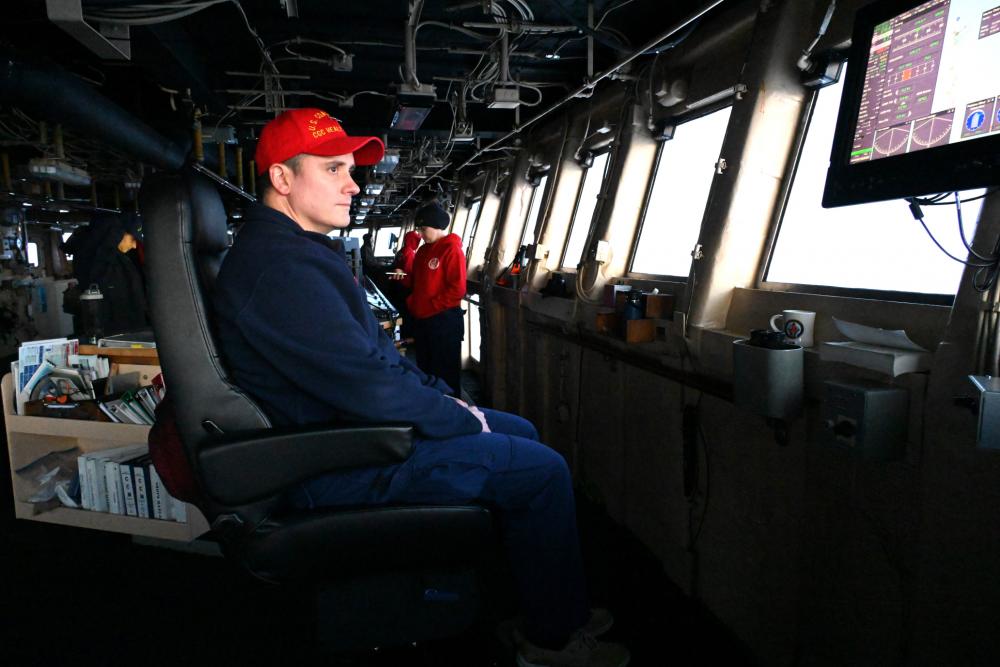
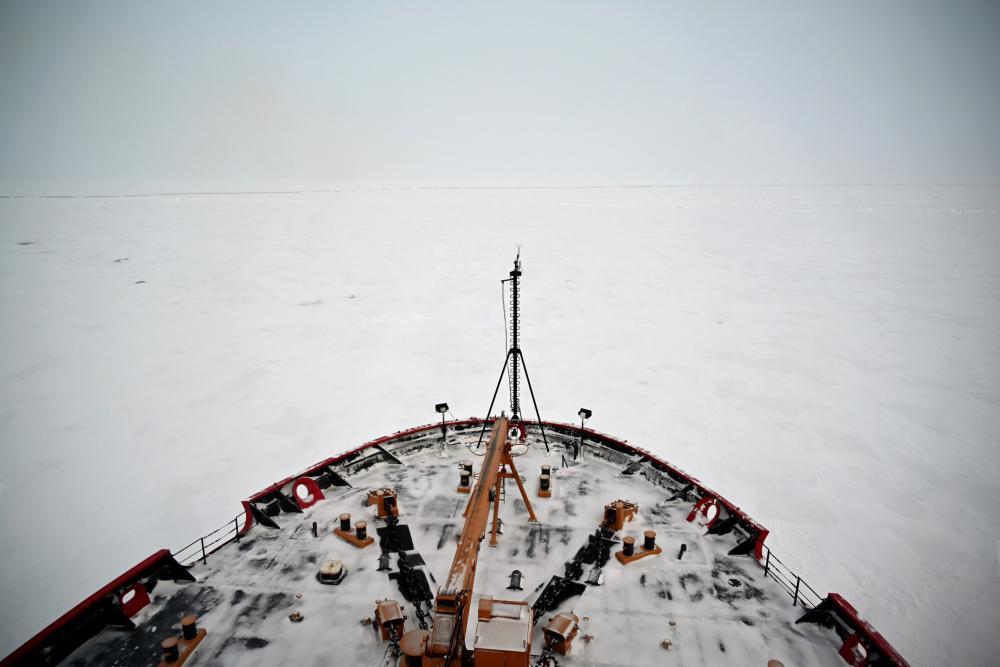
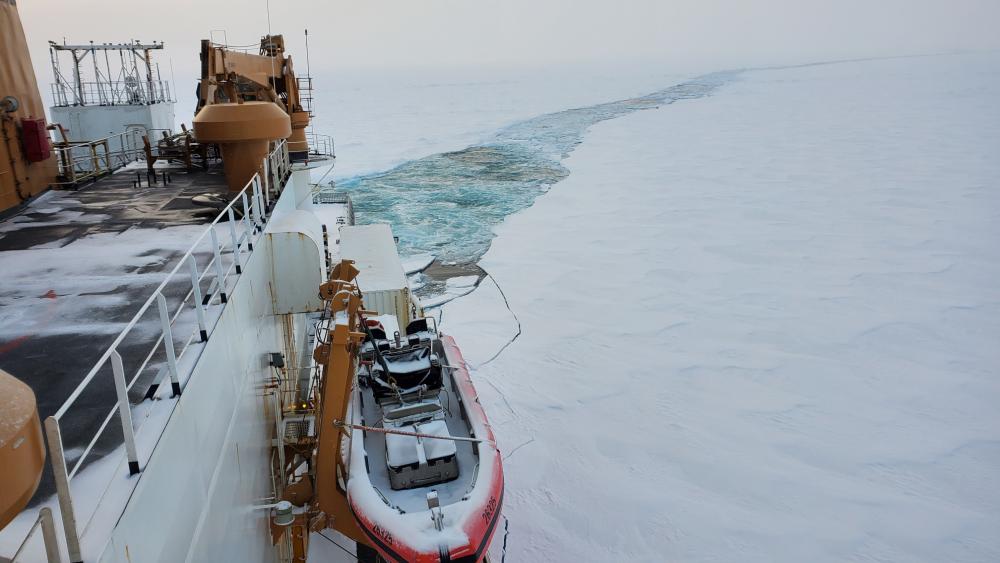
The U.S. Coast Guard Cutter Healy (WAGB 20) cuts a channel through the multi-year pack ice and snow as Healy transits the Arctic Ocean to the North Pole, September 27, 2022. This is the third time the icebreaker has traveled to the North Pole since its commissioning in 1999. U.S. Coast Guard photo by Deborah Heldt Cordone, Auxiliary Public Affairs Specialist 1.

News Release

Oct. 4, 2022
U.S. Coast Guard Pacific Area

U.S. Coast Guard Cutter Healy reaches the North Pole

U.S. Coast Guard Cutter Healy reaches the North Pole U.S. Coast Guard Cutter Healy reaches the North Pole U.S. Coast Guard Cutter Healy reaches the North Pole

Editor’s note: Click on images to download high resolution version.

NORTH POLE — The U.S. Coast Guard Cutter Healy (WAGB 20) reached the North Pole Friday after traversing the frozen Arctic Ocean, marking only the second time a U.S. ship has reached the location unaccompanied, the first being Healy in 2015.

Healy, a medium icebreaker, and crew departed Dutch Harbor, Alaska, Sept. 4, beginning their journey to reach latitude 90 degrees north. The cutter and crew supported oceanographic research in collaboration with National Science Foundation-funded scientists throughout their transit to the North Pole.

This is the third time Healy’s traveled to the North Pole since its commissioning in 1999.

“The crew of Healy is proud to reach the North Pole,” said Capt. Kenneth Boda, commanding officer of the Healy. “This rare opportunity is a highlight of our Coast Guard careers. We are honored to demonstrate Arctic operational capability and facilitate the study of this strategically important and rapidly changing region.”

Healy is currently on a months-long, multi-mission deployment to conduct oceanographic research at the furthest reaches of the northern latitudes. The 420-foot icebreaker is the largest ship in the Coast Guard and is capable of breaking through four-and-half feet of ice at a continuous speed of three knots.

Healy, which departed its Seattle homeport on July 11, currently has thirty-four scientists and technicians from multiple universities and institutions aboard, and nearly 100 active duty crew members.

During the cutter’s first Arctic leg of the patrol throughout July and August, Healy traveled into the Beaufort and Chukchi Seas, going as far north as 78 degrees. As a part of the Office of Naval Research’s Arctic Mobile Observing System program, Healy deployed underwater sensors, sea gliders and acoustic buoys to study Arctic hydrodynamics in the marginal and pack ice zones.

In addition to enabling Arctic science, Healy also supported U.S. national security objectives for the Arctic region by projecting a persistent ice-capable U.S. presence in U.S. Arctic waters, and patrolling our maritime border with Russia.

On their second Arctic mission of the summer, while transiting to the North Pole, Healy embarked a team of researchers as a part of the Synoptic Arctic Survey (SAS). SAS is an international collaborative research program focused on using specially equipped research vessels from around the world to gather data throughout the Arctic across multiple scientific disciplines. Dr. Carin Ashjian, from the Woods Hole Oceanographic Institution in Massachusetts, is currently serving alongside Dr. Jackie Grebmeier as co-chief Scientists onboard Healy with support from the National Science Foundation.

“We are excited to reach the Pole!” said Ashjian speaking on behalf of the embarked science party. “We have little information from the ocean and seafloor at the top of the world so what we collect here is very valuable. It also fills in data from a region, the western Central Arctic, which was not sampled by other ships in the SAS. Our joint efforts with the Healy crew are producing important science results.”

After deploying a series of scientific equipment to collect valuable data at the North Pole, crew members and the science team were granted ice liberty. During this time, they enjoyed taking pictures and posing with a “North Pole” that had been erected on the ice. Healy also used the unique setting to advance two crewmembers and conduct a cutterman ceremony for three crewmembers who each recently achieved the career milestone of five years of sea service.

“Media Advisory: U.S. Coast Guard Academy to commission the Maritime Center of Excellence”

Coast Guard Academy during the 141st Commencement Exercises May 18, 2022. The Coast Guard Academy graduated 252 new officers along with nine international students. (U.S. Coast Guard photo courtesy of Mr. David Lau)

Below is a press release. For some reason it did not come with the usual header identifying point of origin, just the email address, U.S. Coast Guard  uscoastguard@service.govdelivery.com. Nice to see some emphasis on professional development.

It talks about LEED (Leadership in Energy and Environmental Design) certification but does not say what that is. There is an explanation here


Media Advisory: U.S. Coast Guard Academy to commission the Maritime Center of Excellence

Who: U.S. Coast Guard Academy and Coast Guard Academy Alumni Association

Speakers available for comment:

  • Rear Adm. Bill Kelly, 42nd Superintendent of USCGA
  • Andrea Marcille, President of USCGA Alumni Association
  • Greg Mella, Vice President, Corporate Director of Sustainability and Principal Architect, SmithGroup
  • Tilak Subrahmanian, Vice President of Energy Efficiency and Electric Mobility, Eversource
  • Bob Laurence, Manager, Energy Efficiency, Eversource

What: A behind the scenes look at the Maritime Center of Excellence (MCOE), prior to the official opening ceremony at 4 p.m.

Why: The MCOE is the first LEED-certified major construction project to update the Academy’s 90-year old campus. Its presence will transform the landscape of the waterfront campus, and help young women and men from across the country develop a liking for the sea and its lore.

Where: USCGA waterfront 31 Mohegan Ave., New London, CT 06320

When: Wednesday, Oct. 12, 2022 at 1p.m.

How: All interested media should contact USCGA Public Affairs at cga-public-affairs@uscga.edu or (860) 857-5544 by Tuesday, Oct. 11 at noon.

A valid ID will be required for entry onto campus.

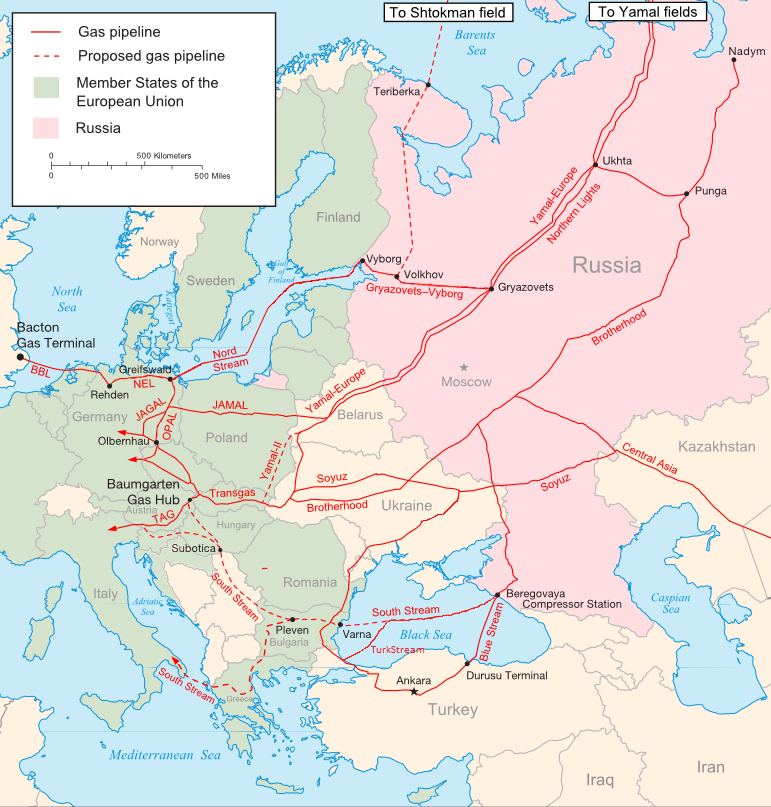
“Nordic Countries’ Response To Nord Stream Sabotage” –Naval News

File:Major russian gas pipelines to europe.png Created: 15 November 2009 Prepared by Samuel Bailey (sam.bailus@gmail.com)

Naval News reports on the Nordic response to the apparent sabotage of the Nord Stream pipeline. Coast guards are involved.

This raises the question of who protects undersea infrastructure? I don’t think there has been a lot of interest in or discussion of this question in the US. Certainly the USCG has a role.

Whatever Happened to Buoy Tender Redbud (WLB-398)? Coast Guard, Navy, MSTS, Philippine Navy, Philippine CG

The U.S. Navy buoy tender USS Redbud (AKL-398) underway off Point Loma, California (USA), in 1949.

A small footnote on Coast Guard history, but it does illustrate how versatile buoy tenders are. A “C” class 180 transferred to the Navy becomes a AKL (Auxiliary Cargo, Light). Becomes a jack of all trades in support of DOD air bases, early warning radar systems, and even LORAN stations.

Redbud Class Light Cargo Ship:

  • Laid down, 21 July 1943, for the US Coast Guard as a lighthouse tender, at Marine Iron and Shipbuilding, Duluth, MN.
  • Launched, 11 September 1943
  • Commissioned, USCGC Redbud (WLB-398), 2 May 1944
  • Acquired on loan by the US Navy in 1949
  • Classified as a Light Cargo Ship and commissioned USS Redbud (AKL-398), 23 July 1949, LCDR. Francis E. Clark USN in command
  • Decommissioned and assigned to the Military Sea Transportation Service (MSTS), 28 February 1952
  • Placed in service as USNS Redbud (T-AKL-398)
  • Placed out of service and returned to the US Coast Guard, 10 November 1970
  • Struck from the Naval Register 20 November 1970
  • Transferred to the Philippines, 1 March 1972, renamed BRP Kalinga (AG-89)
  • Final Disposition, fate unknown

Guess the ice strengthened hull came in handy. More photos from Navsource.

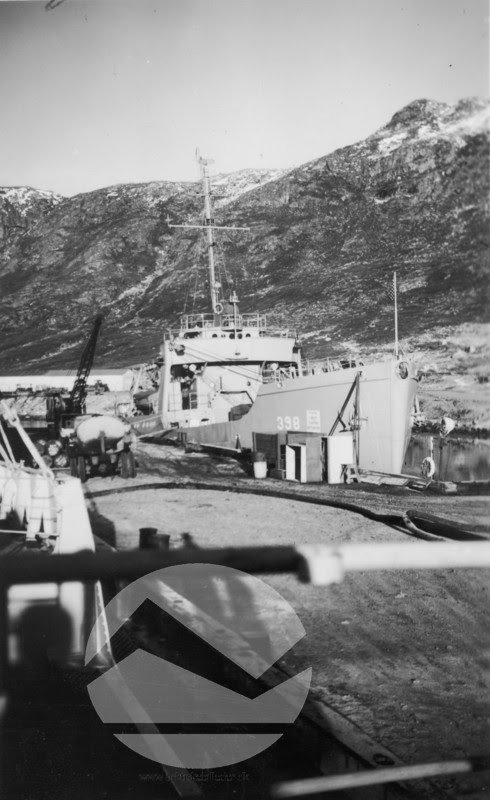
USS Redbud (AKL-398) moored pierside at Danish Naval Station Groennedal, Greenland, circa 1949 – 1950. Photo Source Arktisk Institut. Senior Chief, Erling Baldorf, Royal Danish Navy, retired

USNS Redbud (T-AKL-398) underway in the Arctic on a resupply mission from Thule Greenland to U.S. Coast Guard LORAN (Long Range Navigation Station) at Cape Athol, Greenland in 1967.
Photo by Lawrence Rodrigues

USNS Redbud (T-AKL-398), held immobile by the Arctic ice pack, January 1952. Photo Joe Radigan MACM USN Ret

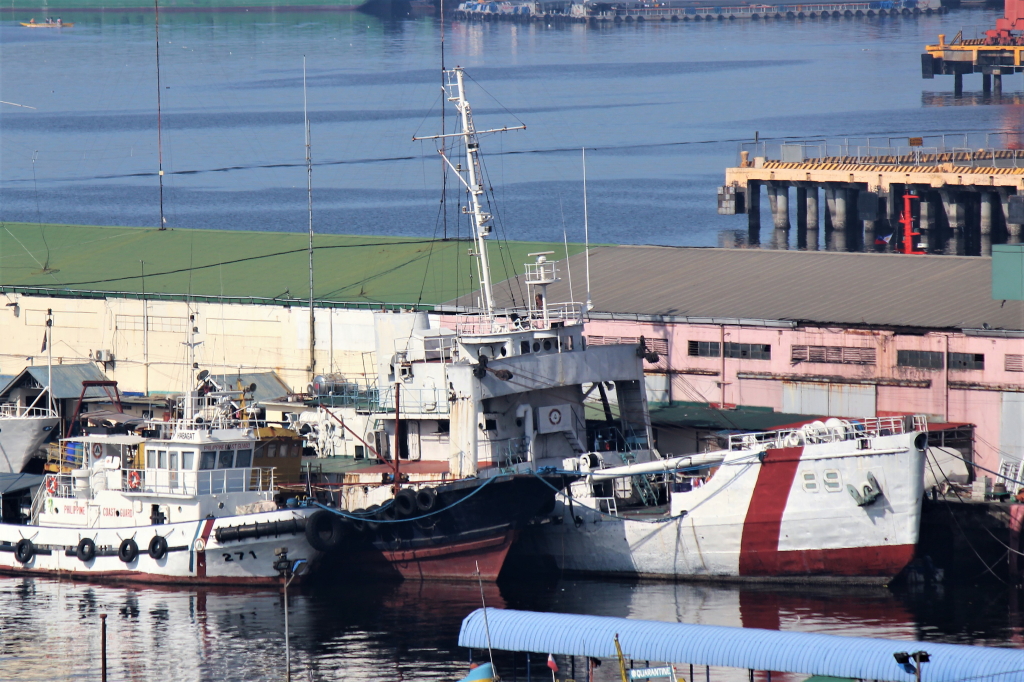
Ex-USNS Redbud (T-AKL-398) in Philippines Coast Guard service as BRP Kalinga (AG-89) moored in Manila South Harbor, 26 January 2020.