“Time to Revise the Japan Coast Guard Act?” –The Diplomat

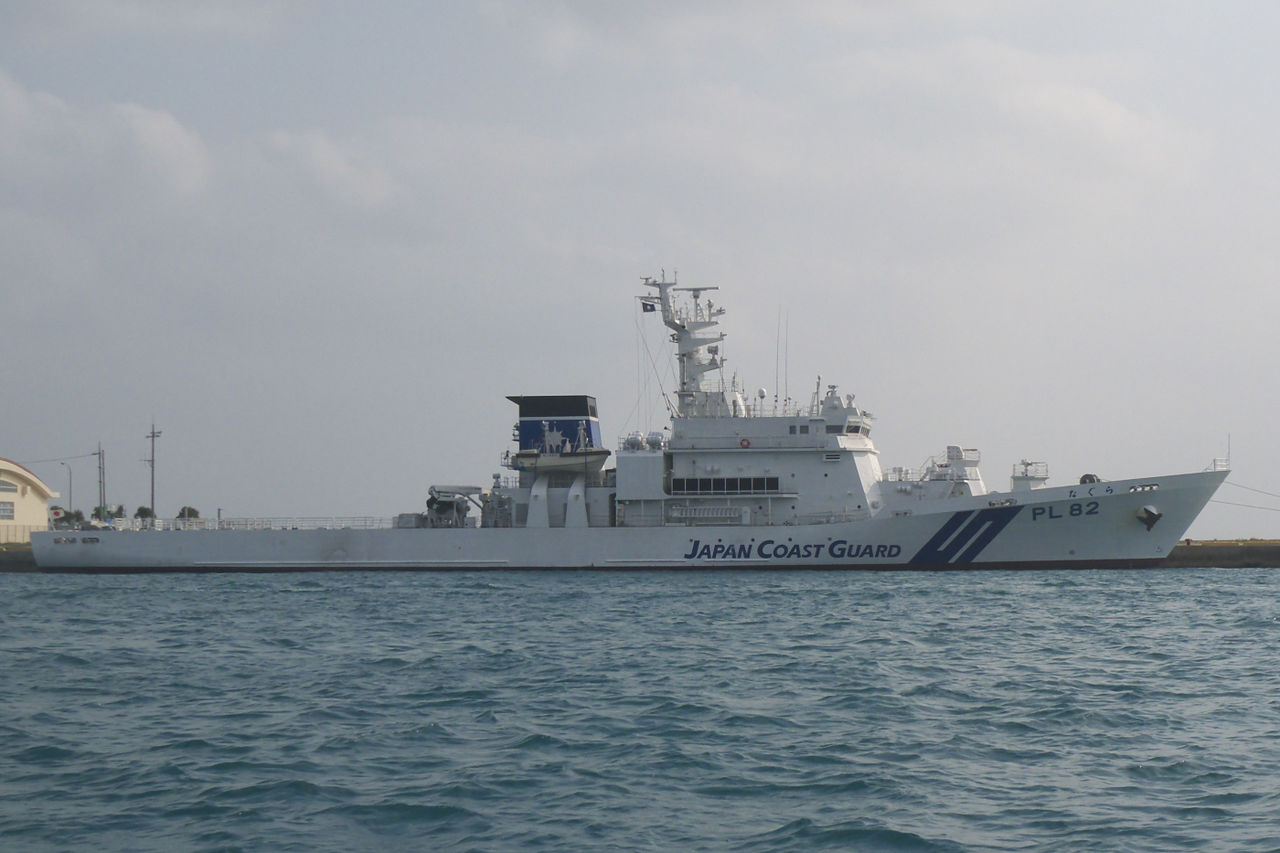
Japan Coast Guard patrol vessel PL82 Nagura at the Port of Ishigaki. Photo from Wikipedia Commons, by Yasu

The Diplomat reports that Japan is considering changes to their laws governing the Japan Coast Guard.

One proposal seeks to add “maintenance of  territorial sea integrity” and “security of territorial sea” to the Act’s mission, while another seeks to moderate the prerequisites allowing harm through use of weapons by Coast Guard officers. All of these proposals seek to give the JCG more muscle.

I don’t have a feel for what the actual proposed changes are, but I do know the Japan Coast Guard does not have the same close relationships with the Japanese Navy (Maritime Defense Force) that the USCG enjoys with the USN. It is not a military service. They don’t share equip or even use the same fuel. You can bet they don’t share the same communications systems. This means that the organization is not as useful as it might be in wartime, and, of more immediate concern, it means coordination in crisis is far more difficult.

Currently none of the Japan Coast Guard vessels have weapons larger than 40mm, and very few have an air search radar or any kind of AAW firecontrol system. If Japanese Self Defense Forces are not immediately available as backup, it might be hard not to feel intimidated by better armed China Coast Guard vessels, particularly if supported by aircraft.
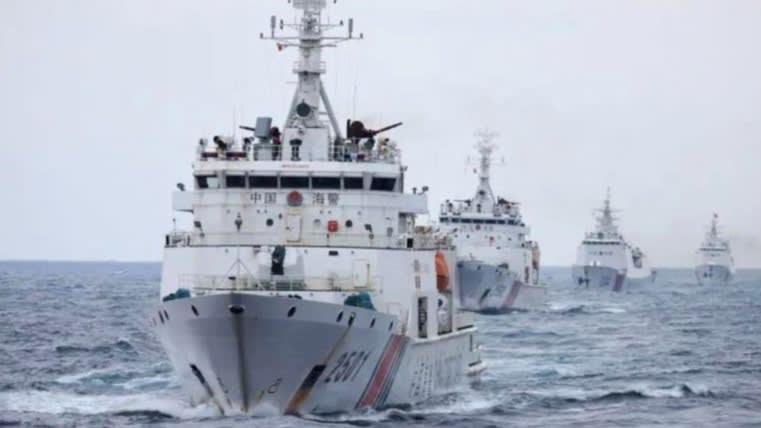
This Chinese coast guard ship is equipped with weapons believed to be 76-millimeter guns. © Kyodo

“VESSEL REVIEW | JB41 – MARINE RESCUE NSW’S NEW HIGH-SPEED, ALL-WEATHER RIB” –Baird Maritime

Australian rescue organization Marine Rescue New South Wales (MRNSW) inflatable boat (RIB) by local builder Harwood Marine.

Baird Maritime reports delivery of a new 45 foot, 30 knot boat to Marine Rescue New South Wales (MRNSW), a volunteer organization. This boat, which is comparable to the Coast Guard Response Boat, Medium, has some interesting features.

Most immediately obvious is provision for a secondary conning position in the flying bridge. There is “…a specially designed hydraulic heavy lift platform that drops below the waterline to assist in evacuating people and in the recovery of heavy equipment from the water.” The boat also uses the Swedish Zipwake ride control system, which is claimed to outperform trim tabs.

A Coast Guard Christmas Greeting

Paul sent me this story from the Nantucket Current. Hopefully they will forgive me for republishing it here.

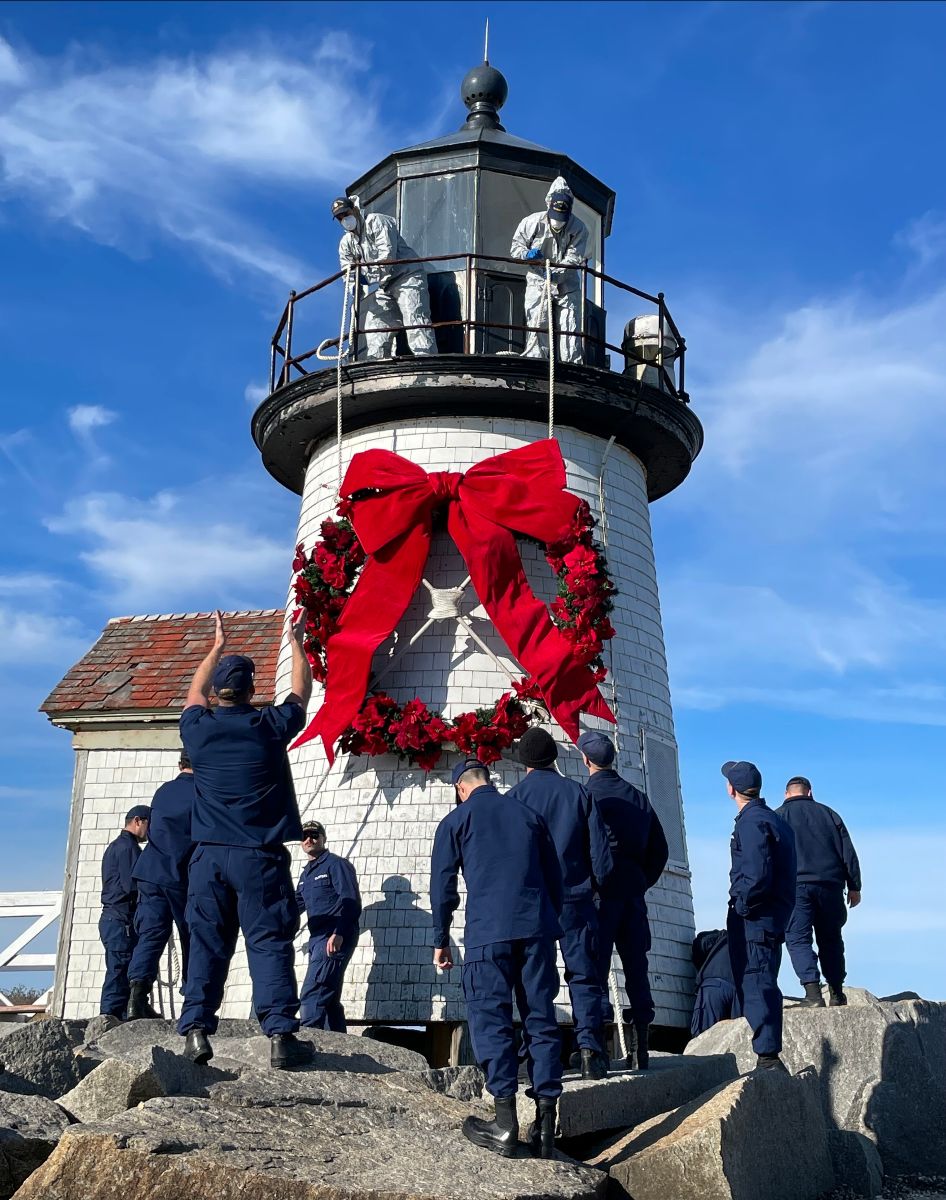
GOOD MORNING NANTUCKET: Christmas Stroll weekend is here. On Wednesday, members of Coast Guard Station Brant Point renewed the tradition of hanging a wreath from the Brant Point Lighthouse. The 2021 holiday wreath was designed and donated by Hafsa Lewis, local floral designer and owner of Hafsa & Co. The wreath tradition was started in 1993 by Station Brant Point Master Chief Jack Downey. The base of this year’s wreath is grapevine foraged from the Coast Guard’s Sconset Station. The red bow includes 50-plus poinsettias that are individually zip-tied to the base of the wreath. The Coast Guard members who are hanging the wreath from the top of the lighthouse are in full gear due to the lead and asbestos inside the lighthouse, which requires them to wear precautionary gear to avoid exposure.

“Chinese Amphibious Forces Eye A Great Leap Past The Second Island Chain” –Forbes

Craig Hooper, writing for Forbes, points out the very real possibility that China, using the pretext of a rescue mission, might seize a permanent presence in Oceania well East of the First Island Chain.

The idea of coming to the aid of Chinese diaspora is very popular with the people of China. There was a very popular movie, Operation Red Sea (2018), that depicted such an expedition (trailer above), very loosely based on the evacuation of Chinese citizens from Yemen in 2015 with considerable fictionalization of the actual events. As we know, nothing goes public in China unless it serves the goals of the party.

Hooper suggests the Coast Guard is part of the solution.

“Coast Guard buoy tender departs Bay Area for last time as San Francisco-based cutter” –News Release

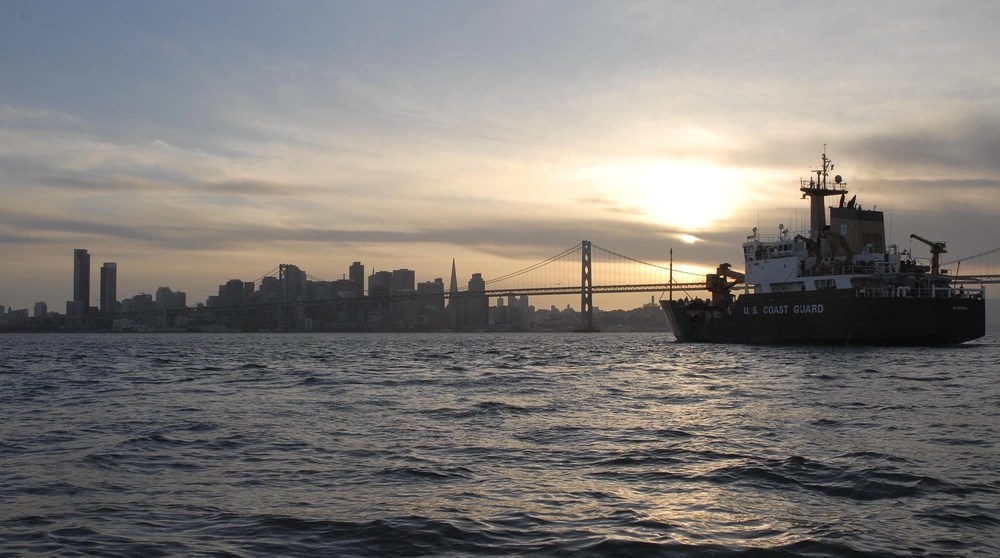
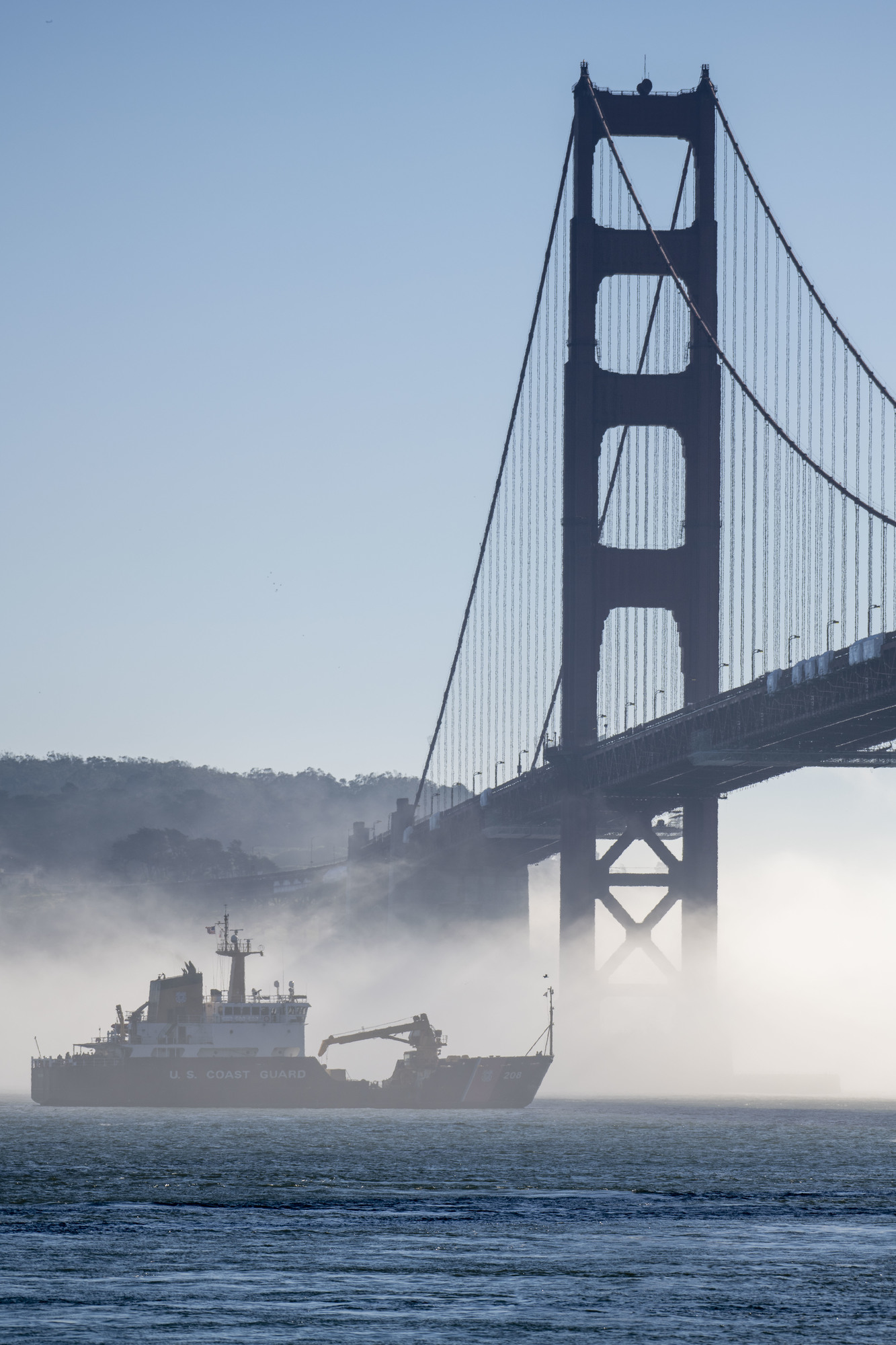
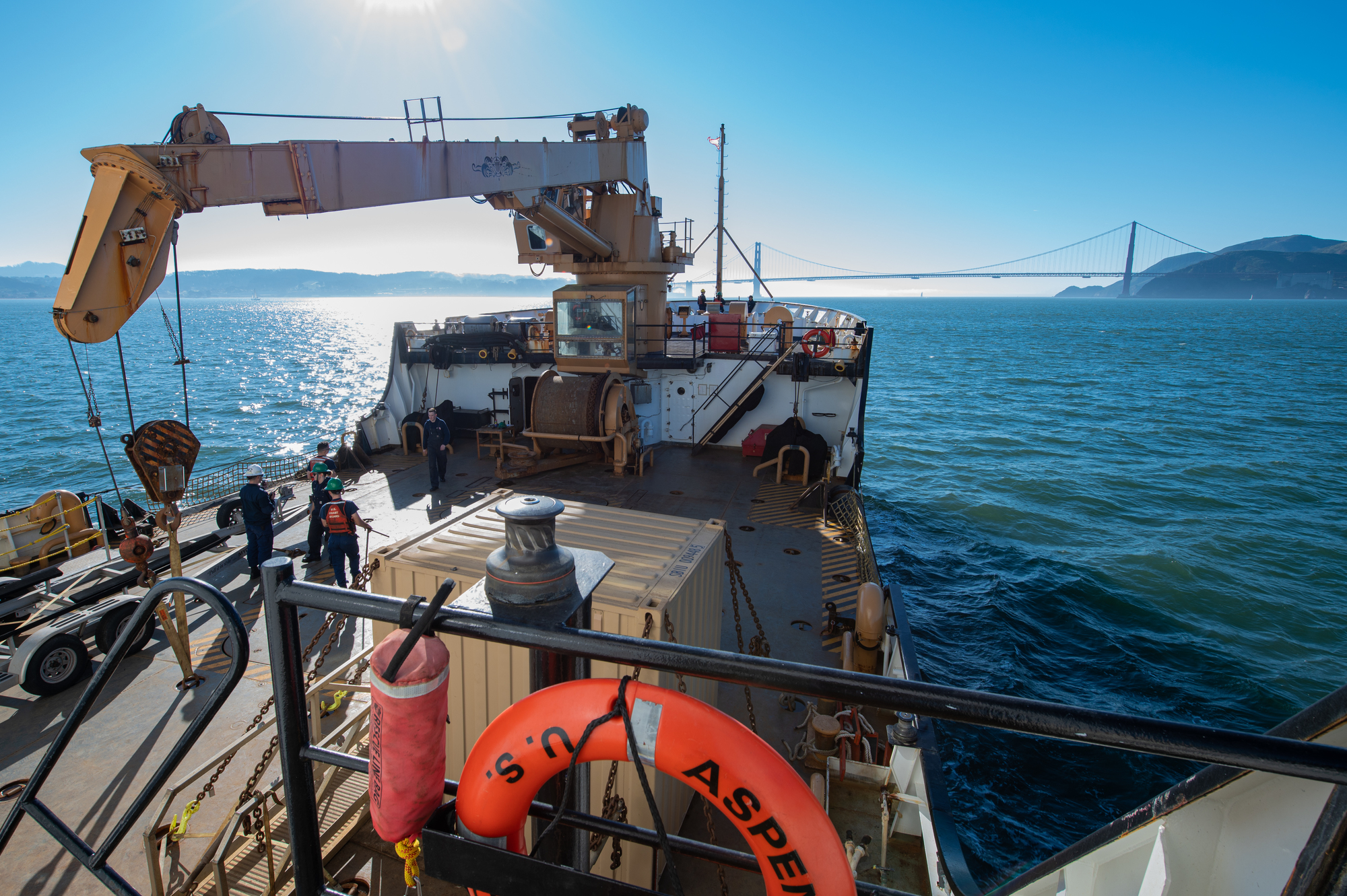
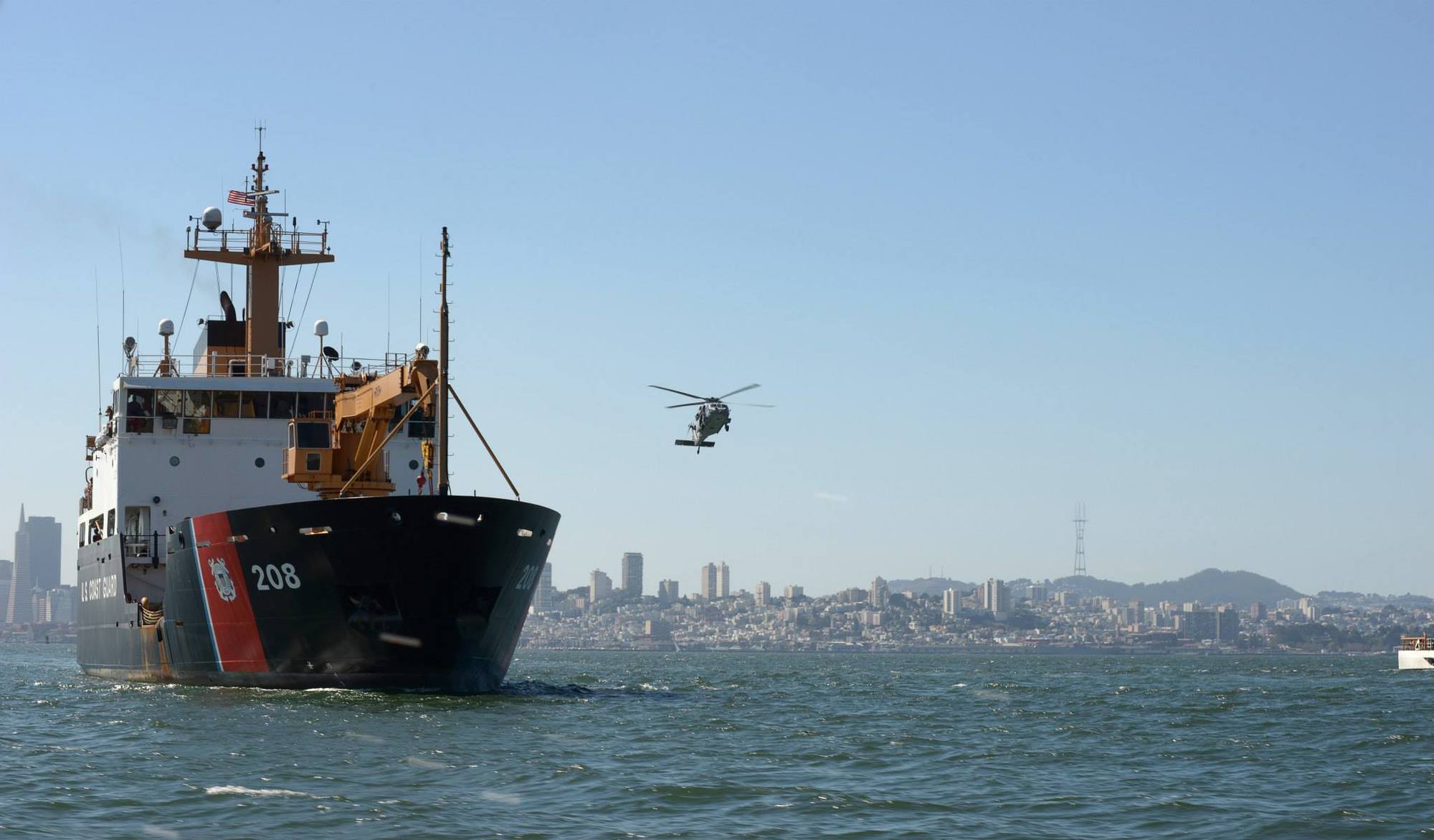
USCGC Aspen (WLB 208) transits through the San Francisco Bay, Wednesday, May 7, 2014. (U.S. Coast Guard photo by Petty Officer 3rd Class Loumania Stewart)

Continued progress on the WLB In Service Vessel Sustainment program. Very nice photoessay.

united states coast guard

News Release

U.S. Coast Guard 11th District Pacific Southwest

Coast Guard buoy tender departs Bay Area for last time as San Francisco-based cutter 

aspen aspen1 001
003 004 002

Editor’s Note: Click on images above to download full-resolution version.

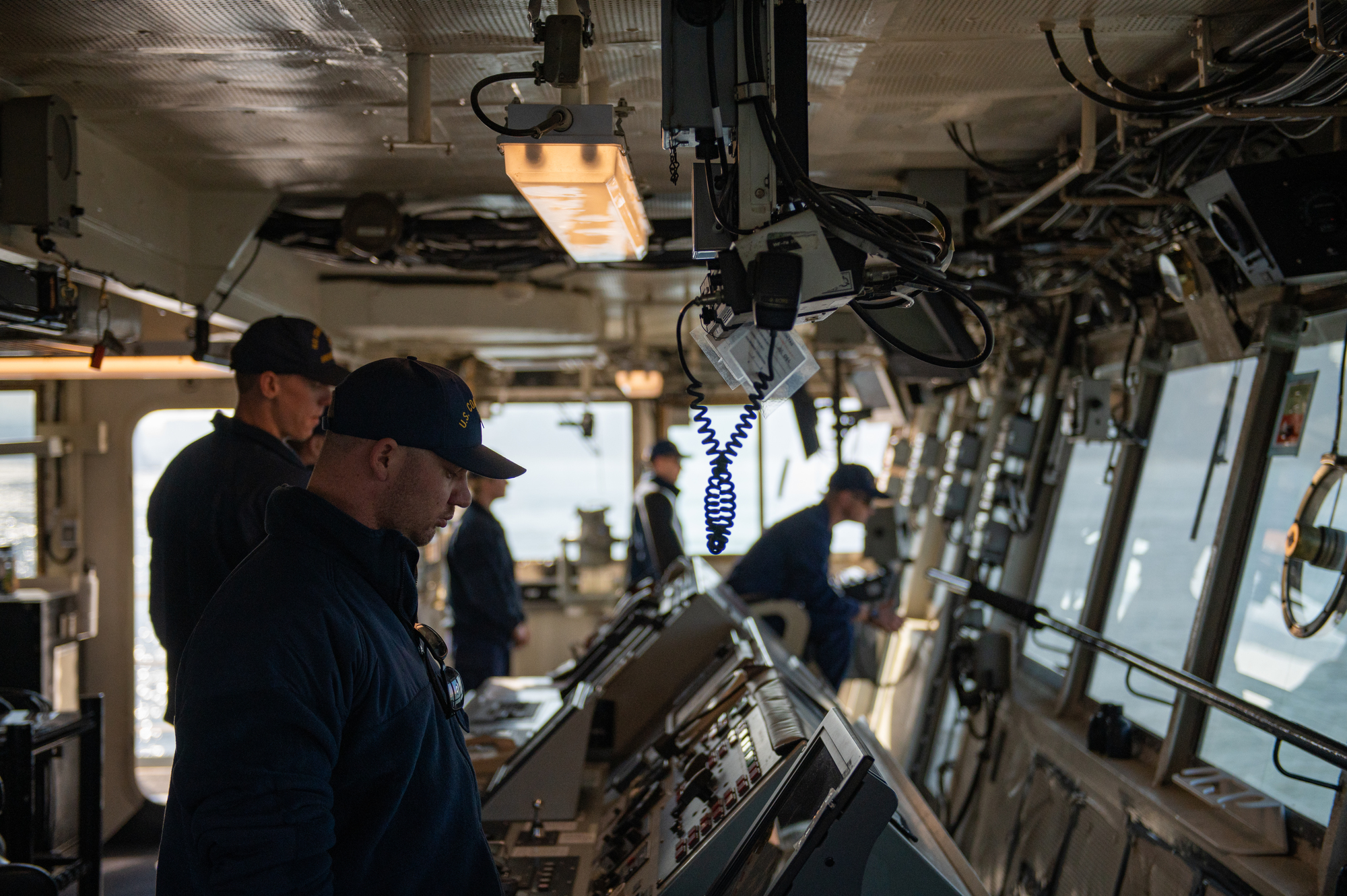
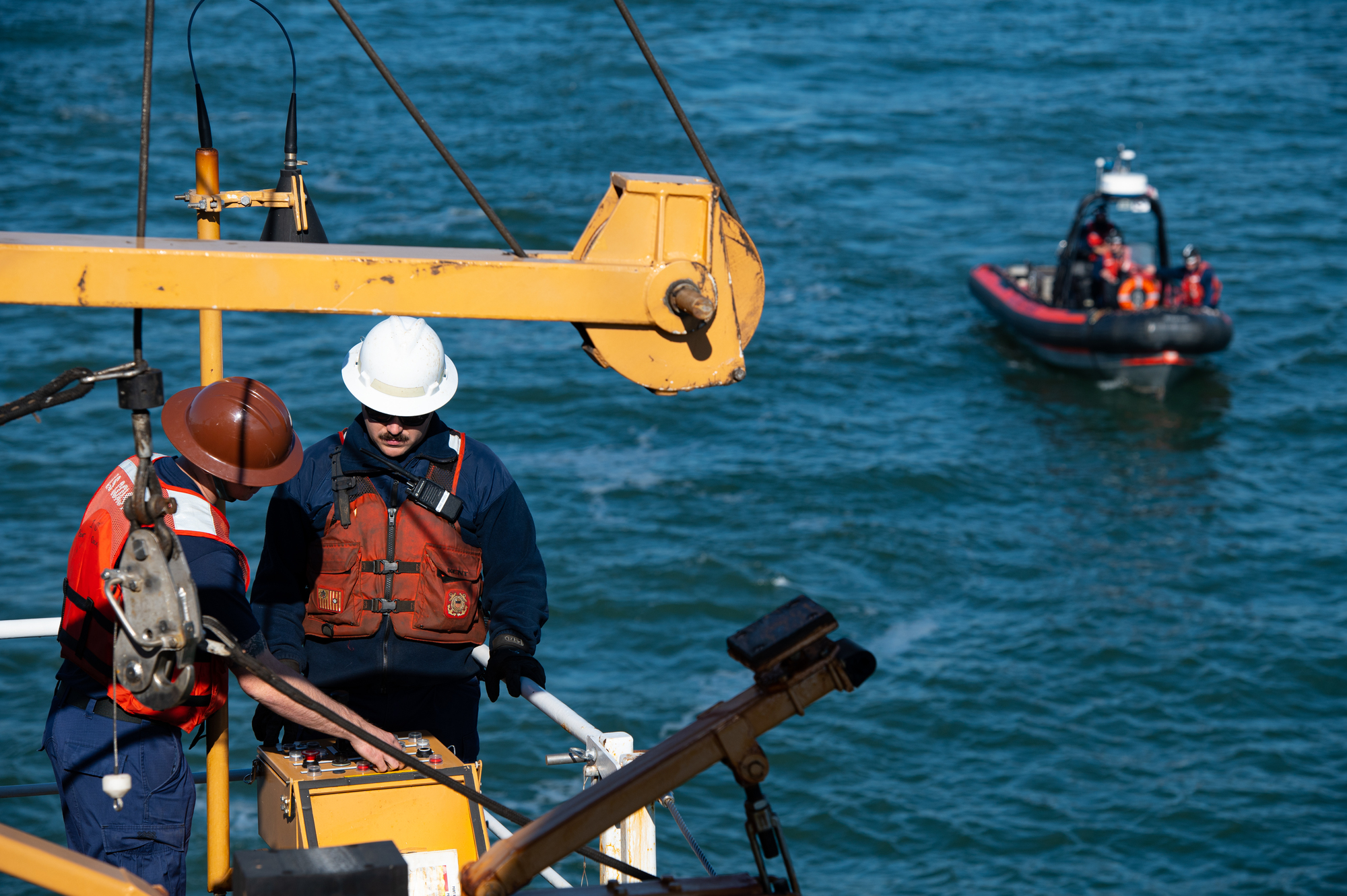
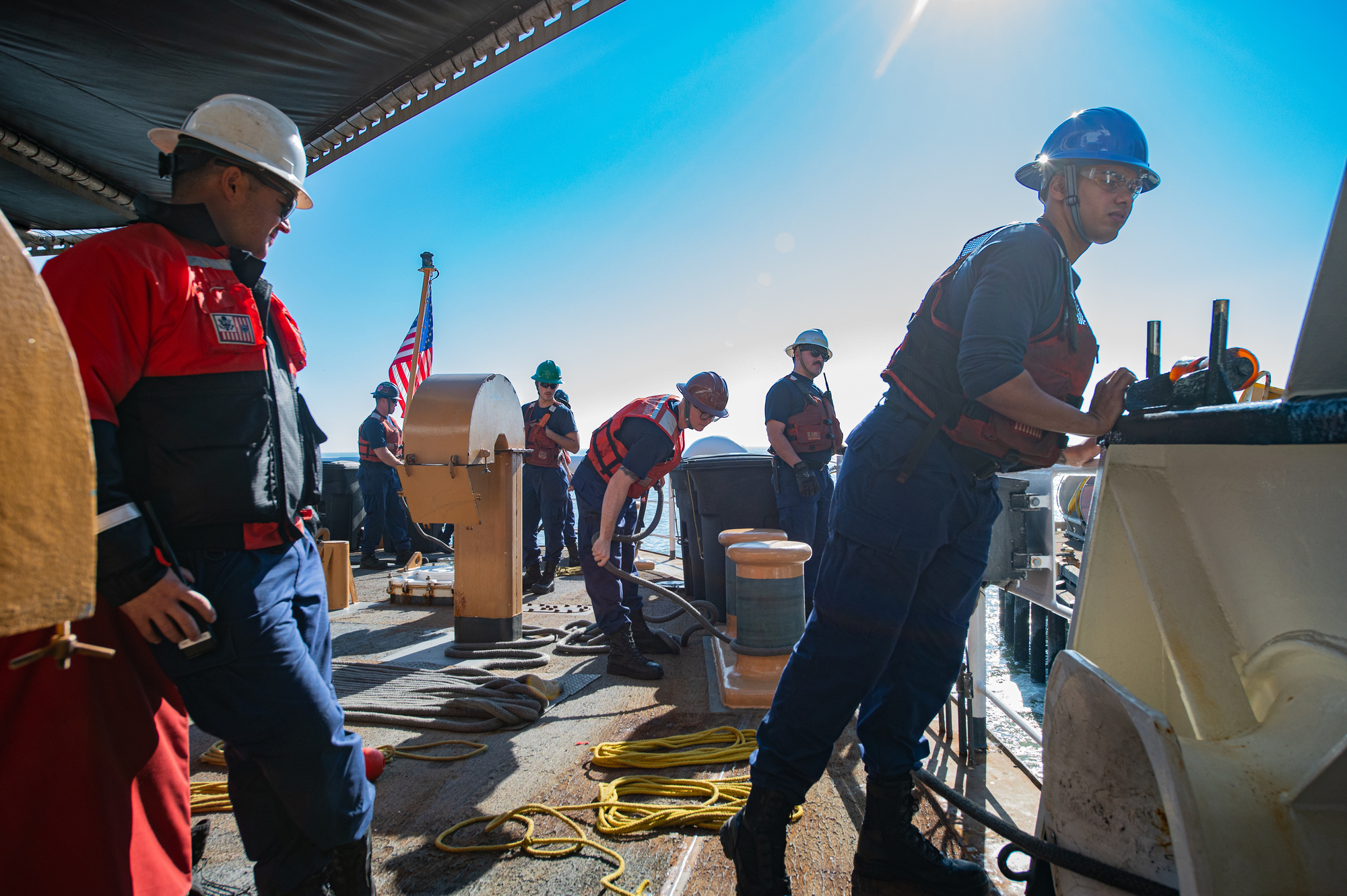
ALAMEDA, Calif. — The Coast Guard Cutter Aspen (WLB 208) and crew departed the Bay Area Monday for the last time as a San Francisco-based cutter and are en route to the Coast Guard Yard in Baltimore to under-go major maintenance and overhaul.

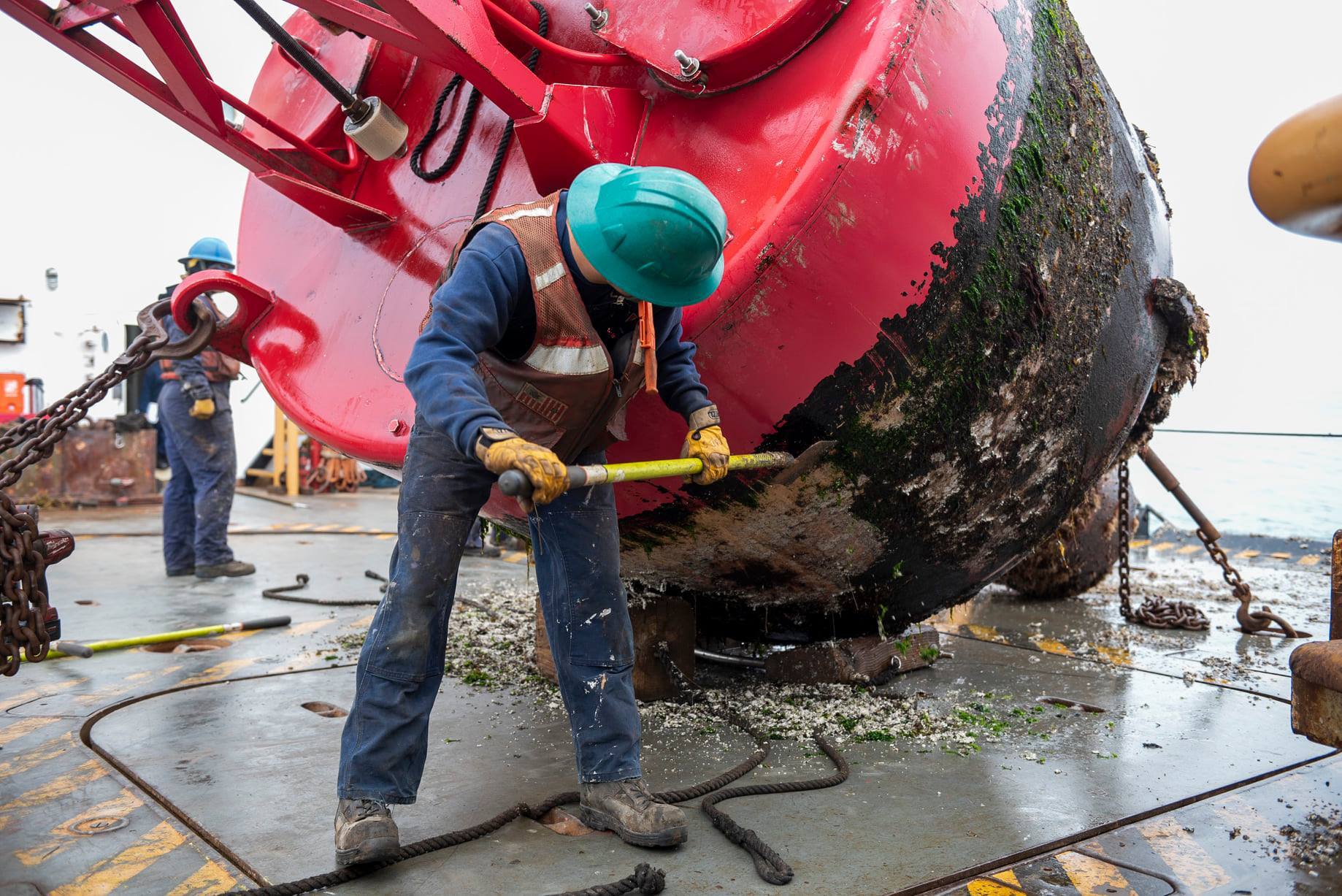
This marks the end of two decades of service along the California Coastline for the Aspen as one of 16 of the nation’s Juniper class sea-going buoy tenders. The 225-foot ship and its 48-person crew have been stationed at Yerba Buena Island since Sep. 28, 2001.

Aspen’s area of responsibility encompassed the coastal areas from the Oregon-California border down to San Diego. In addition to its primary buoy tender operations, the cutter also has a long history in search and rescue, drug and migrant interdiction and marine pollution prevention and response missions. Since 2005, the cutter has worked with U.S. partners in Mexico to interdict tens of millions of dollars in illicit narcotics in support of SOUTHCOM and Joint Interagency Task Force South objectives, most recently interdicting $3.2 million worth of cocaine in 2017.  In 2007, Aspen responded to the Cosco Busan oil spill in San Francisco and the Deepwater Horizon oil spill in the Gulf of Mexico in 2010 to assist in oil spill cleanup efforts.

The crew is slated to travel approximately 6,000 miles over the course of 40 days and pass from the Pacific Ocean to the Atlantic Ocean by way of the Panama Canal. The Aspen is scheduled to undergo a $20 million, 12-month Major Maintenance Availability (MMA) overhaul.

The MMA is a planned dry dock event at the Coast Guard Yard, the first such major availability in the life of this class of ship. The availability will re-capitalize many of the ship’s critical systems, to include complete crane replacement, topside preservation work and technology modernization. The availability is designed to ensure that the cutter can reach its designed 30-year service life. Aspen will be the 11th 225-foot Juniper Class buoy tender to begin the MMA period.

This availability comes at a time when the Coast Guard is embarking on an unprecedented recapitalization of the cutter fleet. Major shipbuilding efforts throughout the county are underway, to include the National Security Cutter, Fast Response Cutter, Offshore Patrol Cutter, Polar Security Cutter and Waterways Commerce Cutter shipbuilding programs. The four 418-foot national security cutters, Bertholf, Waesche, Stratton and Munro stationed in Alameda, are the most visible local signs of these extensive programs.

The Coast Guard Cutter Alder (WLB 216) formerly homeported in Duluth, Minnesota, is slated to be brought back into service in summer of 2022 by the former Aspen crew and re-homeported in San Francisco. The Aspen’s scheduled final destination will be Homer, Alaska in early 2023. 

“It has been a privilege to serve along California’s rugged, oftentimes austere coastline; the beauty is without parallel, and the Pacific Ocean’s winds, current, fog and constant swells offshore continue to mold us as the stern teachers they are, said Lt. Cmdr. Paul Ledbetter, the Aspen’s commanding officer. “The U.S. is and always has been a maritime nation, and my crew relishes the challenges of keeping the maritime transportation system up and running in our capacity as a WLB. We look forward to continuing to serve this great country when we return to San Francisco aboard the Coast Guard Cutter Alder next year.”

Coast Guard Aids to Navigation Team San Francisco will be standing by to perform routine maintenance on the Aspen’s buoys throughout the Bay Area. Additionally, the Coast Guard Cutter George Cobb, a 175-foot buoy tender homeported in San Pedro, is slated to maintain all aids to navigation south of San Francisco and the Coast Guard Cutter Elm, a 225-foot buoy tender homeported in Astoria, Oregon, is also slated to assist throughout Northern California in spring of 2022.

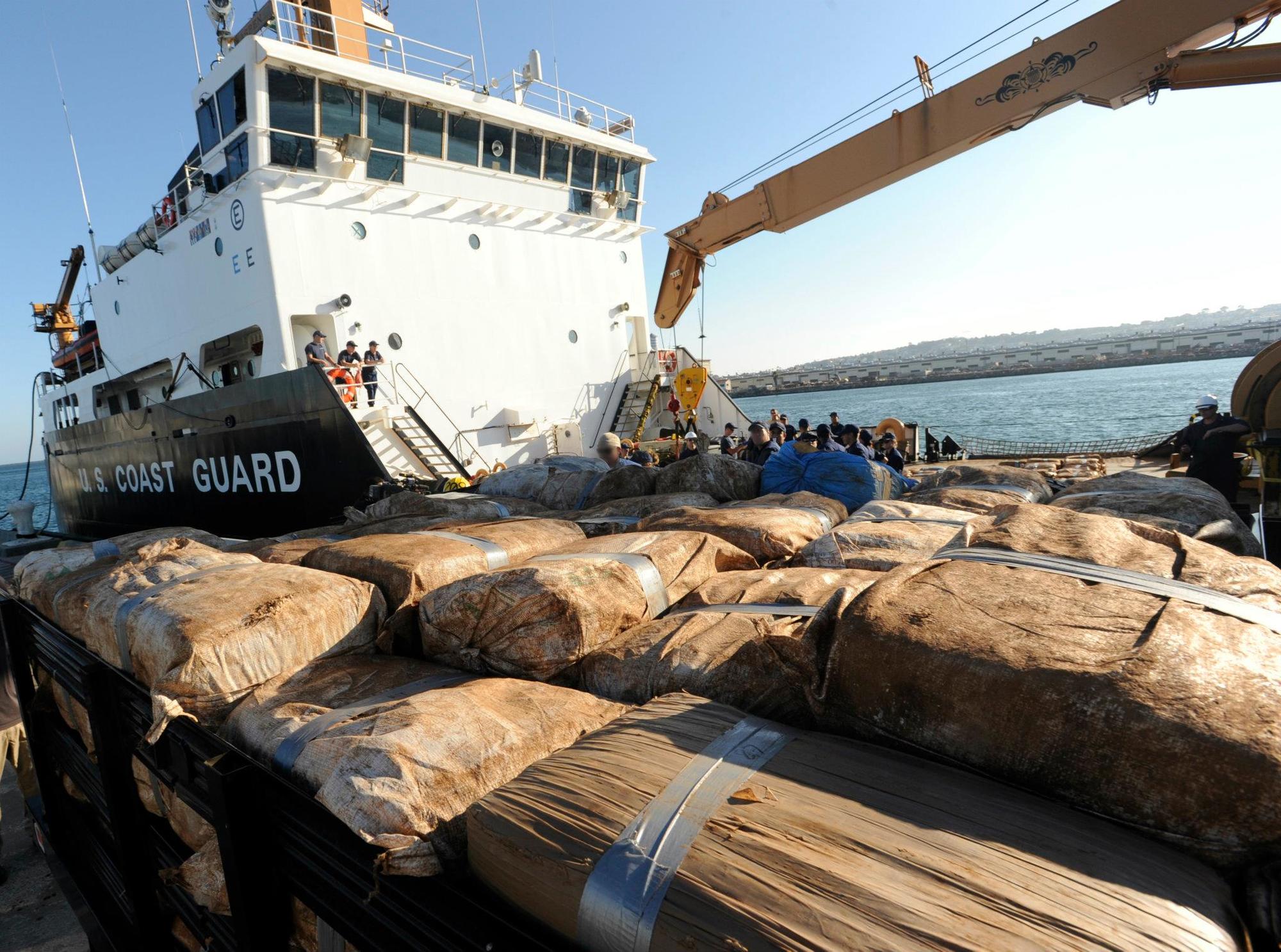
Historical photos of the Aspen are included below:

CGC Aspen transits under Bay Bridge CGC Aspen crew cleans buoy
CGC Aspen marijuana interdiction
Aspen with helicopter photo

“Two Oregon-based Coast Guardsmen receive high honors for heroism” –News Release

A couple of good stories, about good people. 

united states coast guard

News Release

U.S. Coast Guard 13th District PA Detachment Astori

Two Oregon-based Coast Guardsmen receive high honors for heroism

ASTORIA, Ore. — Two Coast Guard Sector North Bend service members were recently recognized with high honors for heroic actions taken in 2021 to save lives while serving along Oregon’s coast.

Petty Officer 1st Class Trevor Salt, an aviation survival technician at Coast Guard Sector North Bend, received the 2021 Angels of the Battlefield Award from the Armed Services YMCA, which pays tribute to military medical personnel for providing life-saving medical treatment and trauma care to service members or civilians in distress.

Petty Officer 1st Class Wallace Qual, a boatswain’s mate serving at Coast Guard Station Yaquina Bay, received the Association for Rescue at Sea Gold Medal Award, the highest search and rescue award presented to a Coast Guard member by a civilian organization.

Salt was awarded the Angels of the Battlefield Award for helping save the lives of two hikers on Oregon’s snow-covered Grayback Mountain in January 2021 by spending more than 12 hours tending to a severely injured hiker, and another hiker, until the pair could be rescued by the National Guard.

Watch AST1 Salt’s award presentation here: https://www.youtube.com/watch?v=K0uVQyEHlmI (Video above, Chuck)

Qual received the AFRAS Gold Medal Award for leading an early-morning September rescue for the master of the 44-foot fishing vessel Legend after the boat aground near the Yaquina Bay channel entrance near Newport, Oregon.

Realizing that no rescue helicopters or boats were available due to on-scene conditions of 60 to 70-knot winds and less than 200 yards visibility, Qual dressed in full search and rescue gear, including an additional 20 pounds of rescue equipment, and led a Coast Guard beach rescue team in running approximately two miles down the beach to help the fisherman in distress.

Battling high surf, wind-driven sand and hurricane force wind gusts, Qual finally succeeded in reaching the master. The beach rescue team was then able to pull Qual, with the master in tow, to shore using the swimmer tending line.

The AFRAS Gold Medal Award was established in 1982 and is presented annually to a Coast Guard enlisted person for an act of extraordinary bravery during a rescue at sea.

Original media release for the rescue may be viewed here: Station Yaquina Bay crew rescues fisherman from surf near South Beach State Park (govdelivery.com)  (Attached below–Chuck)

Below is the earlier news release about the Station Yaquina Bay rescue:


Station Yaquina Bay crew rescues fisherman from surf near South Beach State Park

News Release

U.S. Coast Guard 13th District PA Detachment Astoria

Station Yaquina Bay crew rescues fisherman from surf
near South Beach State Park

Station Yaquina Bay crew member swims to rescue fisherman in the surf near South Beach State Park

Editors’ Note: Click on images to download high resolution version.

YAQUINA BAY, Ore. — A Coast Guardsman swam from shore to rescue a fisherman from the surf near South Beach State Park early Tuesday morning after his vessel ran aground and began taking on water.

The fisherman was forced to abandon ship after the vessel began breaking apart in 10-foot surf.

At approximately 11:40 p.m., Coast Guard Sector North Bend watchstanders received the initial mayday call from a fisherman over VHF-FM radio. The lone mariner aboard a 44-foot commercial fishing vessel requested assistance reporting he was on the south jetty at Newport. Coast Guard crews deployed to respond after Sector North Bend issued an urgent marine information broadcast.

Crews aboard a 47-foot Motor Lifeboat, the 52-foot Motor Lifeboat Victory, and a ground party were dispatched from Station Yaquina Bay.

An Air Facility Newport aircrew aboard an MH-65 Dolphin rescue helicopter also responded but returned to base due to restricted visibility and hazardous weather conditions.

The weather on scene was reported to be 34.5-mph winds, 10-foot breaking surf, near zero visibility and 56-degree Fahrenheit water temperature.

Station Yaquina Bay crew members communicated with the distressed mariner via radio and instructed him to use flares to signal his location. The flares were sighted approximately 1.15 miles south of the Yaquina Bay jetties. The crew aboard the 47-foot Motor Lifeboat arrived on scene at approximately 1:20 a.m, but was unable to approach due to shoaling.

At this time, the ground party arrived on scene after running more than 1.5 miles from the South Beach State Park access area, carrying 500 feet of rescue line and other equipment.

At approximately 1:35 a.m., the mariner entered the water and Petty Officer 1st Class Wallace Qual made a first attempt to swim to his position. As the mariner was quickly being swept south by surf and currents, Qual returned to shore. With a second attempt, Qual successfully reached the mariner. The crew ashore pulled the two from the surf using the rescue line.

The mariner was transported to awaiting emergency medical personnel. No injuries were reported.

“The overall teamwork that went into locating the mariner, and the communication between our crews, was huge”, said Qual. “When I got to him, he was wearing his survival suit and had an EPIRB (emergency position indicating radio beacon) and strobe light in hand. That preparedness probably saved his life.”

The Coast Guard urges all mariners to be equipped with the proper equipment and have a reliable means of communication in case of emergency.

“VESSEL REVIEW | FELIX SAND – FAST COASTAL RESPONSE BOAT FOR GERMAN SEA RESCUE SERVICE” –Baird Maritime

Response boat Felix Sand, German Maritime Search and Rescue Service (Deutsche Gesellschaft zur Rettung Schiffbruchiger; DGzRS), a maritime search and rescue (SAR) charity.

Baird Maritime reports delivery of a large and very capable, self-righting SAR boat.

The Coast Guard is in the market for replacements for the 52 foot MLBs. Now this is, at 90 feet long, a good deal larger than the 64 foot maximum length replacement currently envisioned. At 120 tons, its larger than the 87 foot, 91 ton Marine Protector class WPBs, but in many ways, it’s probably more capable than either.

Compared to the 52 foot MLB’s planned replacement, it has longer range, probably higher sustained speed in adverse conditions, greater towing capacity, and a daughter boat capable of getting into the shallows. It also has a fire monitor and medical facilities.

Compared to the 87-footer, it appears more seaworthy. Though nominally slower than the Marine Protector class, it is probably capable of maintaining higher speed in rough conditions. It carries more fuel, 18,000 liters (4,755 gallons) vs 9464 liters (2,500 gallons), giving it a greater range at a higher speed, 900 nautical miles at 15 knots vs 882 at 10. Perhaps more impressive is the claim of a 600 nautical mile range at 24 knots. It also has bow thruster.

Something like this could replace both the 52-foot MLBs and at least some of the 87-foot WPBs. In addition to the Pacific NW, they would be a welcomed addition in Alaska or along the Maine coast.

The remarkable thing I see in the specs, is the crew, only four, about the same as the 52-footers. That would be a substantial savings relative to the ten-person crew of the WPBs.

Incidentally Fassmer is the designer of an apparently very successful class of Offshore Patrol Vessels used by Colombia, Chile, and Germany.


“World’s First Methanol-Fuelled Towboat To Launch In 2023” –gCaptain

gCaptain reports,

“Maritime Partners in cooperation with Elliott Bay Design Group,  e1 Marine, and ABB, today announces that the M/V Hydrogen One, the world’s first methanol-fuelled towboat, will join Maritime Partners’ fleet and become available for charter in 2023 to meet the pressing demand for sustainable towboat operations.”

I have been hearing more lately about use of Methanol as a source for hydrogen to be used in fuel cells. If this works economically in a commercial setting like a tow boat, we are going to see a lot more of this. Including perhaps on future Coast Guard vessels. Sounds like it may make air independent submarines a lot easier as well.

ALCOAST 388/21 – OCT 2021 VOLUNTEER SOLITICIATION FOR U.S. COAST GUARD ACADEMY ADMISSIONS PARTNER (AAP) AND ACADEMY MINORITY OUTREACH TEAM (AMOT) PROGRAM

Wanted to pass this along.

ALCOAST 388/21 – OCT 2021 VOLUNTEER SOLITICIATION FOR U.S. COAST GUARD ACADEMY ADMISSIONS PARTNER (AAP) AND ACADEMY MINORITY OUTREACH TEAM (AMOT) PROGRAM

R 201239Z OCT 21
FM COMDT COGARD WASHINGTON DC
TO ALCOAST
BT
UNCLAS
ALCOAST 388/21
SSIC 1136
SUBJ: VOLUNTEER SOLITICIATION FOR U.S. COAST GUARD ACADEMY
ADMISSIONS PARTNER (AAP) AND ACADEMY MINORITY OUTREACH TEAM
(AMOT) PROGRAM
1. The AAP program is a volunteer network dedicated to supporting
the recruiting and outreach mission of the United States Coast
Guard Academy Admissions office. Since 2006 Academy
Admissions Partners have worked alongside Admissions staff to
educate, recruit and assist the future cadets and officers of the
United States Coast Guard. Our volunteer organization consists of
1,185 members, made up of Active Duty and Reserve members, CGA
Alumni, AMOT, parents of cadets and graduates, USCG Auxiliary, and
friends of the Academy. Volunteer today and give back to America’s
premier maritime Academy by identifying our next generation of
leaders.
2. AMOT is a segment of the AAP program that is comprised of 114
dedicated minority officers and retirees, many of whom graduated
from the Coast Guard Academy. This dedicated group of volunteers
includes African Americans, Asian, and Hispanic officers and
civilians focused on enhancing recruitment efforts and retention
programs for the Academy. Over the last several years, the role
of AMOT has become more influential across every Academy Division
and has expanded beyond recruitment and Admissions outreach support.
Most recently, efforts have crossed into mentoring and retention
efforts at the Academy and in support of the Coast Guard Academy
Scholars (CGAS) program. This renewed direction has held a
significant lasting impact on the overall goal of improving the
cultural competency of the Academy and the Coast Guard. In this
expansion of efforts, in addition to enhancing the recruitment
reach, purposeful and lasting mentoring relationships have been
created with the presence of AMOT volunteers to support retention
of under-represented minority officers at the Academy and in the
fleet after graduation.
3. Normally, AAP and AMOT participants will outreach with local
schools, participate in college fairs, the Academy Introduction
Mission, CGC EAGLE events, USCGA workshops, USCGA Campus Program
events, conduct applicant interviews and present appointments to
accepted students. Realities of COVID-19 have limited personal
interaction, but virtual options exist for Partners and AMOT to
contribute a minimum of two to four hours of volunteer service
each year.
4. Requirements to become an AAP and AMOT member are as
follows: interested Active Duty, Reserve or civilian participants
must pass a basic background investigation or be in good military
standing as an Active Duty and Reserve member. Prospective Partners
must complete the required training and pass an indoctrination test
with an 85 percent or higher. AMOT members will have the option to
take the indoctrination test or attend an annual training session
held by the CGA Admissions office.
5. Interested participants registering for the AAP or AMOT program
are asked to create a profile on the CGA website at:
(Copy and Paste URL Below into Browser)

https://urldefense.proofpoint.com/v2/url?u=http-3A__www.uscga.edu
_partners&d=DwIGAg&c=tnPw9yRHa20_HV5YVoVFtg&r=iweUoGvREbTXYJTAmo
jhygUnTtWgUIWa_NzooIEDasY&m=LjK3atJ-_zT39TfnKDN-ThAQoy3ggnr9wbK9y
NXr6oY&s=fZI3lzvbMtn1vyhW81ZLxels6KdOINellcgq07OG0CM&e=

6. AAP and AMOT registrants will be notified of their Partner status
via email, so prospective Partners and AMOT members should use
an email account that they regularly monitor (personal or .mil
address).
7. For more information about Academy Admissions Partners, visit:
(Copy and Paste URL Below into Browser)

https://urldefense.proofpoint.com/v2/url?u=http-3A__www.uscga.edu_
partners&d=DwIGAg&c=tnPw9yRHa20_HV5YVoVFtg&r=iweUoGvREbTXYJTAmojhy
gUnTtWgUIWa_NzooIEDasY&m=LjK3atJ-_zT39TfnKDN-ThAQoy3ggnr9wbK9yNXr6
oY&s=fZI3lzvbMtn1vyhW81ZLxels6KdOINellcgq07OG0CM&e=

8. Personnel interested in becoming an Admissions Partner should
notify Mr. Alex Eames, Alexander.G.Eames@uscga.edu or
(860) 701-6385.
9. Personnel interested in becoming an AMOT Member should notify
Ms. Katy Robbins, Katy.A.Robbins@uscga.edu.
10. RDML M. W. Raymond, Acting Deputy for Personnel Readiness
(CG-DCMS-DPR), sends.
11. Internet release is authorized.

“Sunday Ship History: Operation Market Time Vietnam 1965 – 1973” –EagleSpeak

North Vietnamese 100′ Trawler burns on a South Vietnamese beach after being forced ashore by USCGC POINT LEAGUE, on 20 June 1966. It was carrying an estimated 250 tons of supplies for the Viet Cong. USN 1116663

Mark Tempest’s EagleSpeak has a short post about the Vietnam War Operation Market Time. It included a couple of links I have added to my Heritage page.

Particularly the first provides a good overview of how much combat the Coast Guard was actually in.