“Coast Guard completes 30 day test of unmanned surface vehicles off Hawaii” –D14

Three of six saildrones getting ready for deployment from Dutch Harbor, AK, on the 2019 Arctic mission. Photo Credit: Saildrone, Inc.

Below is a 14th District news release discussing a recent month long experiment with using unmanned surface systems for maritime domain awareness (MDA), particularly in regard to Illegal, Unregulated, Unreported (IUU) fishing. Sounds like they had some success.

“These vessels proved to be very effective across a variety of mission areas. The results of this study will help shape how the Coast Guard, and our partners, incorporate USVs into our future operations.”
united states coast guard

News Release

U.S. Coast Guard 14th District Hawaii and the Pacific
Contact: 14th District Public Affairs
Office: (808) 535-3230
After Hours: HawaiiPacific@uscg.mil
14th District online newsroom

Coast Guard completes 30 day test of unmanned surface vehicles off Hawaii

USV USV Test USV

Editors’ Note: Click on images to download a high-resolution version.

HONOLULU — The Coast Guard completed a 30 day demonstration and evaluation of unmanned surface vehicles (USVs) off Oahu, early November.

The focus of the test was to explore how current and emerging technologies might be used to enhance maritime domain awareness in remote regions. The test also showed ways USVs with assorted sensor capabilities might support the Coast Guard’s many missions around the globe ranging from search and rescue, to law enforcement.

“It’s clear that autonomous technology is a growing industry, and has great potential to enhance Coast Guard operations,” said Cmdr. Blair Sweigart, the demonstration’s director from the Coast Guard Research and Development Center. “Combined with artificial intelligence algorithms, unmanned systems could be a game changer.”

During the test the Coast Guard examined USVs from Saildrone and Spatial Integrated Systems to understand their capabilities and effectiveness. The USVs participated in a variety of operational simulations to detect and alert the Coast Guard to both legitimate and nefarious behavior.

As outlined in the Coast Guard’s Strategic Plan 2018-2022, one of the service’s main goals is to “evaluate emerging technologies, such as unmanned platforms, artificial intelligence, machine learning, network protocols, information storage, and human-machine collaboration for possible use in mission execution.”

These tests represent a commitment to those goals, allowing the Coast Guard to identify how USVs could be used to support search and rescue operations, improve Marine Environmental response, enhance Port Security, aid in the fight against illegal maritime smuggling, and identify vessels engaged in illegal, unreported, and unregulated fishing.

“The demonstration helped us understand what these technologies currently are, and are not, capable of,” said Sweigart. “These vessels proved to be very effective across a variety of mission areas. The results of this study will help shape how the Coast Guard, and our partners, incorporate USVs into our future operations.”

With their long endurance, USVs can provide persistent domain awareness in remote regions of the U.S. Exclusive Economic Zone. By conducting the demonstrations off Hawaii, the teams gained a firsthand understanding of how these assets could help protect the islands, and the critical resources and habitats throughout Oceania.

Many of the Coast Guard’s missions require close coordination with federal, state, local, and international partners and during the tests the Coast Guard worked closely with NOAA, DHS partners, the Navy, and agencies from several partner nations who face similar issues to protect the global maritime and fishing industries.

“JAPAN BOOSTS ASIA’S MARITIME FORCES IN PURSUIT OF REGIONAL SECURITY BALANCE” –Baird Maritime

Baird Maritime reports on Japanese efforts to boost Maritime Security capabilities of nations of South East Asia. Check out their report. Below I provide some pictures and informational links.

The Japanese are assisting in two ways. They are providing older ships from their own inventory, and they are providing very long term, low interest loans for ships built in Japanese shipyards which helps their ship building industry.

The US could do something similar. Yes we have passed along several older cutters, but the US Coast Guard holds on to ships so long, only very limited life remains. We could help our allies, help our shipbuilding industry, and have a more up to date Coast Guard, by limiting our own use of the ships to no more than 30 years and then passing them on to our friends before they get too old to be viable in the hands of navies or coast guards where labor for maintenance is cheaper and new ships prohibitively expensive.

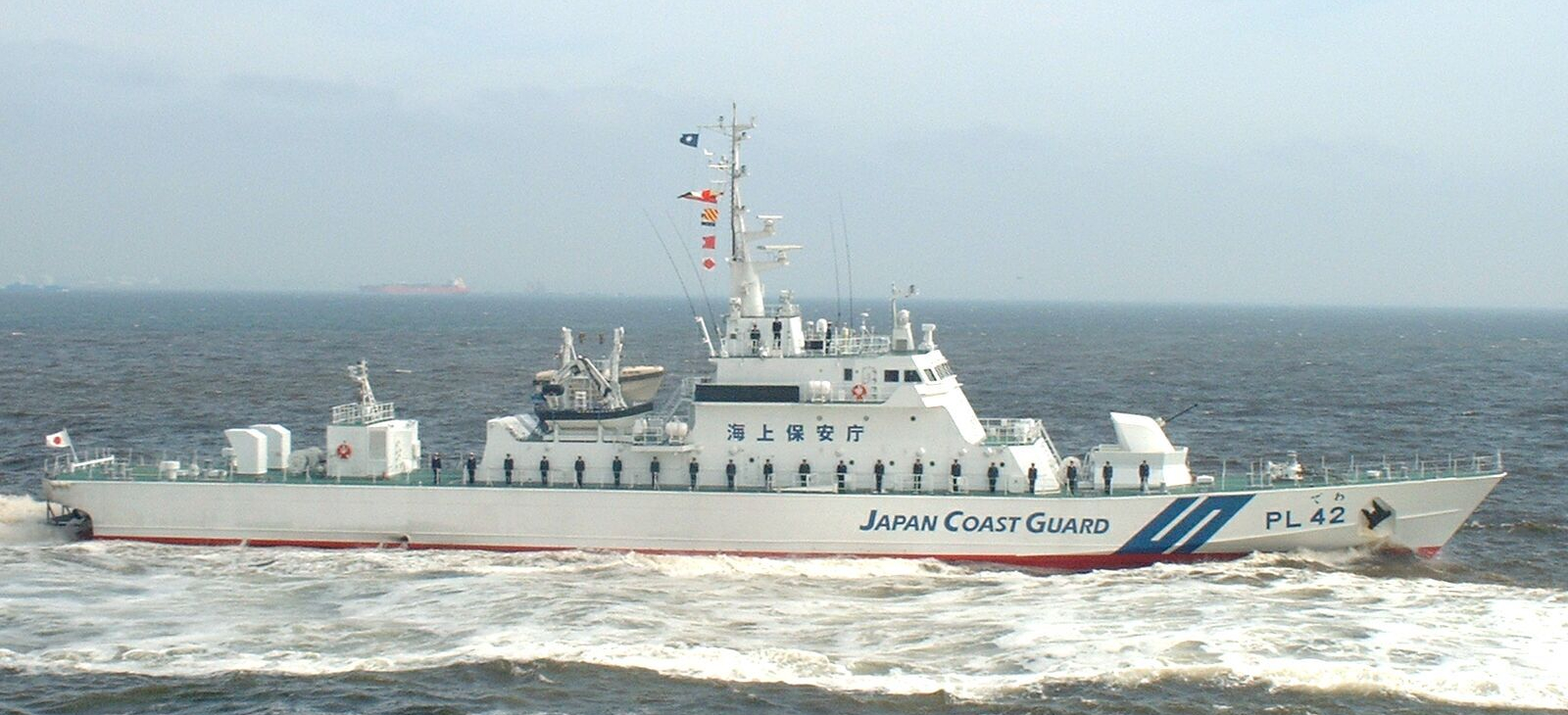
Japan Coast Guard(JCG) Aso class cutter Dewa PL42. 79.0 m (259 ft 2 in) oa. Six similar ships to be built for Vietnam, financed by a 40 year loan. Photo credit: Wikipedia. Sizuru~commonswiki assumed (ba,ed on copyright claims).

According to the report, unlike the Aso class, the Vietnamese ships will have a helo deck.

Rendering of a 94-metre offshore patrol vessel, two of which are slated for the Philippine Coast Guard (Photo: Mitsubishi Shipbuilding)

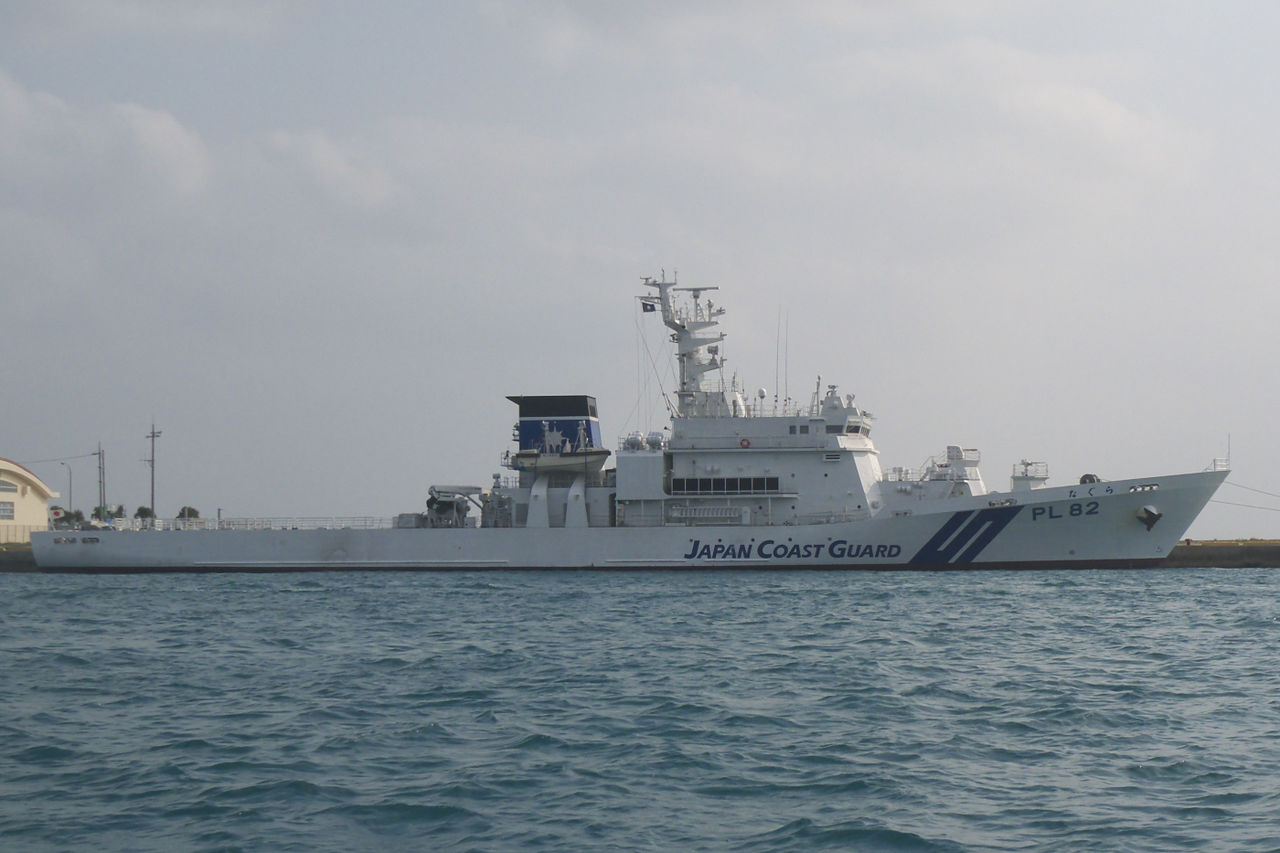
Japan Coast Guard patrol vessel PL82 Nagura, a sister ship of the former Japan Coast Guard cutter Erimo, now the Malaysian CG cutter KM Pekan.  Entered service 1991, 2,006 tons fl, 87 meter, 91.40 m (299 ft 10 in) oa, Photo from Wikipedia Commons, by Yasu

Japan Coast Guard Cutter Oki PL-1 now the Malaysian Coast Guard cutter KM Arau completed 1989, 1500 tons fl, 87 m (285 ft 5 in)

UNITAS LXI Concludes

USCGC Legare in the foreground. Directly behind her is the Peruvian Italian built Lupo class frigate BAP Bolognesi (FM-57). To the right is a Colombian Fassmer designed 80 meter OPV (see links on photo below). To the left is an Italian built Ecuadorian Esmeraldas class corvette. US Navy photo by Naval Aircrewman 2nd Class Joseph Aubrey

We noted USCGC Legare’s participation in the 61st UNITAS exercise earlier. The exercise concluded Nov. 11. Below is a news release.

I am really surprised that I have not seen any Coast Guard public affairs information about this.

The exercise included a SINKEX. Would really like to know how that went. Did the Legare shot? Visible damage?

There is no specific mention of submarines in the news release, but it did say there were ASW exercises. Several of the participating nations have subs. Bet, somewhere there is a photo of Legare in the cross hairs of a periscope.


UNITAS LXI, the world’s longest running multinational maritime exercise concluded with a closing ceremony in Manta, Ecuador, Nov. 11.

For this year’s iteration of UNITAS, Ecuador served as the host nation, joined by forces from Argentina, Brazil, Chile, Colombia, Dominican Republic, Peru, Uruguay, and the United States.

Partner nations used 13 warships and 12 aircraft to conduct scenario-driven joint and combined operations and training to enhance interoperability, flexibility, and increase maritime, air, and ground-domain awareness in the Western Hemisphere.

Events included: surface tactical maneuvers, a sinking exercise (SINKEX), a live-fire exercise, a replenishment-at-sea, search and rescue exercises, anti-submarine warfare exercises, air defense exercises, amphibious landing, reconnaissance, assault, security, and humanitarian assistance/disaster relief response training.

The at-sea phase culminated in a multi-threat, multi-day scenario that allowed participants to work together, further increasing preparedness for real-world crises that would require a multi-national force response effort.

Additionally, U.S. Marine Corps Forces South hosted partner-nations at Marine Corps Base Camp Lejeune, North Carolina, to integrate with Special Purpose Marine Air-Ground Task Force – Southern Command and conducted further interoperability training for humanitarian assistance and disaster relief situations.

“Congratulations to all participants on the successful execution of UNITAS LXI,” said Brig. Gen. Phillip Frietze, commander, U.S. Marine Corps Forces, South. “Your efforts and performance have contributed to building the capacity and strength of our nations to rise together and achieve common goals.”

Peru will host UNITAS LXII next year to celebrate the bicentennial of the country and the Peruvian navy.

For 61 years, the United States has built upon commonalities and increased capabilities within the Western Hemisphere through exercise UNITAS. Different countries host the exercise each year, facilitating the opportunity to gain experience leading a multinational force through complex joint and combined maritime warfare scenarios and exercises.

UNITAS, Latin for “unity,” was conceived in 1959, first executed in 1960 and has been held every year since. This year marks the 61st iteration of UNITAS. The exercise continues to develop and sustain relationships that improve the capacity of our emerging and enduring partners’ joint and combined maritime forces to achieve common desired effects and fosters friendly cooperation and understanding between participating military forces.

U.S. Naval Forces Southern Command/U.S. 4th Fleet is responsible for U.S. Naval forces in the U.S. Southern Command area of responsibility, including the Caribbean, Central and South America.

For more information and news from U.S. Naval Forces Southern Command & U.S. 4th Fleet, visit http://www.navy.mil/local/cusns/, https://www.facebook.com/NAVSOUS4THFLT, and https://twitter.com/NAVSOUS4THFLT.

201104-N-N3674-011 MANTA, Ecuador (November 4, 2020) Naval ships from Ecuador, Colombia, Peru and the United States conduct naval formations during a training exercise for UNITAS LXI (U.S. Navy photo by Damage Controlman Fireman Isaiah Libunao/Released) The two ships leading are Columbian. The ship in the foreground right is a FASSMER designed 80 meter OPV ARC 7 de Agosto (PZE-47)

“Coast Guard Icebreaker Polar Star Bound for the Arctic in December” –USNI

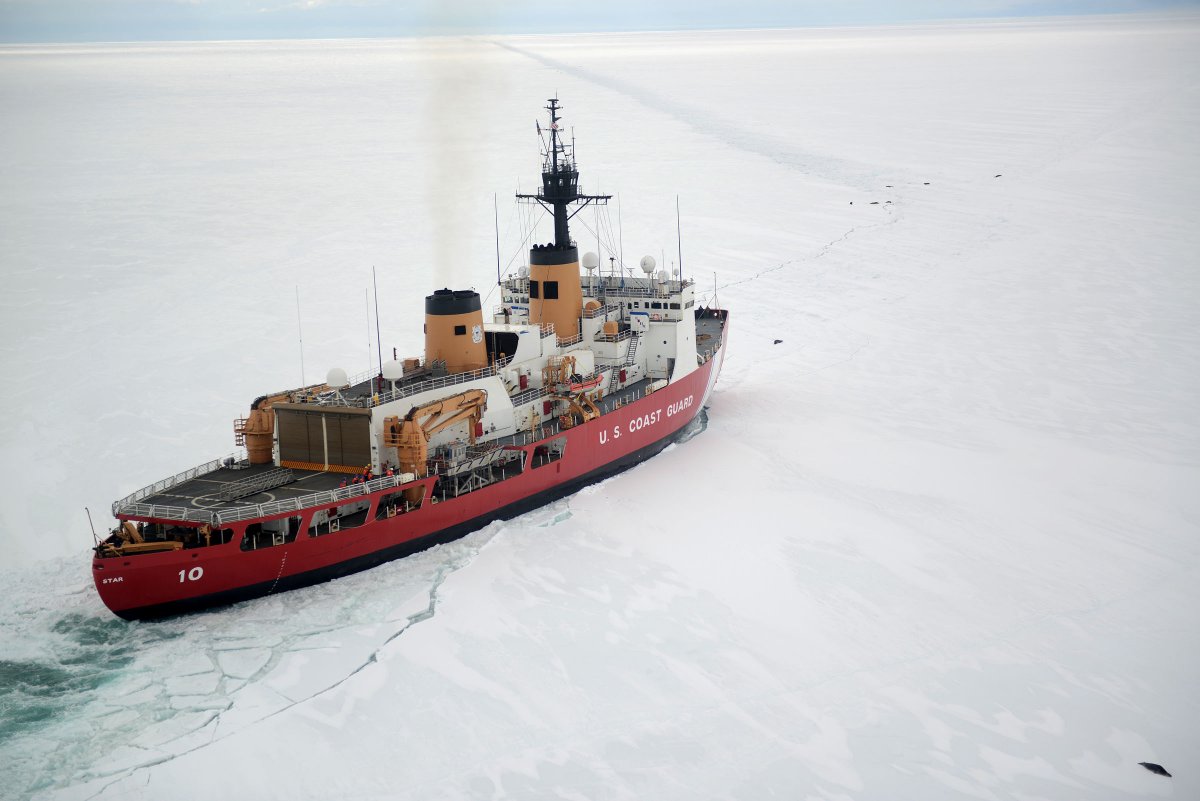
The Coast Guard Cutter Polar Star cuts through Antarctic ice in the Ross Sea near a large group of seals as the ship’s crew creates a navigation channel for supply ships, January 16, 2017. The resupply channel is an essential part of the yearly delivery of essential supplies to the National Science Foundation’s McMurdo Station.US Coast Guard photo by Chief Petty Officer David Mosley

US Naval Institute News Service reports Polar Star will deploy to the Arctic in December. We knew this was coming, but we have been short of details of when and for how long. This at least indicates it will begin in December. (I will speculate, she will be gone about three months, returning in March to provide a little inport time before going into the yard.)

There seem to be a couple of errors in the story.

“For the first time in almost five decades, the Coast Guard’s heavy icebreaker won’t be supporting Antarctic scientific missions in coming months…”

Coast Guard heavy icebreaker support has not been continuous over that period, at least once, and I believe more than once, the McMurdo break-in was done by non-Coast Guard icebreakers, either contracted foreign icebreakers or the National Science Foundation’s own smaller icebreaker.

“This would be the first Coast Guard operation in the Arctic Ocean since August 1994 when a now-deactivated heavy icebreaker with a Canadian Coast Guard heavy icebreaker reached the North Pole.”

This seems to be missing a qualifier. The Coast Guard has certainly operated in the Arctic since August 1994. There is better information on Polar class operations in the Arctic here, in a Military.com report.

“It will be the first deployment of a U.S. Polar-class icebreaker to the Arctic on a non-science mission (emphasis applied–Chuck) since August 1994, when the heavy icebreaker Polar Sea, now inactive, became one of the first two American surface ships to reach the North Pole.

“In 1998, Polar Star spent three months in the region on a science mission. And in 2009, the Polar Sea conducted a three-month Arctic deployment, also dedicated solely to science.”

“The Pentagon isn’t the only one with special operators. Here are the 5 most elite forces outside the Defense Department” –Business Insider

Business Insider brings us a look at five “Special Operations” forces employed by non-DOD organizations.

  • FBI’s Hostage Rescue Team
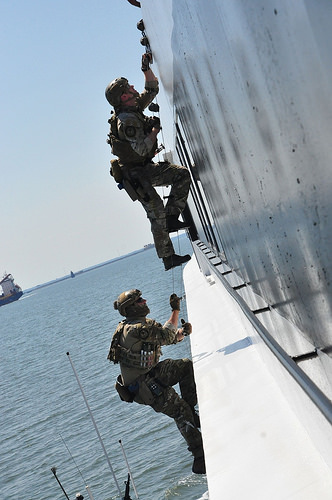
  • Coast Guard’s Maritime Security Response Teams
  • DEA’s Special Response Teams
  • Dept. of Energy’s Special Response Teams
  • CIA’s Special Operations Group

What I noticed in the descriptions of these groups, is that the Coast Guard’s qualification process is the longest, “almost 18 months,” while the other four groups seem to rely heavily on recruiting former military special operations force members. DEA’s course is only two weeks in addition to prior training.

“Dutch Navy To Test Hull Vane Hydrofoil On HNLMS Zeeland OPV” –Naval News

HNLMS Zeeland (P841) Source: kees torn

Naval News reports that the Dutch Navy is going to install a Hull Vane device on the stern of a Holland Class Offshore Patrol Vessel, HNLMS Zeeland (P841), during its next major maintenance . This is a large offshore patrol vessel, almost as large as the Offshore Patrol Cutter or the Bertholf class NSCs. Perhaps significantly, like the NSCs, it has a stern ramp.

The Hull Vane is an 11-meter-wide hydrofoil installed below the stern of the ship. The biggest advantage is the 10% fuel saving it provides. With a reduced resistance, the ship can also achieve a higher top speed with the same engine power. In addition, the modification ensures a reduced wake and therefore fewer waves. This is tactically important, because the ship is less visible from the air.

In addition to the tactical and cost-saving advantages, there is also an operational gain: the Hull Vane means that the aft deck fluctuates less and the helicopter deck is more stable. This makes it easier for the helicopter to land. RHIB boats can also more easily embark and disembark on the slipway. Finally, the modification reduces slamming and therefore increases the comfort for passengers.

If this does half of what is claimed, it would be worth looking into. I’m sure the Dutch would be happy to share their results. We have talked about this innovation a number of times. Here in 2015 after initial studies and modeling. Here in 2017 after a conference presentation. Finally in 2018 after a French patrol vessel was fitted with the device. Results of that modification included a “comparison with the benchmark sea trials – conducted in January in exactly the same conditions – by CMN’s sea trial team showed a reduction in fuel consumption of 18% at 12 knots, 27% at 15 knots and 22% at 20 knots. The top speed increased from 19.7 knots to 21 knots.”

There is a lot of good information in these earlier post and the associated comments.

Hull Vane hydrofoil solution integrated on a Holland-class OPV model (Credit: Dutch Ministry of Defense)


Japan Coast Guard and JMSDF Planning to Use UAVs for Ocean Surveillance” –Naval News

Naval News reports on the Japan CG’s test the MQ-9B and background on the decision to pursue an unmanned solution to Maritime Domain Awareness.

“The JCG’s decision to consider the introduction of UAVs was prompted by the Japanese government’s decision in December 2016 to adopt a new policy for maritime security. The policy is designed to strengthen the functioning of the JCG in response to the recent activity of Chinese fishing and government vessels in the waters around Japan. Therefore, it was decided to consider the introduction of UAVs for the purpose of continuous monitoring of these foreign vessels, especially those operating within Japan’s vast Exclusive Economic Zone (EEZ).In fact, Japan’s territorial waters, plus its EEZ, are the sixth largest in the world, and it would be difficult to keep watch of such a vast area with manned aircraft and patrol vessels alone.”

Significantly, the Japan Coast Guard will be sharing information from their UAS with the Japanese Maritime Defense Force (their navy).

Seems the Japanese started much later on this than the USCG, but is now moving much faster.

Perhaps significantly the MQ-9B has a submarine detection capability using sono-buoys.


COVID strikes USCGC Stratton

USCGC Stratton moored in San Diego, California. Photo by BryanGoff

Below is a PacArea news release. 


united states coast guard

News Release

Nov. 18, 2020
U.S. Coast Guard Pacific Area
Contact: Coast Guard Pacific Area Public Affairs
D11-DG-M-PACAREA-PA@uscg.mil
Pacific Area online newsroom

Coast Guard cutter returns home after crewmembers test positive for COVID

ALAMEDA, Calif — The U.S. Coast Guard Cutter Stratton (WMSL-752) returned to its homeport Wednesday at Coast Guard Island in Alameda after 11 crew members tested positive for COVID-19 during the deployment. 

The affected crew members reported mild symptoms and are receiving medical care. 

The cutter was met by Coast Guard medical staff, who conducted testing of the entire crew.  Following testing, the crew went into quarantine.  The cutter will continue to meet all inport watchstanding requirements while at homeport. 

“The crew’s health and safety is my highest priority,” said Capt. Bob Little, Stratton’s commanding officer.  “Stratton has a highly resilient crew, always dedicated to the mission.  Our mission today is to get healthy so we can continue our service to the nation.”  

The Stratton departed Alameda Oct. 28 to begin a counter-narcotics patrol in the Eastern Pacific.  Prior to getting underway, the crew underwent a restriction-of-movement period where members were required to self-quarantine and pass two COVID tests.  

On Nov. 11 and Nov. 12, several crew members began to develop COVID symptoms and were administered rapid testing kits.  All affected personnel and close contacts were identified and quarantined.  

“The safety of our people and the public remain my top priority,” said Vice Adm. Linda Fagan, U.S. Coast Guard Pacific Area commander.  “We continue to perform all statutory missions while taking the necessary precautions to protect our members and the public. We are committed to maintaining our operational readiness and will continue to perform critical missions that protect our national interests, promote economic prosperity and ensure public safety.”

“GPS unreliability” –Maritime Reporter & Engineering News – November 2020

A short explanation of why we need to get on with providing a terrestrial alternative to the GPS system by Dennis L. Bryant, Capt. USCG (retired).

Reportedly GPS can be spoofed for as little as $300.

With the Coast Guard’s increasing use of drones that use GPS navigation, its not unlikely drug smugglers will start spoofing GPS. We should be ready to detect such efforts and perhaps home in on them. Maybe need an inertial navigation alternative on our UAVs? (Not really sure what we are using right now.)