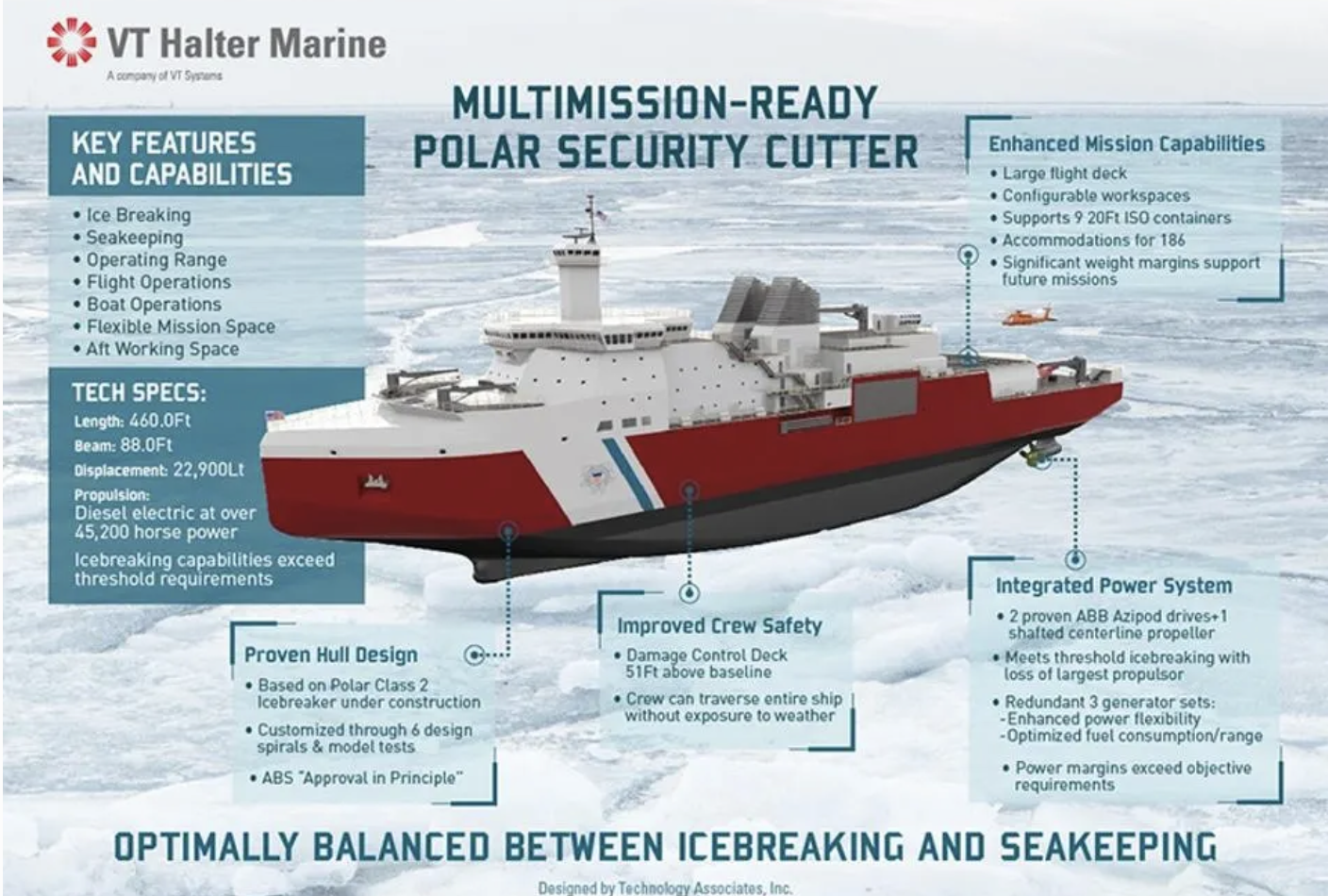
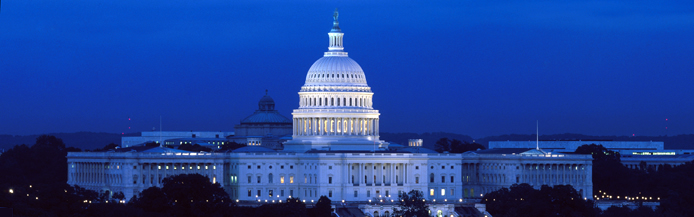
“Trump Bill Secures $9 Billion for U.S. Arctic Surge, Six New Icebreakers to Counter Russian and Chinese Dominance” –gCaptain

gCaptain reports,

“President Trump’s vast tax and spending bill has secured funds the U.S. Coast Guard has been searching for since the early 2010s. The “One Big Beautiful Bill Act” appropriates close to $9 billion for the expansion of the Coast Guard’s Arctic icebreaker fleet.”

The report provides a breakdown of the appropriations that includes money for Polar Security Cutters, Arctic Security Cutters, and infrastructure in Juneau to support USCGC Storis,

Interestingly it also states,

“Rounding out the Arctic package, the U.S. Navy will also receive $115 million for the exploration and development of existing Polar infrastructure.”

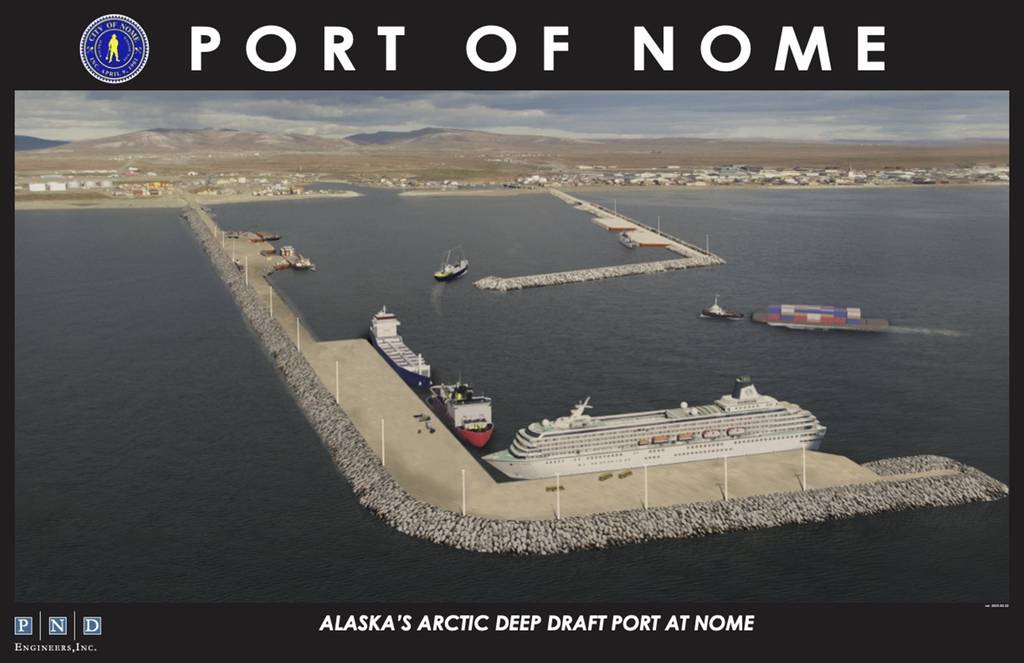
That sounds like improvements in Adak that the Coast Guard might also exploit. It might also refer to development of facilities at Nome but it is not nearly enough to fund plans for a deepwater port that had been shelved by the previous administration.

This rendering provided by the City of Nome shows how the Port of Nome, Alaska, will appear following an expansion project that will cost more than $600 million. Shipping lanes that were once clogged with ice for much of the year along Alaska’s western and northern coasts have relented thanks to global warming, and the nation’s first deep water Arctic port should be operational in Nome by the end of the decade. (PND Engineers Inc./City of Nome via AP)

“Colombian Navy captures unmanned narco submarine in Caribbean Sea” –Naval News

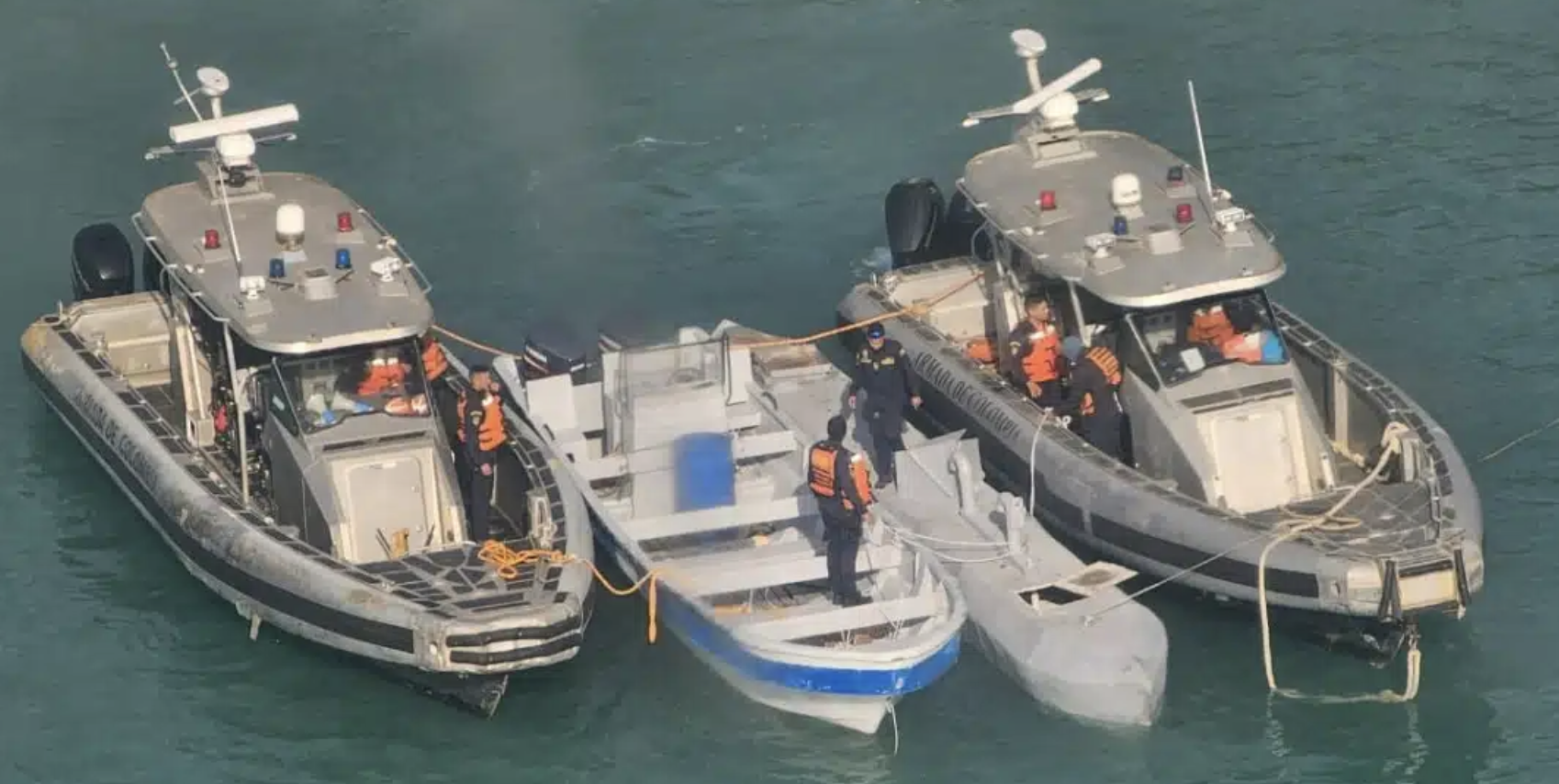
Unmanned Narco-submarine seized by the Colombian Navy boats (Credit: Colombian Navy)

Naval News reports the seizure of an unmanned low profile, semi-submersible that was used to transport illegal drugs.

Not only would semi-autonomous operation eliminate the cost of hiring a crew and the space requirements for accommodations to support the crew, it would also eliminate the possibility of a captured crew becoming a source of intelligence for law enforcement.

It also means that upon boarding there is no one to tell to stop the engines, meaning boardings may be more dangerous than ever.

I would not be surprised to see a remote scuttling option incorporated into future designs.

This Day in Coast Guard History, 4 July

Based on the Coast Guard Historian’s timeline, https://www.history.uscg.mil/research/chronology/
With inspiration from Mike Kelso

July 4

1979  While on a 10-week cadet cruise CGC Ingham located the 75-foot Honduran fishing trawler Mary Ann about 500 miles southwest of San Juan, Puerto Rico.  A boarding team seized the trawler after they discovered 15-tons of marijuana aboard.  The Mary Ann first attempted to evade the boarding and actually rammed Ingham, causing some damage to the cutter.  The trawler finally hove to after Ingham fired a number of warning shots.

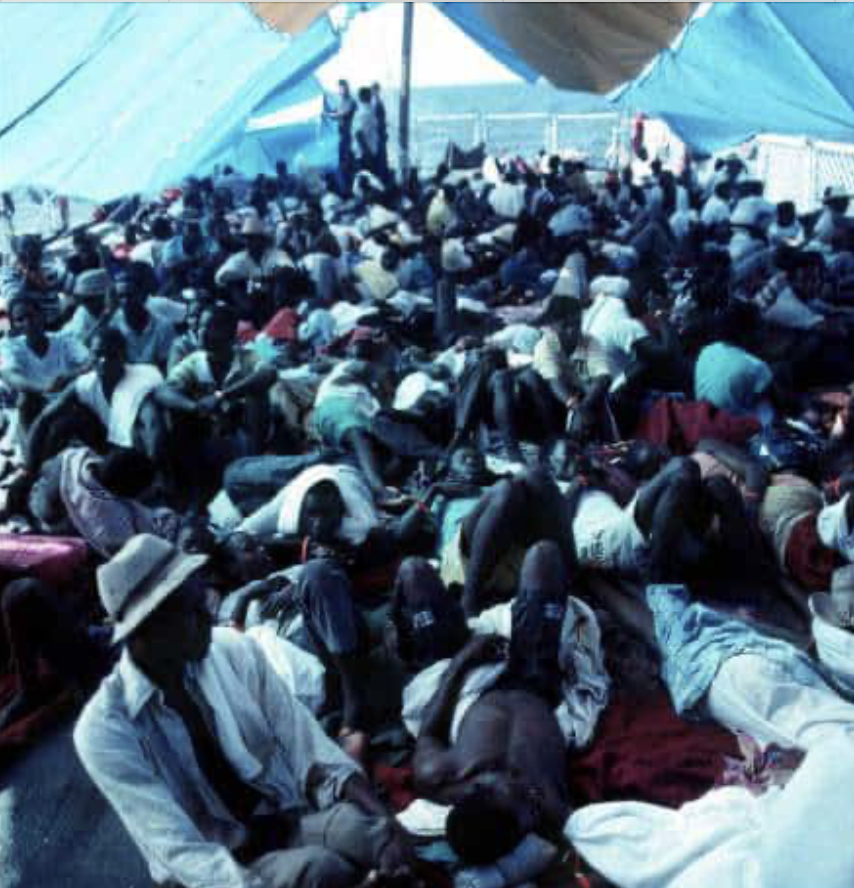
136 Haitian refugees on the flight deck of the US Coast Guard cutter Harriet Lane

1994  Cutters assigned to Operation Able Manner, which commenced under presidential order on January 15, 1994, rescued 3,247 Haitian migrants from 70 grossly overloaded sailboats in the Windward Passage.  They rescued a total of 15,955 during the month of July 1994.

“Coast Guard offloads more than $20 million in illicit drugs interdicted in Caribbean Sea” –District SE

Door gunner on a US Coast Guard HIRON helicopter operating from The Netherlands Navy Offshore Patrol Vessel HNLMS Friesland fires first warning shots and then disabling fire at a suspected drug smuggling vessel off the coast of Venezuela, June 15, 2025.

Below is a District Seven news release.

Note the four intercepts were done by CG teams on partner agencies, the Canadian and Netherlands Navies.

HMCS William Hall – AOPS 433
Port of St. John’s, NL 🇨🇦, 04 MAR 2024, Credit: Ships in Passing.

If I remember correctly, one was done by HMCS William Hall. Three were done by HNLMS Friesland. These were not the first interceptions by these two ships.

HNLMS Friesland (P842), a Holland-class offshore patrol vessel operated by the Royal Netherlands Navy, moors at Naval Air Station Key West’s Mole Pier.


July 2, 2025

Coast Guard offloads more than $20 million in illicit drugs interdicted in Caribbean Sea

Coast Guard Seventh District – 305-202-3735

Editor’s Note: Click here for additional case footage.

MIAMI – U.S. Coast Guard Cutter Northland’s crew offloaded approximately 2,220 pounds of cocaine and 3,320 pounds of marijuana worth an estimated $20.1 million, Wednesday, at Coast Guard Base Miami Beach.

The seized contraband was the result of four interdictions in the Caribbean Sea by the crews of HMCS William Hall and HNLMS Friesland with embarked Coast Guard law enforcement detachments.

“Stopping harmful and illicit narcotics from reaching our shores and entering our communities is a team effort,” said Cmdr. Brian Gismervik, Coast Guard Cutter Northland’s commanding officer. “In the dynamic maritime environment, it takes the combined efforts of our joint force DoD, DHS, and international partners to combat transnational criminal organizations.”

The following assets and crews were involved in the interdiction operations:

  • Royal Canadian Navy ship HMCS William Hall
  • Royal Netherlands Navy ship HNLMS Friesland
  • U.S. Navy ship USS Cole
  • U.S. Coast Guard Tactical Law Enforcement Team South, LEDET 404
  • U.S. Coast Guard Tactical Law Enforcement Team Pacific, LEDET 103
  • Helicopter Interdiction Tactical Squadron Jacksonville
  • Seventh Coast Guard District staff

Detecting and interdicting illicit drug traffickers on the high seas involves significant interagency and international coordination. Joint Interagency Task Force-South, in Key West, conducts the detection and monitoring of aerial and maritime transit of illegal drugs. Once an interdiction becomes imminent, the law enforcement phase of the operation begins, and control of the operation shifts to the U.S. Coast Guard for the interdiction and apprehension phases. Interdictions in the Caribbean Sea are performed by members of the U.S. Coast Guard under the authority and control of the Seventh Coast Guard District, headquartered in Miami.

USCGC Northland is a 270-foot Reliance-class medium endurance cutter homeported in Portsmouth under U.S. Coast Guard Atlantic Area Command.

For breaking news, follow us on X (formerly Twitter). For additional information, find us on Facebook and follow us on Instagram.

Make a difference on land, at sea or in the air with the Coast Guard. Visit GoCoastGuard.com to learn more about active duty and reserve, officer and enlisted opportunities. Information on how to apply to the U.S. Coast Guard Academy can be found here.


“Coast Guard renames geographic operational districts” –CG News

New U.S. Coast Guard District Map

Below is a Coast Guard news release. As a long time advocate of this change I think we ought to recognize the people who originated this idea, even if those making the change now may have never seen the original proposals or may have forgotten them. There may have been others but I know of at least two:

  • Commander Jim Hotchkiss, U.S. Coast Guard Reserve
  • Commander Leah Cole, U.S. Coast Guard

I passed along their suggestions with comments and suggestions of my own:

I brought it up again, “Rebrand the Coast Guard Districts” –USNI / This was too good an idea not to bring up again –24 May 2025

The change retains the District designation as I suggest. I see no significant problems with the new designations, but there might be a better designation for D17 than “Arctic” because most of the district and most of its activities are not in the Arctic. I also think “Mid-Atlantic” would be a more descriptive name for District 5 than simply “Eastern.”


July 3, 2025

Coast Guard renames geographic operational districts

WASHINGTON — The U.S. Coast Guard announced Thursday the renaming of its operational districts from numerical to geographic designations, a key initiative under Force Design 2028 (FD2028).

This strategic change, directed by Secretary of Homeland Security Kristi Noem on May 21, 2025, aims to indicate more accurately the regions they serve and represent. Renaming operational districts revises a numbered system established during World War II, when the Coast Guard operated as part of the Navy to ensure alignment between the services. In the 80 years since the Coast Guard separated from the Navy, the Service has maintained the numbered districts. However, the Navy stopped using numbered districts over 25 years ago.

Updating operational districts to regional names will more clearly align districts with their areas of responsibility, facilitate collaboration with interagency partners, and ensure the American public and maritime stakeholders can easily find and understand the districts in which they live, recreate and operate. This change is a direct action within FD2028’s organization campaign, which is focused on adapting the Coast Guard’s structure to remain effective and responsive.

The new geographic names, approved by the Department of Homeland Security, are as follows:

District 1: USCG Northeast District
District 5: USCG East District
District 7: USCG Southeast District
District 8: USCG Heartland District
District 9: USCG Great Lakes District
District 11: USCG Southwest District
District 13: USCG Northwest District
District 14: USCG Oceania District
District 17: USCG Arctic District

“This renaming is more than just a change in labels; it’s a critical step in our journey to become a more agile, capable, and responsive fighting force,” said Acting Commandant Kevin E. Lunday. “Under Force Design 2028, we are driving fundamental changes to speed decision-making, improve strategic alignment, and ultimately best serve the American people for decades to come. This initiative underscores our commitment to ensuring that change is lasting and has an enduring impact on the Service and the Nation.”

This change will not impact operations or change existing geographical district boundaries. To memorialize the updated names for operational districts, the Coast Guard is undertaking the process of formally changing district names in the Code of Federal Regulations. Through this process, the Coast Guard will continue to communicate with stakeholders and provide updated resources and information as appropriate.

For more information, please contact Coast Guard Media Relations at MediaRelations@uscg.mil.

Read more about the Coast Guard’s transformation through FD2028 here: USCG Force Design 2028.

An Observation on the “Big Beautiful Bill”

Can’t help but notice that while the Coast Guard budget is seeing a modest increase this year, I also see that the Immigration and Customs Service budget is suddenly going to be about 12 times larger than before, growing from $8B to $100B. That is about seven times larger than the Coast Guard budget and equal to more than a tenth of the entire DOD budget.

This Day in Coast Guard History, 3 July

Based on the Coast Guard Historian’s timeline, https://www.history.uscg.mil/research/chronology/
With inspiration from Mike Kelso

July 3

1905  An Executive Order extended the jurisdiction of the Lighthouse Service to the noncontiguous territory of the American Samoan Island.

1918  Congress passed the Migratory Bird Act and the Coast Guard became responsible for the Act’s enforcement after the 1936 passage of the “Act to Define Jurisdiction of Coast Guard.”

1927  Ensign Charles L. Duke, in command of CG-2327, boarded the rumrunner Greypoint in New York harbor and single-handedly captured the vessel, its 22-man crew, and its cargo of illegal liquor.

1986  The Statue of Liberty Centennial Celebration took place in New York harbor.  The Coast Guard was in the “forefront” of the celebration due in part to the Coast Guard’s base on Governor’s Island.

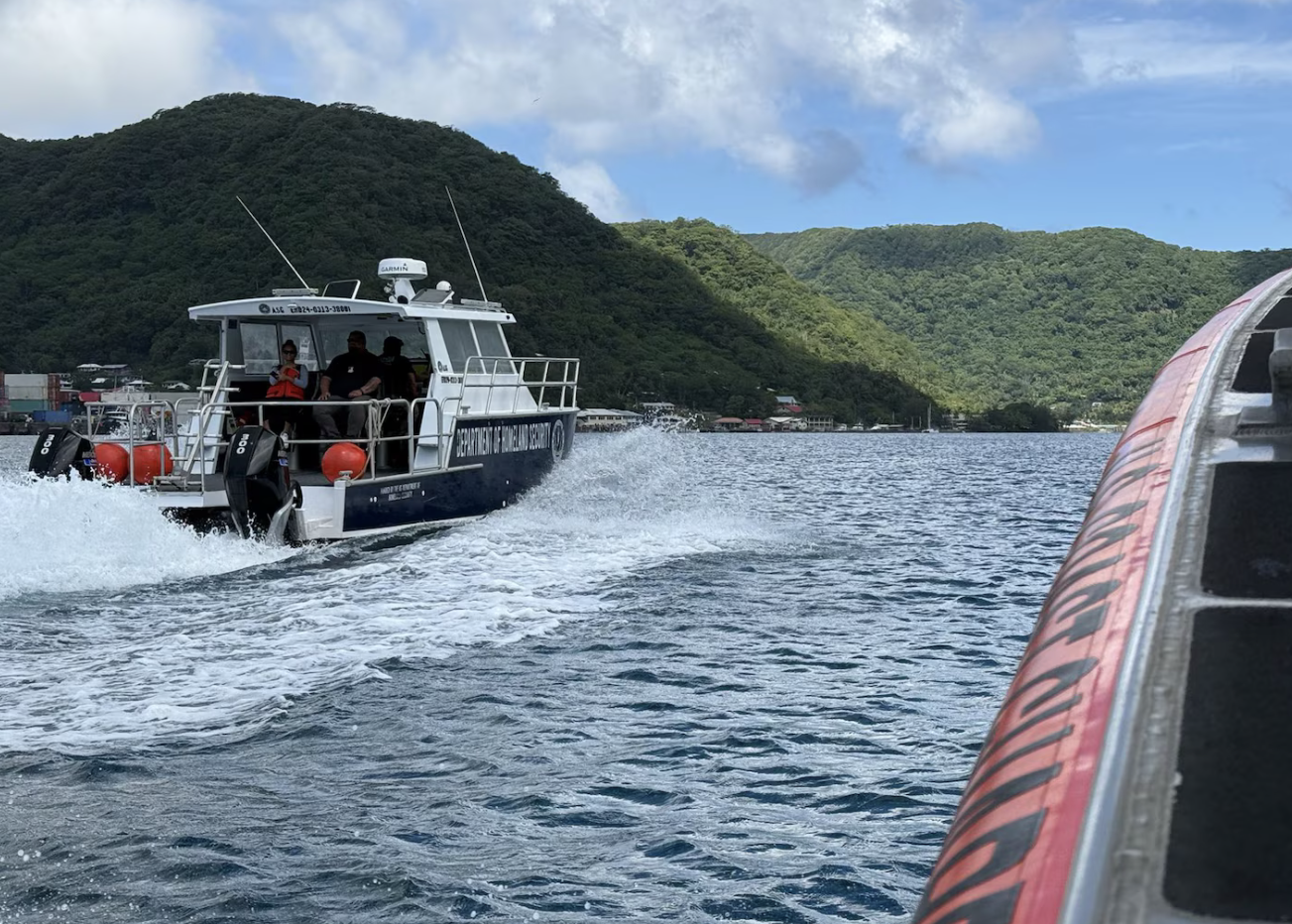
A boat crew assigned to U.S. Coast Guard Maritime Safety and Security Team Honolulu gets underway alongside an American Samoa Department of Homeland Security boat crew to conduct search and rescue training offshore Pago Pago, American Samoa, Feb. 24, 2025. MSST Honolulu and Coast Guard Sector Honolulu personnel deployed to American Samoa to train alongside agency partners, patrol the U.S. maritime border, and enforce U.S. laws and regulations. (U.S. Coast Guard photo, courtesy Maritime Safety and Security Team Honolulu)

2002  The first of the Coast Guard’s Maritime Safety and Security Teams (MSSTs), MSST-91101, was commissioned in Seattle, Washington.  MSSTs were created in response to the terrorist attacks on the U.S. on September 11, 2001.  A total of 12 MSST units were planned for deployment around the nation.

This Day in Coast Guard History, July 2

Based on the Coast Guard Historian’s timeline, https://www.history.uscg.mil/research/chronology/
With inspiration from Mike Kelso

July 2

1836  Congress authorized pay increases for the officers in the Revenue Cutter Service.  Captain’s pay increased to $1200 per annum, First Lieutenant’s to $960, Second Lieutenant’s to $860, and Third Lieutenant’s to $790.

USCGC Itasca as HMS Gorlsston

1937  CGC Itasca, while conducting re-supply operations in the Central Pacific, made the last-known radio contact with the famed aviatrix Amelia Earhart and her co-pilot Fred Noonan.  Itasca later joined the Navy-directed search for the aircraft.  The search was finally called off on July 17 with no trace of the aircraft or its occupants having been found.

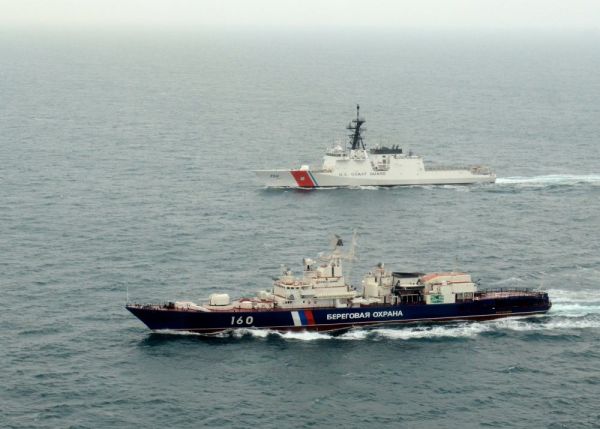
USCGC Bertholf and Russian Coast Guard ship Vorovski, May 2016

2005  The CGC Jarvis and the Russian Northeast Border Directorate vessel Vorovsky rendezvoused about 450 miles southwest of Alaska’s Aleutian Island chain and 250 miles east of Russia’s Kamchatka Peninsula to perform the first joint security exercise of the “North Pacific Heads of Coast Guard Agencies.”

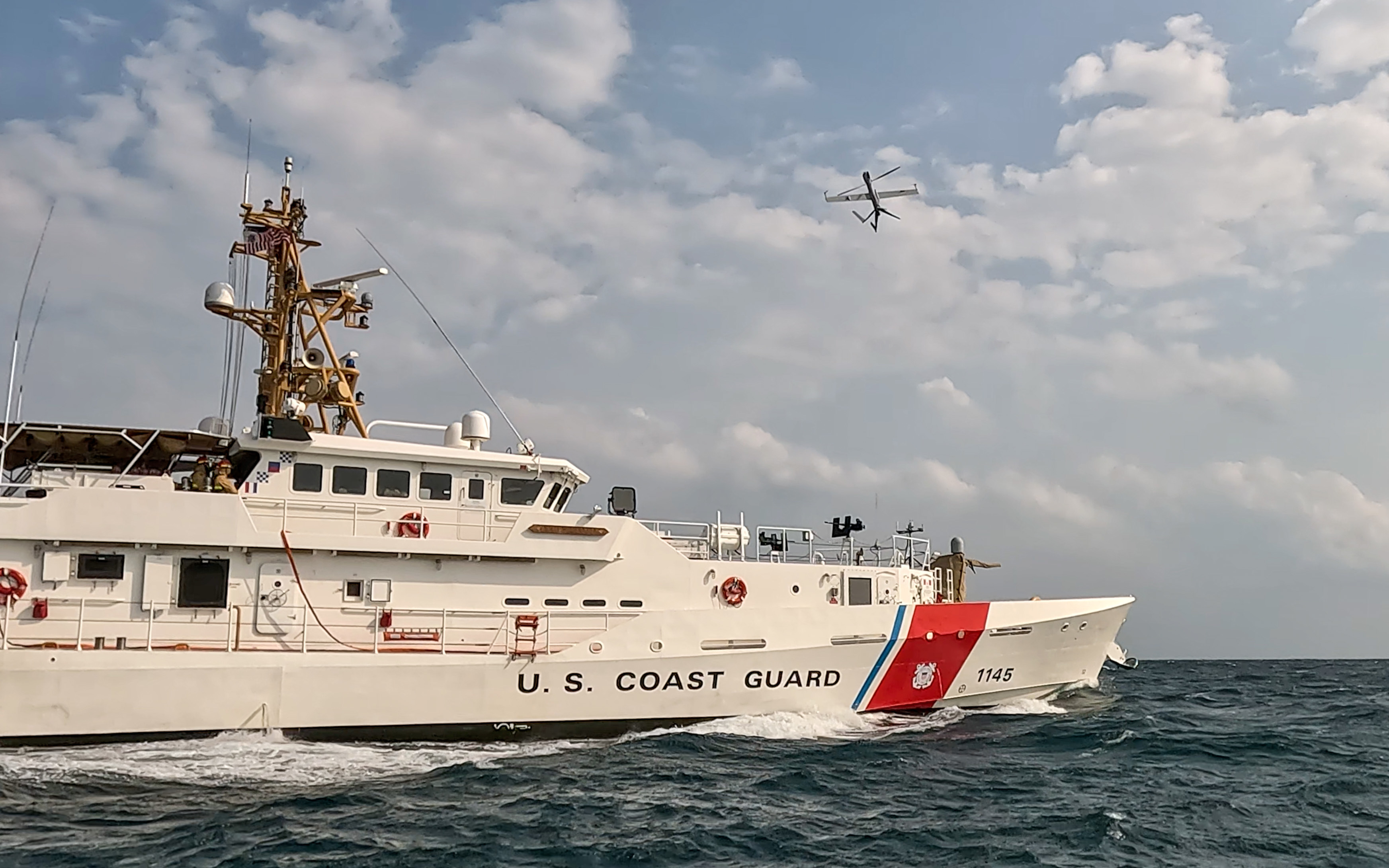
Flexrotor UAS operating from FRC

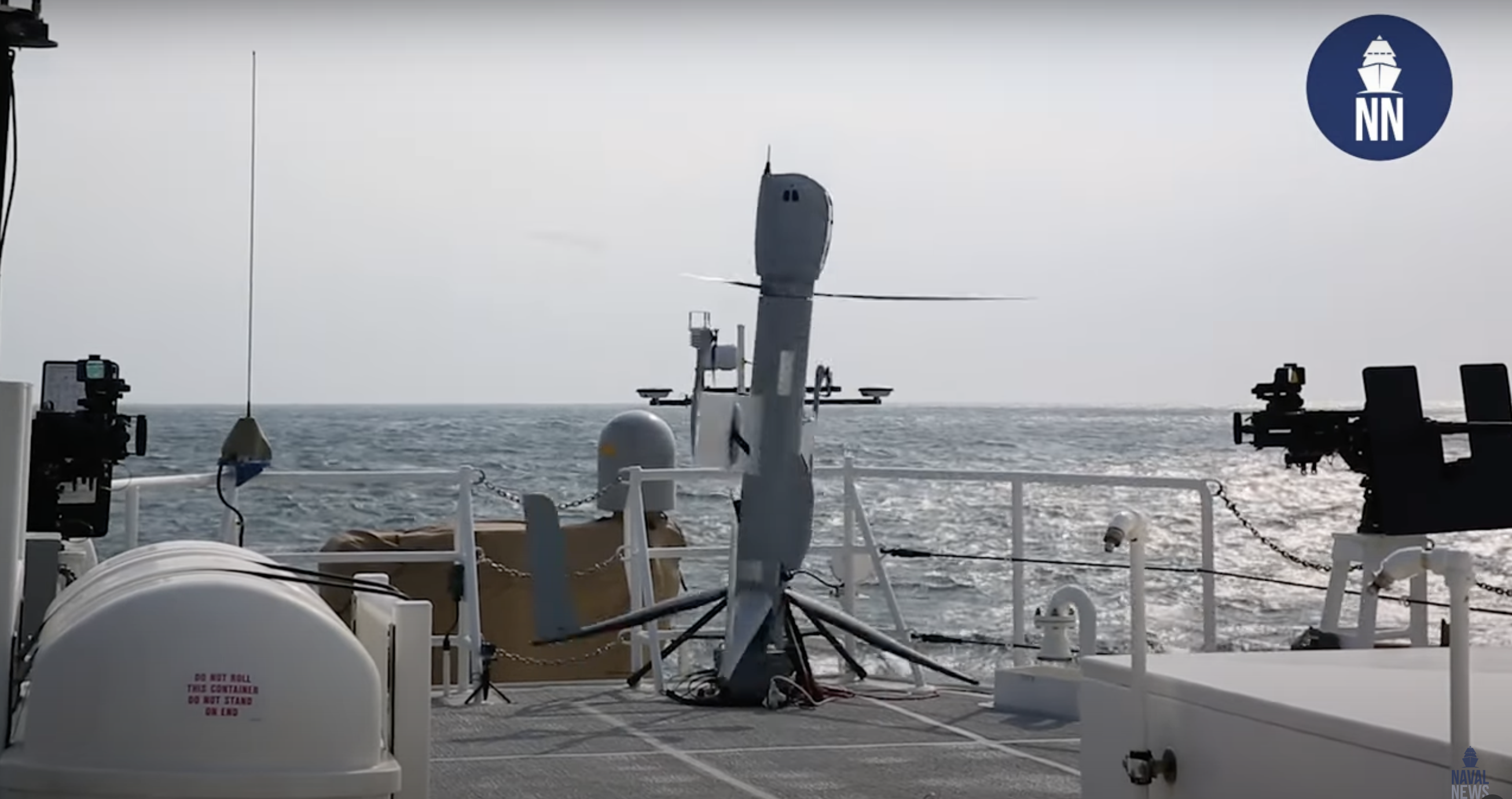
I wanted to pass along this video which includes some scenes of a Flexrotor VTOL UAS operating from USCGC Emlen Tunnell (WPC 1145) times 1:10 and 2:40. Unfortunately, no video of it landing back aboard. Reportedly it requires only a 20×20 foot area for take-off and landing.

Screen grab, time 1:15. Flexrotor launching from USCGC Emlen Tunnell (WPC 1145). Also note the sight on the M2 .50 caliber machine gun mounted starboard.

FRCs are at a disadvantage compared to WMECs, in that they had no possibility of putting eyes in the sky. In some respects, because of their long endurance, having a UAS may be better than having a helicopter, at least for the search function. Giving FRCs a VTOL UAS would definitely be a game changer, particularly when they are operating without the support of land based fixed wing aircraft.

221207-N-NO146-1001 ARABIAN GULF (Dec. 7, 2022) An Aerovel Flexrotor unmanned aerial vehicle (UAV) takes off from U.S. Coast Guard fast response cutter USCGC Emlen Tunnell (WPC 1145) transiting the Arabian Gulf, Dec. 7. U.S. 5th Fleet’s Task Force 59 launched the UAV during Digital Horizon, a three-week event focused on integrating new unmanned and artificial intelligence platforms, including 10 that are in the region for the first time. (U.S. Navy photo)


“Coast Guard Cutter Vigorous returns home after 51-day counter-migration patrol in the Windward Passage”

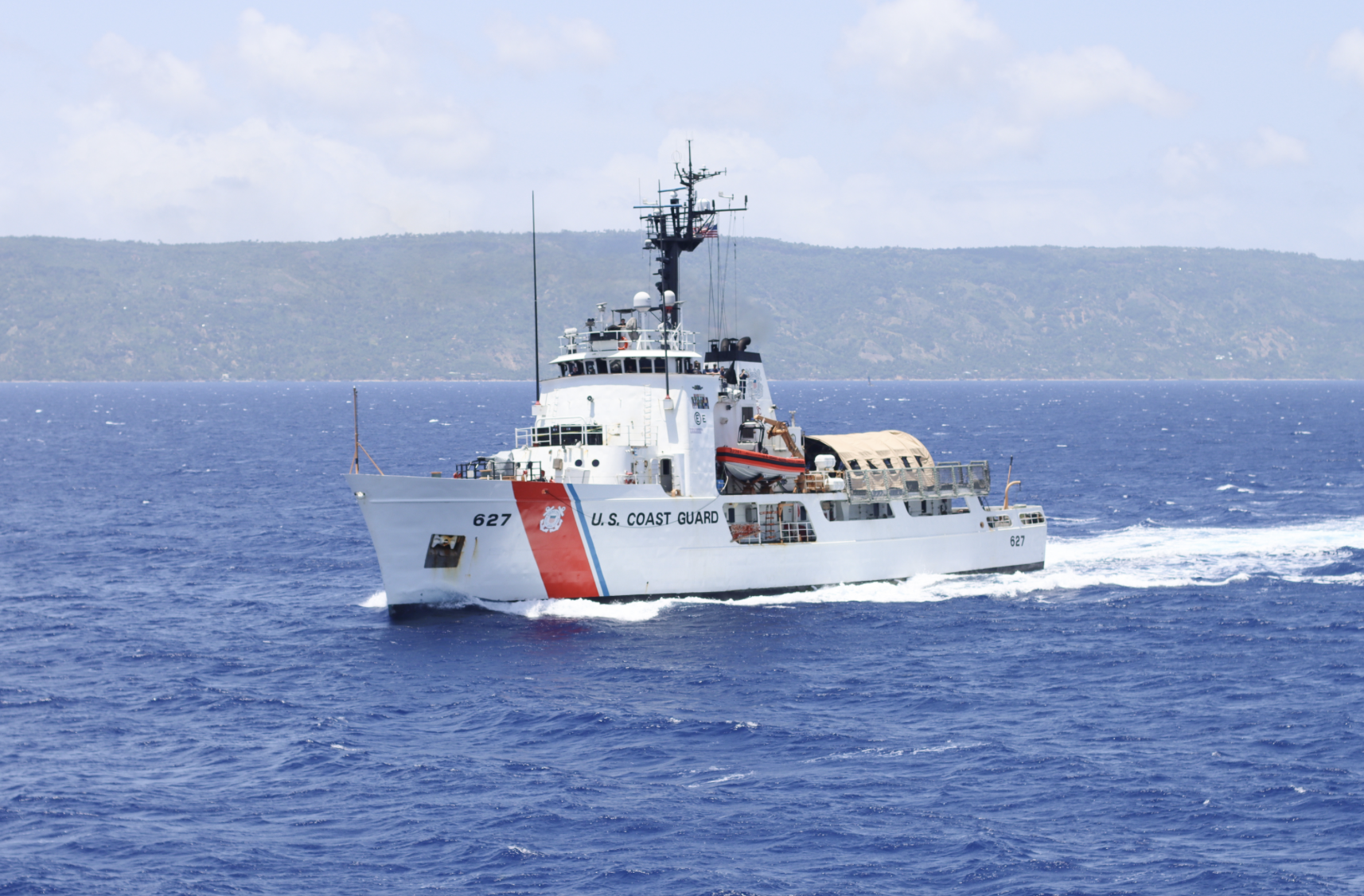
Coast Guard Cutter Vigorous (WMEC 627) patrols off coastal Haiti, June 24, 2025. The crew of Vigorous conducted a 51-day counter-migration patrol in the Windward Passage. (U.S. Coast Guard photo)

Above is a nice photo of USCGC Vigorous. Note the shelter on her flight deck ready to house dozens of migrants. Didn’t happen.

Below is a Coast Guard News release reporting yet another fruitless counter migration patrol in the Windward Passage. This is only the latest.

The Windward Passage lies between Cuba and Haiti.

One might assume they are deterring migration, but, though there is no great surge, migration is happening, but apparently very little in the Windward Passage.

If there were no patrols in the Windward Passage, the Coast Guard would still have lots of places to intercept migrants between the Haiti and the US and lots of Webber class WPCs to do the intercepting.

This just does not look like a good use for WMECs. As I have pointed out, Maybe Some of the Resources in the Caribbean Should be Going to the Eastern Pacific / Realign AREA AORs


July 1, 2025

Coast Guard Cutter Vigorous returns home after 51-day counter-migration patrol in the Windward Passage

PORTSMOUTH, Va. — The crew of Coast Guard Cutter Vigorous (WMEC 627) returned to their home port in Portsmouth, Tuesday, following a 51-day patrol in the Windward Passage.

Vigorous deployed in support of Operation Vigilant Sentry to advance the primary missions of safety of life at sea and deterrence of illegal alien ventures in known transit zones. Vigorous’ crew conducted maritime safety and security missions while protecting America’s maritime borders from unlawful entry.

Vigorous conducted several consent-based interview boardings in the Canal de la Tortue, Haiti, a key transit zone between Haiti and points north. Vigorous also patrolled for Coast Guard Sector Key West and Sector Miami, which are crucial to deterring illegal activities and maintaining maritime domain awareness. Working with Department of Defense and Department of Homeland Security entities, Vigorous contributed to the disposition of 17 suspected smugglers and nearly 1,400 pounds of cocaine with an estimated street value of 10 million dollars.

Vigorous also honed its tactical proficiency through advanced boat tactics training alongside Coast Guard Cutter Campbell (WMEC 909). The crews conducted pursuit training, enhancing their interoperability and response capabilities in high-speed maneuvering situations. Additionally, they completed a towing exercise, further strengthening their collaborative efforts in maritime assistance and rescue operations.

In a demonstration of international partnership, the Vigorous worked with the Department of State to deliver critical boat supplies to the Haitian Coast Guard, bolstering their capabilities and strengthening maritime security cooperation in the region.

“The crew performed exceptionally well throughout this demanding patrol,” said Cmdr. Charles Bare, commanding officer of Vigorous. “Their dedication and professionalism enabled us to achieve significant operational successes, contributing directly to regional stability and interagency and international partnerships.”

DHS Operation Vigilant Sentry is a DHS-led operation comprised of federal, state and local partners responsible for preventing and responding to maritime migration. OVS, previously known as Homeland Security Task Force – Southeast, was established in 2003 and is comprised of more than 50 federal, state, and local agencies.

Vigorous is a 210-foot, Reliance-class medium endurance cutter homeported in Portsmouth, Virginia. Its missions include search and rescue, maritime law enforcement, marine environmental protection, and homeland security operations in the Atlantic Ocean. The cutter falls under the command of U.S. Coast Guard Atlantic Area, which is based in Portsmouth, Viginia.

For more information on how to join the U.S. Coast Guard, visit GoCoastGuard.com to learn about active duty, reserve, officer and enlisted opportunities. Information on how to apply to the U.S. Coast Guard Academy can be found here.

For more, follow U.S. Coast Guard Atlantic Area on Facebook, Instagram and X.