“U.S. Navy, Air Force, Army conduct first real world test of Advanced Battle Management System” in NorthCom –Navy Recognition

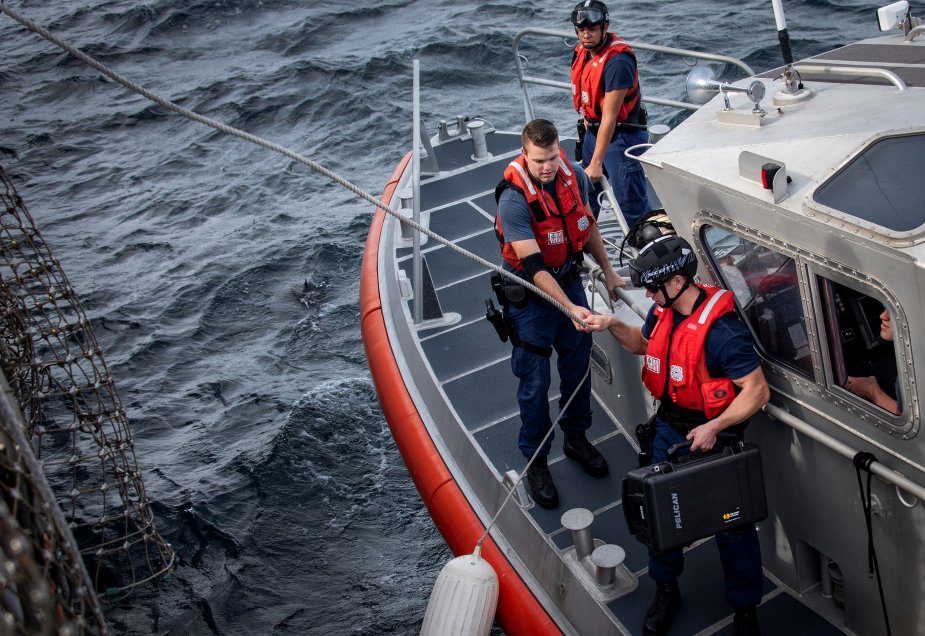
Coast Guardsmen secure communications equipment to a line to bring it aboard USS Thomas Hudner (DDG 116) in the Gulf of Mexico Dec. 16, 2019. The Navy used that equipment during the first demonstration of the Advanced Battle Management System, operators across the Air Force, Army, Navy and industry tested multiple real-time data sharing tools and technology in a homeland defense-based scenario enacted by U.S. Northern Command and enabled by Air Force senior leaders at Eglin Air Force Base, Fla., Dec. 16-18 (Picture source: U.S. Air Force 2nd Lt. Karissa Rodriguez)

There is good news and there is bad news.

NavyRecognition reports on an Homeland Defense exercise run by NorthCom using an Advanced Battle Management System.

A three-day-long exercise of the Advanced Battle Management System (ABMS) tested technology being developed to enable the military’s developing concept called Joint All-Domain Command and Control (JADC2). When fully realized, senior leaders say JADC2 will be the backbone of operations and deterrence, allowing U.S. forces from all services as well as allies to orchestrate military operations across all domains, such as sea, land, air, space and cyber operations. The technology under development via ABMS enables this concept by simultaneously receiving, fusing and acting upon a vast array of data and information from each of these domains – all in an instant. The Air Force expects to receive around $185 million this fiscal year for this effort and intends to bolster these resources over the next five years, underscoring both its importance and potential.

It looks like this exercise was viewed primarily a counter to the possibility of a cruise missile attack. but interestingly it included an Army HIMARS (High Mobility Artillery Rocket System) unit equipped with a mobile surface to surface missile launcher. I presume in light of the nature of the exercise they would have been shooting at a maritime surface target.

The problem with this exercise is that other than delivering a piece of equipment as depicted in the photo above, it appears the Coast Guard played no part in the exercise. If there is a maritime surface threat to the United States, what is the most likely agent to detect it–the USCG. US Navy presence along the US Coast is extremely limited. Significant armed US Navy surface warships are based in the US in only five major port complexes, Pearl Harbor, Puget Sound, San Diego, Mayport, and Chesapeake Bay. Other than training and transit, they spend almost no time underway in US waters.

This looks like an attempt allow a coordinated response to an attack on the US using all available assets. The fact that this is, to say the least, difficult has lead me to believe the Coast Guard should be independently capable of responding to unconventional maritime threats. Even a common operational picture will not guarantee success. Defense assets are not always based within range for timely action. Most Air Force and Army pilots have no training in recognizing various ships types, so even if they arrive on scene, with appropriate ordnance, they may not know which ships is hostile. Giving Coast Guard units laser designators to identify the target and even point to where the target should be struck, might help. In any case, the Coast Guard needs to be included in access to any “Advanced Battle Management System” “Joint All Domain Command and Control” that is expected to defend the US.
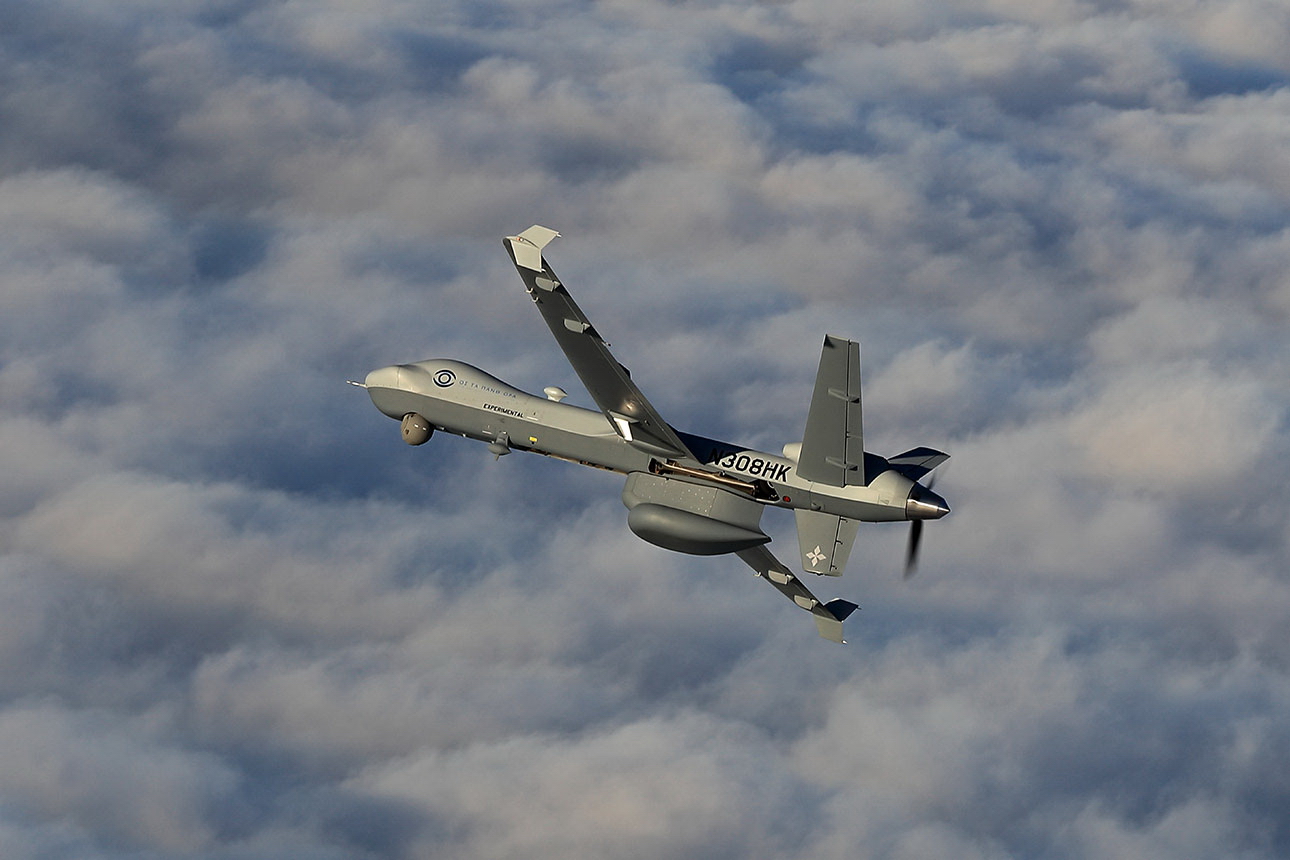
“Guardian” (General Atomic MQ-9) –DmitryShulgin

GA-ASI Concludes Successful Series of MQ-9 Demonstrations in Greece

Dmitry Shulgin reports on the recent demonstration of the Maritime version of General Atomic’s MQ-9 Remotely Piloted Air System and its “Detect and Avoid” system held in Greece for European Defense Officials.

The Coast Guard has had a notional requirement for shore based Unmanned Aircraft Systems (UAS) that goes back at least to the beginnings of the Deepwater program, two decades ago.

The most significant block to the wide spread use of UAS has been fear of mid air collisions with manned aircraft, because they could not “See and Avoid.” The General Atomic claims they have solved this problem with a Detect And Avoid (DAA) system.

The DAA system consists of an air-to-air radar integrated with Traffic Alert and Collision Avoidance System (TCAS II), and Automatic Dependent Surveillance-Broadcast (ADS-B). The DAA system enables safe flight of an MQ-9 in civil airspace, and can even detect air traffic that is not actively transmitting its position.

The Coast Guard has yet to procure a land based long duration UAS for Maritime Domain Awareness. Congress has been pushing the Coast Guard to pursue this capability. There have been some tentative steps, here and  here. It appears there are now off the shelf options.

“Currently GA-ASI aircraft systems support the Italian Air Force, the UK Royal Air Force, the French Air Force, and the Spanish Air Force. The Ministry of Defence for the Netherlands has selected MQ-9 for the Royal Netherlands Air Force, and the Government of Belgium has approved Belgian Defense to negotiate the acquisition of GA-ASI’s MQ-9B. In early December, the Australian Government announced selection of MQ-9B for the Australian Defence Force under Project Air 7003. GA-ASI RPAS are operated by the U.S. Air Force, U.S. Army, U.S. Marine Corps, U.S. Department of Homeland Security and NASA.”

The equipment included in the Guardian version of the MQ-9 is impressive, in addition to High-Definition/Full-Motion Video Optical and Infrared sensors, it includes Raytheon’s SeaVue multi-mode, maritime surface-search radar that is claimed to provide continuous tracking of maritime targets and correlation of Automatic Identification System (AIS) transmitters with radar detections and an Inverse Synthetic Aperture Radar (ISAR) mode that facilitates classification of vessels which are beyond optical sensor range.

For the demonstration, GA-ASI partnered with SES, a leading satellite communications (SATCOM) operator and managed services provider, with over 70 satellites in Geostationary Orbit (GEO) and Medium Earth Orbit (MEO). SES provided the GEO satellite connectivity that enabled the MQ-9 to operate securely with a high capacity datalink, enabling real-time transmission of sensor data from the aircraft, and extending its effective operational range far beyond that of «line-of-sight» datalinks.

Meanwhile, the Navy is supposed to be deploying a fleet of MQ-4C Triton UAS to complement their new P-8 maritime patrol aircraft. Some will be based in Mayport, NAS Point Mugu, Hawaii, and Guam. If their “Board Area Maritime Surveillance (BAMS)” system provides comprehensive coverage of the US EEZ and the drug transit zones, and if they share their information with the Coast Guard, maybe we don’t need our own assets, I have my doubts. If not, perhaps it is time for a Request for Proposal?

“Coast Guard releases final request for proposal for industry studies” –CG-9

OPC “Placemat”

The following is from the Acquisitions Directorate (CG-9) web site. Final responses are required by 31 Jan. 2020. Will see equal urgency in the award?

The Coast Guard released a final request for proposal (RFP) Jan. 10, 2020, for industry studies to support offshore patrol cutter (OPC) follow-on production. The RFP is available here.

This release follows the Industry Day event held Dec. 11, 2019, and the release of the draft RFP.

The deadline to submit responses to the final RFP is Jan. 31, 2020.

The Coast Guard plans to acquire 25 OPCs. The cutters will replace the 270-foot and 210-foot medium endurance cutters, which are becoming increasingly expensive to maintain and operate. The OPCs will bridge the capabilities of the national security cutters, which patrol the open ocean, and the fast response cutters, which serve closer to shore.

For more information: Offshore Patrol Cutter program page

Looking into this a little further, we find the notional delivery dates and construction schedule show one OPC delivered per year beginning in 2022, continuing through 2028 (#1-7), including the first four from Eastern. Then two per year 2029–2036 (#8-23), follow by one in 2037 and one in 2038. (Why the drop back in delivery rate at the end of the program is a bit hard to understand.)

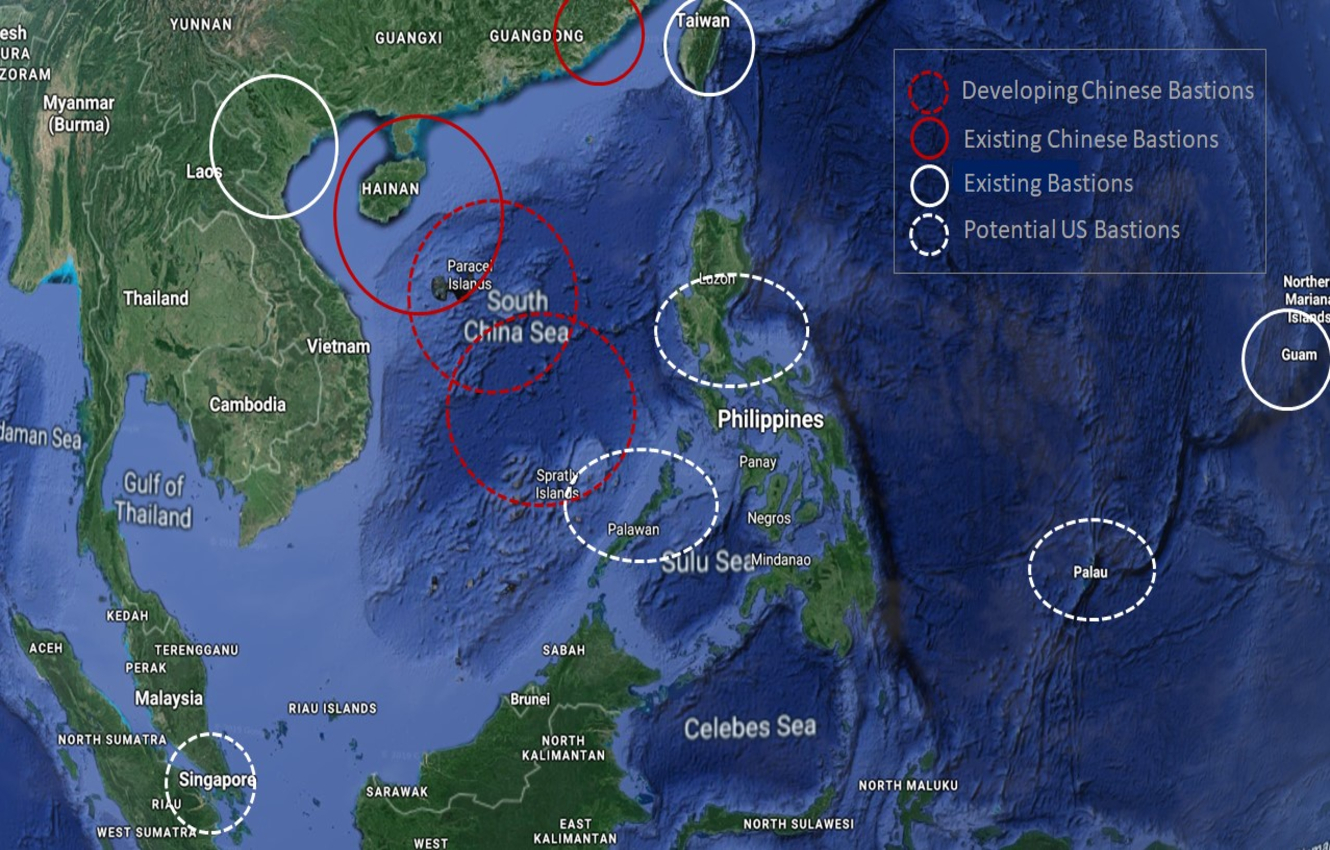
“BATTLE OF THE BASTIONS” –War on the Rocks

Source: Image generated by Allison Lacey.

War on the Rocks has an interesting piece on the apparent development of a Bastions as both defensive and offensive positions.

Bastions are not a new development. World War II offers many examples of both success and failure. Singapore was a British bastion in WWII lost to the Japanese. One could say that Pearl Harbor was a bastion attacked December 7,1941. Malta was a bastion that was besieged for 29 months, from which the British attacked Axis supply lines to North Africa by submarine, surface ship, and aircraft.

The Japanese had Rebaul and Truk as well as many additional fortified island bases. As they pushed further from the homeland, the protected perimeter increased and consequently defenses became thinner and more porous. The US bypassed many of these, leaving them to “wither on the vine.” The months long battle between what became the US bastion at Guadalcanal and Tulagi in the Southern Solomon Islands and the Japanese at Rebaul, New Britain was a good example of a battle between Bastions.

What has changed is the range of influence these bastions now have. Bastions in the South China Sea can now reach Guam with both ballistic missiles and air launched cruise missile.

The Coast Guard is already at two of locations sighted as existing or possible future bastions, Guam and Bahrain.

2020 Coast Guard Outlook

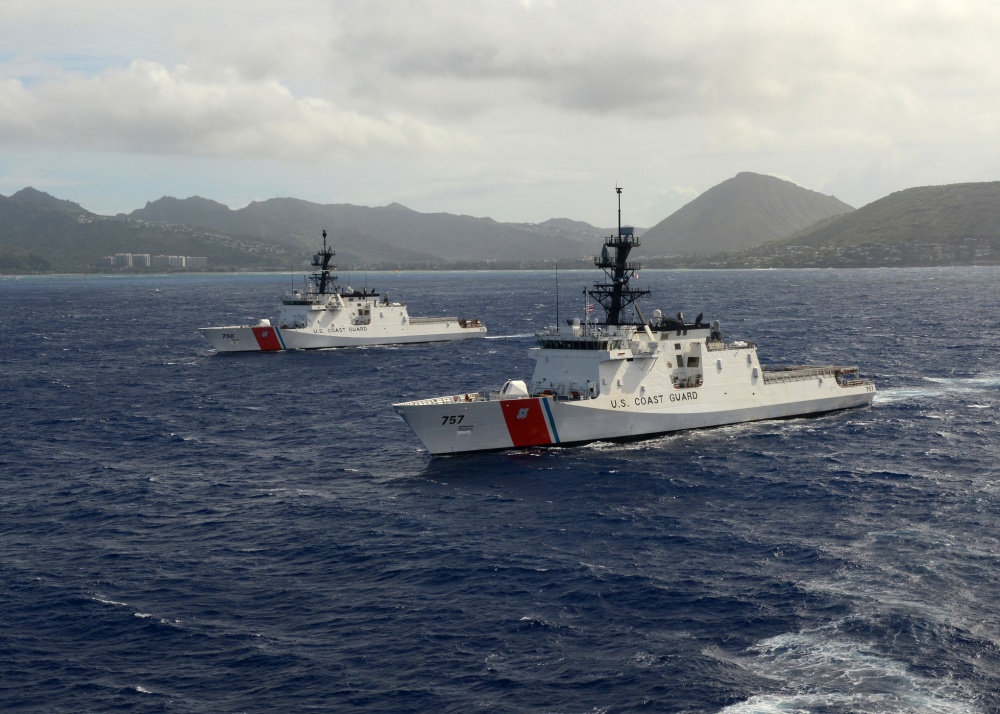
The crews of the Coast Guard Cutters Midgett (WMSL 757) and Kimball (WMSL 756) transit past Koko Head on Oahu, Hawaii, Aug. 16, 2019. The Kimball and Midgett are both homeported in Honolulu and two of the newest Coast Guard cutters to join the fleet. (U.S. Coast Guard photo by Petty Officer 3rd Class Matthew West/Released)

The 2020 Coast Guard Outlook is on line. Can’t say I have read it. There are 127 pages, but looks like there may be some good stuff here.

“Coast Guard to hold memorial service for (20) lost Oregon, Washington Coast Guardsmen” (and four mariners)

Passing along this press release. A potent reminder. 

united states coast guard

News Release

U.S. Coast Guard 13th District PA Detachment Astoria
Contact: Coast Guard PA Detachment Astoria
Office: (503) 861-6380
After Hours: (206) 819-9154
PA Detachment Astoria online newsroom

Coast Guard to hold memorial service for lost Oregon, Washington Coast Guardsmen

Members of the Patriot Guard Riders display American flags in a show of respect for the Coast Guardsmen and fishermen who have lost their lives along the Columbia and Quillayute River bars during a memorial ceremony at Coast Guard Station Cape Disappointment, Jan. 10, 2016. Gordon Huggins, the only surviving crewmember from the capsizing and loss of the 52-foot Motor Life Boat Triumph, January 12, 1961, receives a hug from an attendee of the annual Triumph Memorial ceremony held at the Lewis & Clark Interpretive Center in Ilwaco, Wash., January 13, 2018. Maritime Enforcement Specialist 2nd Class Doug Bruene, Machinery Technician 2nd Class Justin Finney and Seaman Mitch Miller from Coast Guard Station Cape Disappointment in Ilwaco, Wash., prepare to cast a wreath and flowers into the water during a memorial service for the crews of the 52-foot motor lifeboat Triumph and the fishing vessel Mermaid, Jan. 12, 2013.

Editors’ Note: Click on images to download high resolution version.

WARRENTON, Ore. — The Coast Guard is scheduled to host a memorial service Saturday at 10 a.m., at the Lewis & Clark Interpretive Center in Ilwaco, Washington, in tribute to Coast Guardsmen and mariners who lost their lives during seven separate tragic incidents that occurred along the Washington and Oregon coasts.

Family, friends, media, former and current Coast Guardsmen and fellow mariners are invited to attend the short ceremony and pay their respects. Scheduled events include remarks from former shipmates; land and sea wreath ceremonies; and a traditional-bell ringing after each name is read in remembrance.

“Memorials provide an important link to the past, and it is important to honor those who made the ultimate sacrifice,” said Capt. Jeremy Smith, commander, Coast Guard Sector Columbia River. “These memorials allow us to remember the bravery and courage of those who have come before us, while also reminding us of the risks and dangers of our chosen profession.”

Personnel at Coast Guard Station Cape Disappointment host this memorial service annually at the beginning of the New Year in honor of Coast Guardsmen who paid the ultimate sacrifice.

Along with all of those lost at sea, the memorial service recognizes:

  • The four lives lost, all Coast Guardsmen aboard Motor Life Boat 36384, Feb. 5, 1946, during search efforts for two crab boats near Ocean City, Washington. The crab boats were later discovered to be safely anchored inside Willapa Bay.
  • The seven lives lost, five Coast Guardsmen aboard the 52-foot Motor Life Boat Triumph and two mariners aboard the 38-foot fishing vessel Mermaid, Jan. 12, 1961, during the attempted rescue of fishermen aboard the Mermaid near the Columbia River Bar.
  • The three lives lost of 10 Coast Guardsmen aboard the Coast Guard 41-foot Utility Boat 41332, Nov. 15, 1977, during night navigation training near the Columbia River Bar.
  • The one life lost, Coast Guard aviator #911 aboard Coast Guard helicopter 1353, Nov. 14, 1981 during night search efforts for a fishing vessel in distress off the coast of Coos Bay, Oregon.
  • The three lives lost, one Coast Guardsman and two mariners, Jan. 11, 1991, during rescue operations, of the 75-foot fishing vessel Sea King, in which two Sea King crewmembers were rescued near the Columbia River Bar.
  • The three lives lost, all Coast Guardsmen aboard Motor Life Boat 44363, Feb. 12, 1997 during rescue operations of two crewmembers aboard the 31-foot sailing vessel Gale Runner near the Quillayute River Bar.
  • The three lives lost, all Coast Guard aviators aboard Coast Guard helicopter 6017, July 7, 2010, near La Push, Washington. The helicopter crashed while transiting between Astoria, Oregon, and Sitka, Alaska.

“Militias: US sailors in Bahrain ‘legitimate targets’ after Soleimani slaying” –Navy Times

The current crisis in SW Asia of course brings to mind the Coast Guard members in that area, PATFORSWA, based in Bahrain.

NavyTimes has an assessment of the risks that Iranian backed militias in Bahrain might retaliate against US service members in Bahrain or their families.

Assignment to PATFORSWA is an unaccompanied tour, but apparently members are berthed off base in leased housing.

Generally the assessment is that Bahrain’s internal security forces are very good, but there are militants there and that 100% security is impossible.

Apparently the head of a Bahrain Shia militia was one of the victims of the US attack that killed Soleimani, so they might have additional motivation for an attack.

If any of our PATFORSWA personnel are looking in on the blog. Take care.

“U.S. Coast Guard Could Face A Narco Submarine Epidemic In 2020” –Forbes

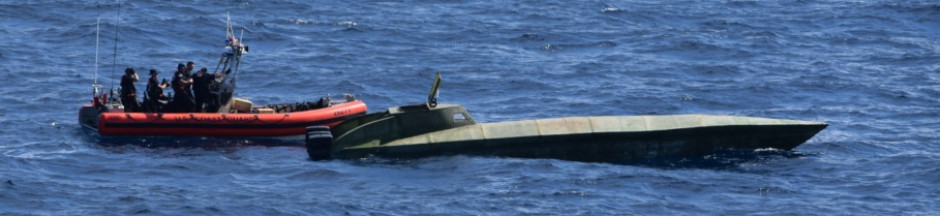
LPV (Low Profile vessel) incercepted by Stratton (WMSL-752) in Eastern Pacific, Aug. 27, 2018. It had three outboard motors. Ref dvidshub.net

Forbes has a short post suggesting we may see a spike or at least a continuation of the high level of self propelled semi-submersible activity in 2020. The article is by H I Sutton, who’s blog, Covert Shores, is on my recommended blog list.

Sutton has come to suspect that use of these vessels has become a status symbol among drug smugglers. There is also a suggestion that we might expect more of them bound for Europe.

I would note that movement from Brazil to Africa, crossing where the Atlantic is at its narrowest, might make sense as well.

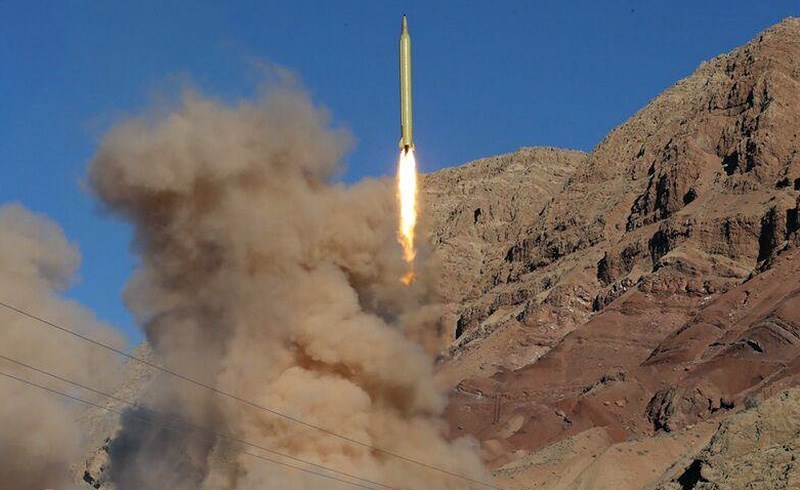
“Iran Launched Missiles at Iraqi Bases with US Forces, Pentagon Says” –DefenseOne

DefenseOne.Com is reporting that,

More than a dozen ballistic missiles were fired at the Al-Assad air base in Anbar province and a base in Irbil, in Iraqi Kurdistan, a DOD statement said.

“The 2020s Will Change The World Submarine Balance” –Forbes

nuclear-capable underwater drone called Ocean Multipurpose System Status-6.

Forbes has a short article about anticipated advancements in the global submarine fleets. Technology is improving. More nations are starting to export submarines. Nations that have never had submarines before are putting them into service.

Perhaps most ominously a range of autonomous underwater vehicles with offensive capabilities are entering service. They range from torpedoes with artificial intelligence or mines that position themselves to a predetermined location, to an entirely new class of intercontinental range, nuclear powered, nuclear armed drones. In effect these include underwater cruise missiles. Since nations have seen fit to share cruise missiles with terrorist organizations, there is no reason not to expect that they will also share at least some of these weapons.