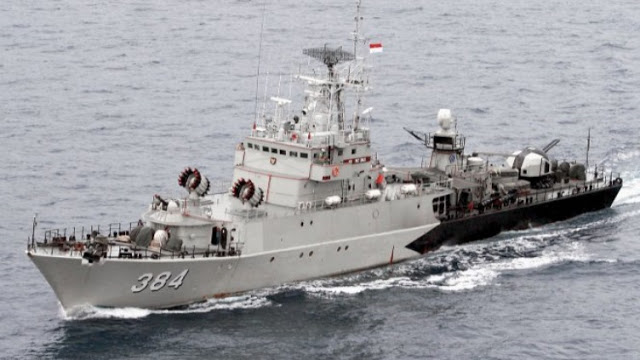
“Vietnamese fishing boat sinks during encounter with Indonesian warship” –Baird Maritime

Baird Maritime reports on an incident between Vietnamese and Indonesian fisheries protection vessels that resulted in the sinking of a Vietnamese fishing vessel in a disputed area of the South China Sea.

The Indonesian Corvette, KRI Tjiptadi (381), is a former East German Parchim class corvette like this one. It is about the size of a 210.

The South East Asian countries having disputes about their respective EEZs should really take it to the UN tribunal. The resulting decisions would ensure international recognition of their rights and leave China’s nine dash line claims in the trash bin.

Chinese Are Outbuilding the US in Warships

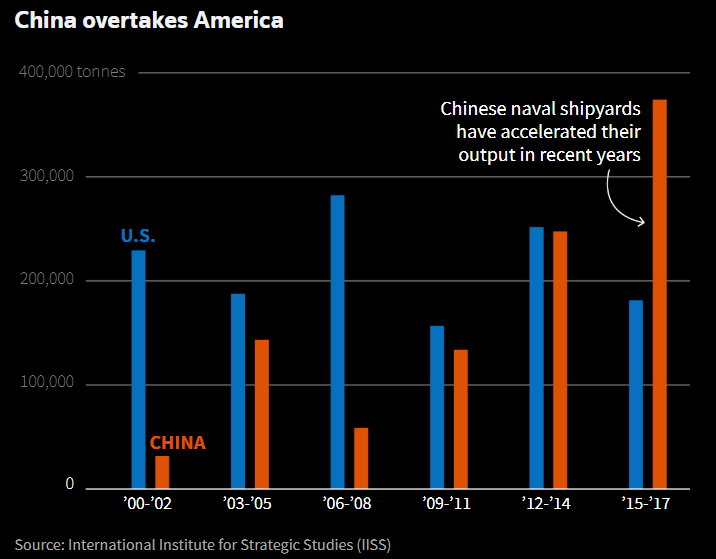
Respected Naval blogger CdrSalamander has a short post on the US Naval Institute blog warning that “The Pacific Will Pivot With or Without You.” It is really a quick look at a longer Reuters report, “China’s vast fleet Is now tipping the balance in the Pacific.” At the center of the stories is the chart above, showing how fast the Chinese have begun to build. The message is simple.

We are in a naval arms race with the most prolific shipbuilding nation in the world. 

The new reality is that China is building up their navy at a rate about twice as fast as the US, not just in numbers but in overall tonnage. That appears to mean, in about 30 years, the Chinese Navy could be twice as large as that of the US. Hopefully there will continue to be mitigating  factors, but since any conflict is likely to be in the Western Pacific, the Chinese also have an enormous geographical advantage.

It is time for the Coast Guard to step up their game as an armed force, with real arms and actual missions for a major war that the service has planned, practiced, and equipped for.

Norwegians Test Vertical Take Off UAS for SAR in the Arctic

Schiebel’s Camcopter S-100 will start tests with the Norwegian Coast Guard in fall 2019. Schiebel

Seapower Magazine is reporting that the Norwegian Coast Guard is to begin a second set of tests to confirm the usefulness of a vertical Take-off and Landing (VTOL) Unmanned Air System (UAS) for SAR in the Arctic environment.

The UAS, the Schiebel Camcopter S-100, has a max takeoff weight of 200 kg (441 lb), a length of 3.11 m (10 ft 2 in), and a main rotor diameter of 3.4 m (11 ft 2 in). The system is widely used, including operation by the German, Italian, and Chinese Navies and the Russian Coast Guard. (More here). It is much more compact than even the smaller MQ-8B version of Fire Scout which has a max. takeoff weight: of 3,150 lb (1,430 kg), a length of 23.95 ft (7.3 m), and a main rotor diameter of 27.5 ft (8.4 m)

We might want to ask if we could send an observer or at least get the results of their evaluation.

Coast Guard Adoption of ScanEagle Encourages International Sales –DefenseOne

Scan Eagle approaching a ship for its first autonomous recovery, using the Skyhook system. This shows how even very small ships can operate these systems.

Pulled the following from DefenseOne’s Global Business Brief, an email blast. 

Insitu Eyes ScanEagle Exports

Insitu says U.S. Coast Guard plans to expand the use of its ScanEagle surveillance drone might draw international customers.

“It’s an old adage: ‘as goes the Coast Guard, so goes the rest of the navies around the world’,” said Ron Tremain, who works in business development at the Boeing subsidiary, in an interview on Monday. “What I see happening: not only are we already working with a number of international navies, but I see more international navies patterning their [unmanned aerial system] operations after the Coast Guard.”

ScanEagle drones flown from the USCGC Stratton over the past year and a half have helped in the seizure of an estimated $1.8 billion in cocaine. Coast Guard Commandant Adm. Karl Schultz, in March, announced plans to accelerate the installation of ScanEagle drones on all National Security Cutters and Offshore Patrol Cutters. Insitu — which owns and operates the Coast Guard’s ScanEagles — is installing the gear for controlling the drones on the service’s ships.

The U.S. Navy started using ScanEagles on its destroyers in 2005. Italy, Britain, Colombia, and Greece are among the international navies using the drone.

In recent weeks, the Federal Aviation Administration granted an Operational Certificate of Waiver or Authorization to allow Coast Guard ScanEagles to fly surveillance missions near the U.S.-Mexico border, Tremain said.

“It’s the very first step in normalizing UAS operations,” he said. “Although a very, very small step, it is significant.”

“Coast Guard Cutter Procurement: Background and Issues for Congress” –Congressional Research Service

US Capital West Side, by Martin Falbisoner

The Congressional Research Service updated its “Coast Guard Cutter Procurement: Background and Issues for Congress” on 24 April, 2019. 

You can read it here. I have quoted the summary below.

The Coast Guard’s program of record (POR) calls for procuring 8 National Security Cutters (NSCs), 25 Offshore Patrol Cutters (OPCs), and 58 Fast Response Cutters (FRCs) as replacements for 90 aging Coast Guard high-endurance cutters, medium-endurance cutters, and patrol craft. The Coast Guard’s proposed FY2020 budget requests a total of $657 million in procurement funding for the NSC, OPC, and FRC programs.

NSCs are the Coast Guard’s largest and most capable general-purpose cutters; they are intended to replace the Coast Guard’s 12 aged Hamilton-class high-endurance cutters. NSCs have an estimated average procurement cost of about $670 million per ship. Although the Coast Guard’s POR calls for procuring a total of 8 NSCs to replace the 12 Hamilton-class cutters, Congress through FY2019 has funded 11 NSCs, including the 10th and 11th in FY2018. Six NSCs are now in service. The seventh was delivered to the Coast Guard in September 2018. The eighth through 11th are under construction. The Coast Guard’s proposed FY2020 budget requests $60 million in procurement funding for the NSC program; this request does not include funding for a 12th NSC.

OPCs are to be smaller, less expensive, and in some respects less capable than NSCs; they are intended to replace the Coast Guard’s 29 aged medium-endurance cutters. Coast Guard officials describe the OPC program as the service’s top acquisition priority. OPCs have an estimated average procurement cost of about $421 million per ship. On September 15, 2016, the Coast Guard awarded a contract with options for building up to nine OPCs to Eastern Shipbuilding Group of Panama City, FL. The first OPC was funded in FY2018 and is to be delivered in 2021. The second OPC and long leadtime materials (LLTM) for the third were funded in FY2019. The Coast Guard’s proposed FY2020 budget requests $457 million in procurement funding for the third OPC, LLTM for the fourth and fifth, and other program costs.

FRCs are considerably smaller and less expensive than OPCs; they are intended to replace the Coast Guard’s 49 aging Island-class patrol boats. FRCs have an estimated average procurement cost of about $58 million per boat. A total of 56 have been funded through FY2019, including six in FY2019. Four of the 56 are to be used by the Coast Guard in the Persian Gulf and are not counted against the Coast Guard’s 58-ship POR for the program, which relates to domestic operations. Excluding these four OPCs, a total of 52 FRCs for domestic operations have been funded through FY2019. The 31st FRC was commissioned into service on March 22, 2019. The Coast Guard’s proposed FY2020 budget requests $140 million in acquisition funding for the procurement of two more FRCs for domestic operations.

The NSC, OPC, and FRC programs pose several issues for Congress, including the following: 

  • whether to provide funding in FY2020 for the procurement of a 12th NSC; 
  • whether to fund the procurement in FY2020 of two FRCs, as requested by the Coast Guard, or some higher number, such as four or six; 
  • whether to use annual or multiyear contracting for procuring OPCs; 
  • the annual procurement rate for the OPC program; 
  • the impact of Hurricane Michael on Eastern Shipbuilding of Panama City, FL, the shipyard that is to build the first nine OPCs; and 
  • the planned procurement quantities for NSCs, OPCs, and FRCs.

“US warns China on aggressive acts by fishing boats and coast guard” –Financial Times

The Financial Times is reporting, (Additional reporting here and here.)

“Navy chief (US Navy CNO Admiral John Richardson–Chuck) says Washington will use military rules of engagement to curb provocative behavior”

This is, if anything, overdue. The Chinese Coast Guard and Maritime Militia are effectively arms of the Chinese government in the same way the Peoples’ Liberation Army Navy (PLAN) is.

The Chinese have been taking advantage of the more ambiguous state of these agencies. They act boldly and if things go well, the Chinese government takes advantage. It things go badly, they can avoid responsibility, particularly with regard to the Militia.

The nations of South East Asia should make a similar stand. The decision to provide a Coast Guard as an agency separate from the Navy is strictly a national prerogative. It does not provide any special status relative to naval vessels. You don’t get a pass just because you are painted white. Similarly fishing vessels employed for aggressive government purposes enjoy no special protection. When they misbehave, they need to face consequence.

Thoughts on PSC Diver Support Requirements

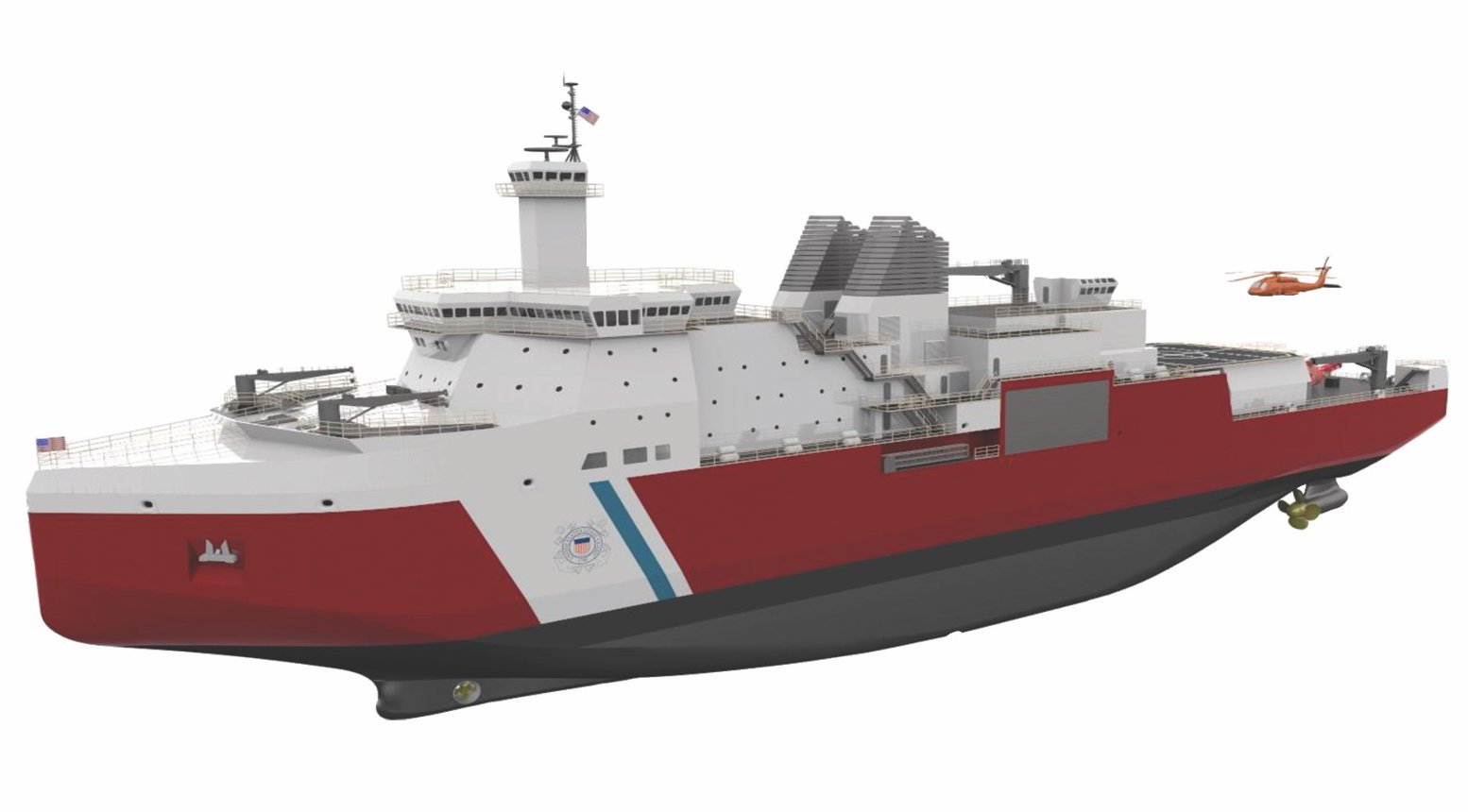
I am passing along some thoughts on Diver Support requirements for the Polar Security Cutter from a former USCG diver, Michael W. Carr, 

Divers are assigned to all Coast Guard Icebreakers, but this operational requirement has, in the past, been an afterthought. Dive lockers were cramped, not designed to support diving operations, and hampered equipment maintenance. Additionally, Coast Guard Icebreakers have rarely carried recompression chambers, even though these ships operate thousands of miles from diving medical assistance. I have not seen the specifications for these new vessels but I hope this new design incorporates DIVING features, and there is a DIVING OFFICER assigned to the design and construction team. Listed below are features which should be on these new Coast Guard Icebreakers:

1. Doublelock Navy approved recompression chamber.
2. Full suite of Surface Supplied Diving Systems, capable of supporting a US Navy MK21 Diving System.
3. Two independent Air Compressors capable of supporting Recompression Chamber Operations, Surface Supported Diving Systems, and SCUBA Operations.
4. A dedicated Diving equipment repair and maintenance space.
5. A dedicated space for a Diving Medical Corpsman.
6. Direct Access to the outside (weather) deck and diving station, with necessary heat and lighting for day/night operations.
7. Necessary equipment to support both hot water suit and dry suit operations.
8. Systems for supporting hydraulic and pneumatic tool operations.
9. Equipment necessary to support ship husbandry operations (propellor, sea chest, transducer, etc maintenance, and repair).
10 Dedicated meeting/training room for Dive Team planning and operations.
11. A Navy approved diving stage and crane to lower and raise divers (In the past divers conducted diving operations from the ice alongside the ship, or from a small boat tied alongside the icebreaker.
12. And finally: NO overboard suctions or discharges in the area of the diving station.

We need to think far into the future, ensuring these vessels meet both present needs, and the expansion of responsibilities as the Arctic and Antartic change due to our rapid climate changes. Coast Guard Divers assigned to Icebreakers are likely to be tasked with many more missions repairing other vessels and offshore structures, oil spill response actions, maritime security, and a myriad of other tasks. Lets really think this through and get it right. Bring on Divers with experience and knowledge to ensure we make these new icebreakers state of the art. Let’s examine icebreakers from all the other countries which operate in Arctic and Antarctic regions, and incorporate that knowledge.

Michael W. Carr is a Coast Guard Academy graduate (1977) and attended US Navy Diving & Salvage Officer training while in the Coast Guard. He then served as Diving Officer on US Coast Guard Atlantic Strike Team Dive Team for 6 years. After 10 years in the Coast Guard, Carr went into the US Army Watercraft community. He retired from Army in 2015.

Japan Builds More XXLarge CG Cutters

Japan Coast Guard patrol vessel PLH32 Akitsushima. Photo by Kaidai

NavyRecognition is reporting that the Japanese Coast Guard is once again building very large coast guard cutters with the launch of Reimei (PLH 33).

Mitsubishi Heavy Industries (MHI) recently launched a brand new patrol vessel for the Japan Coast Guard (JCG). This vessel is a variant of the Shikishima-class, with two previous vessels built in 1992 and 2013. Two more vessels are also scheduled to be built in the future (emphasis applied–Chuck).

This class is going to be something of an oddity, because it looks like there will be at least 30 years between the commissioning of the first ship and the fifth. In fact the Japanese may be planning to replace the first ship of the class with the fifth (that is only speculation on my part, but the Japanese do not keep there ships nearly as long as the USCG. Referencing my Combat Fleets of the World from 2013, the Japan Coast Guard had no ships older than 35 years).

Before the Chinese built their very large Coast Guard cutters, the two earlier ships of this class, Shikishima (commissioned 1992) and her sister ship, Akitsushima (commissioned 2013), were largest cutters in the world, at 150.0m (492 ft), 9300 ton (full load), twice as large as Bertholf class cutters.

The South Koreans have also built some exceptionally large cutters. None of these ships have particularly large crews. Crews are about the same size or smaller than the crews of the Bertholf class. All seem to be good for about 25 knots and have facilities for two helicopters.

Armament:

The first two Japanese ships don’t have the 76mm guns found on the extremely large Chinese and South Korean cutters, but they are well armed for cutters with four gun mounts on each ship. There does seem to be some variation in the way the Japanese ships are armed–not too surprising considering the first two ships were commissioned 21 years apart, and seven years will separate this third ship from the second of the class.
20mm-76_Gatling_pic

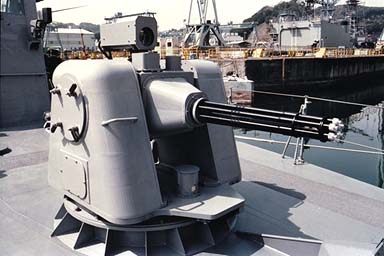
Japanese 20 mm/76 Gatling Gun. Note the camera for remote targeting. JMSDF Photograph.

Just about all Japan Coast Guard cutters have the 20mm Sea Vulcan, which uses the same 20mm guns as those in the Phalanx Close in Weapon System (CIWS) but in a simpler mount. They have a 3000 round per minute rate of fire and a reported effective range of 1,625 yards (1,490 m). The first ships of the class had two mounts forward of the bridge at the O-2 deck level.

The first two ships have two mounts for the Oerlikon 35mm. These guns have a 550 round per minute rate of fire per gun and a reported effective range against surface targets of 8,700 yards (8,000 m). The first ship has two twin mounts, but it appears the second has two simplified single mounts. If the third ship follows typical Japan Coast Guard practice, the larger mounts will continue to be in the 30 to 40mm range. If on the other hand, they mount something larger, it will mark a departure for the JCG, I would assume, in response to the increased militancy of the China Coast Guard.

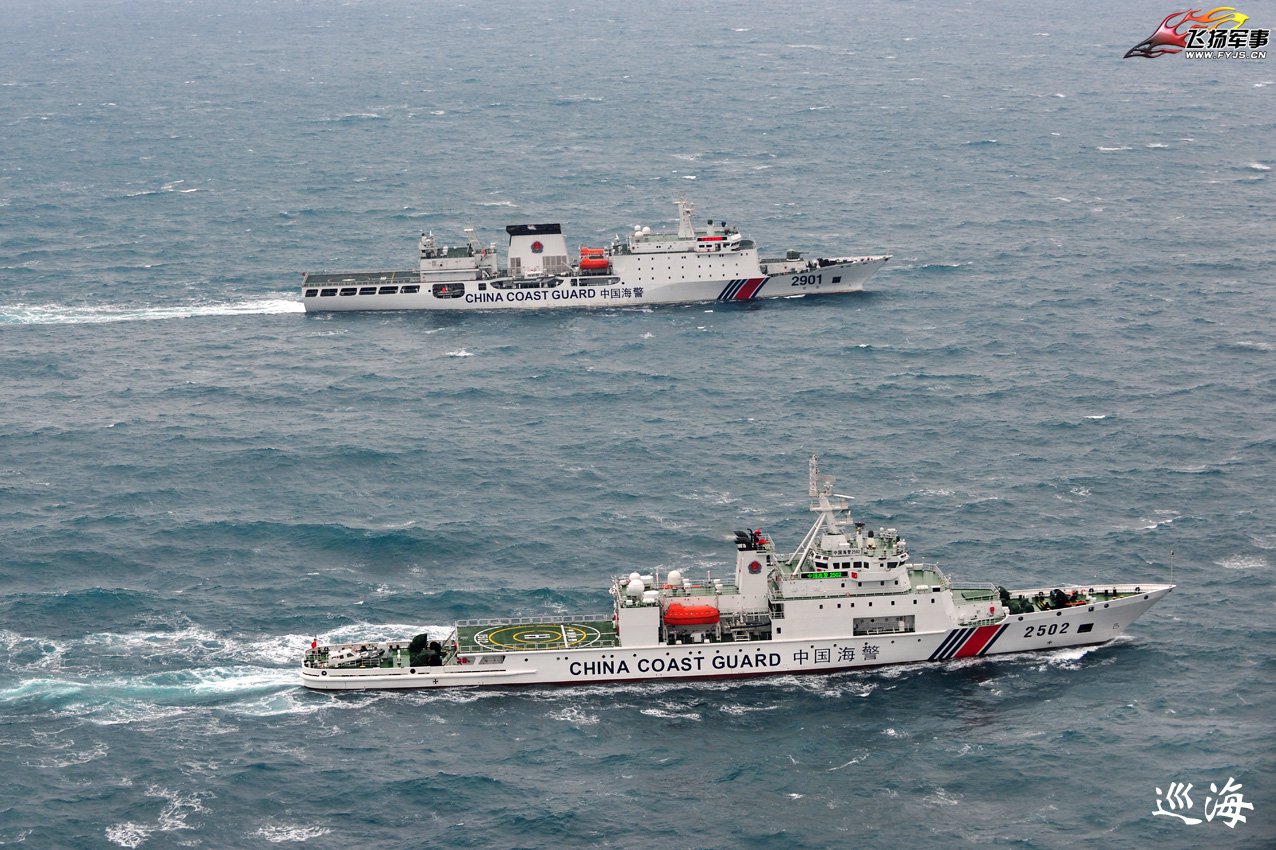
In the world of Asian Coast Guards, it may simply be that their large size is their primary armament. These nations seem to regularly engage in shoving matches. In at least one case, the China Coast Guard reportedly sank a Vietnamese fishing vessel by ramming.

“Rise of the white hulls: Indo-Pacific coast guards become diplomatic tools” –Stars and Stripes

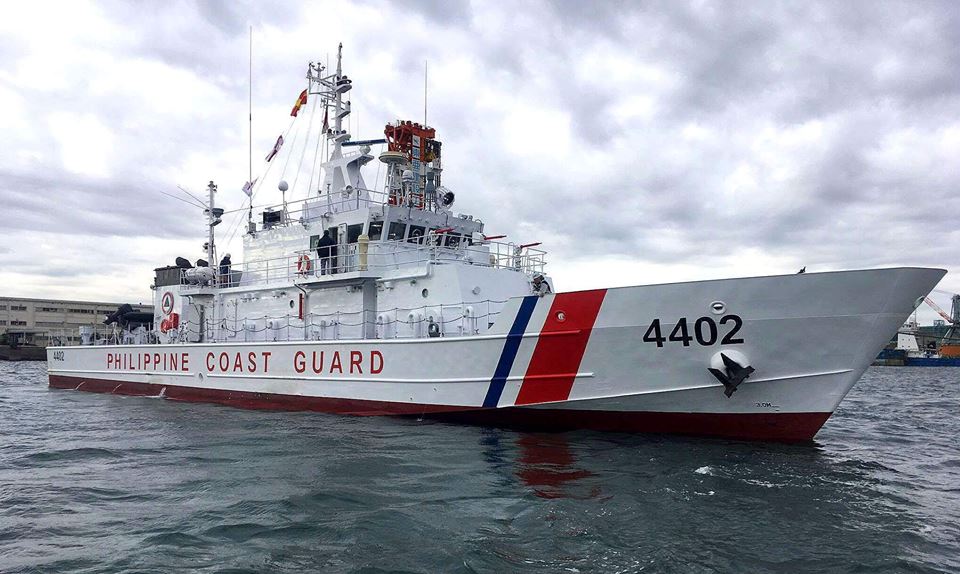
Japanese built Philippine Coast Guard cutter Malabrigo


Stars and Stripes has a brief story on the increased use of Coast Guards in Asia as counters to Chinese actions.

Unfortunately it appears to me that some of the countries there are using a professed need to build up their coast guards as an excuse for not exercises their legitimate rights by using their navies to confront the Chinese when they act unlawfully.