“General Dynamics’ Next Generation Squad Weapon – The RM277”

The army is in the process of selecting a new rifle and light machine gun. This report looks at one of the candidates, but also provides links to information about the other candidates. It is probably going to be a while before the Coast Guard sees a replacement for our existing weapons, with the possible exception of the specialized units.

There is also some information on the new 6,8mm (.277″) round designed to be relatively light while having greater range and better penetration of advanced body armor than the 5.56mm (.222″) round.

“Coast Guard releases draft waterways commerce cutter specifications, plans industry engagement” –CG-9

USCGC Smilax (WLIC-315)

This from CG-9:


The Coast Guard released draft specifications for the river buoy tender and inland construction tender variants of the waterways commerce cutter (WCC) in a special notice Oct. 15.

The WCC program also plans to exhibit and present updates at the International WorkBoat Show in New Orleans Dec. 4-6. The program will have a booth and provide information about its mission needs, status, and desired fielding schedule during a presentation Wednesday, Dec. 4 from 11 a.m. to noon CST. Additionally, a team of program members will be available to meet one-on-one with interested ship construction and design teams consisting of shipyards with design capability or ship designers teamed with shipbuilders. The deadline to request a meeting is Nov. 11.

Both the draft specifications and the one-on-one meeting request link are available here.

For more information: Waterways Commerce Cutter program page

Following the link, there is a little information about the conceptual design, and the way the Coast Guard intends to interface with the workboat construction community that I have reproduced below. Distribution of the specs themselves are limited. 

This special notice is issued for the U.S. Coast Guard (USCG) Waterways Commerce Cutter (WCC) program office. General questions may be directed to wcc@uscg.mil.

DRAFT SPECIFICATION: In continuance of its plan to replace the capabilities of 13 Inland Construction Tenders (WLIC) and 18 River Buoy Tenders (WLR), the USCG is releasing a draft specification with drawings and project peculiar documents (PPD). All of the above are current versions and subject to change. The draft specification is for two mono-hull ship variants with a common after-body as the materiel solutions to replace the WLIC and WLR. (emphasis applied–Chuck) While the draft specification is unclassified, parties interested in viewing it must request explicit access via the Federal Business Opportunities web site. The USCG Contracting Officer will decide all requests for access.

MEETINGS WITH SHIPBUILDERS AND SHIP DESIGNERS: The WCC Program plans to attend the International WorkBoat Show in New Orleans, LA December 4-6, 2019. USCG representatives will take this opportunity to meet one-on-one with shipbuilder and ship design teams (i.e., shipyards with design capability or ship designers teamed with shipyards). To request a meeting during the International WorkBoat Show, click on the link below or copy and paste it into your internet browser. The deadline to request a meeting is November 11, 2019

https://einvitations.afit.edu/inv/anim.cfm?i=472262&k=0666400B7D55

Shipbuilder and ship design teams not able to meet during the International WorkBoat Show may request a phone conference or meeting in Washington, DC by emailing wcc@uscg.mil. Because of resource constraints, the USCG will meet one-on-one only with shipyards with design capability or ship designers teamed with shipyards.

The WCC program will also staff a booth during the International WorkBoat Show and will provide information about its mission needs, status, and desired fielding schedule during a presentation on Wednesday, December 4, 2019 from 11 a.m. to 12 p.m. CT. The presentation will include time for questions. All information provided in the presentation (including questions and answers) and booth handouts will be made available on the program’s website:

https://www.dcms.uscg.mil/Our-Organization/Assistant-Commandant-for-Acquisitions-CG-9/Programs/Surface-Programs/WCC/

“Coast Guard Cutter Procurement: Background and Issues for Congress” –CRS, October 11, 2019

Busy as always, the Congressional Research Service has already updated their examination of the Coast Guard’s cutter procurement program to reflect the results of the contract relief extended to Eastern Shipbuilding Group (ESG) and the intention to re-compete for contracts to construct OPC#5 and later. You can see the new report here. 

Significant changes are found on pages 8-10 under the title “October 2019 Announcement of Contractual Relief and Follow-on Competition,” and pages 13-15 under the title “Issues for Congress–Contractual Relief and Follow-on Competition for OPC Program.”

Delays in the execution of the OPC program might be seen as justification for NSC#12 particularly if it is seen as a trade-off for a future OPC.

Not new to this edition, but looking at “Table 1. NSC, OPC, and FRC Funding in FY2013-FY2020 Budget Submissions” on page 13, raises a question about how many Webber class FRCs are to be built. The Program of Record is 58, but this did not include replacements for the six vessels assigned to Patrol Forces SW Asia. Adding six for PATFORSWA should bring the total to 64. So far 56 Webber class have been funded, including four to replace 110 foot patrol boats assigned PATFORSWA. There is $140M in the FY 2020 budget request, which would fund two more, but there are insufficient funds in the out years to fund even a single additional FRC. This appears to mean the program will end with a total of 58 vessels unless Congress steps in.


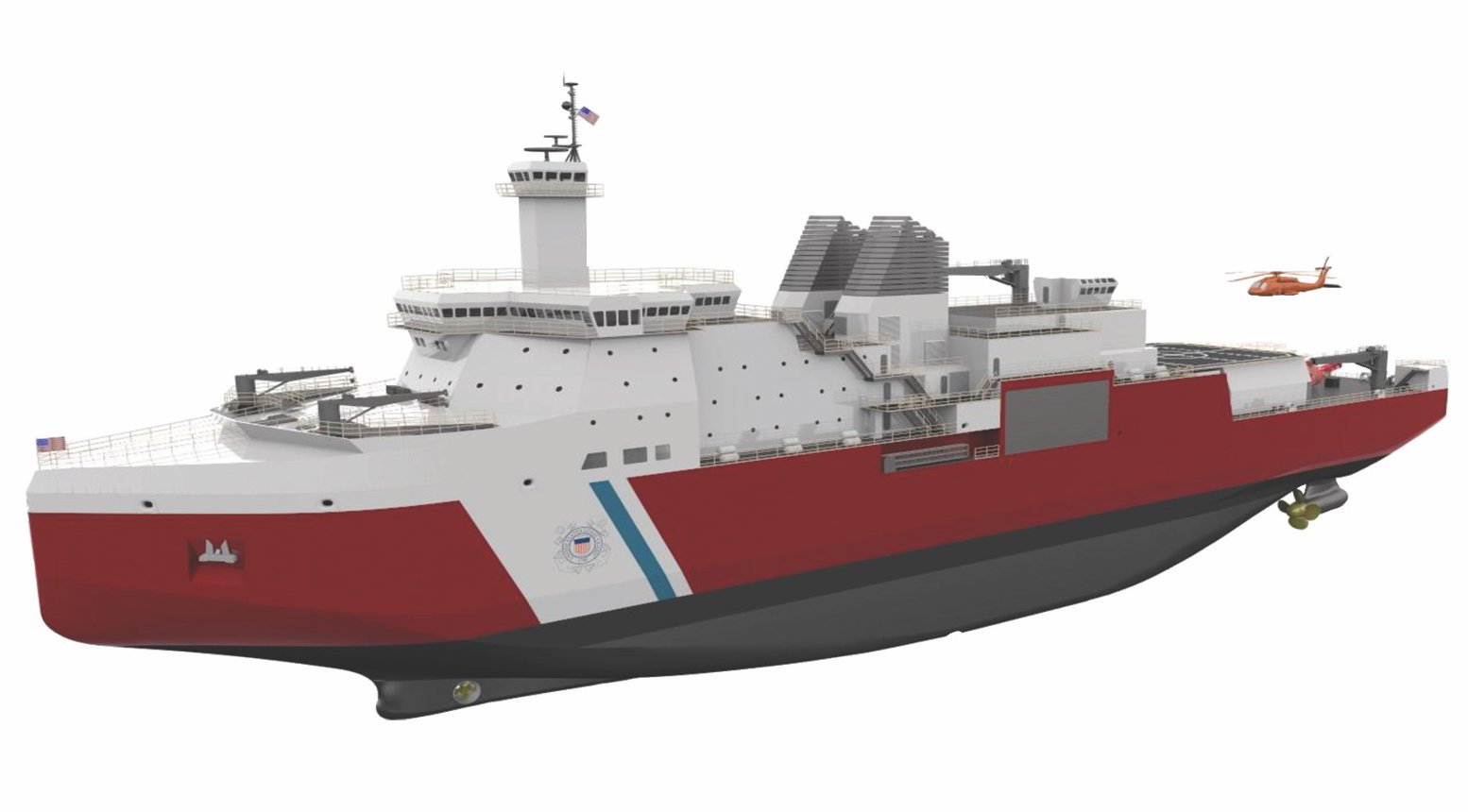
“Coast Guard Polar Security Cutter (Polar Icebreaker) Program: Background and Issues for Congress” CRS, an even newer version

I am a bit embarrassed to admit, I have been behind on this subject. My post from Saturday, linked the 19 September version of the report, but there was already a more recent version, dated 4 October. You can see it here

The significant change in this edition is the addition of the new section at the top of page 15. (This new section reflects the questions Tups has raised here earlier.) 

“Parent Design and PSC Design

“One potential aspect of the issue of technical, schedule, and cost risk in the PSC program relates to the parent design for the PSC design. As mentioned earlier, a key aim in using the parent design approach is to reduce cost, schedule, and technical risk in the PSC program. As also mentioned earlier, VT Halter states that its winning design for the PSC “is an evolution from the mature ‘Polar Stern II’ [German icebreaker] currently in design and construction; the team has worked rigorously to demonstrate its maturity and reliability.” As also mentioned earlier, VT Halter and ship designer Technology Associates, Inc. reportedly made “a lot of modifications” and went through six design spirals to refine the PSC’s design. Potential oversight questions for Congress include the following:

  • “To what degree was Polarstern II’s design a completed and proven design at the time it was used as the parent design for developing the PSC design? How much of Polarstern II’s detail design and construction plan was completed at that time? When did Polarstern II begin construction, and when is the ship scheduled to complete construction and undergo sea trials to confirm the ship’s design and operational characteristics?
  • “How closely related is the PSC’s design to Polarstern II’s design? How many changes were made to Polarstern II’s design to develop the PSC design? What were these changes, and what technical, schedule, and cost risks, if any, might arise from them?”

“Coast Guard Polar Security Cutter (Polar Icebreaker) Program: Background and Issues for Congress” –CRS

19 September, the Congressional Research Service has issued an update to its “Coast Guard Polar Security Cutter (Icebreaker) Program: Background and Issues for Congress” replacing an edition published on eight days earlier. You can see the latest version here. The only significant changes I see in the latest edition is reflected in table C-1 to include future year PSC funding though FY2024 and table C-2 that provides projected Procurement, Construction and Improvements (PC&I) funding through FY2024. Notably these PC&I projections are well below the $2B annually that the Coast Guard has been saying they need.

Projected PC&I totals by FY are:

  • 2020: $1,234.7M
  • 2021: $1,679.8M
  • 2022: $1,555.5M
  • 2023: $1,698.5M
  • 2024: $1,737.0M

You can track the changes made between consecutive editions here.

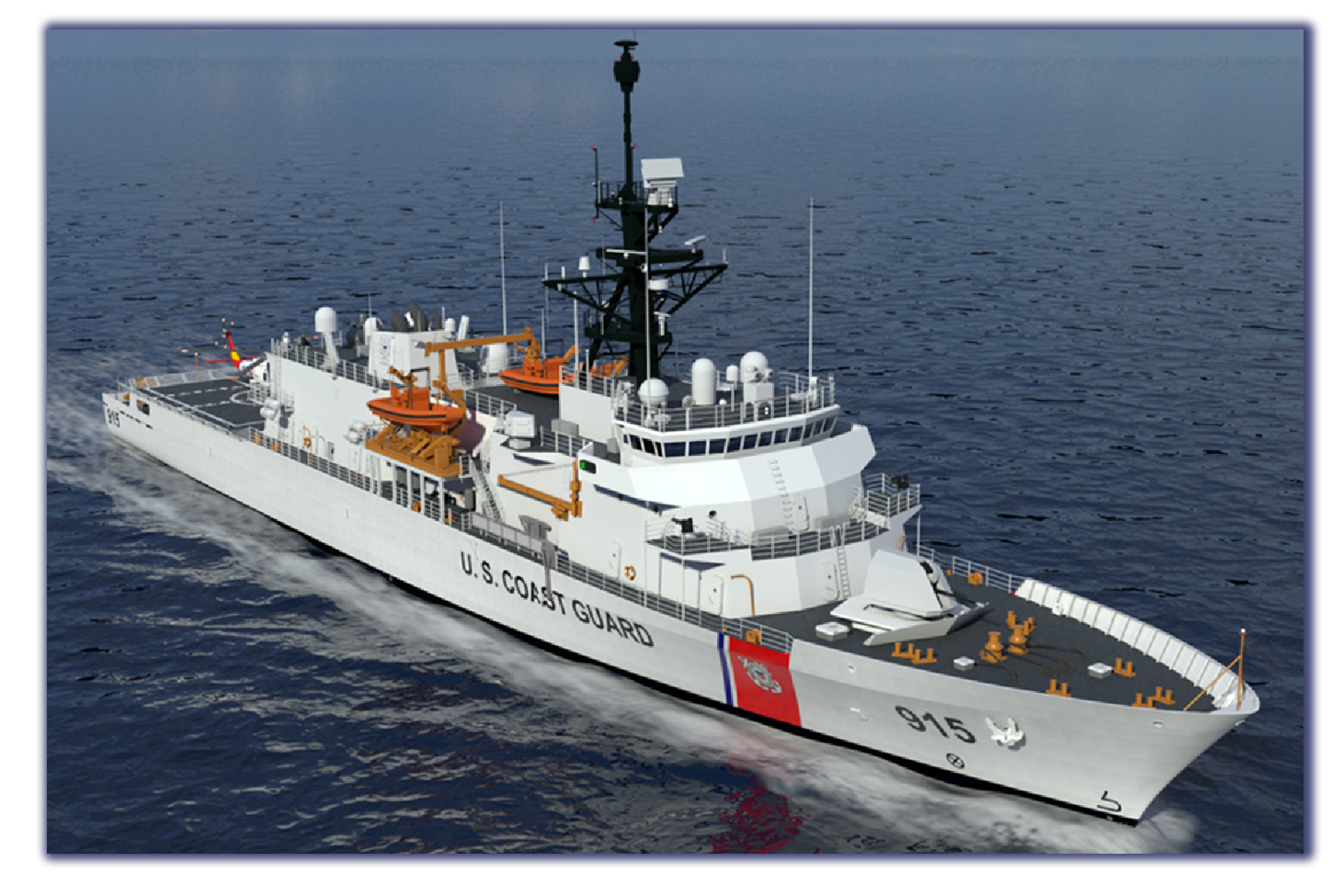
“DHS, Coast Guard extend limited contract relief for Offshore Patrol Cutter” –CG News Release

Below is a news release in full. It reports that “contract relief” will be granted to Eastern Shipyard for construction of the first four ships but that the Coast Guard will reopen bidding for the follow on ships. The Coast Guard always had this option although it seemed unlikely before. The statement that this relief will be granted, “in parallel with immediate recompete” probably means we will see a request for proposal in the near future. 

It seems unlikely that the follow-on ships would be of a different design. The Coast Guard now owns the detail design (correction, I am told the CG does not own all the design details yet but has the option to purchase them) and a different design would introduce additional delays and expense for design development. 

A recompete once again opens the possibility of using a block buy which could result in substantial savings. The recompete could easily provide a block buy for ten ships over five years. A block buy, rather than a contract for two with options, would tend to level the playing field between Eastern, that has the advantage of already building this class, and other shipyards. 

From a historical perspective, the 270 program was also completed by two different shipyards, the first four being built by Tacoma Boat, the other nine by Derecktor Shipyard in Rode Island. The change did result in an 18 month gap between the fourth and fifth ship. 

united states coast guard

 News Release

U.S. Coast Guard Headquarters
Contact: Coast Guard Acquisitions
(202) 475-3069/5532
Headquarters Media Relations (202) 372-4630
mediarelations@uscg.mil
Headquarters online newsroom


DHS, Coast Guard extend limited contract relief for Offshore Patrol Cutter

WASHINGTON – The Department of Homeland Security, in close coordination with the U.S. Coast Guard, granted extraordinary relief to the Eastern Shipbuilding Group (ESG) for the Offshore Patrol Cutter (OPC) under the authority of Public Law (P.L.) 85-804.

ESG submitted a request June 30, 2019, for extraordinary relief after their shipbuilding facilities sustained significant damages from Hurricane Michael, a Category 5 storm, in October 2018.

Acting Secretary of Homeland Security Kevin K. McAleenan made the decision to grant extraordinary contract relief limited to the first four hulls on the basis that ESG’s performance on the OPC contract is vital to the national defense. The Coast Guard will immediately transition to a follow-on competitive contract for the remaining OPC program of record.

P.L. 85-804 was enacted in 1958 and extended to DHS through Presidential Executive Order in 2003. Under this law, an existing contract may be amended or modified when such actions are necessary to facilitate the national defense.

The Coast Guard, supported by DHS and the Navy, conducted an extensive analysis of ESG’s request guided by law and Federal Acquisition Regulation. This review included an assessment of the cost, schedule, and performance impacts on the existing contract. The review was overseen by a Contract Adjustment Board chaired by the DHS Deputy Under Secretary for Management.

“Eastern Shipbuilding’s request for extraordinary relief was carefully considered,” said Coast Guard Vice Commandant, Admiral Charles W. Ray. “This review validated the essential contributions the OPC will provide to our national security and determined that limited relief, in parallel with immediate recompete, is the best option in this exceptional situation. Doing so is consistent with the law, fiscally responsible, and the most expeditious means to deliver this essential national capability.”

The Coast Guard intends to release a Request for Information to gauge industry interest in re-competing the remainder of the OPC program of record. This information will inform the acquisition strategy for the follow-on procurement.

The OPC will replace the fleet of Medium Endurance Cutters, commissioned between 1964 and 1991, providing a critical capability between the National Security Cutter and the Fast Response Cutter. OPC acquisition will expand the Coast Guard’s capability to secure the U.S. border and approaches, disrupt drug cartels and other illicit actors, prevent unlawful immigration, and enhance national preparedness. This decision will ensure critical capabilities are delivered to the fleet as expeditiously and responsibly as possible.

-USCG-

Australian OPV and VTOL UAS

The video above is part of Naval News‘ continuing coverage of the “Pacific 2019” Defense Industry show taking place in Sydney, Australia. The topics of the video are listed below. At least two may be of interest, (1) the new Australian Offshore Patrol Vessel (OPV) being built to a Luerssen design which we discussed  here earlier, and (2) the SAAB UMS Skeldar V200 VTOL Unmanned Air System. This is one of a growing number of vertical takeoff “drones.” This one is the first I have seen with ViDAR included in its list of possible payloads. VIDAR was tested by the Coast Guard in 2016.

Video content:

  • Hunter-class Frigate (SEA5000) with BAE Systems
  • Safran Optronic masts for Attack-class submarine (SEA1000)
  • Luerssen Arafura-class offshore patrol vessel (SEA1180) (time 4:30 to 6:00)
  • Saab UMS Skeldar V200 VTOL UAV (SEA129 Phase 5) (time 6:00 to 7:35)
  • Australian Naval Infrastructure / Osborne Naval Shipyard

There is reference to the fact that the German Navy has also purchased the SAAB UMS Skeldar. Apparently they ordered two, but are not yet decided if it will become a their standard.

Fatal RHIB Accident


Ens. Sarah Mitchell, 23, of Feasterville, Penn., died from injuries sustained during small boat operations July 8, 2018. (Navy)

Navy Times reports the results of a fatal RHIB accident. There are a whole string of potential lessons to be learned from the accident and how the aftermath was handled, such as how to recover injured personnel from the water.